
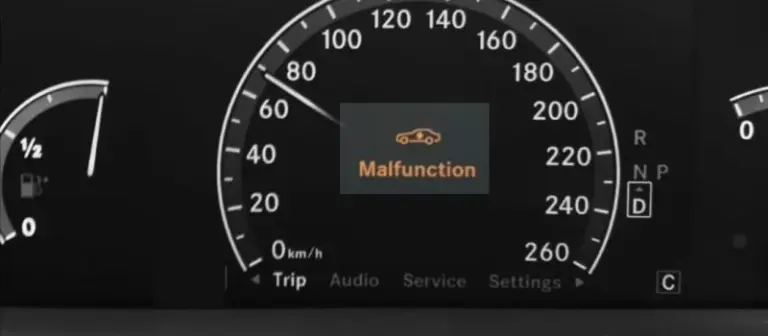
If you drive a Mercedes-Benz with Vehicle Elevation, you already know it is one of those features you appreciate the moment you need it. You press a button, the car lifts up for extra clearance, and suddenly steep driveways and rough ramps feel less stressful.
But when the Vehicle Elevation feature fails, it stops being convenient and starts becoming a safety and reliability worry. In most cases, the problem is not something mysterious. It is typically tied to a defective fuse, a malfunctioning relay, or an air leak within the suspension system.
This guide explains how the system works, how to recognize the difference between an electrical issue and a suspension leak, and what you can do right now to stay safe while you arrange repairs. I also cover what it means when your Mercedes sits lower after being parked for a few days, and whether you can still drive while it is in the lowered state.
One more thing before we troubleshoot. Your exact behavior can vary by Mercedes model and year. Still, the symptoms and the general repair logic stay consistent, and that is what you will use to make smart decisions.
How Vehicle Elevation Works (and What “Normal” Looks Like)
In specific Mercedes-Benz models, the Vehicle Elevation feature raises the vehicle’s ground clearance by a minimum of 20mm. Some models can raise it up to 40mm, depending on how the system is configured.
That lift is not supposed to feel slow or dramatic. It is designed to raise the car when you request clearance for obstacles. The elevation process also has a timing expectation that becomes an important clue for diagnosis.
Here is the benchmark described in the source guidance: when transitioning from a lowered to an elevated position, the process should take less than 15 seconds. If it takes 20 to 30 seconds to reach its full height, you are likely dealing with an issue in the suspension system, especially an air leak.
Once the vehicle reaches its full height, the system increases ground clearance by at least 30mm. That is why you can feel the difference at the front, rear, and undercarriage almost immediately.
That ground clearance gain is exactly why Vehicle Elevation matters. It helps you avoid scraping the undercarriage, protects sensitive components, and reduces the chances of hitting obstacles too aggressively.
Now, when it fails, your job is to sort out which category you are in: electrical (fuse or relay) or mechanical (compressor and air suspension leaks). The faster you identify the category, the less you waste time and money.
Reasons Behind Vehicle Elevation Failures
Mercedes-Benz owners may encounter three primary issues when the Vehicle Elevation feature stops functioning properly. These are the most common culprits described in the guidance, and you will see the same logic echoed by technicians because it works.
Instead of guessing, you can compare what your car is doing against these three categories. That comparison becomes your troubleshooting shortcut.
Defective Fuse
If the Vehicle Elevation feature is completely dead, or it refuses to run reliably, the first electrical suspect is the fuse responsible for the system. The exact fuse varies across Mercedes models, but the guidance points out that a 40A fuse is often the correct one.
Replacing a fuse is one of the more approachable DIY repairs because it does not require opening the air suspension system or working around complex components. Still, it requires discipline.
When a fuse blows, it is doing its job. It is protecting the electrical circuit from short circuits and overload. Your goal is not to keep swapping fuses until one “works.” Your goal is to restore the correct fuse and then watch whether the issue repeats, because a repeated fuse failure can point to wiring, relay, or compressor problems.
The guidance says you can replace the fuse yourself with the help of the vehicle’s manual and some patience. That is good advice for owners who want to start with a low-risk check.
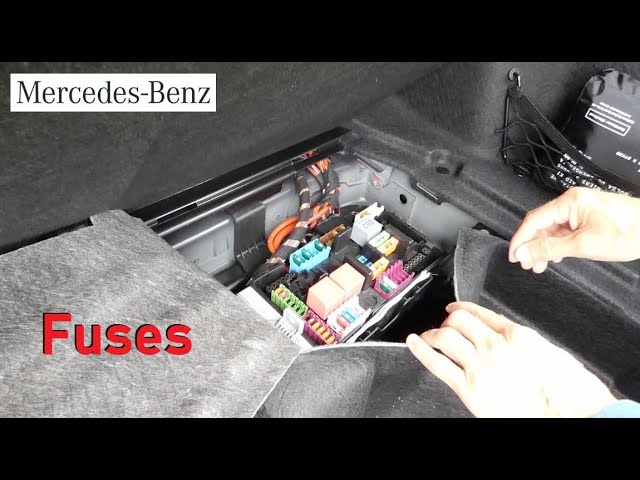
Here is a realistic owner routine. Use the manual to find the fuse that corresponds to Vehicle Elevation. Locate it in the fuse box. Confirm the current fuse condition. If it is blown, replace it with the correct type and rating.
Then, test the system under normal conditions. Do not immediately jump into a steep ramp. First, verify that the lift engages and completes in the expected timeframe.
If the fuse keeps failing again, you have learned something important. The circuit is being overloaded for a reason. At that point, electrical diagnosis has to move beyond “fuse replacement” into relay and compressor testing, or possibly wiring issues.
Relay Problems
Relay issues are a frequent problem. The guidance explains that relay problems occur when:
- the battery supplies insufficient power,
- the fuse fails to regulate electrical current properly, or
- a component in the Vehicle Elevation system lacks adequate power.
That list matters because relays are not magic. They act like controlled switches and regulators for current. If the system is not getting stable power, the relay may not be able to do its job.
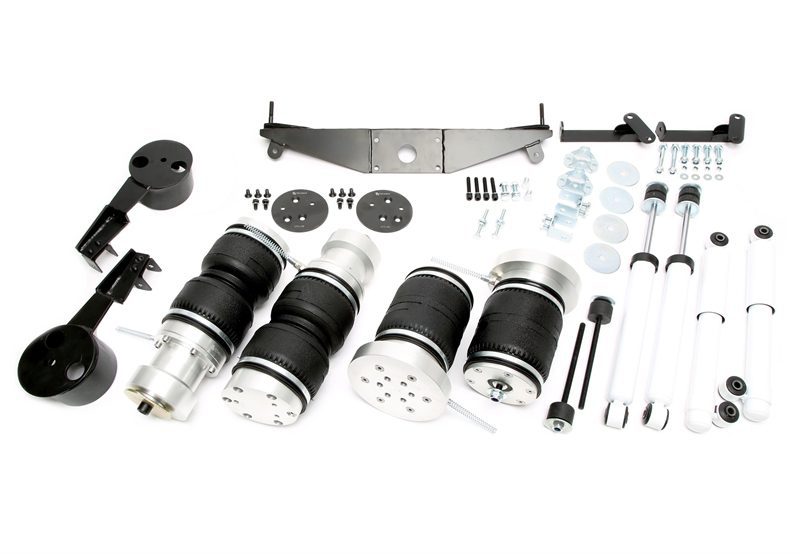
In most cases, the guidance points toward the malfunctioning compressor as the real driver of relay-related symptoms. This compressor is responsible for inflating the air suspension.
Think about the compressor as the muscle of the system. It pumps air into the suspension to raise the vehicle. If it does not receive enough power or the circuit cannot control it correctly, it cannot inflate the suspension. When the air pressure does not build, the vehicle cannot elevate.
The guidance also notes that replacing a faulty compressor can be costly, with repairs averaging around $1,000. That number does not mean every repair will land exactly there. It does mean you should not ignore electrical symptoms and hope they go away. If the compressor is the cause, the system is basically unable to do what you paid for it to do.
Here is what many owners notice when the compressor is not working properly. They press the elevation button. They get a message or a dash indicator. Then nothing happens, or the lift response is weak, slow, or incomplete. Sometimes the system sounds different. Sometimes it never reaches full height.
This is also where it helps to measure timing. If it is slow but not totally dead, you might be closer to an air leak category. If it is dead or inconsistent and seems electrical, you might be closer to fuse and relay plus compressor power issues.
Air Suspension Leaks
This is the category owners fear, and for good reason. An air leak can leave your suspension compromised. The guidance provides specific timing clues and specific sound clues, so you do not have to guess blindly.
The guidance describes what happens during a normal transition. When a Mercedes-Benz transitions from lowered to elevated, the process should take less than 15 seconds. If it takes 20 to 30 seconds to reach full height, there is likely an air leak in the suspension system.
It also references feedback from Mercedes-Benz forums, and that feedback is consistent with what technicians see: slow elevation is often caused by an air leak.
Other indicators of an air leak include:
- the suspension failing to reach its maximum height,
- unusual squeaking or hissing noises from the vehicle’s undercarriage during elevation.
Those noises are a big deal. A hiss can suggest air escaping somewhere in the air suspension plumbing or at a leak point. The squeak can sometimes show up around worn components under pressure.
The guidance is blunt about repairs. Repairing an air leak requires professional expertise and is not a task for inexperienced individuals. The cost to fix an air leak in the suspension can reach up to $1,600.
Just as important is safety. Operating a Mercedes-Benz with a compromised suspension is unsafe. That does not mean you are guaranteed to crash. It means you should not treat a suspected air leak like a minor nuisance.
Quick Diagnosis: Timing, Sounds, and Behavior That Point to the Right Fix
Here is the mechanic-style trick I use to cut through confusion. I look at three things: time to elevate, what the car sounds like, and whether the system reaches full height. Then I compare that to the fuse, relay, compressor, or air leak categories from the guidance.
Use this table as your “stop guessing” reference.
| Your Observation | Most Likely Category | What to Do Next |
|---|---|---|
| Vehicle Elevation does not lift at all | Defective fuse or relay/power issue | Check the correct fuse (40A often) using the manual, then scan relay and power feed behavior at service |
| Lift is weak or inconsistent, seems related to compressor power | Relay problems leading to compressor not building pressure | Have the system diagnosed at a shop because compressor replacement averages around $1,000 |
| Elevation takes 20 to 30 seconds to reach full height | Air suspension leak | Look for undercar noise such as hissing or squeaking, then arrange professional leak repair (up to $1,600) |
| Suspension fails to reach maximum height | Air suspension leak | Do not ignore the warning. Avoid driving that scrapes and book professional repair |
| Unusual squeaking or hissing from undercarriage during elevation | Air suspension leak | Professional diagnosis required. Treat it as a safety issue |
| Car sits lower after days unused, then lifts normally in about 15 seconds | Likely normal system behavior | Press the Vehicle Elevation button and verify normal lift timing |
Now that you can classify the problem, you can also plan your response. Fuse replacement is one kind of repair. Compressor replacement is another. Air leak repair is a safety-focused repair that needs professional hands.
Next, let us address a question that comes up constantly with air suspension systems. Why does the car look lower after you park it for days?
Why Does Your Mercedes-Benz Appear Lower Than Usual?
After being away for a few days, you notice your vehicle appears lower than you remember. It sits in the garage like it never got the chance to “stretch” back up.
Imagine coming back from a five-day or even a two-week trip and finding your Mercedes-Benz sitting noticeably lower in the garage. That is unsettling at first.
Here is the good part from the guidance. Nothing is damaged in that scenario. When a Mercedes-Benz remains unused for several days, the suspension naturally lowers to preserve the system.
So, if you park it and do not drive it for several days, it can look lower. The fix is simple. Press the Vehicle Elevation button, and the vehicle should return to its normal height in 15 seconds or less.
Now, pay attention to the difference between “normal lowering” and “something is wrong.” The guidance highlights a warning sign: if the vehicle drops to a lowered state overnight after being parked, that could indicate a glitch in the Vehicle Elevation system or an air leak.
That overnight drop matters because an air leak often shows itself as gradual loss of air pressure. The car settles lower. It can still lift when you request elevation if the leak is slow. But the repeated overnight change is a clue you should investigate.
In other words, ask yourself two questions: Does the car recover properly in about 15 seconds or less when you press the button? And does it only look lower after days of sitting, or does it keep dropping overnight even when you expect it to hold height?
If the first is true, the system likely behaves normally. If the second is happening, treat it like a potential air leak until proven otherwise.
What Is Vehicle Elevation and Its Purpose?
This feature sounds technical, but it is basically a ground clearance boost on demand. You ask the car to raise itself, and the system increases clearance so you can pass obstacles more safely.
To engage the Vehicle Elevation feature, press the elevation button. The guidance says the button is typically located on the driver’s door or near the climate control and radio controls. That placement varies by model, but the button is usually easy to spot once you know where to look.
When activated, you may see a message such as “Vehicle Elevating, Please Wait” on the dashboard or infotainment screen. Some models also show an elevation indicator light that flashes until the vehicle reaches full height. Once it reaches full height, that indicator disappears.
When fully elevated, the vehicle’s ground clearance increases by at least 30mm. In practical terms, this is what helps you clear steep approaches, garage lips, and uneven driveway edges without scraping as easily.
Now let us talk about the hardest part for owners to handle emotionally. What if it does not lift fully, or it lifts slowly? Can you still drive while it is lower?
Can You Drive Safely at a Lowered Height?
Suppose you must wait a week before a mechanic can repair your Vehicle Elevation feature. During that wait, your Mercedes-Benz might stay in a lower suspension height state.
Is this safe?
In general, driving at a lowered height is safe, but you need to be careful. The guidance is clear: you must avoid obstacles. You also risk scraping the undercarriage if you navigate steep ramps or uneven surfaces.
Here is how I would put it if I were standing next to your car. You are not trying to “test” the suspension. You are trying to get from point A to point B without creating new damage. That means:
- Choose routes with smoother driveways, fewer steep lips, and less aggressive speed bumps.
- Approach ramps slowly and at a steady angle where you can clear the front and rear corners.
- Avoid backing into tight spots where the undercarriage can catch on uneven gravel or curbs.
- Do not force the vehicle through obstacles that your elevated height would normally clear.
Now the safety line gets stricter if you suspect the actual underlying issue is an air leak. The guidance warns that operating a Mercedes-Benz with a compromised suspension is unsafe, and it also states that operating with an air leak in the suspension is not advisable.
So you should use the lowered-height driving advice with common sense. If you know (or strongly suspect) an air leak based on timing, hissing, squeaking, or failure to reach maximum height, the priority becomes arranging repair rather than treating it like a minor cosmetic issue.
Think of it this way: lowered height might be okay for short-term movement if the system is behaving normally and the car still recovers when requested. An air leak is different. It can keep the suspension compromised and can worsen over time.
What to Do When Vehicle Elevation Fails (A Clear Owner Action Plan)
Now we get practical. Here is a simple owner action plan that lines up with the guidance and keeps you safe while you work toward a real fix.
Step-by-step, and in the order that saves you the most time:
- Press the Vehicle Elevation button and time the lift. Use your phone stopwatch if needed. The guidance benchmark is less than 15 seconds. If it takes 20 to 30 seconds to reach full height, treat it as likely air leak.
- Listen during elevation. Pay attention for unusual squeaking or hissing from the undercarriage. Hissing and squeaking during elevation are a strong air leak indicator in the guidance.
- Watch whether it reaches maximum height. If it fails to reach full height, that also points toward air suspension leak category.
- If the system is dead or inconsistent, check the fuse. The guidance notes the fuse varies by model, but a 40A fuse is often the correct one. Use the manual to find the right fuse before replacing anything.
- If fuse replacement is not the answer, plan a relay and compressor diagnosis. Relay issues often connect back to compressor power and failure. Compressor replacement averages around $1,000.
- If an air leak seems likely, do not attempt inexperienced repairs. The guidance says air leak repair requires professional expertise. Repairs can reach up to $1,600, and driving with a compromised suspension is unsafe.
- When parking for days, expect normal settling. If the vehicle naturally lowers after several days unused and then rises back in 15 seconds or less, that is consistent with normal system behavior.
That action plan is the difference between “trying random fixes” and “choosing the right path.” Owners save money when they classify the issue correctly early.
One final safety note. If the car drops overnight and you suspect a glitch or air leak, do not wait weeks to investigate. That overnight change aligns with the guidance warning sign.
Conclusion
The Vehicle Elevation feature increases a Mercedes-Benz’s ground clearance by approximately 30mm, enhancing clearance for obstacles. The elevation process should complete in 15 seconds or less. If it takes longer, potential issues like an air leak or a faulty compressor may be to blame.
While driving at a lowered height can be safe in the short term, the guidance also makes the important point that operating the vehicle with an air leak in the suspension is not advisable. This is one of those repairs where safety and long-term system health matter.
Here is the actionable thought: the next time you press the Vehicle Elevation button, time how long it takes and listen for hissing or squeaking. Are you seeing it finish in 15 seconds or less, or does it creep into the 20 to 30 second range?