
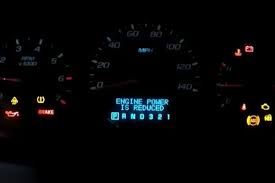

Seeing the “Reduced Engine Power” warning on your Chevy Silverado can feel like the truck suddenly lost its confidence—and in a way, it has. This message typically means the vehicle has detected a condition that could affect safe or reliable operation, so it intentionally limits performance to protect the engine, transmission, and critical drivability systems. While that limitation is frustrating (especially if you’re merging, towing, or climbing a grade), it’s also a clue: your Silverado is telling you it has identified a fault that needs attention.
You’re not alone. “Reduced Engine Power” is a common Silverado complaint across multiple model years and engine options, and it’s most often tied to air intake control (throttle body and throttle position sensors), fuel delivery (fuel filter, fuel pump, injector flow), or the electronic decision-makers that coordinate everything (sensors and the powertrain control module). The good news is that this warning is diagnosable and usually repairable without guesswork, provided you approach it methodically.
Consider this your expert guide to understanding what the warning means, why it happens, how to confirm the cause using practical diagnostic steps, and how to fix it correctly the first time. Along the way, you’ll also learn how to prevent repeat occurrences, because with “Reduced Engine Power,” the cheapest repair is the one you never have to do twice.
Before we dive in, a quick safety note: if the warning appears along with severe misfiring, flashing check engine lights, harsh transmission behavior, overheating, or any red brake/temperature indicators, reduce speed and avoid hard acceleration. If the truck struggles to maintain safe traffic speed, move to a safe location and arrange service. Limp-mode strategies are designed to get you off the road—not to keep you driving indefinitely.
Common Causes for Reduced Engine Power
To fix a “Reduced Engine Power” condition efficiently, you need to understand the systems that can trigger it. In most Silverados, this warning is closely associated with the electronic throttle control strategy: the truck compares inputs (what you request with the accelerator pedal) to outputs (what the throttle body and sensors report). If those signals don’t agree—or if air, fuel, or engine management data becomes unreliable—the control module will restrict power as a protective measure.
Understanding the reasons behind it can help you take the right steps to fix it. Key areas to look into include the throttle body, various sensors, fuel system, and the powertrain control module.
From an expert perspective, the most common root causes fall into two categories:
1) The engine cannot accurately control airflow or fuel delivery. This includes throttle body contamination, failing sensors, or restricted fuel supply.
2) The control module cannot trust the data it’s receiving. This includes sensor signal mismatches, wiring/connector problems, low voltage events, or internal PCM/ECM issues.
Below, we’ll break down the most frequent causes and what they look like in real-world driving—so you can connect the symptom you’re experiencing with the system that deserves the closest inspection.
Throttle Body Issues
The throttle body is the air gatekeeper of your Silverado’s engine. It regulates how much air enters the intake manifold, which directly influences power output. On most modern Silverados, this is done electronically: the accelerator pedal sends a request, and an electric motor in the throttle body opens the plate to match that request. The system then verifies its own work using sensors that report throttle position.
When the throttle body becomes dirty (carbon buildup is common) or the internal motor and gears begin to wear, the throttle plate may not move smoothly or may not reach the commanded position. Even slight sticking can cause a mismatch between “desired throttle angle” and “actual throttle angle.” The PCM reads that mismatch as a reliability problem and one of the most common protective responses is reduced engine power.
A faulty throttle body might not open properly, leading to reduced engine power. It’s essential to check if the throttle body is clean and functioning well. Sometimes, issues with the throttle position sensor can also affect how the throttle body works, altering air intake and performance.
Practical symptoms that often point toward throttle body trouble include:
- Hesitation on acceleration, especially from a stop or when lightly pressing the pedal.
- A “surging” or uneven throttle feel, where the truck seems to add and subtract power unexpectedly.
- Rough idle or a low idle that sometimes dips as if the engine is about to stall.
- Reduced power that appears suddenly and may disappear after restarting—then returns later.
One expert tip: throttle body problems aren’t always mechanical. Electrical connector issues (corrosion, loose pins), damaged wiring, or low system voltage can make a good throttle body behave like a failing one. That’s why a diagnosis should include both physical inspection and data-based verification (trouble codes, live data, and voltage checks).
Also keep in mind that a throttle body can be “dirty enough to cause trouble” without being obviously filthy. A small ridge of carbon around the throttle plate can disrupt airflow at idle and low throttle angles, which is exactly where the system expects the most precise control. That’s why cleaning can sometimes restore normal operation, if the throttle body motor and sensors are still healthy.
Sensor Malfunctions
Your Chevy Silverado depends on a network of sensors to keep the engine efficient and predictable. When any critical sensor sends incorrect data—or sends data that doesn’t agree with another sensor—the PCM may enter a reduced-power strategy to prevent lean conditions, detonation, stalling, or uncontrolled acceleration.
Your Chevy Silverado relies on several sensors to run smoothly. These include the throttle position sensor, mass airflow sensor, and oxygen sensor. If any of these fail, you might see reduced engine power. For example, a faulty throttle position sensor can send wrong signals to your engine control module.
Similarly, a mass airflow sensor that isn’t working correctly can mix up the air-fuel mixture, impacting engine performance. Keep an eye on any warning lights and consider getting these sensors checked.
To make this easier to visualize, here’s how these sensors influence the exact decision to reduce power:
Throttle Position Sensor (TPS): The TPS reports throttle angle. If the PCM commands a throttle opening but the TPS feedback indicates the throttle didn’t move or moved too far, the system can interpret that as a control failure. Many vehicles use dual (redundant) TPS signals; if the two signals disagree beyond a set threshold, reduced engine power is a typical response.
Mass Air Flow (MAF) Sensor: The MAF helps the PCM calculate how much fuel is needed for the measured airflow. If the MAF underreports airflow, the PCM may deliver too little fuel (lean condition). If it overreports, fuel economy and drivability can suffer. A faulty MAF can cause hesitation, rough running, poor mileage, and power limitation if the PCM detects readings that don’t make sense compared to other sensors.
Oxygen Sensors (O2 Sensors): O2 sensors verify whether the air-fuel mixture is correct by measuring oxygen content in the exhaust. If an O2 sensor becomes slow, biased, or fails, the PCM may struggle to maintain proper mixture control. Some faults won’t directly trigger reduced engine power, but they can contribute to conditions (misfires, poor fueling) that eventually do.
Other sensors and inputs can matter too, even if they aren’t the most famous ones:
- Accelerator Pedal Position (APP) sensors: Many throttle-by-wire systems use two pedal sensors for redundancy. If these disagree, the system may limit throttle opening.
- Manifold Absolute Pressure (MAP) sensor (if equipped/used in strategy): Helps validate airflow calculations and load.
- Engine coolant temperature sensor: Incorrect temperature data can distort fuel and timing calculations.
The key takeaway: with sensor-related faults, the truck is often protecting itself from operating with “bad math.” Your repair strategy should be based on code data and live readings, not on replacing a sensor because it’s common. Common does not mean guaranteed and Silverado owners can waste a lot of money replacing parts that were never defective.
A practical best practice is to observe patterns. Does reduced power happen only when the engine is hot? Only in rain? Only after a car wash? Only at highway speed? Those patterns often point toward connectors, moisture intrusion, heat-related sensor failure, or wiring movement rather than the sensor element itself.
Fuel System Problems
When a Silverado can’t get enough fuel under load, the result can feel exactly like reduced engine power—because it is. Engines need the right amount of fuel pressure and flow to maintain power, particularly during acceleration, towing, or hill climbs. If the fuel system can’t keep up, the PCM may detect lean conditions, misfires, or fuel pressure deviations and reduce power to prevent engine damage.
Fuel system issues are common causes of reduced engine power. A clogged fuel filter can block the fuel’s path to the engine. Restricted fuel flow can starve the engine of the energy it needs. Regular maintenance and checks on your fuel filter can help avoid this. Additionally, a failing fuel pump might not supply enough fuel pressure, causing power loss.
From a diagnostic standpoint, fuel delivery problems tend to show up in specific ways:
- Power drops mainly under load: The truck may idle fine and drive gently without obvious issues, but acceleration feels weak or the warning appears when you demand power.
- Hard starting or extended crank: Especially if fuel pressure bleeds down after sitting.
- Surging at highway speed: A marginal pump may struggle to maintain steady pressure.
- Misfire codes or lean codes: The PCM may detect that the mixture is too lean, especially during acceleration.
Fuel filter restriction is more common on setups where the filter is serviceable and has gone past its maintenance interval. On other configurations where the filter is integrated into a module, the “restriction” may effectively be a pump or module issue. Either way, the concept is the same: the engine can’t get the fuel it needs at the moment it needs it.
Fuel quality matters too. Water contamination, heavy sediment, or poor-quality fuel can accelerate filter restriction and injector fouling. If the warning started shortly after fueling, it’s not proof of bad fuel, but it is a strong clue that deserves consideration, especially if multiple vehicles have reported issues at the same station.
An expert approach to fuel diagnosis includes checking fuel pressure (and, ideally, fuel pressure under load), verifying pump command and electrical supply, and evaluating injector performance when needed. Guessing by “it feels like fuel” is not enough; fuel issues can mimic ignition problems and even throttle issues.
Powertrain Control Module Concerns
The powertrain control module (PCM) is the decision-maker that ties everything together. It interprets sensor data, determines throttle commands, calculates fuel delivery, manages ignition timing, and coordinates emissions control. When the PCM detects a fault that could affect safety, it may intentionally reduce throttle response, limit RPM, restrict torque, or activate fail-safe logic.
The powertrain control module (PCM) plays a vital role in your Silverado’s operation. If the PCM encounters software glitches or malfunctions, you might notice reduced power. This module processes data from various sensors. If it misreads or fails to act on this information, engine power issues can arise. Regular diagnostics can help identify PCM problems early.
It’s worth clarifying what “PCM problems” usually mean in the real world. In many cases, the PCM itself is not defective; instead, it is reacting appropriately to faulty inputs. A sensor or wiring issue creates confusing data, and the PCM responds by protecting the truck. True PCM failures do occur, but they are less common than throttle, sensor, and fuel causes.
However, there are PCM-related scenarios that can produce reduced engine power events:
- Software calibration issues: Occasionally resolved through updates (often dealer-level programming). Updates may improve fault detection logic or resolve known drivability concerns.
- Communication problems: If the PCM loses reliable communication with a throttle body, sensor, or another module, it may limit power.
- Voltage instability: Low battery voltage or charging problems can cause control modules to behave erratically, store false codes, or enter protection mode.
- Internal hardware faults: Less common, but possible—especially if the vehicle has experienced water intrusion or electrical damage.
Keeping these components in check can prevent complications related to reduced engine power. Proper maintenance and timely repairs will ensure your Chevy Silverado runs efficiently.
As a professional rule, PCM replacement should be the last step—not the first. Before blaming the PCM, confirm clean power and grounds, stable charging voltage, intact connectors, and consistent sensor readings. Most “PCM failures” disappear once the real upstream cause is corrected.
Diagnostic Steps to Identify the Issue
When your Silverado enters a reduced-power mode, a systematic diagnostic plan saves time and prevents expensive trial-and-error repairs. The most effective process is simple in concept: pull codes, interpret what the truck is complaining about, confirm the complaint with inspections and measurements, and then fix the verified cause.
Addressing reduced engine power in your Chevy Silverado requires a systematic approach. Key steps involve decoding trouble codes, inspecting fuel system components, and examining the throttle and sensors for issues.
If you want an expert-level outcome, avoid skipping straight to parts replacement. “Reduced Engine Power” is a strategy, not a single part failure. The truck stores clues (codes and data) that tell you which system triggered the strategy. Your job is to read those clues correctly.
Also, if the truck is still drivable, try to capture conditions: engine temperature, weather, whether it happened under acceleration or at idle, and whether it’s repeatable. Consistent, repeatable triggers are diagnostic gold.
Interpreting Trouble Codes
The first step is to retrieve Diagnostic Trouble Codes (DTCs). This is non-negotiable if you want to fix the problem efficiently. A capable OBD-II scanner or scan tool can read stored codes, pending codes, and sometimes freeze-frame data (a snapshot of conditions at the moment the fault set). Freeze-frame data is especially useful because reduced power may not be present during diagnosis, but the freeze-frame tells you what was happening when it occurred.
The first step is to check for any Diagnostic Trouble Codes (DTCs) using a scanner. These codes can quickly point to what might be wrong with your vehicle. Connect the scanner to the ECU and retrieve the Error Codes.
Once you have the codes, cross-reference them with your vehicle’s manual or online resources. This will help determine if the problem is related to specific components like the MAF Sensor or Oxygen Sensors. This initial step saves time by narrowing down potential issues immediately.
Here’s how an expert interprets codes without falling into the “parts cannon” trap:
- Identify code families and relationships. If you have throttle-related codes and APP-related codes together, that suggests a throttle-by-wire plausibility issue. If you have lean codes plus fuel pressure-related data, fuel delivery becomes a stronger suspect.
- Look for plausibility and correlation faults. Many reduced-power events are triggered by “signal mismatch” codes—meaning the PCM detected two signals that should agree but don’t. Those codes often point to wiring, connectors, or calibration needs as much as they point to a failed component.
- Use freeze-frame and live data if possible. Live throttle angle, commanded throttle, APP%, MAF readings, short/long-term fuel trims, and O2 sensor behavior can confirm whether the problem is airflow control, fueling, or sensor bias.
- Don’t ignore “low voltage” history. If you see codes or data suggesting battery/charging issues, address them early. Low voltage can cause misleading secondary faults.
Even if your scanner is basic, pulling codes is still a major advantage. If it cannot access manufacturer-specific data, you can still use the code list to decide whether to focus on throttle body, sensors, fuel pressure, or module communication first.
After documenting the codes, resist the urge to clear them immediately. First, write them down (or save a screenshot) and note whether they are “current” or “history.” Clearing codes too early can erase information that makes diagnosis faster.
Checking Fuel System Components
Once codes are retrieved, verify fuel delivery if there’s any indication of lean running, misfires under load, fuel pressure problems, or general power loss during acceleration. Fuel issues can be subtle at idle and obvious only when demand increases.
Next, focus on the fuel system to ensure everything operates smoothly. Start by checking the fuel pump for any signs of failure. A faulty pump might cause your Silverado to lose power.
Look at fuel lines and filters as well, ensuring there are no blockages or leaks. Inspect connections and hoses for wear and tear. If the fuel system isn’t delivering properly, the engine can’t perform at its best.
A professional-level fuel system check typically includes:
- Fuel pressure measurement with a gauge or scan tool PID, compared to specification.
- Pressure behavior under load (not just at idle). A weak pump may meet idle spec but fail during acceleration.
- Electrical supply checks for the fuel pump (voltage drop tests can reveal wiring resistance that starves the pump).
- Filter condition and service history. A filter that has exceeded its interval is a strong candidate, especially if symptoms worsen gradually.
- Injector contribution (when necessary). If one or more injectors are restricted, the engine may misfire or lose power without a global pressure problem.
Fuel system diagnostics are especially important if your reduced power complaint is accompanied by sputtering, stumbling, or a sensation that the engine “falls on its face” at higher RPM. Those symptoms can come from ignition issues too, but fuel checks are relatively straightforward and prevent unnecessary sensor replacement.
If your Silverado has been running well and the warning appears suddenly, don’t assume fuel is impossible. A pump can fail abruptly, and contaminated fuel can create rapid restrictions. The difference is that fuel-related failures usually have consistent drivability symptoms—while throttle/sensor faults can sometimes be intermittent and reset with a restart.
Inspecting the Throttle Body and Sensors
Airflow control is the heart of many “Reduced Engine Power” events, so throttle body and sensor inspection deserves careful attention. This isn’t just “look at it and see if it’s dirty.” The best approach is to combine visual inspection with scan tool data to confirm whether the throttle system is doing what the PCM expects.
Lastly, examine the throttle body and related sensors. A dirty throttle body can restrict airflow, leading to reduced power. Clean it thoroughly using special cleaning products to remove any built-up debris.
Check the Throttle Position Sensor (TPS) for proper operation, as faulty sensor readings can mislead the ECU and adjust throttle inaccurately. Also, verify the functionality of Oxygen Sensors and the MAF Sensor, which are crucial for air-fuel mixture calculations.
Paying attention to these components ensures your engine functions efficiently, restoring lost power and performance.
Here’s what an expert inspection typically covers:
- Throttle body cleanliness and movement: Inspect for carbon around the plate and bore. Carbon buildup can prevent accurate control at low throttle angles. The throttle plate should move smoothly (note: on electronic throttle bodies, don’t force movement aggressively—follow safe practices).
- Throttle connector and harness integrity: Look for bent pins, moisture, corrosion, and harness tension or chafing. Many intermittent reduced power events are wiring-related, especially after prior repairs or in harsh climates.
- TPS and APP plausibility (scan tool): If your tool supports it, compare pedal position sensors and throttle position sensors. Redundant sensors should track predictably. Dropouts, spikes, or disagreement patterns often point directly to the failing circuit.
- MAF sensor sanity check: MAF readings should be consistent with engine speed and load. A contaminated MAF can skew mixture and lead to drivability issues.
- Air leaks and intake ducting: Cracked intake ducts, loose clamps, or vacuum leaks can cause airflow mismatches that confuse fueling calculations, especially if unmetered air enters after the MAF.
When the throttle body is cleaned or replaced, many vehicles require an idle/throttle relearn procedure. Some Silverados can relearn automatically after a sequence of key cycles and drive conditions; others may benefit from a scan tool relearn. If a relearn is skipped, you may experience unstable idle, surging, or a persistent warning even after the physical issue is corrected.
Finally, always interpret throttle and sensor findings in context with the trouble codes. A dirty throttle body can contribute, but if the codes point to an electrical mismatch, cleaning alone may not solve the problem. The right repair is the one that matches the evidence.
How to Fix Chevy Silverado Reduced Engine Power
Fixing reduced engine power on a Chevy Silverado is rarely about one universal trick. The correct repair depends on what triggered the fail-safe strategy in the first place. That said, the majority of successful repairs fall into a few predictable categories: restoring proper airflow control, correcting bad sensor data, ensuring reliable fuel delivery, and addressing module logic or memory issues.
Addressing reduced engine power in your Chevy Silverado often requires a few targeted actions. You may need to clean or replace parts related to airflow and sensors, or reset systems to ensure proper function. Each solution depends on understanding the specific problem with your vehicle.
Below are the most common repair paths, written with an expert mindset: fix what’s verified, confirm the repair with data, and reduce the chances of the warning returning.
Cleaning the Throttle Body
Throttle body cleaning is one of the most practical first repairs when evidence suggests airflow restriction, sticking, or idle instability—especially if codes and symptoms align with throttle control concerns. Carbon buildup is normal over time, particularly in engines that do a lot of idling, short trips, or stop-and-go driving.
The throttle body controls air intake and can get clogged with dirt. When this happens, your engine might struggle for power.
To clean it, you’ll need a throttle body cleaner spray and basic tools. First, disconnect the air intake duct. Next, spray the cleaner inside the throttle body while opening the throttle manually. Wait for everything to dry before reconnecting it. This cleaning helps the Electronic Throttle Control work optimally, avoiding power loss. Regular cleaning can prevent future problems by ensuring smooth airflow.
Expert-level tips to make this cleaning more effective and less risky:
- Use the correct cleaner. Throttle body cleaner is designed for this job; harsh solvents can damage coatings or sensors on certain designs.
- Clean the bore and edges carefully. The most important area is the throttle plate edge and the bore where carbon builds up and disrupts low-angle airflow.
- Don’t ignore the intake duct. A cracked or loose duct can create unmetered air and cause drivability problems even if the throttle body is spotless.
- Perform/allow an idle relearn if needed. After cleaning, the idle may fluctuate briefly as the PCM adapts. If the truck stalls or idles poorly, a relearn procedure (manual or scan tool) may be required.
If cleaning improves symptoms but the warning returns quickly, that often indicates the throttle body is not merely dirty—it may be failing electrically or mechanically, or the sensor feedback signals are becoming unreliable. In those cases, replacement (and a proper relearn) may be the lasting fix.
It’s also wise to confirm that the reduced power event wasn’t caused by a low-voltage episode. If the battery is weak or the charging system is unstable, you can clean the throttle body perfectly and still see the warning return because the root cause was electrical reliability.
Replacing Faulty Sensors
Sensor replacement is appropriate when diagnosis confirms a sensor is biased, intermittent, out of range, or failing plausibility checks. In a modern Silverado, sensors aren’t just “readers”—they are inputs to safety logic. If the PCM sees conflicting throttle, pedal, airflow, or mixture feedback, it reduces power because it can’t guarantee correct control.
Sensors like the Throttle Position Sensor (TPS) are vital for power management. They provide the engine with crucial data to maintain performance. If your TPS or other sensors are malfunctioning, your vehicle will experience reduced power.
First, you need to diagnose which sensor is faulty, often with a diagnostic scanner. Once identified, carefully remove and replace it with a new one. Always ensure that sensors are calibrated correctly afterwards. Fixing sensor malfunctions can make a significant difference in power delivery.
To avoid repeat failures and unnecessary expenses, take these expert considerations seriously:
- Verify wiring before replacing sensors. A damaged wire or corroded connector can mimic a bad sensor. If you replace the sensor without addressing the wiring, the problem returns and the new sensor gets blamed unfairly.
- Use quality parts. Inexpensive sensors with inconsistent calibration can cause more problems than they solve. If you’ve experienced multiple repeat issues, consider OE/OEM-quality parts.
- Confirm the fix with live data. After replacement, verify sensor readings under the conditions that previously triggered reduced power. If the problem was intermittent, a short test drive may not be enough—try to reproduce the original scenario safely.
- Relearn/calibration matters. Some components require a relearn procedure. If you skip it, the system may continue to see “mismatch” conditions.
One more practical note: sometimes multiple sensors appear suspicious because one primary issue is causing chaos. For example, a failing throttle body can cause TPS mismatch codes and airflow/fueling corrections that make MAF/O2 data look abnormal. That’s why you should interpret data as a system, not as isolated “bad readings.”
Fuel System Maintenance
If diagnosis points to fuel pressure or fuel delivery limitations, maintenance and repair of the fuel system can restore power and prevent engine stress. Fuel starvation isn’t just a performance issue—it can create lean conditions that increase combustion temperatures, raising the risk of misfires and long-term damage.
A well-maintained fuel system ensures constant power. Issues like a clogged fuel filter or a faulty fuel pump can reduce engine performance.
To maintain the system, regularly check for clogged components. Replace your fuel filter as recommended in your vehicle’s maintenance schedule. Cleaning out injectors can also help. Keeping clean fuel flowing freely prevents power drops and maintains efficiency. These practices are crucial for older models experiencing frequent engine power warnings.
For an expert-quality repair outcome, fuel system work should be evidence-based:
- Replace a clogged filter when the service interval or restriction evidence supports it. If your Silverado uses a serviceable filter and it’s overdue, replacement is a high-value step.
- Verify pump performance. A pump may run but fail to maintain pressure under load. If reduced engine power occurs during acceleration or towing, pressure-under-load testing is especially important.
- Inspect for leaks and weak connections. Fuel leaks are dangerous and also reduce system performance. Even small seepage can indicate a broader issue.
- Consider injector cleaning or testing. If the engine is rough, misfiring, or has cylinder-specific lean indications, injector condition may be part of the problem.
Preventive fuel system habits can also help: use reputable fuel sources, keep up with service intervals, and avoid running the tank extremely low frequently (which can heat-stress the fuel pump on some designs). While these habits aren’t a guaranteed prevention, they reduce the probability of premature fuel delivery issues.
If your reduced power warning disappears after a restart but returns under load, don’t dismiss fuel delivery. Some fuel issues are borderline and only show up when demand peaks. Capturing scan data during the event (if possible) can turn a frustrating intermittent problem into a straightforward repair.
Powertrain Control Module Reset
Because the PCM manages engine output and stores learned values, it can sometimes benefit from a reset—particularly after repairs, after correcting electrical issues, or when a temporary glitch is suspected. A reset is not a cure-all, but it can clear corrupted adaptive values or transient faults that keep the system in a cautious state.
The Powertrain Control Module (PCM) is the brain of your vehicle, managing engine performance. Sometimes, a reset is necessary to clear up glitches or faulty data.
To reset it, disconnect the negative battery cable for a few minutes and then reconnect it. This resets the PCM to its default settings. Remember, if problems persist, professional diagnostics might be needed. A simple reset can sometimes resolve nagging power issues, giving your Silverado a fresh start.
Professional guidance for PCM resets and what to expect:
- Expect relearning. After a reset, your truck may need to relearn idle control, throttle response, and transmission shift adaptives. Some drivers notice temporary roughness or different shift behavior until relearn completes.
- Don’t use a reset to “hide” a recurring problem. If reduced power returns, the reset was not the solution—it was a brief interruption of the symptom.
- Consider software updates when appropriate. If you have repeat issues that don’t match typical component failures, a dealer may check for PCM calibration updates.
- Address battery and charging health. If you reset the PCM but the root issue is unstable voltage, the warning is likely to return. A healthy electrical foundation is critical for accurate sensor readings and stable module behavior.
In short, a PCM reset can be a helpful step after a verified repair (like throttle body cleaning or sensor replacement) or when troubleshooting, but it should not replace diagnosis. The truck set reduced power for a reason—your job is to discover and correct that reason.
Preventing Future ‘Reduced Engine Power’ Issues
Once your Silverado is running correctly again, prevention is where you save the most money and frustration. Reduced engine power events often have repeat triggers: carbon buildup returning because cleaning intervals are ignored, wiring problems worsened by corrosion, fuel restriction caused by overdue maintenance, or sensor contamination from neglected air filtration. Fortunately, a few disciplined habits dramatically reduce the odds of seeing the warning again.
To keep your Chevy Silverado running smoothly without the dreaded ‘Reduced Engine Power’ warning, regular maintenance is key. Make sure your vehicle gets routine check-ups. This includes oil changes, inspecting belts, and cleaning fuel injectors.
Beyond routine service, focus on the systems that most often trigger reduced power strategies:
- Air intake care: Replace the engine air filter on schedule and inspect the intake ducting for cracks or loose clamps. A healthy air filter helps protect the MAF sensor from contamination.
- Throttle body upkeep: Periodic inspection and cleaning (at reasonable intervals) reduces the chance of throttle sticking and idle control problems.
- Electrical health: Keep battery terminals clean and tight, and address weak battery/charging symptoms early. Modern throttle and sensor systems are highly sensitive to voltage quality.
- Fuel system discipline: Replace filters where serviceable, avoid consistently running the tank extremely low, and consider injector cleaning/testing if drivability suggests restriction.
Keep an eye on your gas mileage. A sudden drop can hint at engine troubles. Poor mileage often means your engine isn’t running at its best. Regularly track your gas consumption to spot any unusual changes early.
From an expert perspective, fuel economy is one of the best early warning indicators because it reflects both airflow and fueling accuracy. If mileage drops suddenly, it may point to sensor drift (like MAF issues), fueling imbalance, or a developing throttle control problem. Treat fuel economy changes like you’d treat a new noise—something to investigate early, before it triggers a limp mode event.
Checking the Throttle Position Sensor (TPS) data can also help. The TPS measures how far the throttle is open, which affects your engine’s performance. Faulty TPS data may lead to power issues. Ensure it’s tested and adjusted as part of your vehicle’s maintenance.
A practical way to “monitor” TPS health without constant scanning is to notice how the throttle feels: consistency matters. If the pedal feels unpredictable, if power delivery is jumpy, or if the truck hesitates repeatedly at the same throttle range, those are early signals that data may be drifting or airflow control is becoming sticky.
The Engine Control Unit (ECU) plays a big role in keeping your engine running smoothly. This small computer controls how the engine works. ECU updates can fix bugs or improve performance. Ensuring it’s up-to-date keeps your engine from unexpected problems.
To be clear, you typically won’t “update” the ECU as casually as updating a phone. But you can ask a dealer or qualified shop to check for applicable software updates if your Silverado has persistent drivability concerns or known technical bulletins. In some cases, updated calibrations can reduce false triggers, improve throttle behavior, or correct edge-case scenarios where the system becomes overly sensitive.
It’s important to follow these steps to maintain your vehicle and prevent issues. Regular attention and care can save you from expensive repairs later on. Keep your Silverado in top shape and enjoy the road without worries.
Finally, here’s a simple expert mindset that prevents repeat reduced-power events: fix small symptoms early. A minor hesitation, a slight idle dip, an occasional long crank, or an intermittent check engine light is often the “preview” before a full reduced engine power warning. Addressing those early signs is cheaper, easier, and far less stressful than dealing with limp mode at the worst possible moment.