
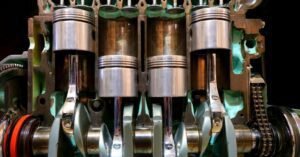

As a driver or car owner, one of the most stressful things you can experience is an engine misfire at idle. When a vehicle runs rough at a stoplight, shakes at a drive-thru, or stumbles while sitting in Park, it’s more than an annoyance—it’s your engine telling you something is not happening correctly inside one or more cylinders.
If your engine misfires, the smartest move is to identify the underlying cause as soon as possible. A misfire that feels “minor” today can become a much bigger—and much more expensive—problem tomorrow. Left unresolved, misfires can damage your catalytic converter, reduce fuel economy, create hard-start problems, trigger stalling, and accelerate wear inside the engine.
What causes engine misfires? What are the symptoms, and what should you do if your engine misfires? This guide answers those questions in a practical, expert-driven way. You’ll learn what a misfire really is, why idle misfires are common, the most likely root causes, how to interpret symptoms, and how to troubleshoot systematically without replacing parts blindly.
Misfire at Idle
Generally, a misfire is a condition where one or more cylinders fail to contribute proper power because combustion is incomplete or does not occur when it should. The driver experience varies from subtle to severe, but it typically includes a rough idle, hesitation, and sometimes a noticeable “skip” or stumble you can feel through the seat and steering wheel.
A misfire leads to slower acceleration or a brief loss of power because the engine is no longer firing evenly across all cylinders. At idle, this often feels worse than you’d expect: the engine shakes, RPM may fluctuate, and the vehicle can feel unstable—especially on four-cylinder engines where each cylinder’s contribution is a larger percentage of total output.
An engine misfire at idle can be the result of an incorrect air-fuel mixture, a faulty oxygen sensor, vacuum leaks, or even a faulty catalytic converter. Misfires can also occur when a fuel injector needs cleaning or when fuel delivery is inconsistent.
During a misfire, the check engine light may flash to indicate possible catalyst damage. The engine may lack power, causing a buck or jerk, and the idle may become rough or unstable. If the light is flashing rather than steady, treat it as urgent—your vehicle is warning you that unburned fuel may be reaching the catalytic converter.
At a fundamental level, there are three basic things your vehicle’s engine needs for full-cylinder combustion: spark, compression, and the correct fuel/air mixture. If one of these is missing or significantly out of range, combustion in that cylinder will be incomplete (or may not happen at all), and that cylinder will produce little or no power.
That “three requirements” framework is the backbone of misfire diagnosis. Most misfire problems can be traced to one of these areas—or to a control issue (sensor/ECU decision-making) that disrupts one of them.
Why Idle Misfires Are So Common (and Why They Feel Worse)
Many owners ask an excellent question: “Why does it misfire mostly at idle?” The reason is that idle is the most sensitive operating condition for combustion stability.
At idle, the engine is running with:
- Low RPM (less inertia to smooth out combustion events)
- Low airflow (small vacuum leaks become a big percentage of total intake air)
- Low fuel demand (minor fueling errors can push the mixture too lean to ignite reliably)
- Higher sensitivity to ignition weakness (spark plugs and coils that are marginal can misfire more easily)
In short: idle magnifies small problems. A tiny vacuum leak that barely matters at highway speeds can create a lean misfire at idle. A slightly weak coil might still fire under some conditions but fail consistently when the engine is hot and idling. Understanding this helps you diagnose smarter—because the fact that it “drives fine once I’m moving” doesn’t eliminate real faults. It often points you toward specific ones.
What are the Common causes of Engine Misfires?
Below are the most common causes of misfires—especially misfires that show up at idle. The list is not random; it maps directly to the three combustion requirements (air/fuel, spark, compression) and the control systems that manage them. The best results come from diagnosing in a structured order instead of guessing.
Incorrect air-fuel mixture
A primary cause of engine misfires at idle (but sometimes not under load) is an incorrect air-fuel mixture. What typically happens is this: your car drives “mostly fine,” but you notice a slight stumble, shake, or uneven rhythm when idling.
A faulty oxygen sensor is a major contributor because it influences fuel trim decisions. If the ECU is receiving bad feedback—or if it’s reacting to a real condition such as vacuum leaks—the engine can run too lean (common at idle) or too rich (less common, but possible), either of which can disrupt combustion stability.
Expert diagnostic clue: Lean idle misfires often improve when you slightly raise RPM (for example, in Neutral with a gentle throttle input) because airflow increases and the impact of small leaks drops proportionally.
Gasket/vacuum lines leak
If the gasket between the intake manifold and the cylinder head begins to leak, it can create a lean air-fuel mixture because extra air enters the engine without being measured correctly. Vacuum line leaks have a similar effect. The ECU thinks it is delivering fuel for a certain amount of air, but the engine is actually ingesting more air than expected, pushing the mixture lean and increasing misfire likelihood at idle.
Vacuum leaks are especially common at idle because manifold vacuum is high, so even small openings can pull in meaningful air. Common leak points include cracked hoses, loose clamps, PCV system issues, throttle body gaskets, intake manifold gaskets, and brake booster lines.
Expert diagnostic clue: Vacuum leaks frequently create high or unstable idle, hissing sounds, and fuel trims that are strongly positive (the ECU adds fuel to compensate).
Failed or dirty fuel injectors
If a fuel injector is faulty or restricted, it may deliver either too little fuel (lean condition) or too much fuel (rich condition) into a cylinder. Either direction can cause a misfire. A dirty injector often shows up as a cylinder-specific misfire code because one cylinder is not receiving the same fuel volume or spray pattern as the others.
Injector problems are often misunderstood. The injector may still “click,” but its flow can be uneven. Deposits can distort the spray pattern, making fuel atomization poor, especially at idle when airflow is low and the mixture is already sensitive.
Expert diagnostic clue: If you have a cylinder-specific misfire (like P0302 for cylinder 2), and ignition parts check out, injectors become a high-probability suspect—especially on high-mileage engines or engines with known carbon/deposit issues.
Low fuel pressure
When fuel pressure is low, the engine may not receive the correct fuel quantity across all cylinders, especially during transitions (idle to throttle) where demand changes quickly. The fundamental cause of low fuel pressure can involve the fuel filter, fuel pump, fuel pressure regulator/control, wiring supply to the pump, or a pressure sensor issue depending on the system design.
Low fuel pressure can create misfires at idle, under load, or both, depending on how severe the pressure loss is and how the ECU compensates. Some vehicles will set lean mixture codes alongside misfire codes.
Expert diagnostic clue: If misfire worsens under acceleration and fuel trims are high positive, fuel pressure testing is a priority. If misfire is only at idle, fuel pressure can still be the culprit—but vacuum leaks and injector issues often rise higher on the probability list.
Engine sensor failure
Modern engines are highly dependent on sensor inputs. A bad MAP sensor, MAF sensor, or oxygen sensor can cause incorrect fueling decisions, leading to air-fuel imbalance and misfires. If the ratio of air to fuel is off—even if spark and compression are fine—combustion can become unstable at idle.
A failing throttle position sensor can also contribute to drivability problems and, in some cases, misfiring under acceleration. While TPS failures are less commonly a direct cause of idle-only misfires, they can create erratic throttle signals that affect engine management and smoothness.
Expert diagnostic clue: Sensor failures often create “implausible” data. Live data comparison (MAF readings, MAP vacuum values, O2 response, fuel trims) can reveal a sensor that’s lying—even if it hasn’t triggered a dedicated sensor code yet.
Low engine compression
Compression is essential for proper combustion. If an internal engine problem reduces compression—such as worn piston rings, burned valves, leaking valve seats, head gasket issues, or incorrect valve timing—the cylinder cannot build the pressure needed for reliable ignition and power. Low compression can cause misfires at idle, under load, or throughout the RPM range depending on severity.
Compression issues are often the most expensive category, but they are also often misdiagnosed because owners jump to spark plugs and coils first (which is reasonable). If ignition and fueling check out but the misfire persists, a compression test (and often a leak-down test) becomes the next intelligent step.
Expert diagnostic clue: A consistent misfire on the same cylinder that does not respond to ignition component swaps is a strong reason to confirm compression and mechanical condition.
Bad spark plugs
A bad spark plug may fail to ignite the air-fuel mixture reliably, resulting in a misfire. This often becomes more noticeable during acceleration (misfire under load) because cylinder pressures rise, requiring stronger ignition performance. However, spark plug issues can absolutely cause misfires at idle too—especially if plugs are fouled, worn, incorrectly gapped, or contaminated by oil or coolant.
Expert diagnostic clue: Pulling and inspecting spark plugs can tell a story. Ash deposits, oil fouling, wet fuel smell, or coolant contamination all point toward different underlying issues.
Failed ignition coil
If an ignition coil can no longer produce a strong spark, a misfire is often the outcome. Coil failures can be intermittent (heat-related) or consistent. Coil-on-plug systems are especially prone to cylinder-specific misfire codes because each cylinder has its own coil and boot.
Expert diagnostic clue: A fast and effective test on many engines is to swap the suspected coil with a coil from another cylinder and see if the misfire code “moves” with the coil. If it does, you’ve identified the culprit with minimal cost.
Faulty catalytic converter (and why it’s often a result, not a cause)
A faulty catalytic converter can contribute to drivability issues if it becomes restricted (exhaust backpressure increases and the engine can’t breathe properly). However, it’s critical to understand the relationship between misfires and catalytic converters: misfires often damage catalytic converters more frequently than catalytic converters cause misfires.
When a cylinder misfires, raw fuel can enter the exhaust. The catalytic converter is designed to treat exhaust gases, not burn excess fuel. Over time (or sometimes quickly), this can overheat and melt the catalyst substrate, causing restriction and compounding the problem.
Expert diagnostic clue: If your check engine light is flashing during a misfire, reduce driving as much as possible until diagnosed. A catalytic converter replacement can cost far more than spark plugs, a coil, or a small intake leak repair.
Common Signs that your Engine is Misfiring at Idle
Misfires don’t always announce themselves with one obvious symptom. Often, they show up as a pattern of small clues. Here are the most common signs—reordered to reflect how technicians prioritize what you should pay attention to first.
- A flashing or illuminated check engine light. The check engine light activates when the ECM detects a recurring problem. If it flashes, treat it as urgent because it can indicate catalyst-damaging misfires.
- Rough idle and unusual vibration. Another sign of misfire at idle is vibration. If you observe serious, unusual vibration in your vehicle while idling, that can indicate one or more cylinders are not contributing evenly.
- A change in engine sound. An engine misfire can trigger a noticeable change in the sound of your vehicle’s engine. If you hear an uneven “putt-putt,” irregular rhythm, or a consistent stumble, it may be misfiring.
- Stalling at idle. If your vehicle stalls while idling, especially after warming up, a misfire (or the condition causing it) may be severe enough that the engine can’t maintain stable combustion.
Additional expert signs to watch for: fuel smell at the tailpipe, RPM hunting, poor cold start behavior, reduced fuel economy, and hesitation when transitioning from idle to light throttle. These are not “extra drama”—they are clues that can point you toward the correct diagnostic path.
What You Should Do First (Triage Before Troubleshooting)
Before you start checking parts, do a quick triage. This keeps you from accidentally causing more damage or misreading symptoms.
- Check whether the check engine light is flashing. If flashing, reduce driving and prioritize diagnosis immediately.
- Listen and observe. Does it misfire only at idle, or also under acceleration? Is it worse cold or hot?
- Confirm maintenance basics. Overdue plugs, dirty air filter, and old fuel can make diagnosis harder.
- Plan to read codes. Guessing is expensive. Codes and live data are your best leverage.
This triage step is not “extra.” It helps you decide whether the vehicle should be parked until repaired and prevents catalytic converter damage in severe misfire situations.
Steps You Can Take When Your Engine Misfires
Below are practical diagnostic steps you can take. They are presented in a smarter order than the typical random internet checklist—starting with information gathering and moving toward hands-on testing. These steps preserve the original guidance while adding the safety notes and clarity a technician would emphasize.
- Use an OBD II scanner to identify the misfiring cylinder and related codes. The scan can reveal the specific cylinder affected (for example, P0301 = cylinder 1 misfire) and may also reveal sensor or mixture-related faults. This is your starting point because it prevents wasted effort.
- Check for vacuum leaks. A flammable spray is sometimes used to help detect a vacuum leak while the engine is idling: spray around suspected leak points (like the intake manifold area) and observe whether engine speed changes. If RPM rises, it can indicate a leak. Safety warning: flammable sprays can ignite on hot components. Use extreme caution, keep a fire extinguisher nearby, and consider safer methods such as a smoke test when possible.
- Check fuel pressure using a gauge. Connect the gauge, start the engine, and compare the reading with factory specifications. If pressure is low or unstable, inspect the fuel pump, filter, and pressure control system.
- Clean the fuel injector (when indicated). Injector cleaning can help if a cylinder is running lean due to flow restriction or poor spray pattern. If symptoms persist, professional injector flow testing may be needed.
- Remove the ignition coil and spark plug on the affected cylinder. Inspect and clean them if appropriate. Replace if worn, cracked, oil-fouled, or otherwise damaged. If your engine uses coil-on-plug, a coil swap test can confirm a weak coil quickly.
- Carry out a compression test. Use a compression tester to confirm mechanical health. If you find low compression, inspect valves, timing components, pistons, and other internal engine factors. Mechanical issues are not as common as ignition issues, but they must be ruled out when a misfire won’t respond to normal fixes.
Expert note: The biggest mistake most people make is doing these steps without a plan. Don’t replace multiple parts at once “just in case,” because you’ll lose the ability to confirm what actually fixed the misfire.
A Professional Misfire Diagnosis Workflow (Spark, Fuel, Compression)
If you want to troubleshoot efficiently, use the same decision logic professionals use. Misfires become much easier when you treat diagnosis as a process rather than a guess.
Step 1: Confirm the type of misfire (random vs cylinder-specific)
Most modern vehicles store misfire codes like these:
- P0300: random/multiple cylinder misfire detected
- P0301–P0308: cylinder-specific misfire (the last digit corresponds to the cylinder number on many engines)
A random misfire often points toward mixture problems (vacuum leaks, MAF issues, fuel pressure, exhaust restriction). A cylinder-specific misfire often points toward ignition or an injector problem—or mechanical compression issues in that cylinder.
Step 2: Decide whether it’s mostly an idle problem or a load problem
This distinction matters because it helps narrow the suspects:
- Misfire mostly at idle: vacuum leaks, injector imbalance, incorrect air/fuel corrections, EGR issues (on some engines), carbon buildup on intake valves (common on direct injection), or borderline ignition components.
- Misfire under load/acceleration: spark plugs, coils, fuel pressure that collapses under demand, or compression that fails under higher cylinder pressure.
The original guide mentioned that incorrect air-fuel mixture is a primary cause of misfires at idle but not under load, and that is often true—especially with small vacuum leaks and oxygen sensor/fuel trim issues.
Step 3: Use live data to validate what the engine is “thinking”
If you have access to live data, focus on the values that most directly relate to idle stability:
- Short-term fuel trim (STFT) and long-term fuel trim (LTFT): high positive trims suggest the engine is running lean (often vacuum leak). High negative trims can suggest rich fueling or sensor bias.
- MAF readings at idle: a faulty MAF can misreport airflow, disrupting fueling.
- MAP/vacuum values: abnormal manifold pressure at idle can indicate leaks or timing issues.
- Misfire counters (if available): some scan tools show which cylinder accumulates misfires and under what conditions.
Live data doesn’t replace mechanical testing, but it dramatically reduces guesswork. It’s the difference between “I think it’s running lean” and “fuel trims confirm it’s running lean at idle, so I’m checking for unmetered air.”
Step 4: Spark checks (because they’re fast and often successful)
Ignition checks are often the best early step because they are quick, relatively inexpensive, and commonly responsible for misfires. If your engine is due for plugs, start there. If it has coil-on-plug, a coil swap test is a strong diagnostic shortcut.
When you remove spark plugs, take a moment to “read” them:
- Dry, light tan/gray: often normal
- Wet with fuel: misfire may be ignition-related (fuel is present but not igniting)
- Oily: possible oil control issue (rings, valve seals)
- White crusty deposits: possible overheating, coolant, or additive-related deposits
This plug inspection is not “extra detail.” It provides real diagnostic direction, especially if only one cylinder shows abnormal deposits.
Step 5: Fuel checks (pressure and injector behavior)
Fuel-related misfires can be subtle. Pressure might be “okay” at idle and drop under load, or injectors might deliver uneven flow only under certain conditions. If you suspect fuel pressure, test it with a gauge and compare it to factory specifications. If you suspect injectors, consider whether the misfire is cylinder-specific and whether cleaning or swapping injectors is practical for your engine design.
Also consider fuel quality. Old fuel, water contamination, and incorrect octane can contribute to poor combustion stability—especially in engines that are sensitive to knock or require specific fuel grades.
Step 6: Compression and leak-down checks (when the misfire won’t quit)
If your misfire remains after spark and mixture checks, confirm compression. A compression test tells you whether the cylinder can build pressure. A leak-down test (more advanced) tells you where pressure is escaping: intake valve, exhaust valve, rings, or head gasket path.
Mechanical issues are not always common, but they are always serious. The sooner you confirm them, the sooner you can make a realistic decision about repair strategy.
Safety Note: When a Misfire Becomes an Emergency
Not every misfire is equally urgent. But there are situations where you should stop driving and address it immediately:
- Flashing check engine light (possible catalytic converter damage)
- Strong fuel smell (raw fuel reaching exhaust; fire risk in extreme cases)
- Severe shaking (risk of stalling; can be unsafe in traffic)
- Misfire with overheating (risk of head gasket and engine damage)
If you must move the vehicle, keep it minimal: avoid high RPM, avoid heavy throttle, and avoid long drives until it’s diagnosed.
FAQ
Can I drive a misfiring engine at idle?
No, do not drive while your engine is misfiring. It can create several other problems like low fuel economy, car stalling, and engine damage. It can also damage the catalytic converter—especially if the check engine light is flashing.
What are types of engine misfires?
Generally, there are different types of engine misfires. One is the dead miss misfire, where no combustion takes place at all in the affected cylinder. Another is a partial misfire, where combustion occurs but is weak and incomplete. The third type is the intermittent misfire, where combustion occurs inconsistently—only under certain conditions or randomly at intervals.
From a diagnostic perspective, intermittent misfires are often the trickiest because they can be heat-related, vibration-related, or tied to specific operating modes (idle, decel, light load). Dead misses are often easier to isolate because the failure is persistent and repeats reliably.
Why does my misfire disappear when I rev the engine?
This is common with small vacuum leaks or minor fueling imbalance. At higher RPM, total airflow increases, so the leak becomes a smaller percentage of intake air. The mixture becomes more stable and the misfire can feel “gone,” even though the underlying problem is still present.
Can a misfire be caused by something as simple as a dirty air filter?
A severely restricted air filter can contribute to poor performance, but it’s less commonly the sole cause of a true misfire at idle. That said, maintenance matters: a dirty filter can worsen mixture control and make other weaknesses (like marginal ignition) more obvious.
Is it always spark plugs or coils?
No. Spark plugs and coils are common, but misfires can come from vacuum leaks, injectors, fuel pressure problems, sensor errors, timing issues, or low compression. The smartest strategy is to confirm with codes, data, and targeted testing rather than assuming.
Final Thoughts
A misfire at idle occurs when an engine’s cylinder cannot produce proper power during the combustion process. The problem is often caused by vacuum leaks, low compression, low fuel pressure, incorrect air-fuel mixture, failing sensors, injector problems, worn spark plugs, or weak ignition coils.
If you suspect an engine misfire—or your car displays any of the signs covered above—address it as soon as possible. The longer a misfire continues, the more likely it is to create additional problems, including catalytic converter damage and severe engine wear.
The most cost-effective mindset is also the most professional one: diagnose first, replace parts second. Read codes, verify the misfire pattern, and test the systems that support combustion—spark, fuel/air, and compression. When you approach misfires systematically, you’ll fix the real issue faster and avoid spending money on parts your engine never needed.