
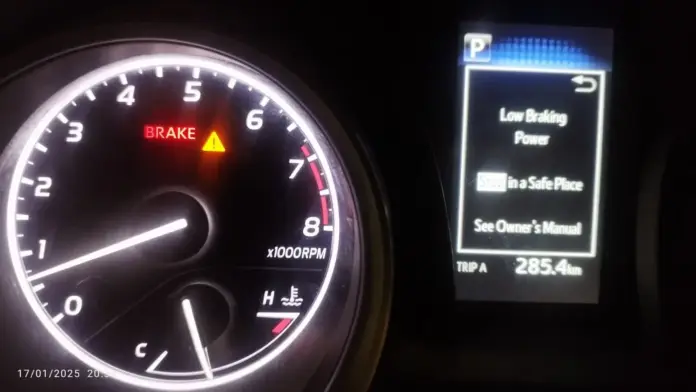
Skidding out of control on the freeway is every driver’s worst nightmare; and it’s exactly why brake problems deserve immediate attention. If you notice that your Toyota’s braking power feels noticeably reduced, the vehicle takes longer to slow down, or the pedal response is inconsistent, you should treat the situation as a safety-critical issue, not a “wait until next service” concern. In many cases, low braking power is linked to a hydraulic issue such as a leak in one of the brake pipes/lines, but other conditions; air in the system, contaminated fluid, worn components, or even electronic control issues; can create the same frightening symptom. Either way, the correct move is to have your brakes inspected and repaired as soon as possible to avoid a collision that could injure you, your passengers, or other road users.
It’s worth emphasizing a key point that many drivers learn too late: modern braking systems are designed with redundancy and safety logic, but they are still governed by physics. If the system cannot generate or maintain hydraulic pressure, or if friction components are too worn to convert that pressure into stopping force, your Toyota will not stop the way you expect; even if there are no warning lights on the dash. Brakes are not an area where you “test your luck.” When braking power is low, your safe following distance must increase dramatically, and at highway speeds the difference between normal stopping and delayed stopping can be the difference between a near-miss and a serious crash.
This guide explains why Toyota braking power can become low, how the problem is typically diagnosed, what repairs commonly solve it, and what brake system maintenance practices reduce the odds of the issue returning. While this article is written in a way that any driver can understand, the perspective is practical and technical; focused on real causes, real symptoms, and safe decision-making.
Why is my Toyota’s braking power low and how can it be fixed?
Low braking power is not an issue that drivers want; because it changes the most important “predictable behavior” of your vehicle: the ability to slow and stop on demand. When a Toyota vehicle has low braking power, it generally takes longer for the brakes to react when the driver pushes down on the pedal. In practical terms, the car feels like it needs more pedal effort, more pedal travel, more time, or all three, to produce the same deceleration that used to happen effortlessly.
When this happens, the results can be severe. If braking power is low, the brakes may not stop the vehicle in time, and the driver can crash into the bumper of the car in front of them. In pedestrian-rich environments; parking lots, school zones, crosswalk areas, and city streets; reduced braking power can also lead to tragic outcomes because you may not have the same stopping ability to prevent impact at the last second.
Here is the most helpful way to think about “low braking power”: it’s not a single failure mode. It is a symptom produced when the braking system cannot do one (or more) of the following reliably:
- Build pressure (hydraulic pressure generation; master cylinder function).
- Hold pressure (no leaks, no internal bypassing, no trapped compressible air).
- Transmit pressure (lines and hoses clear, no restrictions, no collapse).
- Convert pressure to friction (pads and rotors in good condition, calipers moving correctly).
- Coordinate braking electronically (ECM/ABS/brake control logic behaving correctly).
A number of issues could affect your brakes and cause low braking power. Some of these issues are:
● The brake lines are clogged – Debris and dirt sometimes get into the brake hose lines.
Clogging or restriction is less common than leaks or air intrusion, but it can happen; especially in vehicles that have seen corrosion, fluid neglect, or prior brake work where contamination entered the system. A restriction can reduce how quickly pressure reaches a caliper, which can feel like delayed response or uneven braking. In severe cases, a restriction may cause brakes to drag or apply unevenly.
Luckily, the corrective approach is often straightforward. In many cases, you can flush out the old fluid and replace it with new fluid, and the impurities should be carried out with the old fluid; especially if the contamination is primarily moisture and degraded fluid. If there is actual debris or internal hose collapse, a mechanic may recommend replacing the affected hose/line, since flushing alone may not remove physical material or restore the internal structure.
● There is air in the brake lines – there’s an easy way to tell if the air is in the brake lines. Gently squeeze the lines between your thumb and forefinger. If the lines are malleable and they feel soft and not rigid, then you will know there is air in the system.
Air in the brake system is a classic cause of a “spongy” pedal and reduced braking power because air compresses while brake fluid does not (at least not in normal braking conditions). When you press the pedal, part of your force goes into compressing air bubbles rather than pushing fluid to the calipers. That means less clamp force at the pads and a longer stopping distance.
Just like the clogged brake lines above, a common fix is to flush/bleed out the old brake fluid to remove the air. Then, you can refill with fluid (fresh fluid is often recommended), ensuring the system is properly bled so no air pockets remain. Bleeding must be done correctly; often in a sequence; so the system is cleared effectively. A mechanic will typically confirm a firm pedal and consistent braking response after bleeding.
● Issues with the master cylinder – When you use your brakes, the hydraulic system produces hydraulic pressure, which causes the brakes to stop the car. There’s a device called a master cylinder that generates this pressure. If the master cylinder is damaged or old, it will not be able to create the same amount of pressure and brake fluid leak out of it.
The master cylinder is essentially the heart of the hydraulic brake system. If it fails externally (leaking at seals) or internally (bypassing pressure inside the cylinder), the vehicle may still brake, but performance becomes unpredictable and often weak. Many drivers describe this as “the pedal sinks” or “I have to pump the brakes.” A master cylinder issue can also appear after long-term fluid neglect, because moisture-contaminated brake fluid accelerates corrosion and seal wear.
You will have to replace it. The average master cylinder costs $400 to $550.
Cost will vary by model, region, and labor rate, but the key idea remains: a failing master cylinder is not a component you “monitor for a while.” It is a safety component that should be repaired promptly because hydraulic pressure generation is fundamental to braking capability.
● An ECM glitch – The ECM or the Electronic Control Module is a system within a Toyota vehicle that controls the braking system. It will either lower or raise the braking power in tandem with how hard or soft the driver presses down on the brakes.
On many modern Toyotas, braking is not purely mechanical and hydraulic; it is also managed and refined by electronic systems. Depending on the vehicle, this can include ABS (anti-lock braking), brake assist, traction control integration, stability control, and in some cases electronically coordinated braking behavior. If the ECM or related control modules experience a glitch, you can see abnormal brake feel, delayed engagement, warning messages, or inconsistent response.
Sometimes, the ECM module glitches out in malfunctions. In order to fix this, a mechanic will have to restart the computer system along with the ECM
In practice, technicians may perform system resets, software checks, diagnostic scans, and if needed, reinitialization procedures. The key is that electronic issues should be verified with diagnostics rather than guessed; because hydraulic failures and friction failures can feel similar at the pedal but have very different solutions.
● There is a leak in the hydraulic system (more below)
Among all possible causes, this is the one that deserves the highest urgency. Brake fluid leaks can progress from “mildly reduced braking” to “no braking” faster than many drivers expect, especially if the leak worsens under pressure or a corroded line splits further.
Beware: leak in the hydraulic system
One reason that is far more dangerous than all of the other issues is not having enough brake fluid in the hydraulic system. Leaking brake fluid is no laughing joke or light issue. A brake fluid leak is a worst-case scenario because the braking system depends on sealed fluid pressure. If the seal is broken, pressure drops, and your ability to stop can collapse.
You need to contact a mechanic that you trust and tell them to pick up the vehicle. If the size of the hole that the brake fluid is leaking out of is small, you may not notice your vehicle losing braking power for a few days. That “slow fade” is what makes leaks so dangerous: drivers become accustomed to the gradual change until a sudden threshold is crossed and braking performance drops sharply.
In any case, any vehicle that has brake fluid leaking out of its pipes should not be on the road. It is extremely dangerous, and, at some point, the brakes will not work at all.
By driving a vehicle that is leaking brake fluid, you are not only putting yourself in danger, but you are also putting other drivers and pedestrians in danger.
If you suspect a leak, treat it as an emergency. Practical warning signs include:
- A brake pedal that feels unusually soft or sinks toward the floor.
- The brake warning light (or combined warnings) appearing on the dash.
- Visible fluid under the car near wheels or along the chassis line path.
- A sharp drop in the brake fluid level in the reservoir.
- Needing to pump the brakes to get stopping power.
Brake fluid is often clear to amber when fresh and can darken over time. It can feel slick, and it will damage some painted surfaces. If you see a suspicious fluid under your Toyota and braking performance feels reduced, do not try to “drive carefully home.” The safest option is towing.

It is also helpful to understand why leaks happen in the first place. Common leak sources include corroded metal brake lines (especially in regions with road salt), failing flexible hoses, worn caliper seals, leaking master cylinder seals, or damaged fittings after prior brake work. A professional inspection typically traces the leak to its origin, then repairs or replaces the compromised component and verifies system integrity through bleeding and brake performance checks.
What are some other braking issues that you should have checked out?
Since you are at the mechanic already, you should ask them to check out the rest of your braking system and see if there are other issues developing. Brake problems often occur as a “system story” rather than a single isolated failure. For example, old fluid can accelerate master cylinder wear; worn pads can damage rotors; seized caliper pins can cause uneven pad wear; and poor alignment can make braking stability feel worse than it should.
Have them check the brake pads, the vehicle’s alignment, and empty out the brake fluid and replace it with brand new fluid. Even if the immediate issue is repaired, confirming the condition of the remaining brake components reduces the chance of another brake-related scare in the near future.
If you haven’t had your car service in a while, then it is likely that they will probably tell you it is time for your brake pads to be replaced. Brake pads need to be replaced every 4,000 to 7000 miles.
That replacement interval can vary significantly depending on driving style, terrain, traffic conditions, and vehicle weight, but the essential message remains: brake pads are wear items, and ignoring them for too long can reduce braking power and create more expensive damage. A driver who frequently drives in stop-and-go traffic, hilly regions, or carries heavy loads may wear pads faster than someone who drives mostly on open highways.
In addition to pads and alignment, ask for these checks while the vehicle is already in the shop:
- Rotor condition (thickness, scoring, heat spots, warping).
- Caliper function (seized pistons, stuck slide pins, uneven pad wear).
- Brake fluid condition (color, moisture contamination, proper type).
- Brake hose integrity (cracks, bulges, internal collapse).
- ABS/stability system scan (codes that may not trigger a visible warning).
These checks do not replace the urgent repair if a leak exists, but they help ensure the system is healthy after the repair, and they reduce the likelihood of repeat symptoms.
How to care for your Toyota vehicle’s brakes and braking system
Now that you have taken your vehicle to the mechanic and they have fixed the leak and checked over the rest of your vehicle’s braking system, you should know how to properly care for your brakes. Good brake care is not complicated, but it does require consistency. The braking system is one of the few areas of a car where neglect can shift from “minor inconvenience” to “life-threatening risk” without much warning.
Below are the core maintenance practices referenced in this guide; expanded with expert context so you understand not just what to do, but why it matters.
Brake pads – As we mentioned above, you should have your brake pads replaced every 4,000 7,000 miles.
Brake pads are friction materials designed to be consumed gradually. Their job is to clamp against the rotors and convert vehicle kinetic energy into heat. When the pads are too thin, the braking system loses its “buffer.” Heat builds up faster, braking becomes less consistent, and the risk of damaging rotors increases. Worn pads also increase the chance of metal-to-metal contact, which can severely reduce braking efficiency and cause expensive rotor damage.
When you press down on the brakes, you activate the brake pads, and they apply pressure to each rotor connected to each wheel.
As they press down on the rotor, the rotor slows and the wheels slow. This is how you slow down a vehicle when you come to a stop.
If you wait far too long to replace your brake pads, the pads can wear out and may not be able to slow down the rotor effectively, which in turn means the tires cannot slow the vehicle as expected.
Expert recommendation: do not wait until you hear grinding. Grinding usually indicates that friction material is gone and the pad backing plate is contacting the rotor. At that stage, performance can be compromised and repair costs rise. If you hear squealing, that may be the wear indicator warning you before you reach the grinding stage.
Flush the brake fluid every 25,000 miles – brake fluid is a special type of fluid designed to work inside a vehicle’s hydraulic system. One characteristic of brake fluid is that it attracts moisture.
Brake fluid moisture absorption is normal over time, but it is not harmless. Water contamination lowers the boiling point of the fluid, which can cause brake fade under heavy braking because the fluid can begin to boil and produce compressible vapor. Moisture also encourages corrosion inside metal lines and components, which can create leaks and reduce system reliability.
If there is too much moisture in the hydraulic system, it can corrode the metal parts of the system and the stopping power of the brakes will not be as powerful.
Change the brake fluid every 25,000 miles to keep the fluid fresh and moisture-free. If the brake fluids are milky or cloudy, then change the fluid, regardless of mileage.
This advice is especially important if the vehicle operates in humid climates, experiences frequent heat cycles (mountain driving, towing, stop-and-go traffic), or is stored for long periods. A fluid flush is relatively affordable compared to the cost of replacing corroded lines or a failed master cylinder. It is one of the simplest maintenance actions that can significantly extend system life.
Additional habits that protect braking performance can be just as valuable as parts replacement. These habits include maintaining safe following distances (reducing the need for panic braking), avoiding riding the brakes downhill (use engine braking where appropriate), and responding quickly to early symptoms such as vibration, pulling, squeal, or soft pedal feel. Early action is almost always cheaper and safer than waiting for a failure.
Torque and installation correctness also matters more than many drivers realize. Brake components are safety-critical, and incorrect torque on caliper bracket bolts, caliper slide pins, or wheel lug nuts can lead to noise, uneven wear, or dangerous component loosening. If you perform any brake work yourself, always follow manufacturer torque specifications and procedures; and if you are not confident, use a professional mechanic.
Conclusion
It is important to take care of your brakes and have them checked when the manufacturer recommends. If you notice your brakes are not as strong as they used to be, there could be an issue in the hydraulic system. If you see a leak, do not drive your car anywhere.
Call the mechanic and they will come to pick up your car. If you don’t fix the leak in the hydraulic system, sooner or later you will not have any braking power at all.
To summarize the expert approach: low braking power is a symptom that should trigger immediate, methodical action. Start with safety; avoid driving if a leak is suspected. Then confirm the likely causes: fluid condition and level, air in the system, master cylinder health, and the integrity of lines and hoses. Finally, use the repair moment as an opportunity to assess the broader brake system; pads, rotors, alignment, and electronic control behavior; so you restore not only braking function, but braking confidence. Brakes are not a “later” problem. They are a “now” problem, because the next time you need them may be at highway speed with no second chance.

