
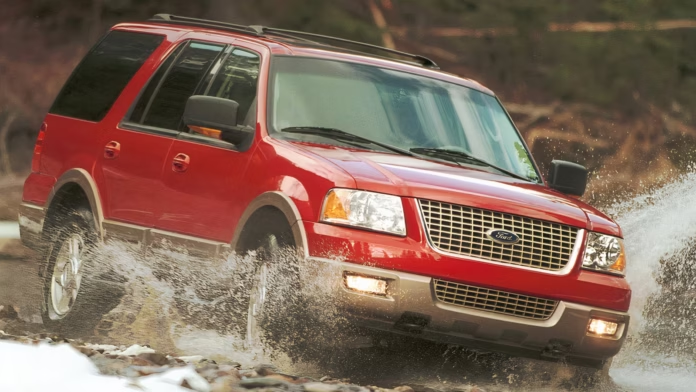
If you’re dealing with Ford Expedition transmission problems, you’re in very familiar territory; because you’re far from the only owner to run into them. Across multiple model years and transmission generations, drivers have reported symptoms like erratic shifting, hesitation, harsh engagement, and occasional loss of power. That combination can be more than frustrating; it can undermine confidence in a vehicle that’s otherwise built for long road trips, towing, and family-duty reliability.
The most helpful mindset is to treat transmission issues like a diagnostic puzzle rather than a guessing game. Automatic transmissions are controlled by fluid pressure, friction components, and software logic. A single symptom; like a clunk on a downshift; can be caused by something minor (fluid condition, a calibration update) or something more serious (torque converter wear, internal clutch damage). Understanding the common failure patterns on the Expedition helps you separate “monitor it” concerns from “fix it now” problems, and it also helps you communicate clearly with a dealership or independent transmission shop.
In this guide, I’ll walk you through what Ford Expedition owners tend to experience, why those symptoms show up, and what practical steps usually lead to a correct diagnosis and durable repair. You’ll also learn how Ford’s Technical Service Bulletins (TSBs), warranty coverage, and dealership support fit into the picture; because in many cases, the fastest path to relief is knowing what documentation exists and how to use it.
Stay with me: you’ll come away with a clear way to identify early warning signs, reduce the risk of repeat failures, and make smarter decisions about repair timing; often saving both money and downtime.
The Ford Expedition Overview
The Ford Expedition is a full-size SUV designed for people who need genuine space, real towing capability, and long-distance comfort in one package. It has earned a strong following because it offers three-row practicality without feeling like a stripped-down work vehicle. In many households it serves as the “do-everything” platform; school runs during the week, road trips on weekends, and towing boats or campers when the calendar opens up.
Its popularity comes from the way it blends a large cabin, strong payload/towing ratings, and confident highway manners. Historically, Expeditions have been paired with durable engines and truck-derived drivetrains. In more recent years, Ford’s shift toward advanced multi-gear automatics has aimed to improve fuel economy and drivability, but it also introduced new complexity. And complexity matters: more gears, more software logic, tighter fluid specifications, and more sensors all mean a higher requirement for correct maintenance and accurate diagnosis when symptoms appear.
In other words, the Expedition can be an excellent long-term SUV; yet the transmission becomes a critical “make or break” system for owner satisfaction. Understanding where the Expedition came from, and how its transmission technology evolved, makes it easier to understand why certain complaints show up in certain years.
Model Heritage and Popularity
The Ford Expedition debuted in 1997 and quickly became a staple in the full-size SUV segment. Early Expeditions earned their reputation through straightforward formulas: body-on-frame construction, generous interior volume, and strong V8 power. For many buyers, it delivered a “truck strength, family comfort” balance that smaller crossovers couldn’t match; especially when towing or hauling full loads.
Over time, the Expedition evolved with changing buyer expectations. Interior technology improved, safety features expanded, and Ford worked to make the platform more efficient without sacrificing capability. That’s why later model years introduced smarter powertrain strategies, including more advanced automatic transmissions designed to keep the engine operating in a more efficient RPM range.
Trim strategy has also helped keep the Expedition relevant. Options such as the XLT and Limited have traditionally offered clear steps up in comfort, convenience, and premium features. That variety matters because Expedition buyers are not one type of customer: some want a comfortable long-distance family vehicle, while others need a tow-capable SUV that can survive heavy use. Ford’s approach has been to cover both ends of the spectrum; family-friendly refinement and rugged utility; within the same model line.
It’s also worth noting that popularity can amplify complaint visibility. When a vehicle sells in large numbers, you’ll naturally see more total reports of problems. The key is not just how many complaints exist, but whether the issues follow repeatable patterns; such as consistent symptoms, common mileages, and similar repair outcomes. With Expeditions, transmission complaints often do follow recognizable themes, which makes them easier to diagnose when you know what to look for.
Transmission Overview in Ford Expedition
The Expedition’s transmission story is really a story of automotive evolution: fewer gears and simpler controls in early years, then a move toward more ratios and software-driven shifting strategy in modern generations. That shift wasn’t random; it was driven by fuel economy targets, emissions regulations, and customer demand for smoother performance across a wide range of conditions.
A major milestone arrived in 2018 with Ford’s adoption of the 10-speed automatic transmission in the Expedition lineup. On paper, a 10-speed design offers meaningful advantages: tighter gear spacing for better acceleration, more opportunities to keep RPM low at cruising speeds, and improved towing control by offering the “right gear” more often.
However, the tradeoff is that a 10-speed requires highly refined calibration. The transmission control module has to make rapid decisions about shift timing, torque converter lockup strategy, and adaptive learning. That means “software behavior” becomes part of the driving experience. A transmission may be mechanically healthy but still feel rough if it needs a calibration update, adaptive relearn, or fluid service performed correctly. Conversely, mechanical wear can sometimes masquerade as a software issue until proper diagnostics confirm what’s actually happening.
From a maintenance perspective, modern Expedition transmissions tend to be more sensitive to fluid specification and service method. Regular servicing; especially fluid changes at appropriate intervals for your driving style; can make a noticeable difference in shift quality and long-term durability. Owners who tow regularly, drive in mountainous terrain, or spend a lot of time in stop-and-go traffic should consider more frequent service than someone who mostly cruises highway miles.
It’s also important to keep expectations realistic. Even when operating normally, multi-gear automatics may shift more often than older transmissions. A driver used to a 4-speed or 6-speed may interpret normal 10-speed behavior as “gear hunting,” when in fact it may simply be the control strategy doing its job. The real red flags are consistent harsh engagements, repeated slipping, shuddering, delayed engagement, or warning lights; especially when symptoms are repeatable and worsening.
Despite occasional complaints, many owners do get excellent service life out of newer transmissions when maintenance is consistent and early symptoms are addressed promptly. The Expedition can absolutely deliver both power and refined handling; but it rewards owners who treat transmission care as a priority rather than an afterthought.
Common Transmission Problems in Ford Expeditions
Ford Expeditions, like many high-torque SUVs, can experience a range of transmission-related concerns. Some issues are relatively minor and solvable with routine service, while others point to component wear that requires professional repair. The most commonly discussed problems include slipping gears, unusual noises, torque converter complaints, and solenoid-related shifting errors. Understanding what each symptom usually means can help you act faster; and avoid unnecessary repairs.
Before diving into each problem, here’s an expert rule of thumb: the transmission is not just “gears.” It is a coordinated system of mechanical parts, hydraulic circuits, electronic solenoids, sensors, and control software. When one element falls out of spec; fluid level, pressure, or sensor feedback; the symptoms can look dramatic even when the root cause is straightforward. That’s why the goal is not to label the transmission “bad” immediately, but to identify the failure mode with evidence.
Below are the key complaint categories, what they often feel like, and what they typically require to fix correctly.
Transmission Slipping Issues
When a Ford Expedition transmission slips, drivers often describe it as a momentary “flare” in RPM, a delay in response when accelerating, or a sensation that the vehicle can’t decide which gear to hold. In practical terms, slipping occurs when the transmission’s internal clutches are not applying firmly enough to maintain the selected gear ratio under load. That loss of firm engagement can feel like a brief loss of power; even though the engine may still be producing torque.
In Expeditions equipped with the 10r80 transmission, some owners report slip-like behavior under certain conditions, especially during light throttle transitions or when the vehicle is warming up. Not every report is a mechanical failure; sometimes the behavior is tied to adaptive shifting logic or a fluid condition issue; but repeated or worsening slipping should always be taken seriously. When true slip is present, the friction material can overheat quickly, accelerating wear and increasing the chance of a costly rebuild if ignored.
Start your checks with the basics. Low fluid level is one of the most common contributors to slipping because the transmission relies on fluid pressure to apply clutches. If fluid is low due to a leak or improper service fill, the transmission may struggle to maintain consistent pressure; especially under load. Also consider fluid condition: burnt-smelling or dark fluid can indicate overheating or excessive wear particles, which can affect hydraulic control and clutch performance.
To protect the transmission, keep fluid at the proper level and follow a service schedule appropriate for how you use the vehicle. If slipping persists, do not “drive it until it fails.” Get professional diagnostics, because continuing to operate a slipping transmission often turns a manageable repair into a full rebuild scenario.
One more professional tip: make notes about when slipping occurs; cold vs. warm, uphill vs. flat roads, light throttle vs. heavy acceleration. These details are extremely helpful for technicians trying to replicate the issue and confirm whether it’s calibration behavior, torque converter control, a pressure problem, or internal clutch wear.
Unusual Noises During Operation
Unusual transmission noises are one of the most anxiety-inducing symptoms because they can sound expensive; and sometimes they are. Owners may report clunking, whining, grinding, or rattling that seems tied to shifting events, speed changes, or load transitions. A particularly concerning description from some users is a loud noise resembling metal chains striking each other, which suggests a harsh mechanical event or a component under abnormal stress.
From an expert standpoint, noises can come from several sources, and not all of them require a full transmission replacement. For example:
Clunking can be a symptom of harsh engagement (often related to pressure control or calibration), excessive drivetrain slack, worn mounts, or internal transmission wear. If the clunk consistently occurs during a particular shift (like a 3-2 downshift), it may point toward a specific clutch or valve body control condition.
Whining often correlates with fluid level/condition issues or pump/bearing concerns. A transmission pump that is aerating fluid due to low level can produce a distinct whine, especially when cold. A persistent whine that changes with gear selection can also suggest internal bearing wear, which should be diagnosed quickly.
Grinding is typically more serious and may indicate mechanical damage. If you hear grinding during shifts or under load, limit driving and schedule inspection immediately. Grinding suggests that something is no longer moving as intended, and continued operation can spread damage through the unit.
For troubleshooting, pay close attention to repeatability. Does the noise occur only during shifting? Only at low speeds? Only when towing? Only when the transmission is cold? Specific patterns help narrow the diagnosis. A technician may road test while monitoring data (such as commanded gear, turbine speed, and torque converter lockup status) to match the noise to an operating event.
If the noise is persistent, do not rely on hope. Get a mechanical inspection. Early action can mean the difference between replacing a smaller component and rebuilding an entire transmission assembly.
Problems with the Torque Converter
The torque converter is essential in an automatic transmission because it transfers engine power to the transmission input while allowing smooth starts and controlled torque multiplication. It also typically contains a lock-up clutch that improves efficiency by reducing slip once cruising speeds are reached. When torque converter function becomes inconsistent, the symptoms can feel like the whole drivetrain is confused.
Common torque converter complaints include shuddering, slipping sensations, reduced acceleration, or vibrations; particularly during light throttle cruising or when the converter is attempting to lock and unlock. Drivers may also report unusual sounds, especially if internal converter components or fluid flow patterns are abnormal.
Torque converter problems can develop from internal wear, contamination in the fluid, overheating, or long-term stress from heavy towing or stop-and-go operation. Once a converter starts shedding material or producing abnormal shudder, it can contaminate the transmission fluid and accelerate wear in other parts of the system. That’s why it’s not wise to ignore a consistent torque converter shudder: it can be the first sign of a problem that becomes broader over time.
In many cases, addressing torque converter issues requires professional repair; often replacement; because the converter is not easily serviced in place. Just as importantly, a technician should determine why the converter failed. If the root cause is overheating, incorrect fluid, or internal pressure-control issues, replacing the converter alone may not provide a long-term fix.
If you suspect a torque converter problem, limit heavy driving and avoid towing until the system is inspected. Continuing to operate a converter that’s shuddering or slipping can lead to bigger failures and a much higher repair bill.
Solenoid Failures Affecting Performance
Solenoids are electro-hydraulic valves that control the movement of transmission fluid through the valve body. In plain terms, they act like precision-controlled “fluid switches” that help the transmission apply the right clutches at the right time. When solenoids malfunction; whether electrically or mechanically; the transmission may shift harshly, shift erratically, refuse to shift into certain gears, or fail to engage a drive range properly.
Solenoid problems can stem from electrical faults, internal contamination, heat-related wear, or degraded fluid. Because modern transmissions rely heavily on solenoid control, even a small solenoid performance issue can create big drivability symptoms.
From an owner perspective, solenoid issues often show up as a check engine light, a wrench light, or stored diagnostic trouble codes. If you suspect solenoid failure, professional scanning is the next step. A good diagnostic process will include code retrieval, freeze-frame analysis, and in many cases, a review of live data to see whether the transmission is commanding certain solenoids and whether the expected response is occurring.
Replacing faulty solenoids can restore correct operation, but timing matters. If you address the issue early; before prolonged slipping or harsh shifting damages friction materials; you’re more likely to avoid major internal repairs. In my experience, the most expensive transmission failures often start with a smaller control problem that was ignored until it triggered mechanical wear.
How to Identify Transmission Issues
Detecting transmission trouble early is one of the most effective ways to reduce repair costs and downtime. The Ford Expedition is a large, powerful SUV; meaning it can sometimes mask early transmission symptoms until they become obvious. That’s why paying attention to small changes in shifting behavior, noise, and engagement timing can make a major difference.
Think of this section as a field guide: it’s designed to help you recognize what matters, document it intelligently, and take the right next step before the problem becomes severe.
Recognizing Early Symptoms
One of the earliest symptoms many owners notice is slight slippage during gear changes; often described as a brief hesitation or a moment where the vehicle feels like it’s “thinking” before it moves. You may also feel a short loss of forward momentum when accelerating, especially during light throttle transitions where the transmission is trying to balance comfort and efficiency.
Listen carefully for loud clunks or thuds, particularly when shifting from Park into Drive or Reverse. A delayed engagement; where you shift into gear and the vehicle takes a second or two before it actually begins moving; can indicate pressure-related issues, fluid concerns, or wear in components responsible for applying clutches.
Dashboard warning lights matter. A modern Expedition’s control modules monitor transmission operation closely, and warning indicators are often the first “official” signal that a problem is being detected electronically. Even if the vehicle seems to drive okay, a warning light can mean the system recorded abnormal slip, temperature conditions, or sensor data.
A burning smell is a major warning sign, particularly if it appears after towing, climbing hills, or driving in stop-and-go traffic. Overheated transmission fluid can lose its ability to lubricate and maintain hydraulic pressure correctly. Over time, overheated fluid can accelerate internal wear and lead to larger failures.
As an expert recommendation, keep a short symptom log if something feels wrong. Write down the speed, gear, temperature (cold start vs. warmed up), and whether you were accelerating, cruising, or braking. This small habit can significantly improve diagnostic accuracy when you bring the vehicle to a shop.
Diagnostic Steps for Transmission Problems
Start with a transmission fluid inspection. Low fluid levels can trigger slipping, harsh shifts, and delayed engagement. Park your Expedition on a level surface, follow the correct manufacturer procedure (which can vary by model year and transmission design), and confirm the fluid level sits between the minimum and maximum marks.
Don’t check only the level; check the fluid condition. Healthy fluid typically looks clean and has a consistent color. Dark fluid, burnt odor, or visible debris suggests overheating or wear. If you see foaming, that can point to aeration (often from low fluid or improper filling), which can cause inconsistent hydraulic pressure.
If the basic checks don’t resolve the issue, the next step is a diagnostic scan. Even if you don’t have a warning light, the vehicle may store codes that indicate abnormal behavior. Scanning can help pinpoint whether the system is seeing shift errors, solenoid electrical faults, torque converter performance issues, or speed sensor irregularities.
For more complex complaints; especially repeated harsh shifts, persistent slipping, or converter shudder; visit a professional service center. A high-quality diagnostic process may include road testing with live data, checking for software updates, confirming adaptive learning status, inspecting for leaks, and verifying whether a Technical Service Bulletin applies. This is where expert technicians can separate “normal behavior” from “abnormal wear.”
One practical note: if you’ve recently had the battery disconnected or the transmission serviced, the shift behavior may change temporarily as adaptive learning recalibrates. That doesn’t excuse severe symptoms, but it does provide context. A professional technician can determine whether a relearn procedure or software update is appropriate.
Technical Service Bulletins and Manufacturer Support
If your Expedition is experiencing transmission issues, Technical Service Bulletins (TSBs) and manufacturer support resources can be extremely valuable. In many cases, the fastest path to a correct fix isn’t trial-and-error repairs; it’s identifying whether Ford has already documented the symptom pattern and published a recommended repair procedure.
It’s also important to understand what a TSB is and what it is not. A TSB is not automatically a recall, and it doesn’t always guarantee free repairs. But it is a strong indicator that the manufacturer has seen the issue frequently enough to issue standardized guidance to technicians. That can reduce misdiagnosis and shorten repair time.
Understanding Technical Service Bulletins (TSBs)
Technical Service Bulletins are manufacturer-issued documents that address known issues on specific makes, models, and production ranges. For Ford Expedition owners, TSBs can be especially relevant when dealing with transmission complaints like harsh engagement, delayed shifts, abnormal downshifts, or software-related behavior that requires updated calibration.
TSBs typically contain diagnostic steps and repair instructions, such as updated programming procedures, revised part numbers, inspection guidance, and installation notes. In other words, they help technicians avoid reinventing the wheel. If your symptoms match a known TSB, you’re more likely to get an effective repair on the first attempt rather than cycling through multiple visits.
You can search for relevant TSBs using your vehicle details such as year, model, and VIN information. Doing this before visiting a shop gives you a stronger starting point for the conversation. It also helps you ask more precise questions; like whether the vehicle has received all applicable calibration updates, whether the symptoms align with a known bulletin, and whether a specific repair path is recommended.
From a professional standpoint, I recommend bringing your symptom notes to the appointment and asking the service advisor to check for TSBs tied to your VIN and complaint. This approach keeps the process evidence-based and reduces the chance of paying for unnecessary parts.
Warranty and Dealer Support Services
Your Ford dealer can be a major asset when dealing with transmission issues; especially if the vehicle is still within warranty coverage. Many repairs guided by TSBs may be eligible for warranty coverage if the vehicle meets the criteria and the condition is verified by the dealership. That’s why it’s often smart to have transmission complaints documented early, even if they seem intermittent at first.
Authorized Ford service centers have access to the newest service information, factory scan tools, and the latest calibration updates. They also employ technicians trained on Ford-specific systems, which can matter with modern transmissions that require correct software procedures and adaptive learning processes. While independent shops can be excellent; especially transmission specialists; dealerships have a direct line to manufacturer guidance and warranty administration.
Dealers typically provide a spectrum of support services, from routine maintenance (fluid service and inspections) to major repairs like valve body work, torque converter replacement, and in some cases, full transmission replacement. Using authorized service can help protect warranty coverage and ensure the work aligns with Ford’s repair standards.
If your vehicle is out of warranty, dealer service may still be worth considering for diagnosis, especially if the symptom appears tied to a known calibration update or a documented issue pattern. In certain cases, owners have also pursued goodwill assistance; though results vary and often depend on service history and the specifics of the situation.
User Experiences and Complaints
Owner experiences are valuable because they provide a real-world view of how problems show up outside of controlled testing environments. With the Ford Expedition, some owners report years of trouble-free service, while others describe repeated transmission concerns that required multiple shop visits. Both realities can be true at the same time, especially across different model years, driving conditions, and maintenance habits.
Reading complaints should not automatically scare you away from the vehicle, but it should sharpen your awareness. Look for patterns: recurring symptoms, common mileages, and whether certain model years or trim levels are mentioned repeatedly. Also pay attention to outcomes; did a software update fix it, did a rebuild help, or did the issue return?
Gathering Insights from Carcomplaints.com
On Carcomplaints.com, many Ford Expedition owners have documented transmission-related frustrations such as rough shifting, jerky acceleration, hesitation, and unexpected failures. A frequently mentioned mileage window is around 50,000 to 70,000 miles, which is an especially important range for used buyers and for owners who are approaching mid-life service intervals.
What makes these reports useful is not only the symptom list, but the context: owners often describe whether issues are intermittent or constant, whether they occur when the vehicle is cold, and whether towing or heavy loads make the symptoms worse. This kind of detail can help you compare your experience to what others have seen; and it can also help a technician narrow down likely causes.
Another theme that appears in owner reports is dealership delay; often tied to parts availability and repair scheduling. Some owners mention waiting weeks for parts, which can turn a transmission problem into a logistical problem as well. If your Expedition is a daily driver or a work vehicle, it’s wise to consider downtime planning, rental options, and whether a repair facility can provide a realistic timeline before you authorize major work.
Sharing experiences on forums and complaint platforms can also be productive. It builds a clearer picture of how widespread an issue might be, and it helps owners discover whether a specific fix (like a calibration update or a component replacement) has worked for others. Just remember: online complaints skew toward negative experiences, because people rarely post when everything is working perfectly. Use the information to become informed; not alarmed.
Common Issues Reported for the 2020 XLT Model
The 2020 XLT model shows up frequently in discussions about transmission concerns. Some owners describe repeated visits to dealership service departments for the same shifting complaints, with repairs that don’t always resolve the issue permanently. In particular, some report that rebuilt transmissions or major component replacements did not always deliver the “one-and-done” fix they expected, which is understandably discouraging.
Commonly described symptoms include erratic downshifting, inconsistent acceleration feel, and shift harshness that makes the vehicle feel less refined than a full-size SUV should. When these symptoms persist, they can affect everyday comfort and towing confidence; two areas where Expedition owners typically expect strong performance.
If you own a 2020 XLT (or are shopping for one), the best practical approach is proactive: confirm maintenance history, ask about transmission service records, verify whether software updates have been performed, and don’t ignore early shifting changes. If you experience symptoms, engage a service center sooner rather than later. Early documentation and diagnosis can reduce the chance of compounded wear and can also support warranty or goodwill discussions.
For prospective buyers, a thorough test drive is essential. Pay attention not just to wide-open throttle behavior, but to normal driving; slow rolling stops, light acceleration, and downhill downshifts; because that’s where many shifting complaints become noticeable.
Repair and Maintenance
Transmission care on a Ford Expedition is not simply about avoiding repairs; it’s about preserving the driving experience and ensuring the SUV remains dependable for the jobs it’s designed to do. Because the Expedition is often used for towing, hauling, and long-distance travel, transmission condition has a direct impact on safety, performance, and ownership costs.
The best strategy is a two-part approach: (1) respond quickly to symptoms, and (2) maintain the transmission proactively with fluid service and inspections appropriate to how you use the vehicle. Many transmission failures that seem “sudden” are actually the final stage of a longer process; one that often shows warning signs weeks or months in advance.
Let’s talk about what repairs typically cost and what maintenance habits usually provide the best protection.
Average Repair Cost for Transmission Issues
Transmission repair costs for a Ford Expedition can vary dramatically depending on the root cause, the model year, and whether you’re addressing a control issue (like solenoids) or an internal mechanical failure (like clutch damage). On average, owners often spend between $1,500 and $5,000, but the final number can move outside that range depending on parts pricing, labor rates, and whether the repair involves rebuilding the unit or replacing major assemblies.
Replacing a valve body, addressing solenoid issues, or repairing a torque converter can land toward the lower-to-middle portion of that range, while rebuilding or replacing the entire transmission will push toward the higher end. The biggest variable is how long the issue has been present. When a symptom like slipping is ignored, it often creates secondary damage; overheated fluid, friction material breakdown, and contamination; raising both the complexity and cost of repair.
From a professional perspective, early diagnosis is one of the highest ROI actions you can take. Spending money on inspection and correct scanning early often prevents spending much more on major mechanical work later.
If your Expedition is still within warranty, bring the vehicle in as soon as you notice consistent symptoms. If it is out of warranty, get multiple quotes and ask questions about what’s being replaced and why. A reputable shop should be able to explain the failure mode and the logic behind the repair plan.
Maintaining Your Transmission
Maintenance is the quiet hero of transmission longevity. Routine service; especially fluid and filter changes performed with the correct specification fluid; helps preserve shift quality and reduces the chance of overheating-related wear. If you tow, drive in heavy traffic, operate in extreme temperatures, or frequently carry heavy loads, your transmission works harder and your maintenance intervals should reflect that reality.
Pay attention to how your Expedition feels from week to week. A transmission rarely goes from perfect to catastrophic overnight. Early changes; slightly harsher shifts, small delays, or occasional shudder; are signals worth investigating. Addressing them early can mean a software update, fluid service, or targeted component repair rather than an overhaul.
Also, don’t underestimate the value of simple inspections: check for leaks, monitor fluid condition, and respond quickly to burning smells or warning lights. Many owners only think about transmission fluid when there’s already a problem; experienced owners treat it as a routine service item that protects one of the vehicle’s most expensive systems.
Finally, keep records. Document fluid services, dealership visits, and symptom onset. Records help with troubleshooting, protect resale value, and can support warranty discussions if a problem escalates.

