
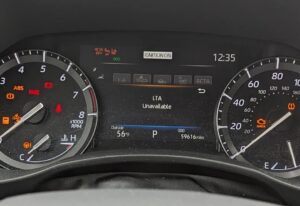

Have you encountered a Toyota Lane Tracing Assist (LTA) malfunction? You’re not alone. A growing number of Toyota owners have reported warnings or inconsistent behavior tied to LTA and related driver-assistance functions, and it’s understandable to feel concerned when a safety feature doesn’t perform as expected.
In this article, we’ll break down the most common causes and practical fixes for LTA malfunctions, so you can respond intelligently instead of guessing. You’ll also learn how to reduce repeat occurrences by keeping the key sensors, camera view, and supporting systems in the conditions LTA needs to operate correctly.
Understanding how LTA works—and what it depends on—is crucial for maintaining the effectiveness of Toyota Safety Sense features and preserving a smooth, predictable driving experience. While LTA is a sophisticated system, the majority of malfunctions trace back to a handful of real-world issues: poor camera visibility, sensor obstruction, unstable electrical power, calibration concerns after windshield work, or communication faults between modules.
What is Toyota LTA System
The Toyota LTA (Lane Tracing Assist) system is an advanced driver-assistance feature intended to improve safety and reduce driver workload. LTA is typically packaged within Toyota Safety Sense (TSS), Toyota’s suite of active safety and convenience technologies that may also include functions such as Pre-Collision System, Dynamic Radar Cruise Control, Lane Departure Alert, and Road Sign Assist (feature availability varies by model and year).
When activated, LTA uses forward-facing cameras (and, on many models, supporting sensor data) to interpret lane markings and the vehicle’s position within the lane. If the system determines your Toyota is drifting or not centered, it can apply gentle steering assistance to help guide the vehicle back toward the center of the lane. When everything is functioning correctly, the result is a more stable “lane-centering” feel—especially during highway travel or long stretches of consistent lane markings.
Even so, LTA is not an autopilot system. It is best understood as steering support rather than steering replacement. It can assist with lane centering under the right conditions, but it requires driver supervision, hands on the wheel as required by the vehicle, and continuous attention to the driving environment.
To turn the Toyota LTA system on or off, you can typically use a steering wheel button (where equipped) and/or vehicle settings in the instrument cluster menu. Exact controls vary by model year and trim. It’s wise to learn the system’s indicators (icons, lane lines changing color, prompts for steering input) so you can tell when LTA is actively assisting versus when it is merely “armed” but not currently intervening. For a quick overview, Toyota provides guidance in this Quick Reference Guide video.
Remember: LTA is a support function designed to reduce workload and improve lane discipline, not a substitute for attentive driving. Always maintain full control of your vehicle, keep your eyes on the road, and be prepared to steer at all times.
How LTA Works (and What It Needs to Function Properly)
When drivers see an “LTA Malfunction” message, the natural assumption is that a single component failed. In reality, LTA depends on a chain of inputs and supporting systems. A problem anywhere in that chain—visibility, calibration, power supply stability, communication between modules, or related sensors—can degrade performance or trigger warnings.
At a high level, LTA typically relies on:
- Forward camera visibility: the camera must clearly “see” lane lines and the road edge without obstruction, glare, or distortion.
- Accurate steering angle information: the vehicle needs to know where the steering wheel is centered and how the vehicle is responding to steering commands.
- Consistent wheel speed and stability inputs: wheel speed sensors and stability control systems help ensure the vehicle is tracking correctly and that the driver-assistance logic is safe to apply.
- Module communication: multiple ECUs share information over the vehicle’s network. A communication loss can disable LTA as a precaution.
- Appropriate operating conditions: clear lane markings, suitable speed range, reasonable weather, and road geometry that the system can interpret.
This dependency chain is also why the “fix” is often simpler than people fear. Many LTA issues are caused by camera obstruction (dirt, ice, condensation), windshield replacement without proper calibration, or electrical/power problems that cause intermittent module communication issues.
However, it’s equally important to be realistic: if LTA is malfunctioning repeatedly under ideal conditions, that’s a signal to perform structured diagnosis rather than repeatedly toggling the feature on and off.
Symptoms of LTA Malfunction
LTA malfunctions can present as obvious warnings, subtle performance changes, or a combination of both. Some symptoms are directly related to lane centering behavior, while others appear as warning messages or related sensor issues that indirectly disable LTA.
Lane Trace Assist Issues
If you’re experiencing an LTA malfunction in your Toyota, you may notice that the Lane Tracing Assist system behaves inconsistently or refuses to engage. The vehicle may struggle to detect lane markings, may “drop out” unexpectedly, or may fail to keep the vehicle centered even on roads where it normally performs well. In practical terms, you might see the lane lines on the display flicker, turn gray, or disappear, indicating the system no longer has confident lane detection.
This can make it harder to maintain smooth lane positioning during long trips—particularly on highways where drivers often rely on LTA to reduce steering fatigue. It can also increase cognitive load, because the driver must constantly confirm whether the system is actively assisting or merely showing lane graphics without applying steering support.
MID Display Warnings
Another common symptom is a warning on the Multi-Information Display (MID) or instrument cluster. These messages may be direct (for example, “LTA Malfunction – Visit Your Dealer”) or may appear alongside other driver-assistance warnings that share camera/sensor inputs.
For instance, some 2022 model year Toyota Tundra SR grade vehicles may display “LTA Malfunction – Visit Your Dealer” along with Diagnostic Trouble Code (DTC) U013787: “Lost Communication with Trailer Brake Control Module Missing Message.” This kind of fault is a strong indicator that the issue may be rooted in network communication between modules rather than in the camera itself. Messages like these should be treated as actionable: they’re telling you the vehicle detected a fault that it cannot resolve through normal self-checks.
Warning messages are not just “annoying pop-ups.” They usually correspond to stored diagnostic trouble codes (DTCs), which provide the fastest route to a correct fix—especially when LTA is disabled as a precaution due to a communication or sensor plausibility issue.
Radar Sensor Issues
Although LTA primarily centers on lane detection and steering assistance, some Toyota configurations rely on a broader sensor ecosystem where radar and camera data may jointly support driver-assistance behavior. A malfunction that affects the radar sensor system can therefore contribute to warnings, reduced capability, or system shutdown depending on the model and how Toyota integrated the features.
If you notice the vehicle is not responding appropriately to traffic ahead—such as inconsistent following distance behavior when cruise functions are active, or alerts suggesting sensor blockage—that can point to radar sensor issues that may appear alongside or indirectly influence other safety system availability. While radar faults may not always be the root cause of LTA lane detection problems, they are important to address because Toyota Safety Sense features often share operational logic and safety interlocks.
In short: if the vehicle cannot reliably interpret its environment, Toyota’s software may choose to disable certain assistance functions rather than risk incorrect steering support.
Effect on Lane Centering
An LTA malfunction directly affects your Toyota’s lane centering capability. When Lane Tracing Assist is not functioning correctly, it may fail to guide the vehicle between lane lines, may apply inconsistent steering assistance, or may disengage unexpectedly. Even if you are a confident driver, the abrupt loss of assistance can feel unsettling—particularly on highways where steering inputs are small but continuous.
Maintaining proper lane centering is important for your safety and the safety of other road users. When LTA malfunctions, it may be triggered by multiple factors, such as a faulty ABS wheel speed sensor or a weak or dead car battery. Recognizing these common contributors helps you troubleshoot efficiently and restore the LTA system to normal operation.
It’s crucial to monitor your vehicle’s LTA performance and pay attention to any alerts the MID displays. If you notice irregularities—such as poor lane detection under conditions where the system typically performs well—have the vehicle evaluated by a qualified technician. A professional inspection can confirm whether the issue is camera visibility, calibration, a sensor input problem, an electrical supply issue, or a network communication fault.
Expert driving guidance: If LTA is malfunctioning or disengaging, avoid “chasing” the lane with overcorrection. Drive normally, keep both hands on the wheel, and treat the vehicle as a standard car without assistance. LTA is designed to support a stable driver—not compensate for unsafe lane control.
Windshield Impact on LTA Malfunction
Your Toyota’s Lane Tracing Assist (LTA) system relies on cameras and sensors to evaluate lane markings and road geometry. Because that forward-facing camera looks through the windshield, the windshield condition has a direct impact on system performance.
If the windshield is dirty or obstructed, the camera may not gather accurate data. Common causes include dust film, road grime, pollen, bug residue, interior fogging, condensation, snow, or ice near the camera’s viewing area. Even a small obstruction can reduce contrast, which is critical for lane line detection. To prevent this, keep your windshield clean and free of debris or obstructions—especially around the camera housing.
The windshield’s physical condition matters, too. Cracks, chips, haze, wiper streaking, or distortion in the glass can interfere with the camera’s interpretation of lane markings. If damage falls within the camera’s viewing field, it can create false edges, reduce clarity, or distort lane lines. In these cases, windshield repair or replacement may be necessary.
Finally, if your Toyota LTA system continues malfunctioning even with a clean, undamaged windshield, the cause may be elsewhere—such as a calibration issue after windshield replacement, electronic interference, a sensor input fault, poor road conditions, or communication problems between modules. At that point, consultation with a Toyota dealership or a qualified mechanic is the most efficient path to correct diagnosis.
Calibration is a frequent “hidden” issue: After windshield replacement, the forward camera may require recalibration so the system can correctly judge lane position and vehicle trajectory. If recalibration is skipped or performed incorrectly, LTA may behave poorly even though the camera itself is not defective.
Common Causes of Toyota LTA Malfunction (Real-World Checklist)
To make diagnosis simpler, here is a practical checklist of causes that frequently trigger LTA warnings or degraded operation. This list is arranged in a “work smart” order—starting with the easiest and most common issues before moving toward less common faults that usually require a scan tool and deeper testing.
- Obstructed camera view: dirt, ice, snow, fogging, or residue around the camera area.
- Poor lane markings or road conditions: faded lines, construction zones, heavy shadows, glare, rain-slick reflections, or unusual lane geometry.
- Windshield damage or distortion: cracks, chips, haze, heavy wiper streaks, or aftermarket tint interfering with the camera.
- Camera calibration mismatch: especially after windshield replacement, collision repair, alignment changes, or camera mounting disturbance.
- Low battery voltage / electrical instability: weak 12V battery can cause intermittent system dropouts and communication faults.
- ABS wheel speed sensor faults: unreliable wheel speed data can affect stability logic and may disable assistance systems.
- Steering angle sensor issues: incorrect steering angle reference can confuse lane centering logic.
- Module communication errors: network faults can trigger DTCs and disable LTA as a precaution.
- Front radar sensor obstruction or misalignment: depending on model integration, radar faults may appear with driver-assistance warnings.
This checklist also helps set expectations: “LTA malfunction” is often a system-level response to a condition it considers unsafe for assistance—not necessarily proof that a single expensive component has failed.
How to Fix Toyota LTA Malfunction
When you encounter an LTA malfunction in your Toyota, the goal is to restore correct operation and prevent repeat failures. That means addressing the root cause, not just clearing the warning message.
The steps below combine professional diagnostic logic with practical owner-level checks. Start with basic visibility and condition checks, then move into scan tool diagnosis and calibration. If you’re unsure, your Toyota dealership or a qualified ADAS-capable shop is the right place to confirm the fix—especially when calibration is involved.
Diagnostic Steps
Before jumping to conclusions, gather evidence. LTA is data-driven; the fastest way to solve an LTA malfunction is to identify what data the system is missing or rejecting. Implement these diagnostic steps:
- Confirm operating conditions: Test LTA on a road with clear lane markings, in daylight, with dry weather if possible. If the malfunction only appears in rain, snow, glare, or construction zones, the “cause” may be environmental rather than a component failure.
- Inspect windshield and camera viewing area: Clean the windshield thoroughly—inside and out—especially near the camera housing. Remove ice, snow, fog, and residue. Look for cracks, chips, tint edges, or heavy wiper streaking that cross the camera’s field of view.
- Check battery health and voltage stability: A weak 12V battery can cause multiple driver-assistance systems to behave unpredictably. If your vehicle has been slow to start, displays sporadic warnings, or sits unused for long periods, test the 12V battery.
- Read error codes (DTCs): Use a diagnostic tool to retrieve stored DTCs related to LTA malfunction. For example, DTC U013787 is an example of a communication-related code that may appear with LTA warnings in certain scenarios. Codes are your roadmap—don’t skip them.
- Perform a Health Check: If you have access to Toyota Techstream, run a complete Health Check to identify related module faults (ABS/VSC, steering, camera, radar, trailer brake control module, etc.). This helps confirm whether the LTA malfunction is isolated or part of a broader communication issue.
- Test drive and verify system behavior: After cleaning/inspection and code retrieval, test drive again and observe whether lane lines are detected consistently and whether LTA engages normally. Document what triggers the malfunction (speed range, road type, weather, bumps, turning, braking).
Once you’ve collected relevant information about the LTA malfunction, you can move from “symptom chasing” to true problem-solving. If you have DTCs, use them to narrow the likely root cause rather than replacing parts blindly.
Professional best practice: Record codes before clearing them. If you clear codes too early, you can erase evidence that would have made the diagnosis faster and cheaper. If the issue is intermittent, those stored codes may be your only clue.
Troubleshooting Tips
After diagnosis, apply troubleshooting in a logical order. Start with the fixes that address the most common root causes—camera visibility and calibration—then move toward sensor and module-level faults if the issue persists.
- Clean and clear the camera and sensor view: Ensure the windshield area in front of the camera is clean, and confirm any external sensor covers are free of dirt, snow, or ice. Small obstructions can cause major detection errors.
- Ensure ideal test conditions: LTA performs best with clear lane markings, stable lighting, and predictable road edges. If it only malfunctions under poor conditions, the system may be operating normally (disengaging because it cannot reliably detect lanes).
- Recalibrate the front camera when appropriate: If LTA performance is poor even on clearly marked lanes—or if the windshield was replaced, the camera bracket was disturbed, or collision/alignment work was performed—camera calibration may be necessary. A Toyota dealership or ADAS-capable shop can perform recalibration to restore correct lane interpretation.
- Inspect supporting sensors and modules: If codes point to ABS wheel speed sensors, steering angle sensor, or network communication faults, address those inputs first. LTA depends on trustworthy stability and steering data, and Toyota may disable assistance if those inputs are inconsistent.
- Consult a professional when warnings persist: If the system malfunctions under ideal conditions and cleaning/recalibration doesn’t help, visit your dealership for deeper analysis. Persistent issues may involve wiring faults, module communication problems, or internal sensor failures that require specialized diagnostic equipment.
If you’ve applied these troubleshooting steps and the problem still persists, visiting your local Toyota dealership (or a qualified shop experienced with Toyota Safety Sense and ADAS calibration) is recommended. Correct repair now can prevent escalating faults later—especially if the root issue is electrical communication, sensor plausibility, or calibration drift.
When an LTA Malfunction Is “Normal” System Behavior vs. a True Fault
One of the most misunderstood aspects of LTA is that the system may appear to “fail” when it is actually protecting you. Toyota designs these features to disengage when confidence drops—because incorrect lane interpretation is worse than no assistance at all.
Examples where LTA may struggle without implying a hardware failure include:
- Faded or inconsistent lane markings (especially in rural areas or older pavement)
- Construction zones with temporary lines, cones, and shifted lanes
- Heavy rain creating reflective surfaces and low contrast
- Snow-covered roads where lane markings are obscured
- Strong glare from low sun angles or oncoming headlights
- Sharp curves beyond the system’s comfort range
In these situations, the system may display lane lines intermittently, reduce steering assistance, or prompt you to take full control. That is expected behavior. A true “malfunction” is more likely when the system fails under ideal conditions or when you receive persistent warning messages with stored DTCs.
Practical Prevention: How to Reduce Repeat LTA Malfunctions
Most repeat LTA malfunctions come down to preventable issues: dirty glass, neglected wiper performance, improper windshield work, and weak 12V battery health. The prevention strategies below are simple, but they’re surprisingly effective when done consistently.
- Keep the windshield camera area clean: Clean the windshield regularly, and don’t forget the inside surface where film and haze can build up.
- Maintain wipers and washer fluid: Streaking and haze reduce camera contrast. Replace wiper blades and use proper washer fluid for your climate.
- Be cautious with windshield tint and stickers: Anything that changes light transmission or creates edges in the camera view can reduce detection reliability.
- After windshield replacement, confirm calibration: If your vehicle requires camera calibration and it isn’t done, LTA performance may degrade even though no parts “failed.”
- Protect 12V battery health: A stable electrical system reduces random warnings and communication interruptions. If your Toyota sits for long periods, consider driving it regularly or using approved maintenance charging practices.
- Address ABS/steering sensor warnings promptly: LTA depends on trustworthy stability and steering data. If you ignore wheel speed or steering angle issues, LTA may become unreliable or disabled.
These steps won’t prevent every fault, but they substantially reduce the most common triggers for LTA warnings—especially the ones tied to visibility and electrical stability.
Conclusion
In conclusion, Toyota LTA malfunctions can be caused by various factors such as a faulty ABS wheel speed sensor, steering angle sensor, debris on the front camera, windshield issues, calibration problems, or broader electrical/communication faults between modules. The most reliable approach is to start with the basics—clean and inspect the windshield and camera viewing area, confirm ideal operating conditions, and verify 12V battery stability—then use a reliable diagnostic tool to retrieve DTCs and pinpoint the true root cause.
If warnings persist or the vehicle displays messages such as “LTA Malfunction – Visit Your Dealer,” don’t treat it as background noise. Either diagnose with a capable scan tool (and record codes before clearing), or visit your dealer or a qualified ADAS-capable shop for calibration and repair support. Addressing the underlying issue promptly helps keep Toyota Safety Sense features working as designed and preserves the confidence and comfort those systems are meant to provide.