
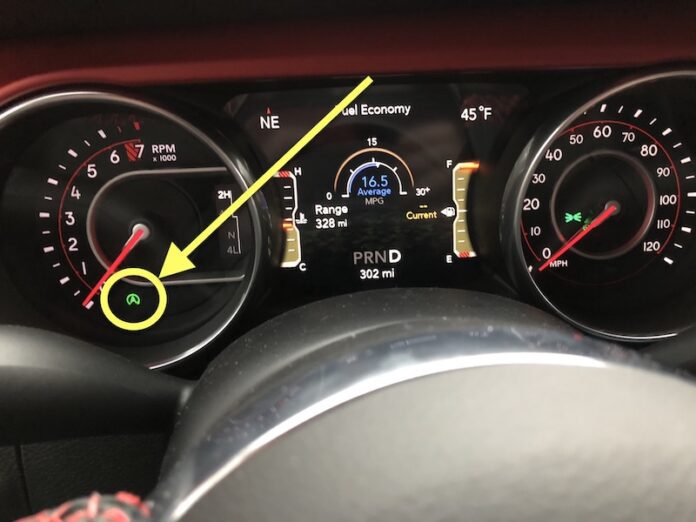

A “Stop/Start Unavailable Service Stop/Start System” notification on a Jeep is the vehicle’s way of telling you that the automatic engine Stop/Start or Start/Stop feature (often branded as ESS; Engine Stop/Start or Electronic Stop/Start) has been disabled. In day-to-day driving, that may sound like a minor inconvenience, but it’s more important than most owners assume. The stop/start system is tied into the vehicle’s battery management strategy, charging logic, starter durability strategy, and multiple safety and drivability inputs. When the Jeep disables it, it’s usually doing so to protect the electrical system, prevent a no-start, or avoid shutting the engine off when the vehicle cannot guarantee a safe, reliable restart.
While several factors can trigger this warning, it’s frequently related to battery health; especially a weak or failing auxiliary battery (sometimes called the backup battery). However, you can also see this message due to loose cable connections, poor grounds, wiring faults, blown fuses/relays, engine performance problems, or certain operating conditions that make the Battery Management System (BMS) “vote no” on stop/start. If you’ve ever noticed that the message seems to come and go with weather changes, short trips, or after the Jeep sits for a few days, that pattern is itself a clue: stop/start is very sensitive to voltage stability.
This guide breaks the issue down the way a seasoned technician would: first, we’ll clarify what Jeep’s electronic start/stop system is actually doing and what the warning means. Then we’ll walk through the most common causes, the safest DIY checks, and the situations where professional diagnosis is the smarter path. The goal is not only to get the stop/start feature working again, but to prevent repeat failures and protect your batteries, starter, and electrical system from unnecessary strain.
Quick reassurance: In most cases, your Jeep is still safe to drive when the ESS feature is disabled; your engine will simply remain running at stops like a traditional vehicle. But you should not ignore the warning indefinitely, because an underlying battery or electrical issue can eventually lead to other symptoms (slow cranking, random warnings, intermittent electronics, or starting problems).
Jeep Electronic Start System and ‘Stop/Start Unavailable Service Stop/Start System’ Warning
Jeep’s start-stop technology is an automated system designed to reduce fuel consumption and exhaust emissions, particularly in urban driving where you spend significant time idling at traffic lights. When the vehicle detects that you’ve come to a complete stop and that the operating conditions are “safe,” it shuts off the engine. It then restarts the engine when it detects the driver intends to move again; commonly when you release the brake pedal or apply throttle input.
That description is accurate, but the system is more sophisticated than it appears from the driver’s seat. The stop/start system is not simply turning the engine off and on. It has to guarantee:
- There is enough battery reserve to restart the engine instantly.
- Vehicle voltage will remain stable enough to support critical electronics while the engine is off.
- Engine temperature, cabin climate demands, and other inputs allow a stop event without harming drivability or comfort.
- No safety or drivability condition is present that would make shutting the engine off undesirable (for example, certain fault codes or abnormal sensor readings).
To do that, Jeep relies on multiple components; batteries, modules, sensors, wiring, and sometimes special high-durability starter and charging strategies. The failure of any one key component can make the system malfunction. When the system malfunctions (or when it believes it can’t safely perform a stop/start event), it will set a warning to notify the driver that the feature has been disabled.
It’s also helpful to understand the difference between a few similar Jeep messages (because owners often see more than one over time):
- Stop/Start Not Ready: The system is working but conditions are not currently met (battery charging, HVAC demand, engine temp, etc.). This is often normal.
- Stop/Start Unavailable: The system is temporarily disabled (sometimes due to battery state or conditions).
- Stop/Start Unavailable Service Stop/Start System: The system is disabled and wants inspection/repair. This tends to point to an actual issue (battery health, wiring, sensors, etc.) rather than just a temporary “not ready” state.
Even when ESS is disabled, the Jeep is still monitoring the underlying components. If the root cause is resolved; such as battery voltage returning to normal, a connection being restored, or a failed component being replaced; the system can come back online. But if the root cause persists, the message will return, and you’ll likely see a repeating pattern that becomes more frequent over time.
Why Jeeps Commonly Use an Auxiliary Battery (And Why It Fails First)
Many Jeep models that use ESS are built around a dual-battery strategy: a main battery and an auxiliary battery. The logic is simple: when the engine shuts off at a stop, the vehicle still needs stable power for electronics and the restart event. The auxiliary battery is often tasked with supporting the stop/start function and supplying power to accessories during stop events so the vehicle doesn’t experience voltage dips, module resets, or flickering lights when the engine is off.
This is also why the auxiliary battery tends to fail sooner than the main battery. It experiences frequent charge/discharge cycles, often at shallow depth; but with high demand consistency. Short trips are especially hard on the system, because the batteries may not spend enough time being recharged to full state-of-charge before the next stop event is requested.
In practical terms, your auxiliary battery may fail “quietly.” You might never notice until ESS throws a warning. That’s not a coincidence; many Jeep owners first learn they have an auxiliary battery only when the stop/start system stops working and they start researching the message.
Now let’s go through the most common causes and fixes in a systematic, technician-style way.
Causes of and Possible Fixes of Jeep ‘Stop/Start Unavailable Service Stop/Start System’ Warning
When diagnosing this warning, the key is to avoid guessing and to recognize that the ESS system is voltage-sensitive and logic-driven. That means the system can be disabled by an actual component failure, but it can also be disabled by a condition that looks like a failure to the computer (for example, voltage dipping under load due to a weak battery, even though the battery “still starts the engine”).
The sections below cover the most common root causes and the most realistic fixes.
Faulty battery
The ‘Stop/Start Unavailable Service Stop/Start System’ warning is mostly triggered by a faulty battery. And it is often because of a faulty auxiliary battery, otherwise known as the backup battery. The battery is mounted under the passenger seat and is used to power vehicle accessories, including the start-stop system.
From an expert standpoint, that battery placement is both practical and problematic: it keeps wiring paths manageable, but it also puts the battery in a location that owners rarely inspect. That means the auxiliary battery can degrade unnoticed until the system flags it. Depending on model year and configuration, access can be more involved than simply opening the hood, which is another reason many owners delay addressing it.
Since the system repeatedly draws charge from the battery, they have lower resistance. This allows them to deliver high current on demand. But unlike the main battery, auxiliary batteries have a shorter lifespan. Often lasting between two to three years.
That 2–3 year range is a realistic average in many climates, especially when the Jeep is driven on short trips, used in hot weather (heat accelerates battery aging), or exposed to deep cold (cold reduces performance). Batteries don’t simply “die” one day; they gradually lose capacity. So your Jeep may still crank and start, but the stop/start system; because it demands stronger reserve and voltage stability; may disable itself first. In other words, ESS is often the earliest warning sign that your battery system is weakening.
Sometimes, the failure of the main battery can also cause the start-stop system to fail. But whichever battery causes the failure, getting a new one is usually the way forward. And you always want to ensure that you get the manufacturer’s recommendation.
Expert battery guidance (what “manufacturer recommendation” really means): It’s not just about buying “a battery that fits.” Jeep ESS systems often require batteries with the correct type (commonly AGM in many configurations), correct cold cranking rating, and correct reserve capacity. Using an incorrect battery type can lead to repeat issues, shorter battery life, and inconsistent ESS behavior. The battery management logic expects certain performance characteristics. If the battery can’t deliver stable voltage under ESS loads, the system will disable again.
How to confirm battery health before replacing (basic but meaningful tests):
- Resting voltage test: After the Jeep has been off for several hours, a healthy fully charged battery typically reads around 12.6V (values vary slightly). A significantly lower reading can indicate a low state-of-charge or a weak battery.
- Cranking voltage drop: If voltage dips excessively during crank, battery capacity or connection integrity may be compromised.
- Charging voltage test: With the engine running, system voltage often rises above resting voltage. If charging is inconsistent, you may be chasing a charging/voltage management issue rather than only a battery issue.
Professional test approach: A shop will typically use a battery conductance tester or load tester to evaluate capacity and internal resistance. Many technicians also check stored codes in body modules or ESS modules that specifically point toward auxiliary battery performance. That’s valuable because replacing only the main battery when the auxiliary is weak can lead to rapid repeat warnings.
Common “two-battery trap” Jeep owners run into: They replace the main battery, the Jeep starts great, but the stop/start warning persists. That’s because the auxiliary battery is still failing, and the system can still detect that weakness. In many cases, both batteries age together. If one fails, the other may not be far behind.
Practical recommendation: If the Jeep is already several years old and you’re replacing one battery due to ESS warnings, it’s worth testing both batteries. Replacing one without testing the other can become a false economy.
Loose cable connections
Loose cable connections can also cause the start-stop system to malfunction. The battery supplies the system with electricity to stay operational. Thus, it must always maintain a stable connection with the battery. Because without a stable connection, the system will malfunction.
This is a deceptively common cause; especially after battery replacement, after other under-hood work, or after off-road vibration loosens fasteners over time. The ESS system is very sensitive to voltage stability. A connection that is “good enough to start” may still be unstable enough to disable stop/start. This is why you might see ESS disabled while the Jeep otherwise appears normal.
Besides a stable battery connection, the vehicle must maintain a solid ground connection. A bad ground connection is enough to cause the start-stop system to malfunction.
Grounds matter because every electrical device in the Jeep relies on a complete circuit. If the ground path has resistance due to corrosion, looseness, or contamination, voltage can drop under load and modules may see unpredictable behavior. In practice, a bad ground can produce random warning messages, intermittent faults, and start/stop malfunctions that come and go.
The battery and ground connections are often disrupted due to corrosion. With the ground connection, the corrosion on the nut causes it to arc, consequently welding it to the connector.
That arcing/welding scenario is real: corrosion increases resistance; resistance generates heat under load; heat accelerates oxidation; and the connection can degrade quickly. Once a ground fastener arcs, it can seize. At that point, a simple cleaning becomes a more involved repair.
The solution is to inspect the battery terminal and connectors for corrosion. If there is any, brush it off using a steel brush. This helps to rekindle the connection between the connectors and the battery terminal. You can also improve the ground connection by cleaning the connector and stud down to the bare metal if you notice any sign of corrosion.
Expert cleaning advice (safe and effective):
- Turn the Jeep off and allow modules to go to sleep before disconnecting anything.
- Disconnect the negative terminal first (when appropriate), then service corrosion.
- Use a terminal brush or steel brush carefully; remove corrosion but avoid damaging the terminal surfaces.
- After cleaning, ensure the terminal clamps are tight and do not rotate by hand.
- Apply a light battery terminal protectant to slow future corrosion if recommended in your environment.
Ground checks that help diagnose quickly: If you have a multimeter, perform a voltage drop test during cranking or under load. High voltage drop across a ground connection indicates resistance; often corrosion or looseness. This approach is more reliable than “it looks clean,” because some corrosion hides under the connector or inside crimped cable ends.
Why this can mimic a battery failure: A poor connection produces the same symptom as a weak battery: voltage instability. That’s why a careful technician checks terminals and grounds before condemning a battery; especially if the battery is relatively new.
Electrical issues
A faulty or poor wiring can also cause the system to malfunction. The system uses a network of wires to interact with the necessary vehicle components.
ESS is not a standalone feature; it’s an orchestration between modules. That means multiple circuits matter: battery sensing circuits, starter control circuits, brake pedal input, hood/door status on some configurations, voltage monitoring, and communication over vehicle networks. If wiring is damaged, chafed, pinched, or corroded, the system can lose confidence and disable stop/start.
The vehicle wire network can become frail, creating an unstable connection. Or worse, it triggers a sudden electrical spike, which will cause the system to fail, as they are extremely sensitive to the operating voltage. The unstable connections can also cause the start-stop system to stall intermittently.
Electrical spikes and voltage disturbances can occur from poor battery connections, failing alternator/regulator behavior, improper jump-start procedures, or aftermarket accessories that aren’t integrated correctly. ESS modules and body modules are designed to protect themselves; when voltage behavior becomes unstable, the system often disables ESS first.
The solution is to investigate the vehicle wiring to trace the broken wire. You may want to involve a professional, as diagnosing electrical issues can be tricky.
Why electrical diagnosis is tricky: Intermittent wiring faults may only show up under vibration, heat, moisture, or specific driving conditions. A wire may test “good” in a stationary driveway test and fail on the road. Professionals often use wiring diagrams, module live data, pin tension checks, and voltage drop testing under load to isolate the fault.
Common places wiring problems show up on Jeeps:
DIY boundary line: Visual inspection is fair game: look for obvious chafing, broken loom, disconnected plugs, or water intrusion. But once you start chasing voltage stability or communication faults, professional tools often save time and prevent misdiagnosis.
Blown fuse or relay
Vehicle electrical circuits, including the start-stop circuit, are opened and closed by relays and fuses. This is to protect the electrical systems from overloads during a surge. A surge current can cause the fuse or relay to fail. The start-stop system will stall when the fuse or relay that protects it fails.
In many cases, a blown fuse or failing relay is not the “first” failure; it’s the result of an underlying issue that caused excessive current draw. For example, if a circuit has a short-to-ground or a component is drawing too much current, the fuse protects the wiring by blowing. Replacing the fuse may restore function temporarily, but if the underlying short remains, the fuse will blow again.
Ordinarily, finding and replacing the defective relay or fuse should bring the system back online.
Expert fuse/relay advice:
- Always replace a fuse with the same amperage rating. Installing a higher-rated fuse can allow wiring to overheat and cause expensive damage.
- If the fuse blows again quickly, stop and diagnose the circuit rather than repeatedly swapping fuses.
- Use your owner’s manual or fuse box diagram to confirm the correct fuse/relay location and label.
Why relays matter: A relay can fail internally without obvious external signs. Sometimes tapping a relay makes it work momentarily, which is a classic sign of internal contact failure. However, that’s not a repair; it’s a confirmation. Replace it and verify.
Professional approach: A shop may test relay control signals, confirm power supply, and verify that the relay is closing under command. This avoids unnecessary replacements when the true issue is upstream (control signal missing due to module logic) rather than a bad relay.
Engine issues
Besides the battery, some engine components also play a crucial role in the operation of the start-stop system. The starter motor, spark plugs, and fuel system work together to keep the system running.
When the vehicle comes to a halt, the system shuts off the engine by turning off the spark to the ignition and fuel flow to the cylinder. Both features are instantly restored so the starter motor can restart the engine once the driver releases the brake pedal.
Clearly, the repeated stop-and-start cycles during trips will speed up the wear and tear of these components. This is why manufacturers employ the toughest and most durable materials for these parts.
But regardless of how durable these parts are, they will eventually break down. The failure of any of these components will invariably cause the system to fail.
You can avoid engine issues with preventive maintenance. Preventive maintenance helps prolong the engine components and detect issues before they arise. But once the damage is done, you must replace the failed component.
Expert expansion: how engine issues disable ESS even when the engine “seems fine”
ESS logic is conservative. If the engine control module detects a condition that could compromise a clean restart; such as misfire risk, unstable idle control, abnormal sensor readings, or a stored fault that affects combustion; it may disable start/stop. This is a practical safety strategy: stop/start is only beneficial when it can restart instantly and smoothly. If the system suspects restart quality could be compromised, it stays off.
Examples of engine or powertrain-related conditions that can indirectly disable stop/start include:
- Active check engine light or emissions-related faults
- Weak ignition components (spark plugs, coils) that cause borderline misfire behavior
- Fuel system inconsistencies (fuel pressure issues, injector problems)
- Engine temperature out of expected range (warming up, overheating risk, etc.)
- Starter motor wear or starter circuit issues (because ESS depends on frequent restarts)
Why maintenance matters more on ESS vehicles: The starter motor and related electrical system are designed for higher cycling, but that doesn’t make them immortal. Keeping spark plugs in good condition, ensuring the battery system is strong, and addressing minor engine faults early reduces ESS disable events and prevents the stop/start system from becoming an annoying recurring warning.
Professional diagnostic logic: If your Jeep has ESS warnings and also shows engine-related symptoms (rough idle, hesitation, misfire feeling, stalled restarts, check engine light), fix the engine issue first. The ESS system is often the messenger, not the root problem.
Extreme operating conditions
The battery management system can also disable the start-stop system. It disables the system during extreme weather conditions. Battery performance takes a hit during cold temperatures. While hot temperatures can also shorten their lifespan.
The BMS deactivates some systems during such situations to reduce the battery load. The start-stop system is often one of the systems that get deactivated. Prompting a ‘Stop/Start Unavailable Service Stop/Start System’ message.
The system should become operational once the operating condition returns back to normal. But if it doesn’t, examine the main and auxiliary batteries to check that they are both working.
Expert clarity on weather-related disablement: Cold weather reduces battery output dramatically. Even a healthy battery can act weak when temperatures drop. Hot weather accelerates chemical aging and can shorten battery lifespan. Because ESS depends on strong battery reserve, cold snaps often reveal borderline batteries. Many owners notice the warning appears during the first truly cold week of the year; that’s the ESS system telling you the battery is no longer performing like it used to.
Also remember “operating conditions” include more than weather: The system can disable stop/start when other loads are too high. For example, strong HVAC demand (defrost, max heat, max A/C), heavy electrical loads, or frequent steering input can influence whether the system allows a stop event. While those conditions sometimes create a “not ready” status rather than a “service” message, the general principle remains: ESS is designed to preserve comfort and safety first, fuel economy second.
Practical tip: If the message appears only during extreme cold and disappears after longer drives, your battery may be weak but not fully failed. That’s a warning window; address it before you get stranded in the cold.
A Step-by-Step Diagnostic Strategy (What to Check First, Second, and Third)
If you want to troubleshoot this message efficiently, don’t start by replacing parts blindly. Start with the quickest, highest-probability checks. This diagnostic flow mirrors what many professional technicians do; just adapted into owner-friendly language.
Step 1: Confirm whether the warning is persistent or intermittent
Is the warning present every time you drive, or does it come and go? A persistent warning suggests a hard fault (battery health, failed sensor, stored DTC). An intermittent warning suggests voltage instability, environmental influence, or a connector issue.
Step 2: Check the basics; battery age and recent history
Ask yourself:
- How old are the main and auxiliary batteries?
- Do you drive mostly short trips?
- Has the Jeep sat unused for long periods?
- Did the warning begin after cold weather, after battery replacement, or after electrical modifications?
These questions help you prioritize whether you’re likely dealing with battery capacity decline or a wiring/control issue.
Step 3: Inspect battery terminals and ground points
Look for corrosion, looseness, or signs of heating (discoloration, melted plastic, white/green residue). Clean and tighten as needed. Poor connections can mimic battery failure and cause ESS to disable.
Step 4: Scan for codes using a capable tool
Even if the Jeep only displays an ESS message, the vehicle may store diagnostic trouble codes in body or powertrain modules. A code scan can reveal whether the issue is battery-related, sensor-related, or module-related. A generic engine-only code reader may miss body module codes, so a more capable scan tool or a professional scan may be required for best results.
Step 5: Verify battery condition with proper testing
Use a load test or conductance test when possible. Voltage alone can be misleading because a battery can show acceptable voltage at rest but collapse under load. If either battery fails testing, replacement is usually the correct fix.
Expert warning: Replacing batteries without addressing corroded connectors can lead to repeat failures. Clean, secure connections are part of a correct repair.
Should You Replace the Auxiliary Battery, the Main Battery, or Both?
This is one of the most common owner questions, and it deserves a clear answer: it depends on which battery is weak and how old the system is; but ESS systems frequently perform best when both batteries are healthy and well-matched. If the auxiliary battery is failing, it can cause ESS warnings even when the main battery still starts the engine reliably. If the main battery is weak, the system may also disable because overall voltage stability is compromised.
Practical rule of thumb many technicians use: If one battery fails and the other is of similar age and usage history, it’s often wise to test both and consider replacing both if they’re both borderline. That reduces the chance that you replace one battery only to have the other fail shortly afterward.
But don’t assume; test: A proper battery test can tell you whether the main battery is strong and whether the auxiliary has degraded. Testing is cheaper than guessing and usually cheaper than repeat labor.
Also note: Some Jeep owners choose to bypass the auxiliary battery strategy entirely, but that’s a modification decision with tradeoffs (and can create other electrical consequences). For a factory-style reliable repair, restoring the system as designed is the most predictable approach.
Can You “Reset” the Stop/Start Unavailable Warning?
You can sometimes clear the message temporarily; by cycling ignition states or disconnecting power; but a reset does not fix the root cause. If a battery is weak, the warning will return. If a connector is corroded, the warning will return. If a module is seeing a fault, the warning will return.
From an expert perspective, resetting is useful only when:
- You repaired the root cause and need to clear stored faults.
- The system is stuck in a logic state and you want to confirm whether it will reinitialize normally.
- You are testing whether a problem is temporary or persistent.
If you clear a warning without fixing the underlying issue, you’re not “solving” the problem; you’re simply postponing it.
Is It Safe to Drive With “Stop/Start Unavailable”?
In most cases, yes. The Jeep will operate like a traditional vehicle; engine remains running at stops; and you can continue driving. The warning mainly indicates that a fuel-saving feature is disabled. However, if the cause is battery weakness or charging instability, you should treat it as a “repair soon” warning, not a “ignore for months” warning. Weak batteries can eventually lead to no-start conditions, module faults, and unpredictable electrical behavior.
If you notice additional symptoms; slow cranking, flickering lights, multiple warning messages, or electronics behaving strangely; stop/start being unavailable may be part of a bigger electrical foundation problem. In that case, addressing batteries and grounds quickly is the smartest move.
Final Thoughts
The electronic start system shuts down the engine to reduce exhaust emissions and fuel consumption.
The system relies on several components, including an auxiliary battery, starter motor, spark plugs, and fuel system. The failure of any of these components can cause the system to fail. But a blown fuse or relay, loose connection, electrical issues, and extreme weather can also cause it to fail.
When the system fails, it triggers a ‘Stop/Start Unavailable Service Stop/Start System’ message to notify the driver that the system has been disabled.
Expert closing advice: Treat this warning as a diagnostic prompt, not a panic alert. Start with the most common and most correct first step: verify battery condition (especially the auxiliary battery) and confirm clean, tight electrical connections. If the warning persists, scan for faults and pursue the root cause logically. ESS problems are often solved permanently with the right battery and a clean electrical foundation, while repeated temporary resets usually lead to repeat frustration. When in doubt, involve a professional; because voltage-sensitive systems can look simple on the dash but require careful testing behind the scenes.