
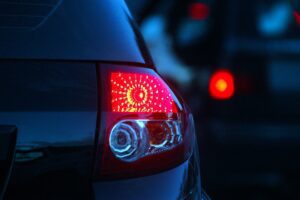

When your car detects a fault in the rear lighting circuit, it will typically illuminate a rear light failure warning on the dashboard to get your attention quickly. This alert is not “just another reminder light”; it’s your vehicle’s way of telling you that something in the rear lamp system is no longer behaving within expected electrical limits. Depending on your vehicle, the message may appear as a symbol, a short text notification, or a warning tone combined with an indicator on the instrument cluster.
From a technician’s point of view, this warning is triggered by several possible conditions. Yes, a failing bulb is common, but modern vehicles monitor far more than whether a filament is simply broken. The fault could be related to a sensor reading, an electrical supply issue, a loose connection, corrosion at the socket, a blown fuse, a grounding problem, or even moisture (humidity/condensation) interfering with the lamp housing and electrical contacts. In some models, the body control module (BCM) also monitors current draw and resistance; if those values drift outside a predefined range, the system flags a fault even if the light still appears to work “most of the time.”
Table of Contents
That detail matters because rear lighting is a safety-critical system. Your tail lights, brake lights, and rear indicators are part of how you “communicate” with other drivers; especially at night, during heavy rain, or in traffic where reaction time is measured in fractions of a second. A rear light failure warning is essentially your car saying: “I’m not confident the people behind you can see what you’re doing.”
In the sections below, I’ll break down why the warning turns on, how the monitoring system works, the most common causes, and the practical fixes; from quick driveway checks to scenarios where a professional scan tool and diagnostic process become the smartest option.
Why Does The Rear Light Failure Warning Light Turn on?
The core reason the rear light failure warning light turns on is simple: your vehicle has a built-in monitoring strategy that checks whether the rear lighting system is operating within expected parameters. Sensors and control modules can detect early signs of trouble in and around the rear lights; sometimes before the failure becomes obvious to your eyes.
In many vehicles, the lighting system is monitored through a combination of electrical feedback and module logic. The system may evaluate:
- Current draw (how much electrical current the bulb or LED circuit is consuming)
- Voltage drop across a circuit (which can change when a connection becomes corroded or loose)
- Resistance in the wiring, bulb filament, or connector path
- Signal integrity between the body control module and lamp circuits
That’s why the warning light does not only appear when a bulb is completely dead. The system can be triggered by partial or intermittent faults, such as a bulb filament that is weakening, a socket that is heat-damaged, or moisture that’s creating a small but significant leakage path for electricity.
It’s also important to understand that not every cause is visible. A rear lamp might illuminate when you glance at it in the driveway, but still trigger a warning because the circuit is operating outside its expected electrical “signature.” For example, a lamp could be working but drawing less current than normal due to aging, or it may flicker briefly on bumps due to a connector that is not seated properly.
If you cannot find the reason why the rear light failure warning light is on, the most efficient next step is to consult a mechanic or a qualified diagnostic technician. Rear lamp faults are often straightforward, but they can also overlap with vehicle electronics, module communication, or wiring harness issues; areas where guessing can become expensive.
A mechanic can use diagnostic tools to retrieve information from your vehicle’s diagnostic system (often through the OBD port). The scan tool doesn’t just “read codes”; on many vehicles it can access body control module data, lamp output tests, live circuit status, and stored fault history. With that information, the mechanic can interpret what the sensors and control modules detected and then confirm the root cause with targeted testing instead of trial-and-error parts swapping.
In short: the warning is the symptom. The diagnostic data helps identify the cause.
What Do Sensors Have to Do With the Rear Light System?
Sensors and control logic are the backbone of modern vehicle diagnostics. The rear light system is no exception. The sensors (and, in many cases, the body control module itself acting as a monitoring device) provide feedback to the vehicle’s diagnostic system. If that sensor feedback is inaccurate; or if the module detects readings outside the expected range; the vehicle flags a fault and alerts the driver.
To make this easier to visualize, think of the rear lamp circuit as a “monitored loop.” The vehicle expects a certain electrical behavior when the tail lights are on, when the brake pedal is pressed, and when the indicators flash. When the measured behavior differs; by enough margin or for long enough; the system interprets it as a developing failure and turns on the warning.
There are sensors all around a vehicle and they cover a wide range of systems. You may hear people refer to gas sensors, engine sensors, hydraulic and combustion-related sensors, electrical sensors, sensors attached to the steering and suspension, and dedicated monitoring for lighting. While not every vehicle uses the same hardware layout, the overall principle is consistent: sensor feedback + module logic = early detection.
The front lights, brake lights, and tail-lights typically have their own monitoring channels or circuits. On some cars, the system monitors each bulb individually. On others, it monitors the circuit as a group. Either way, without sensors and monitoring logic, diagnosing vehicular problems would be far more time-consuming. You would often have to wait until a light completely stopped working or a symptom became obvious, which is not ideal for safety-critical items like braking and signaling.
As stated above, the rear light failure warning light can turn on even if the underlying issue is sensor-related. It does not only illuminate when a bulb burns out or when the circuit loses power entirely. A sensor or module that is drifting out of calibration, a poor ground reference, or corrupted feedback can trigger the same dashboard alert. That’s why accurate sensing and stable electrical connections are critical to vehicle performance; and why it’s wise to treat a rear light failure warning as a real fault that needs a real diagnosis.
One more practical note: aftermarket bulbs (especially LED conversions) can confuse factory monitoring because LEDs draw different current than incandescent bulbs. Some vehicles interpret that difference as a failure. The message on the dash can look identical to a genuine fault, even though the “problem” is a mismatch between the bulb type and the system’s expectations. A proper diagnostic approach helps separate a true defect from an incompatibility issue.
Reasons Why The Rear Light Failure Light Turns On:
There are a myriad of reasons why the rear light failure light would turn on, ranging from simple bulb wear to electrical faults that require deeper testing. The fastest way to pinpoint the source is to use a diagnostic tool that can read body and lighting-related faults; not just generic engine codes. If you don’t have access to that equipment, a reputable mechanic can perform the same checks and validate the issue with proper electrical testing.
Below are the most common triggers. Keep in mind that multiple issues can exist at once (for example, a slightly loose bulb plus early corrosion in the socket), and intermittent problems may only show up under certain conditions like rain, cold temperatures, or vibration from rough roads.
- The rear light bulbs are about to go out.
- There is an issue with the electricity flowing to the rear light system
- The bulb is loose
- There is far too much humidity trapped inside of the rear brake light and it is affecting the electrical system
- There’s an issue with the sensor and it cannot provide accurate information about the rear brake system
- The rear light failure warning system itself is malfunctioning and needs to be taken in to get serviced and repaired
Let’s translate those bullet points into real-world symptoms:
1) Bulbs nearing the end of life: A bulb doesn’t always fail instantly. Filaments can thin out and change resistance, causing subtle dimming or intermittent behavior. The monitoring system may detect abnormal current draw before the bulb fully burns out.
2) Electrical supply or wiring problems: A weak power supply to the rear lamps can come from damaged wiring, a compromised connector, corrosion, a failing relay (if applicable), or a fuse that is partially blown or heat-stressed. A bad ground is also a classic cause; one that can create strange, inconsistent lighting behavior.
3) Loose bulb or poor socket contact: Even a properly functioning bulb can behave like a failed bulb if it is not seated fully. Vibration can worsen the issue, which is why some drivers notice the warning “comes and goes.”
4) Humidity/condensation inside the housing: Moisture where it shouldn’t be can create oxidation on terminals, reduce insulation, and cause the system to detect leakage or abnormal resistance. Condensation is more than cosmetic; it can become an electrical problem.
5) Sensor/monitoring faults: Depending on the vehicle, the BCM or sensor circuits can misread the lighting status. This may happen after repairs, after water intrusion, or due to age-related electronic failure.
6) Warning system malfunction: Sometimes the lamp hardware is fine, but the monitoring module has an internal fault, software issue, or damaged circuitry; especially if the vehicle has been in a collision or experienced electrical modifications.
If there is no light coming from one or both of your rear lights, you may be pulled over by a cop. Rear lights are not optional equipment; they are required so other drivers can identify your vehicle in low visibility conditions. When the rear lighting system is compromised, you’re effectively harder to see; particularly from behind; at the exact time you need to be most visible.
If your rear lights do not work, vehicles behind you may not realize you are there or may not recognize when you are braking. That can escalate into a rear-end collision, especially in fast-moving traffic or during night driving. From a safety perspective, a rear light failure warning should be treated with the same urgency as any other visibility-related fault.
If you prefer learning visually, the video above can help you understand common rear light issues and what to look for. Pairing a visual walkthrough with the diagnostic logic in this guide gives you the best of both worlds: you learn what is physically happening at the lamp, while also understanding why the car’s monitoring system is reacting the way it does.
How to Fix Rear Light Issues
The solutions below address the most frequent causes behind rear light warning messages. Some of these checks are realistic for the average car owner with basic tools and patience. Others; especially those involving wiring faults or module diagnostics; are better handled by a mechanic who can test circuits under load and interpret scan-tool data correctly.
Before diving into specific fixes, here’s an expert-level troubleshooting flow you can use to avoid missing the obvious:
- Confirm the symptom: Which rear lamp is affected; tail light, brake light, turn signal, reverse light, or a combination?
- Check behavior under different conditions: Does the warning appear only when braking, only at night, or only when it’s raining?
- Inspect both sides: Many vehicles compare left vs. right circuit behavior. A “right lamp failure” can sometimes be caused by resistance on the left, and vice versa.
- Start with the simplest physical checks: Bulb condition, bulb seating, socket corrosion, housing moisture.
- Move to electrical checks: Fuses, grounds, connectors, wiring integrity.
- Finish with module-level diagnostics: Scan codes, output tests, and monitoring data if the physical hardware checks out.
This approach keeps you from replacing parts blindly. Rear light circuits are usually simple, but modern monitoring can make a basic fault look complicated; or make a complicated fault look like a simple bulb problem. Methodical testing is the difference between a fast fix and a frustrating weekend.
The rear light bulb is about to go out
The average life expectancy of a rear light bulb is often around five or six years, though that number can shift based on how much you drive, how frequently you use the brakes in stop-and-go traffic, and the quality of the bulb itself. In real workshop terms, bulbs fail in patterns: frequent braking can shorten brake light bulb life, while long nighttime driving can shorten tail light bulb life.
What many drivers don’t realize is that a bulb can be “on its way out” without appearing dead. A filament can degrade and create inconsistent resistance. Sensors (or the body control module’s monitoring logic) can detect that the bulb is no longer operating at its optimum level, even if it still illuminates most of the time.
When that happens, the monitoring system reports the condition to the car’s diagnostic center, and the rear light warning light is triggered. In practical terms, you may see:
- One side slightly dimmer than the other
- A light that works intermittently when you close the trunk or drive over bumps
- A warning that appears briefly and then disappears
- A bulb that looks darkened inside the glass (common on older incandescent bulbs)
You can usually fix this issue by replacing the bulb(s). As an expert recommendation, I generally advise replacing bulbs in pairs (left and right) when they are the same age and type; especially for tail lights; because if one has aged out, the other is often close behind. Use the correct bulb specification for your vehicle, and avoid touching the glass of halogen bulbs with bare hands, as skin oils can create hot spots and shorten bulb life.
After replacement, verify operation in all modes: tail lights on, brake pressed, turn signals, hazards, and reverse lights. If the warning persists after correct bulb installation, that’s your cue to shift focus to seating, socket condition, wiring, or monitoring faults.
There’s an issue with electricity flowing to the rear light system.
Electrical issues are among the most common reasons a rear light warning triggers, particularly in vehicles that are several years old or have had prior repairs. Aging components, heat cycling, vibration, and moisture exposure can weaken connectors and wiring over time. Another frequent cause is parts that were not properly installed during a previous repair; pinched wiring, poorly routed harnesses, or connectors that were not fully latched.
Typical electrical causes include faulty wiring, a blown fuse, an overheated socket, or a compromised ground point. A fuse can fail outright, but it can also become heat-stressed and behave inconsistently under load. A poor ground can create especially confusing symptoms, such as a rear lamp that backfeeds through another circuit, causing flicker or unusual brightness changes when you apply the brakes or activate the turn signal.
Here are practical checks that many owners can perform safely:
- Fuse check: Locate the lighting-related fuses in the owner’s manual and inspect/replace as needed.
- Connector inspection: Inspect the rear lamp connector for corrosion, heat discoloration, bent pins, or looseness.
- Harness inspection: Look for chafed wiring near trunk hinges, tailgate boots, or where the harness passes through body panels.
- Ground point check: Identify the rear ground location (often behind trim panels) and ensure it is clean and tight.
A mechanic’s diagnostic tools can go further by reading stored lighting faults and performing output tests that command the rear lights on while measuring voltage and current. This matters because many wiring problems only reveal themselves under load. A wire can look fine visually but fail electrically when current demand increases (for example, when the brake lights activate).
Once the exact cause is confirmed; whether it’s a damaged wire, a loose terminal, a corroded connector, or a faulty fuse contact; the repair becomes straightforward: restore solid power and ground, protect the connection from future corrosion, and confirm the circuit’s electrical readings return to normal.
There is humid air trapped underneath the plastic housing
Humidity is not supposed to slip underneath the plastic housing of the rear and brake lights. While it’s true that some lamp assemblies can vent small amounts of air to balance temperature and pressure, visible condensation is a red flag that moisture is accumulating faster than it can dissipate; or that water intrusion is occurring through a compromised seal.
If you notice condensation underneath the plastic, it often means the coverings are not properly seated, the gasket is worn, or the housing has developed a hairline crack. Moisture can cause corrosion on terminals, reduce conductivity, and in some cases create short paths that confuse the monitoring system. Even when the light still works, the electrical readings can drift enough to trigger the rear light failure warning.
To address it properly, you will typically need to remove the plastic housings and wipe away the condensation. If you find water droplets or staining, don’t ignore it; dry the area fully. A careful approach includes:
- Removing the lamp assembly (following the vehicle’s recommended procedure)
- Drying the inside of the lens and the bulb/socket area thoroughly
- Inspecting the gasket/seal for flattening, tearing, or missing sections
- Checking for cracks around mounting points and lens edges
Afterward, replace the plastic back onto the rear light and press on the plastic as firmly as you can without breaking it. It should sit evenly with no gaps. If the design allows, you can also apply a mechanic approved sealant to the edges to reduce the chance of future moisture intrusion; especially if the gasket is no longer sealing as it should.
However, avoid over-sealing vented assemblies. Some housings require controlled venting to prevent pressure build-up and recurring fogging. If condensation keeps returning even after reseating and drying, the long-term fix may be replacing the seal or the entire lamp assembly, particularly if cracks or warping are present.
The bulb is loose
It is very common for a rear bulb to become loose, especially soon after it has been replaced. A bulb that isn’t seated correctly can intermittently lose contact at the terminals, which the monitoring system may interpret as a failure. The result can be an on-and-off dashboard warning that seems to “fix itself” temporarily; until the next bump, temperature change, or vibration event.
Even experienced mechanics occasionally fail to fully lock a bulb into place, particularly on designs that use twist-lock holders or tight access panels. The fix is usually simple: remove the bulb, inspect the base and socket for signs of arcing or corrosion, and reinstall it correctly.
In most cases, simply screwing in the bulb (or locking it into its holder) until it cannot move anymore resolves the issue. While doing so, confirm:
- The bulb is the correct type and base style for the socket
- The socket contacts are clean and not flattened
- The bulb holder fully clicks/locks into position
- The wiring connector is seated and latched
If the bulb repeatedly loosens, inspect the holder for worn locking tabs or heat deformation. A holder that has softened from heat may not retain the bulb securely, and replacing the holder (or in some cases the full assembly) becomes the reliable fix.
The rear light failure warning system is not working properly
The rear light warning system itself can fail or behave incorrectly for several reasons. One possibility is prior collision damage. It’s not unusual for a vehicle to be involved in an accident and then; weeks or months later; develop electrical issues as stressed connectors loosen, moisture enters previously sealed areas, or wiring insulation degrades where it was pinched or repaired.
Another cause can be module-level problems. On many cars, the body control module (or a similar lighting control unit) is responsible for supplying power and monitoring lamp circuits. If the module has an internal fault, a software problem, or a damaged output driver, it can incorrectly report failures or fail to control a circuit properly.
You may be able to find the reason if you can operate your vehicle’s diagnostic system and access body/lighting codes. Some advanced scan tools allow bidirectional testing; meaning you can command the rear lights on and off through the tool and compare the requested state with the measured feedback state. This is extremely helpful for proving whether the problem is in the lamp hardware/wiring or in the control module.
If the warning persists after bulb replacement, moisture correction, and basic electrical checks, take your vehicle to a mechanic. They can advise you on what to do, which component is actually failing, and what needs to be repaired or replaced. In cases involving module replacement or programming, professional involvement is especially important because many vehicles require coding, pairing, or calibration after installing electronic control units.
Practical Expert Tips to Prevent Rear Light Warnings (And Repeat Repairs)
Fixing the immediate problem is only half the job. The other half is preventing the warning from returning. In professional diagnostics, repeat faults usually come from one of three issues: incomplete seating/assembly, moisture intrusion that was dried but not sealed, or a high-resistance connection that was not cleaned thoroughly.
Here are prevention strategies that consistently reduce repeat rear lamp issues:
- Use quality bulbs: Cheap bulbs often fail early and can have inconsistent resistance that confuses monitoring systems.
- Clean terminals correctly: Light corrosion should be removed carefully; severely pitted terminals should be replaced.
- Protect connectors: Use appropriate electrical contact protection products when recommended (avoid over-applying grease where it can insulate contacts).
- Confirm gasket integrity: A slightly flattened seal can be enough to invite condensation.
- Recheck after rain or a car wash: If moisture is the culprit, it will often reappear under wet conditions.
Also, be cautious with LED retrofits. If your vehicle was designed for incandescent bulbs, LED replacements may require load resistors or vehicle-specific CANbus-compatible bulbs to avoid false warnings. Installing the wrong LED can create electrical signatures that the car interprets as a fault; leading to persistent alerts even though the lamp appears bright.
When a Rear Light Warning Becomes a Safety Issue (Not Just an Annoyance)
A rear light failure warning is sometimes treated like a minor inconvenience; until visibility drops and the risk becomes real. If your tail lights are not functioning, drivers behind you may have little to no visual reference of your position in darkness, fog, heavy rain, or dust. If your brake lights are compromised, the danger increases further because the driver behind you loses critical reaction time.
From a legal and enforcement standpoint, a non-functioning rear light can also attract attention quickly. If one or both of your rear lights are out, you may be pulled over by the cops, and you may receive a fix-it ticket or citation depending on your local regulations and how strict enforcement is in your area. Even if you avoid a ticket, the bigger concern is liability: in the event of a rear-end collision, non-working lights can complicate fault determinations.
In other words: addressing rear light warnings promptly is not just good maintenance; it’s smart risk management.
A Quick DIY Checklist You Can Use Before Visiting a Mechanic
If you want to make an informed decision before paying for diagnostics, you can do a few quick checks that often reveal the cause:
- Verify all rear light functions: tail, brake, turn, hazards, reverse.
- Compare left vs. right brightness: a dim lamp can still “work” but trigger monitoring faults.
- Check for condensation: visible fogging suggests seal or housing issues.
- Remove and reseat bulbs: confirm correct fitment and solid contact.
- Inspect sockets: look for green corrosion, burned plastic, or bent contacts.
- Inspect fuses: replace any suspect fuse with the correct rating.
If you complete these checks and the warning remains, you’ve already done the most cost-effective first step. At that point, professional diagnostics is no longer “overkill”; it’s the efficient path to a confirmed repair.
Conclusion
There are a couple of reasons why a vehicle’s rear light failure warning light will turn on. The most common causes include a bulb that’s nearing the end of its life, a loose bulb, moisture trapped in the housing, or an electrical supply problem such as wiring damage or a blown fuse. In more complex situations, the issue can involve sensor feedback or the rear light failure warning system itself.
Your vehicle’s diagnostic system can often point to the reason for the warning light, especially when a scan tool can access body and lighting faults. If you don’t have the tools; or if the warning persists after basic checks; taking your vehicle into a mechanic shop is the sensible move. Professional testing can confirm whether the fault is in the bulb, socket, wiring, sensor input, or the control module that manages the lighting system.
Some reasons why the light turns on are simple, like a bulb that needs to be replaced. Other reasons are much more difficult to repair, like a system sensor failure or a module-level fault that requires deeper diagnostics and potentially programming.
If one or both of your rear lights do not work, you may be pulled over by the cops. More importantly, you reduce your visibility to other drivers, increasing the risk of being hit from behind. Replace your rear light bulbs as soon as they go out; and if the warning doesn’t disappear after a correct replacement, treat that as a sign to investigate further rather than assuming the system is “just being picky.”