
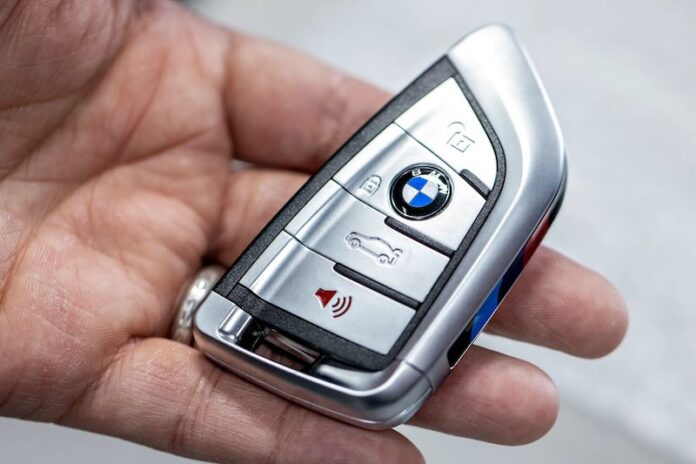
You just popped a fresh battery into your BMW key fob, hit the button… and nothing happens. Frustrating, right? You’d think a simple battery swap would solve everything, but sometimes it doesn’t.
Don’t worry — there’s usually a straightforward explanation. Maybe the replacement battery is a dud, the terminals are corroded, or the fob just needs to be reprogrammed. The fix is often easier than you’d expect.
Let’s walk through the most common reasons this happens and, more importantly, how to get your key fob working again without an expensive trip to the dealer.
How Your BMW Key Fob Actually Works
Your key fob is basically a tiny radio transmitter. It’s battery-powered and specifically programmed to communicate with your car — and only your car. That’s why you can’t just grab any BMW key fob off a shelf and expect it to unlock your doors.
Here’s the short version: BMW uses a Radio Frequency Identification system (RFID). The car and the fob exchange signals through an electromagnetic field. When those signals match up, the car responds — locks, unlocks, whatever you’re telling it to do. When they don’t match, nothing happens.
5 Reasons Your BMW Key Fob Still Won’t Work After a New Battery
A dead battery is the most common key fob issue, so it makes sense you’d start there. But here’s the thing — if swapping it out didn’t fix the problem, one of these is likely the culprit.
1. Worn-Out or Loose Buttons
BMW key fob buttons are made of rubber, and rubber wears down over time. You might notice some buttons feel wobbly, or you have to mash them hard just to get a response.
Sometimes it’s not wear — it’s debris. Dirt and grime can work their way under the buttons and block the contact points. Try giving the fob a careful cleaning with a small brush first. If that doesn’t help, you’ll likely need to get the buttons or the entire fob replaced through an authorized dealer.
2. Corroded or Loose Battery Terminals
Pop the fob open and take a close look at the battery connector terminals. If you spot any rust, corrosion, or terminals that seem loose, that’s your problem. A corroded terminal can’t make a solid connection, no matter how fresh the battery is.
You might be able to clean minor corrosion off, but if a terminal is loose, you may need to solder it back into place.
3. The “New” Battery Is Actually Dead
It sounds unlikely, but I’ve seen it happen more than once. You buy a brand-new battery, install it, and it’s a dud right out of the package. Batteries can sit on store shelves for a long time, and some just arrive with no charge.
Grab a basic multimeter and test the voltage. If it’s reading low, swap it out for another one. Simple as that.
4. An Electrical Issue in the Car Itself
Sometimes the fob is perfectly fine — the problem is on the car’s end. If your door panel has been worked on recently, or if a wiring connection got bumped or damaged, the car might not be receiving the fob’s signal properly.
This type of issue usually shows up alongside other electrical quirks. If you suspect a wiring problem, it’s best to have an automotive electrician take a look rather than guessing.
5. The Key Fob Lost Its Programming
This is actually one of the most common causes. When you pull the battery out, the fob can lose its programming and essentially “forget” how to talk to your car. When this happens, all your remotes — including the spare — will stop working.
The fix? Reprogram the fob. And yes, you can do it yourself.
How to Reprogram Your BMW Key Fob (Step by Step)
If reprogramming is the issue, here’s how to handle it without a dealer visit:
- Get inside your BMW with your key and key fob. Make sure all doors are locked and windows are closed.
- Insert the key into the ignition and turn it to position one (accessory mode). Don’t start the engine.
- Turn the key back to position zero and remove it.
- On the key fob you want to program, press and hold the unlock button, then press the BMW logo three times and release.
- Listen for the doors to lock and unlock — that’s your confirmation it worked.
- If you have a second key fob, repeat step 4 with that one. You should hear the doors lock and unlock again.
That’s it. Both fobs should now be synced up and working properly.
How to Physically Inspect Your Key Fob for Damage
Not sure what’s going on? A quick physical inspection can tell you a lot. Here’s what to look for:
- Open the fob carefully. Use a disassembly tool and start from the bottom edge — not the top. Gently work your way up until it pops open.
- Check for water damage. BMW fobs have a built-in water indicator. Look at the upper left corner for a small circle. If it’s white, you’re good. If it’s red, water has gotten inside.
- Inspect the battery itself. Look for any swelling or visible physical damage. A bloated battery needs to be replaced immediately.
- Test the battery voltage. Use a ZTS Multi-Battery Tester (MBT-1) or a standard multimeter to confirm the battery is actually supplying proper voltage.
For more technical detail, BMW has published a relevant service bulletin here: NHTSA Technical Service Bulletin
Frequently Asked Questions
How do I figure out which battery my key fob needs?
Easiest method: pull out the old battery and check the serial number printed on it. Use that as your reference when buying a replacement. Most BMW key fobs use a CR2032 or CR2450, but always double-check yours to be safe.
What If Nothing Works?
If you’ve checked the battery, cleaned the terminals, inspected for water damage, and reprogrammed the fob — and it’s still not responding — the fob’s internal transmitter might be too weak or damaged. At that point, your best bet is heading to a BMW dealership for a replacement fob.
But before you spend the money, try every fix on this list first. Nine times out of ten, it’s something simple you can handle yourself in under 15 minutes.

