
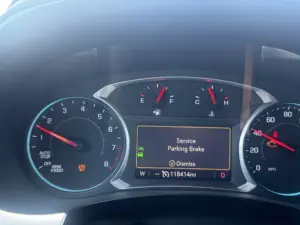

Dealing with a service parking brake message can be frustrating, especially when it shows up without warning and leaves you wondering whether the issue is minor or something that needs immediate attention. In many modern vehicles, this alert can appear for several reasons, including faults in the electronic parking brake (EPB), low system voltage, worn brake components, or problems detected by the vehicle’s ECU. Because the parking brake is tied to both safety and convenience, even a simple warning can feel alarming when it appears on the dashboard.
The good news is that this message does not always mean a major failure. Sometimes it points to something straightforward, such as a low brake fluid level, a weak battery, a dirty switch, or a connection issue. In other situations, it can indicate a deeper problem inside the braking or electronic control system. Understanding why the warning appears is the first step toward solving it with confidence instead of guessing and replacing parts unnecessarily.
Table of Contents
This article walks you through the most common causes, practical diagnostic steps, and realistic solutions for a service parking brake message. Along the way, you will learn how the parking brake system works, how the electronic parking brake interacts with the ECU, what symptoms deserve faster action, and when a professional inspection becomes the safest option. With the right approach, you can move from confusion to clarity and handle the issue more effectively.
Understanding the Service Parking Brake Message
When your vehicle displays a service parking brake message, it is telling you that the parking brake system has detected a fault or an operating condition outside its normal range. That message can appear in vehicles with either a traditional parking brake setup or, more commonly, an electronic parking brake system. In most cases, the warning is meant to prevent you from ignoring a problem that could affect how securely the vehicle remains parked or how safely the braking system behaves when the parking brake is applied or released.
Modern parking brake systems are more advanced than many drivers realize. What once relied mainly on a simple cable and lever is now often controlled through modules, motors, switches, and sensors. These parts communicate through the vehicle’s electronics, and that is why the message may appear even when the brake seems to work normally at first glance. The system is not just checking whether the brake is on or off. It is also monitoring voltage, switch input, actuator position, control logic, and in some vehicles the relationship between the parking brake and the main braking system.
Understanding each part of the system helps make the warning less mysterious. Instead of seeing it as a vague dashboard annoyance, it becomes a useful clue. The alert is essentially your vehicle’s way of saying that something about the parking brake system deserves attention before it becomes a larger inconvenience or a safety concern.
Function of the Parking Brake
The parking brake exists for one simple but critical reason: it keeps the vehicle stationary when parked. That function becomes especially important when you leave the vehicle on an incline, a decline, or any surface where relying on the transmission alone is not ideal. On manual-transmission vehicles, the parking brake is essential for preventing rolling. On automatic vehicles, it adds an extra layer of security and reduces stress on the transmission parking pawl.
In older designs, the system usually relied on a lever or pedal connected to cables that mechanically applied the rear brakes. It was direct, durable, and fairly easy to understand. But it also depended on physical effort, cable adjustment, and mechanical condition. Modern vehicles have increasingly replaced that arrangement with electronic systems that simplify operation and integrate more smoothly with other safety features.
With an electronic parking brake, you usually press or pull a small switch instead of working a hand lever or foot pedal. The system then commands electric motors or actuators to apply the rear brakes. This arrangement is cleaner, more compact, and more sophisticated. It also makes features like automatic brake hold, hill-start assist, and in some vehicles emergency stopping strategies easier to integrate.
Even though the design has changed, the purpose has not. The parking brake still needs to hold the vehicle securely whenever you park. That is why a fault warning deserves respect. If the system cannot apply or release properly, you may deal with more than a nuisance message. You could face uneven braking, a brake that fails to engage completely, or a brake that stays applied when it should release.
When the system notices a fault, it may display a service electronic parking brake message on the dashboard. That message is not there to scare you. It is there to warn you that the feature designed to keep your vehicle safely in place needs attention.
Electronic Parking Brake: An Overview
The electronic parking brake, often shortened to EPB, is the modern replacement for the traditional handbrake. Instead of using a purely mechanical cable system, it relies on electronic controls and actuator motors. For the driver, the biggest change is convenience. Applying the brake no longer means yanking a lever or pressing down a pedal with force. It can be done with the press of a button or switch.
That convenience, however, is only part of the story. The real advantage of the EPB is how well it can integrate with other systems inside the vehicle. It can work with hill-start assist, making it easier to pull away on an incline without rolling backward. It can coordinate with automatic brake hold in stop and go traffic. In certain vehicles, it may automatically apply when the engine is turned off and release when the vehicle is ready to move. All of this is possible because the EPB is part of the car’s electronic network rather than a stand-alone mechanical device.
As useful as it is, the EPB also introduces more potential failure points. A warning can be triggered by wiring problems, low battery voltage, a faulty switch, damaged actuator motors, or issues inside the control module. In some cases, the system may flash a parking brake light, show a dedicated fault message, or display a more general service parking brake warning.
It is also worth knowing that electronic parking brake symptoms are not always dramatic. Sometimes the brake may still seem to engage, but more slowly than usual. Sometimes it may release unevenly or only after a second attempt. Sometimes the warning appears only in cold weather, after a weak battery event, or when the vehicle has been sitting for a while. These patterns matter because they often point toward voltage, switch, or actuator issues rather than total mechanical failure.
If you receive a warning, it is best to diagnose the problem promptly. The EPB is part of the vehicle’s safety system, and unlike a simple cabin switch or accessory feature, it is not something to ignore for weeks at a time. Early attention often means a simpler, cheaper repair.
Another important point is that service procedures can vary between manufacturers. Some vehicles require the EPB to be placed in a dedicated service mode before rear brake work is performed. If that step is skipped, the system can set faults or behave unpredictably. That is one more reason why understanding your vehicle’s system matters before repairs begin.
ECU and Parking Brake Interaction
The ECU, or Electronic Control Unit, acts like the brain of the vehicle. It monitors and coordinates countless systems, including the parking brake. In modern vehicles, the parking brake no longer works in isolation. The ECU receives information from sensors, the brake switch, voltage monitors, brake pedal inputs, and other related modules. It then decides whether the system is operating correctly or whether a warning should be displayed.
This interaction is one of the main reasons a service parking brake message can appear even when there is no obvious mechanical issue. The ECU is not just reacting to visible failures. It is also watching for abnormal patterns. For example, if the EPB switch signal is inconsistent, if the actuator takes too long to engage, or if voltage drops below what the module expects, the ECU may log a fault and alert the driver.
A dirty or damaged EPB switch is a good example. The switch may still function sometimes, but if its signal is unstable, the ECU may interpret that as a fault. Similarly, a wiring problem between the switch and the control module can create confusing symptoms. The driver may think the parking brake itself is the problem, while the real issue is simply that the electronic command is not reaching the system cleanly.
Software glitches can also play a role. As vehicles become more software-dependent, updates sometimes become necessary to correct false warnings, calibration errors, or communication problems between modules. In these cases, the braking hardware may be fine, but the vehicle’s control logic still needs attention.
Regular maintenance and timely electrical checks can help prevent many ECU-related parking brake issues. Clean battery terminals, healthy charging voltage, secure grounds, and proper brake service all reduce the chance of the ECU seeing something abnormal and triggering a warning. In other words, the ECU is only as reliable as the information it receives. When its inputs are clean and stable, the parking brake system usually performs exactly as intended.
Common Causes of the Service Parking Brake Warning
If you have ever seen a “Service Parking Brake” warning light appear on your dashboard, you already know how distracting it can be. The challenge is that the alert does not always point to one single cause. In real-world diagnostics, several issues can trigger it, and some are surprisingly simple while others take a bit more testing to confirm.
The most common reasons usually fall into four categories: low brake fluid, worn brake pads, battery or voltage problems, and faults involving sensors or connections. Each one affects the system differently, but all of them can disrupt the way the vehicle monitors or applies the parking brake. The sections below explain how these faults develop, what symptoms often come with them, and why addressing them early matters.
Low Brake Fluid Level
A very common reason for the service parking brake warning is low brake fluid. Brake fluid is what allows the hydraulic braking system to transfer pedal force into real stopping power. When the fluid level drops too low, hydraulic pressure can be affected, and the vehicle may trigger a warning because the braking system is no longer operating under ideal conditions.
In many vehicles, the brake fluid reservoir is transparent or has a visible side marker so you can quickly check the level. If the fluid is below the “MIN” line, that is your first clue. Topping it off may clear the issue in some cases, but the better question is why the level dropped in the first place.
Sometimes a low level is caused by normal brake pad wear. As pads wear thinner, the caliper pistons extend farther, and the fluid level in the reservoir gradually drops. That is normal to a point. In other cases, low fluid may indicate a leak somewhere in the system, and that is much more serious. A slow leak may not be obvious at first, but it can affect braking performance and trigger multiple warning messages over time.
Your owner’s manual will tell you which type of brake fluid your vehicle requires. Using the correct fluid matters because not all brake fluids behave the same way under heat and pressure. Refilling to the proper level can restore system function, but it should always be paired with an inspection for worn pads, caliper seepage, hose issues, or master cylinder leaks. Treat low brake fluid as a symptom, not just a number to correct.
Keeping the fluid level in range does more than clear a warning. It supports overall brake performance, protects the hydraulic system, and helps the electronic parking brake work with the rest of the braking system as intended.
Wear and Tear of Brake Pads
The condition of your brake pads can also trigger a service parking brake message. Brake pads naturally wear over time, and as they thin out, their ability to create proper friction decreases. Some vehicles have wear sensors that alert you when the pads are close to the end of their service life. In others, the warning may appear because worn pads are indirectly affecting fluid level, actuator travel, or brake performance.
One of the clearest clues is noise. Grinding, scraping, or persistent squealing when you press the brake pedal often signals that the pads are worn and need replacement. If you hear these sounds and also see a service parking brake warning, the connection is worth taking seriously. Worn pads can affect the entire braking system, not just normal stopping performance.
In vehicles with an electronic parking brake, the rear brake components are especially relevant because the system often applies the rear brakes electronically. If those pads are excessively worn, the EPB may struggle to apply or release correctly, or the system may interpret the extra actuator travel as a fault. This is one reason why regular rear brake inspections matter, even on vehicles that do most of their braking work up front.
Routine maintenance is the best defense here. Brake pads wear gradually, which means the signs are usually visible before a failure point is reached. Replacing them when they are due not only improves safety but can also prevent rotor damage, reduce stress on the parking brake system, and keep the warning message from coming back.
Ignoring worn pads almost always makes the final bill worse. What could have been a simple pad replacement can turn into damaged rotors, overheated calipers, uneven brake operation, and additional electronic warnings. Acting early is cheaper and safer.
Battery and Voltage Issues
Sometimes the service parking brake warning has less to do with the brake hardware and more to do with the vehicle’s electrical supply. Modern parking brake systems depend on stable voltage. If the battery is weak, the alternator is underperforming, or a connection is loose or corroded, the EPB system may not receive the power it needs to operate correctly.
This is why low system voltage is a common trigger for parking brake warnings. The actuators and control modules need a reliable electrical supply, and when voltage drops, the system may log a fault even if the mechanical side of the brakes is healthy. In other words, the brakes themselves may not be the problem. The electronics that manage them may simply be starved of power.
Other symptoms often appear alongside voltage-related brake warnings. You may notice dim headlights, slow-moving power windows, sluggish starting, erratic infotainment behavior, or other dashboard messages. These clues matter because they suggest the issue is broader than the parking brake alone.
If your battery is old or struggles to hold a charge, testing it should move high on your priority list. Battery age, cold weather, and short driving cycles all contribute to poor system voltage. Loose battery terminals can make things worse by creating intermittent power drops that confuse the vehicle’s electronics.
Ensuring a healthy battery and charging system often clears the service parking brake warning and improves overall vehicle performance at the same time. From an expert perspective, this is one of the most overlooked causes of electronic brake complaints because drivers naturally assume the warning must point only to the brakes. In reality, the power supply often deserves just as much attention.
Sensor and Connection Troubles
Finally, sensor issues and faulty connections are frequent causes of the service parking brake warning. Modern vehicles depend on sensor data and clean electrical signals to manage nearly every system. If those signals become unreliable, the ECU reacts by setting a fault and notifying the driver.
Brake-related sensors may monitor actuator position, switch status, brake pedal input, or wheel speed, depending on the vehicle’s design. If any of these sensors fail or if their wiring becomes loose, damaged, or corroded, the parking brake system can lose the information it depends on. The result may be an intermittent warning, a brake that refuses to apply, or a brake that releases unpredictably.
Dirt and debris can also play a role, especially around exposed connectors or moving brake components. In some cases, simply cleaning a sensor area or reseating a connector resolves the issue. In other cases, corrosion inside the connector or a partially broken wire causes an intermittent fault that takes more careful testing to identify.
Inspecting the visible wiring and connections around the brake system is a smart starting point. Look for rubbed insulation, loose plugs, moisture, greenish corrosion, or damage near suspension and brake components. Regular checks like these can prevent sensor issues from growing into more serious and expensive repairs.
From a diagnostic standpoint, connection problems are especially tricky because they can mimic much larger failures. A vehicle may behave as though the actuator or control module is faulty, when the real issue is just a poor electrical path. That is why a careful inspection often saves both time and money.
Diagnostic Steps for Service Parking Brake Alert
When you receive a “Service Parking Brake” alert, the smartest response is a structured diagnostic process. Jumping straight to parts replacement can waste money and still leave the problem unresolved. A better approach is to start with basic observation, then move through visual inspection, electronic testing, and finally professional diagnosis when needed.
Good diagnostics are about pattern recognition as much as they are about tools. Does the warning appear every time you start the car, or only after a few minutes of driving? Does it come with other symptoms like dim lights, slow cranking, or brake noise? Does it disappear after restarting the vehicle? These details are often what separate a quick fix from a long guessing game.
The following steps guide you through that process in a practical order, moving from the easiest checks to the more advanced ones.
Initial Error Message Assessment
The first thing to do is look carefully at the exact message displayed on your instrument cluster, DIC, or electronic display. Vehicles do not always use identical wording, and the details matter. Some systems may say “Service Parking Brake,” while others may display “Service Electronic Parking Brake” or show a dedicated symbol. If another warning light appears with it, such as the ABS light or battery light, that is an important clue.
Note whether the parking brake light is flashing, staying solid, or appearing with other indicators. In some GM vehicles, for example, the icon may suggest that the parking brake is partially applied or not fully released. That changes the diagnostic direction, because it points more toward actuator movement or switch problems than a general system warning.
You should also pay attention to when the message appears. Does it happen immediately on startup, after applying the brake, after driving a short distance, or only in certain weather conditions? Restarting the vehicle once can help determine whether the fault is temporary or persistent. If the warning disappears and then comes back later, that often points toward voltage instability, intermittent wiring, or a sensor issue rather than a constant mechanical failure.
These details create a baseline for the rest of the diagnosis. Even a skilled technician will ask about the conditions under which the message appears because it helps narrow down the list of likely causes before any tools come out.
Inspection of the Braking System
Next, perform a visual inspection of the braking system. Start with the basics: look at the brake pads and rotors for obvious wear, heat damage, or scoring. Severely worn components can trigger alerts directly or indirectly by affecting brake fluid level and caliper travel.
If your vehicle uses a traditional parking brake mechanism in addition to or instead of an EPB, inspect the parking brake cables, levers, and linkage points. Rust, binding, or physical damage can prevent normal operation. A parking brake that does not fully release can create heat, noise, and warning messages. A brake that does not apply firmly enough may also trigger system concerns.
For vehicles with an electronic parking brake, the inspection changes slightly. You may not have a simple cable system to examine, but you can still look for visible damage around the rear brake calipers, actuators, wiring connectors, and mounting points. Any sign of fluid leakage, broken connectors, damaged harnesses, or impact to the brake hardware deserves attention.
Check the brake fluid reservoir during this inspection as well. A low level, dirty fluid, or obvious leak can quickly change the diagnostic direction. Even if the vehicle still stops normally, the system may be warning you early.
This step matters because it helps you separate electronic faults from obvious mechanical wear. If you can already see worn pads, rusted hardware, or a leaking caliper, the diagnosis becomes much more focused.
Electronic Diagnostics
Electronic diagnostics are often the turning point in finding the actual cause of a service parking brake message. Using an OBD-II scan tool, you can access stored fault codes related to the EPB or braking system. Many modern vehicles save these codes the moment a fault is detected, and they provide a much clearer direction than a warning light alone.
Plug the scan tool into the vehicle’s diagnostic port and check for codes in the brake, body, or parking brake system if your tool supports those modules. Some basic scanners only read engine-related codes, while more advanced ones can access electronic brake modules. The better the tool, the more useful the results will be.
Once you retrieve the codes, write them down instead of clearing them immediately. Then consult the vehicle manual, service information, or a reliable code database to understand what they mean. A code may point to a low-voltage condition, a switch problem, an actuator fault, or a communication issue inside the electronic parking brake system.
These codes are powerful because they help distinguish between symptoms and causes. For example, a driver might assume the warning is due to worn brakes, while the code reveals a low battery voltage issue affecting the EPB. Or the code may show that the actuator circuit is failing even though the brake pads still have life left in them.
Electronic diagnostics do not replace visual inspection, but they make the rest of the work far more efficient. Rather than guessing, you are now following evidence from the vehicle itself.
Professional Dealership Diagnostics
If the warning remains after the initial checks, the next step is often professional diagnosis. A dealership or a qualified independent shop with advanced equipment can perform a more detailed inspection than most home tools allow. That is especially important when the problem involves software, actuator calibration, hidden electrical faults, or module communication errors.
Professional diagnostic work is often more thorough because technicians can access manufacturer-specific fault codes, run guided test procedures, and command the electronic parking brake system through service functions. They can also perform software updates or relearn procedures when necessary, something basic scan tools cannot usually do.
This step becomes especially valuable when the warning is recurring, the issue is intermittent, or the system has already been reset but the fault keeps returning. Hidden electrical problems and software-related faults are much easier to identify with factory-level tools and accurate service data.
These diagnostic steps give you a logical path from simple observation to advanced repair. Whether the issue turns out to be minor or more involved, this process helps you approach it with confidence instead of uncertainty.
Troubleshooting the Electronic Parking Brake
When dealing with an electronic parking brake problem, there are three areas worth special attention: system reset procedures, low-voltage conditions, and mechanical or fluid-related faults. These are the issues most likely to trigger a warning even when the system is only partially failing.
Because the EPB relies on both electronics and physical brake hardware, successful troubleshooting usually means checking both sides of the system. An actuator may be fine, but low voltage may keep it from working correctly. The pads may still have material left, but rust in the caliper or debris in the mechanism can make the brake behave as though the electronics are at fault. The goal is to look at the whole system rather than focusing on one component too soon.
Resetting the EPB System
Resetting the EPB system is sometimes enough to clear a temporary fault. Start by locating the EPB switch, which is usually near the center console or dashboard. Turn the vehicle on and off a few times and then try engaging and releasing the parking brake. In some cases, the system simply needs a clean restart after a minor electrical interruption or a false warning event.
Some vehicles also require a specific service mode before certain brake-related work can be done or before the system can be reset properly. Service mode temporarily changes the way the parking brake system behaves so repairs or relearn procedures can occur without interference from other modules. If your vehicle requires this, the exact process will be described in the owner’s manual or service information.
It is important not to confuse a reset with a repair. A reset can clear temporary glitches, but it will not fix a worn actuator, bad switch, damaged wire, or low brake fluid. If the warning disappears and then quickly returns, the fault is still there and the system is simply detecting it again.
That said, resets still have value. They help determine whether the issue is constant or intermittent, and they can sometimes restore operation long enough for further testing. In expert diagnosis, a reset is often part of the process, but never the final conclusion unless the problem truly stays gone.
If the vehicle manual provides a specific EPB relearn or reset sequence, follow it exactly. These systems are sensitive to timing, switch position, and vehicle state, so guessing your way through a reset can create more confusion than progress.
Addressing Low System Voltage
Low system voltage is one of the most common reasons an EPB warning appears, and it is often missed because the parking brake seems unrelated to battery condition at first glance. In reality, the EPB depends on stable electrical power. If the battery is weak, the charging system is underperforming, or a connection is poor, the parking brake module may respond with a fault warning.
Begin by checking the battery with a voltmeter. A healthy battery at rest should usually show around 12.6 volts, though exact numbers can vary slightly. If it is significantly lower, or if the engine cranks slowly, battery condition becomes a strong suspect. Also inspect the battery terminals for corrosion and confirm they are tight and clean.
Do not overlook the charging system. A good battery can still cause trouble if the alternator is not keeping it charged properly. If voltage drops while driving or after a short period parked, the EPB system may see low supply voltage and trigger a warning. In some cases, the warning shows up first thing in the morning because the battery weakens overnight.
Loose or dirty connections can mimic a failing battery. A poor ground connection, corroded terminal, or weak negative cable can interrupt current flow and make the entire electrical system behave unpredictably. These are simple problems, but they can create surprisingly complex symptoms.
Resolving low-voltage issues often clears not only the parking brake warning but other strange electronic behavior as well. This is one reason experienced technicians check voltage early. It is faster to confirm the electrical foundation first than to chase multiple false faults later.
Dealing with Fluid and Mechanical Issues
Fluid and mechanical issues can also interfere with proper EPB operation. Low brake fluid is one example, but it is not the only one. Rust inside the rear brake calipers, contamination around the parking brake hardware, seized slide pins, and worn or damaged brake components can all cause the EPB to struggle or fail.
Start with the brake fluid reservoir. If the fluid level is below the recommended mark, top it off with the correct type for your vehicle and inspect the rest of the braking system for leaks or excessive pad wear. Brake fluid is essential for the main braking system, and because the parking brake interacts with it indirectly in many vehicles, low fluid can influence warning messages.
Then look at the rear brake hardware more closely. Dirt, rust, and corrosion can make the brake calipers bind, especially in regions with harsh winters or vehicles that sit for long periods. If the EPB actuator tries to apply or release the brake but the caliper mechanism is sticking, the system may interpret the resistance as a fault.
Regular cleaning and maintenance can prevent some of these issues, but once hardware becomes heavily corroded or damaged, repair or replacement is usually the correct solution. Worn or damaged parts should not be ignored simply because the vehicle still moves. A sticking rear brake can overheat, damage rotors, and create a cycle of recurring warnings.
From a diagnostic standpoint, fluid and mechanical issues often reveal themselves through feel and sound. Uneven brake behavior, drag, heat from one wheel, grinding, or a vehicle that does not roll freely after releasing the parking brake all point toward the mechanical side of the problem rather than pure electronics.
Preventative Measures and Maintenance
The easiest parking brake problem to deal with is the one that never develops. Preventative maintenance is not just about avoiding dashboard warnings. It is about protecting your braking performance, reducing repair costs, and making sure the parking brake works the moment you need it. Modern parking brake systems are reliable when they are cared for, but like any safety system, they respond best to regular attention.
Most service parking brake warnings do not appear out of nowhere. They are often the result of small issues that built up quietly over time: low fluid, worn pads, neglected battery terminals, moisture in an electrical connector, or a sticky rear caliper that was ignored because the vehicle still seemed to drive normally. Small preventive habits help stop those problems before they reach the dashboard.
Regular Brake System Checks
Regularly checking your brake system is one of the best ways to avoid surprise warnings. Make it a habit to watch the parking brake light. If it stays on when it should not, or behaves differently than normal, that is often an early sign that something needs attention. Do not wait for a second or third message before investigating.
Check the brake fluid level periodically, especially if your vehicle has higher mileage or if you have noticed any change in pedal feel. A low level might point to a leak or to worn pads, and both are worth addressing before they grow into bigger problems. Also pay attention to surrounding electrical components. On some vehicles, a compromised light bulb socket seal or nearby moisture intrusion can contribute to electrical irregularities and false alerts, especially if wiring is routed through the same area. It is an unusual detail, but moisture and electrical systems rarely mix well.
Make sure to inspect the parking brake lever or switch behavior as part of your routine. Whether your vehicle uses a traditional lever or an electronic switch, it should return to its normal position smoothly and respond consistently. If you park on an incline regularly, pay extra attention to how well the brake holds the vehicle. Setting and releasing it a few times can reveal problems early, especially if the brake feels slow, noisy, or reluctant to release.
When performing any electrical checks, disconnect the negative battery terminal first to reduce the risk of short circuits. That small step protects both you and the vehicle’s electronics. It is especially important in cars with electronically controlled brake modules and switch circuits.
Regular checks do not need to be overly complicated. Even simple habits like listening for brake noise, watching for warning lights, monitoring fluid level, and noticing changes in parking brake feel can help you catch issues before they become serious. Good maintenance is often just careful observation done consistently.
Importance of Timely Repairs
Timely repairs make a major difference in both safety and cost. If a part of the brake system needs attention, whether that means tightening a loose wire, replacing worn brake pads, cleaning a corroded connection, or addressing low brake fluid, it is wise to handle it promptly. Small brake issues rarely improve on their own. They usually grow into bigger ones.
Simple repairs are often far less expensive than the damage caused by delay. A relatively minor fix in the $100 to $200 range can prevent a more complicated repair involving rotors, actuators, damaged calipers, or repeated diagnostic labor. The parking brake warning is often an early chance to act before the problem spreads.
Noise is one of the clearest signs not to postpone repairs. Grinding usually means brake pads are worn beyond their proper limit. Once metal contacts the rotor, the cost rises quickly. The same principle applies to electronic faults. A weak battery or corroded connector may seem minor, but if it leaves the EPB struggling repeatedly, the added strain can contribute to other failures.
Taking care of the brake system keeps the entire vehicle more reliable. It also improves confidence. There is a real difference between driving a car that feels dependable and driving one that constantly flashes warnings you are trying to ignore. Timely repairs restore that sense of trust.
Can You Keep Driving with a Service Parking Brake Message?
This is one of the most common questions drivers ask, and the answer depends on what else is happening. In some cases, the vehicle can still be driven cautiously for a short time while you arrange inspection or repairs. In other cases, the warning should be treated as urgent because it may be tied to a broader braking problem.
If the warning appears by itself and the brake pedal feels normal, the vehicle may still be safe enough to drive carefully to a repair shop. That said, you should avoid assuming everything is fine just because the car still moves and stops. The parking brake system could still fail to hold properly on an incline, or the warning could be the first sign of a voltage or hydraulic problem that gets worse.
If the warning appears with a soft brake pedal, low brake fluid, brake noise, an ABS light, or a battery warning, the situation becomes more serious. Multiple warnings often mean the problem is not isolated to the parking brake alone. In that case, continued driving should be limited until the vehicle is inspected.
From an expert standpoint, the safest rule is simple: if braking feel changes, if the vehicle rolls when parked, or if other brake-related messages appear, do not treat the issue as routine. Parking brake warnings can range from mild to urgent, and the surrounding symptoms are what determine the risk level.
Common Mistakes Drivers Make After Seeing the Warning
One of the biggest mistakes is assuming the warning must be a glitch and doing nothing about it. Temporary glitches happen, but repeated warnings rarely disappear permanently without a cause. Ignoring the message simply delays the diagnosis and can allow a small issue to become more expensive.
Another common mistake is replacing parts too quickly. It is tempting to blame the parking brake switch, the rear brakes, or even the actuator right away, but without inspection or diagnostic codes, that approach often wastes money. A low battery or bad connection can make several healthy components look faulty.
Drivers also sometimes top off brake fluid without asking why it was low in the first place. That can hide the symptom temporarily while missing the real cause, such as worn pads or a slow leak. Fluid level matters, but so does the reason it changed.
Finally, many people forget to look for related symptoms. Warning lights do not always travel alone. When a service parking brake message appears, the brake pedal feel, battery behavior, startup performance, and other dashboard alerts all become part of the diagnostic picture. Missing those details makes troubleshooting harder than it needs to be.
What a Technician Usually Checks First
When a vehicle arrives with a service parking brake warning, an experienced technician usually follows a consistent routine. First comes a quick assessment of the warning message and any companion lights. Then comes a battery and voltage check, because unstable system voltage can create misleading faults across multiple modules.
After that, the technician checks brake fluid level, pad condition, and visible brake hardware. If the vehicle has an EPB, attention turns to rear calipers, actuator connections, and scan tool access to brake module codes. This order matters because it separates basic causes from more complex ones quickly.
The reason this approach works so well is that it addresses the most common and most influential faults first. It is a reminder that expert diagnosis is often less about having exotic tools and more about following the right sequence.
Final Thoughts
A service parking brake message can feel intimidating, but it becomes much more manageable once you understand what the system is actually trying to tell you. In many cases, the warning is tied to a solvable issue such as low brake fluid, worn brake pads, weak battery voltage, or a sensor or connection fault. In other cases, it may point to a deeper EPB or module problem that needs professional attention. Either way, the message is valuable because it gives you a chance to act before the problem becomes more serious.
The smartest approach is always a methodical one: check the basics, inspect the brake system, evaluate voltage, scan for codes, and escalate to professional diagnosis if needed. That process protects both your wallet and your safety. Instead of chasing random parts, you are following the evidence.
Above all, remember that the parking brake is more than a convenience feature. It is part of the vehicle’s safety system. Treating warnings early, maintaining the brake system regularly, and handling small problems before they grow is the best way to keep your vehicle dependable and your driving experience stress free.