
If your car has suddenly started running rough, hesitating, misfiring, or refusing to start after sitting for a while, one possible cause deserves immediate attention: water in the gas tank. It is a more common problem than many drivers realize. Older vehicles with rusty fuel tanks and poor venting are especially vulnerable, but newer vehicles are not immune either. Bad fuel, condensation, faulty seals, careless storage, or contamination during refueling can all introduce moisture into the tank.
And no, despite how many jokes people make about “watering down” fuel, your engine does not appreciate it. Gasoline engines are designed to burn fuel and air in a very controlled ratio. Add water to that process, and the engine quickly begins to protest. Sometimes it protests mildly with rough idle and poor acceleration. Sometimes it protests more dramatically with no-start conditions, repeated misfires, or in severe cases, mechanical trouble that can become expensive fast.
As an automotive diagnostic specialist, I can tell you that water contamination is one of those issues that can be easy to miss at first because it mimics several other problems. Drivers often suspect bad spark plugs, a failing fuel pump, dirty injectors, weak ignition coils, or low-quality gasoline. Sometimes the symptoms do overlap. But when the problem starts after refueling, after long storage, or after the car has been sitting for some time, water in the fuel system needs to be near the top of the suspect list.
In this guide, I will explain what water in the gas tank does, how to recognize the most common warning signs, why the symptoms often get worse after the car has been standing still, and the correct ways to remove the water before it creates bigger trouble. I will also explain what happens inside the combustion chamber, why some quick fixes work only for small amounts of water, when you need to drain the tank completely, and how to prevent this problem from returning.
By the end, you should know not only what to look for, but also why those symptoms happen and which repair method makes sense for the amount of contamination you are dealing with.
Let’s begin with the core question: how do you know when water is actually in the gas tank?
What Are the Symptoms of Water in the Gas Tank?
The most common signs of water in the gas tank include hard starting, rough idle, misfires, rough acceleration, slow acceleration, excessive steam from the exhaust, a check engine light, and in more serious cases, a no-start condition. Another important clue is timing: the symptoms often become much worse after the vehicle has been parked for a while.
Here is a reorganized overview of the symptoms, starting with the ones most drivers notice first and ending with the more severe outcomes:
- Hard starting
- Rough idle
- Misfires
- Rough acceleration
- Slow or weak acceleration
- Check engine light
- Steam from the exhaust
- The engine may not start at all
- The symptoms get worse after the car sits
Some of these symptoms overlap, and some may show up together. That is normal. Water contamination rarely causes just one clean, isolated complaint. The fuel and ignition systems are closely linked, so once the engine starts receiving a poor mixture, several drivability issues appear at once.
Now let’s break those symptoms down one by one and examine what is actually happening inside the engine when water mixes with gasoline.
How Water in the Fuel Affects the Engine
Before we go symptom by symptom, it helps to understand the basic science behind the problem. Gasoline is meant to atomize, mix with incoming air, and ignite when the spark plug fires. Water does not behave the same way. It does not burn with the gasoline, it does not contribute useful energy to combustion, and it disrupts the carefully balanced air-fuel mixture the engine control module is trying to maintain.
When water enters the fuel tank, one of two things usually happens. If the amount is very small, it may mix enough with the fuel—or get absorbed by a treatment chemical—to pass through the system with limited symptoms. If the amount is larger, it separates from the fuel and settles lower in the tank because water is denser than gasoline. That becomes a problem because the fuel pickup often draws from the bottom region of the tank. The longer the car sits, the more the water can separate and collect, which is why startup symptoms after storage are such a strong clue.
Once water reaches the fuel system, it can disrupt combustion in several ways. It can weaken the burn, interrupt ignition, trigger misfires, confuse fuel trims, and in more severe cases, prevent combustion almost entirely. The result is an engine that feels confused, uneven, and unstable because it is being asked to run on something it was never designed to handle.
That explains why water in the gas tank creates such a broad set of symptoms. It is not attacking one part. It is corrupting the fuel supply itself.
1. Hard Starting

One of the earliest and most common signs of water in the gas tank is a hard starting condition. If the engine cranks longer than normal, struggles to catch, or starts only after several attempts, contaminated fuel should be considered—especially if the issue appeared suddenly or after refueling.
Starting an engine is a delicate event. At startup, the fuel mixture must be close enough to the correct ratio for the spark plugs to ignite it cleanly. When water is mixed into the fuel, that ratio is disrupted. Instead of drawing in a clean combustible mixture, the engine may be receiving droplets or slugs of non-combustible water mixed with gasoline. The spark plug can still fire, but the burn may be weak, delayed, or absent in one or more cylinders.
This often shows up as extended cranking. The engine wants to start, but it cannot establish a stable combustion rhythm. It may sputter briefly, then die, or it may crank much longer than usual before finally catching. In some cases, it starts but runs terribly for the first few seconds because the contaminated fuel has not fully moved through the system yet.
The reason this symptom is especially common after the vehicle has been parked is that water tends to separate and collect. When you first crank the engine, the fuel pump may send a more water-heavy mixture toward the injectors than it would if the car had been running recently and the contents were more agitated.
Hard starting alone does not prove water contamination. Weak batteries, failing fuel pumps, leaking injectors, bad sensors, and ignition issues can all create similar behavior. But when hard starting appears together with rough idle, misfires, and symptoms after sitting, water in the tank becomes much more likely.
In diagnosis, patterns matter more than any single symptom. A one-time long crank could be many things. A repeated long crank combined with rough running and steam from the exhaust tells a more specific story.
2. Rough Idle
Rough idle is another very common sign that the fuel entering the engine is not right. At idle, the engine is operating with very little momentum and very little forgiveness. Minor changes in mixture quality or combustion stability are much more noticeable when the engine is barely working than when it is under steady load on the highway.
When water is present in the gasoline, some cylinders may ignite normally while others receive a weaker or contaminated mixture. The result is a shaky, uneven idle that may feel like the engine is stumbling, bouncing, or fighting to stay running. In some vehicles, you feel it through the steering wheel, seat, or dashboard. In others, you hear it first as an uneven rhythm from the engine bay.
This happens because the engine control module is trying to maintain idle speed with bad information. The oxygen sensors, mass airflow sensor, throttle position, and fuel trims are all working hard to stabilize an engine that is not receiving a normal fuel charge. The system compensates as much as it can, but it cannot make water burn like gasoline. So the idle remains unstable.
Rough idle caused by water contamination often comes and goes in waves. The engine may idle badly for several seconds, smooth out briefly, then stumble again as another water-contaminated portion moves through the injectors. That inconsistency is one of the clues that the fuel itself is part of the problem.
Because idle quality depends on so many factors, rough idle by itself should never be diagnosed blindly. Vacuum leaks, throttle body contamination, bad ignition coils, worn spark plugs, and injector problems can all look similar. But if rough idle appears with poor acceleration, misfires, and symptoms tied to storage or recent fueling, the possibility of water in the fuel becomes much stronger.
Engines are at their most sensitive when idling. That is why fuel contamination shows its hand there so often and so clearly.
3. Misfires
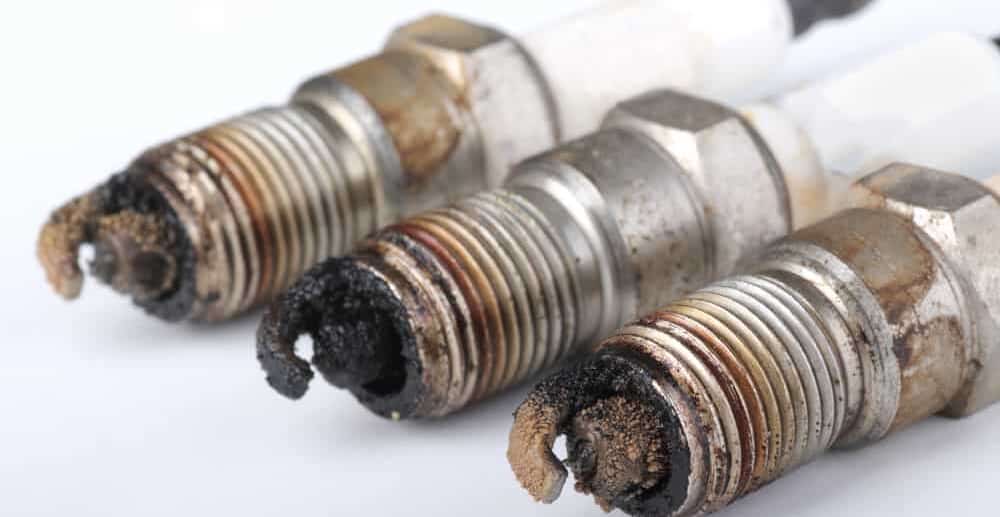
Misfires are one of the strongest signs that the engine is not receiving a proper combustible mixture. If your vehicle begins to jerk, stumble, or pulse as if one or more cylinders are dropping out, water in the gas tank is a realistic possibility.
A cylinder misfires when the air-fuel mixture fails to ignite properly or fails to contribute normal power during the combustion event. Water can cause this in a very direct way. When water enters the combustion chamber along with the fuel charge, it does not burn. Instead, it interrupts the ignition process. The spark may fire exactly on time, but the mixture itself no longer supports a clean, complete burn.
This creates what drivers feel as a stumble or hesitation. Depending on how much water is present, the misfire may be subtle at first or severe enough to trigger warning lights quickly. In some cases, the misfires are most obvious under light acceleration or while climbing a hill because that is when the engine needs clean, reliable combustion the most.
It is worth noting that rough acceleration and misfires are closely related. In many real-world cases, the “rough acceleration” the driver notices is simply the sensation of repeated misfires under load. That is why these symptoms often appear together and should be interpreted together.
Persistent misfires should always be taken seriously, no matter what causes them. If left unresolved, they can send unburned fuel into the exhaust, overheat the catalytic converter, and create larger repair bills. So even if water contamination turns out not to be the cause, the misfire itself is still a legitimate warning that should not be ignored.
If the misfires began shortly after buying fuel from a questionable station or after the car sat unused for a long time, that history makes fuel contamination a much more likely explanation.
4. Rough Acceleration

Rough acceleration is one of the most common complaints from drivers dealing with water in the fuel tank. The car may hesitate when you press the throttle, respond unevenly, or feel as though power is cutting in and out. Sometimes the engine pulls forward, then stumbles, then recovers again. That inconsistent response is exactly what contaminated fuel tends to create.
Under acceleration, the engine demands more fuel and cleaner combustion than it does at idle. If the mixture entering the cylinders includes water, the engine cannot develop power smoothly. Some cylinders may fire normally while others fail to contribute their share. That creates a jerky sensation that can feel like a transmission problem at first, even though the real issue begins in the fuel supply.
Drivers often describe this as “the car bucks,” “it falls on its face,” or “it feels like it cannot decide whether to go.” Those descriptions make sense because combustion is becoming inconsistent from cylinder to cylinder and moment to moment. The engine control system will try to compensate by adjusting fueling and timing, but it cannot correct water contamination the way it can correct a minor airflow error.
Rough acceleration is especially noticeable on vehicles with electronic throttle control because the engine response is expected to be smooth and immediate. When contaminated fuel interferes, the difference becomes very obvious. It can feel dramatic enough that drivers worry the transmission, turbocharger, or ignition system has failed.
That is why context matters so much. Rough acceleration by itself could point to many systems. Rough acceleration that starts after fueling, storage, or weather-related moisture exposure points much more strongly toward water in the gas tank.
In expert diagnosis, I always pay attention not just to what the symptom is, but when it appears and what event preceded it. Rough acceleration after a suspicious fill-up tells a different story than rough acceleration developing slowly over six months.
5. Slow or Weak Acceleration
While rough acceleration feels jerky and unstable, slow acceleration feels more like the engine has lost confidence. You press the pedal and the vehicle responds, but with less power than expected. It may feel sluggish, lazy, or reluctant to gain speed, especially under load.
This happens because the engine management system is built to respond to abnormal combustion by protecting the engine where possible. If the fuel mixture is inconsistent, the sensors begin feeding strange information back to the control module. Oxygen readings shift, combustion quality changes, and the control system may compensate by enriching or leaning the mixture in ways that reduce overall efficiency and output.
The result is a car that feels weaker than it should. It may not stumble violently, but it no longer accelerates with the clean, smooth energy it normally has. This can happen alongside rough acceleration, or it may be the more dominant symptom in vehicles where the control system is doing a better job masking the instability.
In some cases, slow acceleration from water in the fuel tank feels a lot like a partially clogged fuel filter, a weak fuel pump, or a dirty mass airflow sensor. That is why it is important not to jump to conclusions from a single symptom alone. But if slow acceleration appears together with rough idle, hard starting, or steam from the exhaust, the pattern becomes much more suggestive.
From the driver’s seat, slow acceleration feels frustrating. From a mechanical standpoint, it is the engine telling you it is no longer converting fuel into power the way it should. Water contamination is one of the simplest ways to create that exact situation.
6. Check Engine Light
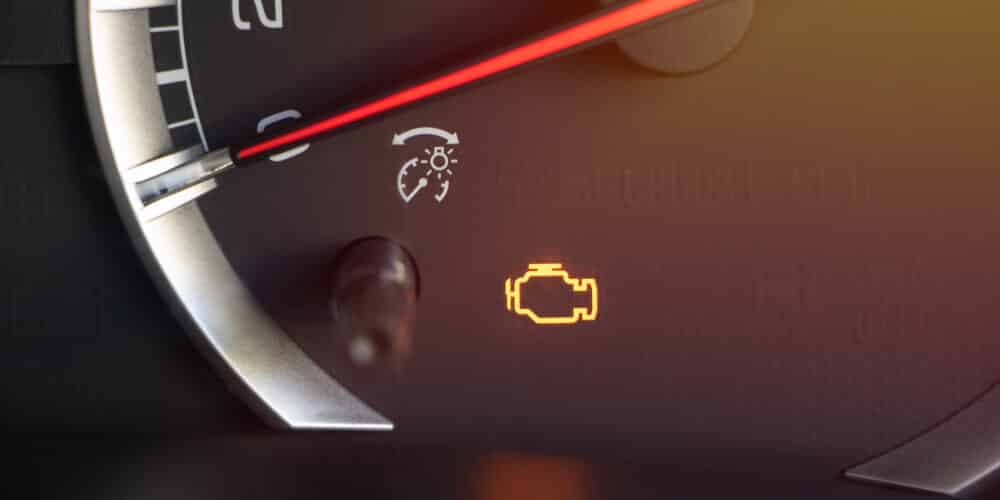
If the contamination is significant enough to upset combustion, it is very common for the check engine light to come on. Modern engines are monitored constantly by the engine control module. When sensors report behavior outside normal limits, the control module stores a trouble code and may illuminate the warning light on the dashboard.
Water in the fuel tank can trigger several types of fault patterns. Most commonly, it causes misfire-related codes because the cylinders are not burning the mixture correctly. It can also lead to fuel trim irregularities or oxygen sensor behavior that looks suspicious to the computer. If the misfire becomes severe enough, the light may flash rather than glow steadily.
A flashing check engine light should always be treated seriously. It often means the misfire is intense enough that raw fuel could be entering the exhaust system and damaging the catalytic converter. If that happens, the cost of the repair can rise quickly. So even if the original cause is “just water in the gas,” the secondary consequences can become expensive.
That is why scanning the vehicle for trouble codes is such a useful step. Even if the dashboard light does not tell you the exact cause, it gives you a trail to follow. Misfire codes, lean or rich condition codes, and random combustion-related codes can all support the diagnosis when paired with the right symptoms and timing.
Of course, the check engine light alone does not prove water contamination. It only tells you the engine management system has detected trouble. But when the light comes on after fuel-related symptoms appear, it becomes an important supporting clue rather than just a general warning.
If the light is on, scan it. If it is flashing, take the situation more seriously and avoid continuing to drive unless absolutely necessary.
7. Steam from the Exhaust
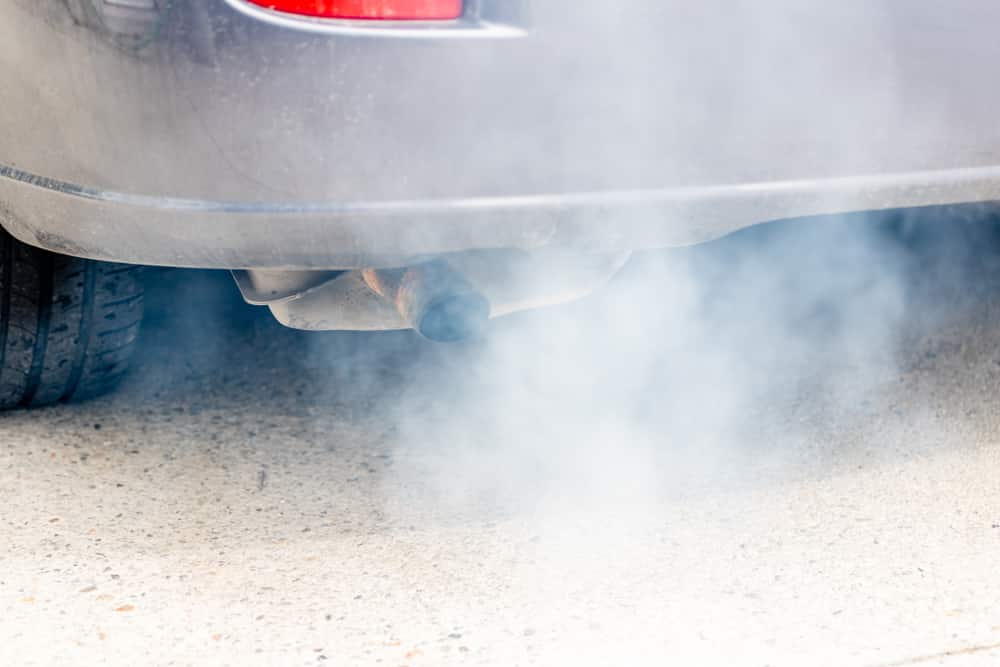
Excessive steam from the exhaust can be another clue that water is making its way through the fuel system and into the combustion chambers. When water enters the engine and is exposed to combustion heat, it turns into steam and exits through the exhaust.
Now, a small amount of visible vapor from the exhaust is perfectly normal in cool weather. That is not enough on its own to diagnose anything. The key is noticing more steam than normal, especially when combined with rough running, hard starts, or misfires. If the car is suddenly producing visible white vapor at the same time it is driving poorly, contaminated fuel becomes more plausible.
That said, this symptom must be handled carefully because white exhaust vapor can also point to coolant entering the combustion chamber from a head gasket problem. The difference comes from the overall symptom pattern. Water in the gas tank usually creates drivability problems tied to starting, idling, and acceleration. A coolant leak often adds overheating, coolant loss, or sweet-smelling exhaust into the mix. The context matters.
In a water-in-fuel case, the steam is simply a byproduct of the engine trying—and failing—to process something that was never supposed to be in the fuel stream. It is not always present, but when it appears alongside the other symptoms in this article, it becomes a useful diagnostic clue.
Think of it as supporting evidence, not the main proof. It is one piece of the puzzle, and it makes much more sense when viewed together with the other signs.
8. The Engine May Not Start at All

If enough water reaches the fuel system, the engine may refuse to start altogether. At that point, the contamination has gone beyond causing mild imbalance and into outright failure of the combustion process. The engine may crank, sputter, or try to catch briefly, but if the injectors are delivering too much water-contaminated fuel, the spark plugs simply cannot produce a normal burn.
In the more ordinary version of this failure, the engine just will not establish combustion because the mixture is too far from usable. In the more severe and less common version, a large enough amount of water can create the risk of hydrolock. Hydrolock occurs when liquid water enters the cylinder in a quantity large enough that the piston cannot compress it. Unlike air and fuel vapor, water does not compress in the same way. If a piston tries to rise against too much liquid, major internal damage can occur.
This is not the most common outcome of ordinary water contamination in the gas tank, but it is possible if the contamination is heavy enough and the engine continues trying to ingest it. Bent connecting rods and other serious internal failures can follow in extreme cases.
If the engine will not start and you strongly suspect heavy water contamination, repeated cranking is not a smart strategy. It is better to diagnose the fuel condition and remove the contamination than to keep trying to force a startup that may not happen safely.
For most drivers, the no-start stage is the point where the issue becomes impossible to ignore. The engine has moved beyond “running badly” and into “refusing to operate.” At that stage, the fuel system must be treated as contaminated until proven otherwise.
9. The Symptoms Are Worse After the Car Sits
This is one of the most important signs in the entire diagnosis, and it is the one many people overlook. If the vehicle runs especially badly after sitting for a while, water in the gas tank becomes far more likely.
The reason is basic physics. Water is heavier than gasoline, so it tends to sink to the bottom of the tank when the vehicle is parked and everything has time to settle. Most fuel pumps draw fuel from the lower portion of the tank, which means the first thing pulled into the fuel system after a long rest may contain a higher concentration of water than the mixture did when the car was actively moving around and agitating the tank contents.
This creates a very recognizable pattern. The car may start hard in the morning, run rough for a while, then improve slightly once fuel flow and mixing become more dynamic. Or the symptoms may be strongest after the vehicle has sat overnight, after several days of parking, or after seasonal storage. Once you drive it, the behavior may change enough to confuse the diagnosis unless you recognize why the timing matters.
This is one of the strongest clues separating water contamination from many other fuel and ignition issues. A failing ignition coil does not usually care how long the car sat. Water in the tank absolutely does. If a customer tells me, “It always runs worst first thing after it has been parked,” I immediately start thinking about fuel separation among the possible causes.
Pattern-based clues like this are extremely valuable because they point to the behavior of the contaminant, not just the behavior of the car. Water settles. Gasoline floats. The engine reacts differently depending on how much of each reaches the pump first. Once you understand that, the symptom becomes much easier to interpret.
What Causes Water to Get into the Gas Tank?
Once you suspect water contamination, the next logical question is how it got there in the first place. In older vehicles, the answer is often related to age and corrosion. In newer vehicles, it is usually connected to condensation, tank venting, filler neck issues, poor fuel quality, or the conditions in which the vehicle was stored.
One common cause is condensation. If a fuel tank sits partially empty, temperature swings can create moisture inside the air space above the fuel. Over time, that moisture can condense into water droplets and collect at the bottom of the tank. This is especially common in vehicles that are stored for long periods or used infrequently.
Another cause is poor tank ventilation or sealing. If the gas cap does not seal correctly, if the filler neck is damaged, or if venting components are compromised, moisture can enter more easily. Older vehicles with rusty tanks are especially vulnerable because corrosion can also introduce debris while making the system more likely to retain contamination.
A third cause is bad fuel from a station. While not extremely common, contaminated underground storage tanks, poor station maintenance, or fuel delivery issues can introduce water into the fuel you buy. If the symptoms begin soon after a fill-up and several drivers in the area complain about the same station, this possibility rises quickly.
There is also storage-related contamination. Seasonal vehicles, project cars, boats, generators, and seldom-driven cars are especially vulnerable because the fuel sits long enough for water separation and stale-fuel issues to develop together. In those cases, the contamination may not be from one event. It may be the result of months of neglect and moisture accumulation.
And of course, there are accidental or unusual cases: flood exposure, vandalism, or maintenance mistakes. These are less common, but they do happen.
The cause matters because if you only remove the water without fixing how it got there, the problem can return. Good repair is not just removal. It is correction of the source as well.
How to Confirm There Is Water in the Fuel Tank
Before you start draining tanks or adding chemicals, it is smart to confirm that water contamination is actually the issue. Since the symptoms can overlap with ignition, injector, or fuel delivery problems, a little verification goes a long way.
The most direct method is fuel sampling. If you can safely pull a sample from the tank or fuel line and place it in a clear container, you may see separation if water is present. Gasoline and water separate into layers when left undisturbed long enough, with water settling at the bottom. This is one of the clearest ways to confirm contamination.
A scan tool can also help indirectly. Misfire data, fuel trim readings, and oxygen sensor behavior can support the diagnosis, even though they do not directly identify water. If the codes and live data align with the symptom pattern and the timeline points to fuel contamination, the case becomes stronger.
Another clue is checking the fuel filter or draining point, if the vehicle design allows it. In older systems with serviceable filters or fuel drain access, contamination is sometimes visible there first. Newer cars are less friendly in that regard, so diagnosis often depends more on sample extraction and behavior analysis.
You can also use process-of-elimination logic. If the car began running badly immediately after refueling, if it worsens after sitting, if multiple cylinders misfire at random, and if ignition components look fine, fuel contamination becomes increasingly likely. A technician may still test coils, scan codes, and inspect spark plugs, but the pattern usually points the way.
Good diagnosis is about confidence, not guesswork. Water in the gas tank is too specific a problem to attack blindly when a little verification can point you in the right direction.
How to Get Water Out of the Fuel Tank
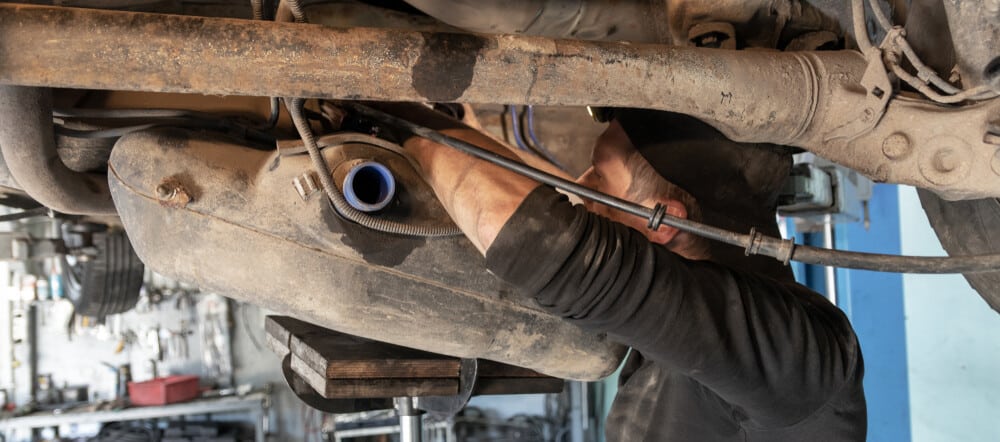
Once you are reasonably confident that water is in the tank, the next step is deciding how aggressive the fix needs to be. The correct repair depends heavily on how much water is present. A trace amount of moisture is one thing. A measurable layer of water at the bottom of the tank is another. Treating a major contamination event like a minor one usually wastes time and can prolong the problem.
As an expert rule, I divide the solutions into two categories: minor contamination and significant contamination. Small contamination may respond to a treatment additive designed to bind moisture. Significant contamination usually requires draining the tank and replacing the fuel filter, and in some cases flushing lines or cleaning the tank.
Below are the most practical methods, arranged in the order I would consider them based on seriousness and repair quality.
1. Drain the Tank, Replace the Fuel Filter, and Refill with Fresh Fuel
This is the most effective and most professional repair method when there is more than a small amount of water in the gas tank. If the contamination is meaningful enough to cause repeated drivability issues, this is usually the correct solution.
The goal is simple: remove the contaminated fuel-water mixture from the tank, replace the fuel filter, and refill the system with clean gasoline. In a workshop setting, this is often done with a dedicated vacuum or fuel extraction machine. That equipment makes it possible to remove fuel from the tank safely and thoroughly.
Some people attempt to pump the tank out using the vehicle’s own fuel pump. That can work to a degree, but it has limitations. Many fuel pickups do not sit at the absolute lowest point of the tank. That means some water can remain behind if you rely only on the in-car system. In smaller contamination cases, that may not matter much. In heavier contamination cases, it absolutely can.
Replacing the fuel filter after contamination is very important. If water and debris have passed through the system, the filter may be saturated, restricted, or carrying contamination that you do not want reintroduced once fresh fuel is added. On some vehicles, access to the filter is easy. On others, the filter is part of a tank module and the procedure becomes more involved. But the principle is the same: if bad fuel was in the system, do not trust the old filter blindly.
In more severe cases, especially on older vehicles with corrosion, the tank itself may need cleaning or inspection. If the water has been present long enough to create rust or sludge, simply draining the tank once may not be enough. That is where shop equipment and experience become especially valuable.
From a results standpoint, this method is the gold standard. It directly removes the problem rather than trying to dilute or chemically absorb it. If there is a lot of water in the tank, this is the method most likely to restore proper operation quickly and fully.
2. Use a Water-Removing Fuel Additive for Small Contamination
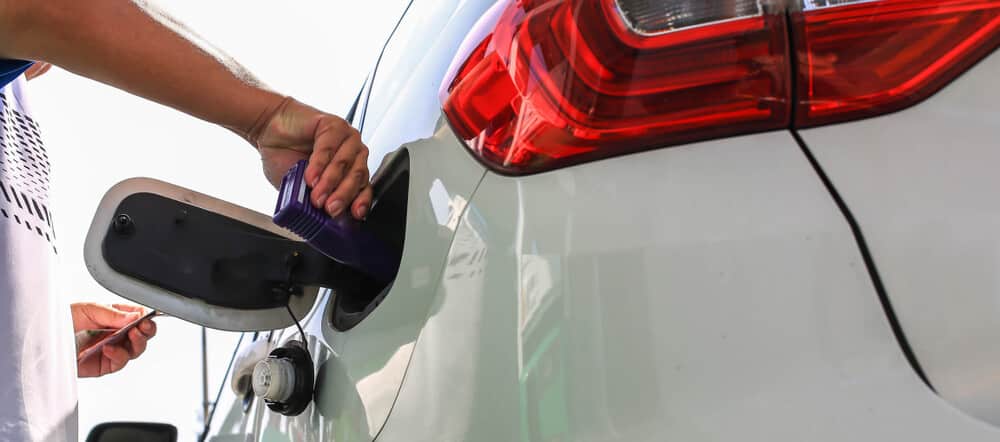
If you believe the contamination is minor, a fuel additive designed to absorb and disperse small amounts of water can be useful. This is the most realistic “quick fix” for light moisture contamination, not for major water accumulation.
These additives work by bonding with small amounts of water and helping it pass through the fuel system in a more manageable form so it can be burned or cleared without pooling separately in the tank. This approach can work well when the issue is light condensation or trace contamination rather than a major water event.
The key word here is small. A fuel additive is not a magic eraser for a badly contaminated tank. If the engine is misfiring severely, refusing to start, or clearly ingesting large amounts of water, this method alone is unlikely to solve the problem. In those cases, additives can waste time while the real problem remains in the tank.
Always follow the product instructions closely. More is not automatically better. Using far too much of an additive or using the wrong chemical can create its own problems. Stick to products specifically intended for moisture removal in gasoline systems and match the dosage to the fuel quantity in the tank.
This method is best thought of as a practical response to light contamination, not as a substitute for draining the tank when the contamination is obvious and severe.
3. Methanol or Alcohol-Based Moisture Treatment—Use with Caution
Some people use small doses of alcohol-based treatments to help absorb moisture in the tank, and historically this approach has been used in various fuel systems. Methanol and similar alcohols can bind with water, which is why they sometimes get discussed as a quick moisture remedy.
That said, this is not a method I recommend casually unless you know exactly what you are doing, the fuel system is compatible, and the quantity of water is very small. Modern fuel systems, seals, and material choices vary, and overdoing alcohol-based treatment can introduce new issues. Commercially formulated fuel-dryer products are generally safer and easier to dose correctly than improvised chemistry.
So yes, alcohol-based moisture control has a place in fuel science. But from a practical consumer standpoint, this is best left to known-safe fuel additives rather than homebrew experimentation. And again, it is for minor moisture, not large-scale contamination.
4. Replace the Fuel Filter After Contamination
This deserves its own section because it is often skipped. If the vehicle has pulled water-contaminated fuel through the system, the fuel filter may need replacement even if the tank has already been drained. Water can carry debris, rust, and fine contaminants that load the filter differently than clean gasoline would.
A restricted or contaminated filter can continue causing poor fuel delivery even after the water itself is gone. That leads drivers to think the problem remains in the tank when, in reality, the system is still recovering from what passed through it earlier.
For that reason, a proper fix after meaningful contamination should not stop at the tank. The filter needs to be part of the conversation too. On some modern vehicles, this means servicing the pump module or following a more involved procedure, but it is still worth considering.
5. Clear the Rest of the System If the Contamination Was Severe
If there was enough water to cause major no-start issues, repeated misfires, or severe drivability problems, then draining the tank alone may not be sufficient. Fuel lines, rails, and injectors may still contain contaminated fuel. In those cases, additional clearing or flushing may be needed so the engine does not keep ingesting the leftovers of the original problem.
This is especially true on vehicles where the engine will not run long enough to dilute the remaining contaminated fuel naturally. A shop may need to perform a more complete purge depending on the vehicle and how severe the event was.
The more severe the contamination, the less useful shortcuts become. At a certain point, professional cleanup becomes the fastest route to a reliable repair.
What Not to Do When You Suspect Water in the Fuel Tank
Just as important as knowing what to do is knowing what not to do. Drivers sometimes make the problem worse through impatience or misplaced optimism.
Do not keep cranking the engine endlessly if it is clearly struggling to start after water contamination is suspected. Repeated attempts can flood the cylinders further, strain the starter, and potentially create bigger problems if severe contamination is present.
Do not assume a bottle of additive will solve a heavily contaminated tank. Additives are useful within their limits. They are not a substitute for draining and cleaning when the contamination is serious.
Do not ignore a flashing check engine light. That is a warning that misfires may be severe enough to damage the catalytic converter. Driving through that warning can turn a fuel contamination problem into an exhaust repair problem.
Do not replace ignition parts blindly without considering the fuel condition first. Water contamination can mimic ignition trouble, and many people waste money on coils and plugs that were never the root cause.
And do not forget to ask how the water got there. Fixing the symptom without addressing the source invites the problem to come back.
How to Prevent Water from Getting into the Gas Tank
Preventing water contamination is usually easier and cheaper than fixing it. A few good habits go a long way.
Keep the gas tank reasonably full if the vehicle will sit for long periods. This reduces the air space inside the tank and lowers the chance of condensation forming. Seasonal vehicles are especially important here.
Make sure the gas cap seals correctly. A loose, cracked, or poor-quality cap can allow moisture and contamination to enter more easily. If the cap clicks poorly or looks worn, replace it.
Buy fuel from busy, reputable stations. High-turnover stations tend to have fresher fuel and often maintain their underground tanks more carefully. While no fuel source is perfect, using trusted locations reduces the odds of bad fuel.
If the vehicle is stored, start it and drive it long enough to reach full operating temperature from time to time when appropriate. This helps reduce moisture issues and keeps the fuel moving through the system.
Address rust, filler neck damage, or venting issues early, especially on older vehicles. A corroded tank or failing seal can quietly create repeat contamination problems that no fuel additive will permanently solve.
For cars that sit through winter storage or long off-seasons, use proper fuel stabilizer where appropriate and follow storage preparation best practices. Water problems and stale-fuel problems often travel together in neglected vehicles.
When You Need a Professional Mechanic
If the contamination is light and the symptoms are mild, a careful owner may be able to use an approved moisture-removing additive successfully. But there are clear situations where professional help is the better choice.
You should strongly consider professional service if the engine will not start, if the check engine light is flashing, if the car misfires badly under load, if you suspect a large amount of water, or if the tank needs draining and you do not have safe extraction equipment. Fuel systems are not the place for unsafe improvisation. Gasoline vapors are flammable, and fuel removal should be handled carefully.
A professional mechanic can extract the contaminated fuel safely, inspect the tank, replace the filter, evaluate whether the lines and injectors need attention, and confirm that the problem really is water contamination instead of another fault with similar symptoms. That confidence is worth a lot when the engine is barely running or not running at all.
There is also the issue of repeat problems. If water contamination returns after treatment, the vehicle likely has an underlying source problem—tank corrosion, poor sealing, venting failure, or storage conditions that need correction. That is where proper inspection matters more than guesswork.
Final Thoughts
Water in the gas tank can create a wide range of symptoms, from mild rough idle and slow acceleration to repeated misfires, hard starting, heavy steam from the exhaust, and in serious cases, a no-start condition. One of the strongest clues is timing: the problem often gets worse after the vehicle has been sitting because water separates from gasoline and settles to the bottom of the tank, where the fuel pickup can draw it into the engine first.
The most important thing is to treat the severity correctly. A small amount of moisture may respond to a proper fuel-dryer additive. A large amount of water will not. In those heavier cases, the correct repair is to drain the tank, replace the fuel filter, and make sure the rest of the fuel system is not still carrying contamination. Trying to shortcut a serious contamination problem usually just delays the real fix.
Just as importantly, do not stop at removal alone. Figure out how the water got into the tank. Condensation, poor sealing, bad fuel, rusty tanks, and long storage are all common causes. If the source remains, the problem can return.
The good news is that once recognized early, water contamination is usually fixable without major long-term damage. The bad news is that ignoring it can lead to bigger issues, especially if misfires are allowed to continue or if severe contamination progresses into a no-start event. So if your car has suddenly become hard to start, rough to drive, and strangely worse after sitting still, do not dismiss the fuel. Sometimes the simplest answer really is sitting at the bottom of the tank.

