
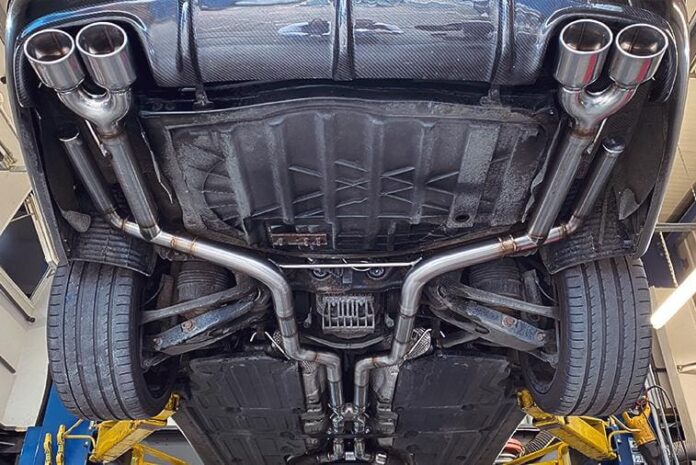
Modern automakers rarely build a vehicle with “just the basics” anymore. Today’s cars leave the factory with features designed to improve performance, satisfy safety and emissions standards, reduce cabin noise, and; yes; support a certain aesthetic identity. Your exhaust system is a perfect example. What looks like “just piping” underneath the car is actually a carefully tuned system of components; pipes, bends, resonators, mufflers, oxygen sensors, and the catalytic converter; engineered to balance power delivery with legality, refinement, and environmental impact.
That’s why straight piping is such a polarizing modification. For some enthusiasts, straight piping is the most direct route to a louder, sharper, more “raw” engine note and less exhaust restriction. For others, it’s an unnecessary compromise that creates excessive noise, emissions problems, legal trouble, and a resale headache. And if you drive a Prius (or any hybrid), the conversation gets even more interesting because the vehicle’s personality is fundamentally different from a traditional performance car; yet people still want to customize it for sound and feel.
So what advantages and downsides does straight piping have? Is it worth the cost? Does it help or hurt horsepower? What about fuel economy, pipe sizing, and legality? Find out the detailed answers in this article. I’ll also discuss a few related items to straight piping so you can make an informed decision before you spend money; or accidentally create a problem that costs more to undo than it did to install.
Important expert note before we begin: Straight piping often involves removing or bypassing emissions equipment (such as the catalytic converter). In many jurisdictions, that is illegal for street use, even if the car “runs fine.” This article explains straight piping at a conceptual and ownership level and highlights risks and considerations; it is not a step-by-step guide for defeating emissions controls. Always check your local laws and emissions inspection rules before modifying the exhaust system.
What Is a Straight Pipe?
A straight-pipe exhaust system is a modification approach intended to increase how quickly exhaust gases exit a car. In basic terms, it replaces parts of the exhaust path that reduce noise and regulate emissions with a simpler, more direct length of pipe. A standard exhaust system typically includes components designed to reduce emissions and sound. These commonly include mufflers, filters (depending on design), catalytic converters, and resonators. Together, these parts shape what you hear, what exits the tailpipe, and how the engine “breathes.”
In a factory system, the exhaust route is designed to do several jobs at once:
- Move exhaust gases away from the engine and passenger compartment safely.
- Reduce harmful emissions to comply with emissions regulations.
- Control noise and harsh frequencies (what people call “drone”).
- Maintain a level of exhaust restriction and pressure behavior that supports drivability and refinement.
The original exhaust system emits gases from the car’s engine out into the atmosphere. Before those gases are released, the muffler helps suppress noise. The catalytic converter (cat converter) is a core emissions component; it reduces harmful compounds in the exhaust stream before they leave the tailpipe. Resonators help tune sound frequency so the cabin is not filled with a constant, unpleasant “boom” at cruising speed. Exhaust tips are typically positioned toward the rear of the vehicle for safety and packaging.
Straight piping is the process of replacing the exhaust pipe path with a “straight” section (or a simpler path) to reduce restrictions and amplify sound. In this process, the standard components (muffler, filter, resonator, and catalytic converter) are removed from the flow path. The result is that exhaust gases pass through with minimal filtering and minimal sound control. Owners often choose straight piping to make the car louder and to pursue a performance feel, especially in engines where exhaust restriction is seen as a bottleneck.
In many builds, straight piping is paired with a fitting exhaust pipe size matched to the vehicle, including hybrid platforms like the Prius. The outcome is usually a much louder exhaust note and a perceived improvement in throttle response. Whether the performance improvement is meaningful depends on the engine’s baseline design, how restrictive the original exhaust was, and whether the engine management system adapts well to the change.
To frame this in an expert way: straight piping is not just “removing parts.” It’s changing the exhaust system’s restriction level, sound attenuation, pulse behavior, and thermal/emissions profile. That is why the modification has both dramatic upsides and serious downsides. Let’s break those down carefully.
Straight Pipe Exhaust in Prius: Pros and Cons
You now have a general idea of what straight piping is. Next, let’s get into the specifics; because the decision isn’t only about “loud vs quiet.” It’s about performance expectations, cost, legality, environmental impact, comfort, and long-term ownership value.
To keep this easy to digest, I’ll separate the discussion into clear pros and cons while also explaining why each point matters; especially if you’re modifying a Prius, where sound and performance goals are often different from traditional sports cars.
Pros
Better performance
The number one reason many car enthusiasts pursue a straight pipe is the promise of higher performance. When the catalytic converter and muffler are removed, the theory is that exhaust restriction is reduced, which can lower the pressure the engine pushes against while expelling exhaust gases. In performance language, that reduction can improve exhaust flow, which may help the engine operate more freely; especially at higher RPM where exhaust volume increases and restriction becomes more significant.
If you’re chasing the “torque feeling” you associate with track cars or high-output builds, straight piping is often viewed as the purest expression of “freeing up” the exhaust. In engines with restrictive factory mufflers or complex internal baffles, removing those restrictions can change how the engine responds under throttle.
However; professional honesty matters here; performance gains are not identical across all platforms. A Prius is not a Formula 1 powertrain, and its hybrid control strategy plays a big role in how it accelerates. Some owners still do straight piping for perceived responsiveness and sound character rather than measurable horsepower. But the “better performance” idea remains one of the most common reasons people do it, and it can be noticeable depending on the setup.
Reduced car weight
Changing to a straight pipe exhaust can reduce overall vehicle weight. Mufflers, resonators, and catalytic converters are not feather-light components; especially on vehicles built for quiet cabin refinement and long service life. Removing those parts and replacing them with simpler pipe sections can reduce weight, which can slightly improve the driving feel (and in some cases, efficiency) simply because the vehicle has less mass to move.
In performance builds, weight reduction is a legitimate strategy because it improves the power-to-weight ratio. In normal driving, the difference might not be dramatic, but enthusiasts appreciate the idea of reducing unnecessary mass, especially if they are combining this modification with other changes.
Car’s appearance
Straight piping can improve the overall appearance of your car; particularly when the pipes feature shiny chrome finishes, polished stainless steel, or visually striking tips. Many owners like the “performance” look a clean exhaust setup provides. It can give your car a more aggressive stance and create a distinct impression on other enthusiasts.
From an expert styling perspective, appearance upgrades often work best when they match the vehicle’s overall theme. A Prius with subtle, clean styling can benefit from tasteful exhaust design rather than oversized tips that look out of place. If aesthetics are part of your motivation, consider how the exhaust integrates visually with the rear bumper and overall profile.
Noisy but has a classic sound
Many people prefer a straight pipe exhaust to a standard exhaust. Why? They find the roaring sound the car produces thrilling. Aside from the cool speed, the noise from the car says a lot not only about the owner but the car itself. A straight piping exhaust system is a great way to reveal the real sound of your Prius’s engine.
There’s no denying the emotional side of exhaust modifications: sound is identity. For some owners, a quieter exhaust feels “hidden,” while a straight pipe feels honest; raw mechanical noise without filters. This is why many enthusiasts describe straight piping as revealing the “true voice” of the engine.
In professional terms, straight pipes remove much of the frequency tuning and sound attenuation the factory designed into the system. That produces an exhaust note that’s louder, sharper, and often more aggressive. Whether it’s “classic” or “too much” depends on your preferences, your neighborhood, your driving habits, and your tolerance for cabin noise.
One more point: sound is not just volume. Straight piping can change tone quality; sometimes making a car sound sporty, other times making it sound harsh or “tinny” depending on engine configuration, pipe diameter, and whether there’s any resonator remaining. This is why some enthusiasts choose partial straight piping instead of a full straight system.
Cons
Cost
Straight piping is a huge investment. It can be expensive to purchase and install, depending on your car’s model. Some straight pipes can cost up to $1000 or more. In addition, it requires professional help to install.
From a practical ownership perspective, cost isn’t only the parts. You may also face:
- Labor charges (cutting, welding, fitting, hangers)
- Potential additional parts (clamps, gaskets, brackets)
- Possible follow-up work if drone is unbearable
- Potential costs if you need to restore OEM components for inspections or resale
Also, exhaust modification quality matters. A poorly welded exhaust can leak, rattle, or contact the body under vibration. The cheapest job is often the one that becomes the most expensive later, because it creates repeat visits and repairs.
Emission
Unlike the standard exhaust system, straight pipes release harmful gases into the air. In turn, it causes pollution. Moreover, it creates discomfort since air quality can be affected. Harmful gases, like sulphur compounds and CO2, produced and released can contribute to global warming. They can also contribute to acid rain or other catastrophic occurrences.
This is one of the biggest non-negotiable downsides: catalytic converters exist for a reason. They reduce harmful emissions significantly. Removing them (or using a straight pipe setup that bypasses that function) increases the amount of untreated emissions released into the environment. From a legal standpoint, this is also where many jurisdictions draw the line: emissions equipment tampering is frequently illegal for road use.
Even if you personally don’t feel the impact immediately, emissions changes affect the broader community, and that’s why regulations exist. This is also why many owners choose alternatives; such as performance exhaust systems that keep catalytic converters; rather than full straight piping.
Resale value
Another cliche is if you decide to sell your car after changing to a straight pipe exhaust. The resale value might depreciate. This is so, especially in areas where straight pipe exhaust is illegal. You may have to keep enjoying the speed and cool sound of your car all by yourself. Besides, who would like to buy a car when its critical engine parts have been tampered with?
From a market reality perspective, many buyers want stock or near-stock vehicles. Straight piping signals that the vehicle was modified, and many people assume modifications come with higher risk. Even if your car is maintained perfectly, the buyer may worry about inspection compliance, insurance implications, or the cost of reverting to OEM.
If resale value matters, keep your original exhaust components (where possible). This gives you the option to return the vehicle to factory configuration later. Losing the original parts makes reversal more expensive.
Pipe size
When choosing your pipes, make thorough findings first and look for a good store to buy your pipes. The wrong pipe size can affect your car’s torque and horsepower after installation.
This point is more technical than it sounds. Exhaust systems are tuned. Pipe diameter influences gas velocity, scavenging, and the engine’s effective breathing behavior. Bigger isn’t always better. If the pipe is too large, exhaust velocity can drop, which may reduce low-end torque and make the car feel “lazy” in normal driving. If the pipe is too small, it can restrict high-RPM flow and reduce top-end performance.
For a Prius, which is not tuned like a high-revving performance engine, pipe sizing should be approached carefully. Many owners are chasing sound rather than peak horsepower, and the wrong sizing can create unpleasant tone, droning, or a hollow note that doesn’t match expectations.
Too much noise
The outrageous and loud sound from the car can be quite disturbing to others. In the US, you cannot modify your car’s exhaust system after environmental and safety standard checks. It’s illegal.
Noise is the issue most owners underestimate until they live with it. What sounds thrilling for five minutes can become exhausting over a long commute; especially if the car drones at a specific RPM range. Drone is not just “loud.” It’s a low-frequency resonance that can cause headaches and fatigue, and it’s one of the main reasons people reverse straight pipe decisions later.
Legality is also a real concern. Many regions have noise limits and emissions inspection rules. If your straight pipe setup violates local regulations, you may face fines, inspection failure, or mandatory repairs. Even if enforcement varies, you don’t want to build a daily driver around a configuration that could create legal problems.
Is straight piping worth it?
My answer remains in the affirmative. With straight piping, there’s a guarantee of incredible flow, improved fuel economy, and great mileage. These aren’t what the best OEM or aftermarket mufflers will offer. It doesn’t mean that top-quality mufflers won’t deliver great flow. Yet, straight piping is worth the investment.
From an expert interpretation, “worth it” depends on what you value most. If your priorities are maximum exhaust flow and the loudest, most unfiltered engine note, straight piping aligns strongly with those goals. Many owners also report improved mileage in certain driving conditions due to reduced restriction and different driving behavior (though results vary widely depending on vehicle tuning, driving style, and how the modification influences the engine’s operating strategy).
However, “worth it” must be measured against the downsides you just read: cost, emissions impact, legal risk, noise fatigue, and resale depreciation. Straight piping can be worth it for some enthusiasts; but it’s rarely the best choice for everyone. The highest-quality decision is one made with full awareness of the tradeoffs.
Do straight pipes reduce horsepower?
I’ve often heard some car owners and drivers say that straight piping reduces a car’s horsepower. This is absolute misinformation. Straight pipes won’t make your car lose horsepower. But, straight piping reduces the amount of back pressure your engine normally endures. This way, the exhaust pipe passes gases directly from the exhaust tip to the air. As a result, the engine can produce more torque and horsepower. Here’s the thing: straight pipes from the cylinders produce the least back pressure.
To add expert clarity: people often use “back pressure” as a catch-all explanation, but what actually matters is the balance between restriction and scavenging. A straight pipe reduces restriction significantly, which can help an engine breathe more freely. That’s why straight piping is widely associated with more torque and horsepower, especially in setups where the factory exhaust is a bottleneck.
Where confusion comes from is that some engines are tuned to work best with specific exhaust pulse behavior. If you change exhaust dynamics too drastically (especially with incorrect pipe diameter), you can change where the engine “feels strongest.” Some drivers interpret that as “lost power,” when it’s really a shift in torque delivery or a drivability change rather than an actual horsepower reduction across the board. But the core message remains: straight pipes are not inherently horsepower killers; they are designed to reduce restriction.

Straight Piping vs. Practical Alternatives (If You Want Sound Without Maximum Downsides)
Many owners want the sound and character benefits of straight piping without the full legal/emissions and comfort drawbacks. While this article focuses on straight piping, it’s helpful to know there are “middle-ground” choices that often satisfy enthusiasts more long-term.
Common alternatives include:
- Cat-back exhaust systems: improve sound and sometimes flow while retaining the catalytic converter.
- Muffler delete (without cat removal): increases sound but may create drone; legality varies.
- Resonator delete: changes tone, sometimes increases rasp; often less dramatic than a full straight pipe.
- High-flow mufflers: better sound and good flow while keeping some refinement.
These alternatives can preserve much of your vehicle’s everyday usability and reduce inspection risk while still giving you a more engaging exhaust note. If your Prius is a daily driver, these options may deliver a better long-term ownership experience; especially if you want a “sportier” sound without turning every commute into a noise event.
Straight Pipe Ownership Reality Check (What Most People Discover After the Install)
Before we wrap up, here are the “real world” observations many owners report after straight piping; both positive and negative. These aren’t meant to scare you; they’re meant to prepare you:
- The sound is louder than expected, especially on cold starts and under load.
- Cabin drone can become the biggest regret, depending on pipe setup and driving RPM range.
- People notice you; which can be fun or annoying depending on your personality and where you drive.
- Inspections and legality become a factor (and reversing the modification later can be costly).
- Performance feel can improve, but results depend heavily on how restrictive the OEM system was and whether pipe sizing is correct.
If you’re going into straight piping with clear expectations; and you’re comfortable with the downsides; it can be a satisfying modification. If you’re doing it impulsively just for “more sound,” it’s worth considering a less extreme option first.
Final Thoughts
Straight piping means replacing a car’s mufflers and cat converter with straight pipes. Before you decide to straight pipe your Prius, first weigh the pros and cons. Also, bear in mind environmental law about pollution and extreme auto noise. You must be careful not to break jurisdiction laws.
Finally, do not try to install the pipe yourself if you have no basic understanding of the exhaust system. Exhaust work often requires proper fitting, safe mounting, and professional-level welding or sealing to prevent leaks and rattles. I recommend allowing a professional to handle the job, especially because a poorly installed exhaust can create safety issues, exhaust fumes in the cabin, and long-term damage to underbody components.
If you take one expert-level takeaway from this article, let it be this: straight piping is not simply “more noise.” It’s a structural change to the vehicle’s emissions and sound control system, and it has consequences that last beyond the first week of excitement. Make the decision with full awareness; and if you proceed, do it responsibly and legally.

