
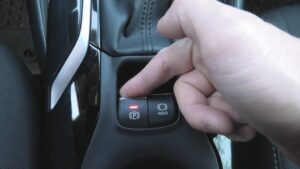

When your Toyota displays a “PKSB Malfunction” warning, it isn’t merely an irritating dashboard message; it’s a deliberate notification from the vehicle that something in the Parking Support Brake (PKSB) system is not operating within expected parameters. PKSB is designed to assist during low-speed parking maneuvers by automatically applying braking in certain situations to reduce the likelihood (and severity) of minor collisions. So, when the system flags a malfunction, the practical implication is straightforward: you may no longer have automatic brake assistance during parking, and the vehicle may disable related features as a precaution.
Drivers often notice this warning after a car wash, during winter conditions, or following bumper repairs; yet the same message can also be triggered by electrical faults, communication errors between modules, or a weak 12V battery (especially on hybrids, where the 12V battery plays a crucial role in powering control units even though it doesn’t crank the engine). The key is to approach diagnosis logically: start with the most common, least expensive causes (like sensor contamination), then work toward wiring, component, and module-level issues.
In this guide, I’ll break down what the Toyota PKSB system actually does, how it “thinks,” what commonly causes the malfunction warning, and how you can perform safe, meaningful DIY checks before deciding whether professional diagnostics are necessary. You’ll also learn how sensor angles and calibration matter more than most people realize, why ABS or wheel-speed sensor faults can take PKSB offline, what the most common diagnostic codes mean, and what repair costs typically look like.
What Is the Toyota PKSB System?
The Parking Support Brake (PKSB) system is Toyota’s low-speed collision-avoidance technology intended to reduce parking-related accidents; think of the classic scenario of creeping toward a wall, another vehicle, or a post and misjudging distance by a foot. In vehicles equipped with PKSB, the system can detect obstacles and apply braking automatically in specific conditions to help prevent minor impacts or reduce their severity.
It’s helpful to frame PKSB correctly: it is not an autopilot feature, and it is not a substitute for careful driving. Instead, it’s a layered safety system designed to intervene when (a) you are moving slowly and (b) sensor data suggests an obstacle is close and a collision is likely. Toyota builds these systems around the principle of “support,” meaning the driver remains responsible for situational awareness, pedal control, and safe maneuvering.
Depending on model and trim level, PKSB may be part of a broader suite of parking and low-speed safety tools (such as parking sonar, rear cross-traffic alert, backup camera guidance, or advanced driver assistance packages). Even if those features appear separate from the driver’s seat, they often share sensors, wiring routes, and electronic control modules. That shared ecosystem is one reason a fault in one system can cascade into warnings in another.
How the System Works
At the heart of PKSB is a network of ultrasonic sensors placed around the vehicle. These sensors emit ultrasonic pulses and measure the return signal to estimate distance to nearby objects; similar in concept to sonar. Toyota positions them to provide coverage where parking collisions most commonly occur: the front bumper and rear bumper.
The PKSB system uses a network of ultrasonic sensors positioned strategically around your vehicle:
- Four sensors in the front bumper
- Four sensors in the rear bumper
- Center sensors typically calibrated at 3-degree angles
- Corner sensors usually set at 4-degree angles
Those angle values matter because ultrasonic sensors are directional. Toyota engineers “aim” the sensors so the beam pattern covers the most relevant space without producing excessive false positives. The center sensors typically focus more directly forward/backward (hence the 3° calibration reference), while corner sensors are aimed slightly outward to cover oblique angles (commonly around 4°). If a sensor is installed at the wrong angle after a repair; or if a bumper impact subtly shifts its mounting; detection accuracy can degrade, and the vehicle may interpret that mismatch as a malfunction.
These sensors constantly monitor your surroundings when you’re driving under 9 mph in Drive or Reverse. That speed threshold is not arbitrary: PKSB is intended for parking maneuvers, not for normal driving. At higher speeds, braking intervention based on close-range ultrasonic detection would be inappropriate and potentially unsafe. So Toyota restricts PKSB activation to low-speed contexts where it can meaningfully prevent a “creep collision.”
The sensors communicate through a daisy-chain configuration, where each sensor passes information to the next until all data reaches the main control module. In practical terms, this wiring architecture means the system behaves like a holiday-light string: if one sensor loses power, ground, or communication, it can interrupt the chain and affect the entire circuit. That’s why a single damaged connector or a single failed sensor can sometimes knock the entire PKSB system offline.
What makes this system especially “modern Toyota” is how it integrates with other safety and vehicle-control systems. PKSB does not exist in isolation; it relies on consistent data and reliable module communication to decide whether intervention is necessary and safe.
What makes this system unique is its integration with other safety features like:
- Anti-lock Braking System (ABS)
- Electronic Stability Control (ESC)
- Wheel speed sensors
This interconnectivity is a double-edged sword. When everything is healthy, PKSB can apply braking in a controlled, predictable way because ABS/ESC and wheel speed sensors provide the feedback needed to manage brake pressure and confirm vehicle speed. But when one of those systems develops a fault; such as a wheel speed sensor signal drop, an ABS module communication error, or a low-voltage condition; Toyota will often disable PKSB as a safety precaution. From the vehicle’s point of view, it’s better to remove automated braking support than to risk incorrect intervention based on unreliable inputs.
One more nuance worth understanding: the PKSB system may behave differently depending on gear selection and the direction of movement. The vehicle’s control logic typically compares obstacle distance, approach speed, and driver inputs (brake/throttle) to decide whether to warn, to assist, or to intervene. That’s why some drivers experience warnings only in Reverse, or only when pulling forward into a tight garage.
Finally, the “PKSB Malfunction” warning is not always triggered by imminent danger. Often it appears because the system’s self-check detects something abnormal; contaminated sensors, a communication error, or a calibration/initialization issue. The key is to interpret it as: PKSB assistance may not be available until the underlying fault is addressed.
Common PKSB Malfunction Causes
If you’re seeing the warning message, there are several likely culprits. In the field, PKSB malfunctions tend to fall into a few repeating categories: sensor contamination, electrical problems (including battery voltage issues), and wiring/connector faults. Less commonly, the issue may involve sensor misalignment, failed sensor hardware, or module communication problems logged as network codes.
If you’re troubleshooting at home, the most professional approach is to begin with what is (1) most common, (2) easiest to verify, and (3) least expensive to fix. That’s exactly the order used below.
If you’re seeing that dreaded warning message, several culprits might be responsible. Here’s what typically goes wrong:
Sensor Contamination (35% of Cases)
The single most frequent cause of PKSB warnings is also the simplest: dirty or obstructed ultrasonic sensors. These sensors sit low on the bumpers, where they’re constantly exposed to dust, mud, slush, salt spray, rainwater film, and residue from cleaning products. Because ultrasonic sensing relies on clean, consistent emission and reflection of sound waves, even a thin layer of grime can distort readings.
Your ultrasonic sensors can get covered with:
- Dirt and road grime
- Snow and ice
- Water droplets (especially after a car wash)
- Mud splatter
When sensors are covered, they may fail in one of two ways. First, they may not “see” properly, because the ultrasonic pulse is partially absorbed or scattered by the contamination. Second, they may interpret the contamination as a constant near-field obstacle, which can create false alerts or cause the system to disable itself because it believes the sensor output is implausible.
This is why PKSB malfunctions frequently show up in winter (ice and road salt buildup) and immediately after washing your car (water droplets and wax residues). It’s also why the warning can appear and then disappear on its own after weather changes; though relying on the problem to “go away” is not a great strategy, because the system may remain unreliable until the sensors are cleaned and the fault condition clears.
From an expert standpoint, sensor contamination is not only common; it’s also easy to misdiagnose. Drivers sometimes assume “malfunction” means a broken sensor. In reality, many of these sensors are perfectly functional but temporarily compromised by environmental buildup. A careful cleaning, followed by a short drive and re-test, solves a large percentage of complaints.
One additional factor many people overlook: aftermarket coatings. Heavy wax, ceramic coatings applied carelessly over sensors, thick bumper paint layers, or bumper stickers placed near sensor faces can change sensor performance. Toyota sensor faces are engineered for consistent acoustic behavior; altering the surface can change how ultrasonic pulses transmit and reflect.
Electrical Problems (25% of Cases)
Because PKSB integrates with core braking and stability systems, electrical faults can trigger “PKSB Malfunction” even when the ultrasonic sensors themselves are clean and undamaged. The vehicle’s logic may disable PKSB if it cannot confirm reliable speed signals, stable voltage, or module communication integrity.
Common electrical problems include:
- Wheel speed sensor malfunctions
- ABS sensor failures
- Low battery voltage
- Damaged wiring
- Corroded connectors
These issues can prevent proper system initialization and communication, shutting down PKSB as a safety precaution. For example, if a wheel speed sensor drops out intermittently, the vehicle may not trust its own speed calculation at low speeds. Since PKSB intervention depends on accurately knowing whether the vehicle is creeping at parking speed, Toyota may disable automated braking support until the speed signal is reliable again.
Low battery voltage deserves special emphasis. Modern Toyota systems are extremely sensitive to voltage stability because multiple modules must boot, self-check, and communicate quickly. If the 12V battery is weak; especially during cold starts; or if terminals are loose/corroded, you can get sporadic warning messages that seem unrelated to battery health. In hybrids, the 12V battery’s role is even more critical for electronics: it powers up computers, relays, and communication networks. A hybrid can appear to “drive fine” yet still show strange system warnings because modules are seeing low or unstable voltage.
Electrical issues can also be “secondary.” In other words, the PKSB system may not be the original problem; it may only be reporting that it cannot function because another system has already flagged a fault. That’s why it’s important to check for related warning lights (ABS, check engine, hybrid warnings), and why diagnostic trouble codes are so valuable when a simple sensor cleaning doesn’t resolve the warning.
Wiring and Connector Issues (20% of Cases)
The PKSB sensor network is only as strong as its weakest connection. Because the sensors often communicate in a daisy-chain, a single broken wire, loose connector, or corroded pin can disrupt communication and trigger a malfunction message.
Problems often stem from:
- Physical damage during previous repairs
- Rodent damage to wiring harnesses
- Natural wear and corrosion
- Environmental damage from road salt
One broken connection in the daisy chain can disable the entire system. This is why PKSB issues sometimes appear after body work, bumper replacement, sensor replacement, trailer hitch installation, or even minor impacts. It’s not always the sensor itself; sometimes a connector is not fully seated, a harness clip is missing and the wiring rubs through, or water intrusion corrodes terminals over time.
Rodent damage is more common than many drivers expect, particularly in regions where vehicles are parked outdoors or near vegetation. Small animals may chew wiring insulation in the engine bay or around the chassis. Since bumper harnesses often route low and accessible, they can become targets. If the warning appears suddenly and repeatedly, and cleaning doesn’t help, a wiring inspection is a reasonable next step.
Also remember that wiring issues can be intermittent. A partially broken conductor may still carry signal until temperature changes, vibration, or moisture makes the connection unstable. Intermittent faults are the ones that frustrate drivers most; but they are also the ones where professional diagnostic tools (and patient testing) bring the most value.
Common Error Codes
When diagnosed properly with a capable scan tool, PKSB malfunctions often store diagnostic trouble codes (DTCs). These codes are not just “computer jargon”; they’re structured clues that point you toward the failing circuit, sensor, or module communication link.
PKSB malfunctions often show specific diagnostic trouble codes:
- C1AE1 through C1AE9: Individual sensor failures
- C1AEC: Front sensor communication failure
- C1AED: Rear sensor communication failure
- U0100, U0101, U0142, U0155: Communication failures between modules
Here’s how an expert typically interprets those groupings:
- C1AE1–C1AE9 commonly indicate a problem with a specific sensor signal (failure, out-of-range reading, poor communication, or abnormal behavior detected during self-check). The exact meaning can vary by model, but the core point is that the system is calling out a particular sensor position or sensor line.
- C1AEC / C1AED are especially useful because they point toward a “network” style issue: front or rear sensor communication failure. In a daisy-chain system, this can mean a sensor is dead, a connector is loose, or a harness is open/shorted, preventing sensor data from reaching the module.
- U-codes (like U0100, U0101, U0142, U0155) generally indicate module-to-module communication failures. These can be caused by low battery voltage, CAN bus issues, a module that fails to wake up, or wiring faults in the communication network. In many cases, the PKSB warning is secondary; your root issue may be elsewhere on the network.
Even if you don’t have access to Toyota Techstream, a scan tool that can read manufacturer-enhanced codes (not just basic OBD-II engine codes) can dramatically reduce guesswork. If you plan to DIY beyond cleaning and resets, investing in the ability to read these codes is often cheaper than replacing parts blindly.
DIY Diagnosis and Fixes
Before heading straight to the dealership, there are several safe and meaningful steps you can take at home. These steps won’t replace professional diagnostics in complex cases, but they will address the most common triggers and can often restore system function quickly.
Before you begin, a professional caution: if your vehicle is showing multiple safety warnings (ABS, brake system warnings, stability control warnings), do not ignore them. PKSB depends on the braking system’s integrity. If the vehicle indicates a base braking fault, prioritize that first.
Before heading to the dealership, try these steps to diagnose and potentially fix your PKSB malfunction:
Visual Inspection and Cleaning
Cleaning and inspection are the first-line fix because they address the most common cause (contamination) and can reveal physical damage. Use gentle materials; ultrasonic sensors can be damaged by harsh scraping or aggressive chemicals.
- Check all sensors for visible dirt, debris, or damage
- Clean sensors with a soft, damp cloth
- Remove any aftermarket accessories like bike racks or custom license plate frames that might interfere with sensors
- Inspect for any obvious damage to sensors or surrounding areas
For best results, use a mild car-wash soap solution and rinse gently. Avoid blasting the sensors with high-pressure water at point-blank range; while many vehicles tolerate normal washing, a concentrated pressure stream can force water into connector seals or sensor housings; particularly if seals are already worn.
Also pay attention to bumper paint condition around sensors. If the bumper has been repainted and the painter applied excessive paint thickness on the sensor faces, sensor performance can be affected. The sensor may not fail completely, but its signal can be distorted enough to cause false detections or malfunction status in specific conditions.
After cleaning, test the system under controlled conditions: start the vehicle, ensure the warning is present or not, and perform a slow approach to a safe obstacle (like a large cardboard box) while prepared to brake. If the warning clears and the system behaves normally, contamination was likely the issue.
Basic Reset Procedures
Many PKSB malfunctions; particularly those triggered by transient communication errors or low-voltage events; can be resolved with a system reset. The logic is simple: if the fault was temporary and conditions are now normal, clearing volatile memory and forcing modules to reinitialize may restore operation.
However, an expert note: resetting can also erase learned settings (window auto-up calibration, steering angle memory in some vehicles, radio presets, and other adaptations). If you’re unsure, consult your owner’s manual or proceed cautiously.
Many PKSB malfunctions can be resolved with a simple system reset:
Battery Disconnect Reset:
- Disconnect both battery terminals
- Touch the cable ends together for 15 seconds (away from the battery) to discharge capacitors
- Reconnect cables, positive terminal first
- Start the vehicle and check if the warning is gone
This method forces a deeper reset because it fully disconnects vehicle power. The “touch cable ends together” step is intended to discharge residual energy in capacitors within certain modules. Make sure the cable ends are away from the battery posts when doing this, and do not allow tools to short the battery.
Alternative Reset Method:
- Disconnect only the negative terminal
- Leave disconnected for at least 3 hours (overnight is better)
- Reconnect and test
This approach is slower but sometimes preferred because it reduces the chance of accidental shorting during reconnection. Leaving it disconnected longer can allow more modules to fully power down. If the malfunction was caused by a transient logic fault, this can restore normal operation. If the warning returns immediately, treat it as evidence of a persistent issue rather than a “glitch.”
Parking Brake Reset Procedure:
- Start the vehicle
- Drive forward several meters
- Shift to Park gently
- Wait 5-10 seconds
- Turn off the vehicle
- Manually engage the parking brake
- Restart while pressing the brake pedal
- Test if the warning is cleared
This procedure is often used because it forces the vehicle to complete a normal low-speed drive cycle, transition into Park, and restart with proper brake input; steps that can help modules reinitialize in a clean state. While it may feel “too simple,” it’s an easy, low-risk method that sometimes clears warnings tied to temporary initialization or state conflicts.
After any reset, verify the system carefully. If PKSB comes back online, confirm it behaves predictably in Drive and Reverse under low-speed conditions. If the warning returns shortly after, especially after driving in rain/snow or after parking overnight, consider battery voltage and sensor contamination as repeat offenders.
When Simple Fixes Don’t Work
If cleaning and basic resets don’t restore function, the next phase is to look for root causes that prevent PKSB from initializing; most commonly low voltage, related braking system faults, or communication issues. At this stage, you are no longer guessing; you are narrowing the fault domain.
If the above steps don’t resolve your PKSB malfunction, check these potential issues:
Check Your Battery Health:
Low voltage conditions can prevent proper PKSB operation. Have your battery tested, especially in hybrid vehicles where the 12V battery is crucial for systems operation.
From an expert perspective, don’t settle for “the battery seems fine because the car starts.” Instead, evaluate battery condition under load and check terminal integrity. Common symptoms of battery-related PKSB warnings include intermittent appearance, multiple unrelated warnings, or warnings that appear after the vehicle sits for a while. If a battery test shows borderline capacity, replacing it can prevent repeated electronic anomalies.
Look for Related Warning Lights:
PKSB malfunctions rarely occur in isolation. Check if you also have:
- Check engine light
- ABS warning light
- Hybrid system warnings
Addressing these primary issues might automatically resolve your PKSB malfunction. For example, an ABS warning caused by a wheel speed sensor failure can disable ABS and stability functions, and PKSB may also be disabled because it depends on those systems for controlled braking intervention. Fixing the wheel speed sensor fault can restore both ABS and PKSB.
If you have a scan tool, this is a good point to check for stored DTCs across multiple modules; not only the engine control module. Many generic scanners only read emissions-related engine codes. For PKSB, you’ll often need a tool that can scan body systems, braking systems, and driver-assistance modules.
Also consider recent events. Ask yourself:
- Did the warning start after a bumper repair or minor impact?
- Did it appear immediately after a car wash or storm?
- Have you installed aftermarket accessories near bumpers (plate frames, tow hooks, racks, sensors, lights)?
- Has the vehicle recently had a battery replacement or experienced a dead battery?
These context clues often point you directly to the likely fault domain: moisture/contamination, wiring disturbance, or low-voltage initialization errors.
Professional Diagnosis and Repair
When DIY methods don’t resolve the PKSB malfunction, professional diagnosis is usually the fastest path to the correct repair; especially when the issue involves communication codes, intermittent wiring faults, or sensor calibration requirements. A skilled technician can isolate the fault using scan data, freeze-frame information, live sensor readings, and harness testing methods that are difficult to replicate without specialized tools.
When DIY methods don’t fix the problem, it’s time for professional help:
Diagnostic Equipment Used
Toyota technicians typically use a combination of factory-level software and guided diagnostic procedures to pinpoint PKSB faults. This matters because “PKSB Malfunction” is a general warning; professional tools translate that warning into codes, sensor readings, and test routines.
Toyota technicians use specialized tools to diagnose PKSB issues:
- Toyota Techstream software
- Manufacturer-specific diagnostic scanners
- Calibration equipment for sensor positioning
With Techstream or equivalent tools, technicians can often:
- Read manufacturer-specific DTCs and sub-codes
- View live ultrasonic sensor distance readings (where supported)
- Confirm module communication status across the network
- Perform guided troubleshooting steps and activation tests
- Confirm calibration and run system verification routines
Professional diagnostics are also important when U-codes appear (communication failures). A technician can determine whether the fault stems from low voltage, a failing module, network wiring issues, or a module that is intermittently “dropping off” the network due to internal failure.
Sensor Replacement and Calibration
If an ultrasonic sensor is confirmed faulty (or physically damaged), replacement is only half the job. Correct sensor installation and calibration are crucial because sensor angle and orientation directly affect detection accuracy and false-positive/false-negative behavior.
If sensors need replacement, precise calibration is critical:
- New sensors must be installed at exact factory angles
- Calibration requires inputting specific angle values (typically 3° for center sensors, 4° for corner sensors)
- System verification confirms proper operation
Calibration is where many “comebacks” happen after repairs. If the sensor is installed slightly crooked, mounted in a stressed bumper bracket, or the wrong sensor type is installed, the system may still complain even though the part is new. A technician will often validate the result by checking system status, confirming that each sensor reports plausible readings, and ensuring that the system transitions properly between warning-only behavior and braking support conditions.
Another expert consideration is bumper alignment. If the bumper cover is not seated properly; common after collision repairs; the sensor faces may point slightly upward, downward, or outward. That can reduce accuracy and cause malfunctions or persistent false alerts. Correcting the bumper fitment can sometimes resolve “mystery” PKSB issues without replacing more parts.
Wiring Repairs
If codes or live data suggest a harness issue, professional wiring diagnosis becomes valuable. Wiring faults can be time-consuming, but the right process prevents unnecessary sensor replacement and ensures the root cause is corrected.
For wiring issues, professionals will:
- Use Toyota-specific wiring diagrams
- Test continuity through the daisy-chain configuration
- Repair or replace damaged sections
- Ensure proper sealing of all connections
A proper wiring repair isn’t just “twisting wires together.” Professionals typically use correct splicing techniques, sealing methods (heat shrink, correct terminals), and harness routing/retention to prevent repeat damage. They also confirm that connectors are locked and that weather seals are intact, which is essential in bumper areas exposed to water and road salt.
In intermittent cases, technicians may perform wiggle tests, thermal stress testing (warming/cooling sections of harness), or isolate sections of the daisy chain to identify which segment is dropping communication.
Repair Costs and Coverage Options
The cost to fix a PKSB malfunction can range from “free and simple” (cleaning a sensor) to expensive (major wiring repairs). The wide spread exists because the warning is a general symptom, not a single failure. Costs also depend on local labor rates, how accessible components are on your model, and whether calibration procedures are required after replacement.
The cost to fix PKSB malfunctions varies widely depending on the underlying cause:
Typical Repair Costs
The table below reflects common price ranges many owners encounter. Your exact cost will vary by region, shop type (dealer vs independent), and whether the repair involves additional related work like bumper removal or harness replacement.
| Repair Type | Estimated Cost |
|---|---|
| Sensor cleaning/reset | $0-50 (DIY possible) |
| Single sensor replacement | $250-500 plus labor |
| Complete system calibration | $400-500 |
| Wiring harness repair/replacement | $600-12,000 (extreme cases) |
A few expert notes on the “extreme cases” wiring range: the high end usually reflects scenarios where major harness sections are replaced (sometimes involving extensive interior disassembly, bumper removal, and labor-intensive routing). While $12,000 is not typical for most owners, it can occur in rare situations where a large harness assembly is damaged or where repeated short circuits have caused broad electrical damage. Fortunately, most wiring-related PKSB issues are far less dramatic and involve localized repairs or a single harness segment.
It’s also worth noting that calibration costs can overlap with replacement costs. Some shops quote sensor replacement “plus calibration,” while others bundle it. Make sure you understand whether the estimate includes calibration and verification; because those steps determine whether the repair is complete.
Warranty Coverage
Warranty coverage can significantly reduce the cost of PKSB repairs, but coverage depends on vehicle age, mileage, and the specific component that failed. If your Toyota is still within its base warranty period, you may have excellent coverage for PKSB-related repairs.
Toyota’s warranty coverage for PKSB components includes:
- Basic warranty: 36 months/36,000 miles
- Powertrain coverage: 60 months/60,000 miles for related components
- Toyota Extra Care extended warranties ($2,200-4,000)
Additionally, check for Technical Service Bulletins (TSBs) that may apply to your model and symptom. A TSB doesn’t automatically mean “free repair,” but it signals that Toyota has recognized a pattern and published diagnostic or repair guidance. In some situations, known issues may receive special coverage policies or goodwill repairs, even outside the standard warranty window; especially if the problem is well documented and the vehicle has been maintained.
If you suspect warranty or coverage may apply, gather the following before contacting a dealer:
- Your VIN and current mileage
- The exact warning message(s) shown
- Any stored codes (if you have them)
- Recent repair history (especially bumper work or sensor replacement)
Being specific helps service advisors and technicians reproduce the issue and reduces the chance of “no problem found” outcomes in intermittent cases.
Preventing Future PKSB Malfunctions
PKSB is a helpful system, but like any sensor-driven feature, it performs best when you treat its sensors and electrical foundations as part of routine maintenance. Preventive steps don’t require advanced skills; they simply reduce the likelihood of contamination, corrosion, and voltage-related errors.
Keep your system running smoothly with these preventive measures:
Regular Maintenance
The most effective preventive maintenance is simple consistency. If you clean and inspect sensor areas occasionally, you’ll often catch issues before they become persistent warnings.
- Clean sensors monthly using mild soap solution
- Visually inspect for physical damage
- Avoid high-pressure car washes that might force water into sensor housings
- Maintain your battery with regular testing and terminal cleaning
Battery maintenance is an underappreciated part of preventing “random” electronic warnings. Keep terminals clean and secure, and consider proactive replacement if your battery is aging or testing weak. Voltage stability is foundational for module communication and system initialization, including PKSB.
If your Toyota is a hybrid, do not neglect the 12V battery just because the vehicle “doesn’t crank like a traditional car.” Hybrids still depend on that 12V system to wake up computers and close relays. A weak 12V battery can produce surprisingly broad symptoms, including warnings that appear unrelated at first glance.
Seasonal Considerations
Ultrasonic parking sensors are sensitive to environmental conditions. Seasonal planning helps you avoid the most common contamination triggers.
PKSB performance is affected by environmental conditions:
- Clear snow and ice from sensors in winter
- Be aware that heavy rain can temporarily reduce system effectiveness
- In areas with heavy road salt use, consider undercoating treatments to protect electrical components
- Increase inspection frequency during harsh weather seasons
In winter, the most common PKSB “malfunction” complaints are not true failures; they’re sensor blockage from slush, salt crust, or ice. Carefully clearing sensor faces (without scraping harshly) can restore normal operation quickly. If you repeatedly experience warnings after storms, consider washing the bumper area more frequently to remove salt buildup that can cling and harden.
In summer, direct sunlight and heat can affect sensor behavior slightly, and heavy dust can accumulate on bumpers quickly in dry climates. A quick wipe-down can prevent intermittent warnings that arise when a sensor’s signal becomes inconsistent.
The PKSB System’s Limitations
Even when operating exactly as designed, PKSB has limitations. Understanding them helps you interpret system behavior correctly and avoid overconfidence. Remember: ultrasonic sensors do not “see” the world like a human does; they estimate distance based on sound reflections, which can vary dramatically with object shape, surface texture, and environmental conditions.
Even when working perfectly, the PKSB system has inherent limitations you should understand:
Environmental Factors
Environmental conditions can change how ultrasonic waves travel and reflect. Some conditions reduce effectiveness and can even cause temporary disablement or reduced reliability.
The system may not function optimally in these conditions:
- Heavy rain or fog
- Extreme temperatures
- Direct sunlight on sensors
- Uneven road surfaces
Heavy rain can create a film of water and droplets that distort sensor readings. Fog and humidity can also subtly affect signal behavior. Uneven surfaces can change the angle between the sensor and the obstacle, making returns less consistent; especially when approaching angled curbs or sloped driveways.
Extreme temperatures can influence sensor and bumper material characteristics. In very cold weather, ice formation is the obvious issue. In extreme heat, expansion and material softness can slightly change mounting stability on older vehicles, though this is typically minor.
Physical Limitations
Ultrasonic sensors are effective for many common parking obstacles, but they are not perfect. Certain objects are notoriously difficult for ultrasonic systems to detect reliably.
Sensors have detection limits:
- Very low objects (under 15cm tall)
- Narrow posts or poles
- Soft objects like fabric or snow
- Objects at the edge of detection range
Very low objects can sit below the primary sensing beam, particularly if the sensor angle is optimized for typical bumper-height obstacles. Narrow poles may return a weak echo depending on the angle and distance. Soft materials like fabric or snow can absorb sound, reducing reflections. And at the edge of detection range, readings can become less consistent; especially if the object has an angled or irregular surface.
Understanding these limitations helps set realistic expectations for your PKSB system. It also clarifies why Toyota designs PKSB as a support system rather than a guarantee: conditions can exist where a collision is still possible even when the system is functional.
Making the Most of Your PKSB System
When functioning properly, PKSB provides real value: it can reduce the risk of low-speed parking impacts, help you avoid costly bumper damage, and add an extra layer of safety in tight spaces. To get the best performance, combine it with good driving habits and treat warnings as actionable information rather than background noise.
When functioning correctly, the PKSB system provides valuable protection during parking maneuvers. To maximize its effectiveness:
- Keep sensors clean and unobstructed
- Be aware of system limitations
- Don’t rely solely on the system – always check your surroundings
- Address warning messages promptly
- Follow manufacturer recommendations for system use
The PKSB system is designed as a backup to your own awareness, not a replacement for careful driving. Use your mirrors, your backup camera (if equipped), and deliberate pedal control. If you’re parking in especially tight or complex environments; crowded garages, cluttered driveways, loading areas with posts and equipment; slow down even further. PKSB operates under 9 mph, but the most reliable parking is often done at a controlled crawl well below that threshold.
Also, treat a PKSB warning as a meaningful change in your vehicle’s safety profile. If the system is unavailable, you can still park safely, but you should do so knowing that automated braking assistance may not intervene. Many drivers adapt unconsciously to driver-assistance features over time. When a feature disables itself, the driver must consciously compensate by slowing down and double-checking surroundings until repairs are complete.
Finally, if your warning persists and you’ve already cleaned sensors and checked battery health, don’t delay diagnosis indefinitely. Persistent PKSB malfunctions may indicate wiring faults or communication problems that can worsen over time, especially if corrosion is involved. Addressing the issue early is often cheaper and prevents the inconvenience of repeated warnings.