

After this year’s EICMA motorcycle show, it’s hard to ignore what the industry is signaling: 2026 may shape up to be one of the strongest years on record for beginner motorcycles. Manufacturers are investing real engineering effort; not just cost-cutting; into the small-displacement and beginner-friendly categories. For new riders, that translates into more variety, better build quality, and far more “grown-up” features (like ABS, traction control, and ride modes) than the entry-level segment used to offer.
There’s also a broader cultural shift happening. More people are showing interest in smaller bikes for commuting, weekend fun, and skill development, and that demand has pushed brands to design motorcycles that are light, approachable, and affordable without feeling cheap. Whether you’re shopping for a sharp-looking sportbike, a classic cruiser, or a dirt-capable dual sport, the beginner space in 2026 is full of genuinely good options rather than compromises.
Different strokes for different folks, as they say, but the fundamentals of a great first bike have not changed: a manageable balance of size, weight, and power matters more than aesthetics or hype. The tricky part is that those words still describe a lot of motorcycles; so below is a curated list of stand-out beginner bikes for 2026, organized by riding style and explained through the lens of what actually matters for new riders: control, comfort, safety, and how the bike will support your skill growth.
How We Evaluate a Beginner Motorcycle in 2026
Before diving into specific models, it helps to clarify what “beginner-friendly” means from an expert perspective. A great starter bike is not necessarily the slowest bike or the smallest engine. It’s the bike that helps you build correct habits quickly; without punishing small mistakes and without overwhelming you with performance you can’t yet use.
Here are the primary factors experienced riders, trainers, and technicians tend to prioritize when evaluating a first motorcycle:
- Predictable power delivery: Smooth throttle response and an engine that doesn’t feel abrupt at low rpm.
- Approachable seat height and ergonomics: Confidence at stops matters, especially during the first few months.
- Low-speed handling: Many beginner drops happen during parking-lot speeds, not highway speeds.
- Safety tech: ABS is a major advantage; traction control and ride modes can also help when learning.
- Clutch and transmission friendliness: Light clutch pull and forgiving engagement reduce stalling and stress.
- Real ownership costs: Insurance, tires, service intervals, and parts availability matter more than most beginners expect.
- Room to grow: A bike should remain enjoyable after your first season of learning, not feel disposable.
With those criteria in mind, here are the best beginner motorcycles of the year; plus additional “honorable mentions” later in the guide if you want more shopping options.
Triumph Speed 400 & Scrambler 400 X
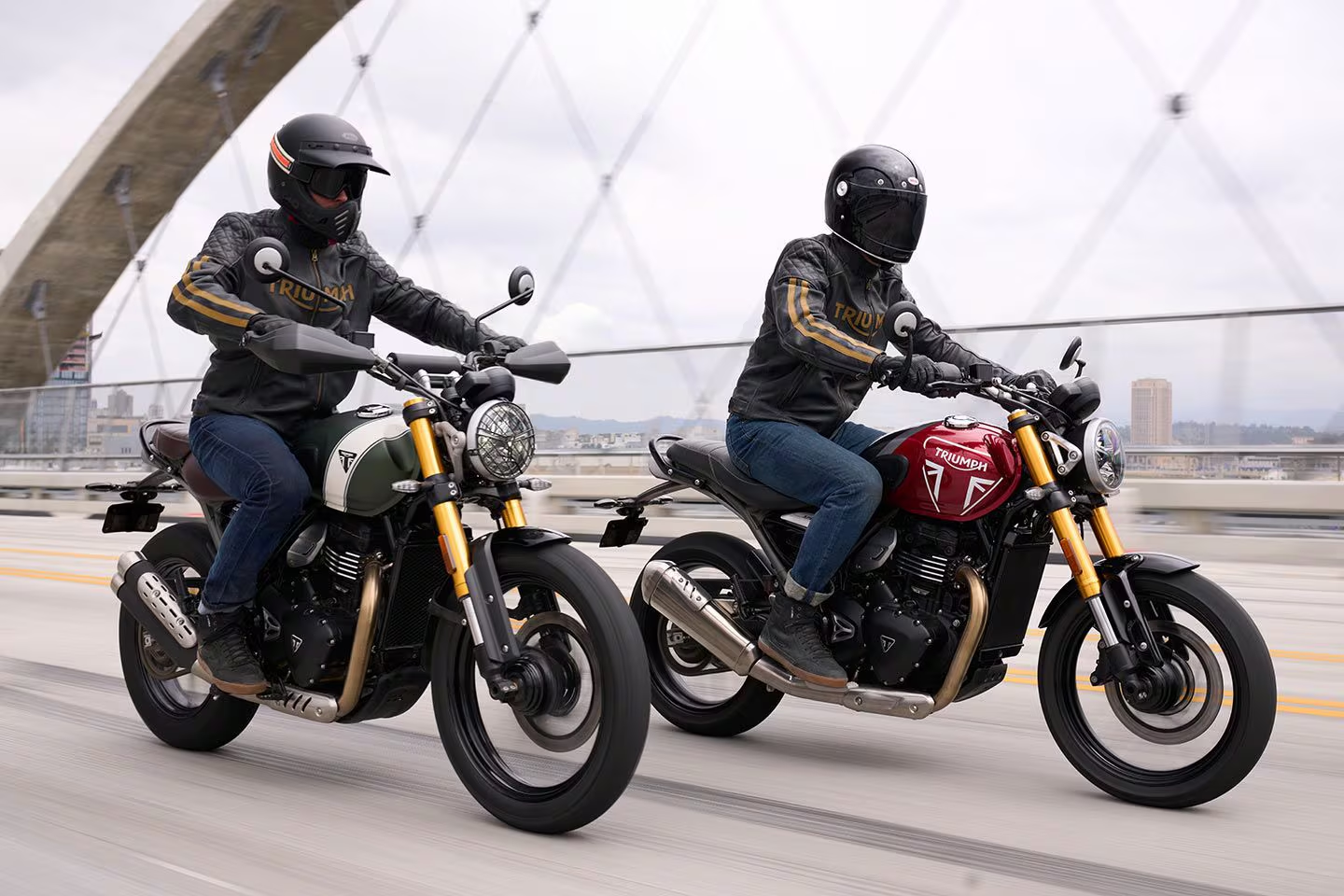
Triumph’s 400cc platform is one of the most important beginner-bike developments in recent years because it delivers what entry-level motorcycles often promise but rarely achieve: a premium feel at a genuinely accessible price point. The Speed 400 in particular raised expectations for what a roughly $5,000 motorcycle can be. Its single-cylinder engine is smooth, responsive, and pleasantly torquey, which makes it easy to ride in real traffic without constantly chasing rpm.
For a beginner, the Speed 400’s biggest win is how coherent it feels. The chassis doesn’t just “get the job done”; it rewards good technique. That’s a subtle but valuable trait in a first motorcycle because you’ll feel the feedback when you brake smoothly, choose clean lines, and use gentle steering inputs. Even experienced riders can appreciate the balance on twisty roads, and that’s the mark of a platform that isn’t merely entry-level in name.
If your tastes lean more vintage and rugged, the Speed’s Scrambler 400 X sibling delivers the same basic strengths; approachable power, strong value, and quality feel; but with a more upright stance and the added versatility to handle rougher roads. The Scrambler’s wide bar and open ergonomics can make it feel like a larger bike than the more compact Speed 400, which is good news for taller riders who sometimes feel folded up on smaller standards.
From a training perspective, both Triumph 400s hit a sweet spot: they’re easy enough not to intimidate, but refined enough that you can keep enjoying them even after your first year. If you’re shopping for “one bike to learn on and keep,” these are strong candidates.
Who they suit best: Riders who want a premium look/feel without premium pricing; commuters who value comfort; beginners who want a bike that remains exciting after skill improves.
What to watch for: As with any single-cylinder, expect some character in vibration at certain rpm (though it’s well-managed here). Also, if you plan heavy off-road use, remember the Scrambler 400 X is “dirt-capable,” not a true enduro.
BMW G 310 R
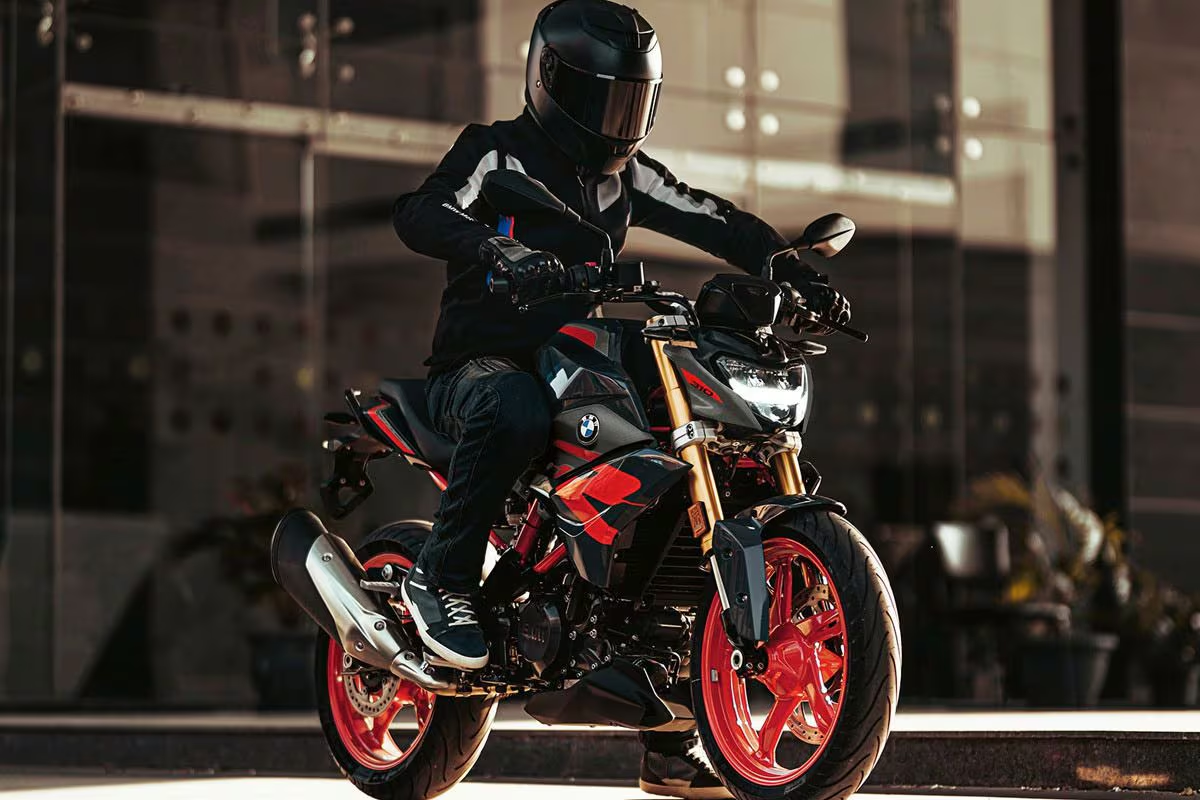
If you like the idea of a premium brand but don’t want a premium-displacement (or premium-insurance) learning curve, BMW’s G 310 R is one of the most sensible “starter-BMW” choices available. It often starts around the $5,000 range, which is notable for a brand whose larger bikes can quickly climb into luxury-car territory. More importantly, the G 310 R delivers a cohesive, polished riding experience rather than feeling like a stripped-down afterthought.
From an expert standpoint, the G 310 R’s value is in its confidence-building nature. It’s lightweight, easy to steer, and smooth-revving, which helps beginners focus on the skills that matter; throttle discipline, scanning traffic, braking technique; without fighting the motorcycle. The trellis frame and its styling details (including color-matched wheels) also give it visual punch that exceeds what many people expect from the entry class.
For beginner-focused practicality, the 310’s 30.9-inch seat height makes it easy to flatfoot for a wide range of riders. Its 362-pound curb weight helps reduce stress during slow-speed maneuvers like U-turns and parking-lot drills. BMW also made a strong move for new riders by fitting a BMW with both a slip-assist clutch and an idle speed boosting system. Together, these features make it easier to launch from a stop without stalling; an underrated benefit when you’re still mastering clutch feel.
Who it suits best: Beginners who want a premium badge with friendly ergonomics; riders who commute and need an easy daily companion; learners who value low seat height.
What to watch for: BMW ownership can still mean BMW parts and service pricing in some regions. It’s worth checking local dealer support and maintenance costs before buying.
Honda XR150L
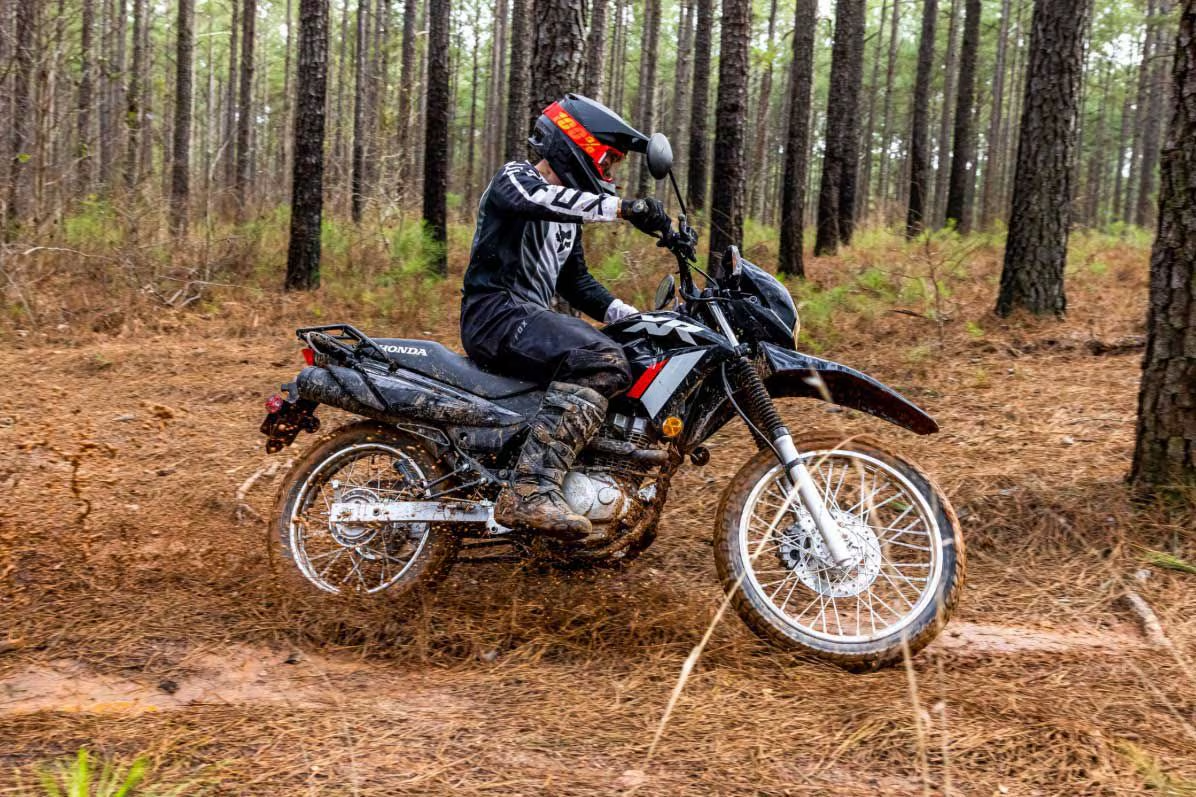
When we talk about truly beginner-friendly motorcycles, it’s hard to beat the simplicity and approachability of Honda’s XR150L. This is one of those rare bikes that feels like it was designed specifically to reduce the friction of learning. It’s light, nimble, and unintimidating in a way that encourages practice; and practice is what turns new riders into competent riders.
Two traits stand out immediately: the exceptionally low seat and the ultra-light clutch pull. For beginners, clutch effort matters because repeated stop-and-go practice can fatigue your hand quickly, especially if you’re anxious or tense. A light clutch reduces that fatigue and makes it easier to focus on the friction zone without rushing.
The XR’s engine is also a standout for training. It delivers power in a forgiving way that doesn’t punish imperfect throttle inputs. When teaching new riders, the best motorcycles are the ones that don’t “bite” when the rider is still learning smoothness. The XR150L’s virtually unstallable feel (in typical beginner use) helps beginners build confidence while they refine coordination.
The price is the final piece of the puzzle: with a starting price around $3,099 new, it creates a low-risk on-ramp into motorcycling. That affordability also makes it easier to budget for gear and training, which are arguably the most important investments a beginner can make.
Who it suits best: Absolute beginners; riders who want an easy dual-sport-style bike; anyone prioritizing low cost and low stress.
What to watch for: It’s not built for high-speed highway touring. If your daily route involves sustained high-speed freeway riding, a larger-displacement bike may be safer and more comfortable.
Aprilia RS 457
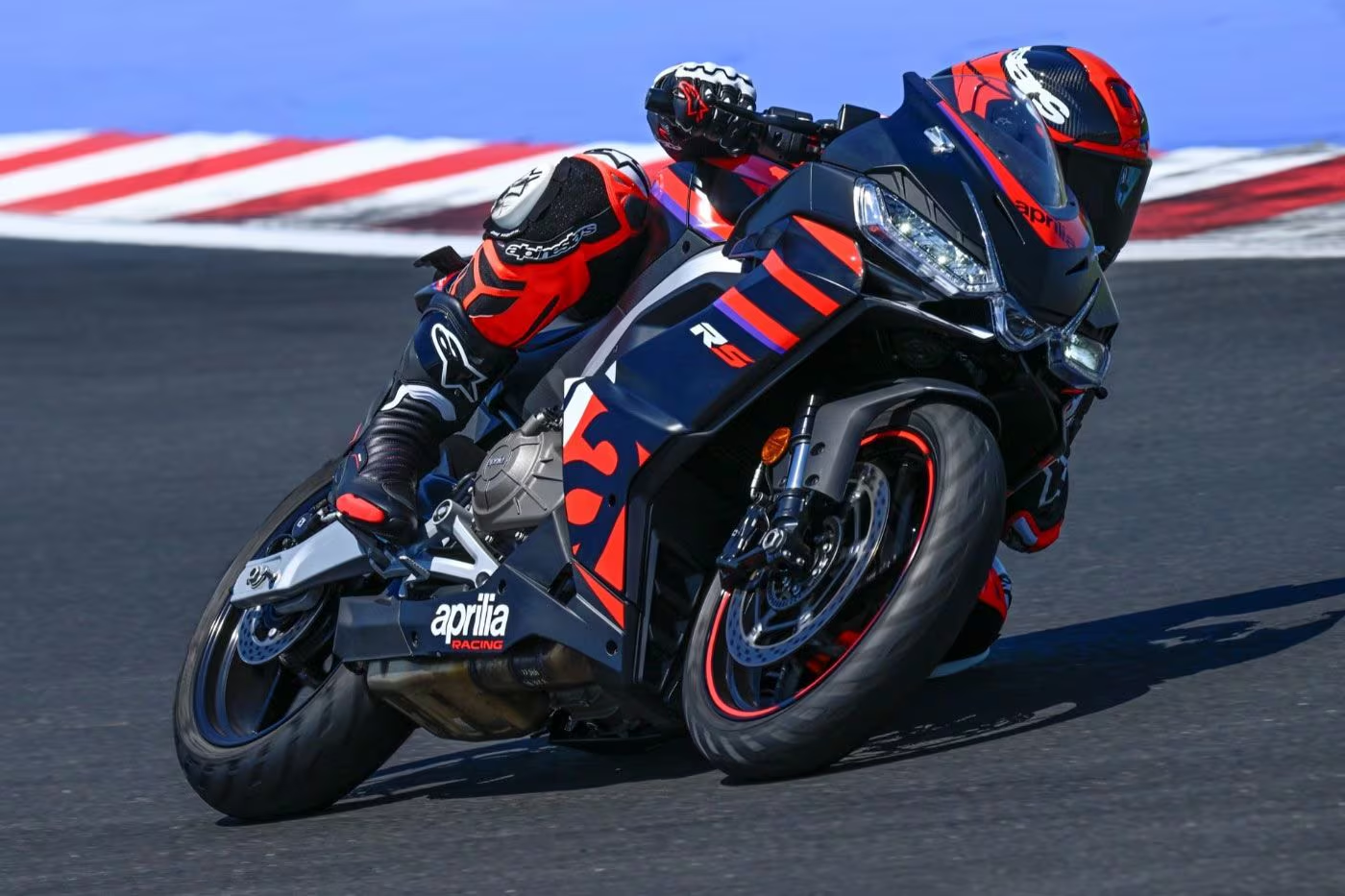
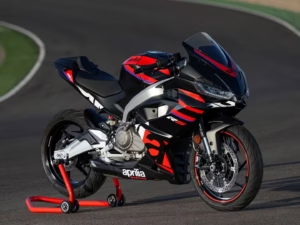
Beginner sportbikes are one of the most difficult categories to get right. If a manufacturer makes the bike too tame, it can feel dull and disposable. If it’s too aggressive, it can outrun a beginner’s decision-making. Many entry-level sportbikes lean toward “safe but sleepy.” Aprilia’s RS 457 takes a different approach: it aims to be a legitimate sportbike that happens to be approachable rather than a watered-down bike wearing race-bodywork.
The headline features matter because they shape the riding experience: a best-in-class power-to-weight ratio, a sharp-handling aluminum twin-spar frame, and suspension that doesn’t feel out of its depth when you ride hard. But what makes it beginner-friendly is how those ingredients are paired with modern electronic support. Aprilia equips the RS 457 with dual-disc hydraulic brakes, traction control, and adjustable engine power modes; tools that can reduce risk while the rider learns.
For newer riders who are genuinely committed to learning sport riding correctly, this is an excellent platform. It rewards good technique rather than punishing it, and its chassis gives clear feedback; something you want when learning corner entry speed, braking pressure, and line discipline.
Who it suits best: Beginners who want a true sportbike feel; riders who will take training seriously; learners who want electronics and strong brakes.
What to watch for: Sport ergonomics can be tiring for some riders, especially in city traffic. Also, check local dealer/service availability; support matters more with premium European brands.
Kawasaki Ninja 500
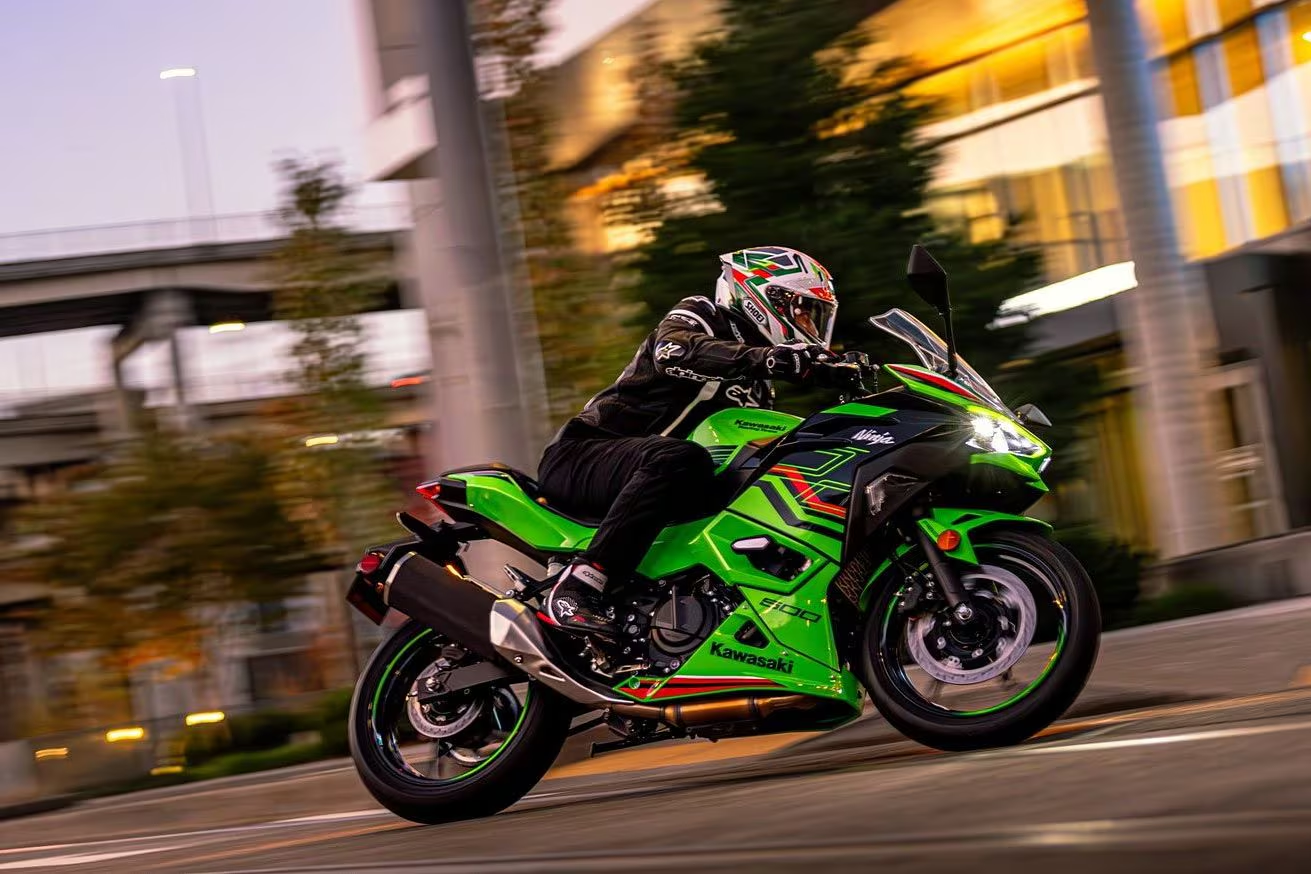
If the Aprilia RS 457’s twin-cylinder idea appeals to you but you want something more budget-friendly (and typically easier to find/service), Kawasaki’s Ninja 500 continues a long line of beginner sportbike excellence. The Ninja 400 set the standard for years, and the Ninja 500 carries that momentum. Importantly, the “500” name and supersport styling can intimidate new riders on paper, but in practice this bike is intentionally designed to be approachable.
The Ninja 500 earns its beginner reputation because it nails the balance that matters: its parallel twin is engaging without being overwhelming, and it delivers power smoothly enough that a new rider can focus on technique rather than managing surprises. The clutch feel is light, launches are forgiving, and the engine doesn’t demand constant high rpm to be usable.
The ergonomics are another reason this bike works so well as a first sportbike. The seat height is a friendly 30.9 inches, the riding position is far more comfortable than a hardcore track-focused machine, and the bike’s 375-pound fully fueled weight keeps handling nimble and confidence-inspiring. And value matters: a new one can be had for around $5,300, which is very competitive in 2026.
Who it suits best: First-time riders who want sport styling; commuters who want wind protection; learners who want a bike with strong resale value.
What to watch for: As with many popular models, theft risk can be higher in some areas; budget for security (disc lock, cover, tracking).
Yamaha MT-03
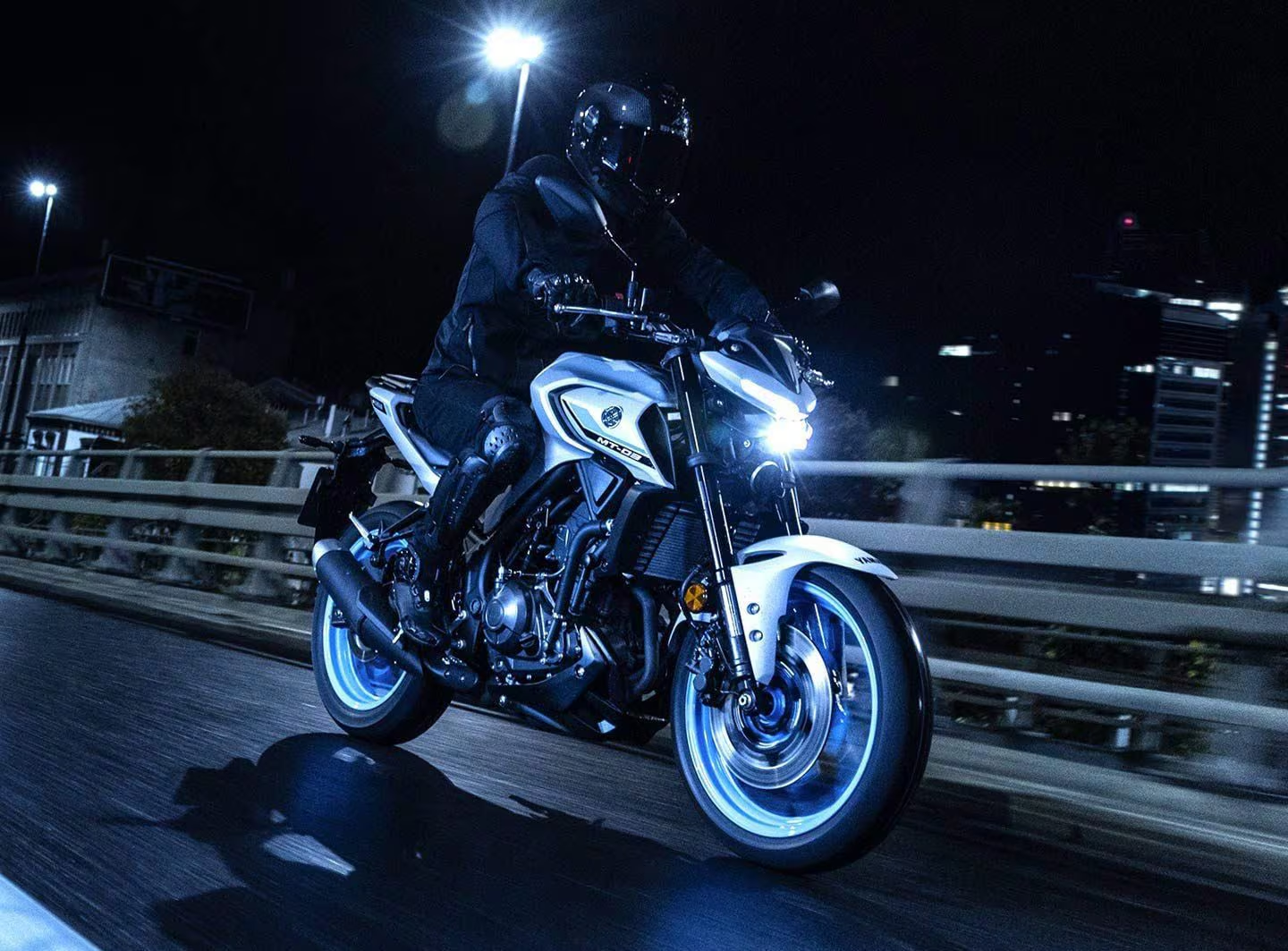
Yamaha’s MT-03 has been a go-to beginner favorite for years because it delivers exactly what new riders need: compact dimensions, light weight, predictable steering, and an engine that is friendly in everyday use. It also avoids a common beginner-bike pitfall by using a twin-cylinder engine rather than a vibey single, which helps keep power delivery smooth and reduces fatigue on longer rides.
For 2026, Yamaha doubled down on real-world beginner usability. The addition of a slip-assist clutch helps reduce stalling and makes takeoffs smoother, while the narrower seat and side panels make it easier to flat-foot at stops; especially helpful in dense traffic, stoplights, and parking-lot practice sessions. Those ergonomic details don’t sound glamorous, but they matter daily for new riders.
Value remains a major MT-03 advantage. Despite the upgrades, Yamaha kept pricing just under the $5,000 mark in many configurations, which preserves its role as one of the smartest “buy it, learn on it, keep it or sell it easily” motorcycles on the market.
Who it suits best: Beginners who want an upright naked bike; city commuters; riders who value smoothness and easy handling.
What to watch for: Naked bikes offer less wind protection at higher speeds. If you’ll spend lots of time on fast highways, consider windscreen options or a faired alternative.
Kawasaki KLX300 & 300SM
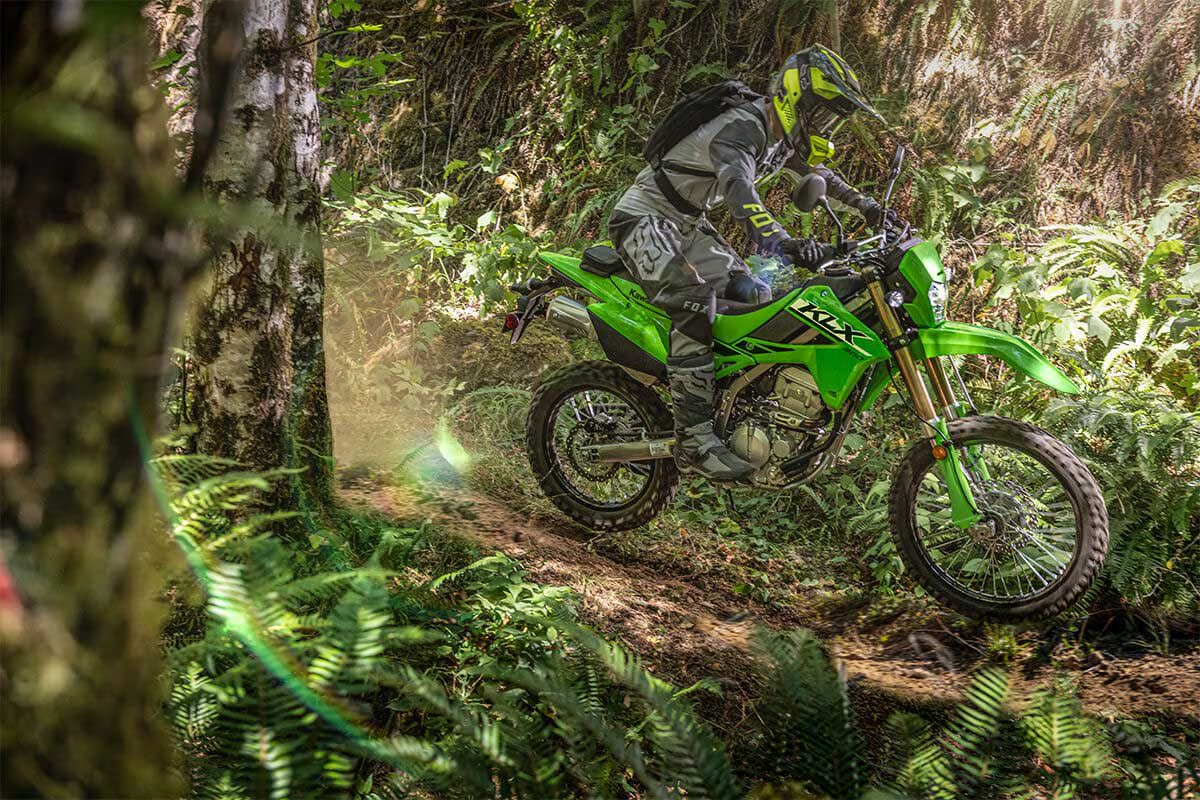
Dual sports are frequently underestimated as beginner bikes, but they can be some of the best training tools in motorcycling. The Kawasaki KLX300 is a prime example because it offers something many entry-level street bikes sacrifice first: real suspension. Good suspension isn’t just about comfort; it’s about control. A bike that stays composed over bumps and uneven pavement is easier to ride smoothly, and smooth riding is safe riding.
The KLX300’s long-travel suspension is adjustable and well-damped, which makes it an excellent option for beginners who want to develop off-road skills or simply want a street-legal bike that can handle rough roads. The engine is easygoing and predictable, and the curb weight is impressively low at around 302 pounds, which reduces stress when learning balance and slow-speed technique.
The major caveat is fit. The KLX is tall, with a 35.3-inch seat height, so it’s best suited to taller riders or those comfortable on taller machines. If that height feels intimidating, it can slow learning rather than accelerate it. That’s why Kawasaki’s alternative matters.
If you want something lower, Kawasaki offers the KLX in a supermoto form (the KLX300SM). It uses reworked suspension and 17-inch wheels to bring seat height down to about 33.9 inches. This version is also a brilliant learning tool: supermoto-style bikes teach cornering confidence, braking control, and “slow bike fast” fun. And you’ll be amazed how entertaining a bike can be with just 18.1 lb.-ft. of torque when the chassis is light and playful.
Who they suit best: Taller beginners; riders learning off-road; commuters on rough roads; anyone who wants a lightweight, durable platform.
What to watch for: Seat height and wind exposure. Dual sports aren’t ideal for long highway slogs without gearing/wind protection considerations.
Royal Enfield Meteor 350
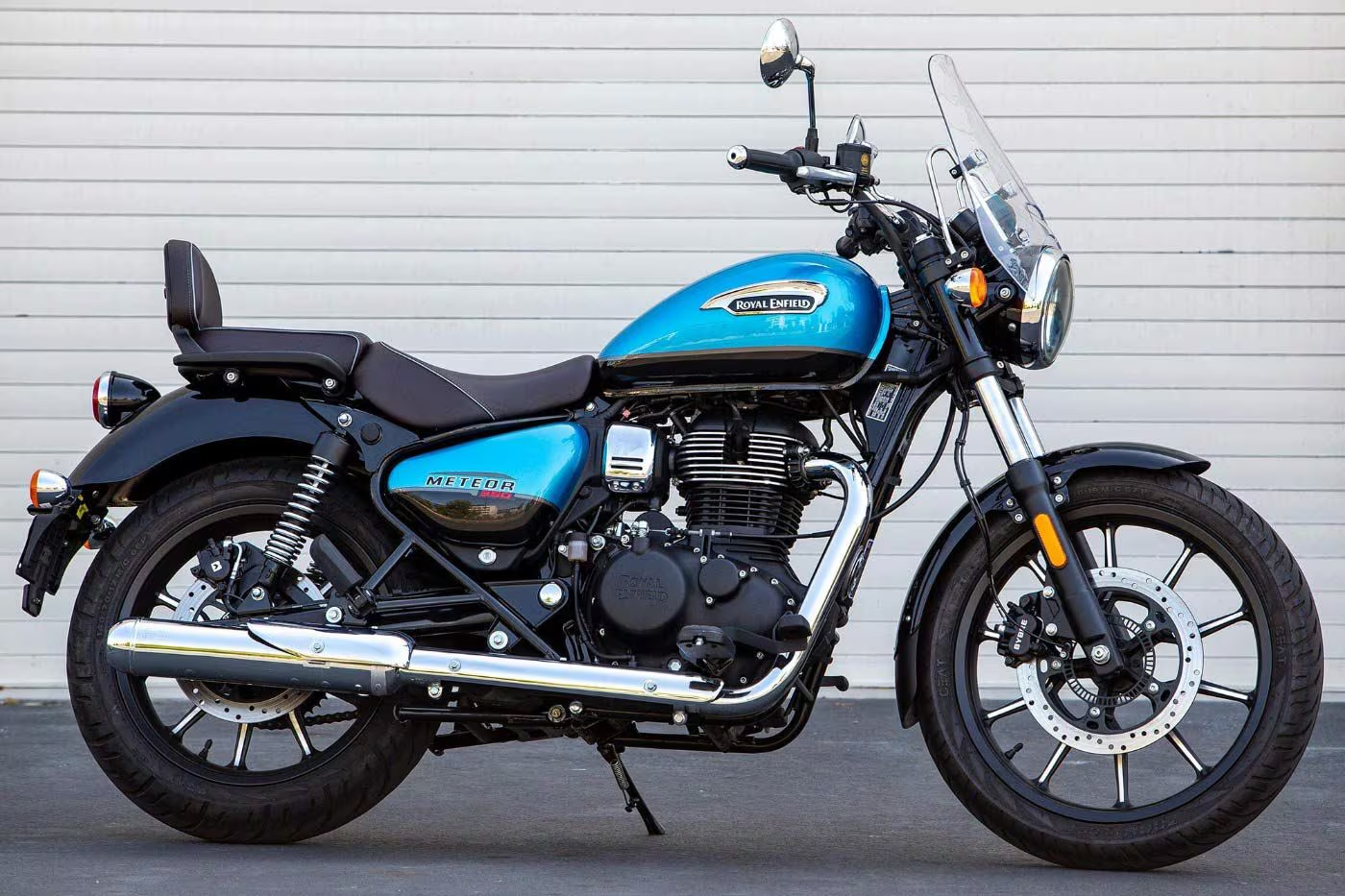
Many beginner cruisers are practical but lack personality. They can feel overly modern, visually generic, and sometimes too quiet to deliver the emotional “cruiser” experience many buyers want. That’s why Royal Enfield’s air-cooled Meteor 350 stands out. It checks the beginner boxes while still delivering classic charm and a satisfying sense of character.
The long-stroke engine produces usable torque across the rev range, and it even delivers a pleasing rumble that many small-displacement cruisers miss. For beginners, that torque-focused nature is helpful: it makes the bike easy to ride without constant shifting, and it feels calm rather than frantic. The Meteor also offers strong bang for the buck. Royal Enfield includes ABS, turn-by-turn navigation, and a heel-toe shifter as standard equipment, all for well under $5,000 in many markets.
As an expert recommendation, the Meteor 350 is especially good for beginners who want a relaxed riding style, plan to cruise around town and back roads, and care about “feel” as much as function. It’s also a great option if you want a bike that looks timeless and doesn’t scream “starter bike.”
Who it suits best: Beginners who want a true cruiser vibe; riders who prefer relaxed ergonomics; buyers who value style and simplicity.
What to watch for: Cruisers typically have limited lean angle compared to naked bikes and sportbikes. That’s not a problem for learning, but it’s worth understanding if you plan aggressive canyon riding later.
KTM 390 Duke
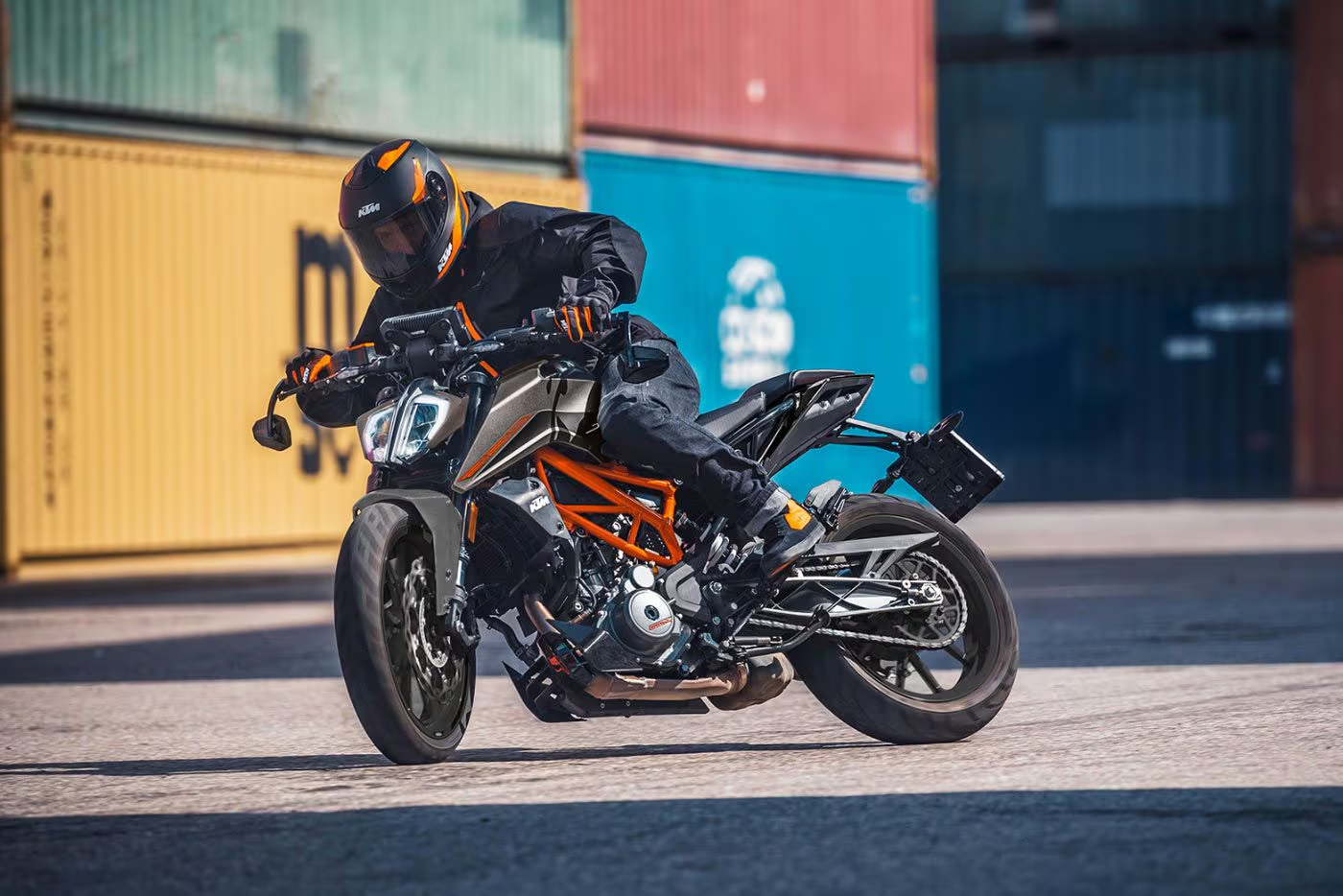
KTM treats its small bikes like serious motorcycles, not placeholders; and the 390 Duke proves it. On paper, its 44 hp and 329-pound dry weight push close to the performance ceiling of A2-friendly motorcycles. In the real world, that means it’s lively, responsive, and genuinely exciting. Yet it’s still engineered with beginner usability in mind.
The Duke’s handling is razor sharp thanks to its compact steel-trellis frame and quality WP suspension components. That agility helps new riders learn the mechanics of cornering; countersteering, line choice, body posture; because the bike responds clearly. KTM also includes a strong electronics suite (including a supermoto mode designed to be slide-friendly) and a full-color TFT dash to manage it. For beginners, the real value is adjustability: you can tailor how the bike responds as your skill increases.
Even though it sits on the performance end of the beginner spectrum, the 390 Duke remains unintimidating in daily use. It’s easy to maneuver, it has a low seat relative to many performance bikes, and the clutch is light. If you’re a beginner who wants a “serious” bike and you’re disciplined about throttle control, the Duke can be an excellent first motorcycle.
Who it suits best: Skill-focused beginners; riders who want sharp handling; commuters who want lightweight performance.
What to watch for: Because it’s eager and quick to respond, it rewards smoothness and punishes sloppy inputs. It’s beginner-friendly, but it’s not “sleepy.”
Honda Grom
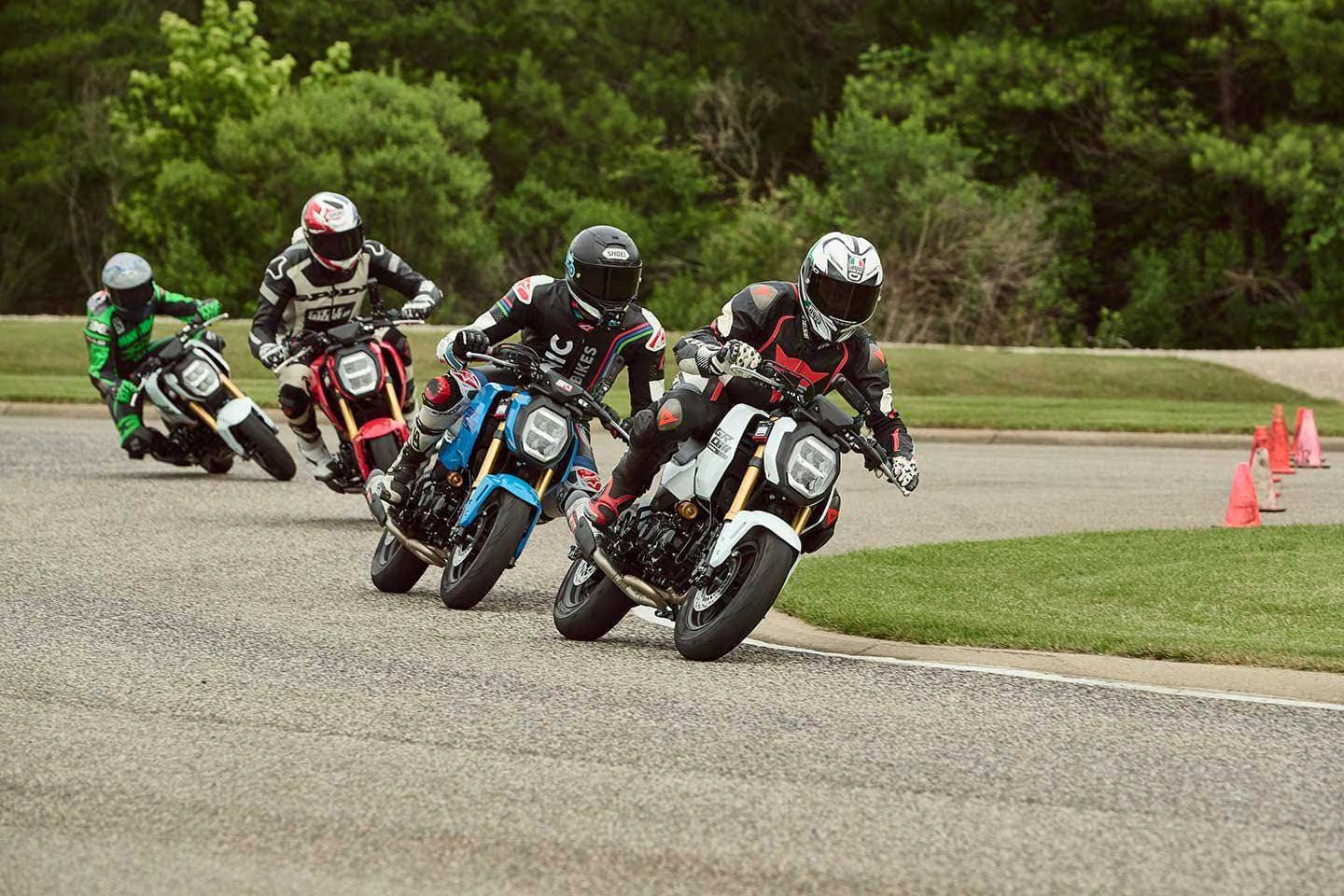
Small in physical size, huge in personality: the 124cc Grom is one of the easiest motorcycles to ride; and one of the most fun. Since its launch in 2014, the Grom has built a culture around itself because it delivers an experience that’s hard to replicate: low stress, high laughs, and a platform that makes every ride feel like play.
Everything about the Grom supports beginners: its light weight, compact wheelbase, low seat, and mellow engine all reduce intimidation. Beginners can focus on core skills; smooth throttle, clutch control, braking; without feeling like the motorcycle is constantly trying to pull ahead of them. And because the bike is so small and manageable, slow-speed practice becomes far less stressful than it can be on larger motorcycles.
But the Grom isn’t just a beginner tool; it’s a reminder that motorcycling is supposed to be fun. The “fun per horsepower” ratio is off the charts. As an example of its entertainment value, the Grom has proven itself even in unexpected contexts, like endurance events at Barber Motorsports Park. Many riders report having more fun pushing a small bike near its limits than riding a liter bike at a fraction of its capability.
It’s affordable, reliable, and incredibly customizable. In many ways, it’s a perfect “gateway bike” that teaches fundamentals and builds confidence; especially for riders who are nervous about starting on a full-size machine.
Who it suits best: Absolute beginners; riders in dense cities; anyone who wants the easiest, most playful learning platform.
What to watch for: Like the XR150L, it’s not ideal for high-speed highway riding. It’s happiest on urban roads, back streets, and twisty low-speed fun routes.
Beginner Motorcycle Matchmaking: Choose by Riding Style
One reason the beginner market is so strong in 2026 is that there isn’t just one “best” starter bike. There are best starter bikes for your use case. If you choose by riding style and environment, you reduce the odds of buyer’s remorse.
Here’s a practical way to think about the bikes above:
- Modern classic / standard: Triumph Speed 400, BMW G 310 R
- Retro scrambler with light dirt capability: Triumph Scrambler 400 X
- Entry sportbike: Aprilia RS 457, Kawasaki Ninja 500
- Naked streetfighter-style all-rounder: Yamaha MT-03, KTM 390 Duke
- Dual sport / off-road growth platform: Honda XR150L, Kawasaki KLX300 & 300SM
- Beginner cruiser: Royal Enfield Meteor 350
- Mini-moto / fun-first trainer: Honda Grom
If you’re not sure what you want yet, that’s normal. Many riders only discover their favorite riding style after a few months of seat time. In that situation, prioritize versatility (MT-03, Speed 400, G 310 R) and manageable ownership cost.
Expanded List: More Beginner Bikes Worth Shopping in 2026
You asked to add to the list, and 2026 offers enough strong options that it’s worth expanding beyond the highlights above. The motorcycles below aren’t included because the earlier picks are “better,” but because beginner needs vary. Consider these as additional finalists if you’re cross-shopping by price, ergonomics, or brand availability.
Honda Rebel 500
The Rebel 500 remains one of the most balanced beginner cruisers because it combines a low seat height with a friendly engine character and modern usability. It’s not a “hardcore” cruiser; it’s a practical, confidence-building motorcycle that happens to look cool. Many training programs and new riders gravitate to it because it’s easy to manage at stops and doesn’t punish slow-speed errors.
Why it’s worth considering: approachable ergonomics, smooth twin-cylinder power, easy everyday handling, and strong resale value.
Yamaha YZF-R3
If you like sportbike styling but want something lighter and less intense than middleweight sport machines, the R3 is still one of the smartest choices. It’s forgiving, stable, and encourages learning cornering technique without trying to overwhelm you. It also tends to be affordable to insure compared to higher-displacement sportbikes.
Why it’s worth considering: beginner-friendly sport ergonomics, predictable power, and a large aftermarket for parts and upgrades.
Kawasaki Z500
For riders who like the Ninja 500’s engine concept but prefer an upright naked layout, the Z-series family is often an ideal match. Upright bars improve leverage at low speed and reduce wrist fatigue in traffic, while the same engine architecture keeps performance usable without being intimidating.
Why it’s worth considering: daily comfort, friendly handling, and the ability to grow into spirited riding.
Suzuki SV650
The SV650 is sometimes called the “forever bike” because it can be a first bike for mature beginners and still remain fun for years. Its engine is torquey and responsive, so it requires respect; but it’s also predictable and widely supported. If you’re a taller rider or you want something that won’t feel small quickly, the SV650 can be a smart step-up choice when approached with discipline.
Why it’s worth considering: strong real-world power, comfort, huge parts availability, and proven reliability.
Honda CB500F / CBR500R / CB500X
Honda’s 500-class family is often recommended because it sits in a sweet spot: stable highway capability without aggressive power delivery. The CB500F is upright and practical, the CBR500R adds wind protection and sport styling, and the CB500X leans toward adventure ergonomics and longer-distance comfort.
Why they’re worth considering: calm performance, easy ownership, and versatility across commuting and weekend rides.
New Rider Reality Check: What “Beginner-Friendly” Does (and Doesn’t) Mean
It’s worth stating clearly: a beginner-friendly motorcycle doesn’t make you safe automatically. It simply makes it easier to learn and easier to recover from small mistakes. The rider still has to build skill, judgment, and consistent habits. In that sense, beginner motorcycles are like good training shoes; they support the process, but they don’t replace the work.
Here are the most common misconceptions new riders have when shopping for a first bike:
- Myth: “If it’s small, it’s automatically easy.” Reality: some small bikes have abrupt throttle or twitchy ergonomics.
- Myth: “I’ll outgrow a beginner bike quickly.” Reality: most riders haven’t come close to mastering a 300–500cc bike in the first year.
- Myth: “More power is safer because I can get out of trouble.” Reality: more power often creates trouble faster than beginners can react.
- Myth: “ABS means I can brake however I want.” Reality: ABS helps, but technique still matters for stopping distance and stability.
If you shop with these realities in mind, you’ll be more likely to pick a motorcycle you enjoy and learn effectively on.
Practical Buying Guide: How to Choose the Right Beginner Bike from This List
With so many good beginner motorcycles available, the challenge is no longer “What can I buy?” It’s “What fits my life?” Use the checklist below to make a confident decision.
Step 1: Be Honest About Your Riding Plan
Where will you ride most in the next six months?
- Urban commuting: prioritize low-speed handling, narrow width, easy flat-footing (MT-03, G 310 R, Speed 400, Grom).
- Highway commuting: prioritize stability, wind protection, and usable midrange torque (Ninja 500, CBR500R, CB500X).
- Back roads and twisties: prioritize chassis feedback and brakes (RS 457, 390 Duke, Speed 400).
- Dirt and mixed surfaces: prioritize suspension travel and durability (KLX300/300SM, XR150L, Scrambler 400 X).
A bike that’s perfect for city streets can feel unpleasant on fast highways. Likewise, a tall dual sport can be brilliant off-road but stressful for shorter riders in traffic. Fit the bike to the environment, and learning becomes easier.
Step 2: Prioritize Fit Over Spec Sheets
Seat height is important, but it’s not the only fit variable. The shape of the seat, the width of the bike, and bar reach can make a taller bike feel manageable; or make a “low” bike feel awkward. When you sit on a motorcycle at the dealership, check:
- Can you comfortably put at least one foot flat at stops?
- Are the bars easy to reach without leaning forward aggressively?
- Does the bike feel balanced when you stand it upright off the side stand?
- Can you operate clutch and brake levers smoothly without straining?
Confidence at stops is not an ego issue; it’s a safety issue. Choose a bike that makes you feel stable at walking speeds.
Step 3: Budget Like a Professional (Not Like a Dreamer)
New riders often spend 90% of the budget on the bike and 10% on everything else. Experienced riders often do the reverse. Your real beginner budget should include:
- Helmet, gloves, jacket, boots, and pants
- Training course fees
- Insurance (sportbikes often cost more)
- Basic maintenance (chain care supplies, tire gauge, etc.)
- Initial service and tires (especially if buying used)
A beginner bike is only “affordable” if you can afford to ride it safely and maintain it correctly.
Used vs New: What’s Smarter for a First Motorcycle?
Both paths can be smart, but each has tradeoffs. A used beginner bike often saves money and reduces stress about minor cosmetic drops. A new bike offers warranty coverage, predictable condition, and sometimes better financing. In 2026, as entry-level quality improves, buying new can make more sense than it did a decade ago; especially if the price gap between used and new is small in your region.
If you buy used, prioritize condition over modifications. Poorly installed aftermarket parts can cause electrical issues, fuel mapping problems, or safety concerns. If you buy new, don’t skip training and gear “because the bike has electronics.” Rider skill matters more than electronics.
Final Takeaway: 2026 Is a Beginner’s Market; and That’s Great News
The biggest story of the 2026 beginner motorcycle market is simple: you no longer have to choose between “cheap and dull” or “cool but risky.” Bikes like Triumph’s Speed 400 and Scrambler 400 X, the BMW G 310 R, Honda’s XR150L, Aprilia’s RS 457, Kawasaki’s Ninja 500, Yamaha’s MT-03, Kawasaki’s KLX300/300SM, Royal Enfield’s Meteor 350, KTM’s 390 Duke, and Honda’s Grom represent a broad spectrum of riding styles; without forcing beginners into bad compromises.
The right first motorcycle is the one that matches your body, your environment, your budget, and your goals. Choose a bike that makes you want to ride often, practice willingly, and improve steadily. That’s how you build the skill that matters; and how you end up enjoying motorcycling for the long haul.