

When you step back and look at humanity’s industrial progress, it becomes clear that technology doesn’t merely “support” society—it actively shapes how we live, work, travel, trade, and even how we define status. Few inventions demonstrate that relationship as clearly as the automobile. Over roughly a century and a half, the car evolved from a rare mechanical curiosity and luxury object into a near-universal tool of daily life. It has served as personal transportation, public transit, a backbone for logistics and heavy-load hauling, and a platform for sport, recreation, and engineering competition. Cars have also become symbols—of freedom, of modernity, of wealth, and sometimes of national pride.
Yet the deeper you explore automotive history, the more you realize how much of it has been fragmented or obscured over time. Brands rise and fall. Companies change owners. Trademarks get merged, acquired, revived, or retired. Some names remain intact while the organizations behind them change completely; others vanish almost without a trace. Economic cycles, war, shifting regulations, and new manufacturing methods have all accelerated this churn. What survives in popular memory is often only a tiny fraction of what once existed.
Table of Contents
This is why alphabet-based brand research—such as a focused look at marques beginning with a specific letter—can be surprisingly useful. It gives structure to a vast subject and helps you spot patterns: where certain types of manufacturers emerged, how regional industries matured, and why some companies succeeded while others disappeared. In this guide, we examine car brands that start with the letter “W.” Some are globally recognized; others are niche, historic, or short-lived. Together, they form a small but fascinating cross-section of automotive development.
What car brands start with the letter W?
The letter W, as the first letter in the name of automobile brands, is quite common. There are many automobile brands—famous and not-so-famous. Among them are Wallyscar and Warren-Lambert, Willys, and others.
For enthusiasts, collectors, historians, and even everyday drivers who simply enjoy understanding what’s behind a badge, the challenge is rarely curiosity—it’s access to clean, reliable summaries. Many valuable details are scattered across archives, old catalogs, regional publications, and enthusiast communities. Helpful information often exists, but it may be incomplete, difficult to verify, or buried in lists that are not designed to tell a coherent story. With that in mind, the goal here is straightforward: to present each “W” brand in an engaging, easy-to-follow format while preserving the core facts and maintaining a clear sense of context.
As you read, keep a useful distinction in mind: a “brand” can refer to a long-running manufacturer with multiple generations of products, but it can also refer to a short-lived venture, a specialty builder, or a name attached to a single notable vehicle. In automotive history, impact is not always proportional to longevity. Some companies produced only a handful of models yet still influenced design, production techniques, or regional industry development.
W Motors
W Motors is a Dubai-based car brand with roots in Lebanon, founded in 2012 by Ralph Debbas. From an industry perspective, its importance is not merely the vehicles it created, but the signal it sent: it became the first car brand in the Middle East to develop luxury sports models, proving that high-performance automotive development could be pursued beyond the traditional centers of Europe, Japan, and North America.
At its core, the company focuses on the research and development of high-performance sports cars and also provides consulting services connected to low-volume, small-scale production—an area where precision, supplier quality, and engineering discipline matter as much as marketing. Working at this end of the market requires expertise in lightweight materials, advanced powertrain integration, cooling solutions, braking performance, and aerodynamic stability, particularly because the expectations of buyers are exceptionally high.
The brand drew additional attention after developing an electric, multi-purpose model for ICONIQ Motors, a Chinese manufacturer associated with the ICONIQ name and the ICONIQ Seven subsidiary. This kind of collaboration is common in modern automotive business: it allows a specialist firm to apply its engineering capability across multiple projects while partner companies benefit from design and development support without building an entire performance-focused R&D organization from scratch.
In 2020, W Motors announced it was expanding beyond its core product lines by including the production of its own electric and autonomous vehicles. That move reflects a broader industry reality: electrification and automation are not side projects anymore—they increasingly define the future of mobility, especially for premium brands that can justify the cost of advanced technology and early adoption.
In practical terms, W Motors represents a modern kind of boutique manufacturer: one that builds prestige not only through styling and exclusivity, but also through engineering partnerships and a willingness to adapt to evolving technology trends.
Wallyscar

Wallyscar is based in La Marsa, Tunisia, and was founded in 2007 by French engineer Nicola Cagnot. The company’s identity is strongly tied to practical vehicles with Jeep-based roots, which is a sensible strategy for a small manufacturer: proven mechanical foundations can reduce development risk while still allowing a brand to shape design, packaging, and market positioning.
From a production standpoint, the company’s capacity is reported to support up to 600 vehicles per year. That places it firmly in the low-volume category—large enough to develop manufacturing rhythm and supply chains, but small enough that quality control, parts sourcing, and export logistics can define the customer experience as much as the vehicle itself.
Wallyscar’s vehicles have been exported to the EU, Qatar, Panama, and its domestic market. Exporting from a smaller manufacturing base is a meaningful achievement because it typically requires meeting specific regulatory, safety, and emissions standards—especially when entering EU markets. In addition to vehicles, the company also produces components for Peugeot and Citroën, which suggests integration into broader automotive supplier ecosystems and an ability to meet external quality requirements.
Historically, Wallyscar produced its Izis model from 2007 to 2014. As of 2017, a newer model, the Wallyscar Iris, became available for sale. Model transitions like this can be pivotal moments for niche brands: they test whether a company can evolve design, production consistency, and market relevance while maintaining the practicality that initially made it viable.
In the broader “W” landscape, Wallyscar stands out as a North African manufacturer that blended regional ambition with export-minded production—an approach that demands technical discipline and a clear understanding of its target buyers.
Waltham
The Waltham Manufacturing Company represents an early chapter of American mobility, founded in 1893 in Waltham, Massachusetts, USA. Its founders were Charles Herman Metz, Prof. Herbert L. Thompson, Elmer G. Howe, Frank L. Howe, and William Parrott. If you study the late 19th and early 20th centuries, you’ll see a recurring pattern: many “automobile companies” began as broader mobility manufacturers, building anything from bicycles to motorized buggies, often learning by iteration rather than following an established playbook.
In 1898, the company began producing motorcycles, ATVs, three-wheelers, and self-propelled models. That broad approach made sense in an era when the market had not yet decided what the “standard” personal vehicle should be. Steam, electric, and gasoline solutions competed in parallel, and many manufacturers tried multiple directions before specializing—if they survived long enough to specialize at all.
Waltham produced under three brand names: Orient, Waltham, and Waltham-Orient. The first offering was a steam car, followed by products such as the Orient Victoriette motor buggy and small cars built between 1902 and 1903. In 1905, the Orient 20 HP De Luxe Touring automobile appeared—an example of how quickly manufacturers were pushing toward more capable touring vehicles as engines improved and customer expectations grew.
Production continued until the brand closed in 1910. While that lifespan may seem short, it was not unusual for the period. Early automotive manufacturing required capital, supply networks, and scaling capability that many regional firms simply could not sustain once larger, better-funded competitors entered the market.
From a historical lens, Waltham’s significance lies in its contribution to the experimental era—when the industry’s foundational ideas were still being tested in workshops, small factories, and regional hubs across the United States.
Wanderer

The German automotive industry matured early, and in several ways it was ahead of the U.S. industry during the formative years of personal transportation. Wanderer Werke AG is one of the notable early representatives of this trajectory. The company produced bicycles, motorcycles, and passenger cars beginning in 1896—again illustrating how many automotive enterprises evolved out of bicycle and mechanical manufacturing traditions.
It was founded in Augsburg (Germany) by Johan Winklhofer and Richard Jaenicke as Winklhofer & Jaenicke. In 1911, it adopted the name Wanderer. Names mattered then as they do now: a brand name functioned as a promise of reliability and identity, especially in a market flooded with new entrants. “Wanderer” also fit a mobility narrative—vehicles as tools for travel and independence.
In 1932, Wanderer became part of Auto Union AG, a consolidation that reflects the economic and industrial realities of the era. The company’s principal products included passenger cars and vans. Among its well-known models were the Wanderer W21 of 1933, the Wanderer W25 of 1936, and the Wanderer W25 Stromlinie Spezial. Models like these help illustrate how German manufacturers steadily refined design, performance, and aerodynamics through the interwar years.
The brand was discontinued in 1945. That endpoint makes historical sense: the conclusion of World War II reshaped factories, ownership structures, and national industries across Europe. Some marques were revived, others were absorbed into new organizations, and many simply ended due to political and economic transformation.
In the “W” lineup, Wanderer is one of the most historically consequential names—both because of its longevity and because of its association with a major consolidation in German automotive history.
Warren-Lambert
Warren-Lambert is a reminder that early automotive history is full of entrepreneurial experiments—some clever, some ambitious, and many ultimately brief. In 1912, Warren Lambert-Morgan, a car sales agent in Richmond, Surrey County, Britain, founded an automobile company named after himself, stylized with a hyphen: Warren-Lambert Engineering Co. Ltd.
His first automobile was a four-wheeled velomobile, reflecting a transitional era when designers were still negotiating the boundary between bicycle-derived light vehicles and fully developed automobiles. By 1914, the company produced a ten-horsepower model featuring a Dorman powerplant. Engines were often sourced from specialized manufacturers, and smaller builders frequently assembled vehicles using purchased components—an early form of the supply-chain model that later became standard practice.
World War I interrupted production, as it did for countless manufacturers across Europe. The company resumed operations in 1919 in Richmond, focusing on two-seater models. In 1921, it displayed a new Dorman model, but only two prototypes were produced. That model became the final chapter for the brand, which was liquidated the same year.
From an expert’s viewpoint, Warren-Lambert’s short life is still instructive: it illustrates how fragile early automotive ventures could be, especially when external forces—war, economic strain, and rapid competitive development—compressed the margin for error.
Wendax

Wendax, based in Hamburg-Hamm, Germany, is often described as a brand with one of the shortest histories of automobile production—an example of how difficult it can be to transition from industrial manufacturing into competitive vehicle building. Founded in 1933, the company initially produced railroad carts and cargo tricycles under the name Draisinenbau Dr. Alpers, products that align with practical post-industrial transport needs rather than consumer passenger cars.
Automobile production began in 1949 and ended quickly in 1950. The brand is remembered for producing the first German half-ton truck immediately after the war—an achievement that reflects the urgent need for durable commercial transport in postwar recovery.
During its brief automotive period, Wendax developed the Wendax S sedan and a three-seat roadster, as well as the WS 400 with one-wheel drive. These projects point to experimentation in layout and design, but they also highlight a harsh reality: innovation without consistent build quality can quickly damage trust in a young brand.
Ultimately, poor vehicle quality contributed to the brand’s closure at the end of 1950. In professional terms, Wendax is a classic case study in manufacturing transition risk: building transport equipment and building reliable road cars may share tools and materials, but they demand different quality control systems, supplier standards, and customer expectations.
Westfield

In 1982, Chris Smith founded Westfield Sportscars on Dudley Road in Kingswinford, England. Westfield’s story is best understood in the context of British kit car culture—a space where enthusiasts value lightweight design, sharp handling, and the satisfaction of building or customizing a vehicle themselves. Kit car companies often thrive when they capture the spirit of an iconic design while improving usability, parts availability, and structural integrity.
At a time when Lotus Cars was experiencing difficulties, Westfield successfully sold kits similar in style and layout to the Lotus Seven. The brand produced two-seater open-top cars, offered both as factory builds and factory-built variants. The first of these cars traces back to the influence of Colin Chapman’s minimalist engineering philosophy, where performance comes from reducing mass and refining chassis dynamics rather than simply increasing power.
Westfield did not merely copy a format; the company made significant changes to design and construction, an important distinction for anyone evaluating kit car lineage. Over time, Westfield vehicles earned recognition for being more than replicas—they became an evolving interpretation of the lightweight sports car ideal, with updates shaped by market demand and engineering refinement.
In 2006, the brand became part of Potenza Sports Cars Limited. Its sports, Turbo, and Racer electric racing car models achieved European status, reflecting how the kit and specialty market can also become a laboratory for innovation, especially in motorsport-inspired applications.
From an industry perspective, Westfield stands out because it proves that “small” manufacturers can succeed by focusing on a clear driving experience, adaptable production, and a community of owners who value involvement as much as the finished product.
Western Star
Western Star is an American brand recognized for heavy commercial vehicles—an area of the automotive world where durability, payload capability, and lifecycle cost matter more than styling trends. Founded in 1967 by Semon Emil Knudsen, the company became a division of White Motor Company, operating with an office in Portland, Oregon, USA. This positioning placed it in the heart of a North American trucking ecosystem that depends on long-distance reliability and serviceability.
In 1981, both companies came under the control of Volvo Trucks. During that period, Western Star Trucks gained economic independence and was acquired by Terry Peabody, who had previously transferred the brand to Daimler’s Freightliner division ten years earlier. Ownership shifts like these are common in commercial vehicle markets, where economies of scale, dealer networks, and platform sharing can determine survival.
Today, the company produces several Class 8 trucks with payloads exceeding 15 tons, along with specialty equipment. In professional transport terms, Class 8 is the top tier for heavy-duty applications—vehicles expected to handle harsh duty cycles, high mileage, and demanding work environments. Specialty configurations further show how commercial brands differentiate themselves: the “best” truck is often the one correctly specified for a niche task.
Western Star’s presence in this list broadens the definition of “car brands” into the larger automotive industry. Understanding a marque like this is useful not only for historians but also for anyone tracking the evolution of freight, construction transport, and industrial logistics.
Wills Sainte Claire

Wills Sainte Claire was the automotive division of the American company CH Wills and Company, operating in Marysville, Michigan, beginning in 1921. The founder, Childe Harold Wills, was named in an unconventional way—his mother was a devoted admirer of Lord Byron. The brand itself took its name from the nearby river that flowed close to the factory, a naming tradition that reflects how location and identity were tightly linked in early manufacturing towns.
The first car under the Wills Sainte Claire name was released in 1921. By 1923, the brand adopted a refined corporate name: Wills Sainte Claire Incorporated. The vehicles could be fitted with different body types, which was typical for the era. Body styles were often selected by customers or dealers, and manufacturers offered multiple configurations to broaden appeal and address a market that was still defining what “standard” passenger transport should look like.
In 1927, the founder closed the brand. Closures like this were not always the result of a single failure; they often reflected the rising costs of scaling production, increasing competition from major manufacturers, and the growing importance of dealer networks and parts support.
For collectors and historians, Wills Sainte Claire remains a compelling name because it captures a transitional period: when craft, engineering, and brand-building were colliding with the industrialization of mass-market motoring.
Willys

Willys has been a manufacturer of American automobiles since 1908, founded by John Willys. In the early decades of the industry, Willys became associated with practical engineering decisions and strategic partnerships—moves that helped it compete in a market filled with both ambitious startups and rapidly expanding industrial players.
In 1913, the company acquired a license to produce engines developed by Charles Knight, which led to some models being sold under the Willys-Knight brand. Licensing arrangements like this were significant because engine design was a primary differentiator. A distinctive powerplant could elevate a brand’s perceived sophistication, smoothness, or durability.
During the 1920s, collaboration with Crossley of Manchester and the involvement of F.B. Stearns contributed to the development of models associated with the luxury line Stearns-Knight. In 1926, the budget-oriented Whippet model appeared, demonstrating Willys’ ability to navigate both upscale and affordable segments—an approach that often determines whether a manufacturer can survive economic fluctuations.
During the crisis period, the company was supported by the Willys 77 model, which became the basis for the Willys Americar. The most famous military product was the Willys MB, a model that became strongly associated with wartime utility and off-road capability. In 1944, the civilian Willys CJ-1 was developed, and the Jeep CJ2A also entered production. In 1946, the Jeep Station Wagon was released. Finally, in 1953, Willys merged with Kaiser Motors.
From an expert standpoint, Willys is one of the most influential “W” names because it bridges multiple eras: early passenger cars, wartime vehicle development, and the transition into civilian utility vehicles that shaped postwar automotive culture.
Winnipeg
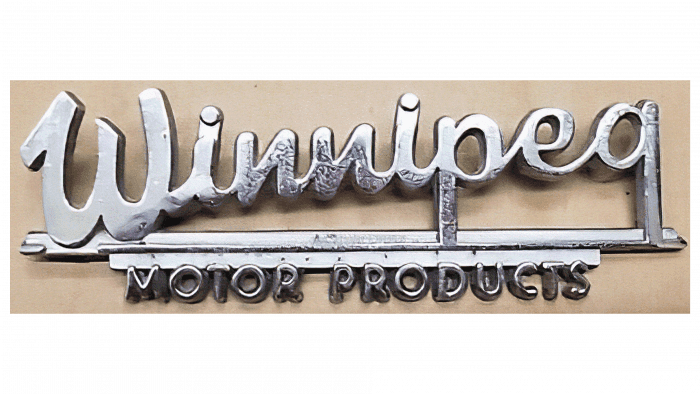
Winnipeg Motor Cars played a brief but noteworthy role in Canadian automotive development between 1921 and 1923. Short-lived companies are sometimes overlooked, but they can still reveal how regional markets attempted to build local manufacturing capacity—even when supply chains and capital were concentrated elsewhere.
Based in Winnipeg, Manitoba, the company was founded by Frank and Dave Ogletree, E. L. Herbert, and Louis Arsenault. In that short operating window, the brand introduced two models aimed at the compact touring car segment. Touring cars were a practical choice for the era: they offered flexible seating and utility, and they matched the road conditions and travel habits of the time.
The Hatfield Model A-42 tourer, produced in Sidney, New York, was shipped to Winnipeg in disassembled form and reassembled locally. This is an important detail because it highlights a common strategy used by smaller markets: semi-knockdown assembly allowed regions to participate in manufacturing and employment while relying on established production sources for core components.
In 1923, the car adopted a six-cylinder powerplant, a move that suggests a push toward improved performance and refinement. However, a financial crisis led to the company’s closure. For students of automotive history, Winnipeg Motor Cars demonstrates the fragility of regional manufacturing ventures when confronted with market volatility and limited scale.
Wolseley

Wolseley Motors Limited began production in 1901 and was founded by Herbert Austin together with the Vickers brothers. In its early phase, the company focused on large, expensive, and luxurious automobiles—vehicles designed not only for transport, but for prestige and comfort at a time when car ownership itself was a marker of wealth.
After the deaths of the founding brothers, the company expanded and became one of the larger automobile manufacturers in the 1920s. This era is particularly interesting because it marks the transition from handcrafted luxury vehicles to broader industrial production, where brand identity had to scale alongside manufacturing volume.
In 1927, Wolseley was acquired by William Morris and merged into Morris Motors. For decades, parallel production of similar models under both names continued until the company closed in 1975. This kind of brand pairing is a classic strategy: it allows a manufacturer to target different customer perceptions (traditional, premium, modern, value-focused) while sharing engineering and production resources.
Today, the right to use the Wolseley name belongs to the Chinese company SAIC Motor. That detail captures a modern reality: legacy automotive trademarks can outlive the original companies by many decades and may be repurposed as the industry globalizes.
WEY
WEY is a relatively modern brand created in 2016 as a luxury SUV line connected to Great Wall Motors. It was named after the family of the founder, Mr. Jack Way, and positioned as a premium offering within the broader Haval luxury crossover space. Naming a brand after an owner is unusual in contemporary mass-market automotive strategy, which makes this detail notable: it signals a deliberate attempt to attach personal identity and leadership to product ambition.
The brand is associated with model lines such as the Wey Tank 300, Wey VV5, and Wey VV7. In market terms, these vehicles sit in a segment where buyers typically expect upscale interior design, advanced infotainment, strong safety features, and an ownership experience that feels more premium than mainstream alternatives.
WEY is described as the first Chinese car lineup named after an owner and the first brand in the luxury SUV category, with an explicit goal of becoming a world leader in that space. Whether any brand reaches such a target depends on product consistency, global distribution, and long-term brand trust—but the stated ambition itself reveals how quickly the global industry has shifted. Premium positioning is no longer limited to older, traditional luxury centers; it has become a competitive global objective.
Weltmeister

Weltmeister is a brand with a deliberately bold self-image—its name translates as “Champion of the World.” In branding terms, that choice is a direct challenge to traditional automotive hierarchies and a signal of confidence, especially within the fast-moving electric vehicle sector where new entrants often define themselves in opposition to long-established manufacturers.
The brand was founded in 2015 by Freeman Shen, who previously managed Geely in Shanghai (China). Leadership experience matters a great deal in EV startups and technology-led automakers, because success depends on more than product design: it requires supply chain coordination, battery strategy, manufacturing execution, and after-sales planning.
Weltmeister’s core business is the production of electric vehicles. The company operates under WM Motor Technology Co., Ltd., which specializes in developing battery-electric vehicles. In the modern automotive landscape, EV-focused firms must balance innovation with reliability. Battery management, thermal control, and software calibration are not optional; they are fundamental to performance and customer trust.
As an entry in a “W” brand guide, Weltmeister also highlights how the letter now spans both early automotive history and the newest chapter of mobility: electrification, software-led driving experiences, and the rapid scaling of new manufacturers.
Workhorse
Workhorse Group Incorporated was founded in 1998 by Steven Burns in Cincinnati, Ohio, USA. The company’s primary focus is the production of trucks, including models with electric drive—an area that has gained increasing attention as fleets seek lower operating costs, reduced emissions, and predictable maintenance scheduling.
Under the Workhorse name, the company has produced new-generation vans featuring all-electric drive, composite construction, and a range of up to 100 miles. That specification profile aligns with a common fleet use case: local delivery routes, last-mile logistics, and service vehicles that return to a depot regularly, where charging infrastructure can be managed in a controlled environment.
Since 2007, the organization has operated as a vehicle electrification company through the AMP Electric Vehicles division. The concept of “electrification companies” is significant because it reflects a shift from traditional automaker identity toward technology integration: batteries, motors, power electronics, and software increasingly define the product’s competitiveness.
From an expert perspective, Workhorse is best understood as part of the commercial EV transition. While consumer EVs attract headlines, fleet electrification can deliver faster environmental and cost benefits because commercial vehicles rack up predictable mileage and can be optimized for specific operational needs.
Wiesmann

Wiesmann is widely associated with handcrafted sports cars that blend classic proportions with modern performance. Founded in 1988 by German entrepreneurs Martin and Friedhelm Wiesman in Dülmen, the company built its reputation around manual assembly and distinctive, non-standard convertible designs—vehicles that feel personal in a way mass-produced cars rarely do.
The brand’s specialty is the hand-built approach. In engineering terms, that often allows a builder to focus on craftsmanship, fit-and-finish, and an enthusiast-oriented driving feel. The trade-off is scale: boutique manufacturers must price accordingly and rely on brand loyalty, collector interest, and a strong identity to remain sustainable.
In 2014, the company was temporarily closed. Plans were announced to relaunch the brand with both a new conventional-type model and an electric car, with development described as recently completed. The relaunch concept emphasizes readiness for the unexpected—an interesting phrase that, from a product-development viewpoint, suggests an attempt to combine performance character with modern technology and updated market expectations.
A related offshoot, Wiesmann Sports Cars GmbH, is noted for having produced more than 1,600 cars. After bankruptcy, the brand was bought in 2014 by British buyers Rohin and Sahir Berry. Ownership changes are especially common among niche performance marques because their value is often concentrated in the brand identity, design language, and loyal community rather than in high-volume manufacturing assets.
In a “W” guide, Wiesmann represents the enthusiast end of the spectrum: a maker that relies on design charisma, craftsmanship, and a strong emotional hook—qualities that can matter as much as raw specifications.
Wartburg
Wartburg is a German car brand associated with the GDR era, existing from 1955 and produced by Automobilwerk Eisenach until 1991. From a historical point of view, Wartburg offers insight into how automotive manufacturing developed behind the Iron Curtain—where production goals, export strategies, and model cycles were shaped by different economic and political conditions than those in Western markets.
The company initially produced the Wartburg 311 model for 12 years. It was based on the IFA F9 but featured a new, modernized chassis. Three modifications were created: the Wartburg 312 (station wagon), the Wartburg 313 (roadster), and a pickup truck. These variants illustrate a practical approach to platform usage—using one basic architecture to create multiple body styles and satisfy broader transport needs.
In 1965, the next major variant arrived: the Wartburg 353. It remained in production for 13 years and appeared in several forms, including the Wartburg 353W Tourist. Pickup and station wagon bodies were among the versions produced. Then, a 1985 restyling led to substantial changes in the body’s appearance, demonstrating that even within constrained production systems, design refreshes were used to keep vehicles current.
Production ended in 1991. That conclusion aligns with the broader industrial restructuring that occurred after German reunification, as factories and brands faced new competitive pressures, standards, and ownership realities.
Wuling

Wuling is a Chinese automobile brand founded in 2002 in Liuzhou (Guangxi Province, China) through a joint venture involving SAIC Motor and General Motors. Today it is widely recognized as the largest manufacturer of minivans under the SAIC-GM-Wuling Automobile (SGVM) umbrella. For anyone studying global automotive development, joint ventures like this are crucial: they allow technology transfer, shared manufacturing practices, and market expansion in a way that purely domestic development might struggle to match at the same speed.
The brand is described as incorporating modern manufacturing technologies developed by its founding partners. In practical terms, that typically translates to improvements in consistency, production efficiency, and quality-control systems—factors that directly affect a vehicle’s reputation, especially in high-volume, budget-conscious segments where buyers expect value and dependability.
Wuling has also been positioned as an affordable electric vehicle maker and is sometimes described as the “people’s electric car” brand. Its popularity grew in 2021 following the introduction of the Wuling Hongguang Mini EV model in 2020. The significance here goes beyond one model: it reflects a major market trend in which compact, cost-effective EVs can accelerate adoption by lowering the barrier to entry for new buyers.
Within the “W” landscape, Wuling demonstrates the power of accessible mobility. It’s a brand built around scale, affordability, and practical transportation—an approach that influences how quickly electrification can spread in everyday life.
Weber

Weber is known since the early 1980s as a medical equipment manufacturer—an origin story that might sound far removed from performance cars, but it actually makes sense when you consider that precision engineering, materials knowledge, and manufacturing discipline can translate across industries. In 1990, the company opened a new direction: developing road-going sports cars.
To support that move, a dedicated division, Weber Sportscars, was established in 2000. The brand’s product range included cars designed with street racing in mind, and the company focused on small production batches rather than high-volume manufacturing. This small-batch strategy typically allows builders to emphasize individuality and engineering experimentation, though it also requires careful cost control and a consistent customer base.
In 2013, Weber released the notable Weber Faster One, described as a cult model that incorporated the innovations of the WS brand. Vehicles that earn “cult” status usually do so for a reason: distinctive design, rarity, a strong driving character, or an engineering feature that makes them memorable long after production ends.
In the broader story of “W” marques, Weber represents an intriguing crossover: a company that leveraged a precision-manufacturing mindset to enter the performance-car world with a boutique, enthusiast-focused approach.
Walker

Walker is a reminder that some early automakers were defined not by long production runs, but by short bursts of creativity. Founded in 1905 in Detroit, Michigan, the brand became known primarily for producing a few 1906 models. In that era, Detroit was rapidly developing into an automotive powerhouse, and many small builders emerged—some aiming to become major manufacturers, others simply exploring a promising market.
The brand created two passenger-style roadsters and a low-volume model featuring a twin-opposition engine. Opposed-engine layouts have long been valued for their balance and packaging advantages, though they also come with design complexity. The company employed a direct-drive transmission with two gears—forward and reverse—which reflects the relatively simple driveline solutions typical of early vehicles.
The car’s maximum speed was 25 miles per hour, which today seems modest but was entirely relevant in an era of mixed road quality and limited traffic management. Early cars were as much about dependable motion as they were about speed.
Walker’s short history still carries value: it shows how early manufacturers experimented with engine layouts and driveline concepts before standardized designs became dominant.
Warszawa

Warszawa is a name that many enthusiasts associate with postwar Eastern European motoring heritage. In “W” brand discussions, it often appears as a cultural reference point as much as a manufacturing one—an example of how cars can become embedded in national memory through everyday use, state-era production, and long service life.
When researching brands like Warszawa, it’s useful to pay attention to three practical areas: production period (to understand what regulations and industrial constraints shaped the vehicles), typical body styles offered (to see whether the focus was private ownership, fleet use, or government service), and export presence (to evaluate international reach). Even without deep technical detail in a brief guide, those lenses help you place the brand in the larger automotive timeline.
Warwick

Warwick is one of those “W” names that can surface in automotive lists and spark further investigation. That is not unusual: some brand names overlap with regional business names, coachbuilders, or short-lived ventures that never reached large-scale production. For researchers, the best practice is to cross-check period publications, registration records, and specialist archives to confirm whether the name refers to a manufacturer, a model designation, or a distributor.
In many historical cases, a brand’s significance may come from its influence on local manufacturing or its presence in a particular niche—such as cyclecars, coachbuilt bodies, or specialty components. Warwick’s appearance in “W” brand lists highlights how automotive history includes more than just the mainstream giants; it includes a long tail of regional and specialist names.
West Coast Customs

West Coast Customs (often shortened to WCC in popular conversation) is best understood as part of automotive culture rather than conventional vehicle manufacturing. Customization houses shape public taste, influence aftermarket trends, and demonstrate what’s possible when design and fabrication are pushed beyond factory constraints. Their work often blends aesthetics, entertainment, and engineering problem-solving—especially when major interior, body, and electronics modifications are involved.
In a practical sense, custom brands help define how vehicles function as personal expression. While a mainstream automaker optimizes for consistency, cost, and compliance, a custom shop optimizes for uniqueness and impact. That difference explains why customization brands are frequently discussed alongside manufacturers: they shape perception and influence demand, even if they are not building production cars in the traditional sense.
Wiima
Wiima appears in “W” lists as a name associated with the broader automotive ecosystem, particularly the world of vehicle bodies and transport equipment. In the global industry, not every influential brand is a passenger-car manufacturer. Coachbuilders, bus body specialists, and commercial body producers can have substantial impact on how mobility is delivered in real-world conditions.
For readers exploring lesser-known names, a useful expert tip is to treat the automotive world as a layered system: chassis suppliers, engine makers, body builders, and final-assembly brands all contribute. Wiima’s inclusion underscores that “automotive brands” can sometimes mean the companies that shape the vehicles people actually ride in daily—especially in public and commercial transport.
Wills
Wills is a name that may be encountered separately from Wills Sainte Claire, and it serves as a good example of why brand research requires careful naming discipline. Early automotive history includes many similarly named ventures—sometimes tied to founders, sometimes tied to locations, and sometimes associated with parent companies that used multiple labels for different product lines.
When you come across a name like Wills in a list, it’s worth checking whether it represents a standalone manufacturer, a division, a trademark used for a specific product, or an identifying mark used in a particular market. This careful approach prevents mixing timelines and attributing features to the wrong organization—one of the most common errors in automotive historical summaries.
Willys-Overland

Willys-Overland is closely associated with the broader Willys story and with the industrial evolution of early American car manufacturing. Names like these are often a clue to mergers, reorganizations, or branding strategies used to consolidate operations and expand market reach. In early automotive business, naming was frequently tied to ownership structure, and changes in the corporate title often accompanied shifts in production direction or distribution strategy.
For readers exploring “W” brands, Willys-Overland is an important connective point: it helps explain how a marque can exist not only as a badge on a vehicle, but also as a corporate identity shaping manufacturing decisions, product positioning, and long-term brand recognition.
Woodill
Woodill is commonly referenced in niche automotive discussions, particularly those involving specialty vehicles and low-volume projects. In the broader pattern of small manufacturers, names like Woodill often represent a specific moment in enthusiast culture—when builders sought to create something distinctive using available components, creative design, and a limited production run or kit-based approach.
From an expert standpoint, specialty marques matter because they influence design trends, showcase alternative construction techniques, and sometimes introduce body styles or packaging ideas that later reappear in mainstream products. Even when production numbers are small, the cultural footprint can be large, especially among collectors.
WCC
WCC is commonly recognized as shorthand for West Coast Customs, particularly in media-driven automotive culture. In brand research, abbreviations can create confusion because the same acronym may refer to multiple organizations across different industries. In this context, WCC is best treated as a cultural and customization identifier—connected to bespoke builds, fabrication, and the transformation of vehicles into one-off statements.
The reason WCC belongs in a letter-based brand guide is simple: customization is part of automotive history. It shapes what people want, how they personalize, and what becomes “cool” in the public imagination. Even when a shop is not producing a mass-market vehicle line, it can influence mainstream design language and aftermarket demand.
Webb
Webb is an example of a name that is sometimes described as lesser-known and connected to specialized automotive niches. This is common in brand lists: not every entry is a household name, but many still represent real engineering work, regional manufacturing activity, or a particular product category (such as components, specialty vehicles, or limited production runs).
When you encounter a brand with limited mainstream documentation, the most reliable way to evaluate it is to look for consistent references across independent sources, confirm geographic links, and identify what the company actually produced (complete vehicles, partial assemblies, engines, or bodies). That method prevents the common mistake of treating every brand name as though it belonged to a full-scale automaker.
Weineck
Weineck is often associated with extremely powerful niche vehicles and engineering projects that prioritize high output. In “W” brand discussions, it is frequently mentioned in connection with supercar-level performance—an example of how small companies can gain recognition by specializing in an extreme corner of the market where uniqueness and power define the brand’s identity.
From an expert viewpoint, brands like Weineck illustrate a recurring theme: specialization can create global recognition even without high production volume. The trade-off is that the audience is naturally smaller, typically consisting of collectors and enthusiasts who value rarity, spectacle, and mechanical intensity.
Welter
Welter is a name most commonly associated with racing and performance-oriented engineering work. In motorsport, a brand’s reputation is built on results, innovation, and reliability under extreme conditions. Lightweight construction, aerodynamic efficiency, and endurance-minded engineering are often key to success in prototype and endurance categories.
Including a racing-oriented name in an alphabetical brand guide is valuable because motorsport has always been one of the industry’s most influential laboratories. Technologies that become normal in road cars—materials, braking improvements, and aerodynamic awareness—are often proven first on the track.
FAQ
What cars start with the letter W?
Cars and automotive marques beginning with the letter “W” come from a wide range of markets and specialties—historic passenger-car builders, modern luxury and EV brands, kit car companies, heavy-truck manufacturers, and performance-focused niche firms. Here are several notable examples (rearranged for clarity, from historically influential to niche and specialty):
- Wanderer: A historically important German brand that produced bicycles, motorcycles, and passenger cars, later becoming part of Auto Union. Its pre-war models are now regarded as classics.
- Willys: An American manufacturer with a major legacy in both passenger cars and military vehicles, including the famous Willys MB and later civilian Jeep-related models.
- Wolseley: A British marque that started with large, luxurious cars and later became part of Morris Motors, illustrating how consolidation shaped the industry.
- Westfield: A well-known British kit car brand focused on lightweight, enthusiast-oriented sports cars inspired by classic open-top designs.
- W Motors: A Middle East-based luxury performance brand that also expanded into electric and autonomous vehicle ambitions.
- Wiesmann: A boutique German sports car maker combining retro-inspired styling with modern performance and handcrafted construction.
- Weber: Known for performance-oriented small-batch sports cars and innovations within its specialty product range.
- Weineck: A niche performance name often connected to extreme power and collector-focused, low-volume vehicles.
- Welter (Welter Racing): Recognized in racing circles for performance engineering and lightweight endurance-oriented design work.
- WCC (West Coast Customs): Famous through television and media for dramatic custom builds that influenced car culture.
- Webb: Often described as a lesser-known company connected to specific automotive niches.
Which car brand has a “W” in its logo?
Volkswagen, abbreviated as VW, is a well-known German automaker with a distinctive logo featuring the letter “W” inside a circle. The brand offers a range of cars and SUVs that cater to global preferences and needs.
Volkswagen’s cars combine innovative technology with practical functionality, making them modern and user-friendly. The range includes compact city cars and spacious SUVs ideal for families, all designed with a focus on quality, safety, and sustainability.
Which supercar starts with W?
The Weineck Cobra is a standout supercar that begins with the letter “W.” Made by the German company Weineck Engineering, it draws inspiration from the Shelby Cobra, a famous 1960s sports car. It is known for its striking looks and powerful engine. Produced in small numbers, it is rare and sought after by collectors and supercar enthusiasts.
Which car has a W logo?
The “W” logo is synonymous with Volkswagen, one of the largest car manufacturers in Germany. This logo, a simple “W” inside a circle, is known worldwide.
Volkswagen offers a diverse range of vehicles to suit a wide variety of customers. The range includes everything from the classic Beetle to the modern Tiguan and electric ID series models. Its clear and simple design is one of the most recognizable automotive logos globally.
Which expensive cars start with the letter W?
Luxury cars starting with the letter “W” include high-end models from W Motors and Westfield Sportscars. W Motors is renowned for producing luxury cars, such as the Lykan Hypersport and Fenyr SuperSport.
Westfield Sportscars produces high-performance kit cars that allow for extensive customization and sophisticated engineering. These cars are preferred by those who love to personalize their vehicles for a superior driving experience.
Weltmeister specializes in luxury electric vehicles, standing out in the electric vehicle market by combining eco-friendly technology with elegant design and luxurious amenities.