

While some people genuinely enjoy flying, others are deeply intimidated by it—and plenty of travelers sit somewhere in the middle: they don’t love it, they don’t hate it, they simply want it to be smooth, quiet, and over with as efficiently as possible. No matter which category you fall into, most of us share the same goal every time we step into an airport: a calm, comfortable, low-stress journey from check-in to baggage claim.
Comfort in the air isn’t about luxury; it’s about reducing friction. The small annoyances are what make flying feel exhausting: dead phone batteries, cramped seating, sudden temperature changes, dry cabin air, loud neighbors, long queues, poor sleep, and the feeling that everything you need is either overpriced or inconveniently out of reach. The good news is that most of those problems are predictable—and predictable problems can be managed with simple systems.
This article gathers practical flight hacks that address the real issues: how to charge your devices, pack more intelligently, choose seats with purpose, reduce germ exposure, keep your body comfortable in low-humidity air, minimize turbulence discomfort, and avoid wasting time and money at the airport. Some tips are specifically “flight comfort” moves; others are broader travel tricks that make your entire trip easier. Either way, the goal is the same: fewer surprises, less stress, and a smoother experience from takeoff to landing.
So buckle up and get ready for an awesome and insightful ride—with us as your friendly, detail-oriented “pilot.” Here are travel hacks to make your flights more comfortable.
Before You Leave Home: Set Yourself Up for an Easy Airport Day
The most effective flight comfort hacks don’t start on the plane. They start at home, when you still have time, space, and control. A small amount of preparation can prevent the classic travel spiral: you arrive rushed, then you forget something, then you overpay for replacements, and by boarding time you’re already tired. The tips in this section focus on building a “carry-on system” that protects your energy, hygiene, and entertainment.
Pack Hack
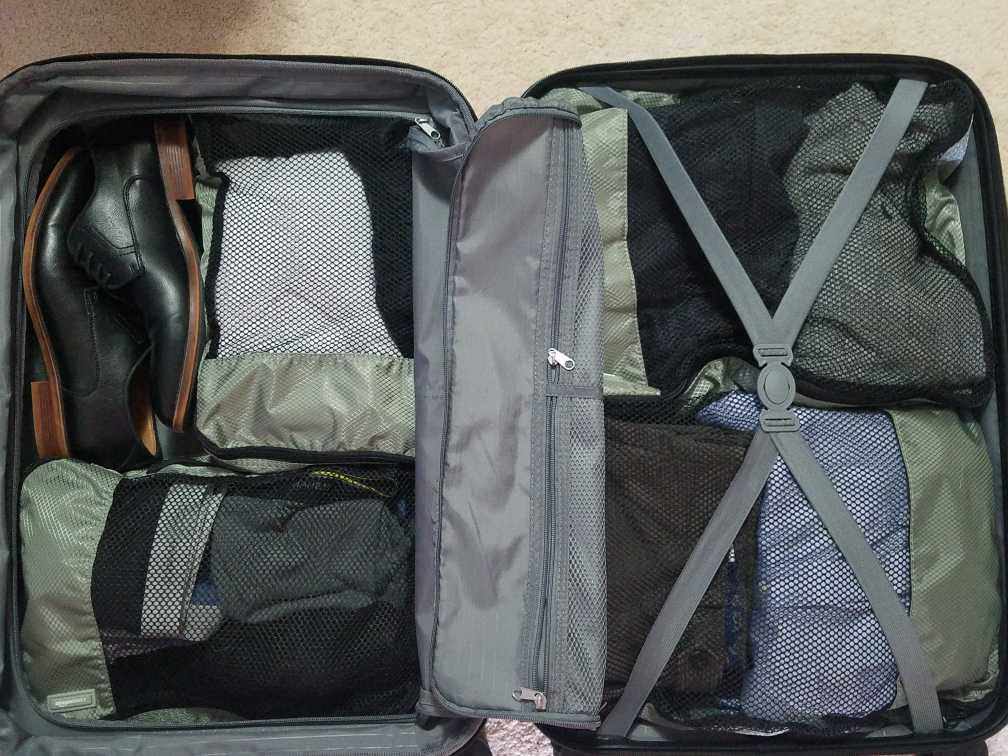
When planning a trip, most people will always tell you to pack light. The more accurate advice—especially for frequent flyers—is to pack smart. Smart packing is about space efficiency, wrinkle control, and easy access. With this nifty packing trick, you’re bound to save yourself loads of space in your suitcases without turning packing into an engineering project.
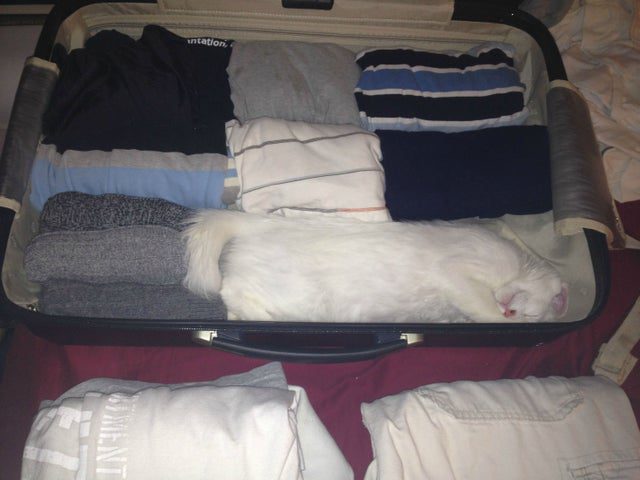
The trick is to lay out heavier, larger items—like towels or sweatshirts—at the bottom of your suitcase before you start packing anything else. Roll up everything else, like shirts and pants, to save space, except for items that are likely to wrinkle—you’ll want to fold those.
Expert add-on: This method works even better when you pack in “zones.” Keep one zone for clothing, one for shoes, one for toiletries, and one for “airport tools” (snacks, chargers, wipes, medication). When you use zones consistently, you reduce the chaotic rummaging that leads to wrinkles, lost items, and the classic “Where did I put my headphones?” moment right when boarding begins.
Practical reminder: If you are checking a bag, keep your essentials in your carry-on anyway: one change of underwear, basic toiletries, and anything you can’t tolerate losing (medication, chargers, documents). Checked luggage delays don’t just inconvenience you; they can turn your first day into a shopping trip you never wanted.
Layer Up
When flying, the cabin can feel warmer or colder depending on where you are, the altitude, aircraft airflow settings, and how many of your fellow passengers have turned the air conditioning on—or off. Temperature discomfort is one of the fastest ways to turn a “fine” flight into a miserable one, especially on long routes. So, to stay comfy, it’s best to dress for the trip and wear layers.

If it warms up while you’re in the air, you can always take your layers off until you feel comfortable, and likewise, if it cools down. This way, you can at least feel a little more comfortable, especially on longer flights.
Expert note: Layers matter because planes are “microclimate machines.” You might be sweating in the terminal and shivering in the cabin an hour later. The ideal approach is a breathable base layer plus a removable mid-layer (hoodie, light jacket, cardigan). This is also why travel outfits that look simple tend to work best: they’re functional, not complicated.
Dress for the Occasion
For most people, sitting in the airport and on a plane can get cramped, stuffy, and overall uncomfortable—so it’s best to dress for the occasion by wearing what you feel comfortable in, not what you feel most fashionable in. Your goal is to minimize the “I can’t wait to change clothes” discomfort that creeps in as hours pass.
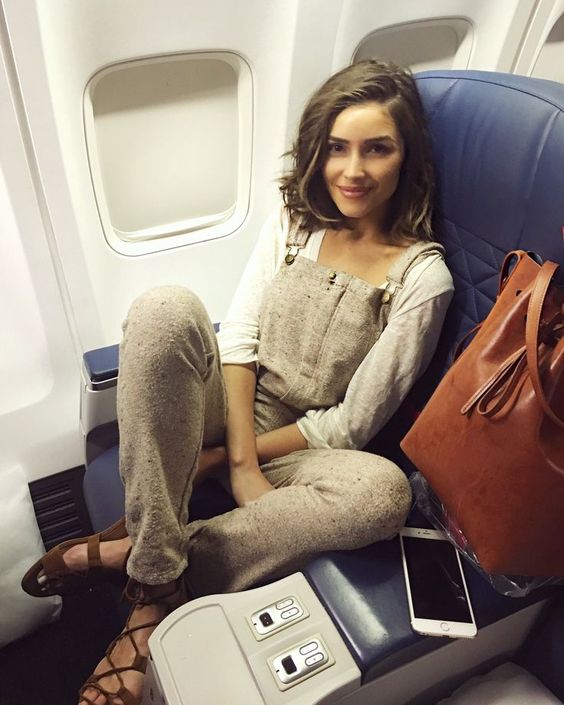
Sure, if you’re on a one-hour flight and planning on rushing from the airport straight to a meeting or a party, then you might want to dress up a little. For longer flights, wearing your favorite heels and tank-top or your best suit just won’t cut it comfort-wise—and you’ll be in for a long and uncomfortable ride.
Expert add-on: Comfort clothing also supports circulation. Tight waistbands, restrictive layers, and uncomfortable shoes can make swelling and stiffness worse on long flights. When in doubt, wear clothes that let you shift positions easily—because you will need to shift positions.
Dress Smart
Speaking of dressing for the occasion, if you are hopping on a longer flight, then remember this essential: dark clothing. You might be super comfortable and cute in your beige tracksuit, but after hours of trying to eat in a cramped space, you will be spotted with crumbs and remnants of dinner.
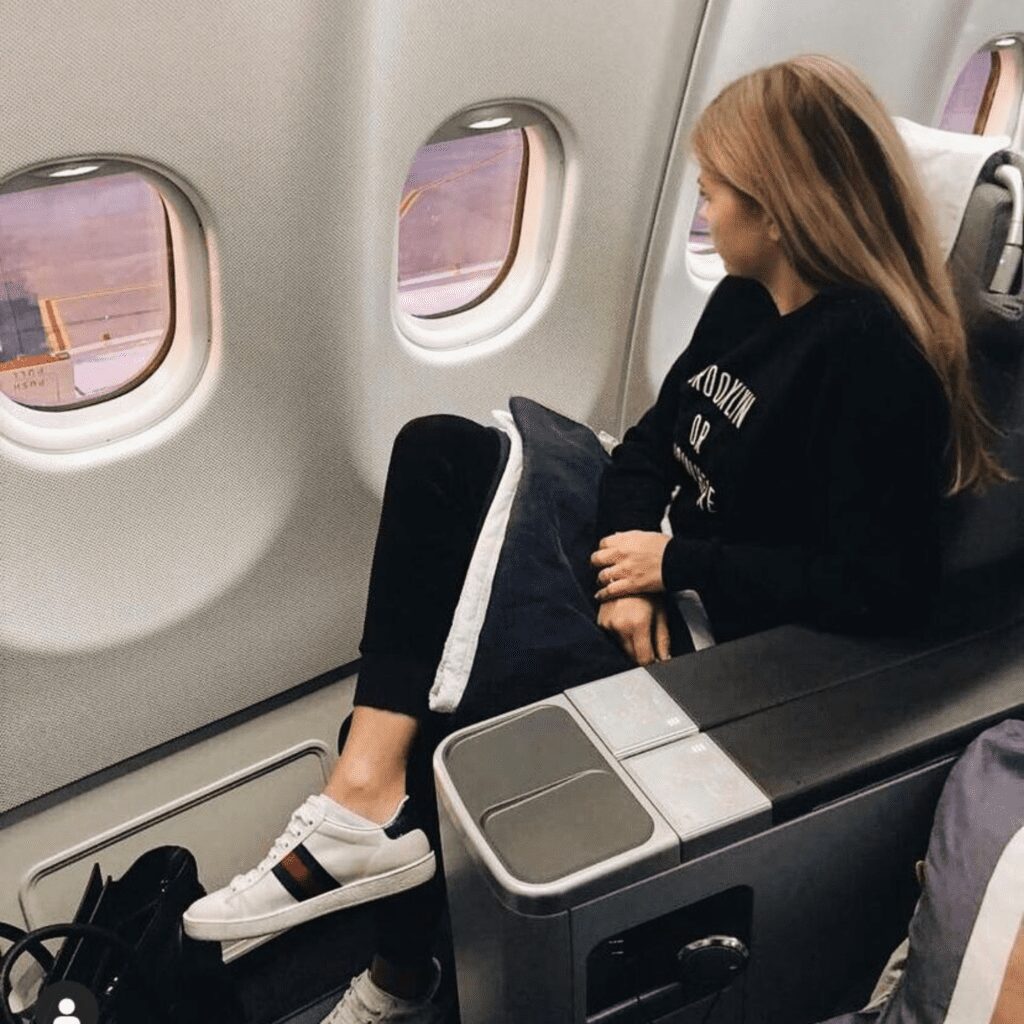
Even if you manage to escape eating without getting any food on yourself, you will still have to worry about sweat stains or dirt from the seat rubbing off on you. Dark clothing will go a long way in hiding any stains.
Expert note: Dark doesn’t have to mean “boring.” The point is that travel is messy in subtle ways: crumbs, condensation, unexpected spills, and seat fabric residue. Choosing darker basics is a low-effort way to look presentable when you land—without treating your flight like a fashion shoot.
Shorts Or Pants?
This one shocked us, too, because who doesn’t like being comfy when they travel? Shorts are a popular go-to for most travelers, especially when traveling over the summer. They offer an effortless level of comfort and style that can’t be replicated.
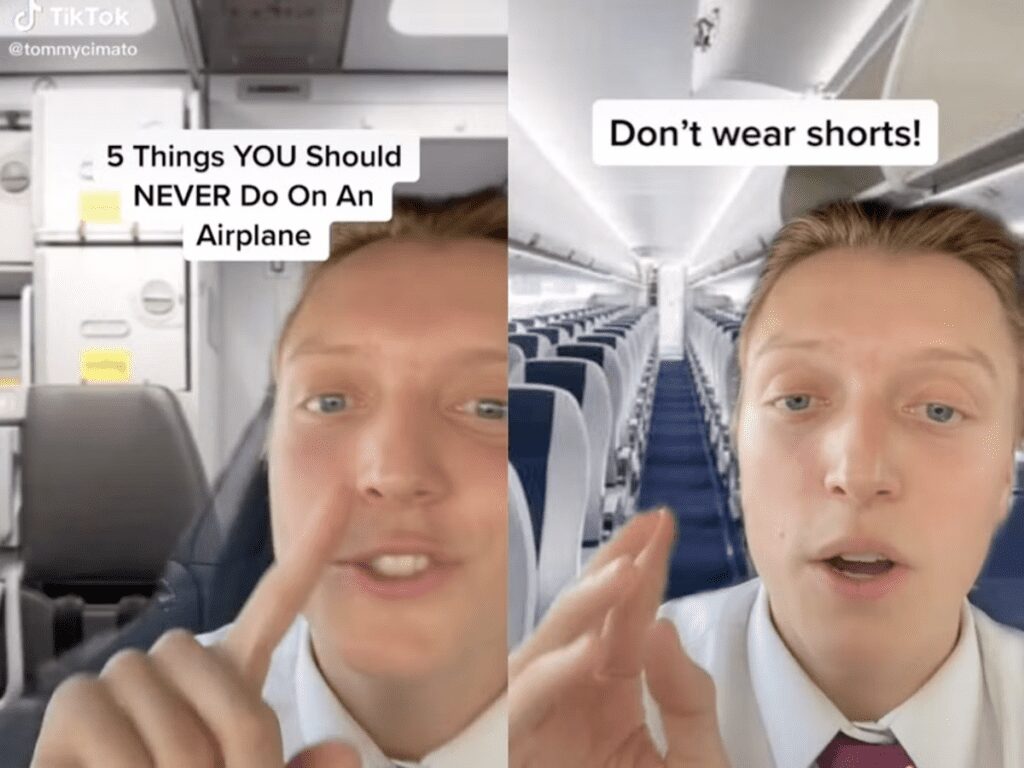
However, and this is a tip from a seasoned flight attendant, you are better off going with pants. The main reason for this is hygiene since you never know how clean the seats and other common surfaces are going to be. So, maybe look for some light pants next time you’re traveling instead of shorts.
Expert add-on: If you hate feeling “overheated,” choose breathable pants: lightweight cotton, travel joggers, or technical fabrics designed for movement. You can still get comfort without making direct skin contact with surfaces that are touched by hundreds of people daily.
Travel Kit Tips
Going back to the topic of feeling refreshed, the best way to do this when using an airplane bathroom with no access to a nice hot shower is to pack cleansing essentials in your carry-on luggage so you can clean yourself up a bit when you’re feeling icky.
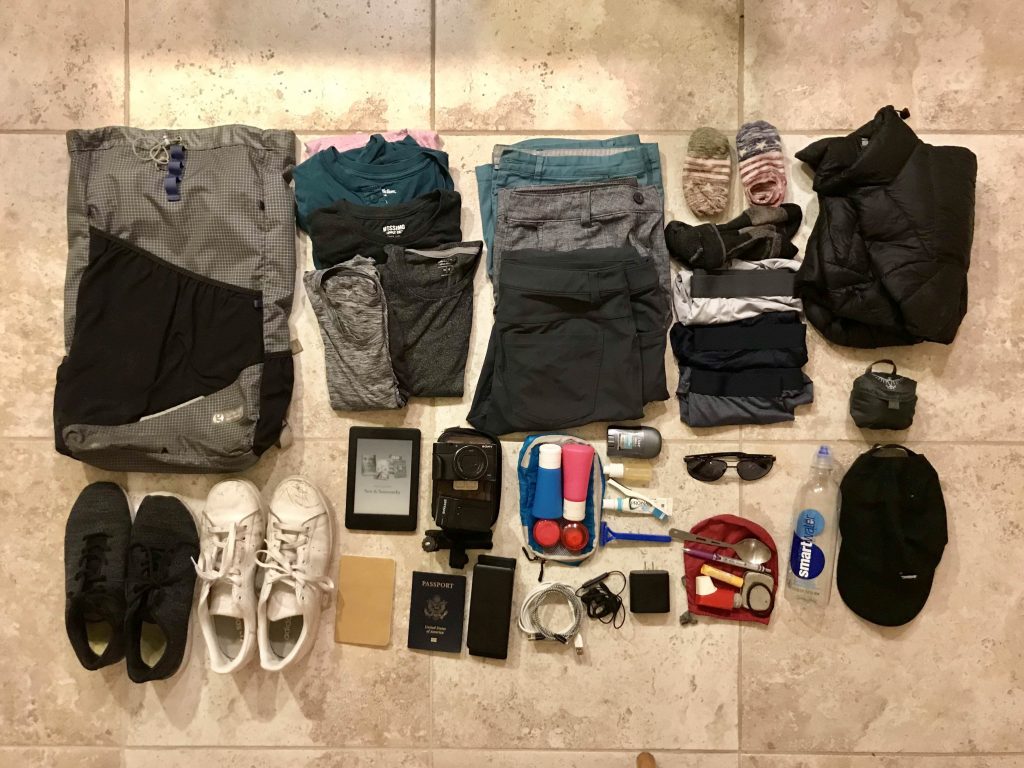
Packing face wipes, a toothbrush, toothpaste, deodorant, and spare clothes can make a huge difference to your overall mood, let alone appearance and smell. If you really want to go above and beyond, ladies, pack a little make-up, too. But nothing heavy like foundation—stick to the basics like some lipstick and mascara.
Expert note: A small hygiene kit is more than vanity—it’s mood management. When you feel clean, you feel calmer, more confident, and more capable of handling travel surprises. The trick is keeping the kit compact, flight-compliant, and easy to access (not buried under everything else).
Dryer Sheets
Especially if you’re spending a lot of time traveling and not so much time at the dry cleaners, your dirty clothes can pile up—and your suitcase might start to smell a little less than fresh. But there’s a simple trick to keep the odor under control while you move between destinations.
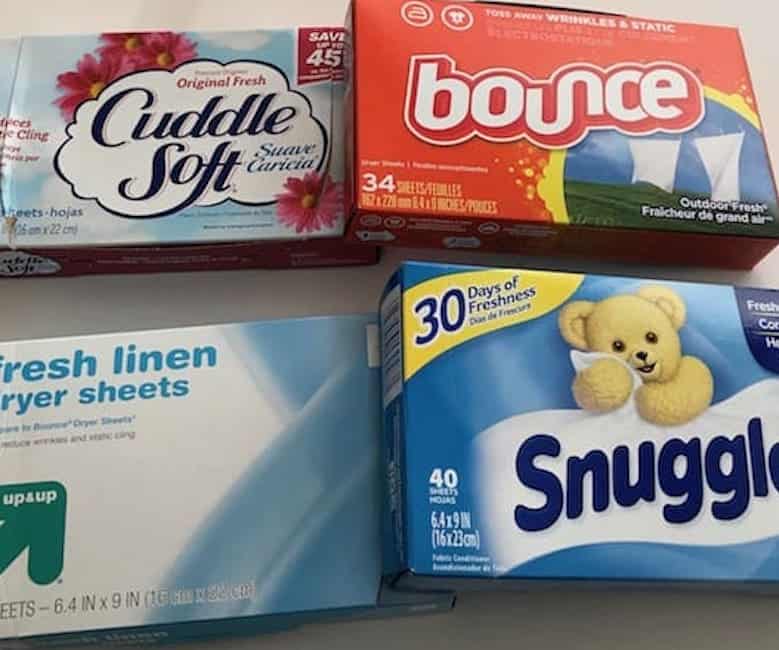
It’s simple! All you need to do is pop a few dryer sheets into your bag. The sheets will absorb those nasty stinky feet and faint dirty sock smells and help keep your clothes smelling a lot cleaner and fresher.
Expert add-on: Dryer sheets work best when paired with “dirty clothes containment.” If you can, keep worn clothing in a separate bag (even a simple plastic bag) so smells don’t contaminate your entire suitcase. Dryer sheets help, but containment is the real first line of defense.
Portable Fragrance
Some of us enjoy the finer things in life, like bringing your favorite perfume so you can feel refreshed and ready for the day. But fragrance bottles are often bulky and likely to break if jostled around too much.
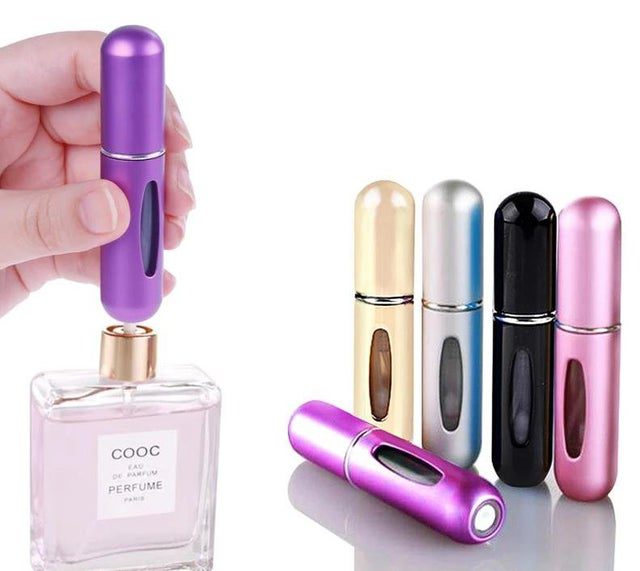
The solution? Portable fragrance bottles. They are smaller, easier to carry around, and far less likely to break. Most pharmacies should sell them at a reasonable price. So next time you are packing, don’t forget to transfer some of your Chanel to a portable fragrance bottle instead of schlepping the whole thing in your bag!
Expert add-on: If you’re traveling internationally, keep in mind that fragrance can trigger sensitivity in tight cabins. Use sparingly and consider applying after landing rather than mid-flight.
Scan the Important Things
Even in your home city, losing your passport, ID, or driver’s license is stressful—especially if you don’t have copies. But when you’re in a new city or need to catch a flight, not having your passport can become a serious problem.
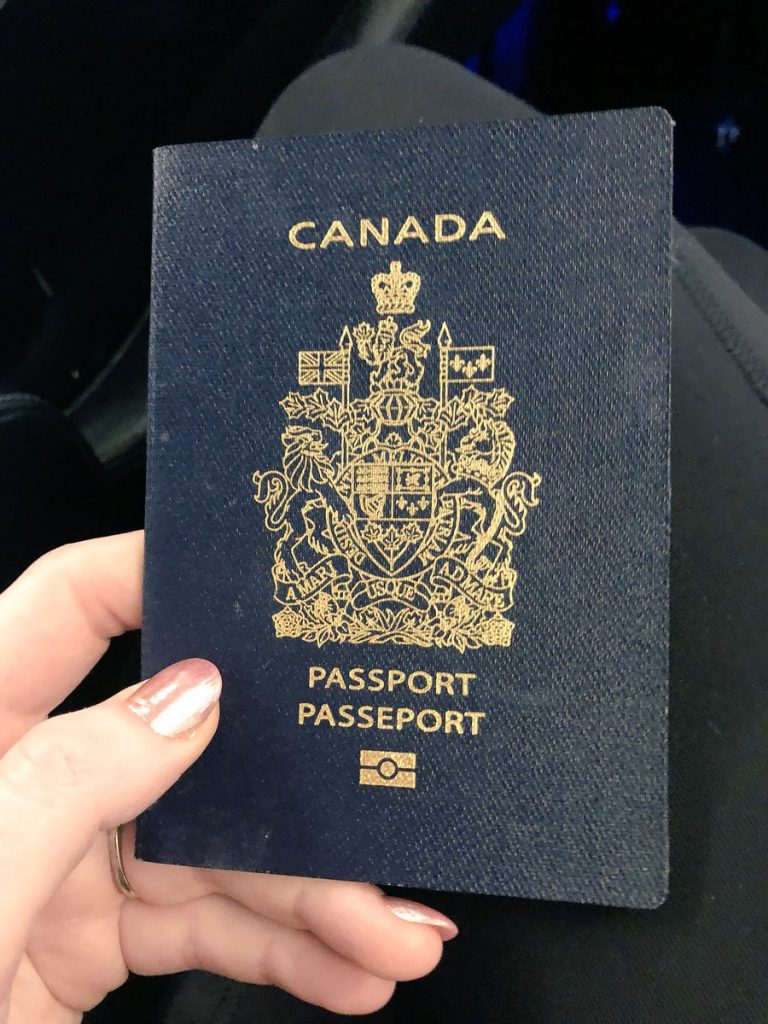
We suggest scanning your passport, ID, and any other important documentation and emailing it to yourself or saving it on your device—so if you do become the unlucky victim of theft or loss, you at least have some proof of identification at the airport.
Expert add-on: Store these files securely. A password-protected folder or encrypted storage is ideal. The goal is to make recovery easier without creating a new security risk.
Go Incognito
Here’s a clever trick to help you avoid more expensive flights when booking. Many airline and flight booking websites track your cookies and note how many times you have searched for a particular route or date.
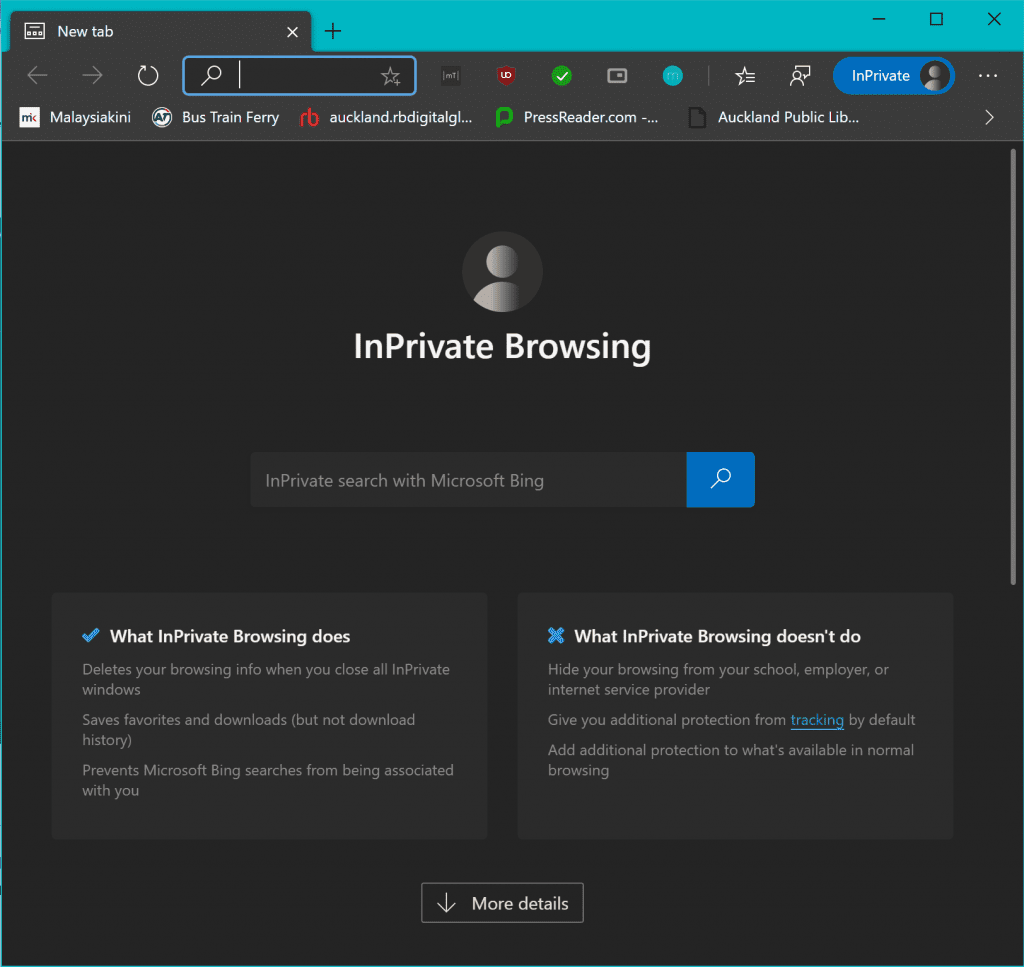
If they see you’ve searched for a particular flight before, they might hike the prices up simply because they know you’re interested. So, to make sure you aren’t paying more than you should, search your flights in an incognito window that doesn’t track your cookies.
Expert note: Pricing algorithms are complex, and not every price change is caused by your searches. But incognito browsing is a low-effort habit that can help you verify whether you’re seeing consistent pricing—and it costs you nothing to try.
At the Airport: Charge, Navigate, and Avoid Time-Wasting Traps
Airports are designed for movement, but they are also designed for spending: snacks, drinks, accessories, charging cables, “just in case” items, and last-minute upgrades. Your comfort strategy at the airport should focus on three things: keeping devices powered, minimizing queue stress, and avoiding overpriced purchases.
Charger Hack
Oh no! You forgot to charge your phone, and you still have a good few hours to wait until your flight. Without your Candy Crush Saga and Sim City games, Spotify playlist, and Netflix lineup, you’re sure to go crazy from boredom.
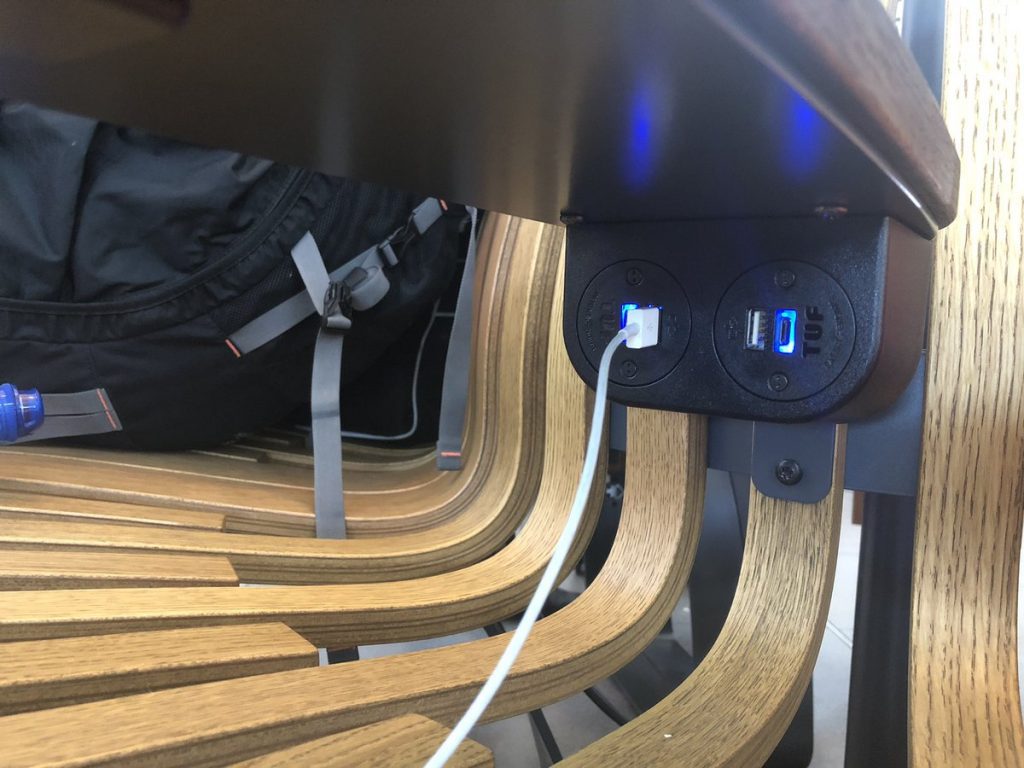
Worry no more because we have got just the solution for you. Most airports do have charging centers like the one in this picture, but they also have televisions, and most televisions nowadays have USB ports that you can use to charge up your cell phone battery! You’re welcome.
Expert note: USB ports on public devices can be useful, but remember basic security hygiene: use your own cable and, if possible, consider a “USB data blocker” adapter so you can charge without exposing your device to unknown data connections. The goal is comfort without compromising security.
Portable Power Bank
To some, this handy device might be one of the first things on your packing list—but it sure does come in handy when your phone battery is about to die. A power bank is a portable charger that you can use to charge your phone, tablet, and other devices.

It’s a great thing to have, especially when you know you’re in for a long trip and may not have access to a plug point anytime soon. So, if you don’t have one on hand and you’re planning a long trip—we highly recommend the investment.
Expert add-on: The best travel power banks are the ones you can actually carry and use easily: not too heavy, fast-charging, and compliant with airline battery rules. Keep it in your carry-on (not checked baggage), and keep it accessible so you’re not searching for it while boarding begins.
Think Drink
Another great way to avoid the overpriced beverages at the airport is to utilize this practical little hack that not many people know about. Whilst liquids are not permitted before entering security, frozen water, tea or coffee is. How many of you knew this?
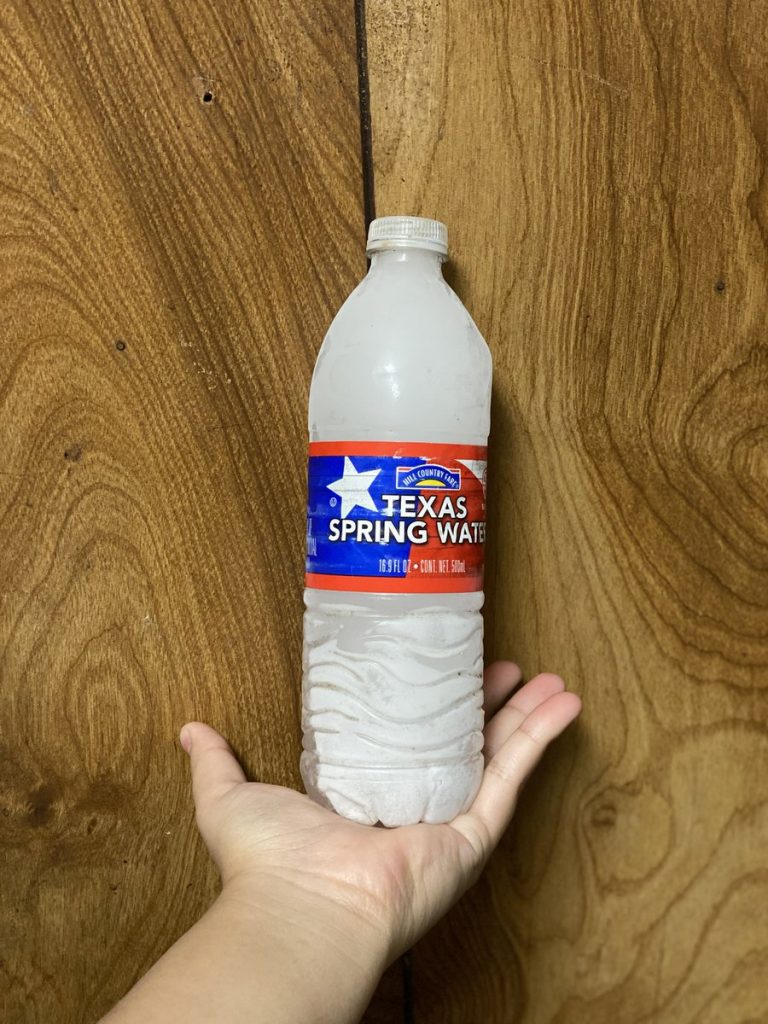
Make sure that the liquid is completely frozen when you pass through security, or you’ll have to leave it behind. It should also go without saying that your flight should be long enough for your beverage to defrost. Otherwise, you’re carrying a frozen bottle for nothing!
Expert note: Rules vary by airport and country, so treat this as a “check local guidelines” hack. But conceptually it’s brilliant: you avoid inflated airport beverage costs while staying hydrated.
Save Some Dough
We all know how overpriced things can be at an airport—but because you’re not allowed to take any liquids with you through security, you might get a little thirsty while you wait to board your flight and even when you’re on the plane.
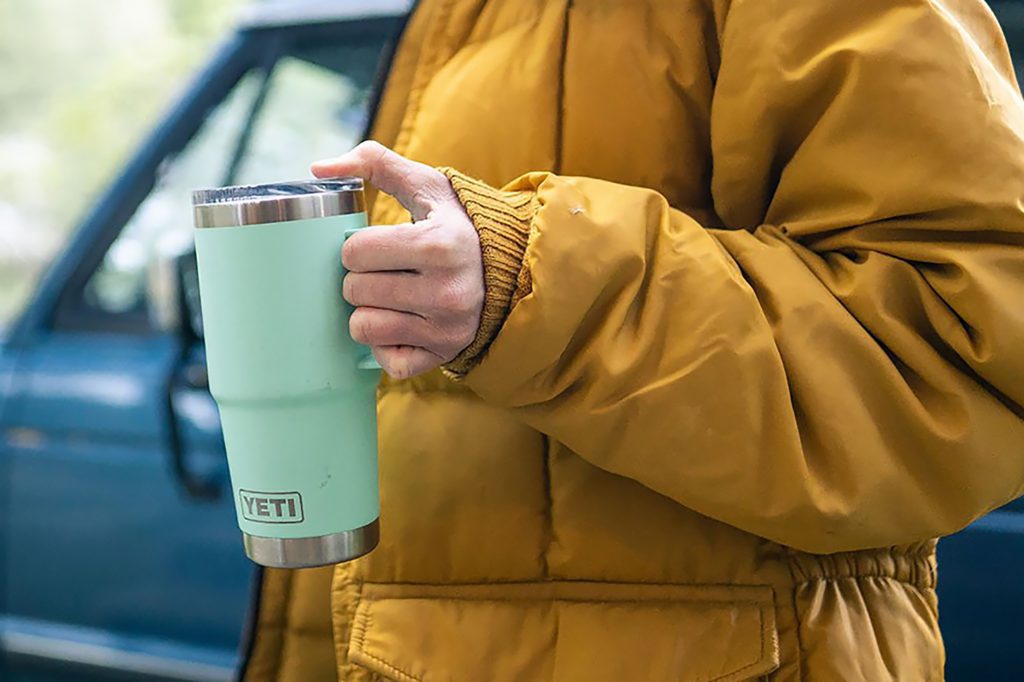
So, instead of spending a lot of extra cash on some water or tea, just pack an empty travel mug or flask and some teabags. Then all you need to do is ask one of the employees in a cafe or the air hostess for some hot water, and you’ll have a much more affordable beverage. Save that cash for your trip!
Expert add-on: This hack is also a comfort win. A warm drink can calm nervous flyers and help you feel settled—especially on early morning departures when airport air-conditioning feels aggressive.
Pack Snacks
Even worse than boredom is hunger. Now, you’ll probably be fed on the flight—but let’s be honest, most airline food is not exactly inspiring. So you might be thankful that you packed yourself some pretzels.
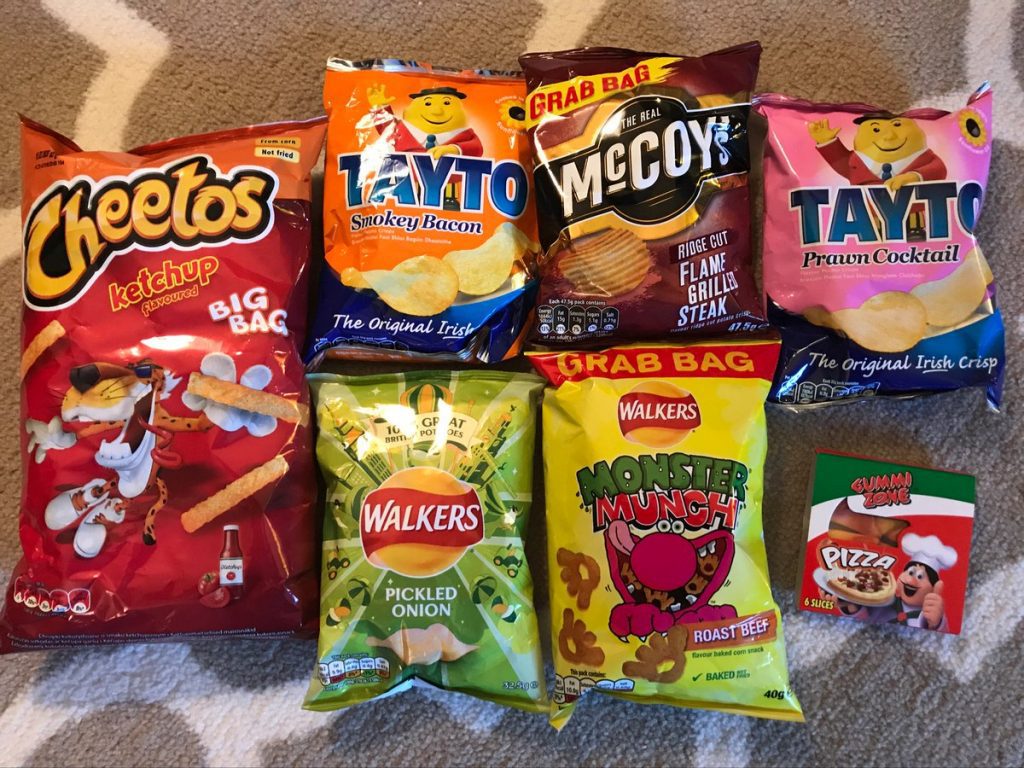
Plus, packing some of your favorite snacks from home means you’ll save all the cash you would have spent on those same snacks at the airport—snacks that are likely going to be three to four times the price.
Expert note: Snacks are also a turbulence and delay strategy. When flights are delayed, your mood and comfort degrade faster when you’re hungry. Pack snacks that travel well (nuts, granola bars, crackers) and avoid anything that smells aggressively strong in a closed cabin.
Don’t Sweat the Small Stuff
So many people find themselves stressed out about the security checkpoint—and the line that goes with it. But there really is nothing to worry about. Just be sure to plan your day properly and get to the airport well in advance so that you have plenty of time to wait.
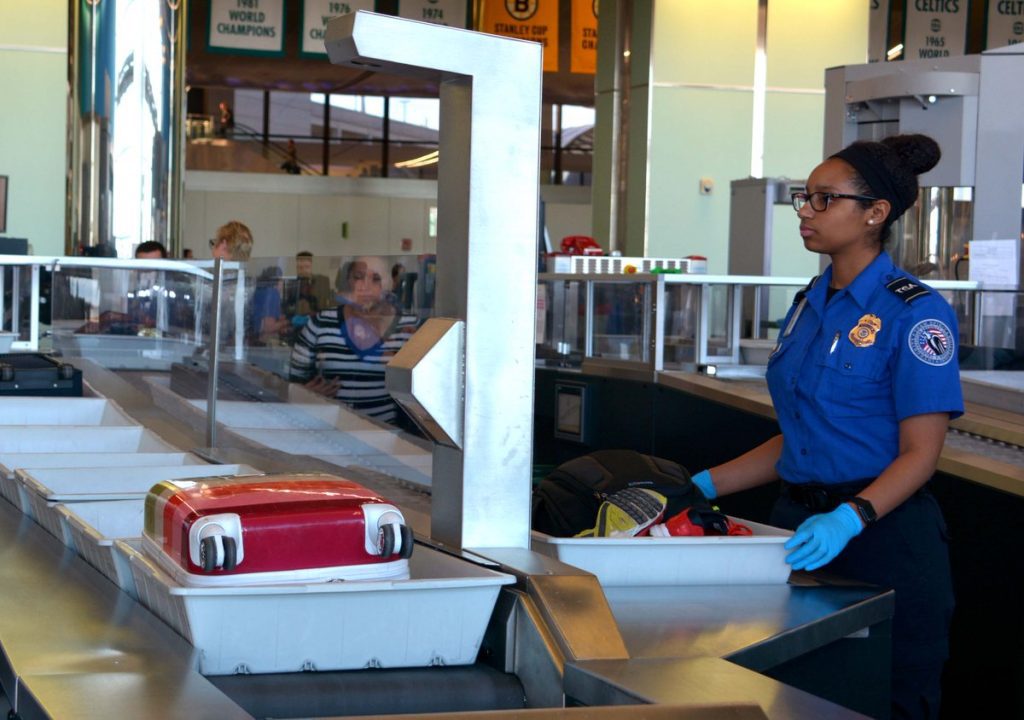
Airport security should actually comfort you—they’re so strict because they need to protect all of their passengers and staff in the airport from any threats—and that includes you. So really, this should be the least of your worries when traveling.
Expert add-on: Security becomes less stressful when you have a repeatable “checkpoint routine”: empty pockets early, keep liquids accessible, wear easy shoes, and organize electronics so you don’t repack in a hurry. The goal is to reduce the feeling of being rushed by the people behind you.
Skipping the Line
If you hate waiting in lines as much as we do, here’s a way to avoid waiting in the security line at the airport as long as you usually would. When you’re entering the security line, always turn left. Why? We’re glad you asked.
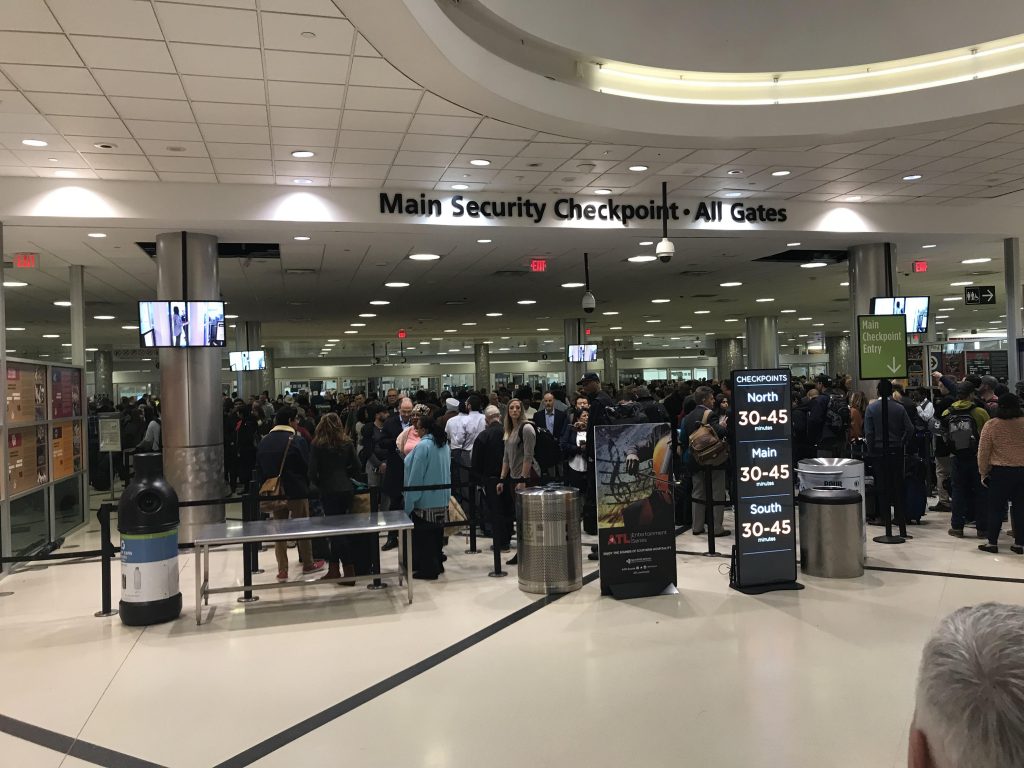
People tend to turn towards their dominant hand—and because the majority of people are right-handed, the queue on the right will likely be longer. So save yourself some time and turn left—you might just skip most of that line.
Expert note: This isn’t magic, but it’s a surprisingly consistent behavioral pattern. Even small time savings matter in airports—because less rushing reduces mistakes (like leaving items behind at security or boarding stressed and sweaty).
Avoid the Queue!
Especially since the Covid-19 pandemic, many flights are being rearranged and even canceled. And we bet your bottom dollar if you’ve already arrived at the airport that the line to rebook flights is pretty long. Goodness, you’re never going to get the next flight with a line like this!

Well, here’s a handy trick for a moment just like this. Instead of waiting for hours on end only to very likely be disappointed by the fact that the next few flights are already fully booked—just call customer service instead! They’ll book the flight for you, and you won’t need to wait in that awful queue all day long.
Expert add-on: If you can use multiple channels at once (phone call + airline app + airport desk), do it. Rebooking is often a race. The fastest traveler isn’t the one who runs; it’s the one who uses the quickest workflow.
Flightboard
There are many frustrating elements when it comes to traveling, like making sure you don’t miss your flight. Keeping an eye on the flight’s departures and arrivals board can get a little tedious—especially if there is nowhere near them to sit.
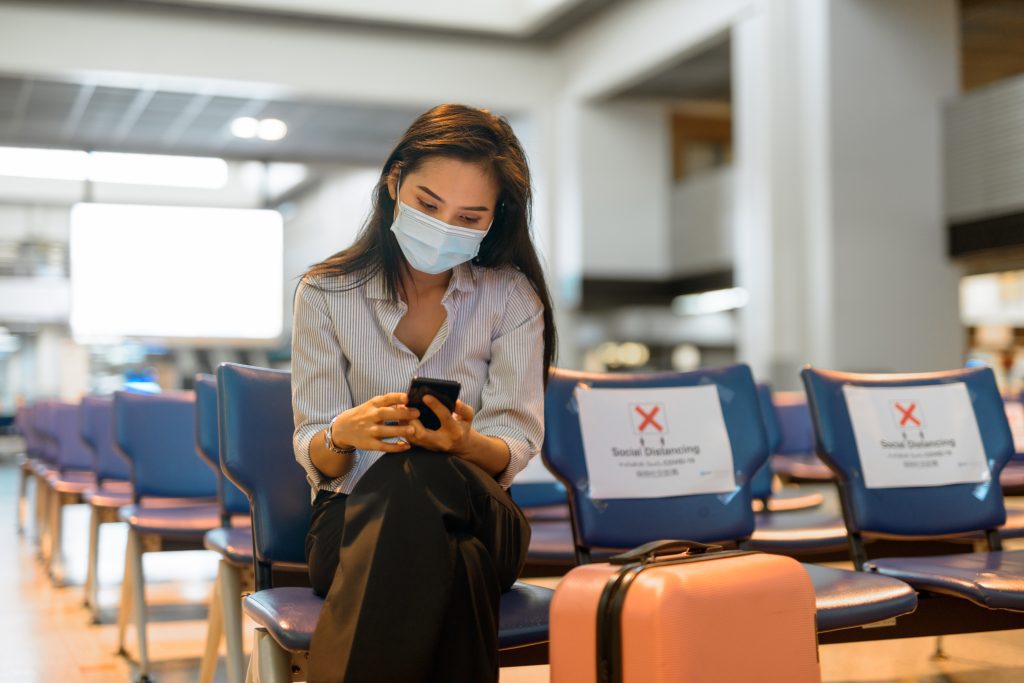
So, instead of having to check for an update on your flight constantly, just download the Flightboard App into your smart device and keep an eye on all of the arrivals/departures without having to leave your seat every few minutes!
Expert tip: Notifications reduce anxiety. When you can track changes calmly from your seat, you avoid the constant “am I missing something?” feeling that drains your energy before you even board.
Onboard Comfort: Seating, Sleep, and Body Management
Once you’re on the plane, comfort becomes a game of small advantages. You can’t control the seat size, but you can control how you prepare your body, where you sit, what you wear, how you manage pressure changes, and how you reduce noise and germs. This section is designed to help you “fly smarter” rather than simply endure the hours.
Middle Seat Cheat
Not even the cuddlers like the middle seat—it’s squishy and less comfortable than a standard aisle or window seat. It’s especially not nice when traveling alone and having to sit next to two strangers for your flight.
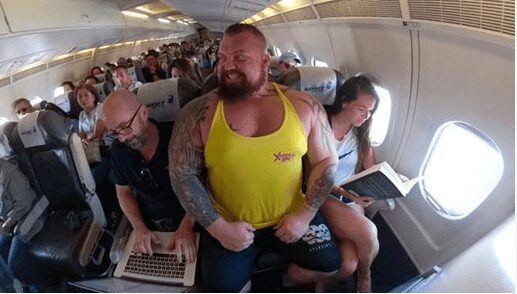
Here’s something you can try to avoid that seat—head over to Expertflyer.com and create a seat alert. If somebody on your flight changes or cancels their flight, they’ll notify you, and you can switch your seat for theirs!
Expert note: Seat monitoring is a genuine advantage on crowded routes. Many travelers assume seat assignments are final; experienced flyers know they evolve until boarding closes. Alerts help you react quickly without constantly refreshing the airline app.
There is nothing greater than noticing that the middle seat next to you is empty when it’s time for liftoff! And here’s how to get that for free. This one is not a guarantee, but still worth a try if you are riding in economy and want to score some extra room.
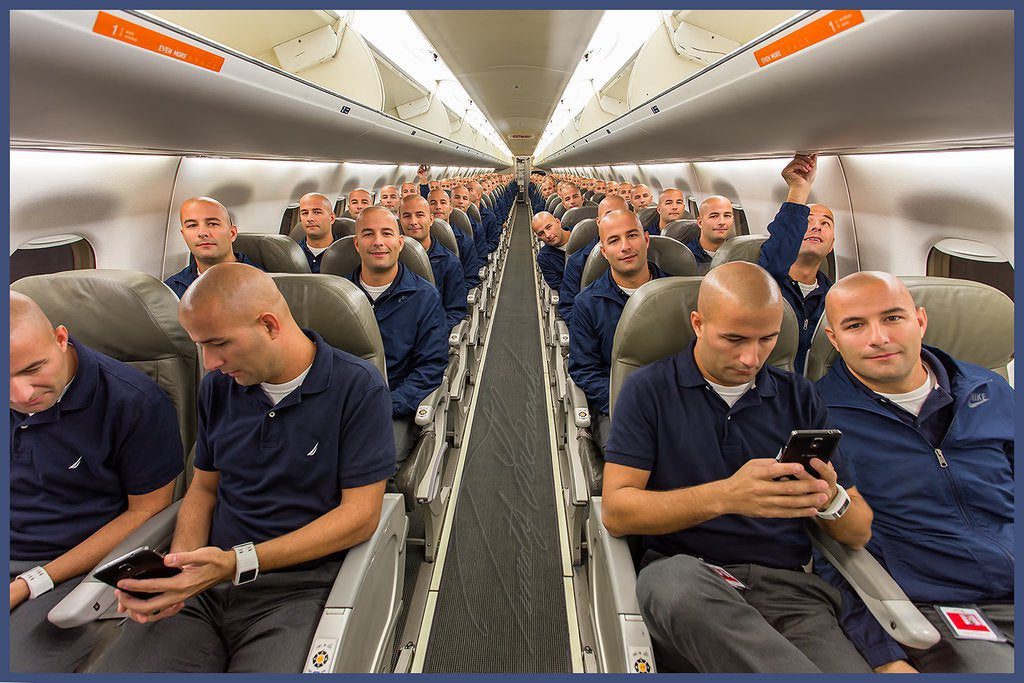
If you are traveling as a pair, book the aisle and window seat. If your flight happens to be under-booked, it is improbable that someone will pick a seat between two people that they don’t know—so your chances of having some extra space are at least a little bit higher!
Expert add-on: If the flight fills up and someone books the middle seat, be polite and flexible. Many travelers will swap for the window or aisle, and the interaction stays smooth when everyone feels respected.
Avoid Front Seats
Picture this: you are on a 10-hour red-eye flight that started just an hour ago. You’re trying to get cozy so you can catch some shut-eye when suddenly, you hear a sharp cry from the baby beside you. That’s when you realize that your plan won’t work.
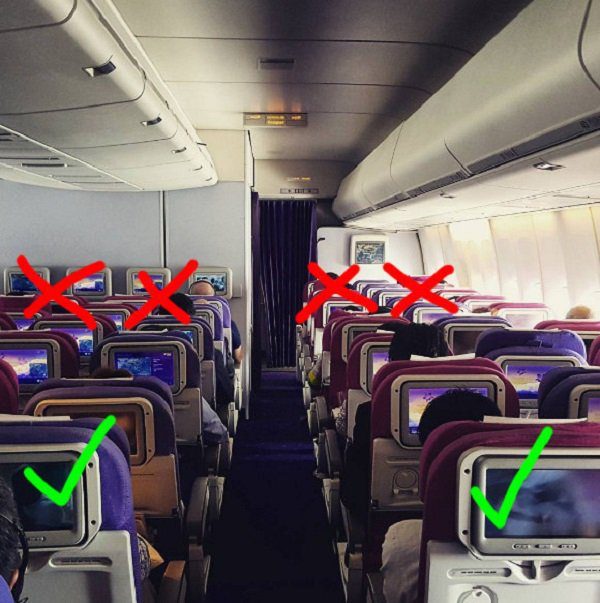
Kids can be lovely and adorable, but they can also make you lose your beauty sleep. That’s why when you’re choosing your seat on the plane, it’s better to pick the ones at the back of either side. Front seats are where most families and children sit, so choose wisely.
Expert note: Seat selection is risk management, not judgment. Families often choose certain zones because of bassinets, quicker boarding, or convenience. If your priority is sleep, choose your seat accordingly and give yourself the highest probability of a quiet environment.
Turbulence Tip
Some people love turbulence. Most people hate it—especially if you’re already an anxious flyer. Turbulence can cause stress, dizziness, nausea, and even vomiting—hence the complimentary barf bags found on most airlines.
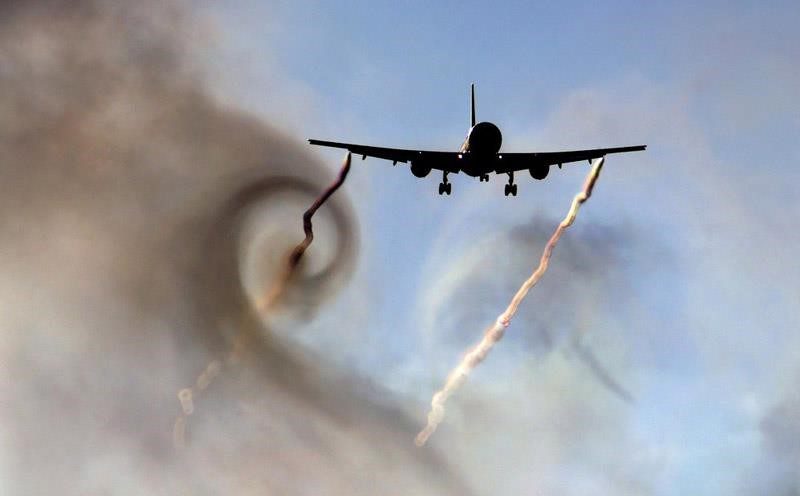
If you’re someone who doesn’t cope too well with turbulence, remember to pick your seat with this in mind. Choose a seat above the wing of the plane, and avoid the back as that’s where you’ll feel it the most.
Expert explanation: The wing area tends to feel more stable because it’s closer to the plane’s center of lift and structural balance. The rear can amplify motion sensations. This doesn’t remove turbulence, but it can reduce your perception of it—which matters a lot if anxiety is the main issue.
Hate Turbulence? This One’s For You!
If you’re someone who suffers immensely from turbulence, you probably try everything in your power to avoid it. We’ve already mentioned where to sit, but this one is about when to fly.
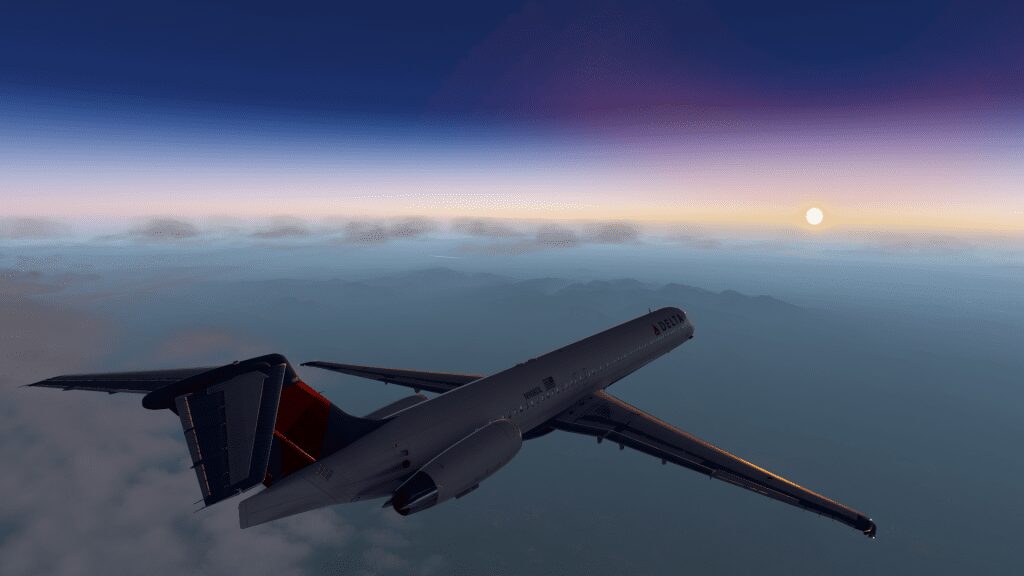
Morning flights tend to have less turbulence as the heat of the day has not yet risen—the heat, which causes storms and wind, ultimately causes turbulence on planes. So, if you want to avoid turbulence, your best bet is to book an early morning flight.
Expert note: This is a probabilistic strategy, not a guarantee. Weather patterns vary. But if you have flexibility, booking earlier flights can reduce the likelihood of thermal turbulence and afternoon storm systems on many routes.
Sleep After Takeoff
Rather than sleeping before or immediately during takeoff, use this time to look after your ears. They are susceptible to air pressure and are not able to regulate with rapid changes such as the drastic change in air pressure after takeoff.
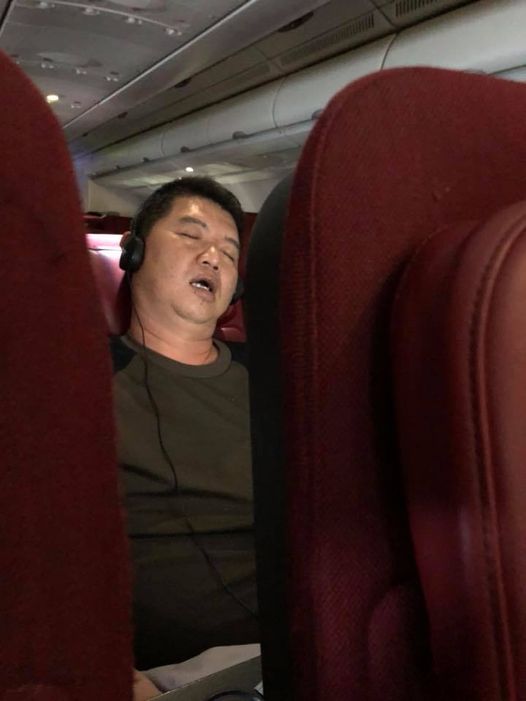
So, chew some gum, take an antihistamine, and make use of some earplugs to protect your ears. Once you’re safely in the air, you can relax and take that long-awaited nap that you and your body have been waiting for.
Expert add-on: Ear pressure is easier to manage when you’re awake and proactive. Sleeping through pressure changes can make discomfort worse because you’re not swallowing or adjusting. A few minutes of attention early can prevent hours of irritation later.
The Best Pillow
If you tell us that you have the easiest time falling asleep on a plane, then we want to know your secret! For most of us, trying to catch some shut-eye while flying is a painful endeavor. It feels like no matter what we do, we can’t get comfortable.
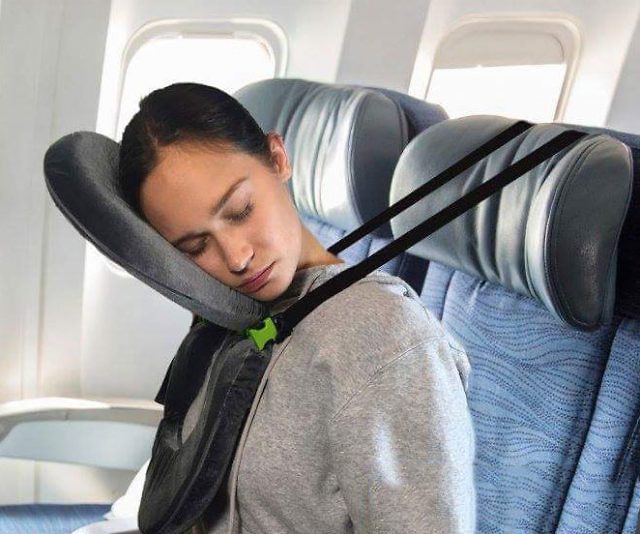
With this special pillow, you never have to worry about adjusting your stiff neck again! You can just rest your head on the pillow, and it’s that simple. Just tie it to the back of your headrest. We have a feeling this will change the way you fly!
Expert note: Sleep comfort is often a neck-support problem. When your head tips forward or sideways repeatedly, you wake up sore. Any pillow that stabilizes head position can improve sleep quality—even if you only manage short naps.
Flight Stretches
Flying tends to affect circulation and can cause feet and legs to swell—particularly on longer flights. But there are techniques you can use on the plane to try to prevent this swelling from happening.
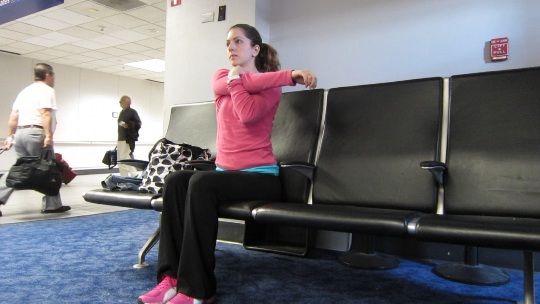
Doing in-seat stretches and making sure that you are getting up and walking around the plane when you have a chance will help your blood flow a little more and help you avoid the swelling.
Expert add-on: Movement is not only comfort—it’s health. If you’re on a long-haul flight, set a simple reminder: every hour or two, flex your ankles, rotate your feet, and stand when possible. Your body will thank you when you land.
Hygiene, Germ Reduction, and “Don’t Get Sick on Vacation” Protocol
Many travelers don’t worry about germs until they get sick halfway through a trip. Air travel concentrates people, surfaces, and shared air systems. The goal is not fear; it’s sensible hygiene: reduce exposure where it’s easy to do so, and avoid behaviors that increase risk unnecessarily.
Keep the Air On
If you’d like to protect yourself from germs as much as possible during your flight, then it’s best to keep the aircon above you on full blast—even if it does get a little bit chilly. The air actually helps to keep germs away.
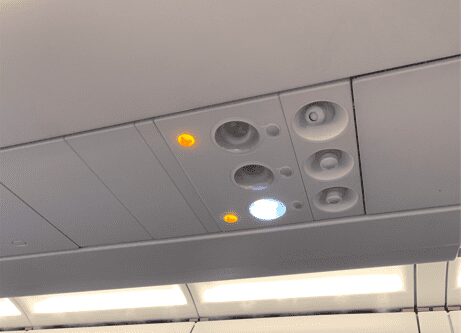
The air from the vent creates a sort of invisible layer of air around you that basically prevents any germs or viruses from hanging around and making you sick—and no one wants to get sick when traveling, so it’s best to keep the air on and warm up with a sweater!
Expert note: Think of this as airflow management. The vent can help push cabin air away from your breathing zone. Pair it with layers (so you don’t freeze), and you get a practical hygiene tool without sacrificing comfort.
Disinfectant Wipes
Whether your trip is for business or pleasure (or both), no one wants to get sick when traveling. The best way to avoid this is to be as sanitary as possible. Sometimes you catch a bug in the air—and other times, it’s from touching something.
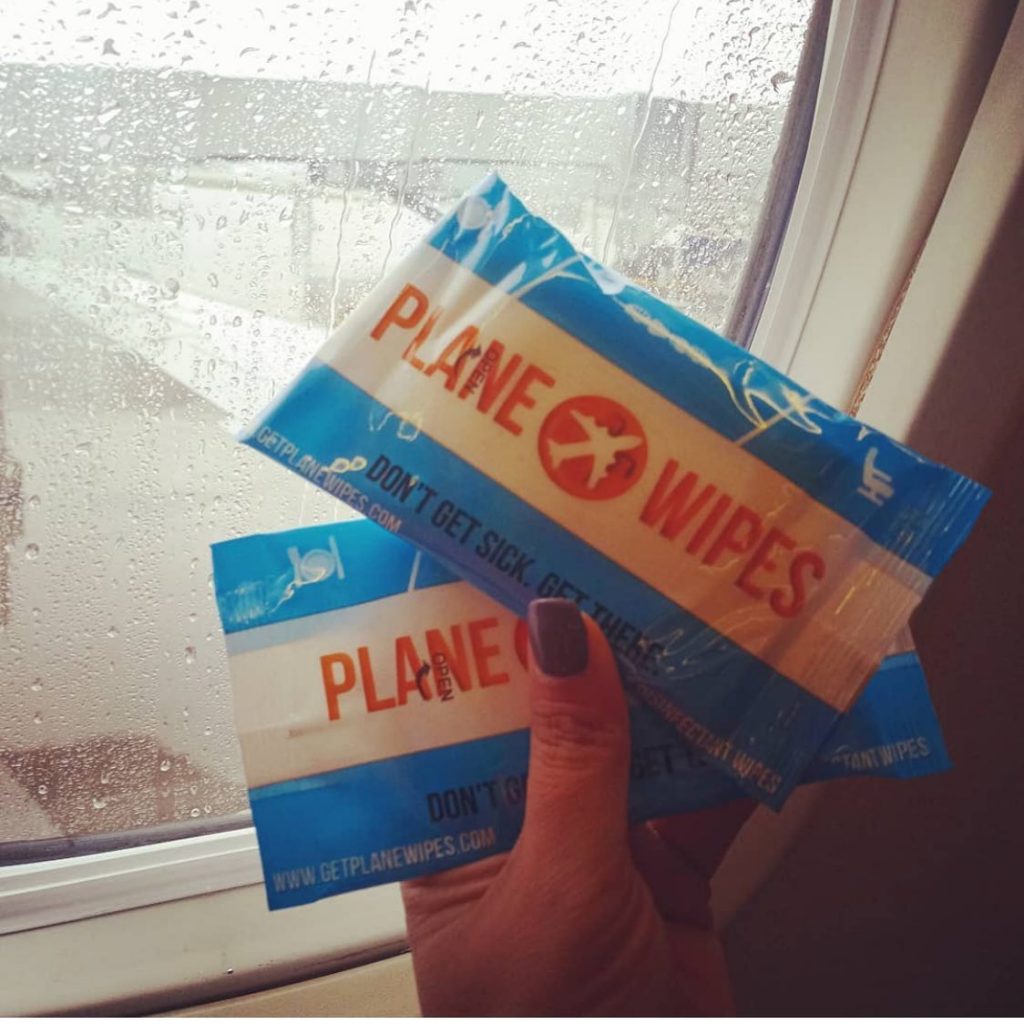
Just like you’ll use the air conditioning in the plane to protect you from germs, always remember to pack some disinfectant wipes to clean your seat and surfaces you’re going to be touching during your flight to make sure you’re always protected.
Expert add-on: Prioritize high-touch areas: tray table, arm rests, seatbelt buckle, screen controls, and overhead buttons. You don’t have to wipe the entire aircraft—just the parts your hands will use repeatedly.
Bye Bye Blanket
If you’re a germaphobe or someone likely to catch an infection, it’s best to avoid using the blankets you receive at the start of your flight. Aside from when they come in a sealed bag, it’s highly likely that they aren’t perfectly clean.
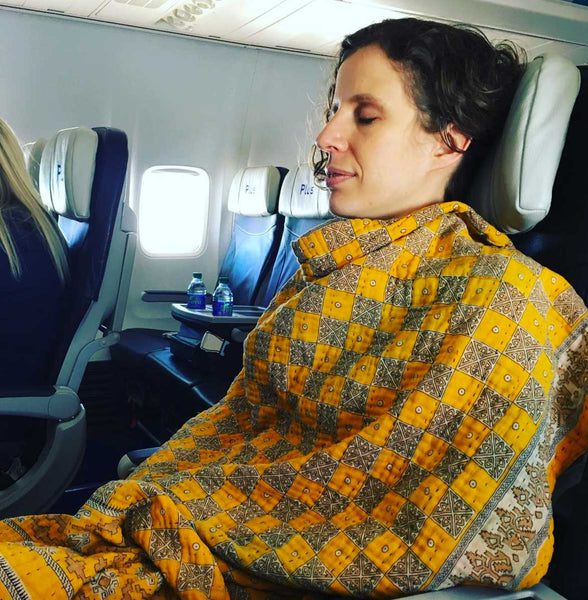
If you’re somebody that feels the cold easily, rather than using the blankets from the airline, pack your own in your carry-on, or better yet, as we said before, dress a little warmer and layer up to avoid shivering during your flight.
Expert note: A compact travel blanket or oversized scarf can double as a pillow support and warmth layer. Multi-use items are the most valuable ones in a carry-on.
Skip the Ice
We know we told you to avoid fizzy drinks and drink water instead. And while anyone will agree that there is nothing quite like a tall glass of ice-cold water to quench your thirst, we must warn you that ordering ice in your drink on a plane can be a no-go—but not for the reason many people assume.
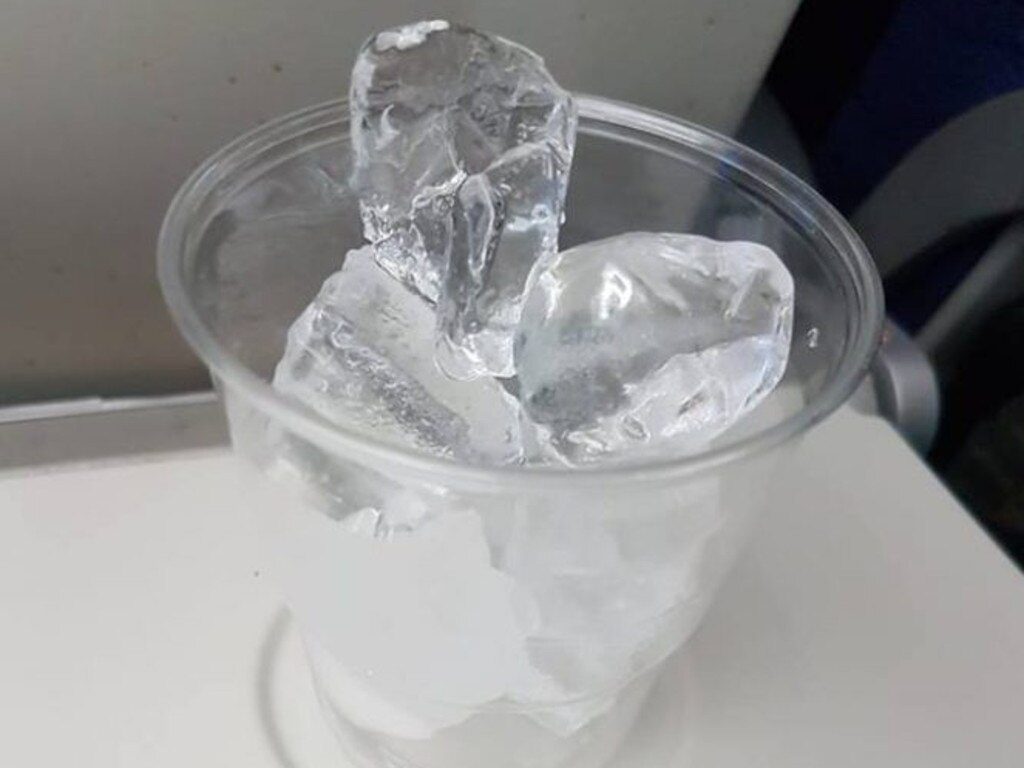
It is a misconception that the ice served on most flights comes from the plane’s water tank. The ice is actually brought on board and is ordered from a caterer. But the food carts where the ice is stored might be unsanitary, and this is why we caution against taking the ice on your flights.
Expert add-on: If you want cold water, consider bottled water when available, or simply drink it without ice. The key is choosing the option that reduces avoidable hygiene risk while still keeping you hydrated.
What You Drink and How You Feel: Hydration, Bloating, and Cabin Comfort
Cabin air is dry, meals are often salty, and long periods of sitting change how your body feels. A few smart beverage and food decisions can reduce discomfort dramatically—especially bloating, dehydration, headaches, and that “why do I feel gross?” feeling after landing.
Keep Hydrated
Did you know that due to there being less moisture way up in the air, your body tends to dehydrate faster than it would on the ground? That’s why it’s super important to keep hydrated, especially on a long, international flight.
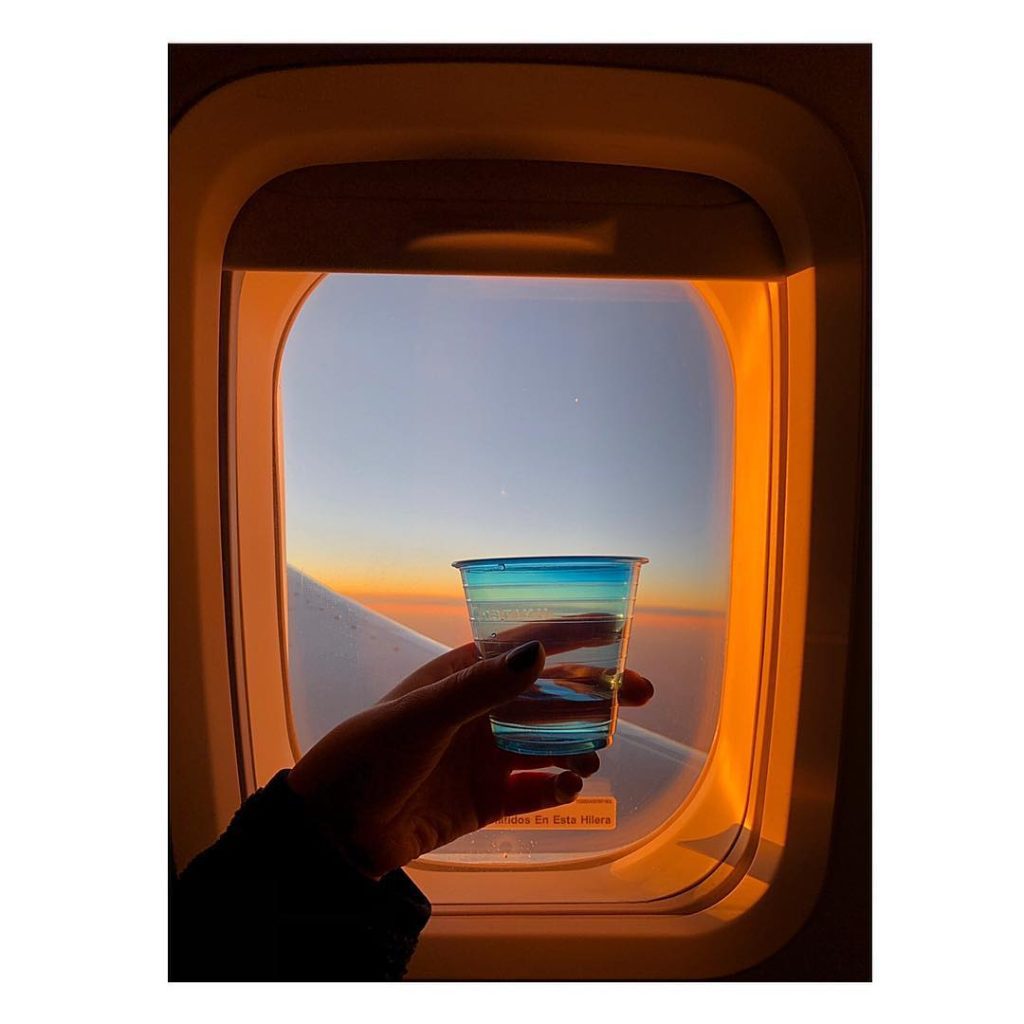
Even if you end up frustrating yourself and other passengers by frequenting the bathroom, your skin and body will stay hydrated and healthy like nothing ever happened. It is recommended to drink at least one cup of water every hour of your flight.
Expert note: Hydration is also a jetlag tool. Dehydration makes fatigue feel worse and headaches more likely. If you want the flight to feel easier, water is one of the simplest “comfort multipliers” available.
No Soda
Carbonated drinks like fizzy water or sodas are not a great combination with high air altitudes and can cause your intestinal tract to swell—causing discomfort and unwanted gas and burping! That’s pretty embarrassing, especially if you’re seated next to strangers.
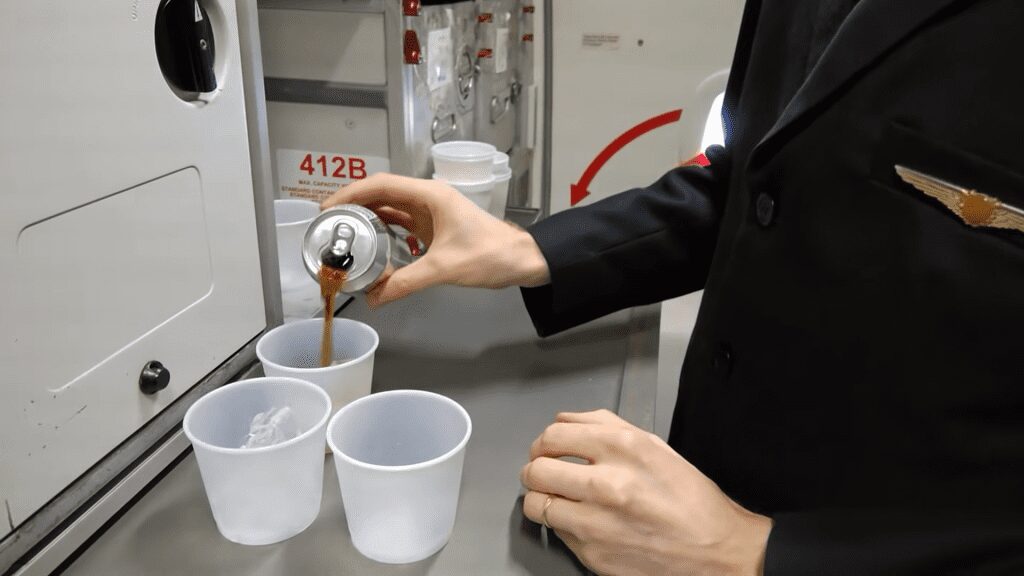
Instead of indulging in a glass of Coke, try drinking water or juice for the duration of your flight and save the fizzy drinks for when your feet are on the ground. That way, you’ll have less discomfort and embarrassment if your body needs to “break wind.”
Expert add-on: If you know you’re sensitive to bloating, keep meals light before boarding, avoid heavy salty snacks, and drink water steadily. Comfort in the air is often digestion comfort.
Noise, Cleanliness, and Small Comfort Tools That Make a Big Difference
Long flights rarely feel miserable because of one dramatic problem. They feel miserable because of dozens of tiny ones: noise, sweat, stale clothing, uncomfortable contact points, and a general feeling of being stuck. The next set of hacks targets those “death by a thousand paper cuts” issues.
Block It Out
When it comes to flying, nobody wants to suffer from loud chatter, weeping babies, or noisy sneezes when they’re trying to relax, nap, or read a book while staying focused on arriving at their destination.
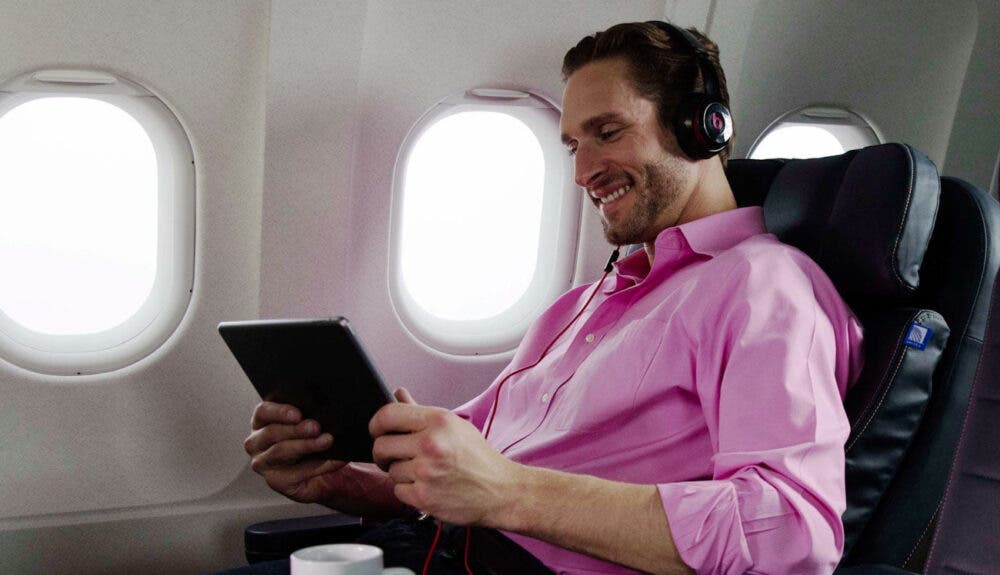
We recommend avoiding the frustration by remembering to pack noise-canceling headphones and silicone earplugs—even reusable ones—to block out the noise and try to enjoy your time in the air as much as possible.
Expert add-on: If you’re a light sleeper, combine earplugs with an eye mask. Sound and light are the two biggest sleep disruptors on planes. Removing both increases your chance of real rest.
For longer flights, a great way to make sure your flight is as comfy as possible is to pack spare socks and undies in your carry-on. That way, if you feel gross and sweaty, you can change your intimates and feel more refreshed.
There are no showers on the plane, so your best bet to feel fresher is being able to change your clothes, especially your undies. If you really want to feel brand new, pack some deodorant (if you’re allowed to) and a spare change of clothes, too.
Expert note: This is one of the most underrated comfort hacks in aviation. Fresh socks alone can make you feel dramatically better, especially on long-haul flights where cabin air and long sitting time create that “stale” feeling.
Seat Features You’re Probably Ignoring (But Shouldn’t)
Planes have small design details that many passengers never notice—yet those details can improve your comfort, organization, and sanity. This section is about “use what the seat gives you” so you’re not balancing items awkwardly or dropping things into the seat gap for the entire flight.
Tray Table or Coat Hook?
Well, in this case, the answer is both! Do you know that tiny little hook you often find at the bottom of the tray table on the plane? Turns out it’s a coat hook. When we say coat hook, we obviously don’t mean that the hook can only be used to hang coats.
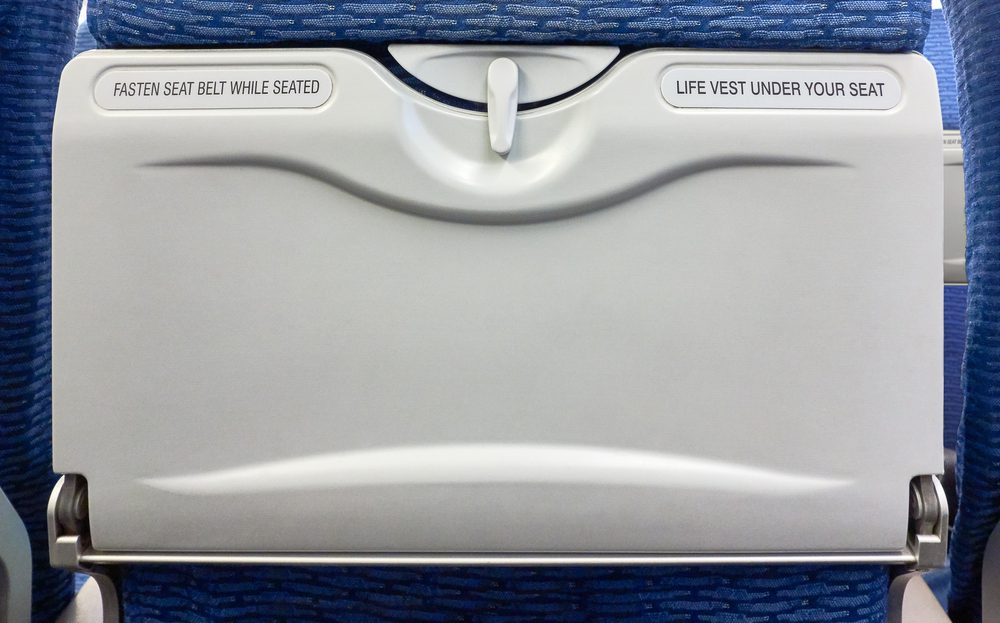
You can use them to hang all manner of things, including earphones. Depending on the airline, these hooks can be found at the bottom of the tray, next to your tray, or just on the side of the seat ahead of you. Now you know!
Expert add-on: Hanging items reduces clutter and keeps your footwell clear. That matters because your footwell is your “movement space.” The less you block it with bags and loose items, the easier it is to shift positions, stretch, and stay comfortable.
After Landing: Navigation, Social Travel, and Money-Saving Moves
Not every “flight comfort” hack happens in the cabin. A comfortable flight also includes a comfortable arrival—meaning you can navigate without panic, recharge devices if you’re missing cables, and avoid getting stuck paying for unnecessary services. The hacks below are especially useful in unfamiliar cities or when you’re traveling solo.
Download Offline Maps
After a long flight, all you want to do is get to your hotel and freshen up. But if you’re in a new city or country, it might be difficult to navigate—and there might not be an available Wi-Fi connection to help you when you need it most.
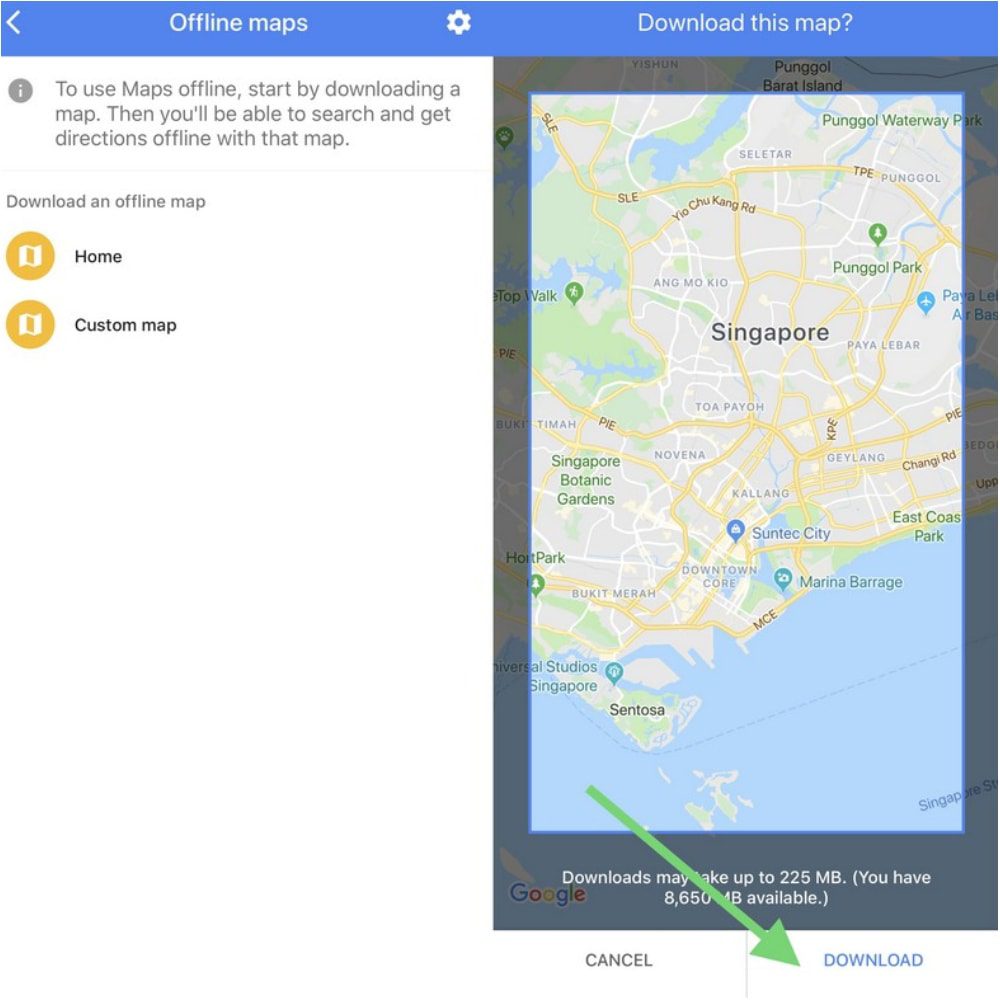
Don’t worry, dear traveler—Google’s got your back for this one. Before you leave home, open up Google Maps on your phone and download offline maps for your destination. That way, you’ll have easy and internet-free access to maps, and you’ll be able to find your way around far more easily.
Expert add-on: Offline maps don’t just prevent getting lost—they prevent expensive “panic solutions” (unnecessary taxis, roaming data charges, or buying SIM cards at the airport out of urgency). A calm traveler spends less.
Tour Guides
Why spend extra money on a tour guide who’s likely to take you to basic, touristy locations when you can spend the cash on traveling treats and be your own tour guide? Doesn’t that sound more fun?

With the help of technology, apps have made traveling easier and more accessible. Just do some research before you leave your hotel—and explore your travel destination! If you get lost, you can always consult your phone or ask a friendly local for help.
Expert note: Guided tours can be valuable in some situations (complex history sites, safety concerns, language barriers). But if your goal is flexibility and savings, self-guided travel can deliver more freedom—and more authentic discovery—when done thoughtfully.
Buddy Up!
If you’re traveling solo rather than with a partner, family, or friends, one of the best ways to create memories is to meet people from all around the world during your trip.
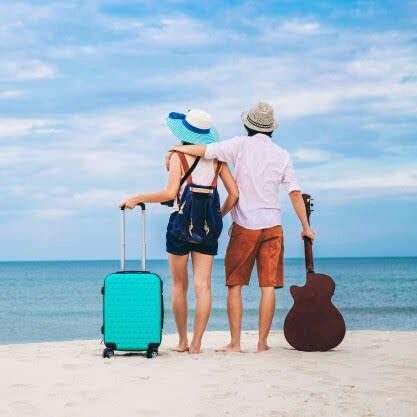
Approaching strangers can be daunting—but technology can help. Travel Buddies or Backpackr will connect you with other travelers in the same city as you—and you can meet up with them and start your adventures!
Expert caution: Meet in public places, trust your instincts, and prioritize safety. Social travel is wonderful, but smart boundaries make it safer and more enjoyable.
Escape Your Comfort Zone
If you really want to get to know a city and its culture, then you’re going to want to spend time with locals—and let them show you the hidden gems most tourists won’t discover.

All you need to do is download the Party with the Locals App onto your smart device and start connecting with locals keen to meet you and show you around town! It’s a great way to make new friends too.
Expert note: Local connections often lead to the best travel experiences: better food at fair prices, less tourist congestion, and a deeper sense of place. It’s not just about saving money; it’s about upgrading the quality of your time.
TV Charger
Remember we mentioned how most airports have TVs that you can use to charge your phone in a desperate situation? Well, most hotels have them too. If you’ve arrived at your hotel only to realize that you’ve either forgotten your charging port or it’s not the right one for your destination, we have a solution for you.

Just like you would at the airport, check if the TV in your hotel has a USB port—most of them do. You can use the TV to charge your device until you’re able to get to a store to replace your charging port. Or just don’t bother! If the TV is working for you, use that extra cash on a nice meal or activity.
Extra Flight Hacks That Can Save Money, Stress, or Both
This final section includes practical hacks that don’t fit neatly into one category, but can meaningfully improve comfort, budget, or trip flexibility. Consider them “smart traveler behaviors”—small habits that stack over time.
Plan Ahead
There’s nothing worse than being bored with nothing to do when you’re sitting on a plane 30,000 feet in the air. That’s why we suggest planning ahead and preparing some things for you to do while you’re on the way to your destination.
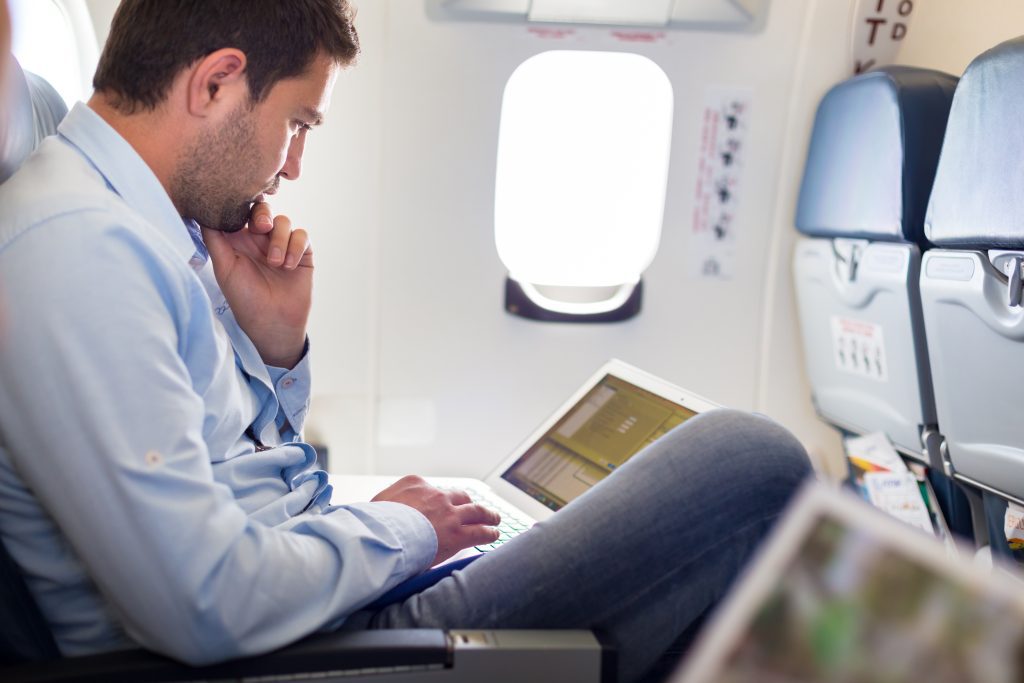
The longer your flight, the more entertainment you’ll need to prepare to keep yourself busy. Download movies, bring a book or two, and if you enjoy journaling, that’s also a great way to pass the time and not go stir-crazy.
Expert add-on: Entertainment planning is also anxiety planning. When your mind has something to do, it has less space to spiral. For nervous flyers, a structured playlist, downloaded shows, or a good book can be surprisingly calming.
Rechargeables
Rechargeable batteries can really come in handy when traveling—especially if you’re in a location that doesn’t have many luxuries. It’s best to pack a battery charger, too, so that you don’t have to keep stocking up on new batteries.
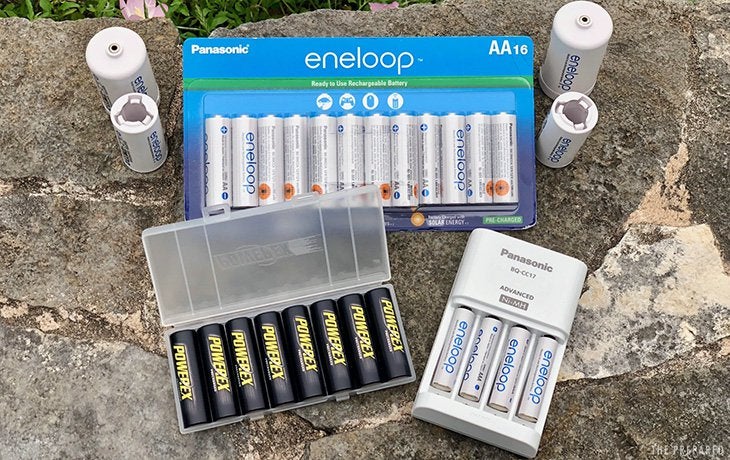
Batteries come in handy for many things, including portable fan systems for a hot night in a hostel with no air conditioning. Or perhaps you’d like to do some night-time exploring and need a torch—remember to take some spares with you, so you don’t wind up lost in the dark!
Expert note: The key advantage is predictability. When you travel with rechargeables, you reduce “emergency shopping” in unfamiliar places, which saves time and money.
First Class In Economy
Now, this is not exactly a hack, but if you like to fly, you must know about this deal. Air New Zealand offers economy flyers the option to convert a whole row into a bed. It costs a little extra, but not so terrible.
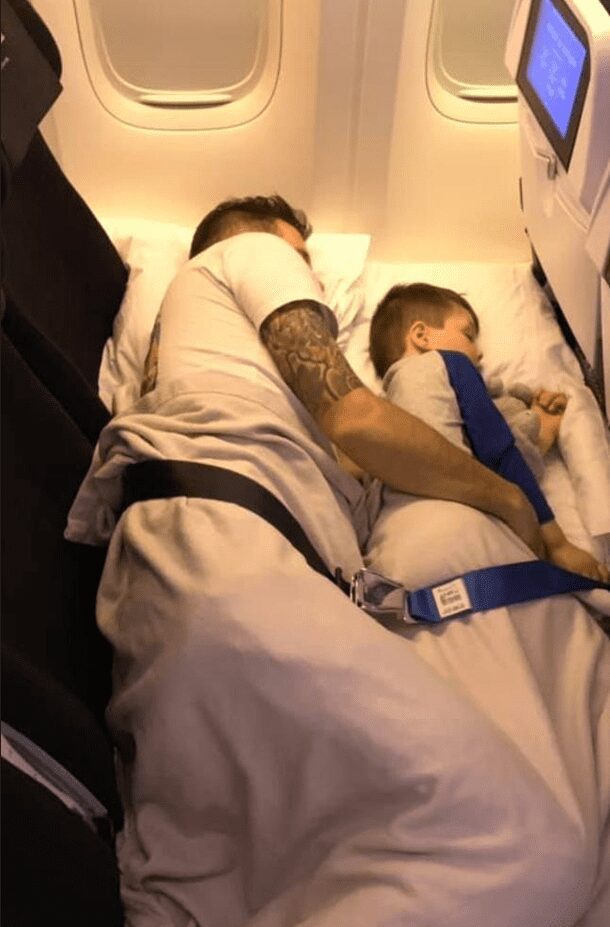
When this family of four went on a long, international flight, they made sure to book with Air New Zealand for this specific reason. For those with families that can’t afford first-class, this is the best option out there!
Expert note: This is a strong example of “buy comfort strategically.” If sleep is your biggest issue on long-haul flights, targeted upgrades that improve rest can be worth far more than luxury for luxury’s sake.
On The Go
Maybe you’re an on-the-go person and want to explore new places while you’re already traveling instead of planning your entire trip beforehand—what’s more fun and exhilarating than that? You have to be spontaneous.

If you’re feeling adventurous, then download the Skyscanner app for the latest deals for your chosen destination in a few simple steps. You’ll be sitting on a flight to your new travel location in no time!
Expert add-on: Spontaneity is most enjoyable when it’s paired with a basic safety net: saved documents, offline maps, and a power bank. Then your “spontaneous” decision doesn’t become “chaotic” travel.
The Sacrifice Might Be Worth It
So, you’ve found yourself on an overbooked flight, and the airline is calling for volunteers to give up their seats. You think about missing your flight and maybe a day’s worth of travel and are hesitant to be the one to make the sacrifice.
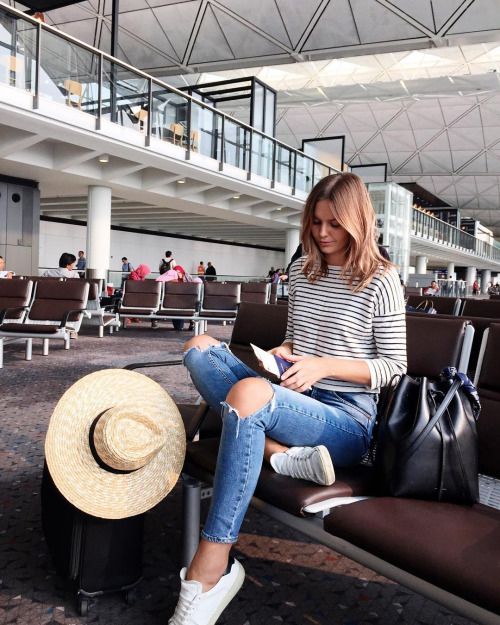
But take our advice and give up your seat! The airline will be grateful for it and will likely treat you to free meals, drinks, and accommodation nearby—they might even upgrade you when they rebook you onto the next available flight.
Expert note: This can be a great strategy when your schedule is flexible. The key is to evaluate the trade: time lost vs. compensation gained. If you’re not under pressure, volunteering can turn disruption into a win.
Jogging Off The Jetlag
No one likes jetlag—it makes you tired and irritable and can last several days and sometimes even up to a week! And if you’re traveling, you want to be alert and awake so you can take in and enjoy all the new surroundings.
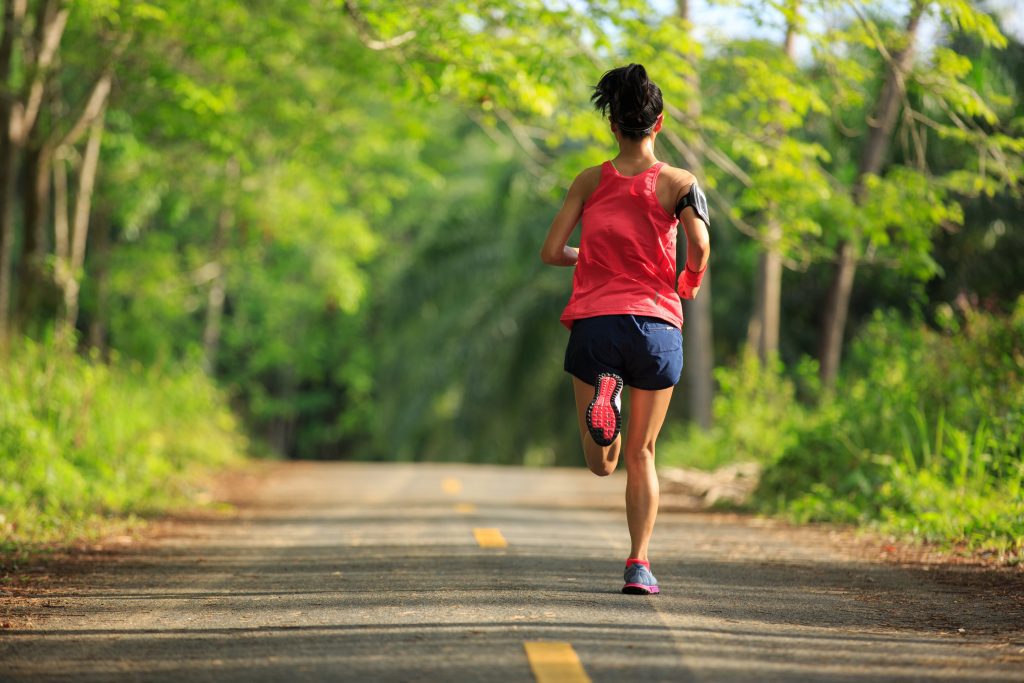
So, instead of filling up on coffee and dozing off in the middle of the day, get up in the morning and go for a nice jog in the sun. The sun will set your internal clock to know that it’s time to start the day, and the exercise will make you feel replenished and revitalized, too.
Expert note: Morning light exposure is one of the strongest signals for circadian rhythm adjustment. Pair it with movement and hydration and you give yourself a far better chance of “recovering” from jetlag quickly.
Waterproof That Case
We’re sure you can relate to the stress of getting caught in the rain with your luggage and worrying about water seeping through and damaging your belongings. But fear not—if you don’t have a waterproof suitcase, there’s a simple workaround.
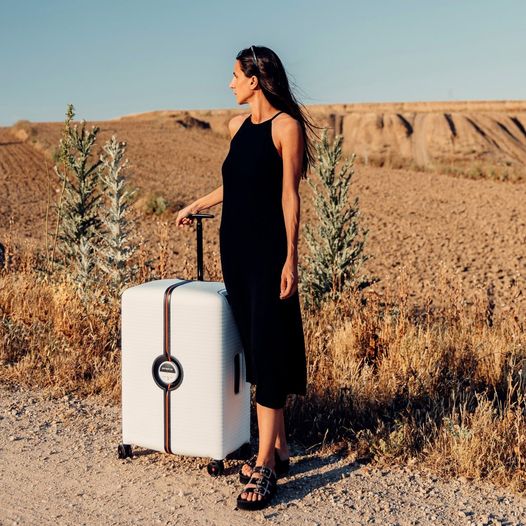
Line the inside of your bag with bin liners. That way, you’ll avoid the misfortune of your things getting wet—and all you’ll need to do is let your suitcase dry out in the sun when the sun comes back out.
Expert add-on: This trick also helps with “liquid accidents” inside your luggage. Toiletries leak. Bottles crack. Bin liners create a simple barrier that prevents one small accident from ruining everything.
Fragile Luggage
If you’re traveling with fragile or important items that could get bumped around in the cargo hold, risking damage to your goods—even your bag—we have a game-changing trick to increase the chances your luggage is handled with care.
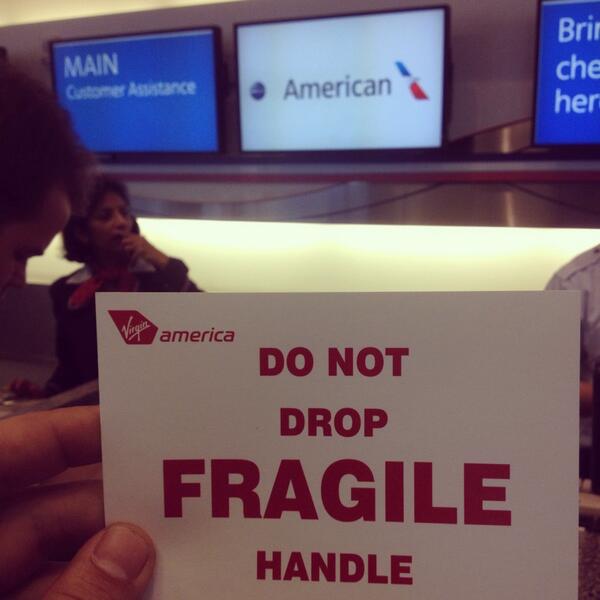
When checking in, mark your luggage as fragile—not only will this encourage careful handling, it will also mean your luggage will be placed on the top of the pile—meaning you’ll also be one of the first to get your things from the carousel!
Expert note: While no label guarantees perfect treatment, “fragile” marking is still a reasonable friction tool. It nudges handlers toward caution and can improve placement in the stacking process.
Cover it Up
If you’re like most travelers, you’ve probably lost or forgotten the plastic cover that comes with your razor blade. Here’s a practical hack to protect yourself from accidentally slicing your fingers when rummaging through your toiletry bag.
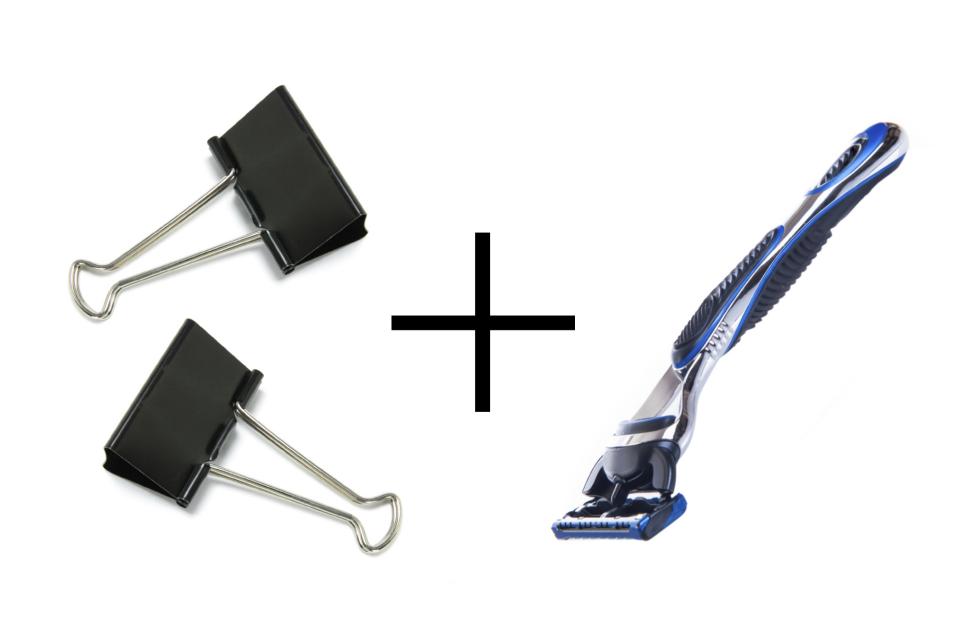
Do yourself—and your fingers—a huge favor and get some binder clips. They’re a great substitute for the plastic cover, and it’s a much better investment than buying a new razor every time you lose the cover!
Expert add-on: This is also an organization hack. A clipped razor is easier to spot, less likely to cause damage, and reduces stress when packing up quickly on checkout day.