
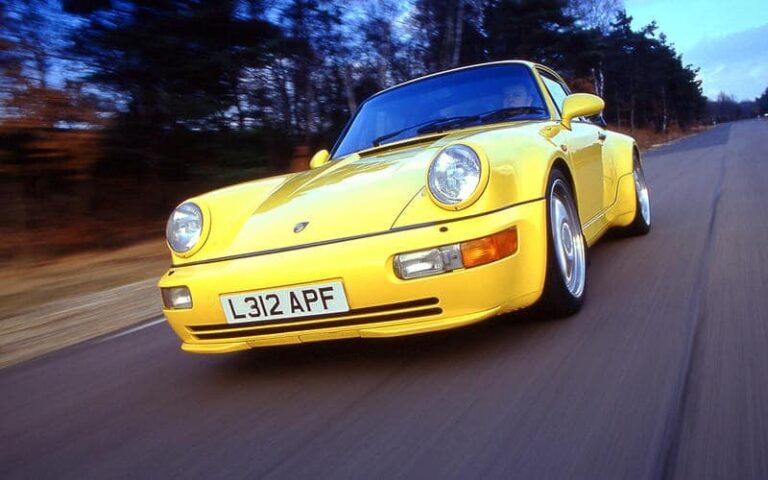
It is pretty well known that German automakers have a talent for building more than “just cars.” Over the years, they have turned out some of the most luxurious, advanced, and hard-hitting machines on the road. You can hear the names everywhere: Audi, Mercedes-Benz, BMW, and Volkswagen. The thing is, people often talk about the loudest, flashiest models, the ones that win awards on brochures and in showroom conversations. But Germany also has a long list of engines and powertrains that deserve way more respect than they get.
And that is exactly what we are doing here. If you look at a few of the most powerful German machines, you will notice a pattern. Some of them stay under the radar, even while delivering an incredible amount of performance. Some of them are not underappreciated because they are weak. They are underappreciated because they do not always look exciting on the outside, or because the people talking about them focus on the wrong details.
So let us talk about a handful of these machines the way an experienced owner would. No confusing jargon for the sake of sounding smart. Just real talk about what makes each engine interesting, why it became trusted, and why you might actually want to pay attention to it even if it is not the most talked-about option in its lineup.
Why some German performance engines fly under the radar
Here is the truth: when people chase performance, they usually chase stories first. They want the engine that everyone recommends, the one that sounds good in a video, or the one that has a simple reputation. But a lot of the most satisfying power comes from engines that are designed to work hard every day, and to keep working hard even when life gets messy.
Sometimes that means the engineering is straightforward instead of trendy. Sometimes it means the car is popular, but the engine gets overshadowed by a louder trim. Other times, the engine is known among enthusiasts, but it is not famous outside the community. That is where the “underappreciated” label actually comes from.
Now, before we jump into the specific engines, it helps to remember something practical. An engine’s reputation is not just about horsepower numbers. It is about how it responds to real ownership, how it holds up over time, and whether it makes your life easier when you are loading the car, commuting, driving in traffic, or dealing with the everyday stuff.
With that in mind, here are three German powerplants that have earned their credibility. Each one has a reason people keep returning to it, upgrading it, or building it into something bigger. And each one is worth your attention even if you have never heard someone hype it at a car meet.
What you will notice after reading this
- You will see how design choices like strong cast components, solid fueling strategies, and proven control systems can make engines both powerful and dependable.
- You will understand why certain engines can be tuned hard without feeling like they are constantly on the edge.
- You will get ownership-focused context, like what makes these engines feel “easy to live with” compared to flashier alternatives.
VOLKSWAGEN ALH TDI
The V.W. A.L.H. is one of the most iconic machines ever made. The machine can make up to 800 horsepower of power. Most likely, the success of the engine is due to the cast iron exhaust manifold and block. That kind of durability matters when an engine is working hard, and when you are pushing it beyond the “normal” range.
It became well known not only because it was reliable, but also because it delivered good gas mileage. That combination is what makes the ALH TDI stand out. You did not need to choose between saving money at the pump and enjoying real, usable power.
Let me put it in a real-world way. Imagine you have a commute, you carry gear sometimes, and you want a vehicle that can handle long drives without feeling like you are always one maintenance item away from trouble. An engine like this tends to fit owners who want stability and efficiency, but still appreciate performance when the mood hits.
Now, one of the things people underestimate is how cast iron choices support longevity. A cast iron block and exhaust manifold can handle heat cycles more calmly than many other materials. That does not mean “no maintenance ever.” It means the engine starts with a foundation designed to survive abuse, especially the kind of abuse that happens in everyday driving, not just track sessions.
Why those cast parts matter more than people think
When people hear “cast iron,” they sometimes think old-school and heavy, not “advanced.” But in performance terms, cast iron can be a big deal. It provides strength and resistance to stress. In an exhaust manifold, that can mean more consistent performance, fewer headaches related to heat issues, and a sturdier platform if you want to tune.
As for the block, reliability often starts with the baseline. If the foundation is strong, the engine can take more changes, more upgrades, and more aggressive driving without feeling like the engineering was fragile from the beginning.
Of course, no engine is magically indestructible. If you chase big numbers, you need to respect the basics: fueling health, cooling, oil quality, and proper tuning. But compared to engines that are built for one specific range, the ALH TDI is the type of platform that gives you options.
What owners tend to love about the ALH TDI
- Strong horsepower potential: You can reach up to 800 horsepower in the right setup.
- Durable structure: The cast iron exhaust manifold and block help it stay credible under stress.
- Real-world efficiency: It is known for good gas mileage, not just speed.
- Reputation you can build on: It is an engine people reference because it has already proven itself over time.
That is a combination you do not see often. Many engines are strong on either the efficiency side or the performance side. The ALH TDI is remembered because it manages to cover both.
Even if you never chase the extreme numbers, you still benefit from what the engine was designed to do. Strong foundations and dependable operation often feel boring at first, and then you realize boring is exactly what you want in a daily driver.
BMW M62

When you hear the name BMW, you probably picture something stylish and high-end. Since we are being honest, it is one of the coolest lineups of cars and engines Germany has produced. But the BMW M62 is more interesting than most people realize. From 1995 to 2005, BMW’s best engine was the big V8 that ranged from 3.5 to 4.8 liters.
This engine was easy to tune because it had a D.O.H.C. system, an aluminum block, and a Bosch Motronic ECU. And here is the key part for reliability fans: most likely, the reliability of these engines is due to the lack of high-tech parts in the fuel pump and timing chains.
So yes, it is powerful. But it is also one of Germany’s most underrated machines, because people often focus on the flashy stuff and forget that sometimes the best performance stories are built on straightforward engineering decisions.
Why the M62 is such a friendly platform to tune
“Easy to tune” sounds like a casual phrase, but it matters. If an engine responds predictably to tuning, owners waste less time chasing weird behavior and they get a better result for the effort they put in. The M62 was known for that kind of tunability, largely because of its setup: D.O.H.C., an aluminum block, and the Bosch Motronic ECU.
Think about tuning like upgrading your coffee machine. If you add the right adjustments, you get better results fast. But if you start with a system that behaves randomly, everything becomes frustrating. That is why a lot of enthusiasts gravitate toward engines they can understand and control.
And in the BMW world, where people sometimes assume everything is complicated, the M62 becomes an example of how that assumption is not always right.
Reliability: the part people forget to talk about
There is a reason many engine stories turn into “it is fast, but…” The “but” is usually reliability. With the BMW M62, the reliability discussion points to a pretty practical idea. Most likely, it holds up better because of the lack of high-tech parts in the fuel pump and timing chains.
In everyday terms, that means fewer complex failure points. Complex systems can be great when they are working perfectly. But when age shows up, it helps when the engine does not rely on a dozen fragile advanced components to keep it alive.
So if you are the kind of owner who likes performance, but you also want something that does not constantly demand attention, this is one of the reasons the M62 has a loyal following.
Quick snapshot of why the M62 earns respect
- Time window: Produced as BMW’s best V8 engine from 1995 to 2005.
- Displacement range: 3.5 to 4.8 liters.
- Tuning-friendly setup: D.O.H.C., aluminum block, and Bosch Motronic ECU.
- Reliability reasoning: Most likely tied to fewer high-tech components in the fuel pump and timing chains.
- Underrated status: Still considered one of Germany’s most underrated machines.
It is underrated in the best way. Not “forgotten because it is bad,” but “forgotten because people chase the loudest story.” If you value a balance of power and real-world dependability, this engine belongs on your radar.
VOLKSWAGEN EA888
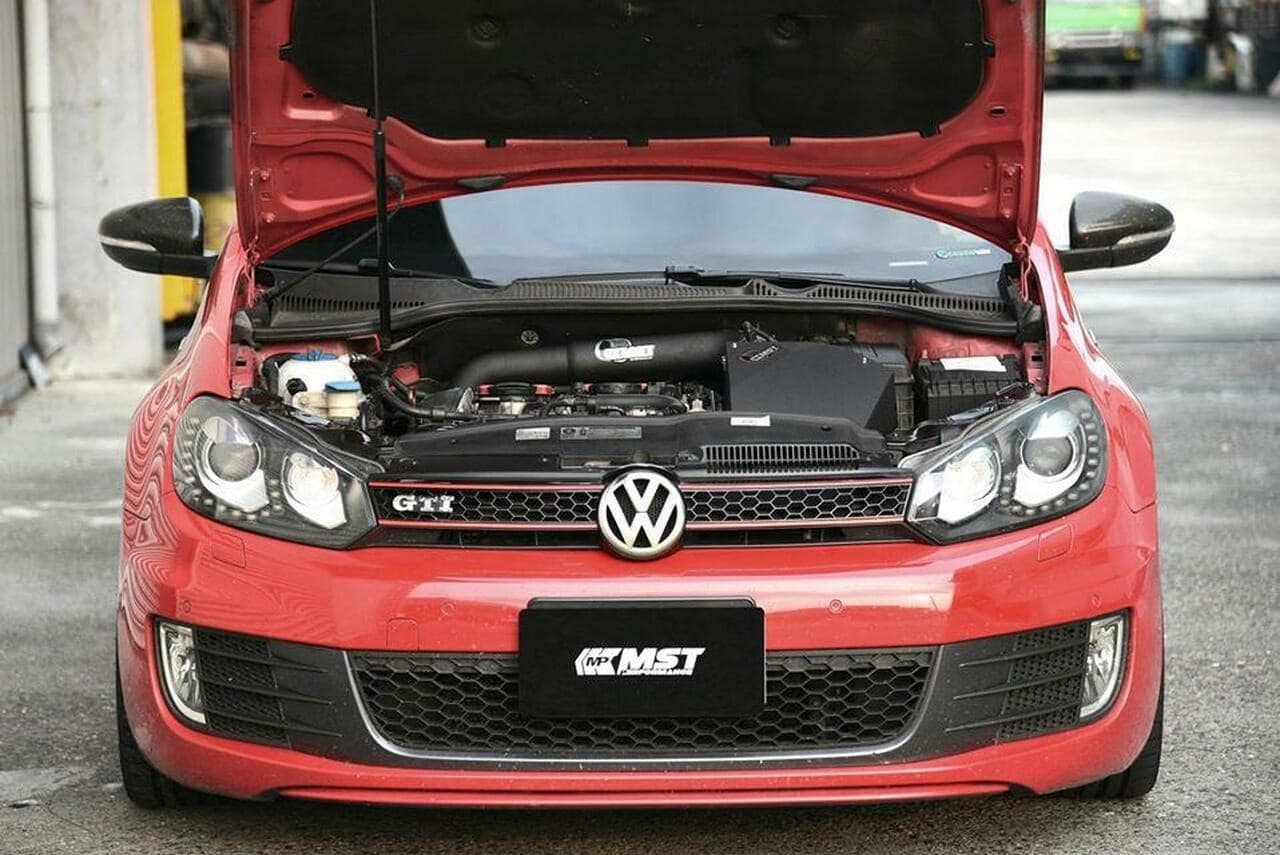
Think of the VW EA888 when you think of legends. This beast of a machine won an award for how well it worked. That is already a huge tell. The EA888 is seen as a smart machine for its time in terms of how well it performs, how it operates, and how it stays relevant across generations.
So the VW group has been using it for over 20 years, and they keep making changes to it to make it better. That long run matters because it suggests the engine was not just a one-off experiment. It became a foundation that Volkswagen kept improving instead of replacing right away.
Why an engine that lasts for over 20 years deserves respect
Not every engine platform earns multi-decade attention. Some get replaced quickly because the initial design does not hold up well in the real world. Others get abandoned because they fail to meet new rules, new expectations, or new performance goals.
With the EA888, the fact that the VW group has used it for over 20 years points to something owners notice over time. It can be adapted. It can be updated. It can evolve with technology instead of turning into a dead end.
And that is why the engine is often discussed as a “smart machine.” The story is not only about raw power. It is also about how well it works in real driving conditions, and why the design has continued to be useful.
Ownership real talk: what “works well” usually means
When someone says an engine “worked well” enough to win an award, it usually means a few things that matter day to day. It starts reliably. It runs well across temperatures. It delivers smooth response without constantly feeling fragile. And over time, it tends to have a strong support ecosystem because it is widely used.
That last point is huge. Even if you never modify the car, a widely used engine means parts and knowledge are easier to find. Owners can get help faster, and mechanics often know the common issues by experience rather than by guessing.
Now, the EA888 story also includes ongoing improvement. Volkswagen kept making changes to make it better, which suggests the platform was not locked into an early compromise. It was refined as needs evolved.
- Award-winning reputation: The EA888 won an award for how well it worked.
- Smart design for its era: It earned a reputation for being effective and well thought out.
- Long lifecycle: Used by the VW group for over 20 years.
- Ongoing updates: Changes kept coming to improve it over time.
That is a serious track record, and it is one reason enthusiasts keep talking about the EA888. It is not just a name. It is a platform that has stayed relevant.
What “underappreciated” looks like when you own the car
Underappreciated power does not always mean “unknown.” It often means people do not talk about the right parts of the story. They might focus on brand reputation, model badges, or one impressive spec number. But you live with the engine through seasons, through road trips, through winter starts, and through the times you simply need it to work.
If you drive any performance-focused German car long enough, you start learning the same lesson: the best engine is the one that matches your life. Maybe your life needs efficient torque and a foundation that tolerates upgrades. Maybe your life needs a big V8 that is both powerful and not overly fragile. Maybe your life needs an engine platform that has proven itself across multiple generations.
Here is a hypothetical example. Suppose you and three friends all want a German performance experience, but you all drive differently. One person does long highway runs and wants strong efficiency. Another person wants a smooth, confident V8 character and easy tuning. Another person is more of a tinkerer and wants an engine platform that keeps improving over decades. Underappreciated engines are often perfect matches for one of these real-life patterns.
That is why these engines stay interesting. They cover different personalities. They cover different driving needs. And they show that German engineering does not only shine in the loud, obvious ways.
How to decide if one of these engines fits your next purchase
Let us make this practical. If you are considering a vehicle that uses one of these engines, you will get the best results by thinking in terms of expectations. Ask what you want from ownership, and then match the engine to that.
Because here is the thing: a powerful engine is only part of the equation. The other part is the condition of the specific car you are buying, how it was maintained, and whether the previous owner treated it like a project or treated it like a tool.
A simple buying checklist for these German powerplants
- Service history: Look for consistent maintenance records. An engine that is reliable on paper still needs oil changes and basic care.
- Proof of tune or no-tune: If the vehicle is modified, understand what is changed. If it is stock, confirm that the story matches the condition.
- Cooling system health: Heat is where performance engines show their age. Check for signs of overheating or neglected components.
- Noise and smoke: Listen for unusual mechanical sounds. Watch for smoke patterns that might hint at fueling or wear issues.
- Ownership goals: Decide whether you want efficiency, tune potential, or a platform with long proven evolution.
That checklist is not meant to scare you away. It is meant to help you buy the right example of the engine, not just the right engine name on a spec sheet.
Where these three engines all connect
Even though the ALH TDI, the BMW M62, and the VW EA888 are different in personality, they share a similar theme. They are powerplants that earned credibility through engineering choices that make the engine practical and capable.
The ALH TDI points to durability and efficiency, supported by the cast iron exhaust manifold and block and known for strong potential, including up to 800 horsepower, while still being known for good gas mileage.
The BMW M62 points to a big V8 era with tunability and credibility, with 3.5 to 4.8 liters and a D.O.H.C. setup plus an aluminum block and Bosch Motronic ECU, and most likely improved reliability tied to less high-tech complexity in fuel pump and timing chains.
The VW EA888 points to long-term evolution, with an award-winning reputation for how well it worked, and continued use by the VW group for over 20 years, along with ongoing updates to make it better.
That shared theme is what makes them worth attention. They are not just “cool engines.” They are credible engines that fit into real ownership, not just fantasies.
Your next move
If you want to feel confident about German performance without chasing hype, pick one of these engines and learn how it behaves in real ownership. Then, when you are shopping, focus on maintenance history and condition, not just horsepower stories.
Which one matches your style the most: the ALH TDI for efficiency and durability, the BMW M62 for big V8 tuning potential, or the VW EA888 for a platform that has kept improving for over 20 years?