
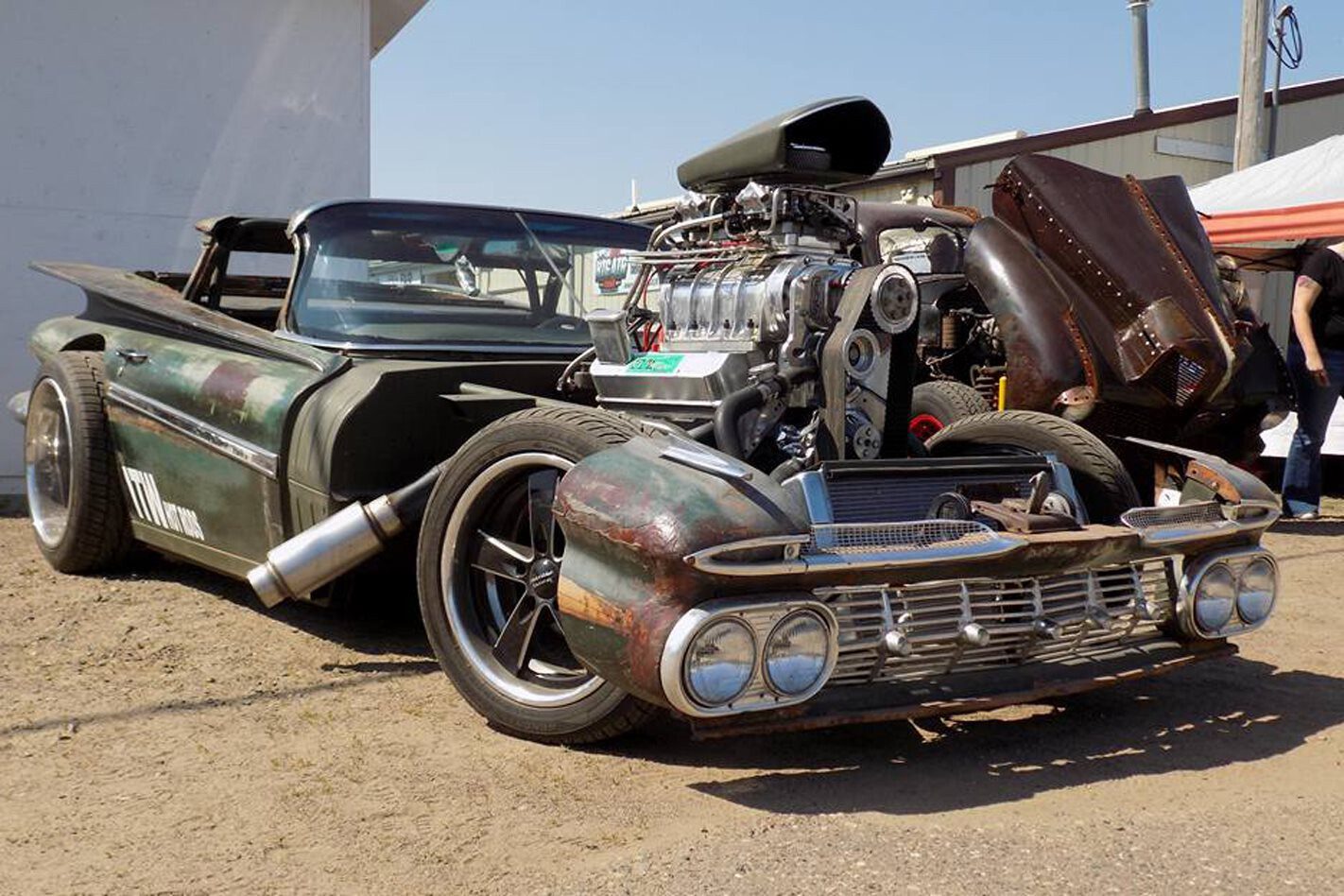

Rat rods are not simply modified cars. They are rolling declarations of independence from polished, factory-perfect automotive culture. Where a traditional restored classic often aims for flawless paint, correct trim, and showroom precision, a rat rod moves in the opposite direction. It celebrates rust, exposed welds, chopped bodywork, salvaged parts, and mechanical honesty. The result is a style that looks rebellious on the surface but, in truth, is deeply artistic underneath.
The roots of the rat rod movement stretch back into the broader hot rod culture of the mid-20th century, when builders took old, inexpensive cars and turned them into something faster, louder, and far more personal. Over time, a distinct branch emerged: one that valued rawness over polish and ingenuity over perfection. In that world, an imperfect body panel is not a flaw. A visible patch, a rough weld, a mismatched door, or a handmade bracket often tells the story of the builder more honestly than any pristine show finish ever could.
That is part of what makes rat rods so compelling. They are not anonymous machines. Every one of them reflects the imagination, humor, technical skill, and taste of the person who built it. Some are brutal and industrial. Some are elegant in a strange, rusty way. Some look like they rolled out of a Mad Max film, while others feel like mobile comic-book sketches brought to life with steel, old engines, and a welding torch. In nearly every case, the builder is saying the same thing: this machine belongs to no trend except my own.
Rat rods also occupy a fascinating space in automotive culture because they transform discarded history into motion. Old trucks, forgotten sedans, school buses, military equipment, classic European coupes, and even wheelbarrows have all been reborn as rat rods. Builders hunt for parts in scrap yards, swap meets, farm auctions, and abandoned barns, then combine them with custom fabrication to create something entirely new. The outcome often looks improbable, yet that very improbability is the point. Rat rods are built to surprise.
Despite their rough appearance, these vehicles are not always static sculpture. Many of them are fully functional road machines built to cruise, race, or simply show off their personality at events and meetups. The rat rod community values driving as much as display. These machines are meant to move, rumble, shake, and draw attention in the real world. The smell of fuel, the vibration of an oversized engine, and the sight of a rusty body gliding past on oversized tires are all part of the experience.
In the following collection, you will find a remarkable range of rat rods—some historic, some outrageous, some oddly beautiful, and all memorable. A few are built from legendary cars. Others come from sources no one would ever expect to see reborn as road-going art. Together, they show why rat rods continue to fascinate builders and fans around the world: they reject uniformity, embrace experimentation, and turn scrap, memory, and horsepower into unforgettable rolling statements.
1925 Duesenberg 8 Speedway Roadster
The 1925 Duesenberg 8 Speedway Roadster is not just old; it is a piece of serious motorsport history. Designed in an era when racing still felt raw and dangerous, it carries the kind of narrow-bodied, upright look that instantly reveals how different early speed machines were from modern performance cars. Its style may feel primitive by today’s standards, but its record on the track made it anything but ordinary.
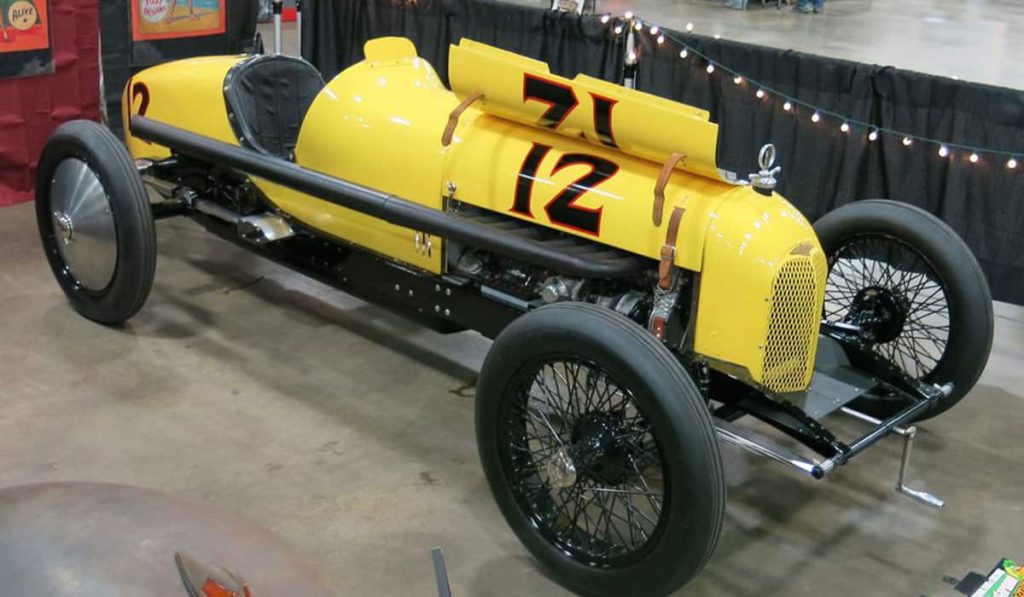
Peter DePaolo drove this type of Duesenberg to victory at the Indianapolis 500, setting a new speed record of roughly 101.13 mph, a milestone that held for years. That alone gives the car a larger aura than many polished collectibles ever achieve. With around 225 horsepower from a massive racing engine, it represented serious engineering ambition for its day. It is also a reminder that rat rod and hot rod culture did not appear from nowhere; it inherited a great deal from machines like this—cars built around speed first, elegance second. Auction history only adds to the legend, with values rising well above what many expected.
Winged Rod
The Winged Rod is exactly the kind of build that proves rat rod culture runs on imagination as much as mechanical skill. At first glance, it resembles a chopped hot rod with a dramatic rear section, but the longer you look, the stranger and more entertaining it becomes. It feels less like one finished design and more like several automotive ideas stitched together into something proudly unhinged.
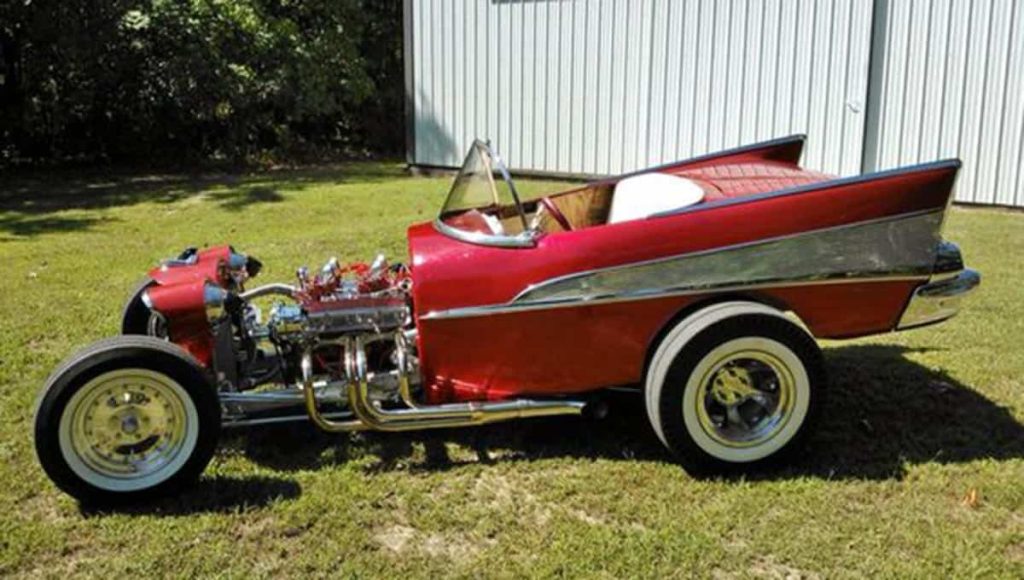
Its Frankenstein identity comes from mixing parts drawn from several vehicles, including the rear body section of a 1950s Chevrolet Bel-Air. That gives the car a winged, tail-heavy personality that feels perfect for anyone obsessed with mid-century drag racing and custom styling. It also captures one of the key rat rod principles: no part is sacred if it can be repurposed creatively. Rather than preserving one donor vehicle exactly as it was, the builder reshaped the past into something new and theatrical. The result is weird, memorable, and completely true to the rat rod tradition of choosing bold visual impact over factory logic.
1927 Ford Model T
The Ford Model T is one of the most historically important cars ever built, which makes any radical customization of it feel almost rebellious by default. Yet that is exactly why it works so well in rat rod culture. The Model T’s mechanical simplicity, durable frame, and unmistakable shape made it a favorite for repurposing even in its own era, and that tradition has never really ended.
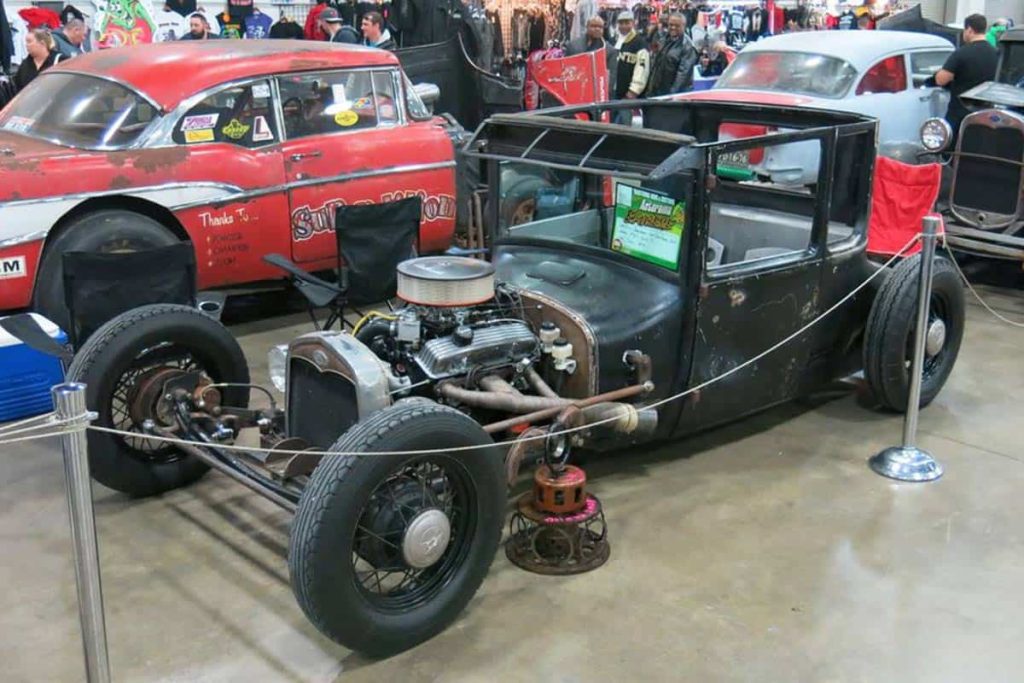
By the time production ended in 1927, the Model T had already changed transportation forever. In rat rod form, however, it takes on a second life—as a stripped-down symbol of toughness and reinvention. Historically, people transformed Model Ts into tractors, utility rigs, and all kinds of practical machinery because the parts were so adaptable. That spirit lives on in builds like this. The vehicle you see now is not simply an old Ford preserved under glass. It is a reminder that the Model T’s greatest strength may have been how easily it surrendered its original identity in service of new ideas.
1929 Ford Pickup “Phoenix”
The 1929 Ford Pickup known as “Phoenix” carries one of the most fitting names in this entire collection. Like its mythical namesake, it feels like something reborn from the ashes of time, workshop labor, and patient vision. Based on the original Ford Model A era, it carries the DNA of one of America’s most recognizable early automobiles, but it has been reshaped into something much more personal.
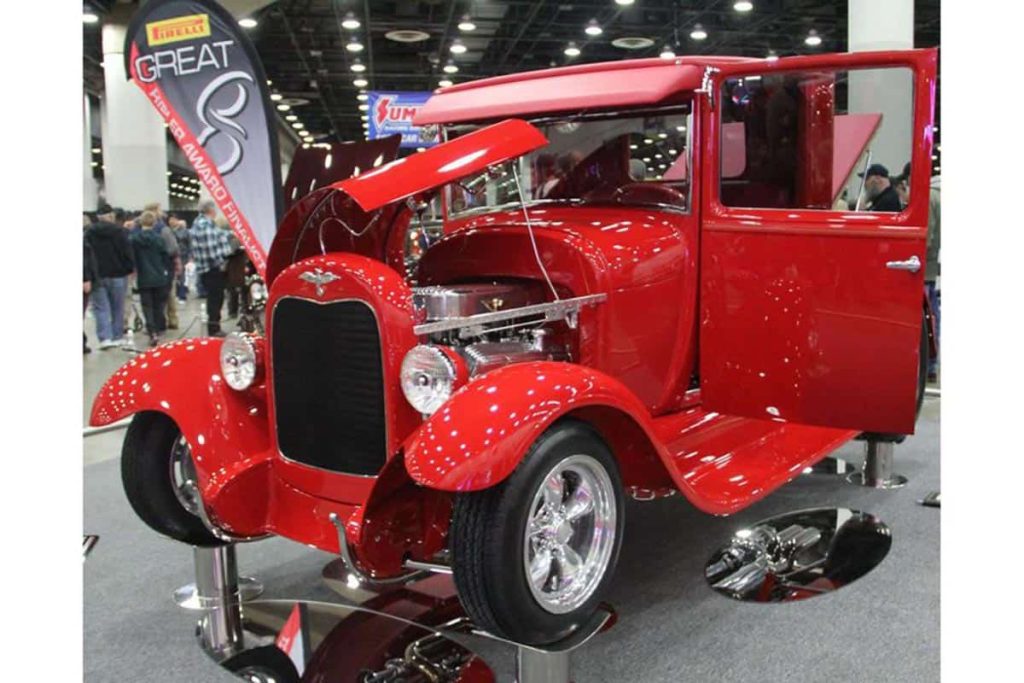
This build reportedly took around twenty years to complete, which says a lot about the level of commitment behind it. The truck gains a roomier cabin, a striking Phoenix emblem, and a powerful 383-cubic-inch engine, while still preserving pieces of its period flavor. The Stewart-Warner climate hardware and other classic details keep one foot in history even while the rest of the truck charges into custom territory. That blend is what makes “Phoenix” work so well. It does not erase its age. It uses that age as texture, then layers modern mechanical confidence and craftsmanship on top of it to create something stronger than nostalgia alone.
Wheel Barrow Rod
At some point in the rat rod universe, someone looked at a wheelbarrow and saw not a gardening tool but a potential custom car body. That sort of leap is exactly what keeps this culture alive. The Wheel Barrow Rod is absurd, charming, and weirdly logical all at once, which makes it one of the purest examples of rat rod creativity on this list.
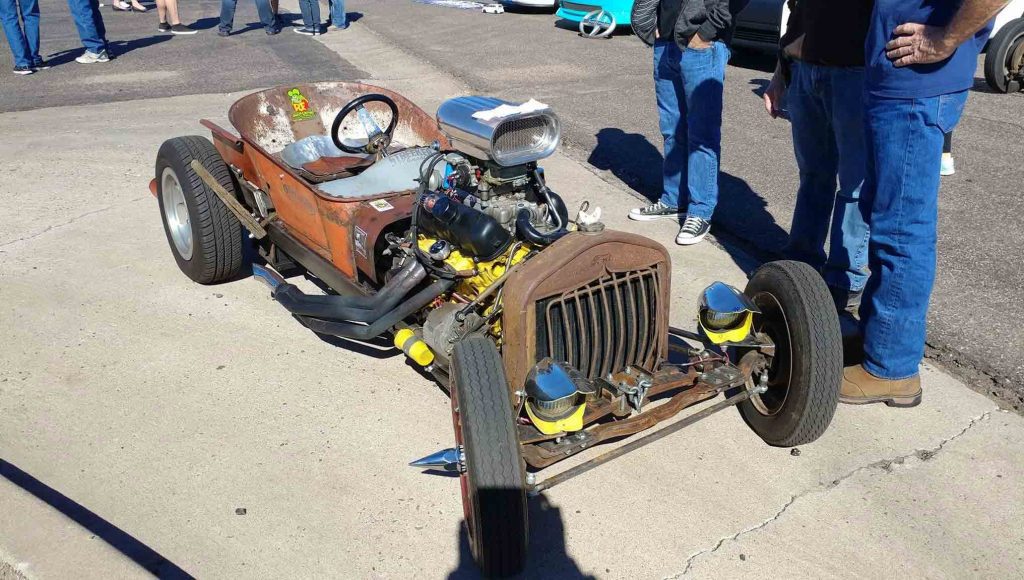
Built in the 1970s and still remembered decades later, this machine embraces humor without abandoning craftsmanship. The wheelbarrow body is only the beginning. A snow shovel becomes a seat, a pitchfork turns into the grille, and 1953 Mercury headlight remains provide the face. It should not work, and yet it absolutely does. The whole build feels like a metal cartoon created by someone with welding skills and zero interest in convention. That is part of the deeper lesson here: rat rods are not always trying to look intimidating or elegant. Sometimes they exist simply to prove that imagination has no business rules.
Jeepster Rad Rod
The Jeepster Rad Rod tells a story that is familiar in the custom-car world: a rough old vehicle gets rescued, then slowly transformed with enough time, money, and stubbornness to become something entirely different. In this case, the owner reportedly spent around $13,000 upgrading the Jeepster with modern hardware and selected refinements, creating a machine that feels more thoughtful than chaotic.
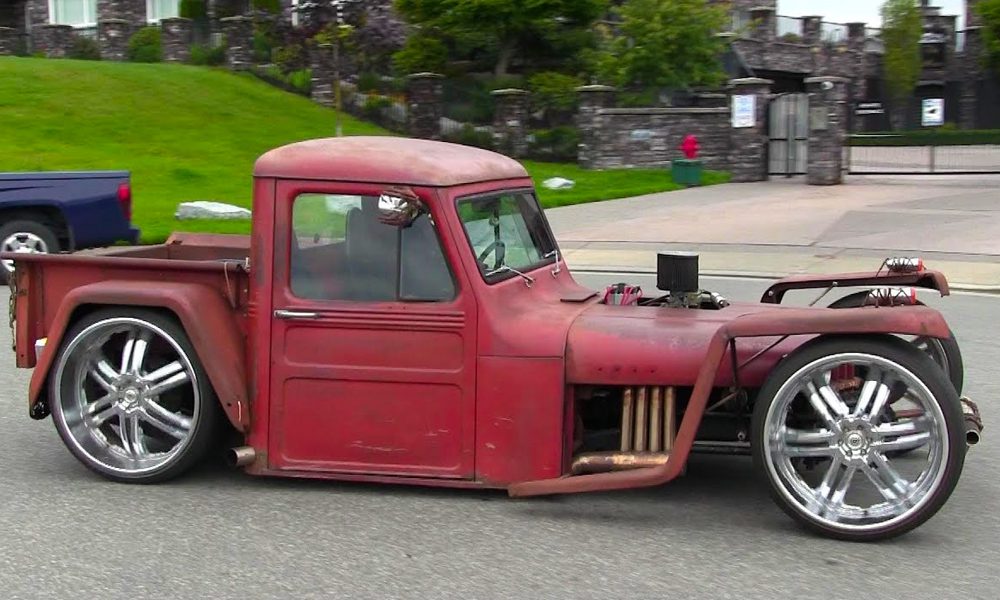
The result includes a stainless steel fuel tank, GPS assistance to compensate for an unreliable speedometer, and a general update in usability that keeps the rod more road-ready than many extreme builds. It still carries the rough, aged body language that makes rat rods visually compelling, but underneath that attitude there is more practical engineering than you might guess at first glance. This is one of those cars that shows rat rod culture is not always about chaos for chaos’s sake. Sometimes it is about taking an old platform with personality and giving it enough mechanical life to remain fun, functional, and unmistakably personal for years to come.
1957 Chevy Wagon Rat Rod
This 1957 Chevy Wagon Rat Rod is proof that partial reconstruction can still produce a complete personality. It may not look fully conventional by any stretch, but it has enough presence, engineering, and attitude to stand among the most memorable wagons reborn in rat rod form. It also carries serious credibility, having won a Rat Rod Build-Off roughly a decade ago.
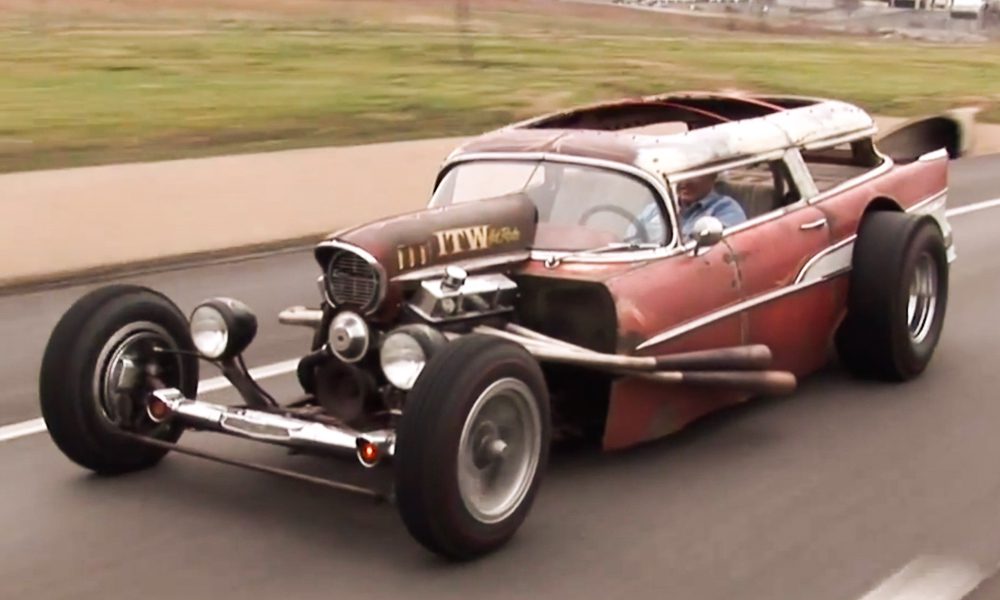
The body itself was built around the shell of a 1957 Chevrolet wagon, but the mechanical identity belongs to a much more serious piece of hardware: a small-block 355 cubic-inch Chevy racing engine. That gives the car a split personality in the best sense. It looks weathered, patched, and slightly unruly, but it carries the heart of something genuinely fast. That contrast is central to the rat rod ethos. A polished body with a race motor is impressive. A scarred, battle-worn wagon shell hiding serious performance is even better. It turns the car into a visual bluff—until it moves, and the bluff disappears.
Yellow Fever
Few rat rods make a first impression like this one. “Yellow Fever,” built from a 1941 Chevrolet school bus, has the kind of visual energy that makes people stop mid-sentence and stare. It is not subtle, it is not trying to be tasteful in the ordinary sense, and that is exactly why it works. The shape, color, and absurdity all come together in a way that feels both playful and intimidating.

Owner Jason Bliesner reportedly bought the old bus for about $2,700 and then turned it into a custom diesel-driven statement piece. Beneath the towering school-bus silhouette sits an 8.9-liter 12-valve engine paired with air ride suspension and turbo hardware, showing that this build was never meant to be only a joke. It still has the broad, unmistakable shape of its original life as a bus, but the mechanical upgrades shift the whole mood from utility vehicle to rolling spectacle. “Yellow Fever” shows how rat rod culture can transform even the most awkward donor into something unforgettable if the builder is bold enough to follow the idea all the way through.
1968 Lamborghini Espada
Turning a classic Lamborghini into a rat rod sounds like heresy to some enthusiasts and brilliant irreverence to others. The 1968 Lamborghini Espada rat rod exists right at that fault line, which is part of why it is so captivating. The original Espada was already a dramatic machine, but this custom version takes that drama and bends it into something more confrontational, more theatrical, and much less precious.
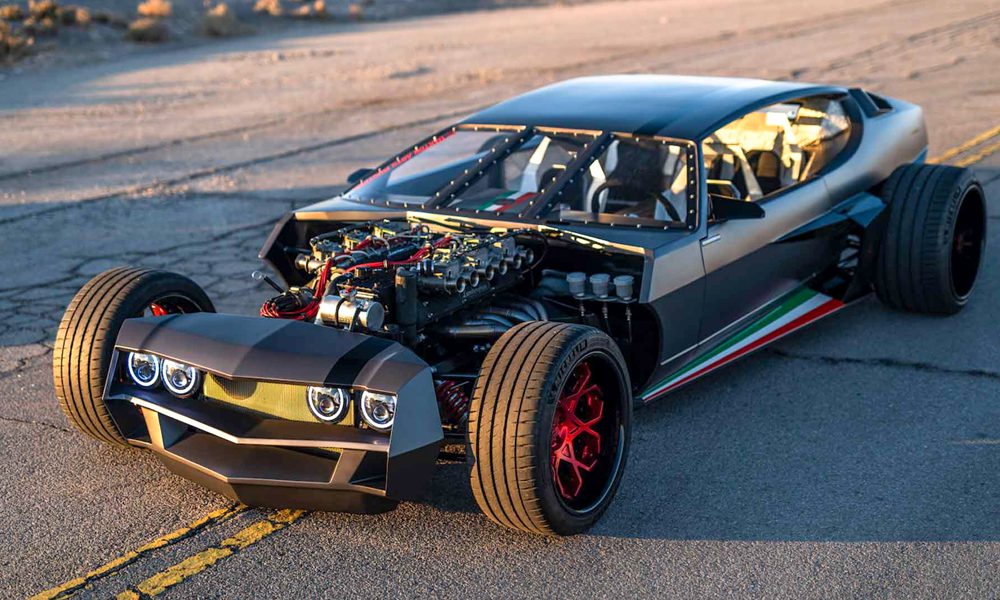
Built by professional customizers to commemorate the model’s 50th year, the car underwent extensive modifications, from seating and wheels to body treatment and overall presentation. At its core remains the unmistakable V12 powerplant that defined the Espada’s identity. That matters because the rod is not merely using the Lamborghini name for attention. It still carries authentic performance heritage underneath the shock value. This build asks an uncomfortable but interesting question: is preserving a classic the only way to respect it, or can reimagining it with courage be another form of tribute? Whether you love it or hate it, it is impossible to forget.
Stubby Bob
Stubby Bob is one of the rare rat rods that became famous through television, and its on-screen origins only add to its legend. Built by the hosts of Roadkill, it began life as a 1950 Ford F6 refuse truck—an unglamorous, heavy-duty machine that hardly looked destined for cult status. But rat rod builders are at their best when they see outrageous potential where others see scrap.
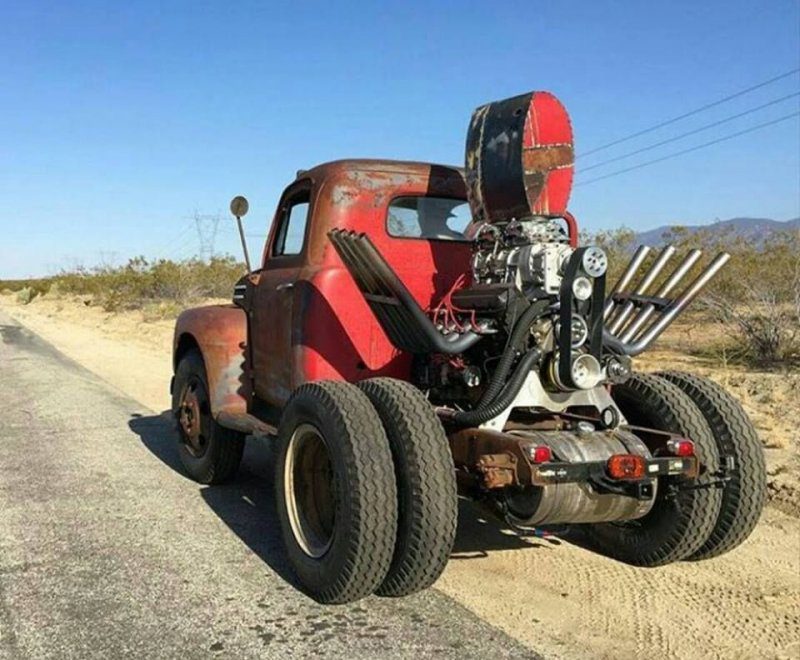
The truck now carries a massive 454-cubic-inch Chevy engine, a giant exhaust, and an extremely short wheelbase that makes it look almost cartoonishly condensed. One of the smartest engineering tricks in the build was mounting the engine backward to free up crucial space. That kind of improvisation is classic rat rod logic: weird on paper, brilliant in execution if it works. Despite its boxy frame and heavy origins, the finished machine reportedly moved with surprising speed and aggression. Stubby Bob is not beautiful in the conventional sense. It is memorable because it feels like a giant industrial joke that somehow became a working performance machine.
Hot Rod Scooter
Not every rat rod needs to be giant, loud, and menacing. The Hot Rod Scooter proves that the same rebellious spirit can shrink itself into something smaller, lighter, and almost charming. It is one of the least conventional entries in the collection because it blurs the line between rod, scooter, novelty build, and urban mobility machine.
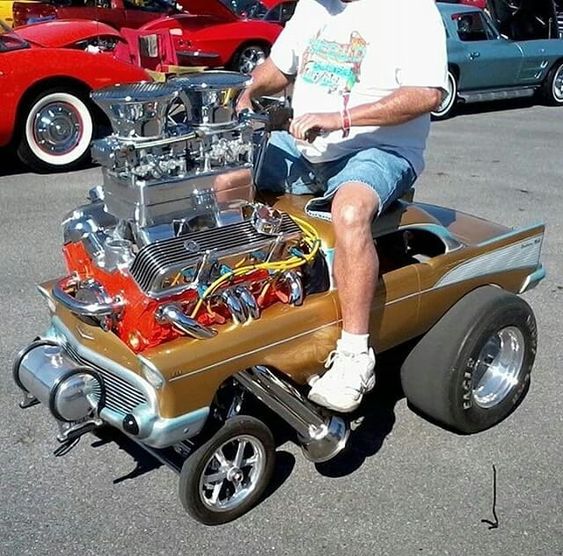
Even without a full set of detailed specifications, the visual concept alone is enough to make it stand out. It looks like someone took the spirit of a hot rod—exposed machinery, stripped styling, custom bodywork—and compressed it into a machine designed for shorter trips and maximum attention. It may not be the obvious choice for drag racing, but it would certainly own the parking lot at any custom-car gathering. That is part of the appeal. Rat rods are not bound by category purity. If a builder can create something cool, strange, and drivable from an unexpected platform, it belongs in the conversation. The Hot Rod Scooter absolutely does.
Rodzilla
Some rat rods are playful. Some are elegant. Rodzilla is neither. Rodzilla is a monster, and it knows it. Built by the Blastolene Brothers, this towering creation takes the idea of a rat rod and inflates it into something almost mythic. Its name is not exaggeration. The vehicle stands around seven feet tall, and its entire visual identity is built around intimidation, scale, and absurd mechanical power.
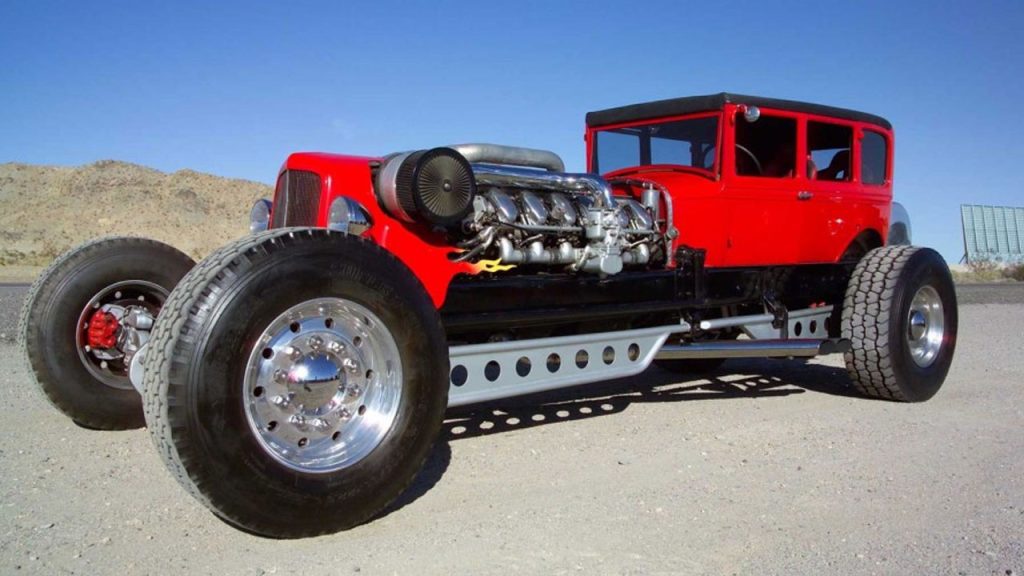
The frame comes from a 1928 Studebaker, but nearly everything else has been amplified far beyond ordinary hot rod expectations. A 29-liter tank-derived fuel setup and a staggering horsepower figure around 1,400 turn it into a rolling mechanical threat. The builders claimed it could cover a quarter mile in around 11 seconds, which is remarkable considering how visually enormous the thing appears. Rodzilla represents one of the most extreme directions rat rod culture can take: not just reusing history, but weaponizing it into a giant, theatrical machine that feels larger than the road it occupies.
Jeep DJ-5
The Jeep DJ-5 rat rod is one of the more sentimental builds in this collection because it was customized not just for style, but to preserve a chapter of its owner’s life. Built from an old Jeep body purchased on eBay, the machine was transformed by Jim Bye into a postal-service-themed tribute that reflects his years working for the United States Postal Service.
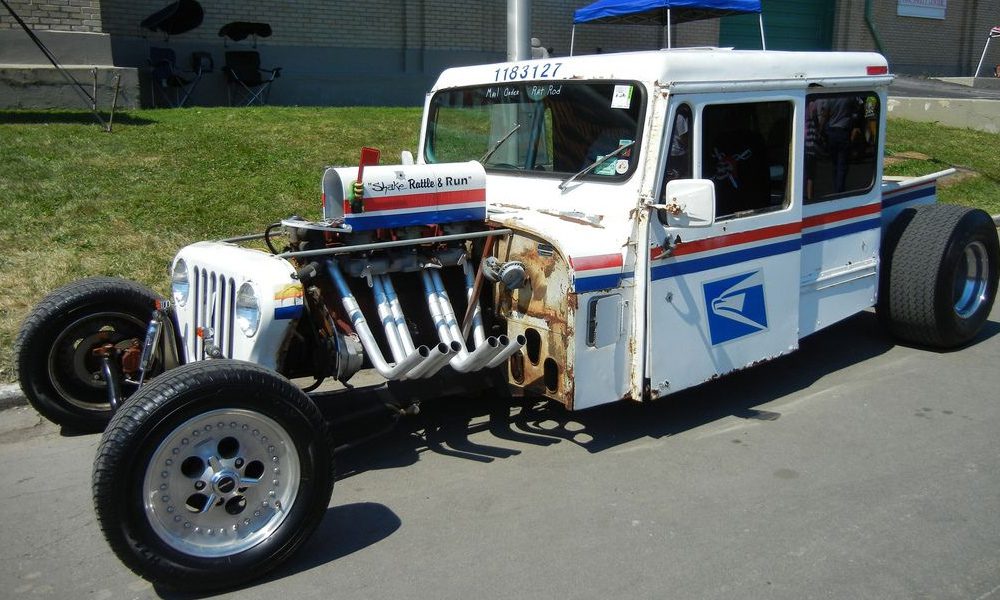
Mechanically, the car takes on a new life with a 292-cubic-inch inline-six borrowed from a 1985 GMC truck, plus Mickey Thompson wheels and other custom touches. Visually, though, its postal inspiration steals the show. The logos, mailbox-themed elements, and service-inspired finish make it feel personal in a way many custom cars never quite achieve. Rat rods often reflect the builder’s imagination, but this one reflects memory too. It is not only a rod; it is also a conversation piece about work, identity, and community. That emotional layer gives it a different kind of charm—one that survives even after the engine cools and the crowd walks away.
Gasser
The Gasser looks like it is trying to tear itself apart in the most entertaining way possible. Its most dramatic feature is the massive blower protruding through the hood, making it seem as though the engine physically forced its way upward because the body could not contain it. That visual exaggeration is part of what makes the build so effective. It immediately communicates speed, aggression, and complete lack of restraint.
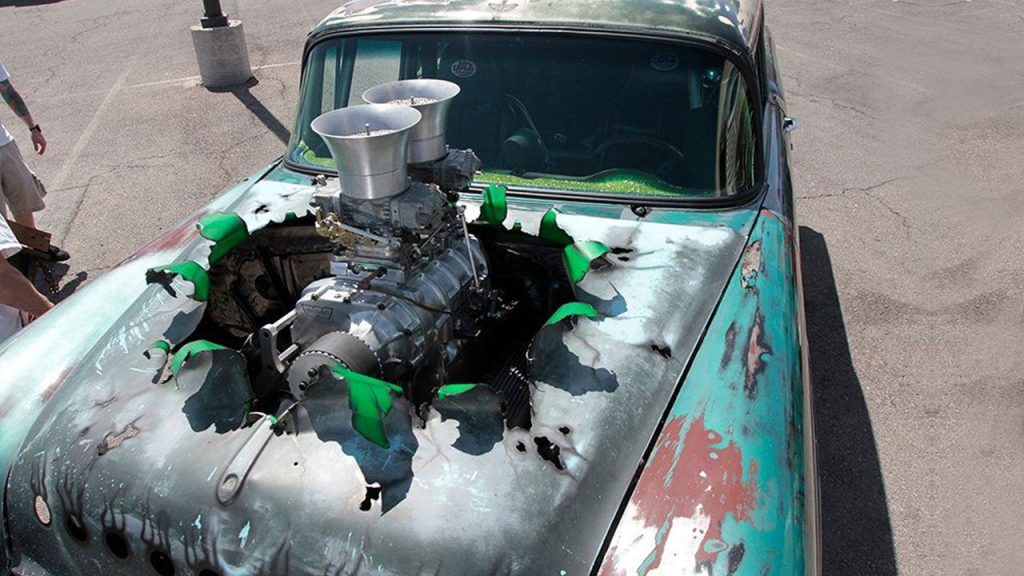
Built by WelderUp from a 1955 Chevy Sedan 150, this rod channels the spirit of old-school drag racing culture, where outrageous intake hardware and nose-high stances turned ordinary bodies into quarter-mile predators. Even standing still, the Gasser looks impatient. It feels less like a restored vintage car and more like a machine that escaped a secret underground race series. The exposed engine, custom body cuts, and purposeful violence of the build all reinforce the same message: this is a rat rod made to intimidate, amuse, and race in equal measure. It does not whisper its intentions. It announces them.
Crazy Frank
Crazy Frank looks like it belongs on a movie set where civilization has collapsed and only the loudest, ugliest, fastest machines still survive. It immediately calls to mind the brutal visual language of films such as Mad Max and Death Race, where function and intimidation blur into one shape. That cinematic quality is a major part of its appeal.
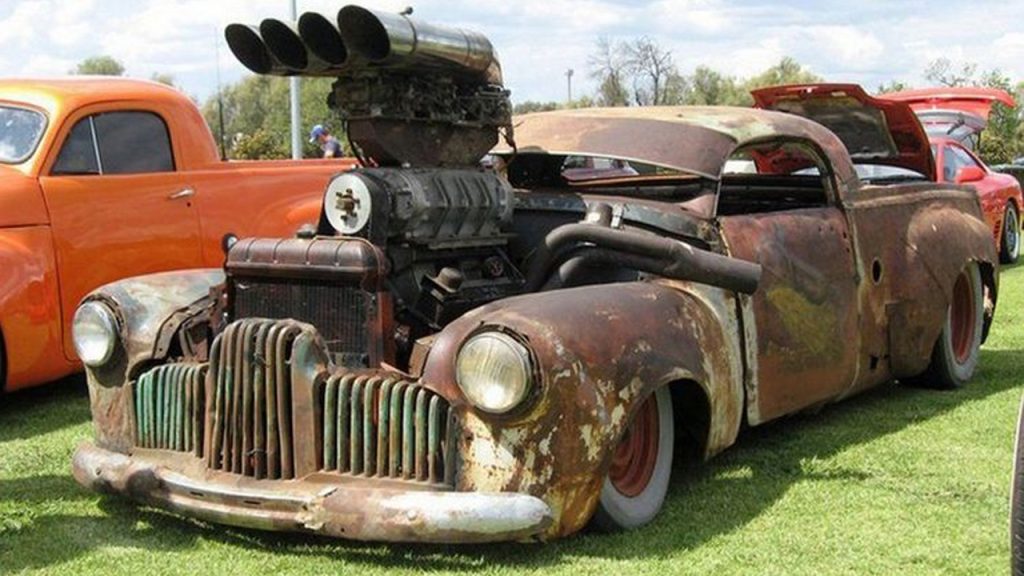
Its body comes from a Holden FX, but nearly everything about it now feels weaponized. The supercharged Chevy V8 with multiple intakes and the two-speed Powerglide transmission transform it from an old shell into a machine with serious drag-race intent. The vehicle’s nickname fits because the design does not chase subtle balance. It chases visual chaos and speed. And yet, beneath the dramatic styling, there is obvious craftsmanship. Builds like Crazy Frank succeed because they balance madness with engineering discipline. If they were only ugly, they would be forgettable. If they were only fast, they would be ordinary. Instead, this car manages to feel like a post-apocalyptic fantasy with genuine performance credibility.
Corvette Zinger
The Corvette Zinger is one of the stranger entries in the rat rod world because it comes from the tradition of promotional model cars rather than from a straightforward roadgoing donor. Zingers became famous in the 1970s as exaggerated custom show models—raised, oversized, and wildly stylized. They were not conventional production machines, which makes their influence on custom culture especially interesting.
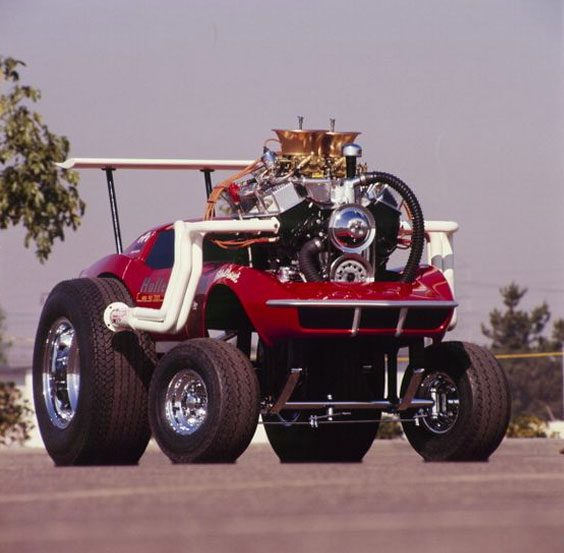
This Corvette Zinger belongs more to the world of spectacle than practical motoring. It was used heavily as a promotional display concept, and its exaggerated proportions make it feel more like a fantasy sketch made solid than a conventional rod. That said, it absolutely deserves a place in this collection because rat rod culture is partly about visual storytelling, not just horsepower. The Zinger’s appeal comes from its boldness and toy-like theatricality. It reminds us that custom-car culture has always included a strong element of play, and that even the wildest “what if?” ideas can become part of the scene’s visual memory if they are daring enough.
Van Rod
This Van Rod begins with an old 1964 Chevrolet G10 van, but whatever practical utility the original once had is gone. What remains is a chopped, shortened, and thoroughly repurposed shell carrying the spirit of someone who looked at a tired cargo van and saw a speed project instead of a retirement candidate.
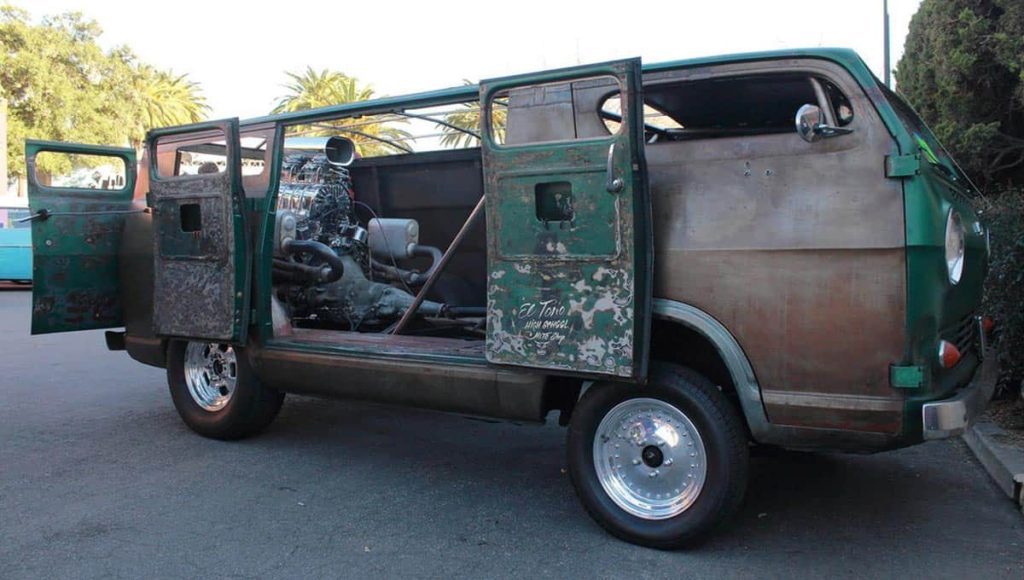
Its Chrysler engine mounted in the rear immediately changes the car’s personality. Instead of behaving like a humble old van, it now carries the visual and mechanical tension of a machine trying hard to become something it was never meant to be. Many of the original seating and practical elements are gone, leaving only the essentials needed to make the rod function and provoke reactions. That is part of its success. It doesn’t apologize for abandoning usefulness. It leans into absurdity. The result feels like a test of how far a builder can push the identity of a work vehicle before it becomes pure custom art. Rat rod culture often thrives in that exact space.
’64 Cadillac “Deuce DeVille”
Transforming a 1964 Cadillac DeVille into a six-wheeled rat rod is not the sort of project anyone stumbles into by accident. It takes confidence, imagination, and a willingness to disrespect traditional Cadillac elegance in favor of something stranger and louder. That is precisely what makes this build so fascinating.
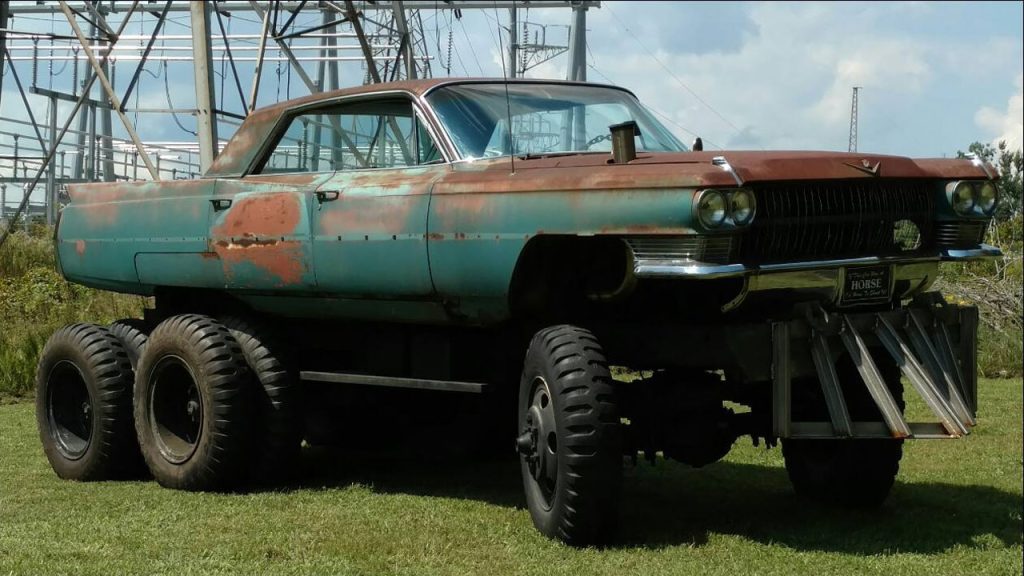
Designer Matt Groover has a reputation for producing attention-commanding customs, and this one certainly fits. The trailer-derived wheels and extended six-wheel setup shift the DeVille away from luxury and toward theatrical road-machine territory. It no longer feels like a boulevard cruiser. It feels like something built to dominate open space. The body can still be recognized as Cadillac at heart, but the attitude has changed completely. That transformation is what rat rods do best. They keep just enough of the original car’s identity to make the viewer feel the contrast. In this case, the contrast between Cadillac prestige and six-wheeled custom madness is exactly what makes the car memorable.
1976 Toyota Land Cruiser FJ40
The 1976 Toyota Land Cruiser FJ40 already had a reputation for toughness long before it entered the rat rod world. In factory form, it was known for durability, off-road capability, and a no-nonsense attitude. What makes this South African custom build so special is that it preserves that commanding spirit while completely reimagining the look and hardware around it.
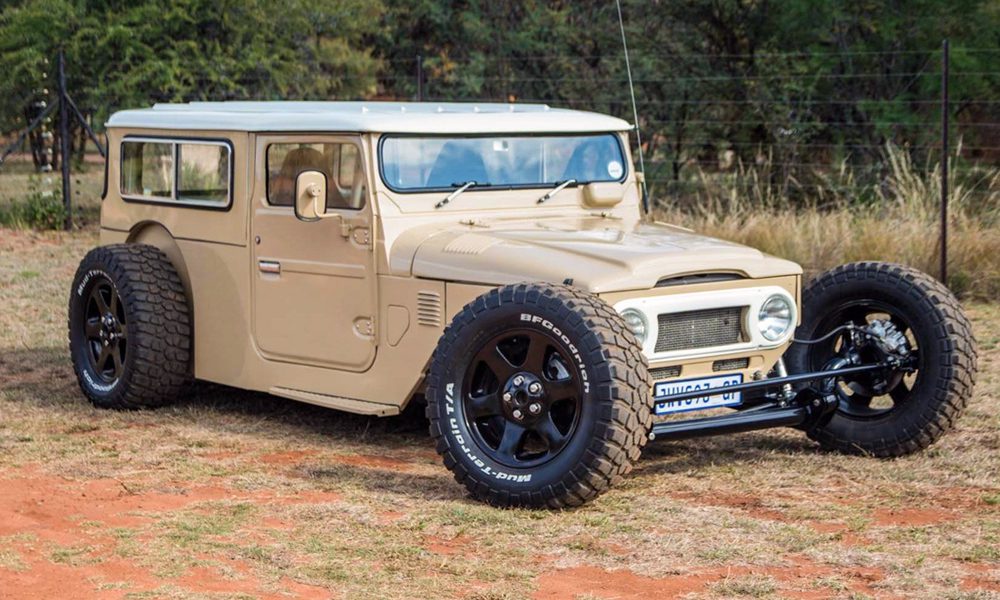
Designed by a custom shop in Johannesburg, the rod wears details from several sources, including Jeep Wrangler seats and Volkswagen Golf headlights, while power comes from a Lexus 1UZ V8. That engine swap alone changes the personality dramatically, taking the old off-road workhorse and giving it a far more eager and dramatic heartbeat. The result feels both regal and aggressive, almost like an off-road king’s chariot built from global parts-bin diplomacy. It also demonstrates that rat rods do not always need to come from American classics. The same spirit of reinvention can be applied to Japanese icons, especially when the original vehicle already carries enough personality to survive the transformation.
Truck Rod
At some point in any deep dive into rat rods, you stop being surprised by what people are willing to build from. This Truck Rod is one of those moments. What appears to be a tractor-trailer-based rat rod takes heavy-duty utility and gives it a custom identity somewhere between hauler, novelty machine, and statement piece.
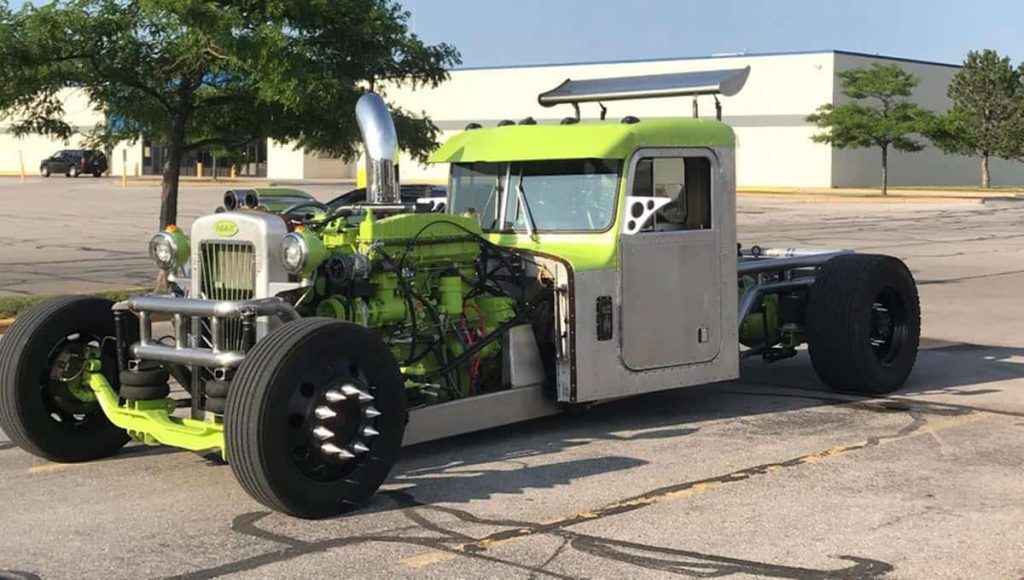
The unusual charm of this build lies in the contradiction. Truck-based machines are supposed to haul, not pose. Rat rods are supposed to be compactly weird, not built from something this industrial. Yet by combining these identities, the builder creates something that feels oddly logical. It still suggests brute pulling strength, but now it also hints at speed and theater. Once the cargo is gone, the machine seems ready to shift from utility into performance mode, at least in spirit. Rat rod culture loves that kind of contradiction. It takes a vehicle designed for one clear purpose and asks what happens when that purpose becomes only part of the story.
Let’s Call It “Nameless”
Some rat rods are easy to describe. This one is not. “Nameless” feels like the result of a builder deciding that conventional category labels had become optional. It looks part cartoon, part carnival machine, part fever dream, and fully committed to being visually unforgettable.
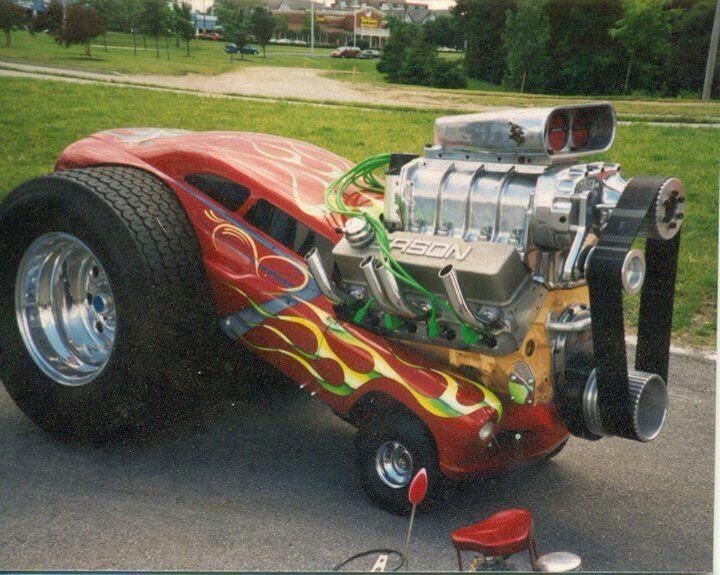
The giant front wheels and tiny rear wheels create an absurd stance that should make the whole thing look ridiculous, and it does—but in an entertaining way rather than a failed one. The vivid flame styling gives it a kind of exaggerated show-car energy, while the compact and oddly balanced body makes it look like it escaped from an animated world where physics is negotiable. The engine appears ready for mischief, and the overall result is a car that likely attracts attention before anyone even understands what they are looking at. That confusion is part of its power. Rat rods often succeed when they force the viewer to stop trying to classify them and simply accept the spectacle instead.
1930 Ford Model A
This 1930 Ford Model A rat rod feels like a piece of rolling projectile design. Its shape has a bullet-like sharpness, and the modifications have pushed it so far from its original mainstream identity that you almost need the nameplate to remember where it began. That dramatic redesign is a key part of its charm.
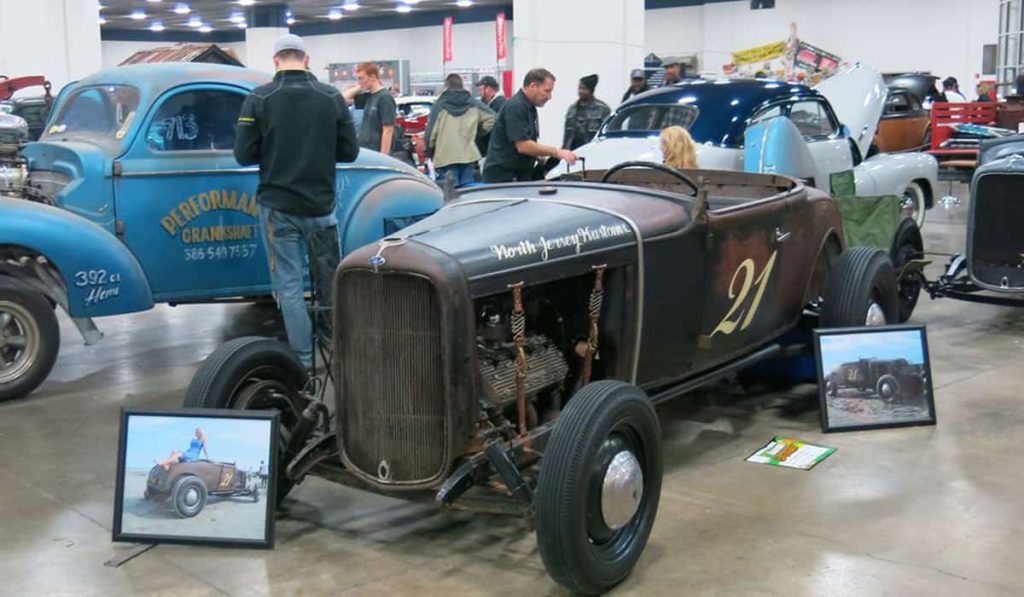
Now equipped with a V8, a 5-speed manual transmission, and a relatively compact fuel tank, it has little interest in behaving like an old commuter relic. And yet, enough of the original Model A language survives to keep its ancestry visible. That tension matters. Rat rods often work best when the old identity is still faintly present beneath the custom shape. It allows the transformation to feel more dramatic. In this case, what was once among the most familiar cars in the world has become a lean, exposed, stripped-down machine that wears its age and its modifications with equal boldness. It is both artifact and weaponized nostalgia at once.
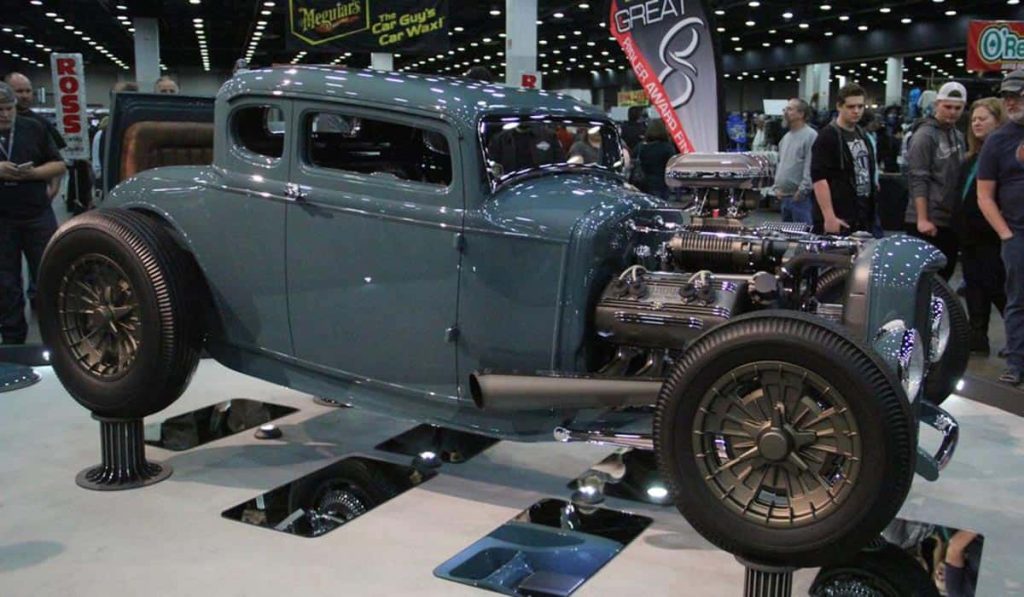
1932 Ford Tudor “GPT”
The 1932 Ford Tudor known as “GPT” is one of those builds that reminds you how powerful restraint can be in a custom scene often known for excess. It is undeniably modified, undeniably aggressive, and undeniably fast-looking, yet it also feels composed. There is a polished confidence in how its black bodywork, proportion changes, and gold-accented wheels come together.

Originally built in 1997 and featured at Detroit Autorama, the car carries a 312 Ford Y-block V8 with a Hilborn injection system, giving it both visual and mechanical seriousness. But the details are what elevate it. Shortened quarter windows, revised cowl positioning, and reshaped panels show that this was not a quick chop-and-go custom. It was a considered project with a specific vision. That matters in the rat rod world, where craftsmanship can easily be hidden beneath rough style. GPT proves that a rod can feel sinister, elegant, and forceful all at the same time—and do so without losing its 1932 Ford soul in the process.
1930 Ford Coupe
The 1930 Ford Coupe rat rod has the kind of exposed mechanical confidence that makes other cars feel overprotected. The hood comes off, the engine takes center stage, and the whole machine seems designed to announce its intentions before the driver even touches the throttle. It is not trying to hide its hardware. It wants you to see exactly what is powering it.
That open-engine drama matters because the rest of the car still carries strong echoes of early Ford design. It looks like a relic that refused to stay gentle. With a speed-oriented setup and a body that remains light enough to benefit from every added horsepower, the coupe turns into the sort of rat rod that makes rivals nervous before the race even begins. Yet it still avoids becoming a purely modern machine in costume. The old Ford outline is visible enough to keep the historical connection alive. That blend of exposed aggression and preserved identity is exactly why Model A and Model T-era Fords remain so central to rat rod culture decades later.
The Crucifier
The Crucifier is inseparable from the name Joe Cruces, one of the most respected customizers ever associated with this style of car building. His work helped define what creativity, proportion, and attitude could look like in a rod, and The Crucifier stands as one of the clearest examples of his influence.
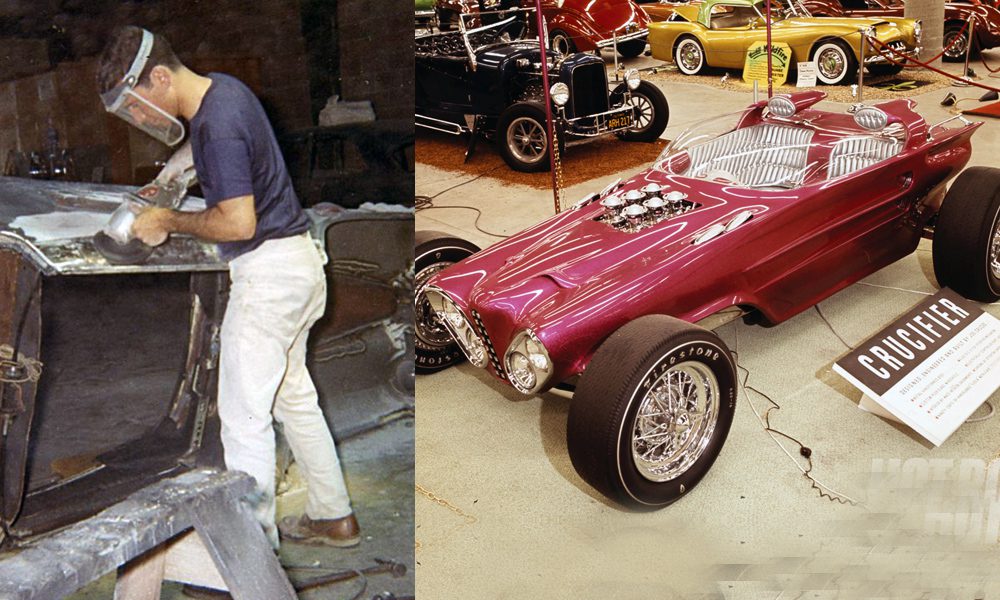
This build is not just a car. It is a signature. It earned magazine coverage, public admiration, and long-term status because it captured a particular balance that only the best customs achieve. It is stylish without looking sanitized, mechanical without becoming soulless, and aggressive without trying too hard. Cruces later moved into broader restoration work, including aircraft, but The Crucifier remains one of the rods most closely associated with his legacy. It shows how powerful a single build can become when it expresses both technical mastery and a strong artistic voice. In a culture full of memorable cars, only a few become landmarks. This one did.
Another Truck Rod
This second truck-based rod feels less industrial and more theatrical than the earlier one. Painted in a vivid blue and decorated with a bold American flag, it instantly calls to mind the visual force of a parade machine, a patriotic showpiece, or even a cinematic rig built to look larger than life. It also carries the kind of visual presence that makes comparison to pop-culture icons almost unavoidable.
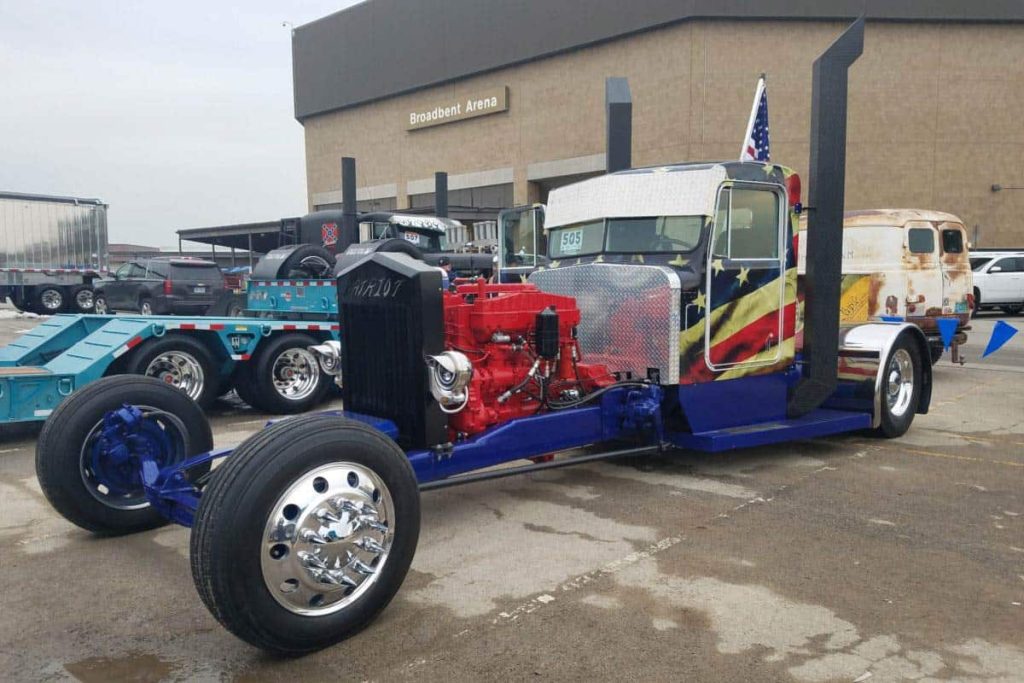
Its massive exhaust stack, broad profile, and towering stance make it feel close to something like a live-action toy truck. That is part of why it works so well. Rat rods often thrive on exaggeration, and this one embraces it proudly. Yet even with the theatrical paint and patriotic styling, it still retains the mechanical seriousness you want from a proper rod. It is not simply decoration. It is a machine first, then a symbol, then a spectacle. That layered identity is what keeps it from becoming novelty alone. It is bold, excessive, and completely comfortable being seen from a very long distance away.
Baja Bandeeto
Baja Bandeeto looks like it escaped from a retro-futuristic cartoon universe and somehow landed in a custom car show with complete confidence. It is one of the most visually unusual builds in this collection, and that is saying a lot. The body is all curves, bubble shapes, maze-like paintwork, and playful asymmetry, making it feel more like a moving sculpture than a straightforward automobile.
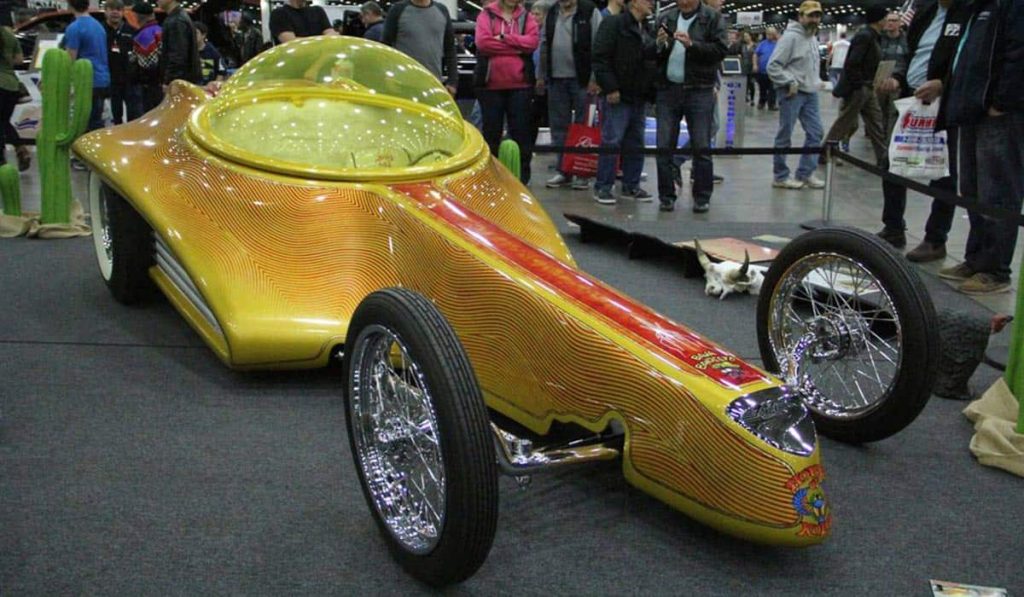
Designed by illustrator Jimmy Smith for builder Fritz, the car is powered by a Volkswagen Beetle 1600cc engine and carries a fiberglass body, Harley-Davidson wheels, and a clear bubble top that pushes the design even further into Jetsons territory. What makes Baja Bandeeto special is that it does not merely look weird for attention. It has a strong artistic concept behind it. The maze-like paint and toy-like stance turn the rod into a visual puzzle, something viewers study rather than simply glance at. That level of design commitment is rare, even in custom culture. It feels deeply imagined rather than randomly assembled.
1952 Kaiser-Frazer Henry J “Henry Jaded”
The Henry J is already a historically interesting car because Kaiser-Frazer was one of the first American companies to emerge strongly after World War II. That background gives any surviving example a certain importance. In rat rod form, though, “Henry Jaded” takes that historical curiosity and turns it into something much more flamboyant and personality-driven.
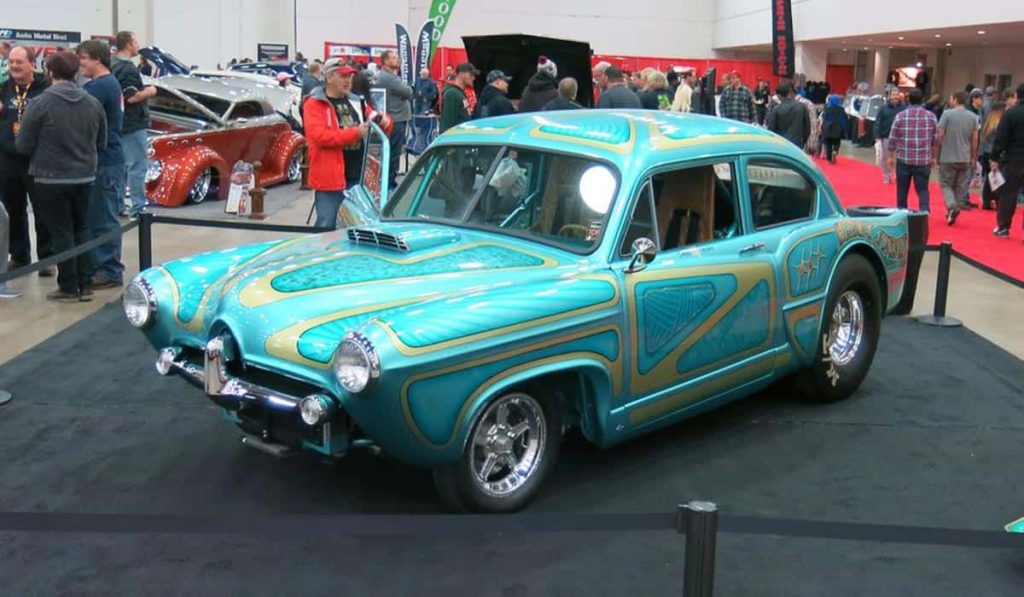
Now powered by a Chevrolet 572 engine and fitted with Flowmaster mufflers, the car no longer whispers postwar economy. It shouts custom aggression. Yet the most memorable element may be the paint treatment, which gives the rod a vibrant visual identity that separates it from more traditionally rusty or matte-finished builds. This is a great example of how rat rods do not have to rely purely on decay aesthetics to be effective. Sometimes color, character, and contrast do the heavy lifting. “Henry Jaded” respects its past enough to keep it recognizable, but it is not trapped by that past. It has moved on, loudly and beautifully.
Darth Vader x Megatron Rod
Just from the name alone, this build announces exactly what kind of energy it plans to bring. If two sci-fi villains known for intimidation, domination, and sheer destructive presence had somehow fused into one machine, this rat rod would be a convincing candidate. It looks less like a car and more like a mechanical antagonist in the final act of a dystopian action film.
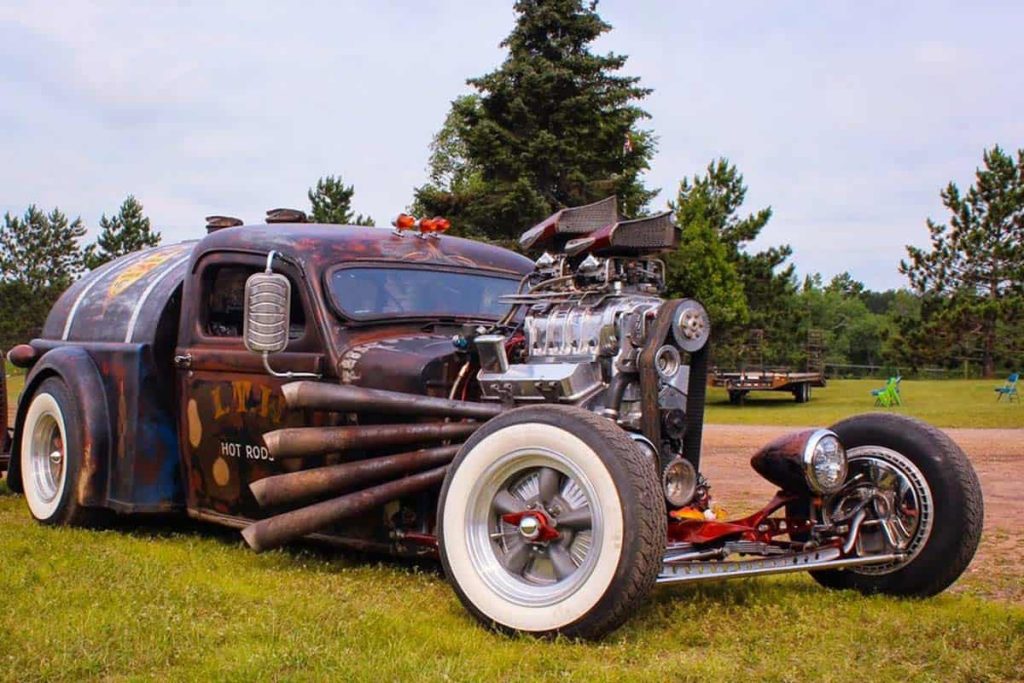
The sheer scale, the spikes, the massive searchlights, and the armored visual language all work together to create something that feels militaristic and theatrical at once. The body does not simply try to look menacing—it succeeds. Yet beneath all that visual aggression is the same core rat rod principle as always: reimagining the car as a statement of identity. In this case, the identity is unapologetically villainous. It is not a subtle design, but subtlety would have been the wrong goal here anyway. This rod was clearly built to dominate attention, and by that standard, it is a complete success.
Tank Rod
If you ever thought rat rod builders had reached the limit of extreme source material, the Tank Rod proves otherwise. Building a rod from a tank-inspired platform sounds absurd at first, but that absurdity is exactly why it belongs here. Rat rod culture has always had a taste for the outrageous, and military hardware naturally pushes that instinct to the edge.

To make this machine road-worthy and recognizable as a rat rod rather than a combat vehicle, a huge amount of weight had to be removed—reportedly around 12,000 pounds. Even after that dramatic diet, the rod remains massive, and that mass is paired with power figures that are just as outrageous. Around 1,000 horsepower is enough to give something this large genuine shock value. The brilliance of the Tank Rod lies in how it converts intimidation into entertainment. It does not try to hide its military ancestry. It turns that ancestry into a style language all its own, proving once again that in rat rod culture, no donor platform is too serious to be reimagined.
1940 Willys
The 1940 Willys is one of those cars that rewards close attention. At first glance, its body is compact, almost modest. But seasoned hot rod fans know that Willys coupes carry a long drag-racing history, and that background gives the rat rod version an extra layer of menace. It is the kind of car that appears smaller than its reputation.
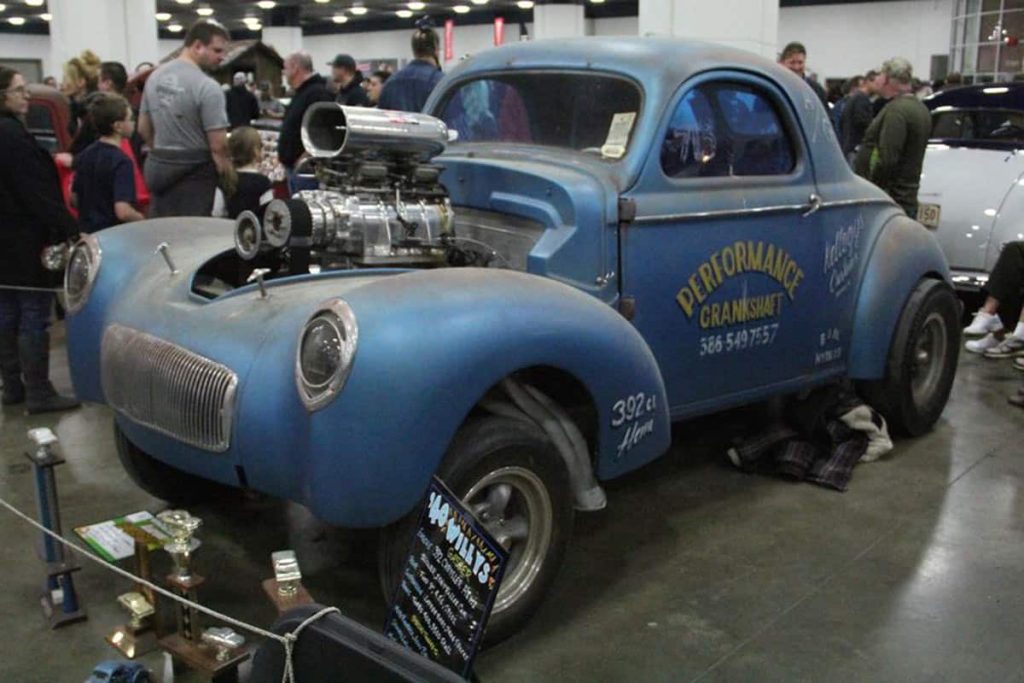
This custom build carries a 502-horsepower steel-bodied setup with a 350 transmission and a Holley carburetor, making it far more serious than its small frame might suggest. The engine sits prominently enough to dominate the visual impression, and that helps reinforce the car’s reputation as a speed-oriented machine rather than a restored antique. Willys builds have long been favorites in drag culture because the body style lends itself beautifully to exaggerated performance setups. In rat rod form, the same formula still works. It looks compact, but it carries enough aggression to make much larger cars take it seriously.
Spider Web Rod
The Spider Web Rod is one of the most theme-driven vehicles in the entire collection, and what makes it impressive is how completely the theme was carried through. Plenty of custom cars have a concept. Far fewer commit to it this fully. Here, the spider-web idea is not just decoration. It shapes the entire personality of the rod.
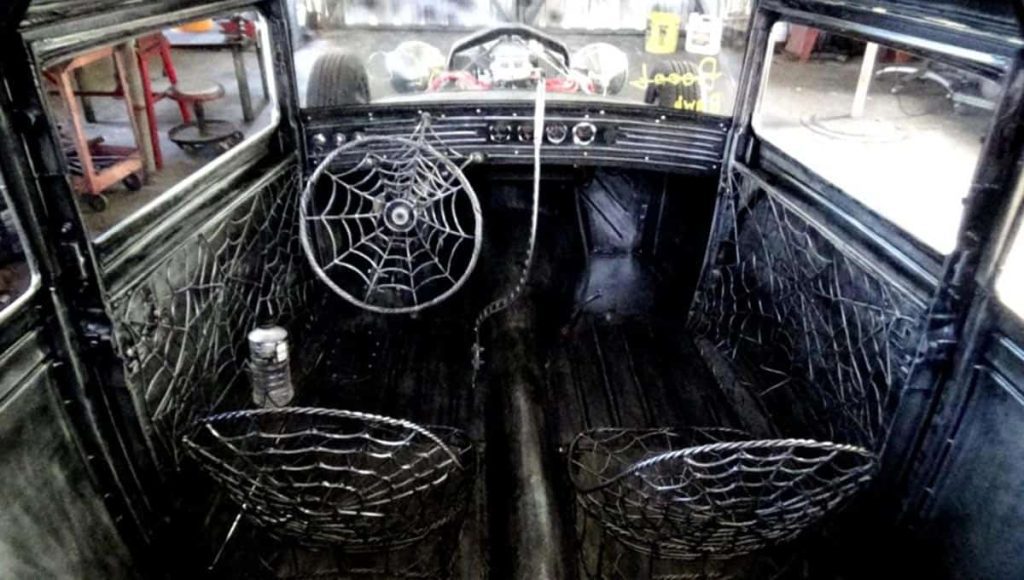
The seats, side panels, and even the steering wheel pick up the web motif, turning the interior and exterior into a complete visual story. That level of consistency makes the rod feel much more intentional than a novelty wrap or one-off paint job would. Underneath it all is a 1931 Chevy foundation, but the original vehicle now feels almost invisible beneath the custom language layered over it. This build succeeds because it understands that themed design only works when the builder fully commits. Instead of hinting at a spider concept, it spins the whole car into the web. The result is creepy, theatrical, and undeniably memorable.
1949 Chevrolet C10
This 1949 Chevrolet C10 is one of the more handsome rods in the group because it manages to combine major customization with genuine visual coherence. Some rat rods lean hard into chaos. This one feels more composed. It has a clear identity, a strong stance, and enough carefully chosen upgrades to make the whole truck feel complete rather than simply pieced together.
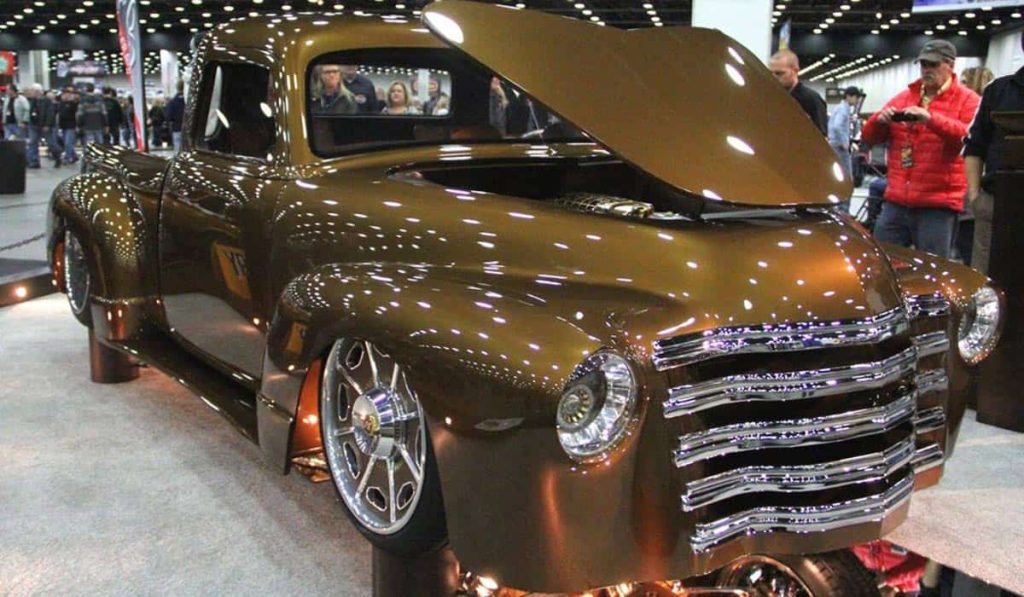
Owned by Bob and Hazel Collvins of Texas, the truck uses brown leather inside and incorporates taillights from a 1949 Cadillac, along with other tasteful body and fender changes. It also upgrades from its original layout to a more assertive 4×4-style stance. What stands out here is the balance between old and new. The truck still carries the broad emotional shape of a classic Chevrolet, but the details nudge it into something more stylish and commanding. This is the kind of rat rod that can appeal to people who are not even deep into the scene, simply because the design feels so resolved and confident.
1948 Ford F-7 “Standin’ Tall”
“Standin’ Tall” is not just a nickname. It is a literal description. At about 11 feet 6 inches high and around 9 feet wide, this 1948 Ford F-7-based rat rod operates on a scale that makes most custom builds look compact by comparison. It began life as a fire truck, which already gives it a sense of public-service history and oversized character. The rat rod transformation simply pushed that scale into spectacle.
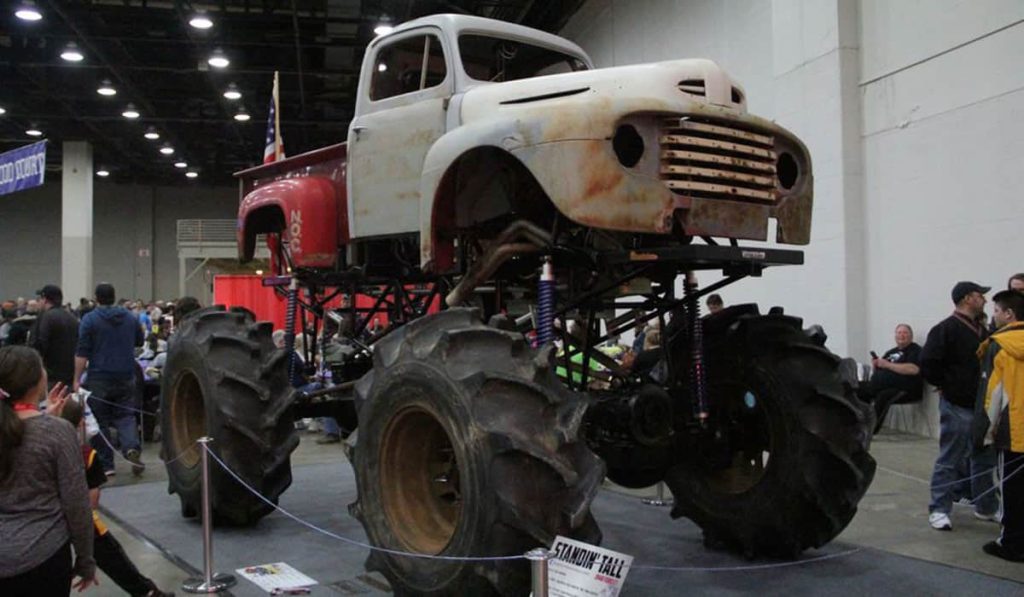
The truck now uses a Ford V8, Rockwell five-ton axles, and a C6 automatic transmission, turning the preserved giant into a working roadgoing machine. But the mechanical hardware is only part of the story. The bigger achievement is emotional. This build feels like an event simply by existing. It is huge, strange, and impossible to ignore. Yet because it began as a former fire truck, the project also carries a quiet undercurrent of preservation. Rather than abandoning a massive old working vehicle to decay, the builders found a way to give it a second identity—one that is louder, stranger, and somehow even more commanding than the original.
Soviet Minsk Auto Zavod Truck
The Soviet Minsk Auto Zavod truck—better known through the MAZ name—adds geopolitical history to the rat rod conversation. These trucks were born from a very different industrial and political world than the American classics that dominate most rod culture. That alone makes this build stand out before you even look at what was done to it.
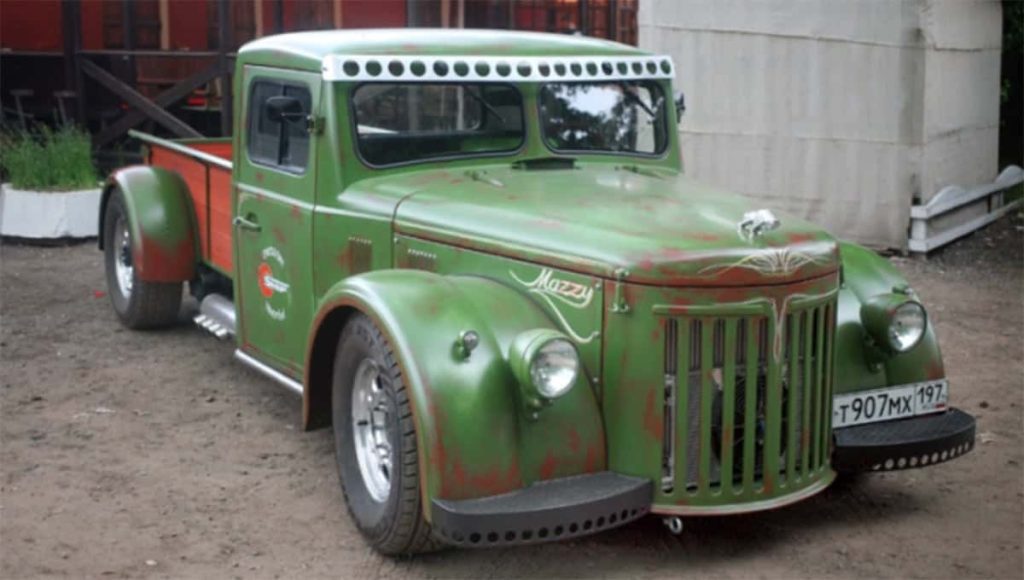
MAZ produced serious Soviet machinery, including trucks capable of carrying and supporting military hardware. Reimagining one of those workhorse platforms as a rat rod completely changes the context. Instead of strategic equipment, the machine becomes a custom object of fascination. There is something uniquely compelling about taking a symbol of industrial heaviness and recasting it as automotive art. That does not erase its past. It reframes it. This rod reminds us that custom culture is not limited by country, ideology, or brand prestige. If a machine has enough presence, history, and mechanical drama, a builder somewhere will eventually look at it and imagine a second life on entirely different terms.
Supercharged Big Block
This supercharged big-block build has the spirit of a cinematic villain car and the mechanical seriousness to back up the image. Originally tied to a 1930 Ford Sedan body and built through a mix of Ford and Chevy components, it feels less like a restored antique and more like a deliberately overpowered street machine wearing old-sheetmetal clothing.
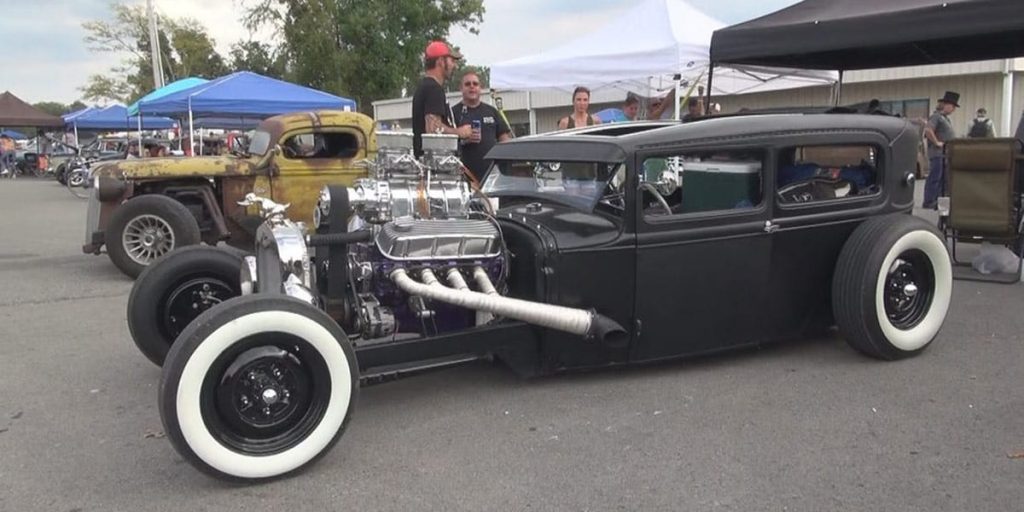
The centerpiece is the 468 Chevy engine with a Dyer’s supercharger, a setup chosen not only for performance but for visual authority. It sits like a declaration rather than a hidden component. Rat rods often love exposed engines, but this one takes that philosophy especially seriously. You are meant to notice it. The chopped and shortened body helps tighten the profile around that power, making the whole machine feel compact, focused, and a little threatening. Builds like this are what happen when old Ford proportions and big-block Chevy power meet under the guidance of someone who values spectacle as much as speed. It is unapologetically excessive, which is precisely why it succeeds.
Ricky Bobby Rat Rod
The name “Ricky Bobby” naturally makes people think of cinematic racing comedy now, but in this context it belongs to a Tennessee rod-shop owner with real street-racing roots. That background gives the build a certain authenticity. It was not named for speed as a joke. It came from someone who understood speed long before the joke became famous.
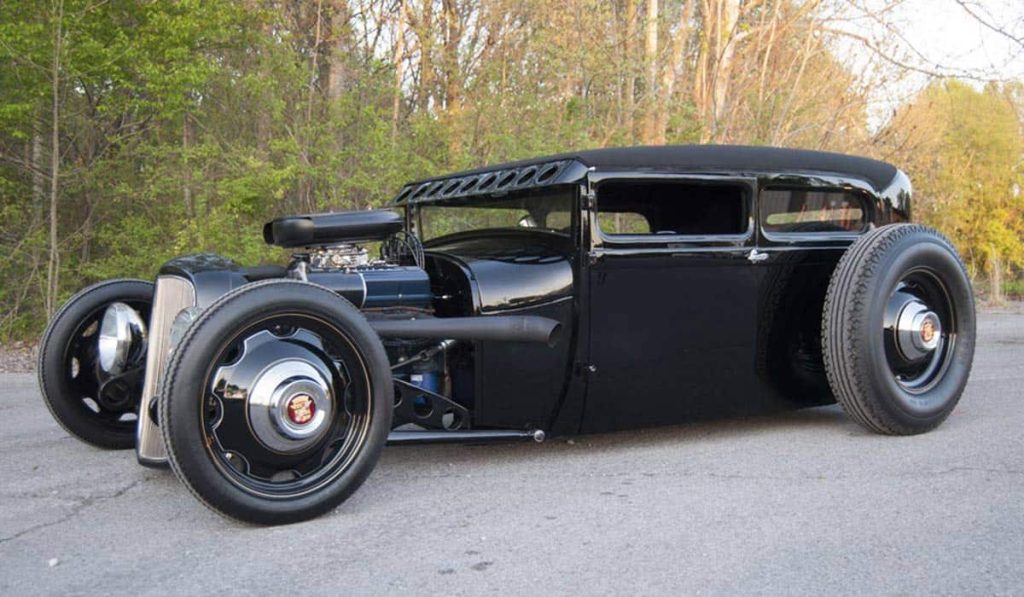
Built around a 1949 Ford flathead engine and using a heavily cut-down body, the rod reflects a very traditional sort of custom-car storytelling: take what you know, what you love, and what shaped your youth, then rebuild it into something that still honors all three. The shortened dimensions and stripped-down format give it the kind of compact aggression that rat rod fans appreciate, but there is also a sense of continuity in the build. It does not feel random. It feels inherited. That makes the car more meaningful than a purely visual stunt piece. It carries memory, mechanical heritage, and personal history all at once.
Steam Punk – Diesel Punk
This steam-punk-inspired rat rod may be one of the most conceptually rich vehicles in the entire lineup. It visually evokes a world before modern carbon-heavy motoring, when brass, steam, rivets, and industrial imagination defined what “the future” was supposed to look like. At first glance, it seems like it should run on vapor and pressure rather than liquid fuel and combustion.
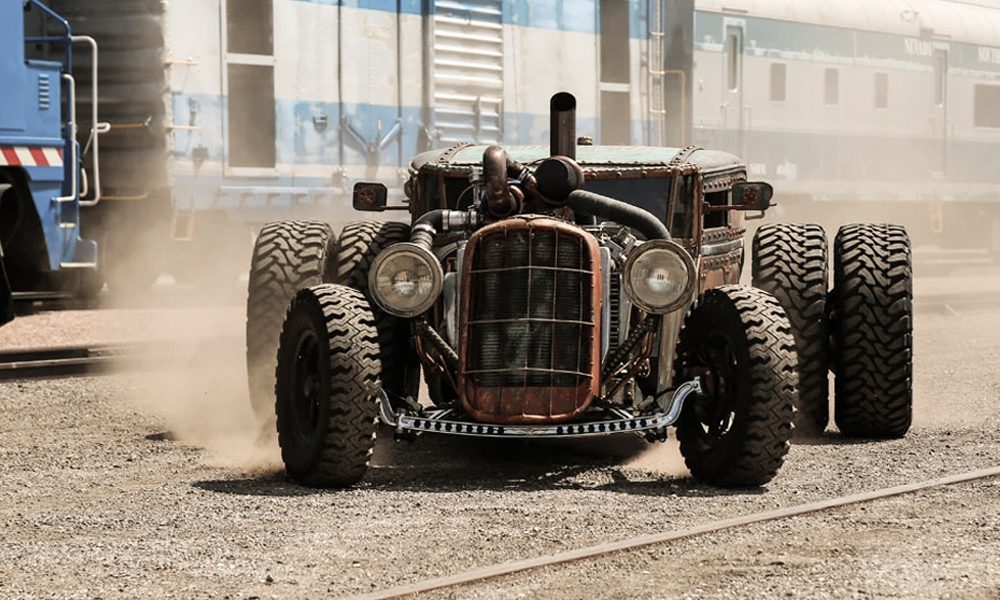
And yet, under the theatrical old-world styling sits a diesel engine capable of around 1,250 horsepower on regular fuel, climbing even further with nitrous. That contrast is exactly what makes the build so striking. It wears nostalgia on the outside and brute force underneath. The old-fashioned proportions and weathered industrial appearance suggest one age, while the actual performance belongs to another. Rat rods often mix time periods visually, but this one does so with unusual clarity. It feels like alternate-history transportation: what if the age of steam had collided head-on with high-output diesel performance? The answer, at least visually, might look something like this.
Spaceship Rod
The Spaceship Rod earns its nickname immediately. The bulbous, dome-like cockpit gives it the unmistakable silhouette of a retro jet canopy, while the rest of the body feels like a grounded science-fiction experiment built from rusted Earth metal. It is one of the most whimsical entries in the collection, but also one of the clearest examples of how far a strong concept can carry a build.

Its donor roots trace back to an old Volkswagen Bug, but those origins are now just part of a much stranger story. The body styling pushes toward the imagination of 1950s and 1960s future design—the kind of future that believed transportation would one day look like personal flying saucers. Despite the worn metal and weathered paint, the build still communicates that optimism through shape alone. It is as though the rod came from a future imagined by the past and then got left in the rain for decades. That combination of fantasy and decay gives it real emotional texture, which is far more interesting than simple novelty.
1954 Kaiser Manhattan “Voodoo Sahara”
The “Voodoo Sahara” interpretation of the 1954 Kaiser Manhattan is one of the most layered builds in the lineup because it pulls together styling parts from several different decades and brands without losing its own sense of identity. The result feels a little like a desert-night dream car—part 1950s show machine, part rat rod, part rolling lounge.
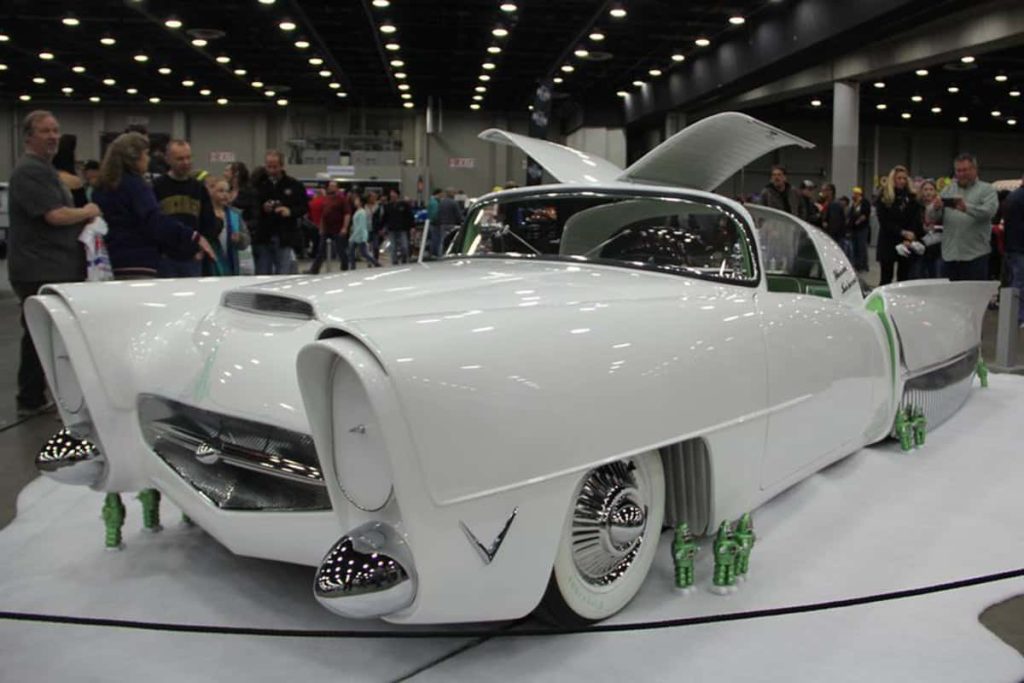
It wears 1960 Corvair headlights mounted in 1935 Ford buckets, a 1955 Chevy windshield, and the rear end of a 1977 Nova. The taillights come from a 1958 Mercury. That kind of cross-era design could easily become chaotic, but here it works because the builder clearly understood how to make the pieces speak the same visual language. Underneath, a small-block 1969 V8 provides the energy, while the interior—with its television, telephone, and microphone—leans hard into theatrical nostalgia. This is not a rod built only for speed. It is built for atmosphere. It wants to feel like a set piece from a lost era of American custom fantasy, and it absolutely succeeds.
1941 Ford Pickup “Gold Standard”
The 1941 Ford Pickup called “Gold Standard” is one of the most visually refined vehicles in the collection. It does not rely on overt rust or shock-value shape to stand out. Instead, it uses finish, restoration technique, and carefully chosen custom treatment to become unforgettable. If many rat rods celebrate rawness, this one proves that patina and polish can coexist in a fascinating way.
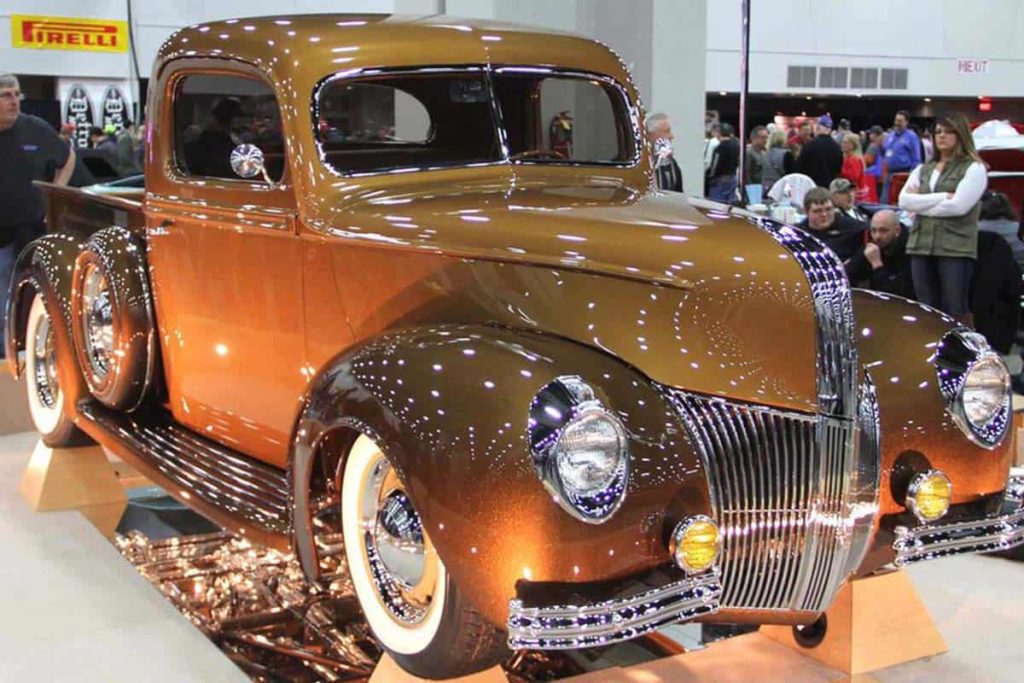
Owner Ed Sears turned to East Coast Hot Rod Garage to rework the truck, and the result includes acid treatment, a 1953 Ford 284-cubic-inch block, and a finish that makes the entire vehicle glow with a kind of metallic royalty. The “King Midas” comparison is an easy one to make because the truck seems to carry gold in its attitude even where it does not literally carry gold in its paint. This is the kind of build that broadens the definition of a rat rod. It shows that the genre is not trapped in one visual formula. It can be rough, dark, rusty, glamorous, or regal—as long as it still reflects transformation and personality.
Rolls-Rod
A Rolls-Royce in rat rod form should feel wrong, and that is exactly why it works. Luxury cars are built around quiet composure, formality, and prestige. Rat rods reject all three. So when a 1934 Rolls-Royce Phantom hood meets a Mercedes roof and a radically shortened custom chassis, the result carries a fascinating kind of tension between refinement and rebellion.
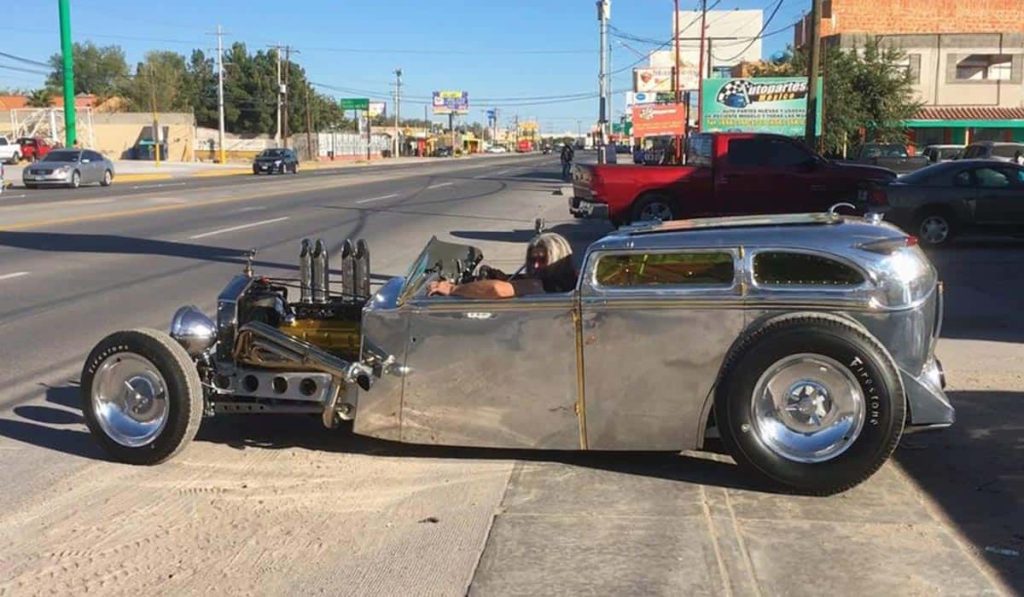
The Rolls-Rod strips away the stately dignity people associate with the brand and replaces it with something lower, harsher, and much more theatrical. Yet enough of the original prestige survives in the silhouette to make the contrast meaningful. It is not just another chopped custom. It is a transformed symbol. That matters because custom culture often becomes most interesting when it dares to alter the untouchable. The Phantom was once a symbol of elite status. In rat rod form, it becomes a performance statement with a sense of irony. It remains special, but for entirely different reasons than the factory ever intended.
1950 Dodge D-100
The 1950 Dodge D-100 rat rod shows how easily old truck bodies can become deceptive. Its shell looks weathered and modest enough that an untrained eye might dismiss it as a leftover workhorse. Underneath, however, the truck has been transformed into something considerably more serious, with a Chrysler 392 crate engine and a six-speed manual transmission giving it far more urgency than the original machine ever had.
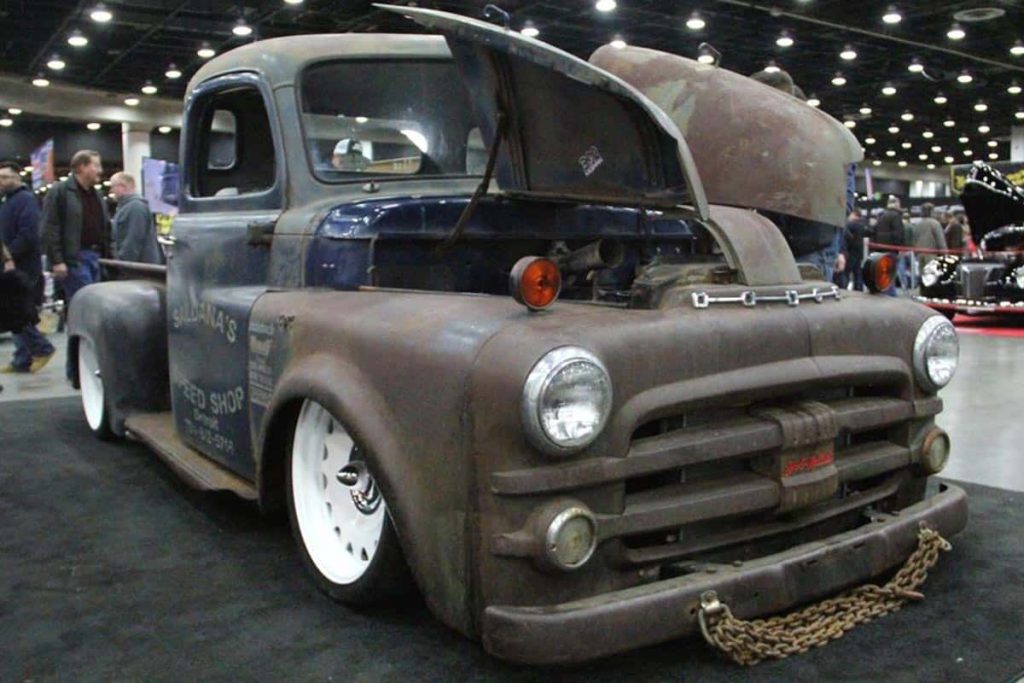
That tension between appearance and capability is central to the rod’s appeal. It still looks rough enough to be underestimated, but the drivetrain says otherwise. The use of custom headers, a stronger bed, and more modern hardware turns it into a machine that is more about movement than nostalgia. This is a good reminder that rat rods do not always need the most dramatic visual tricks to succeed. Sometimes the most satisfying builds are the ones that let the old body remain old-looking while the engineering underneath quietly becomes far more capable than anyone expects.
1954 Chevrolet Corvette
The 1954 Chevrolet Corvette already carries one of the most sacred names in American sports car history, so turning one into a rat rod inevitably feels like a bold move. Yet this build manages to keep enough of the original spirit alive that it feels more like a radical reinterpretation than an act of destruction. The red paint remains one of its strongest assets, giving the body an unmistakable heat and visual confidence.
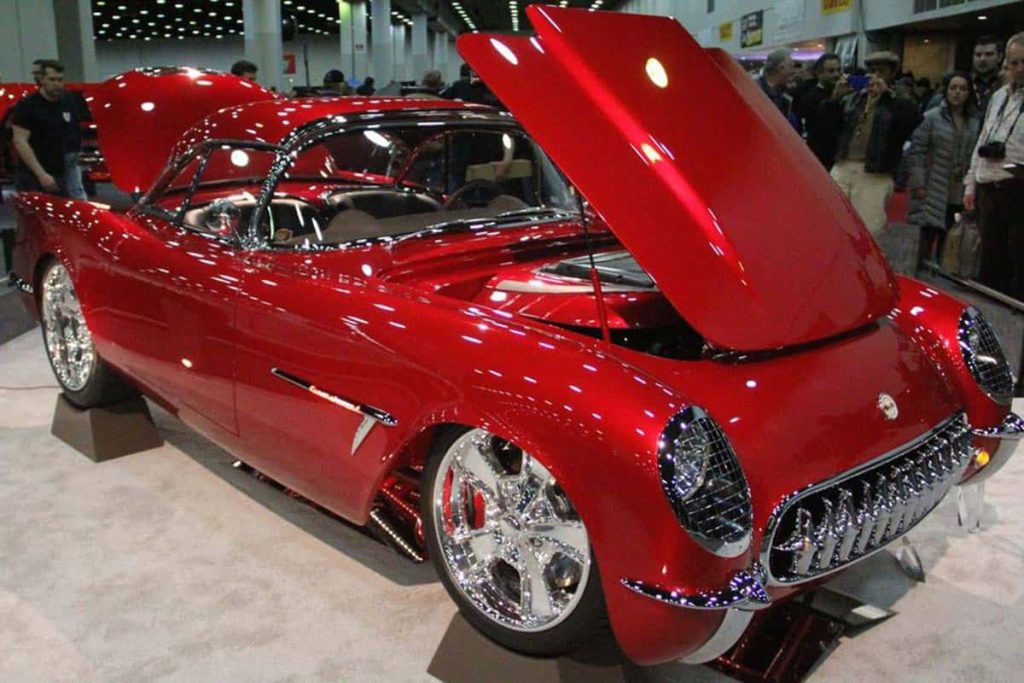
Underneath that body sits a far more potent setup than the original car had, including a supercharged V8 and later Corvette windshield and hardtop influences. That matters because early Corvettes were historically more charming than overwhelming in stock form. This custom version erases any shortage of force. It becomes the kind of machine people may have wished the original could be if technology and ambition had been pushed further in the 1950s. In rat rod form, the Corvette loses some of its polite early sports-car character and gains a much harder edge. It remains a Corvette, but one with a much meaner sense of purpose.
1933 Dodge
The 1933 Dodge rat rod does not waste time with subtle introduction. The hood is off, the Chevy 427 engine is on display, and the whole machine looks eager to prove itself in a race. It has the sort of stripped aggression that hot rod culture has always admired—less ornamental than some builds, but no less serious.
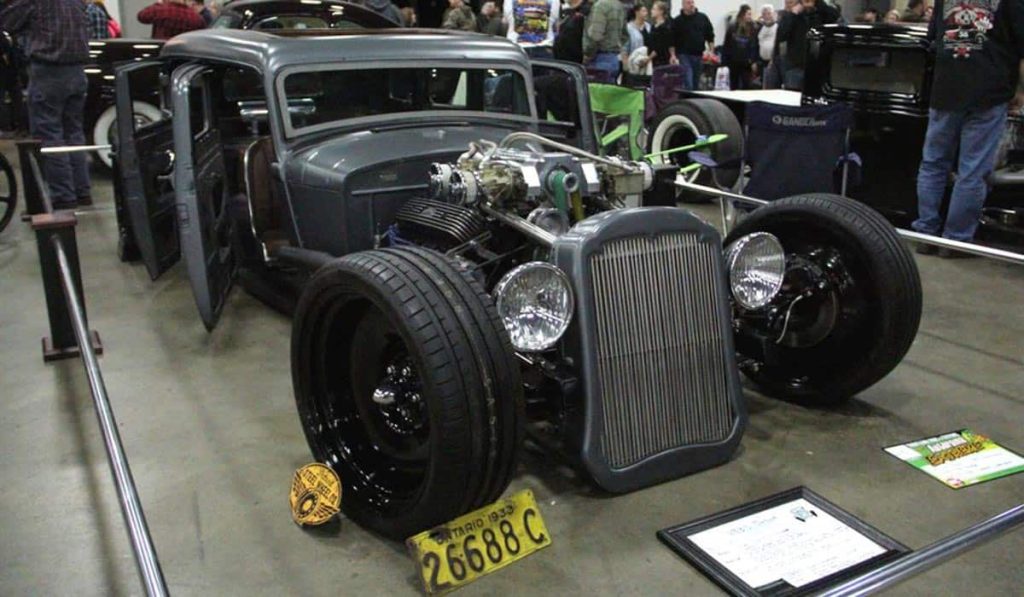
The combination of the 427, Turbo 400 transmission, and rear-mounted radiator creates a package that feels purpose-built for speed rather than just visual drama. The body may be old, but the attitude is timeless. It carries the sort of mechanical exposure that says there is nothing to hide and no reason to pretend. This is a rod that wants to be judged by what it does, not by whether it fits into anyone’s definition of beautiful. And that confidence is part of what makes it work so well. In a field full of flamboyant customs, a build like this proves that directness can still be a style all its own.
1933 Ford Renaissance Roadster
The 1933 Ford Renaissance Roadster is one of the most refined examples in the entire collection. Displayed at the Detroit Autorama in 2017, it had the sort of presence that silences a room even in a building full of expensive custom machinery. It gleams like a serious show car, but it still retains the spirit of the rod world in how it blends eras, brands, and craftsmanship.
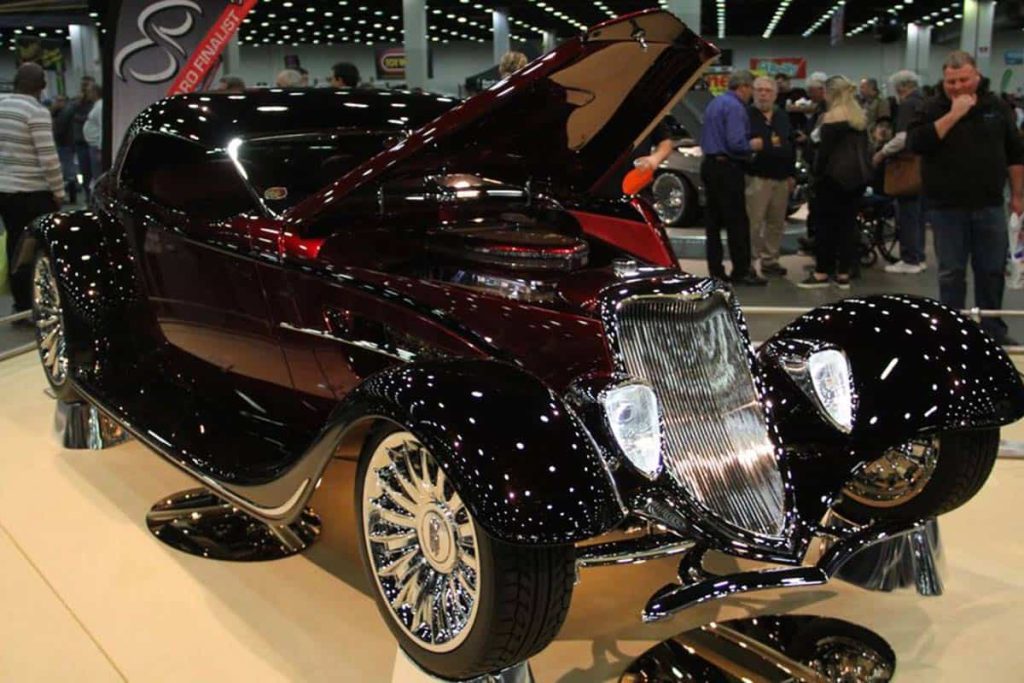
Power comes from a GM Performance engine matched to a 4L60 transmission, showing that the build is not chained to Ford-only purity. Instead, it follows the rod tradition of choosing what works best, regardless of badge loyalty. The custom rear bumper, revised headlights, aluminum driveshaft, and countless finished details reveal how carefully the whole concept was executed. If some rat rods thrive on visible roughness, this one succeeds by proving that the same rebellious spirit can be expressed through a more polished, almost jewel-like finish. It is still a rod. It is simply one that wears elegance and engineering discipline with equal strength.
Why Rat Rods Continue to Fascinate Car Culture
What makes rat rods so enduring is not just their appearance. It is their philosophy. They represent a branch of automotive culture where individuality matters more than correctness, and imagination matters more than factory loyalty. A rat rod can be funny, threatening, beautiful, crude, nostalgic, theatrical, or all of those things at once. It can preserve history, mock history, or rebuild history from scratch. That freedom is rare in any design culture, and it is one reason these machines hold attention so powerfully.
They also remind us that automotive passion does not always depend on wealth. Many rat rods are built from leftovers, scrapyard finds, forgotten donor bodies, and mechanical parts that more traditional builders would never consider. That gives the culture an anti-elitist streak. Skill and imagination matter more than pristine starting material. Some of the most unforgettable rods begin with the least glamorous raw ingredients.
At the same time, the best rat rods are not lazy. Their roughness is often intentional. Their asymmetry, rust, theme work, and exposed engineering usually reflect a choice, not just neglect. That is what separates meaningful rat rods from random unfinished cars. The best ones have purpose. They know what they are trying to say.
This collection proves exactly that. From the history-heavy Duesenberg and Ford builds to the outrageous Tank Rod, school bus conversions, spider-themed creations, and luxury-brand mutants, every vehicle here says something different. Together, they show that there is no single right way to build a rat rod. There is only the challenge of making the machine impossible to forget.
Final Thoughts
Rat rods are often described as rough, rebellious, and unconventional, and all of that is true. But that description only covers the surface. Beneath the rust, welds, chopped panels, and oversized engines lies something far more important: vision. These machines are built by people who see possibility in discarded metal and are willing to turn that possibility into a moving work of art.
What makes these builds unforgettable is not just their speed, their donor vehicles, or their strange silhouettes. It is the fact that every one of them reflects a decision to create rather than preserve, to reinterpret rather than obey, and to leave personality visible instead of sanding it away. Some of them are beautiful. Some are bizarre. Some are intimidating. Some are hilarious. All of them matter because they prove that car culture still has room for raw imagination.
Whether the base vehicle was a Duesenberg race machine, a school bus, a Soviet truck, a Cadillac, a Toyota Land Cruiser, or a simple old Ford, the rat rod transformation gave it a second identity. In many cases, it gave it a louder and more memorable life than the factory ever did.
That is the magic of rat rods. They are not trying to be perfect. They are trying to be unforgettable—and the best of them absolutely are.