


I once watched a friend agonize over buying a used Jeep Grand Cherokee EcoDiesel for three solid weeks. He kept asking the same question: “Is a diesel SUV actually worth it, or am I just buying into hype?” Two years and 47,000 miles later, that man has become the most annoyingly passionate diesel evangelist I know. He tracks his fuel economy on a spreadsheet. He texts me his MPG after every road trip. He genuinely gets emotional talking about torque.
His enthusiasm, however obnoxious, actually makes sense — because diesel SUVs occupy a genuinely fascinating position in the American automotive landscape. They sit right at the intersection of two seemingly contradictory ideas. On one hand, SUVs have always been criticized for guzzling fuel and being heavier than they need to be. On the other hand, diesel engines have a well-earned reputation for squeezing remarkable mileage from every gallon, producing powerful low-end torque, and handling heavy loads with an almost casual sense of composure.
Table of Contents
Combine those two things, and something interesting happens. You end up with a vehicle that can carry five passengers, pull a 5,000-pound trailer, cruise across three states on a single tank — and still post highway fuel economy numbers that make sedan owners suspicious you’re lying.
Yet despite those advantages, diesel-powered SUVs have never broken into the American mainstream the way they did across Europe, Australia, and South Africa. In the U.S., buyers have consistently gravitated toward gasoline V6 engines, turbocharged four-cylinders, and — more recently — hybrid and fully electric powertrains. Meanwhile, diesel has remained the quiet choice of long-haul drivers, towing enthusiasts, and a dedicated community of owners who discovered what 420 lb-ft of torque feels like at 1,800 RPM and simply couldn’t go back.
That niche status is precisely what makes diesel SUVs so interesting to evaluate right now. Many of the best models were sold in limited trims during narrow production windows — sometimes just three or four model years — before disappearing from dealer lots entirely. Some built loyal followings. Others vanished before most buyers ever realized they existed.
As someone who has spent years studying vehicle ownership from both mechanical and real-world value perspectives, I believe diesel SUVs deserve considerably more attention than they typically receive — particularly on the used market, where clean 2014–2019 examples are now sitting at increasingly attractive price points.
Are they perfect? Absolutely not. Diesel ownership brings tradeoffs: emissions-system complexity, more specialized maintenance requirements, and a driving personality that leans toward muscular composure rather than sporty agility. However, for the right driver with the right expectations, a well-chosen diesel SUV can deliver one of the most satisfying and cost-effective long-distance driving experiences available.
This guide goes well beyond the surface. I’ll walk you through what makes diesel SUVs fundamentally different, which models have genuinely earned their reputations for balancing power and fuel efficiency, where the reliability risks actually hide, and how to shop for one without making expensive mistakes. Along the way, I’ll share specific ownership context, honest strengths and weaknesses, and practical buying advice for each vehicle.
Because the reality is straightforward: diesel SUVs aren’t built for everyone. But for the buyer who values torque over turbo lag, range over revs, and towing confidence over stoplight speed, they can be genuinely brilliant. And if you’re looking for one in America today, these ten models are the names most worth knowing.
What Makes a Diesel SUV Different From a Gas-Powered One?
Before diving into specific models, it helps to understand why diesel-powered SUVs feel so different behind the wheel. The distinction goes beyond just fuel type — it fundamentally changes the driving character of the vehicle.
Diesel engines aren’t designed to impress with high-revving horsepower theatrics. Instead, they’re engineered to produce torque — and they deliver it in a way that transforms the entire driving experience. Torque is the rotational force that gets heavy things moving. It’s the shove you feel pulling away from a stoplight with four passengers and a loaded cargo area. It’s the steady, unwavering pull that keeps your speed constant climbing a 6% highway grade with a trailer hitched behind you.
In practical terms, that torque translates into one sensation: effortlessness. A well-sorted diesel SUV genuinely feels like it’s working less hard than a comparable gasoline model, especially when carrying weight or covering long distances. The engine sits at low RPMs, the cabin stays quiet, and the vehicle just… cruises. There’s no straining, no dramatic downshifting, no sense that you’re asking too much of the powertrain.
Efficiency is the other major advantage. Diesel fuel contains roughly 10–15% more energy per gallon than regular gasoline. Combined with the diesel engine’s high-compression combustion design, this energy density often produces noticeably better real-world fuel economy — particularly during highway driving, where diesel engines truly excel. Many diesel SUVs return 28–34 MPG on the highway, numbers that seem almost impossible given their size and weight.
Additionally, well-maintained diesel engines have earned a long-standing reputation for mechanical toughness. The internal components are built heavier to handle higher compression pressures, which generally favors longevity under consistent use. That said, this durability applies to the engine itself — the modern emissions equipment and turbocharging systems wrapped around it can introduce their own maintenance challenges, which we’ll address shortly.
Finally, diesel SUVs tend to deliver a more relaxed highway personality than their gasoline counterparts. Because useful power arrives at lower engine speeds, the vehicle doesn’t need to rev as aggressively to maintain pace or pull a load. That creates a calmer, more composed cruising character — one that seasoned diesel owners frequently describe as the single biggest reason they stay loyal to the powertrain.
Of course, compromises exist. Diesel engines typically sound rougher at idle compared to smooth gasoline units. Maintenance tends to be more specialized. And emissions-control systems — including diesel particulate filters (DPFs) and selective catalytic reduction (SCR/DEF) hardware — add a layer of complexity that gasoline vehicles simply don’t carry. Nevertheless, for the right buyer, those tradeoffs feel minor compared to the tangible benefits.
Which SUVs Were Actually Sold With Diesel Engines in America?
The roster of diesel SUVs sold in the United States is surprisingly specific — and in many cases, surprisingly short-lived. Unlike European markets where diesel options are standard across most SUV lineups, American diesel SUV availability has always been selective, often limited to particular trims or narrow production windows.
The most recognizable diesel-powered SUVs sold in the U.S. include the Jeep Grand Cherokee EcoDiesel, BMW X5 xDrive35d, BMW X3 xDrive28d, Land Rover Range Rover Td6, Range Rover Sport Td6, Mercedes-Benz GL350 BlueTEC, Mercedes-Benz ML350 BlueTEC, Mercedes-Benz GLK250 BlueTEC, Jaguar F-Pace diesel, and the GMC Terrain diesel. Depending on how broadly you define the segment, you may also encounter diesel-equipped versions of the Chevrolet Tahoe, Chevrolet Suburban, GMC Yukon, and Land Rover Discovery — though availability and trim specifics vary considerably by model year.
What’s most relevant for today’s shoppers is this: the majority of compelling diesel SUVs in America are no longer sold new. The truly interesting options predominantly exist in the used market, typically from the 2014–2019 model years. That reality shifts the entire shopping strategy — rather than comparing window stickers at dealerships, you’re evaluating maintenance histories, inspecting emissions equipment, and learning to spot the signs of a well-cared-for versus a neglected diesel vehicle.
In other words, the American diesel SUV market is real and rewarding — but it’s specialized territory that benefits enormously from an informed, careful approach.
How Reliable Are Diesel SUVs in the Real World?
This is the question that separates genuinely informed diesel buyers from those who end up frustrated. And the honest answer isn’t simple: reliability depends heavily on the specific model, its maintenance history, and the complexity of the vehicle surrounding the engine.
Here’s what experienced diesel owners and mechanics will tell you: the engine block itself is often the toughest part of the entire vehicle. Diesel engines are overbuilt by design — they handle higher compression ratios and heavier internal loads than gasoline engines, which generally gives them excellent long-term stamina when properly maintained.
The reliability challenges typically emerge from everything wrapped around that engine. Modern diesel SUVs include turbocharging systems, exhaust aftertreatment hardware (DPF, SCR, EGR), high-pressure fuel injection components, numerous sensors, and — in the case of luxury models — sophisticated electronics, air suspension, and complex infotainment platforms. Each of those systems can develop age-related issues independently of the engine itself.
This is precisely why simpler, more widely supported diesel platforms tend to deliver the most predictable ownership experience. The Jeep Grand Cherokee EcoDiesel, for instance, consistently ranks well in long-term owner satisfaction partly because the vehicle is familiar to American mechanics, parts are readily available, and the enthusiast community has thoroughly documented common issues and solutions.
Conversely, I tend to be more cautious recommending highly complex luxury diesel SUVs — particularly from brands with mixed reputations for electronics reliability and long-term ownership costs. A diesel Land Rover or Jaguar can be deeply rewarding when everything functions correctly. However, those vehicles may prove more vulnerable to age-related complexity than simpler platforms, especially in the hands of a second or third owner who may not have maintained the vehicle to factory standards.
That doesn’t mean luxury diesel SUVs should be avoided outright — it means they demand more thorough homework, stronger service documentation, and more realistic expectations about ongoing maintenance costs.
For buyers prioritizing maximum reliability above all other factors, I recommend looking for diesel SUVs with:
- Complete, verifiable service records from previous owners
- Documentation of regular fuel-system maintenance (filter changes, quality fuel use)
- Evidence that emissions equipment has been properly maintained — not deleted or tampered with
- No signs of aftermarket performance tuning or modification
- Strong parts availability through both dealer and independent channels
As a general principle: the more electronically complex and “exclusive” the diesel SUV, the more carefully it should be inspected and the more conservatively it should be budgeted for ongoing maintenance.
8 Critical Factors to Evaluate Before Buying a Diesel SUV
Shopping for a diesel SUV requires a somewhat different mindset than buying a standard gasoline crossover. The fundamentals — comfort, cargo space, safety features, and pricing — still matter enormously. However, diesel ownership introduces additional considerations that can significantly impact long-term satisfaction. Here’s what deserves your attention most.
Service Records: Your Single Best Protection Against Hidden Problems
Start here — always. A diesel SUV with incomplete or missing maintenance documentation isn’t a bargain waiting to be discovered. It’s a potential liability. Diesels reward consistent, proper maintenance with remarkable longevity. Conversely, neglected examples can develop expensive problems surprisingly quickly.
You want verifiable oil-change records, evidence of transmission servicing where applicable, and — critically — signs that the emissions equipment hasn’t been ignored or improperly modified. Ask specifically whether the vehicle has received any work on its diesel particulate filter, DEF system, turbocharger, injectors, or high-pressure fuel system. A seller who can’t identify those components isn’t necessarily hiding anything, but it does signal you should proceed with extra caution during inspection.
Suspension Quality: Why It Matters More in a Diesel
Because diesel SUVs are frequently chosen for long-distance travel, towing, and adverse-weather driving, suspension quality becomes especially important. A properly sorted diesel SUV should feel planted, composed, and confidence-inspiring — not bouncy, wallowy, or unsettled.
Some models prioritize highway comfort over off-road capability, while others are engineered to handle both. Understanding which side of that line your preferred vehicle falls on helps set realistic expectations. Additionally, keep in mind that air suspension systems and adaptive dampers — common in luxury diesel SUVs — can deliver outstanding comfort when functioning properly but may become costly to repair as the vehicle ages.
Off-Road Capability: Separating Real Toughness From Marketing Photos
Not every diesel SUV with rugged styling is genuinely built for trail use. Some are engineered primarily for paved-road efficiency with occasional bad-weather confidence, while others offer legitimate off-road hardware including meaningful ground clearance, low-range transfer cases, locking differentials, and underbody protection.
If you genuinely need off-pavement capability, evaluate the vehicle’s specifications honestly rather than relying on appearance alone. A diesel SUV that looks adventurous in promotional photos and one that can actually handle a rough forest road are not always the same machine.
Transmission Behavior: The Often-Overlooked Deal-Breaker
Nearly all diesel SUVs sold in the American market use automatic transmissions, which generally pairs well with the diesel engine’s low-RPM torque characteristics. A well-calibrated automatic keeps the engine in its power sweet spot, makes towing smoother, and simplifies daily driving.
What you want to watch for during test drives, however, is any transmission that feels hesitant, jerky, or confused about gear selection. Diesel torque places significant mechanical stress on driveline components, so transmission issues should never be dismissed as minor annoyances. Pay close attention to shift quality at low speeds, during hill climbing, when requesting sudden acceleration, and especially under loaded conditions.
AWD vs. 4WD: A Distinction That Actually Matters for Diesel Buyers
All-wheel drive and four-wheel drive serve different purposes, and diesel buyers tend to care about this distinction more than average crossover shoppers. If you live in a region with harsh winters, tow regularly, or venture off-pavement frequently, the drivetrain configuration becomes genuinely important.
A diesel engine’s abundant low-end torque becomes especially valuable when traction is compromised — but only if the drivetrain architecture can effectively transfer that torque to the ground. Don’t assume trail-readiness based on body style and a diesel badge alone. Some models are optimized for on-road stability with moderate weather capability, while others include proper low-range gearing designed for demanding conditions.
Interior Practicality: Does the Vehicle Actually Fit Your Life?
Diesel SUV buyers tend to be practical people who genuinely use their vehicles — hauling families, packing camping equipment, loading bicycles, accommodating dog crates, towing weekend toys. That makes cargo capacity and cabin layout more critical here than they might be for someone simply commuting in a sedan.
Think honestly about your real-world use cases before shopping. A diesel powertrain that delivers impressive fuel economy and strong torque won’t compensate for a cargo area that can’t fit your gear or a rear seat that makes passengers uncomfortable on long drives.
The Fuel Savings vs. Repair Cost Calculation
Diesel ownership has always involved a fascinating cost equation. You’ll typically save money on fuel — particularly during highway driving and while towing — but you may encounter higher repair costs related to emissions-control components and specialized fuel-system hardware.
The math tends to favor diesel strongly when you drive high annual mileage, tow frequently, or spend significant time on highways. It becomes less compelling if your driving consists primarily of short urban trips — partly because the fuel savings diminish in city driving, and partly because diesel emissions systems can develop problems when they’re never given adequate highway heat cycles to regenerate properly.
Resale Value: Will Someone Want It When You’re Ready to Sell?
Because diesel SUVs represent a niche market in America, resale dynamics can swing in two directions. A clean, well-documented diesel example from a respected platform — like the Grand Cherokee EcoDiesel — may actually command a premium because informed buyers actively seek them out. Meanwhile, a used luxury diesel SUV with a reputation for expensive repairs might sit on the market longer, even if it’s priced attractively, simply because the buyer pool is smaller and more cautious.
Brand perception plays a significant role here. Consider not just what the vehicle is worth to you today, but how easily you’ll find a buyer when you’re ready to move on.
Diesel SUV Advantages and Disadvantages at a Glance
To bring the key tradeoffs into sharper focus, here’s a consolidated view of what diesel SUV ownership delivers — and what it demands in return.
Why Owners Love Their Diesel SUVs
- Exceptional low-end torque: Diesel engines deliver strong, usable pulling power right where you need it most — from low RPMs, without demanding aggressive throttle input
- Confident towing capability: That torque advantage makes towing boats, campers, and trailers feel manageable rather than strained
- Impressive highway fuel efficiency: Many diesel SUVs return 28–34 MPG on highway drives — remarkable for vehicles of their size and weight
- Extended driving range between fill-ups: Better fuel economy means fewer fuel stops during long trips, which adds up to real convenience over time
- Calm, composed cruising character: Diesel SUVs tend to feel unhurried and relaxed at highway speeds, creating a more comfortable long-distance driving experience
- Proven engine longevity: When properly maintained, diesel engine internals are built to withstand high compression loads and often deliver excellent long-term durability
What Diesel SUV Buyers Should Prepare For
- Acceleration is strong, not sporty: Diesel SUVs feel powerful under load, but they’re rarely quick in the zero-to-sixty sense that sports sedans deliver
- Engine refinement varies: Modern diesels are much quieter than older units, but a characteristic idle clatter remains part of the experience — some owners appreciate it, others don’t
- Emissions equipment adds complexity: DPF, DEF/SCR, and EGR systems require proper maintenance and can become costly if neglected
- Short-distance city driving is less ideal: Diesel engines and their emissions systems perform best during longer, highway-speed driving cycles
- Premium-brand repair costs can be significant: European luxury diesel SUVs, in particular, may carry higher parts and labor expenses as they age
- New-model options are increasingly limited: Most compelling diesel SUV choices in the U.S. market now exist primarily as used vehicles from the mid-to-late 2010s
The 6 Specifications Worth Comparing Before Anything Else
When evaluating diesel SUVs side by side, I recommend anchoring your comparison to six core performance indicators before getting distracted by interior trim levels, paint colors, or wheel designs. These specifications reveal whether a diesel SUV will actually deliver the real-world benefits you’re paying for.
Torque output is the single most important number, because torque is fundamentally the reason you’re considering diesel in the first place. A gasoline SUV may advertise higher peak horsepower, but the diesel’s advantage lies in how much usable pulling force it produces at low engine speeds — exactly where you need it for towing, merging, and climbing.
Transmission calibration comes next. A diesel engine paired with a smooth, well-programmed automatic gearbox creates a driving experience that feels seamless and refined. The same engine paired with a clunky, indecisive transmission can make the vehicle feel agricultural and frustrating.
Drivetrain type matters significantly if weather, towing, or trail use are part of your ownership plans. AWD provides all-weather road confidence. Proper 4WD with low-range gearing adds genuine off-road and heavy-towing capability.
Suspension tuning determines whether the vehicle is truly a long-haul companion or merely a heavy crossover with a torquey engine bolted in. Good suspension makes multi-hour drives feel effortless. Poor suspension makes them exhausting.
Ground clearance and underbody protection become important if you plan to leave paved roads with any regularity. Without adequate clearance, an SUV’s trail ambitions stay theoretical.
Real-world fuel economy — not the EPA window sticker, but actual owner-reported numbers — remains one of diesel’s strongest selling points. In larger SUVs, every additional mile per gallon produces a noticeable difference in fuel costs over a year of ownership.
A diesel SUV that scores well across all six areas while maintaining a reasonable reliability reputation deserves a serious test drive.
Smart Shopping Strategies for Used Diesel SUV Buyers
It’s remarkably easy to fall in love with a diesel SUV during a 20-minute test drive. That smooth torque surge, the composed highway cruising, the impressively low fuel consumption — it all feels intoxicating. But buying wisely means looking well beyond the test-drive honeymoon.
Always begin with the service history. From there, inspect for emissions-system warning signs, evaluate cold-start behavior, listen for unusual injector noise, assess transmission shift quality, check for suspension wear, and look carefully for underbody corrosion. Research the specific common problems associated with your target model year and engine combination — because a 2014 version of a particular diesel SUV can present a very different ownership experience than a 2018 of the same nameplate.
If towing matters to you, verify the exact towing rating for the specific configuration you’re evaluating — not every trim level achieves the maximum advertised number. If fuel economy is a priority, look at real-world owner data and long-term tracking rather than brochure estimates. And if reliability ranks highest on your priority list, lean toward well-established mainstream diesel platforms rather than the most exotic or luxury-oriented option available.
Perhaps most importantly, confirm that your actual driving patterns suit diesel ownership. If your daily routine consists primarily of short urban trips, a diesel SUV’s advantages largely go unused — and its emissions systems may actually suffer from insufficient operating temperatures. On the other hand, if you regularly cover highway miles, travel with gear, tow loads, or simply value maximum range between fuel stops, the ownership equation shifts dramatically in diesel’s favor.
The 10 Best Diesel SUVs That Balance Fuel Efficiency and Real-World Power
With the foundational knowledge in place, let’s examine ten diesel SUVs that have earned genuine reputations for delivering where it counts — in torque, fuel efficiency, and usable everyday strength. Some prioritize luxury. Others emphasize practicality. Several have become particularly compelling in the used market. All of them demonstrate what a diesel SUV can do well when the powertrain matches the vehicle’s mission.
1. Jeep Grand Cherokee EcoDiesel — The Most Well-Rounded Diesel SUV for American Buyers
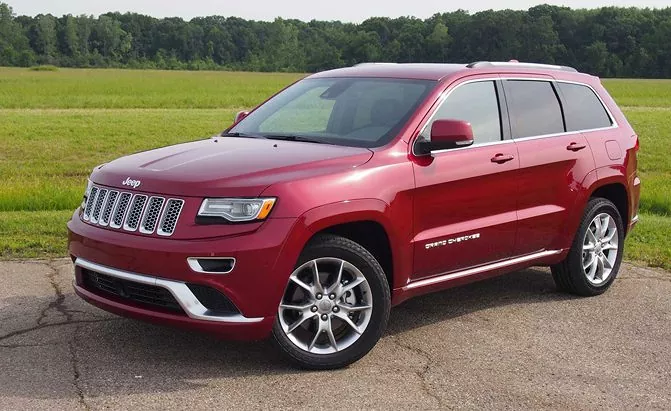
If I had to recommend a single diesel SUV to the broadest range of American buyers, the Jeep Grand Cherokee EcoDiesel would be exceptionally difficult to overlook. It brings together strong low-end torque, familiar SUV proportions, genuine towing usefulness, and — crucially — a far more approachable ownership profile than most European luxury diesel alternatives.
The Grand Cherokee’s 3.0-liter EcoDiesel V6 earned widespread attention because it delivered something most mainstream competitors simply couldn’t match: real diesel torque inside a vehicle that still felt comfortable, family-friendly, and daily-drivable. Depending on model year, output typically lands around 240 horsepower and approximately 420 lb-ft of torque — exactly the kind of power that makes towing and highway merging feel easy rather than labored.
Versatility further strengthens the Grand Cherokee’s position. In the right configuration, it serves equally well as a comfortable road-trip vehicle, a capable tow rig, and a genuinely competent off-road SUV. That breadth of ability makes the diesel powertrain feel purposeful rather than excessive — you’ll actually use the torque advantage across multiple driving scenarios.
From a long-term ownership perspective, the Grand Cherokee EcoDiesel isn’t flawless, but it typically feels far less intimidating than a diesel Land Rover or Mercedes-Benz when it comes to finding service, sourcing parts, and accessing community-generated repair knowledge. That accessibility makes a meaningful difference over years of ownership.
For buyers seeking a diesel SUV that feels purpose-built for American roads, driving patterns, and ownership realities, the Grand Cherokee remains one of the strongest all-around choices in the segment.
2. BMW X5 xDrive35d — The Most Refined Diesel Highway Cruiser Money Can Buy

Few diesel luxury SUVs manage to blend refinement, meaningful torque, and long-distance composure as successfully as the BMW X5 xDrive35d. In diesel form, the X5 doesn’t feel like a compromise between efficiency and performance — it feels like the powertrain this chassis always deserved for real-world driving.
U.S.-market versions typically featured a 3.0-liter turbocharged inline-six diesel producing approximately 255 horsepower and roughly 413 lb-ft of torque. Those numbers may not seem dramatic alongside some gasoline V8 outputs, but in practice, the engine’s torque-rich delivery gives the X5 an effortlessly muscular character. It surges forward with minimal drama and settles into highway cruising with the kind of calm confidence that makes you genuinely enjoy long drives.
Fuel economy represents another major draw. The diesel X5 lets you experience a genuinely premium midsize SUV without the fuel costs many buyers automatically associate with the BMW badge. Nevertheless, overall ownership costs remain a BMW reality — parts and specialized labor aren’t inexpensive, and purchasing one used without thorough service documentation isn’t something I’d suggest doing casually.
Still, for buyers whose budgets accommodate proper maintenance and who prioritize one of the most polished diesel SUV driving experiences available in America, the X5 xDrive35d stands out clearly. It feels expensive because it is — but it also feels genuinely special in ways that justify its place on any serious diesel SUV shortlist.
3. Land Rover Range Rover Sport Td6 — Where Diesel Torque Meets Genuine Off-Road Prestige
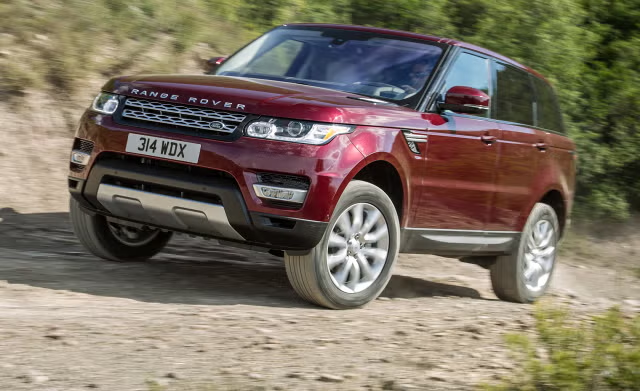
The Range Rover Sport Td6 delivers one of the most compelling blends of visual presence, off-road capability, and diesel torque available in any luxury SUV. This is a vehicle that genuinely looks, feels, and behaves like a premium machine — not a dressed-up crossover attempting to punch above its weight.
Its 3.0-liter V6 diesel produces around 254 horsepower and a substantial 443 lb-ft of torque — numbers that give the Range Rover Sport a calm, authoritative character perfectly suited to its personality. The vehicle never feels rushed or frantic. Instead, it delivers composed strength and quiet confidence, whether cruising at highway speed or navigating challenging terrain.
Suspension tuning and road presence rank among its strongest assets. Few diesel SUVs combine highway composure and genuine all-terrain confidence as naturally as the Range Rover Sport does when it’s operating at its best. It carries real luxury credentials while simultaneously feeling more at home on unpaved roads than most of its luxury-segment competitors.
The significant caveat, however, is ownership complexity. Land Rover products can deliver deeply satisfying and deeply frustrating ownership experiences — often depending heavily on maintenance history and mechanical luck. A clean example with comprehensive service records can be genuinely wonderful. A neglected one can rapidly become a test of both patience and finances. This is emphatically not the diesel SUV to purchase impulsively because a used listing price seems attractively low.
For buyers who understand the brand’s demands and commit to proper maintenance, the Td6-powered Range Rover Sport remains one of the most charismatic and desirable diesel SUVs in the entire segment.
4. BMW X3 xDrive28d — Compact Diesel Efficiency With Premium Polish
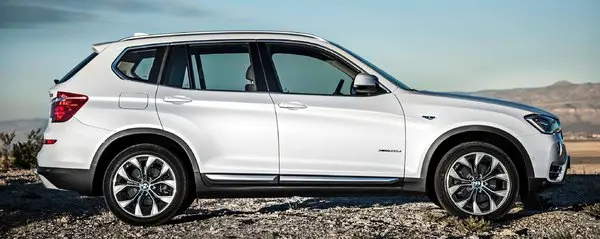
The BMW X3 xDrive28d represents one of the smartest diesel crossover options for buyers who want a premium driving experience without committing to the size, weight, and cost of larger luxury SUV ownership. It captures the core diesel advantages — efficiency, torque, and relaxed highway behavior — while packaging them in a more manageable, city-friendly footprint.
U.S.-market examples commonly featured a diesel engine producing approximately 180 horsepower and 280 lb-ft of torque. Those aren’t attention-grabbing performance numbers, but they make excellent sense within a compact luxury crossover’s mission. The X3 feels genuinely eager in daily driving, largely because diesel torque arrives early in the rev range and works harmoniously with the vehicle’s balanced chassis dynamics.
Another reason the X3 earns its position is accessibility. Compared with a larger, more expensive luxury diesel SUV, it’s easier to live with physically, often simpler to justify financially, and feels less like a commitment and more like a smart everyday choice. Fuel economy is a particular highlight — the diesel engine gives the X3 a long-legged highway personality that suits regular commuting and weekend road trips equally well.
Like its larger X5 sibling, however, the X3 carries BMW ownership realities. Maintenance costs aren’t economy-car territory, and used-market buyers should still prioritize vehicles with thorough service documentation. That said, among premium compact diesel crossovers sold in America, the X3 xDrive28d remains one of the most coherent and rewarding packages available.
5. Mercedes-Benz GL350 BlueTEC — Full-Size Diesel Luxury for Families Who Travel
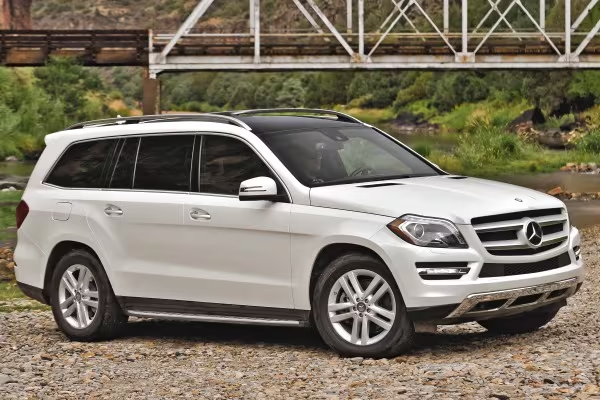
The Mercedes-Benz GL350 BlueTEC occupies a compelling position for families and travelers who need genuine cabin space without sacrificing diesel torque or highway range. If Mercedes’ smaller GLK250 represents the compact, city-focused side of diesel ownership, the GL350 is the full three-row grand-touring expression of the same engineering philosophy.
Powering most GL350 BlueTEC models is a 3.0-liter turbocharged V6 diesel delivering approximately 240 horsepower and an authoritative 455 lb-ft of torque. That torque figure matters enormously in a full-size SUV because it helps the GL350 feel composed and confident despite its substantial dimensions. Large, heavy SUVs need muscular authority rather than rev-happy agility — and diesel torque delivers exactly that character.
Road-trip comfort is arguably the GL350’s greatest strength. It’s spacious, refined, and engineered for long-distance travel in ways that many midsize crossovers simply aren’t. It also tows with genuine confidence and provides full-size luxury presence while typically returning better real-world fuel economy than a comparably sized gasoline-powered SUV.
The ownership caution follows a familiar pattern: complex premium SUVs can be wonderful to drive and expensive to maintain as they age. Air suspension, sophisticated electronics, and diesel emissions hardware all require careful attention on used examples. A compelling purchase price should never be the sole reason to buy one — always verify that the maintenance history supports long-term confidence.
6. Mercedes-Benz ML350 BlueTEC — The Well-Balanced Midsize Mercedes Diesel
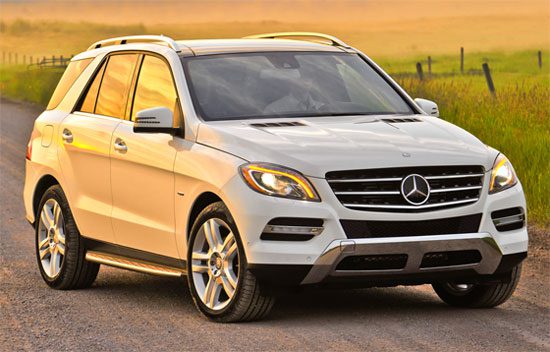
The Mercedes-Benz ML350 BlueTEC sits in an appealing middle ground within Mercedes’ diesel SUV lineup. Smaller and less imposing than the three-row GL350, yet still delivering genuine Mercedes refinement, diesel torque, and premium road-trip capability, the ML350 often represents the more balanced luxury diesel choice for buyers who don’t need maximum interior space.
Sharing the same 3.0-liter V6 diesel with the GL350 — producing approximately 240 horsepower and 455 lb-ft of torque — the ML350 delivers a relaxed but powerful driving feel. It was never designed to be sporty in the way performance crossovers aim for sportiness. Instead, it was engineered to feel composed, quietly muscular, and distinctly premium in motion.
One of the ML350’s most appealing qualities is how naturally it suits diesel character. The vehicle genuinely benefits from smooth, low-RPM pulling power — especially during highway cruising and loaded-condition driving. The engine feels matched to the vehicle’s mission rather than merely installed for efficiency marketing purposes.
As with all used premium diesel SUVs, purchasing without a proper inspection carries risk. However, a well-maintained ML350 BlueTEC with documented service history can deliver a deeply satisfying combination of comfort, range, and mature highway authority that few competitors replicate.
7. Jaguar F-Pace Diesel — The Most Design-Forward Diesel SUV Available
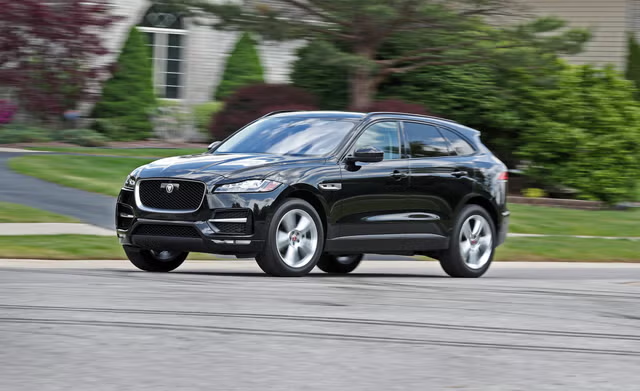
Among the diesel SUVs sold in America, the Jaguar F-Pace consistently stands out as one of the most visually striking. Jaguar entered the SUV market with a strong emphasis on design language and road presence, and the F-Pace remains one of the better-looking luxury crossovers from its era. In diesel form, it adds efficiency and low-RPM torque without compromising its inherently upscale character.
Most U.S.-market diesel F-Pace models used a 2.0-liter turbo-diesel four-cylinder producing approximately 180 horsepower and 318 lb-ft of torque. That torque figure gives the F-Pace more real-world pulling capability than the modest horsepower number alone might suggest. It’s not a muscular V6 bruiser, but it’s efficient, smooth in its delivery, and genuinely usable in daily driving conditions.
What distinguishes the F-Pace from boxier, heavier diesel SUVs on this list is its lighter, more road-focused driving character. If you want diesel efficiency and torque but prefer something that drives more like an athletic car than a utility vehicle, the F-Pace offers a genuinely appealing alternative.
Jaguar ownership does demand caution, however. Attractively low used-market pricing can sometimes obscure significant long-term maintenance requirements. Parts costs, electronics complexity, and specialist labor rates can all elevate ownership expenses beyond initial expectations. As a product, though, the diesel F-Pace remains a highly compelling combination of style, efficiency, and driving character.
8. Land Rover Range Rover Td6 — The Ultimate Full-Size Diesel Luxury Statement

The full-size Range Rover Td6 stands as arguably the most elegant diesel SUV ever offered to American buyers. Where the Sport model leans slightly more athletic in character, the standard Range Rover projects quiet authority and understated regality. It delivers a commanding seating position, a genuinely luxurious cabin, and enough diesel torque to make its considerable mass feel composed rather than cumbersome.
The Td6 shares its 3.0-liter V6 diesel with the Range Rover Sport, producing approximately 254 horsepower and 443 lb-ft of torque. In the full-size body, however, the driving character shifts perceptibly. The story becomes less about horsepower and more about how the engine’s low-rev confidence perfectly complements the vehicle’s grand-touring personality. In a full-size Range Rover, diesel power doesn’t just make sense — it feels entirely natural.
Its strengths are immediately apparent: a refined ride quality, imposing visual presence, genuine off-road credibility, and long-distance comfort that few competitors approach. This is a vehicle capable of making rough roads feel ceremonial. At the same time, it demands the most careful evaluation of any vehicle on this list if you’re buying used.
Full-size Range Rovers can deliver extraordinary ownership satisfaction when properly maintained. When neglected, they can generate repair costs that escalate remarkably quickly. If you’re considering one, insisting on comprehensive maintenance documentation and a specialist pre-purchase inspection isn’t optional — it’s essential.
9. Mercedes-Benz GLK250 BlueTEC — Compact Diesel Luxury That Flies Under the Radar
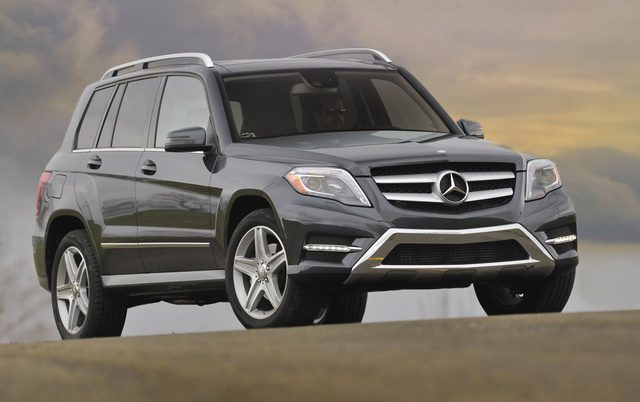
The GLK250 BlueTEC represents a distinctly different kind of diesel SUV compared to the larger Mercedes and Land Rover offerings above it. It’s smaller, more urban-oriented, and more compactly premium — making it a strong option for buyers who want a diesel luxury crossover without the size commitment and running costs of bigger six-cylinder models.
Powered by a 2.1-liter turbocharged four-cylinder diesel, the GLK250 may seem modest on paper relative to the V6-powered SUVs elsewhere on this list. In practice, however, the engine still delivers the torque-rich driving feel that diesel buyers value. It’s efficient, surprisingly capable in daily driving, and well-suited to the compact luxury crossover mission it was designed for.
The GLK250’s most practical strengths center on its footprint and efficiency. It’s easier to maneuver in tight spaces, simpler to park, and often easier to justify than larger diesel luxury SUVs. It tends to make particular sense for buyers whose driving splits between city or suburban environments and occasional highway stretches — delivering diesel fuel savings without the bulk of a full-size platform.
Predictable caveats apply: premium-brand maintenance costs, diesel-system complexity, and the importance of purchasing a well-documented example. Nevertheless, among compact luxury diesel SUVs sold in America, the GLK250 BlueTEC remains a distinctive and surprisingly sensible choice.
10. GMC Terrain Diesel — The Most Practical and Budget-Friendly Diesel Crossover
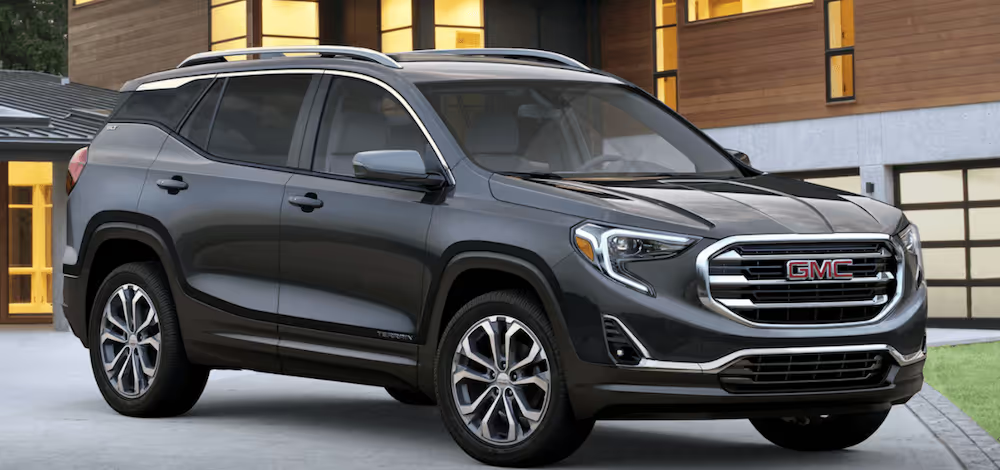
The GMC Terrain diesel closes out this list because it offers something the other nine vehicles largely don’t: mainstream compact-crossover practicality combined with a diesel option that feels genuinely attainable. It lacks the glamour of European luxury nameplates and the iconic ruggedness of the Jeep Grand Cherokee, but for many practical buyers, that’s actually the point.
During the 2018 and 2019 model years, GMC offered the Terrain with a turbocharged 1.6-liter four-cylinder diesel engine in SLE and SLT trim levels. The engine prioritized efficiency and respectable low-end torque over outright speed, making the Terrain one of the most interesting fuel-conscious compact crossover options available during its production run.
The Terrain’s genuine appeal lies in balance. It’s easy to live with, easy to size into daily routines, and available with genuinely useful comfort features depending on trim — heated seats, a power driver’s seat, a heated steering wheel, and a power liftgate all contribute to a well-equipped feel without excessive complexity.
From a mechanical perspective, the Terrain diesel also makes strong sense for buyers who specifically want to avoid the parts costs and specialist-labor requirements associated with European luxury brands while still enjoying diesel’s core torque and fuel-economy advantages. That makes it one of the most underrated and overlooked entries in the entire diesel SUV category.
It may not generate the excitement of a Range Rover or BMW, but the Terrain diesel is arguably one of the most rational choices on this list — and in the used market, rational often matters considerably more than badge prestige.
Which Diesel SUV Is the Best Overall Pick?
If the question is which diesel SUV delivers the strongest overall blend of power, fuel efficiency, mainstream serviceability, and practical everyday value in the American market, my answer consistently points toward the Jeep Grand Cherokee EcoDiesel. It isn’t the most luxurious option on this list, nor the most efficient on paper — but it does the best job of balancing real American ownership realities with core diesel advantages.
However, reframing the question changes the answer. If you prioritize the most refined and premium long-distance driving experience, the BMW X5 xDrive35d makes an exceptionally strong case. If visual presence and emotional appeal matter most, many buyers will gravitate toward the Range Rover Sport Td6 or the full-size Range Rover Td6. And if compact practicality and affordability rank highest, the GMC Terrain diesel and BMW X3 xDrive28d become increasingly attractive alternatives.
That’s precisely why no single universal winner exists in this category. The best diesel SUV for you depends on whether you prioritize long-term durability, luxury refinement, maximum fuel efficiency, compact convenience, or raw capability — and how honestly you assess your own driving patterns and maintenance budget.
Frequently Asked Questions About Diesel SUVs
Are diesel SUVs worth buying in 2024 and beyond?
For buyers who drive significant highway miles, tow regularly, or value long-range capability between fuel stops, diesel SUVs can still represent excellent value — particularly on the used market where clean 2015–2019 examples are available at attractive prices. The key is matching the vehicle’s strengths to your actual driving patterns. Short-trip, city-only drivers typically benefit less from diesel ownership.
What kind of fuel economy can I realistically expect from a diesel SUV?
Real-world highway fuel economy for most diesel SUVs on this list falls between 26 and 34 MPG, depending on vehicle size, engine configuration, driving conditions, and load. Compact models like the BMW X3 xDrive28d and Mercedes GLK250 BlueTEC tend to land at the higher end of that range, while full-size models like the Mercedes GL350 BlueTEC and Range Rover Td6 typically deliver mid-to-high-20s highway economy.
How much does diesel SUV maintenance cost compared to gasoline models?
Routine maintenance costs — oil changes, filter replacements, fluid services — tend to run modestly higher for diesel SUVs than comparable gasoline models. However, the more significant cost differences usually emerge from emissions-system repairs (DPF cleaning or replacement, DEF system components, EGR maintenance) and, on luxury European models, from premium-brand parts and specialist labor rates. Budget expectations should factor in these potential expenses beyond basic scheduled maintenance.
Can I still buy a new diesel SUV in the United States?
New diesel SUV options in the American market have become increasingly limited as manufacturers shift focus toward hybrid and electric powertrains. While a handful of diesel options may still exist in specific model years and configurations, the most compelling and diverse selection of diesel SUVs is now found in the used market — predominantly from the 2014–2019 production years.
Is it safe to buy a high-mileage used diesel SUV?
Diesel engines are generally built to handle higher mileage than gasoline engines, and a well-maintained diesel SUV with 100,000–150,000 miles can still have substantial life remaining in the powertrain. The critical factor isn’t mileage alone — it’s maintenance history. A diesel SUV with 120,000 miles and complete service records is typically a far better purchase than one with 60,000 miles and no documentation. Always prioritize verified maintenance over odometer readings.
Which diesel SUV is best for towing?
For buyers whose primary use case involves towing, the Jeep Grand Cherokee EcoDiesel offers the strongest combination of towing capability, torque delivery, and ownership practicality. Its 420 lb-ft of torque handles trailers with composed authority, while its mainstream platform ensures accessible service and parts availability. The Mercedes GL350 BlueTEC, with 455 lb-ft of torque, also tows confidently but carries higher luxury-platform maintenance demands.
Final Perspective: Matching the Right Diesel SUV to Your Life
Diesel SUVs may occupy a niche within the American automotive market, but they remain some of the most genuinely interesting and rewarding utility vehicles ever sold here. They combine strong, usable torque, long-distance cruising composure, and often remarkable fuel efficiency in ways that gasoline SUVs — for all their strengths — simply can’t replicate.
The essential ingredient in a successful diesel SUV purchase is choosing carefully. A well-matched diesel SUV can feel like the ideal road-trip companion, tow vehicle, or all-weather family hauler. A poorly chosen one — or one that doesn’t align with your actual driving patterns — can become a frustrating and expensive ownership story you didn’t anticipate. That’s why reliability research, service-history verification, emissions-system condition assessment, and honest use-case matching matter so much in this category.
From the versatile, accessible strength of the Jeep Grand Cherokee EcoDiesel to the polished highway manners of the BMW X5, the commanding luxury presence of the Mercedes-Benz models, and the design-forward appeal of the Jaguar F-Pace, this segment offers far more personality, diversity, and genuine capability than most people realize.
If you’ve read through this entire guide and something resonates — if the idea of effortless torque, long-range highway comfort, and a driving character built around calm strength rather than frantic revving appeals to you — the diesel SUV world is absolutely still worth exploring. You just need to know where to look, what to avoid, and which names have genuinely earned their reputations through real-world ownership.
Start by test-driving a Grand Cherokee EcoDiesel or sitting behind the wheel of a BMW X5 diesel. Feel that low-RPM torque surge for yourself. Watch the fuel gauge barely move during a 200-mile highway run. Experience the composed, unstressed cruising personality that only a well-sorted diesel SUV delivers. If it clicks for you the way it clicks for most diesel converts, you’ll understand why owners of these vehicles tend to become quietly, persistently loyal — and why they smile every time they pass a gas station with fuel still left in the tank.