

When most people hear the name Toyota, their minds jump straight to the Corolla or the Camry. Maybe a Land Cruiser if they’re the adventurous type. And fair enough. Toyota has built its global reputation on reliability, fuel economy, and the kind of bulletproof engineering that keeps vehicles running in every climate and terrain on earth, from the sweltering deserts of the Arabian Peninsula to the frozen logging roads of northern Scandinavia.
But here’s the thing most casual car buyers never realize: Toyota has a sports car heritage that stretches back over half a century. This is a company that has competed in Formula One, dominated the World Rally Championship, won the 24 Hours of Le Mans, and built some of the most celebrated performance machines in automotive history. The brand that sells more sensible sedans than anyone on the planet also happens to produce cars that can shred tires, set lap records, and make grown adults grin like teenagers.
From the factory floors of Aichi Prefecture in central Japan to racetracks and showrooms spanning every inhabited continent, Toyota’s sports cars have left marks that go far beyond spec sheets and quarter-mile times. These are cars that shaped enthusiast culture, influenced automotive design globally, and proved that a company known for dependability could also build machines of genuine excitement.
What follows is a list of ten Toyota sports cars that deserve your attention. Some are legends. Some are hidden gems. A couple never even made it to production. But every one of them tells a story about what happens when Toyota decides to stop playing it safe and build something that makes your pulse quicken.
1. GR Supra: Toyota’s Flagship Performance Machine Returns
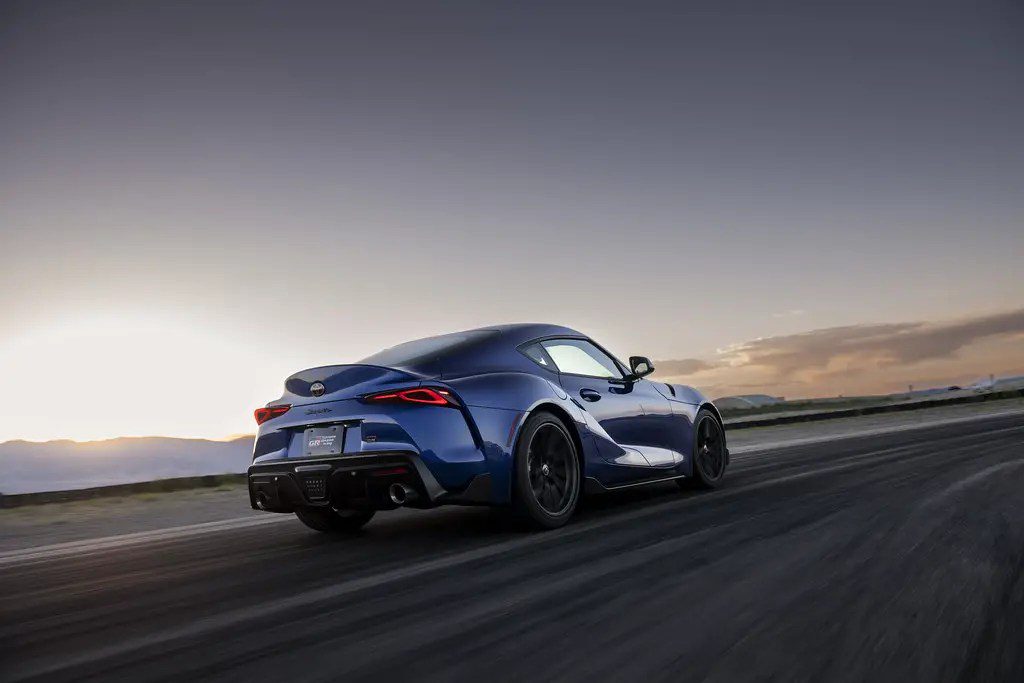
The GR Supra takes the top position on this list, and it earns it. After a 17-year absence that left Supra fans around the world wondering if the nameplate was dead for good, Toyota brought it back in 2019 as the fifth-generation Toyota Supra. The anticipation was enormous. The expectations were nearly impossible to meet. And the reception? It was complicated.
A significant portion of the Supra faithful were initially unhappy with the new car’s design. It didn’t visually reference the beloved fourth-generation model the way many had hoped. The proportions were different. The face was different. And then came the biggest controversy of all: the GR Supra was developed in partnership with BMW, sharing its platform, its engines, and much of its internal architecture with the BMW Z4. For purists who wanted a purely Japanese sports car built on a Toyota-exclusive platform, this was hard to swallow.
But here’s where the GR Supra wins people over. Drive it, and the partnership debate fades into background noise. The car is genuinely excellent.
Two engine options are available. The entry-level powertrain is a turbocharged 2.0-liter inline-four producing 255 horsepower and 400 Nm of torque. It’s quick, responsive, and lighter over the front axle than its bigger sibling, which gives the car a nimble, tossable character that’s surprisingly fun on winding roads.
The flagship engine is where things get serious. A turbocharged 3.0-liter inline-six, also sourced from BMW, delivers 382 horsepower and 500 Nm of torque in its most recent tune. This engine is silky smooth, pulls relentlessly from low RPM all the way to redline, and gives the GR Supra a 0-60 mph time in the low four-second range. It’s fast enough to humble cars costing twice as much.
Transmission choice has been a point of evolution for the GR Supra. The car launched exclusively with an 8-speed automatic with paddle shifters. Enthusiasts immediately asked for a manual, and Toyota listened. A 6-speed manual became available for the 3.0-liter model starting in 2023, which addressed one of the biggest criticisms the car had faced since launch.
The Toyota-BMW partnership for the GR Supra is an interesting case study in automotive globalization. The car was developed at Toyota’s technical center in Japan but also draws heavily on BMW’s engine and platform engineering from Munich, Germany. Final assembly takes place at Magna Steyr’s facility in Graz, Austria. It’s a car with Japanese DNA, German engineering, and Austrian manufacturing, a genuinely multinational product that reflects how the modern automotive industry operates across borders and continents.
The GR Supra isn’t just a sports car. It’s a statement about where Toyota sees its performance future heading. And based on the driving experience, that future looks promising.
2. Toyota Supra Turbo (A80): The Legend That Started It All
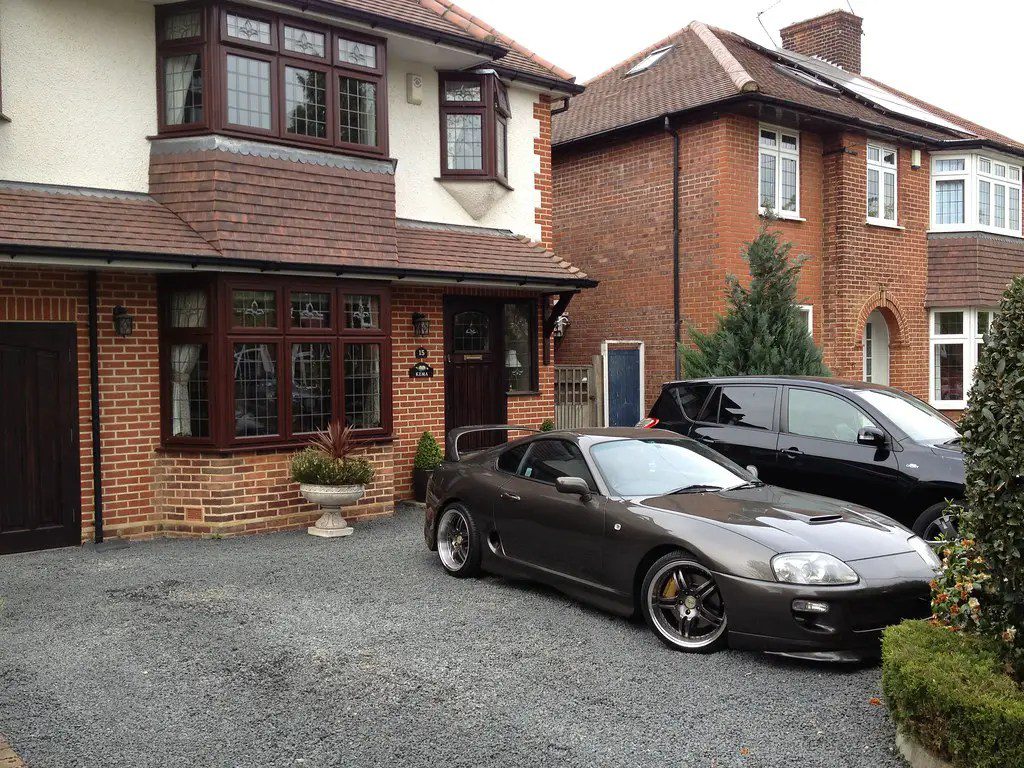
If there’s one Toyota sports car that transcends the brand and enters the territory of genuine cultural icon, it’s the fourth-generation Supra Turbo. This is the car that launched a thousand poster walls, inspired an entire generation of tuners, and became the centerpiece of the early Fast and Furious franchise. The A80 Supra isn’t just a Toyota. It’s a symbol of an entire era in car culture.
The Supra nameplate first appeared in 1978, and in its early years, it was essentially an upmarket version of the Toyota Celica. It shared the Celica’s platform but added a longer nose to accommodate a straight-six engine. It was sporty, but it wasn’t extraordinary. Not yet.
Things started to change in 1986 when the Supra split from the Celica and became its own standalone model. More powerful six-cylinder engines became available, both naturally aspirated and turbocharged. The car grew more serious, more capable, and more expensive. But it was the fourth generation, introduced in 1993, that turned the Supra into a legend.
The A80 Supra Turbo came powered by the now-legendary 2JZ-GTE engine, a 3.0-liter twin-turbocharged inline-six that produced 320 horsepower in factory trim. That number alone was competitive for the era, putting the Supra in the same conversation as the Porsche 911, Chevrolet Corvette, and Nissan 300ZX Twin Turbo. But the 2JZ’s real party trick wasn’t its stock output. It was its capacity for modification.
The 2JZ engine was over-engineered from the factory, with a cast-iron block, forged internals, and a robust bottom end that could handle absurd amounts of boost. With relatively modest modifications, tuners were extracting 500, 600, even 800 horsepower from these engines. Full-build 2JZ Supras have been known to produce over 1,500 horsepower in competitive drag racing. The engine became a legend in its own right, independent of the car it lived in.
The Supra Turbo was also remarkably fast in stock form. It could outperform many European sports cars that cost significantly more, which made it a hero for enthusiasts who wanted supercar-rivaling performance without a supercar price tag.
Geographically, the Supra’s cultural impact followed interesting patterns. It was hugely popular in Japan’s domestic tuning scene, particularly in the street racing culture that thrived in cities like Tokyo and Osaka during the 1990s. It became a dominant force in the import tuning community across North America, especially in southern California and the Gulf states where car culture runs deep. And its appearance in the 2001 film “The Fast and the Furious,” filmed largely in Los Angeles, cemented its status as a global performance icon.
Production of the A80 Supra ended in 2002 (1998 in North America), and values have been climbing ever since. Clean, low-mileage examples now sell for six figures at auction. That’s a staggering appreciation for a car that originally retailed for around $40,000. The Supra Turbo didn’t just earn its place on this list. It arguably is the list.
3. Lexus LFA: A $375,000 Masterpiece Built in Limited Numbers
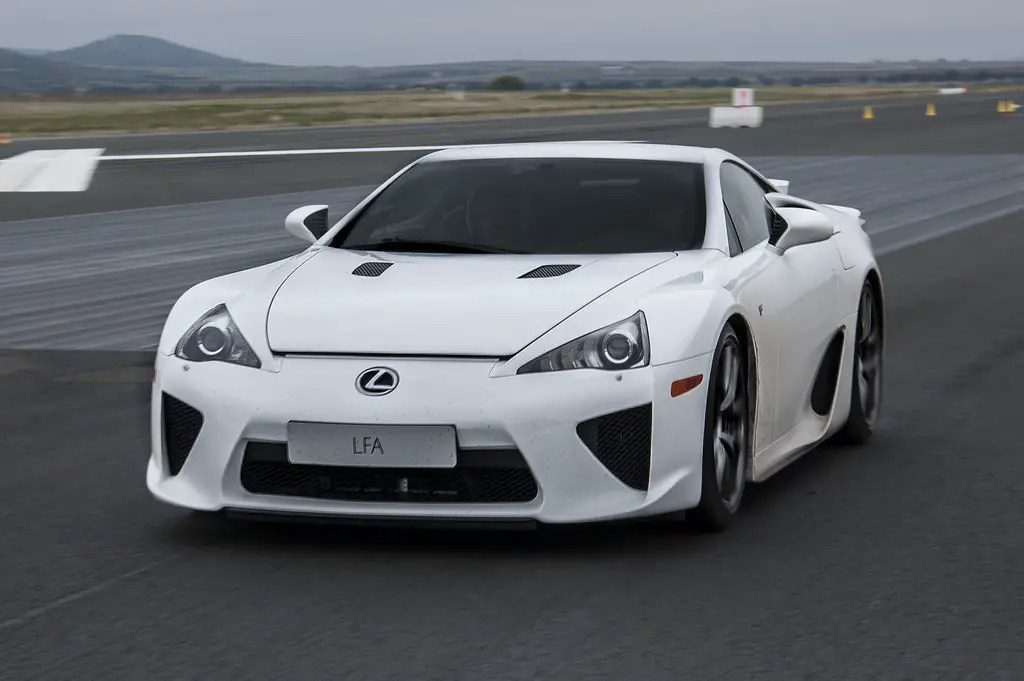
The Lexus LFA isn’t just one of the best Toyota sports cars ever made. It’s one of the best sports cars, period. Full stop. When Toyota’s luxury division set out to build the LFA, the brief was simple and uncompromising: create the finest pure driving machine possible, regardless of cost. And they delivered.
The LFA took roughly a decade to develop, a development timeline that’s almost unheard of in the automotive industry. During that period, the engineering team experimented with multiple engine configurations before settling on a naturally aspirated 4.8-liter V10 that produces 552 horsepower and revs to a screaming 9,000 RPM. The engine was co-developed with Yamaha, the same company that builds grand pianos and concert instruments, and it sounds like one. The exhaust note of the LFA’s V10 is widely considered one of the greatest engine sounds ever produced by a road car. It’s an instrument, not just a motor.
The chassis uses a carbon fiber reinforced polymer (CFRP) construction, which was cutting-edge technology at the time. Toyota built an entirely new production facility to manufacture the carbon fiber components, developing in-house expertise that would later benefit the brand’s broader vehicle development programs. The car weighs just 1,480 kg (3,263 lbs), giving it a power-to-weight ratio that rivals dedicated track machines.
Only 500 units were ever produced, between 2010 and 2012. Each one was hand-assembled at the Motomachi plant in Toyota City, Aichi Prefecture, Japan. At its original price of approximately $375,000, the LFA was expensive. But it was widely considered to be worth more than Toyota was charging. The company reportedly lost money on every unit sold because the development and manufacturing costs far exceeded the sticker price.
The LFA’s exclusivity and engineering excellence have made it a coveted collector’s item. Prices on the secondary market have climbed well past their original MSRP, with some examples trading for over $1 million. Owners span the globe, from Japan and the Middle East to North America and Europe, and the car has developed an almost cult-like following among collectors who appreciate engineering for engineering’s sake.
A special Nürburgring Package edition, limited to just 50 cars, added more aggressive aerodynamics, stiffer suspension, and a power bump to 562 horsepower. It was tuned specifically for the legendary Nürburgring Nordschleife circuit in Germany, one of the most demanding race tracks on earth, and set a lap time that embarrassed cars costing three times its price.
The LFA was Toyota and Lexus’s way of saying: we can build anything. And they proved it.
4. Lexus RC F: A Naturally Aspirated V8 in a World Gone Turbo
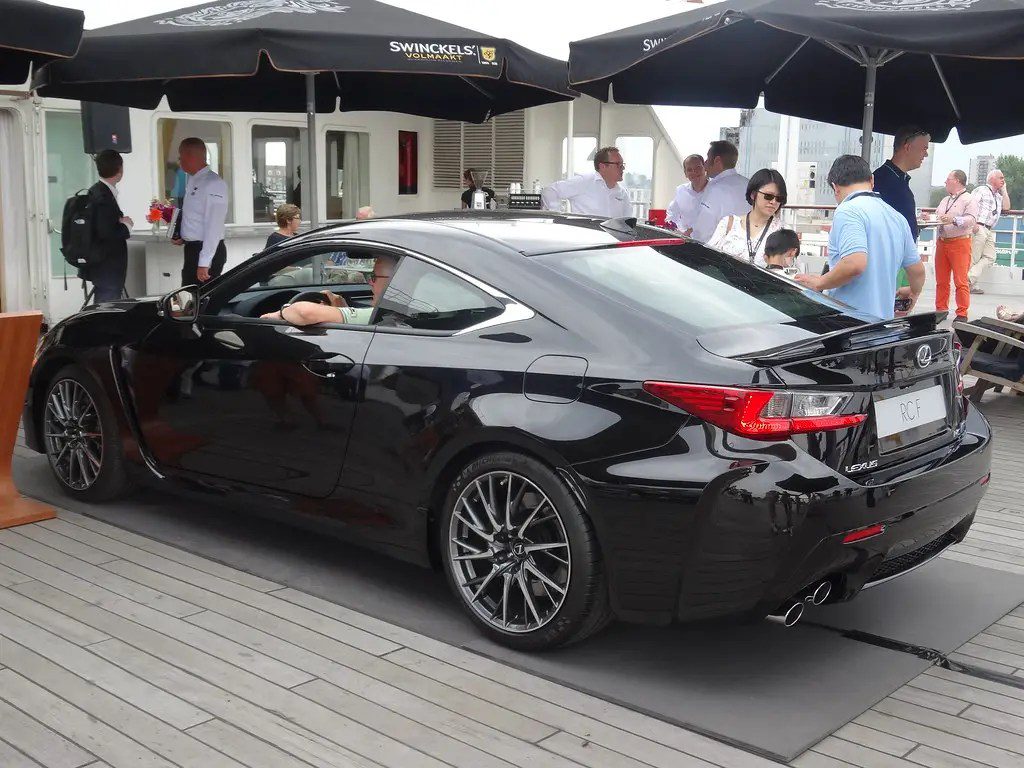
In an era where nearly every performance car has gone to turbocharging and downsized engines, the Lexus RC F stubbornly bucks the trend. And enthusiasts love it for that.
Introduced in 2014, the RC F is a two-door performance coupe from Toyota’s luxury division. The “RC” stands for Radical Coupe, and while the exterior design might look like a muscled-up version of Lexus’s standard coupe, the substance beneath the skin is far more aggressive than the bodywork suggests.
The heart of the RC F is its 5.0-liter naturally aspirated V8 engine, producing 467 horsepower and 527 Nm of torque. At the time of its introduction, this was the most powerful V8 engine Lexus had ever installed in a production vehicle. It revs freely, responds instantly to throttle inputs without turbo lag, and produces a baritone exhaust note that sounds genuinely menacing at full throttle.
The RC F was designed to compete with the BMW M4, Mercedes-AMG C63, and Audi RS5, established German performance coupes that dominate the segment in markets across North America, Europe, and the Asia-Pacific region. While the Lexus never quite matched the Germans in outright driving dynamics (it’s heavier and less surgically precise than the M4, for instance), it offered something the competition couldn’t: Toyota’s legendary reliability wrapped in a package that could sustain high-speed runs on the autobahn or repeated track sessions without breaking a sweat.
The car comes loaded with performance technology. A Torque Vectoring Differential (TVD) helps manage power delivery through corners. Multiple driving modes let you adjust everything from throttle response to suspension stiffness. Carbon ceramic brakes were available as an option for buyers who planned to use the car on track days.
Lexus also released a limited Track Edition with reduced weight, more carbon fiber components, and recalibrated suspension for sharper handling. It trimmed approximately 80 kg from the standard car, which made a noticeable difference in agility.
The RC F proved that Toyota’s luxury brand could build more than comfortable cruisers. It could build a genuine muscle coupe with refinement, and that’s a combination very few manufacturers get right.
5. Toyota GT-One (TS020): The Le Mans Weapon
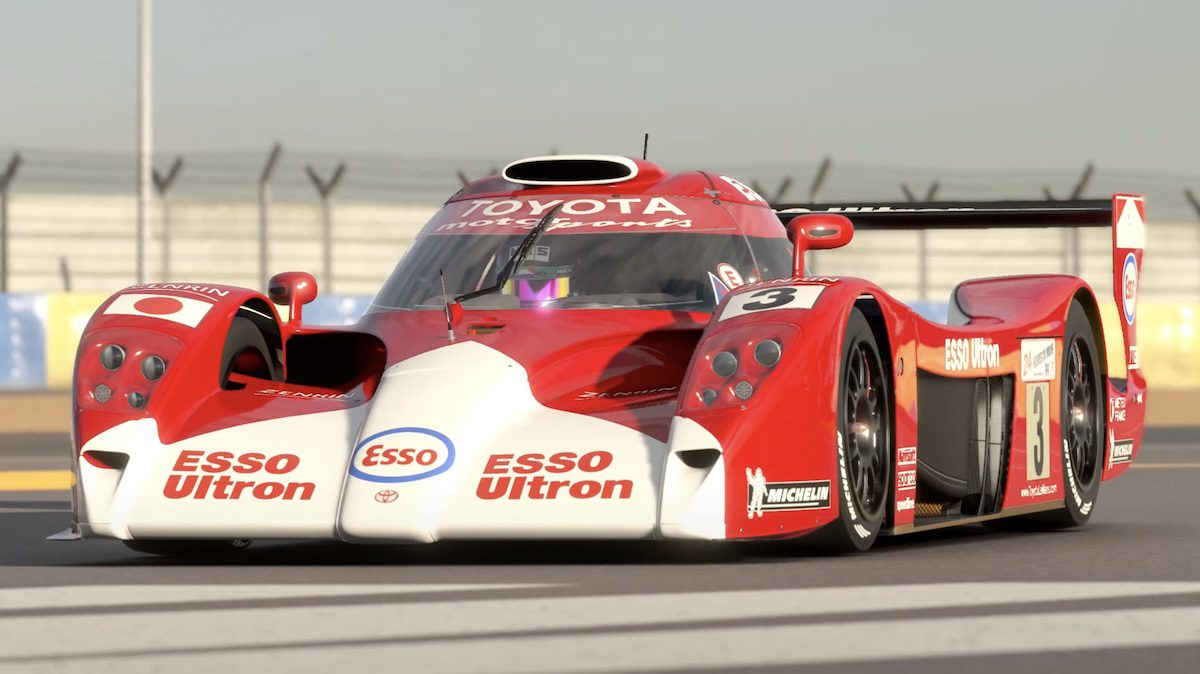
If you’ve ever thought of Toyota as just a manufacturer of practical commuter cars, the GT-One will shatter that perception instantly. This is one of the most visually striking and technologically advanced race cars ever built, and it came from the same company that makes the Camry.
The Toyota GT-One, officially designated the TS020, was developed specifically to compete at the 24 Hours of Le Mans, the legendary endurance race held annually at the Circuit de la Sarthe near Le Mans, France. Le Mans is the most prestigious endurance race in the world, and winning it is a goal that has consumed entire manufacturers for decades.
Toyota first entered Le Mans in 1985 and spent years chasing a victory that kept slipping away. The GT-One, introduced for the 1998 season, represented the company’s most serious and aggressive attempt at the time. The car featured a twin-turbocharged 3.6-liter V8 engine producing approximately 600 horsepower, mounted in a carbon fiber and aluminum honeycomb chassis that weighed barely more than 900 kg.
Its design was extreme. Low, wide, and shaped by aerodynamic requirements rather than aesthetic preferences, the GT-One looked like it belonged in a science fiction film. The car’s body was sculpted in a wind tunnel to maximize downforce while minimizing drag, essential qualities for a car that needed to reach speeds exceeding 300 km/h on the Mulsanne Straight at Le Mans.
At Le Mans in 1998, the GT-One was devastatingly fast, qualifying on the front row and leading portions of the race. But endurance racing is cruel, and mechanical failures knocked both cars out before the finish. Toyota returned with an updated version in 1999, finishing second behind a BMW V12 LMR. It was heartbreakingly close.
To homologate the GT-One for the GT1 class at Le Mans, Toyota was required to build a small number of road-going versions. These road cars, of which only two were ever produced, are among the rarest and most valuable Toyotas in existence. They featured detuned versions of the race engine and minimal concessions to road legality, making them essentially race cars with license plates.
The GT-One story is important because it demonstrates a side of Toyota that rarely gets public attention: the relentless, decade-long pursuit of motorsport glory at the highest level. Toyota would eventually win Le Mans outright in 2018 with the TS050 Hybrid, but the GT-One remains the car that showed the world Toyota could compete with anyone, anywhere, at any speed.
6. Toyota Celica (Seventh Generation): The Final Evolution of a Classic Nameplate
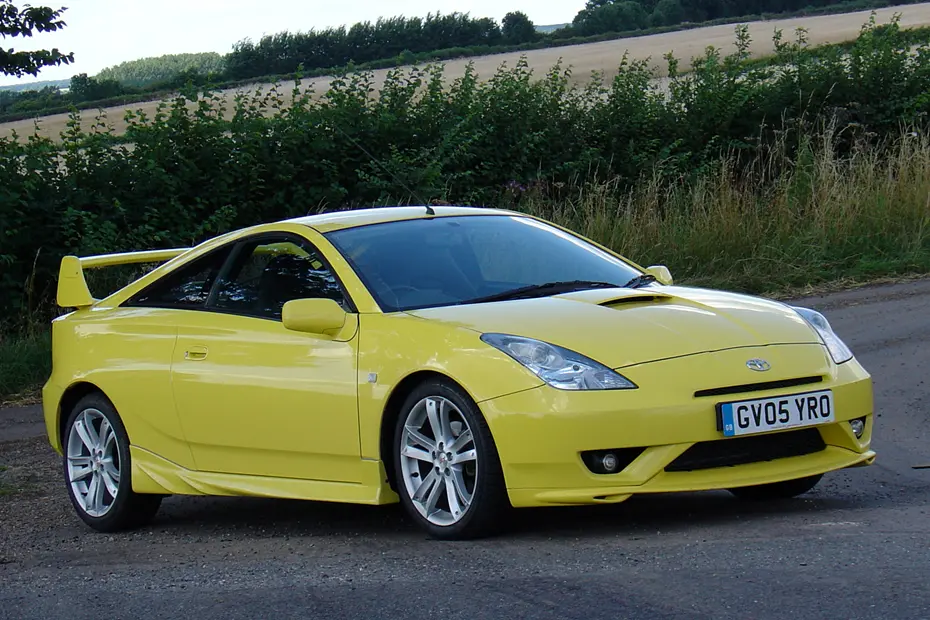
The Celica is one of Toyota’s longest-running sports car nameplates, spanning seven generations and over three decades of production. The seventh and final generation, produced from 1999 to 2006, represented the culmination of everything Toyota had learned about building affordable, lightweight performance cars.
The seventh-generation Celica was available with two engine options, both 1.8-liter four-cylinder units but with very different characters.
The base engine was the 1ZZ-FE, producing 140 horsepower. It was shared with the MR2 Spyder (the third-generation MR2), and while it wasn’t going to win any drag races, it was smooth, reliable, and perfectly adequate for daily driving with an occasional spirited run through twisty roads.
The real gem was the GT-S trim’s 2ZZ-GE engine, a high-revving 1.8-liter unit developed in collaboration with Yamaha Motor Company. This engine produced 180 horsepower, which doesn’t sound earth-shattering until you understand how it delivered that power. The 2ZZ-GE featured Toyota’s VVTL-i system (Variable Valve Timing and Lift with intelligence), which essentially gave the engine two personalities. Below 6,200 RPM, it was calm, tractable, and easygoing. But once you crossed that threshold, the high-lift cam profile engaged, and the engine came alive with a surge of power that carried all the way to the 8,200 RPM redline.
That 2ZZ-GE engine was so good that Lotus selected it for use in the Elise and Exige, two of the most celebrated lightweight sports cars in the world. The fact that a British sports car manufacturer chose a Toyota engine for its flagship models says everything about the quality of the engineering.
The Celica’s design was polarizing at the time. Sharp, angular, and aggressive, it didn’t look like any previous Celica, and opinions were divided. But its lightweight construction (the GT-S weighed around 1,100 kg), responsive handling, and that brilliant engine made it a genuine driver’s car. The Celica was assembled at Toyota’s Tahara plant in Aichi Prefecture and sold in markets worldwide, from Japan and North America to Europe, Australia, and parts of Southeast Asia.
When production ended in 2006, Toyota didn’t replace the Celica directly. It left a gap in the lineup that wouldn’t be filled until the GT 86 arrived six years later. For many enthusiasts, the seventh-generation Celica remains an underappreciated gem, an affordable, reliable, and genuinely fun sports car that deserves more recognition than it gets.
7. Toyota S-FR: The Best Toyota Sports Car That Never Was
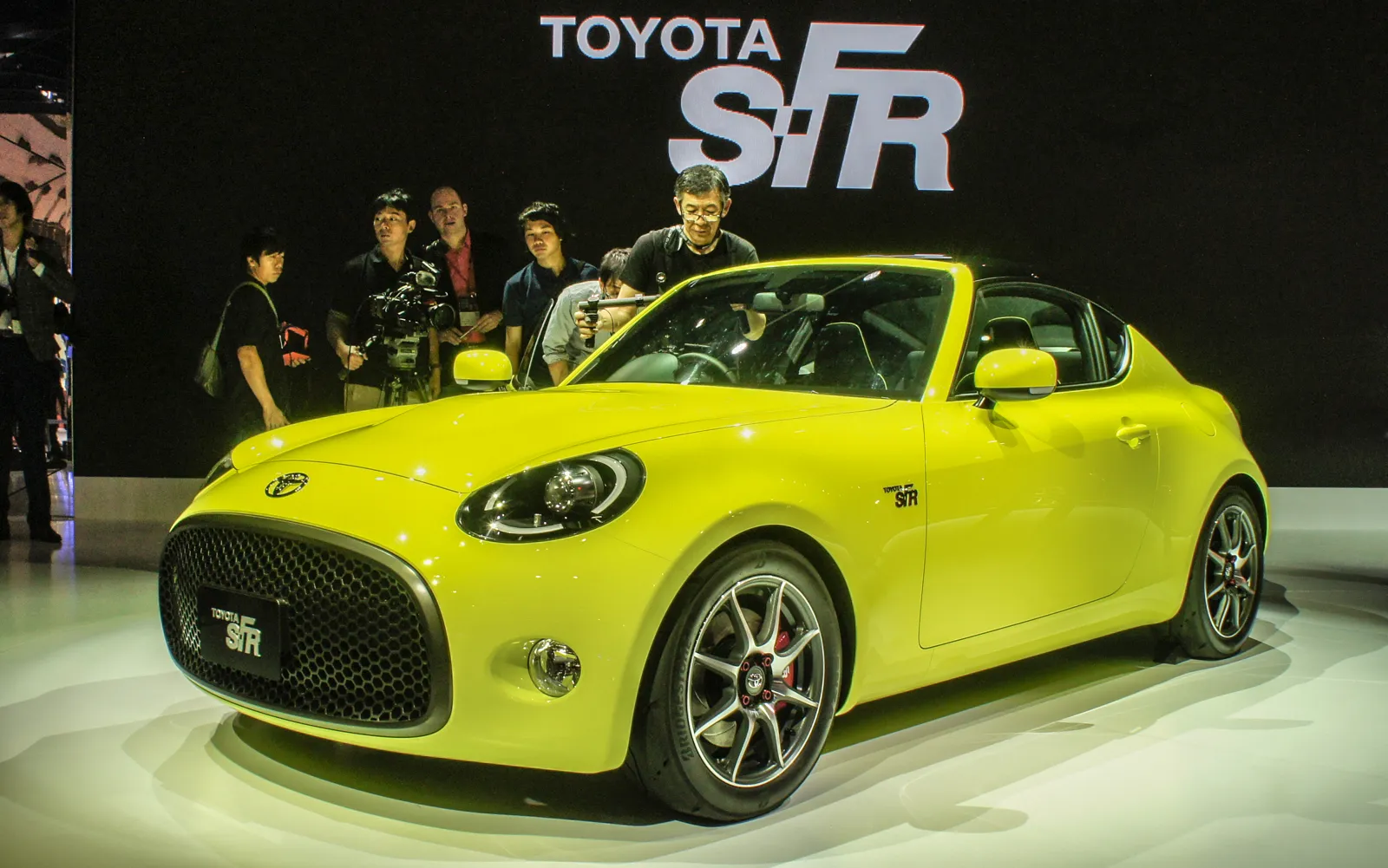
Not every great idea makes it to production. The Toyota S-FR is proof of that, and its story is one of the more frustrating “what ifs” in recent automotive history.
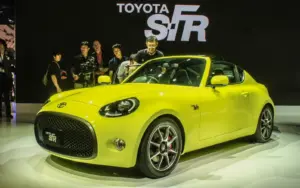
Unveiled as a concept car at the 2015 Tokyo Motor Show, the S-FR was Toyota’s vision for an entry-level, affordable, lightweight sports car. Think of it as a spiritual successor to the classic Sports 800 (which we’ll get to later on this list), but reimagined for the modern era.
The concept was small. Really small. It had a tiny footprint barely larger than a Mazda MX-5, with a short wheelbase, minimal overhangs, and a design that managed to look both charming and aggressive at the same time. The face had an almost playful quality, with round headlights and a wide grille that gave it character without trying too hard. It was the kind of design that made people smile.
Under the skin, the S-FR concept featured a rear-wheel-drive layout with a manual transmission, the exact formula that sports car purists dream about. A small displacement engine (rumored to be a 1.5-liter four-cylinder) would have kept the car light, efficient, and accessible to younger buyers and first-time sports car owners. The concept was aimed squarely at the Mazda MX-5’s market segment: people who wanted the thrill of rear-drive, manual-shift driving without spending BMW money to get it.
Toyota’s idea was to create a three-tier sports car lineup: the S-FR as the affordable entry point, the GT 86 as the mid-range driver’s car, and the Supra as the flagship. It would have given Toyota one of the most complete sports car portfolios in the industry.
But the S-FR never made it past the concept stage. Toyota ultimately decided against production, reportedly due to concerns about profitability in the small sports car segment and the challenge of meeting increasingly stringent global emissions and safety regulations with such a small, lightweight platform.
It’s a shame. The enthusiast community was genuinely excited about the S-FR, and the concept addressed a real gap in the market: a new, affordable, fun-to-drive sports car from a mainstream manufacturer. Instead, it remains a tantalizing glimpse of what could have been, a car that existed only in concept form and in the imaginations of the people who fell in love with it at the Tokyo Motor Show.
8. Toyota 86 (GT 86 / FR-S / GR 86): The Driver’s Car That Reignited a Brand
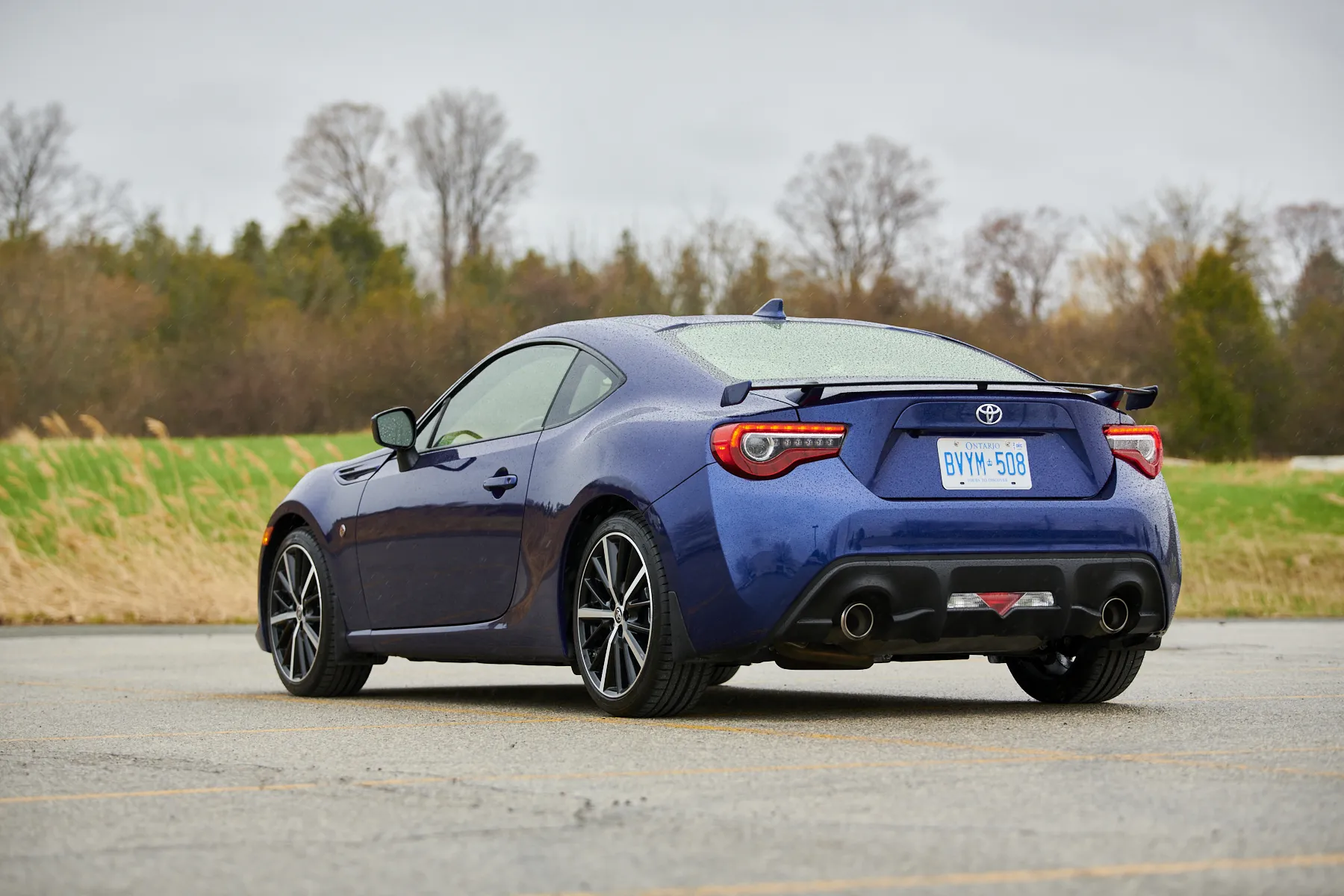
If the Supra is Toyota’s most famous sports car, the 86 might be its most important one, at least in the modern era. This is the car that reminded the world that Toyota still knew how to build a vehicle purely for the joy of driving.
The Toyota 86 (sold as the GT 86 in some markets, the Scion FR-S in North America initially, and later the GR 86) was introduced in 2012 as a joint development project between Toyota and Subaru. Toyota handled the overall design and engineering direction, while Subaru contributed its expertise in boxer engines and symmetrical all-wheel-drive platforms (though the 86 is rear-wheel-drive, the boxer engine was key to the car’s low center of gravity).
The first generation featured a naturally aspirated 2.0-liter flat-four engine producing 200 horsepower. That’s not a lot of power by modern standards. And that’s entirely the point. The 86 was never designed to be fast in a straight line. It was designed to be engaging, balanced, and rewarding to drive at any speed.
The car weighs around 1,250 kg (2,756 lbs), sits low to the ground, and has a near-perfect 53:47 front-to-rear weight distribution. The steering is communicative. The chassis is playful and predictable. The rear end can be rotated with throttle input, making the 86 one of the most popular platforms for drifting, autocross, and amateur motorsport around the world.
The 86 wasn’t just popular in one market. It became a global phenomenon. In Japan, it tapped into the country’s deep love of lightweight, balanced sports cars. In North America, it attracted young enthusiasts who had been priced out of other sports car segments. In Europe and Australia, it competed directly with the Mazda MX-5 and attracted a loyal following. The 86 created an aftermarket ecosystem of its own, with thousands of modification parts, dedicated track events, and community organizations spanning dozens of countries.
The second generation, the GR 86, arrived in 2022 with a larger 2.4-liter boxer engine producing 228 horsepower and, critically, more torque across the rev range. It addressed the most common complaint about the original (that the mid-range felt flat) while keeping everything that made the first generation great: the lightweight construction, the rear-wheel-drive layout, the analog driving experience, and the availability of a manual transmission.
Finding clean, original first-generation Toyota 86s is becoming increasingly difficult, especially low-mileage examples that haven’t been modified. Values are starting to climb as the car transitions from “affordable used sports car” to “future classic.” If you’ve been thinking about picking one up, the window is narrowing.
9. Toyota Sprinter Trueno and Corolla Levin (AE86): The Drifting Pioneer
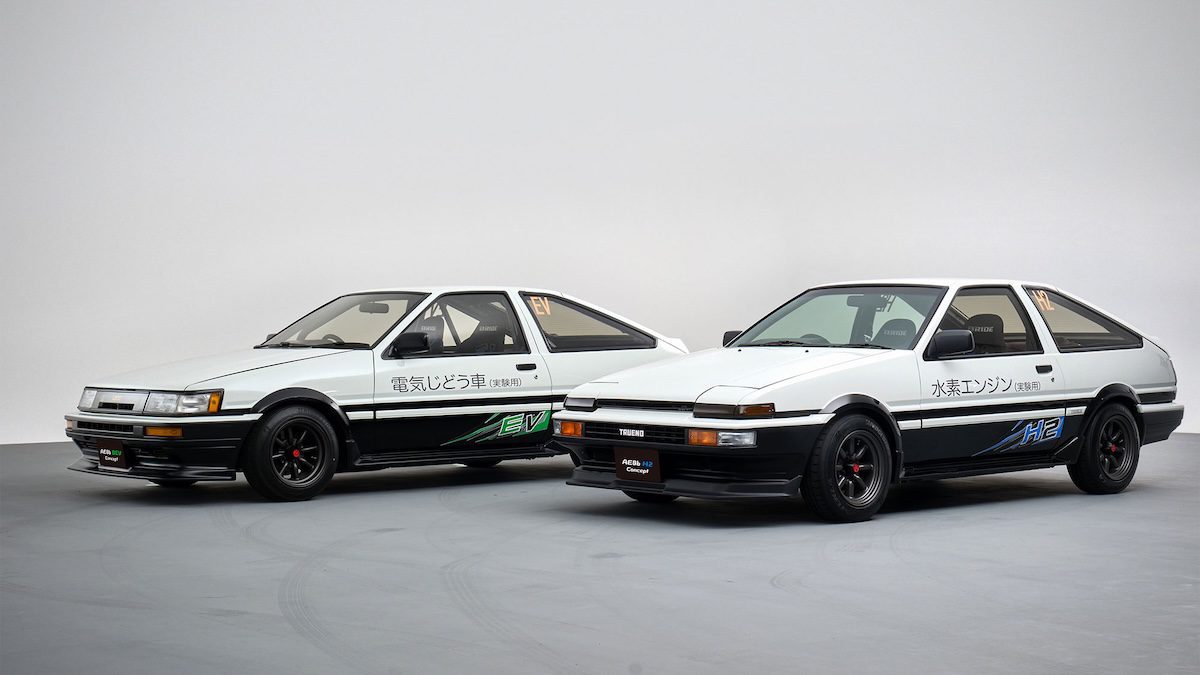
Before the modern Toyota 86, there was the original: the AE86, a chassis code that has become shorthand for an entire philosophy of driving. The AE86 refers to the fifth-generation Toyota Corolla Levin and Toyota Sprinter Trueno, produced from 1983 to 1987. These were lightweight, rear-wheel-drive coupes and hatchbacks that became the foundation of drifting culture as we know it today.
The AE86 was powered by Toyota’s 4A-GE engine, a 1.6-liter twin-cam four-cylinder that produced around 130 horsepower in its most common configuration. On paper, those numbers are modest. In practice, the AE86’s magic came from its incredibly low curb weight (around 940 kg), its rear-wheel-drive layout, and its near-perfect balance. The car responded to driver inputs with an immediacy and honesty that more powerful, heavier cars simply couldn’t match.
The AE86’s legend was forged on the mountain roads of Japan. In the touge (mountain pass) racing scene that flourished in rural Japan during the 1980s and 1990s, the AE86 became the weapon of choice for skilled drivers who could exploit its balance and predictability on narrow, winding roads. Keiichi Tsuchiya, the professional racing driver who earned the nickname “Drift King,” built his early reputation drifting an AE86 on mountain roads, and his exploits helped establish drifting as a legitimate motorsport discipline.
The car’s fame spread further through the manga and anime series “Initial D,” which follows a young tofu delivery driver who becomes an unlikely street racing legend behind the wheel of a white and black Sprinter Trueno AE86. The series, set in the mountains of Gunma Prefecture, became a massive cultural phenomenon across Japan and later worldwide, introducing the AE86 to millions of fans who had never seen one in person.
The AE86 has appeared in hundreds of video games, automotive publications, and enthusiast media over the decades. Its influence on car culture is disproportionate to its original market position. When it was new, it was just a compact, affordable Toyota with rear-wheel drive. Today, it’s one of the most sought-after collector cars from the 1980s, with prices for clean examples reaching well into five figures.
The Sprinter Trueno hatchback is the most desirable variant, thanks to its retractable headlights and the strong association with Initial D. But the Corolla Levin coupe, with its fixed headlights and slightly different front-end treatment, is equally capable on the road and increasingly appreciated by collectors who missed the boat on Trueno pricing.
The AE86 isn’t fast by modern standards. It’s not luxurious. It’s not technologically advanced. But it’s one of the purest, most involving driving experiences you can have in a car, and that’s a quality that never goes out of style.
10. Toyota Sports 800 (Yotahachi): Where It All Began
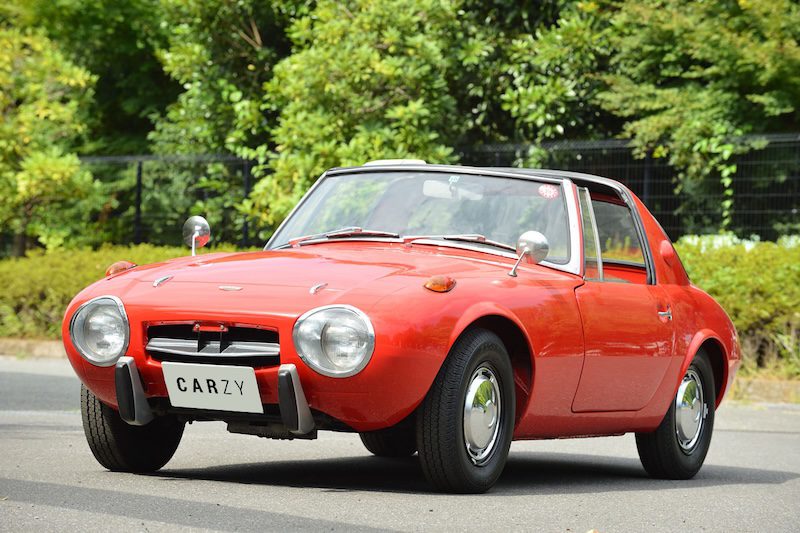
You can’t tell the story of Toyota’s sports car heritage without starting here. The Toyota Sports 800, affectionately known as the “Yotahachi” in Japan, is where Toyota first proved it could build more than reliable transportation. It could build something exciting.
Produced from 1965 to 1969, the Sports 800 was a tiny, two-seat coupe that emerged during a period of rapid economic growth in Japan. The country’s postwar industrial miracle was in full swing, and a growing middle class was beginning to aspire beyond basic transportation. Small, affordable sports cars were becoming popular across the developed world (think the original MG Midget, Austin-Healey Sprite, and Fiat 124 Spider in Europe), and Toyota wanted to capture a piece of that market domestically.
The Sports 800’s specifications were humble by any standard. Its air-cooled two-cylinder 0.8-liter engine produced just 44 horsepower, mated to a four-speed manual transmission driving the rear wheels. Those numbers would be laughable in a modern context. But the Sports 800 had a secret weapon: it weighed less than 580 kg (1,279 lbs).
At that weight, 44 horsepower goes a lot further than you’d expect. The car’s power-to-weight ratio was competitive with far more powerful machines, and its tiny dimensions, low center of gravity, and responsive handling made it genuinely quick on winding roads. Toyota engineers designed it with a front-engine, rear-wheel-drive layout that gave it balanced, predictable handling characteristics.
The design featured a removable aluminum targa-style roof panel, which was innovative for the era and gave the car a distinctive look. It was aerodynamically efficient for its time, with a drag coefficient that contributed to its surprising top speed of approximately 155 km/h (96 mph), remarkable for an 800cc engine.
The Sports 800 competed directly with the Honda S800, its main rival in the Japanese lightweight sports car segment. Both cars represented different philosophies within the same market. The Honda revved higher and produced more power per liter. The Toyota was lighter, more aerodynamic, and arguably more refined as a complete package. The rivalry between these two cars in the Japanese domestic market during the late 1960s foreshadowed the Toyota-Honda competition that would play out across every vehicle segment for the next half century.
Fewer than 3,200 Sports 800s were produced during its four-year run. Most were sold in Japan, and the vast majority have long since disappeared from the road. Surviving examples are rare and increasingly valuable, sought after by collectors who appreciate both the car’s historical significance and its pure, uncomplicated driving character.
The Sports 800 proved something fundamental about Toyota’s capabilities. Even in the 1960s, with minimal resources compared to what the company commands today, Toyota could build a sports car that was lightweight, engaging, and genuinely fun. Every Toyota sports car that followed, from the Celica to the Supra to the GR 86, can trace its spiritual lineage back to this tiny, 44-horsepower coupe from Aichi Prefecture.
Honorable Mentions: Cars That Almost Made the List
Ten slots aren’t enough to capture the full breadth of Toyota’s sports car history. Several other models deserve recognition:
- Toyota MR2: Toyota’s mid-engine, rear-wheel-drive two-seater that came in three generations (1984-2007). The first generation was a lightweight, affordable mid-engine car that won Car of the Year awards globally. The second generation added turbocharging and supercar-like styling. The third generation went back to lightweight simplicity with a sequential manual gearbox option.
- Toyota 2000GT: Japan’s first true supercar, produced from 1967 to 1970 in collaboration with Yamaha. Only 351 were built. It appeared in the James Bond film “You Only Live Twice” and established Japan as a legitimate player in the high-performance sports car world. Clean examples now sell for well over $1 million at auction.
- Toyota GR Yaris: A modern homologation special built to support Toyota’s World Rally Championship program. It features a turbocharged 1.6-liter three-cylinder engine producing 257 horsepower, all-wheel drive, and a 6-speed manual. It’s one of the most exciting hot hatchbacks ever produced and has been praised by every automotive journalist who’s driven it.
- Toyota GR Corolla: Taking the GR Yaris formula and applying it to the Corolla body, this all-wheel-drive hot hatch packs 300 horsepower and a manual transmission. It brings rally-inspired performance to one of the world’s best-known nameplates.
Why Toyota’s Sports Car Legacy Matters
Looking at this list from a broader perspective, Toyota’s sports car story is really a story about a company that refuses to be defined by a single identity. The same manufacturer that builds the world’s best-selling hybrid (the Prius), the most trusted pickup truck in developing nations (the Hilux), and the most ubiquitous sedan on the planet (the Corolla) also builds cars that win at Le Mans, dominate drift competitions, and make sports car purists weak in the knees.
The geographic reach of Toyota’s sports car influence is remarkable. The AE86 shaped drifting culture from the mountains of Japan to the circuits of North America. The Supra became an icon in the tuning scenes of southern California, the Middle East, and Southeast Asia. The LFA proved that Japanese engineering could match or exceed the best that Germany and Italy had to offer. The GT-One competed on the hallowed ground of Le Mans in France. The GR 86 filled parking lots at track day events on every continent.
Toyota’s current performance lineup, under the Gazoo Racing (GR) banner, suggests the company is more committed to sports cars now than it has been in years. The GR Supra, GR 86, GR Yaris, and GR Corolla represent a diverse, accessible, and genuinely exciting range of performance vehicles. Toyota president Akio Toyoda (now chairman), himself a racing driver, has been the driving force behind this renewed focus on performance, and his influence has transformed the brand’s relationship with enthusiasts worldwide.
The next time someone tells you Toyota only makes boring cars, show them this list. Then hand them the keys to a GR Supra and watch the conversation change completely.