
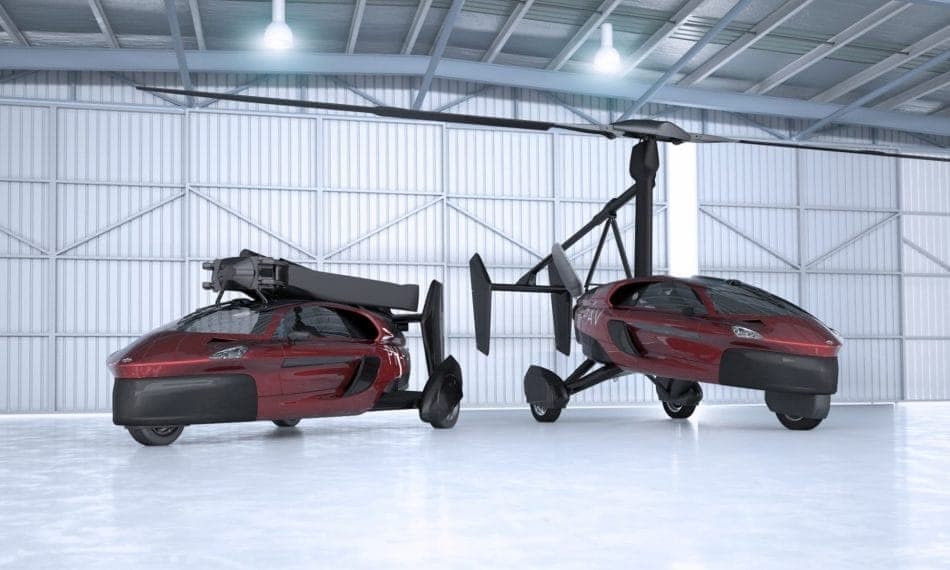

A CAR THAT FLIES, A PLANE THAT DRIVES.
Self-driving cars, hoverboards, and jetpacks are starting to feel less futuristic when compared with something far more practical; and far more technically demanding: a roadable aircraft you can actually buy. PAL-V International B.V., a Dutch company known for developing roadable aircraft, has moved from concept and testing into commercial sales with its first customer-facing flying car models: the “PAL-V Liberty Pioneer” and “PAL-V Liberty Sport.” Both are three-wheeled motorcycles that transform into gyrocopters; meaning they are designed to operate both on public roads and in the air. In this lineup, the Liberty Sport is positioned as the base model, while the Liberty Pioneer sits above it with a higher-end trim and premium specification.
That distinction matters because PAL-V is not presenting these machines as novelty toys. The Liberty platform represents an attempt to bridge two highly regulated worlds; automotive and aviation; into one product that still remains usable, storable, and (within its operational boundaries) practical. Calling it a “flying car” is accurate in the popular sense, but technically it is a roadable gyrocopter: a vehicle designed to drive like a narrow three-wheeler and fly using gyrocopter principles once converted into flight mode. That combination is what makes it so compelling; and also why it has taken so long to arrive at a market-ready stage.
Before we go deeper, it helps to set expectations clearly. A “car that flies” does not mean vertical takeoff like a helicopter or a science-fiction hovercraft that launches from your driveway. PAL-V’s approach is rooted in established rotorcraft logic, where flight safety, stability, and certification pathways are more mature than experimental VTOL concepts. The result is a vehicle that aims to be realistically certifiable and realistically operable rather than purely cinematic.
In other words, PAL-V is essentially betting that the first widely sellable flying car will not be the most radical aircraft design. It will be the one that fits existing regulations, leverages proven aerodynamic principles, and reduces the pilot’s workload rather than increasing it. And that philosophy is what underpins the Liberty story.
PAL-V, the company behind this two-seat flying vehicle, has been developing it for nearly a decade with a very specific goal: meet global regulatory safety requirements while designing out common user errors that can occur in light aviation. That’s a crucial point. The difference between “a prototype that can fly” and “a product that can be sold responsibly” is not only mechanical reliability; it is human factors engineering, redundancy, training logic, and compliance with certification standards.
Now, with commercial sales underway, there is little doubt that the broader flying car conversation has entered a new phase. For decades, flying cars lived mostly in concept art, experimental demos, and small-scale engineering attempts. PAL-V’s entry is notable because it is presented as a buyer-facing product with defined trims, performance claims, specifications, and a price structure; signals that the company sees itself as operating in the real mobility market, not only in the experimental aviation space.
For owners and observers, the most important question becomes practical: what exactly are you buying? How does it drive? How does it fly? What does it require from the operator? What infrastructure does it need? And how do its specs translate into real-world mobility value?
This guide walks through those questions in a structured way; starting with the PAL-V concept and its operational reality, then moving through pricing, licensing, and finally the EU and US specification tables. Along the way, you’ll also find expert context on gyrocopter flight logic, practical operating limits, and what the numbers truly mean if you are evaluating this as a potential owner rather than simply as a headline.
PAL-V has been working on its flying vehicle for almost ten years to ensure it meets safety expectations set by regulatory bodies around the world and to reduce the impact of common pilot mistakes during real-world operation. At this stage, the company’s confidence is clear: the technology has matured enough for PAL-V flying car sales to begin in a meaningful, commercial way; not as a one-off demonstration, but as a product offered in defined versions.
“After years of hard work, beating the technical and qualification challenges, our team succeeded in creating an innovative flying car that complies with existing safety standards, determined by regulatory bodies around the world,” says the company’s CEO Robert Dingemanse.
He adds:
“This truly is a pivotal time in aviation and mobility history.”
After nearly a decade of development, PAL-V positions the Liberty program as evidence that “flying car” technology is no longer a vague promise. In theory, it can make travel faster and more flexible; particularly in regions where road infrastructure struggles to keep up with population growth. Places like Lagos, Nigeria, where traffic congestion is a daily reality, are often used as examples because the time lost in gridlock is measurable and consistent. However, practical flying mobility still depends on access to appropriate takeoff and landing space and on regulatory permission to operate. PAL-V’s own operational reality includes the need for a runway of about 500 feet for takeoff and roughly 100 feet for landing, which means the “flying” advantage is most realistic when paired with nearby airstrips, small airports, or suitable open spaces that meet aviation safety rules.
It is worth emphasizing the bigger picture here: a flying vehicle does not eliminate ground infrastructure needs; it shifts them. Instead of depending entirely on roads and highways, you depend partly on aviation infrastructure and airspace rules. That tradeoff is not inherently negative; in many regions, general aviation infrastructure already exists, and small airfields can be far less congested than city streets. But it does mean the PAL-V concept is best understood as “multi-modal personal mobility” rather than a simple replacement for everyday driving.
The PAL-V Liberty Pioneer and PAL-V Liberty Sport, described as gasoline-engine gyrocopters, are engineered for low-altitude flight; below 4,000 feet. That altitude range aligns with the typical operating environment for many light aircraft and rotorcraft, where visual navigation and local airspace management are practical. The vehicles’ light weight contributes to the stated top speed of up to 180 km/h (112 mph) both on land and in the air. Put simply: these machines are designed to be light enough for efficient flight while still being robust enough for road use, which is one of the fundamental engineering balancing acts in roadable aircraft design.
From an expert perspective, the “lightweight” emphasis is not just about speed. Weight is central to everything in aviation: takeoff distance, climb performance, fuel consumption, payload margin, and safety reserves. Every kilogram saved can translate into either more useful load (people and baggage) or more operational margin (fuel reserve, better climb). On the road, weight influences acceleration, braking, and tire wear. Designing one vehicle that must satisfy both domains is a far more complex problem than designing a car or aircraft alone.
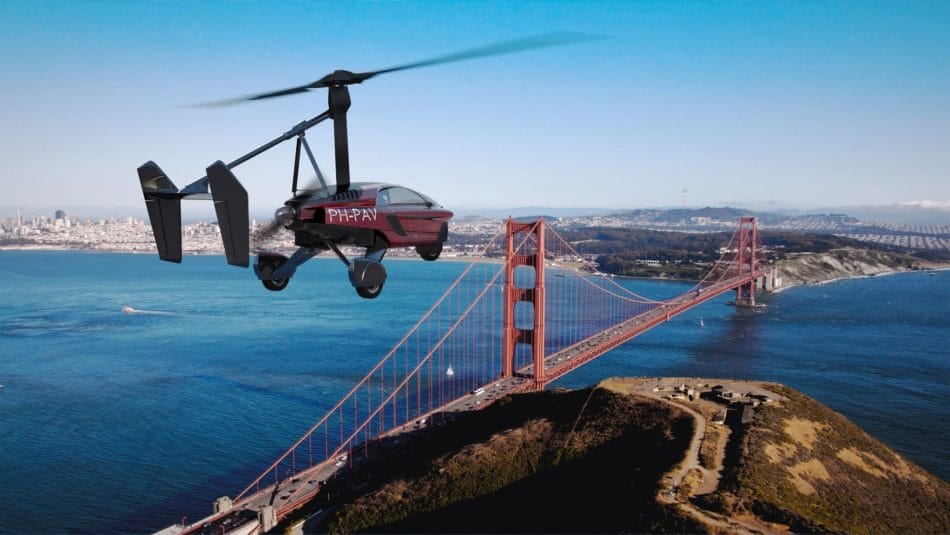
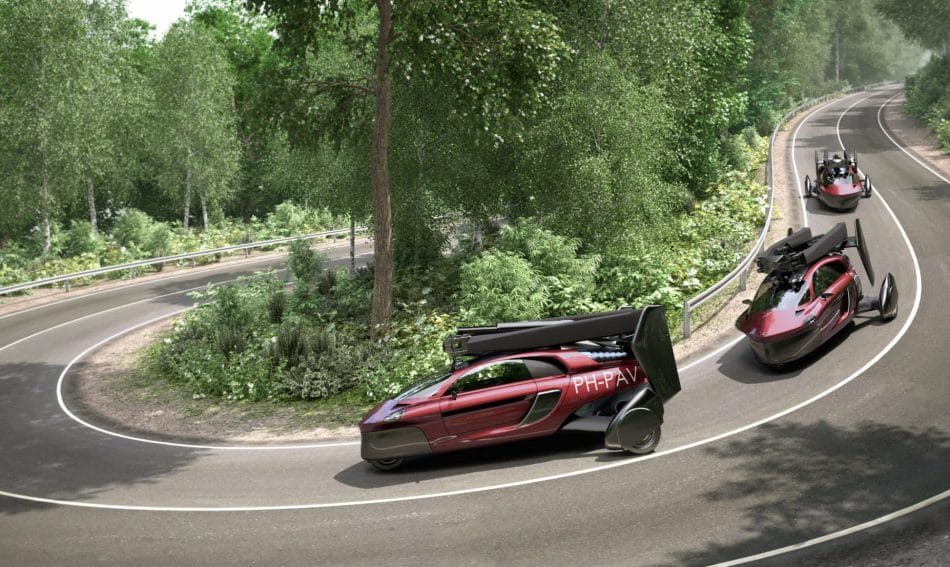
On the ground, the PAL-V looks closer to a compact sports vehicle; narrow, agile, and road-oriented. In the air, it resembles a rotorcraft more than a fixed-wing airplane, and the gyrocopter architecture is the reason. A gyrocopter (or autogyro) uses a freely spinning rotor for lift, with forward thrust provided by a separate propulsive system. This differs from a helicopter, where the rotor is powered to generate both lift and thrust. The distinction matters because gyrocopters are often described as more forgiving in certain flight characteristics, and they can be engineered to reduce some categories of pilot workload.
PAL-V’s conversion mechanism is part of what makes the Liberty platform so visually and mechanically interesting. Advanced gyrocopter technology enables the rotor blades and tail to fold automatically after landing, and the vehicle can be switched into driving mode with the push of a button. In a properly designed roadable aircraft, transformation has to be repeatable and reliable; because the transition is not cosmetic; it changes the vehicle’s center of gravity, aerodynamic surfaces, and operational configuration.
Unusually (and very characteristically Dutch in design philosophy), the PAL-V turns like a motorcycle by leaning. That leaning behavior helps the vehicle remain narrow while still feeling stable during cornering, and it aligns with the logic of three-wheeled leaning vehicles. This approach was famously pioneered in a different format by the Carver vehicle, also from a Dutch company. The key advantage is that you can keep a small road footprint while maintaining an engaging, controllable driving dynamic. For many owners, this will feel more “motorcycle-like” than “car-like,” which is important to understand before imagining it as a conventional family vehicle.
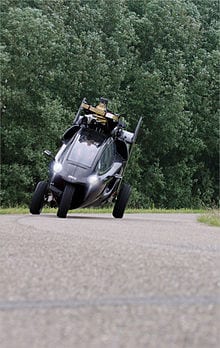
In physical size, the PAL-V is described as comparable to a regular car, which is one of the more important practical advantages of the Liberty approach. If a roadable aircraft is too wide or too long, it becomes difficult to integrate into everyday traffic, parking, and storage. The Liberty is designed to fit into typical road environments, which supports the core concept: it should behave like a road vehicle when you need it to, without demanding a special transport trailer or unusual storage requirements in normal use.
At the same time, it introduces a fundamentally new mobility option. Instead of choosing between driving the entire way or flying the entire way, the owner can drive to an appropriate takeoff location, convert the vehicle, fly to another point, then convert again and continue on the road. That is the real promise of a roadable aircraft: it is not just about flying; it is about reducing friction between the modes of travel.
However, this is not a “no-skills-required” mobility product. The owner will likely need both a sport pilot certificate (or equivalent aviation credential depending on region) and a standard driving license. This dual-licensing requirement is not a barrier created by PAL-V for marketing reasons; it is a direct consequence of operating in two regulated transportation domains. Aviation regulators require competence, training, and certification to operate aircraft safely. Road authorities require licensing for highway operation. Owning a PAL-V therefore implies a higher level of responsibility than owning a conventional vehicle, and future buyers should treat that as part of the purchase decision.
From a risk-management standpoint, that responsibility also extends beyond licensing. A roadable aircraft owner must think about weather conditions, wind limits, visibility, and flight planning. You cannot “brute force” your way through poor conditions the same way some drivers do in cars. In aviation, conservative decision-making is part of safety culture. Even though PAL-V aims to reduce common pilot mistakes, it cannot eliminate the need for judgment.
On the other hand, this is precisely what makes a product like this attractive to many buyers: it is not just transportation. It is a skill-based mobility tool; part vehicle, part aircraft, part lifestyle. For some, the value proposition includes the training and the experience as much as the destination.
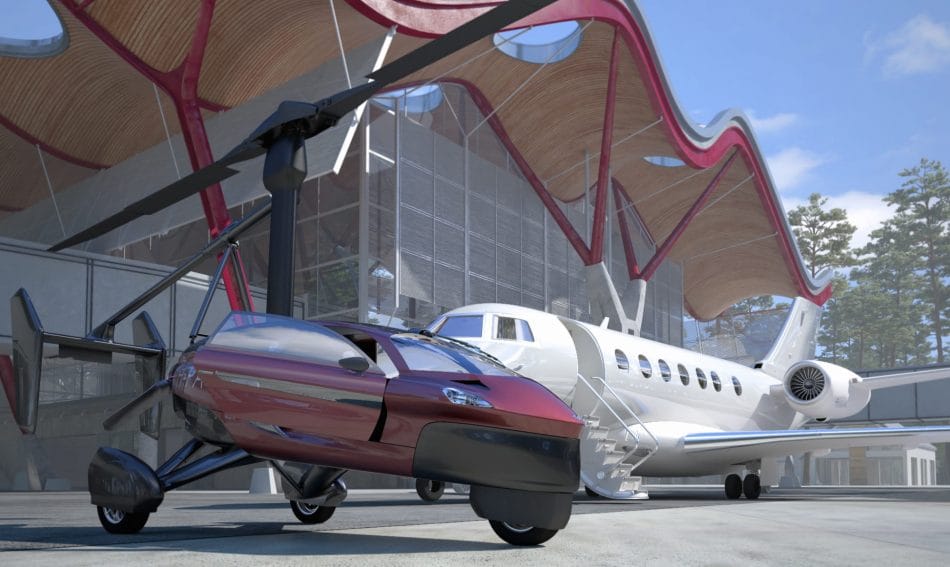
Check out the pictures of the flying cars below:



Watch Video below
A machine that genuinely blends road travel with flight will never be cheap; and PAL-V makes no attempt to pretend otherwise. The earliest test-flown model (first flown for testing in 2012) was reported to cost around $300,000, and that figure mostly serves as a baseline for understanding how expensive it is to engineer, certify, and produce a dual-mode vehicle. In today’s commercial lineup, the Liberty Sport is priced at roughly $399,000, while the premium Liberty Pioneer is listed at about $599,000. These figures do not include taxes. PAL-V also offers down payment options, but even the lowest entry point is still substantial at $10,000.
From a professional ownership standpoint, purchase price is only part of the cost conversation. A roadable aircraft is likely to require ongoing maintenance programs that resemble aviation standards as much as automotive service intervals. Inspections, wear items, and regulatory compliance requirements can vary by region, but buyers should expect aircraft-like discipline: scheduled checks, documented maintenance records, and adherence to operating limitations.
Insurance is another factor that future owners often underestimate. Even if the vehicle is road legal, the moment it becomes an aircraft, aviation insurance logic applies. Depending on region, policy structure, pilot experience, and usage profile, premiums can be significant. Owners should treat insurance planning as part of the acquisition process, not an afterthought.
Then there is training time. If you do not already hold the necessary pilot certificate, you must factor in the cost and time required to earn it, plus the ongoing proficiency requirements. In many aviation systems, staying current is not optional; it is part of safe operation. A flying car does not eliminate that reality; it places it directly into consumer mobility.
Still, for the intended buyer; someone who values time, novelty, multi-modal freedom, and aviation culture; the Liberty models represent something rare: a commercial attempt to normalize a capability that once existed only in prototypes. For that buyer profile, the price is not only about transportation; it is about entry into a new class of mobility.
PAL-V flying car specifications (EU)
The specification tables below present the PAL-V Liberty’s performance and technical data in EU measurements. To read these numbers like an expert, it helps to separate marketing appeal from operational meaning. For instance, maximum speed is less important than cruise speed in real flight planning because cruise determines range, comfort, and typical engine loading. Likewise, takeoff and landing distances are not just “numbers”; they define what kind of airfields and open spaces you can realistically use.
Also note that performance values can be influenced by conditions such as temperature, altitude, payload, and wind. That is true for all aircraft, and it matters even more for a vehicle designed to be light and efficient. The published specs are best understood as baseline performance data under defined assumptions, not as guaranteed performance in every scenario.
DRIVE MODE EU
Drive mode specifications describe how the Liberty behaves as a road vehicle. These numbers are useful for understanding whether it can keep up with highway traffic, how quickly it accelerates to typical speeds, and what kind of fuel efficiency and range you can expect when operating strictly on the ground.
| Max Speed | 160 km/h |
| Top speed acceleration (0-100 km/h) | <9 seconds |
| Engine power | 100 hp |
| Fuel economy: | 7.6 l/100km |
| Range: | 1315 km |
Interpreting these figures: a 160 km/h maximum road speed and sub-9-second 0–100 km/h acceleration places the Liberty in a range that is compatible with modern highway driving. The 100 hp figure in drive mode reflects that road operation does not require the same power profile as flight, especially when the vehicle is optimized for low mass and aerodynamic packaging.
The fuel economy and range values indicate that in road mode the Liberty is intended to function like a real travel vehicle, not a short-range novelty. However, keep in mind that real-world consumption may vary with driving style, traffic, weather, load, and tire setup; particularly for a three-wheeled leaning vehicle where riding behavior differs from traditional cars.
FLIGHT MODE EU
Flight mode specifications are where the Liberty becomes a genuine aircraft. These numbers define not only speed, but also operating altitude, payload, runway needs, fuel burn, and flight endurance. In aviation, these are the numbers that shape planning and safety margins. They tell you what “missions” are realistic: short hops between local airfields, regional travel legs, or longer cross-country flights within the range and endurance envelope.
| Economic cruise speed | 140 km/h |
| High cruise speed (90% range) | 160 km/h |
| Maximum speed | 180 km/h |
| Min speed for level flight | 50 km/h |
| Engine power: | 200 hp |
| Maximum operating altitude | 3500m |
| Useful load | 246 kg |
| Take-off roll (MTOW, MSL) | 180m |
| Take-off distance (+ 15m obstacle clearance) (MTOW***, MSL****) | 330m |
| Landing roll distance | 30m |
| Fuel economy | 26 l/h |
| Max Range (with ½ hour reserve fuel*, MTOW) | 400 km |
| Max Range (with ½ hour reserve fuel, single person operation, MSL) | 500 km |
| Max endurance (with ½ hour reserve fuel, MTOW) | 4.3 hours |
From an expert reading, the economic cruise speed of 140 km/h is the kind of value that typically matters for flight planning. “Maximum speed” may look impressive, but most aircraft are flown at cruise speeds that optimize fuel burn and engine loading rather than continuously chasing maximum. The listed maximum operating altitude of 3500 m fits the concept of low-altitude operation, aligning with the earlier claim that the Liberty is intended to fly below 4,000 feet in typical use (noting that altitude references can differ depending on measurement context and operating region).
Useful load; 246 kg; is one of the most important practical figures because it defines what you can carry beyond the empty mass: passengers, baggage, and fuel within the maximum takeoff weight limit. In real ownership, useful load is where many aircraft either feel flexible or constrained. Two occupants plus baggage and reserve fuel must fit within that margin, and that is why the baggage specification later in the technical table matters as well.
Takeoff and landing distances define operational accessibility. The takeoff distance to clear a 15 m obstacle (330 m) is a planning-critical number because it accounts for safety clearance rather than just ground roll. Landing roll distance (30 m) is impressively short, but remember that landing performance is influenced by approach speed, surface, wind, and pilot technique. Conservative planning typically assumes extra margin, not minimum distance claims.
- ½ hour reserve fuel is 100-150 km of fuel left for driving
In practical terms, reserve fuel is not “optional leftover.” It is part of safety planning, ensuring you have flexibility if conditions change, if you need to divert, or if delays occur. The note explains the reserve in terms of driving distance, which helps bridge the road/air identity of the vehicle: even when thinking like a pilot, the vehicle still has a road-mode reality once landed.
*** Maximum Take-off Weight
**** Mean Sea Level
These abbreviations are aviation fundamentals. MTOW defines the absolute legal and structural limit for takeoff weight; operating above it is unsafe and typically prohibited. Mean Sea Level (MSL) matters because aircraft performance changes with altitude: higher elevation reduces air density, which can increase takeoff distance and reduce climb performance. That’s why the specification explicitly references MSL conditions; it defines a baseline.
TECHNICAL SPECIFICATIONS EU
The technical specifications summarize the Liberty’s mass and dimensional constraints in both modes. This is where you see the real compromise of a roadable aircraft: it must be compact enough for roads and storage, yet large enough in flight mode to provide lift and stability. The rotor diameter and flight-mode height illustrate why folding systems and transformation engineering are essential: without folding, storage and road legality would be far more difficult.
| Capacity | 2 persons |
| Mass Empty | 664 kg |
| Maximum Take-Off Weight (MTOW) | 910 kg |
| Fuel type | Euro 95, Euro 98, E10 ** |
| Fuel capacity | 100 l |
| Dimensions Drive-mode | 4m L x 2m W x 1.7m H |
| Dimensions Flight-mode | 6.1m L x 2m W x 3.2m H (Rotor diameter is 10.75m) |
| Maximum baggage load | 20 kg |
The baggage figure; 20 kg; makes the mission profile clear. The Liberty is a two-person aircraft designed primarily for personal travel rather than heavy carrying capacity. That is typical of many light aircraft, and it’s a sensible compromise given the weight sensitivity discussed earlier. Owners considering cross-country travel should treat baggage limits seriously, because overloading affects safety, takeoff distance, climb, and handling.
Fuel capacity (100 l) and fuel type compatibility (Euro 95, Euro 98, E10) also highlight an advantage: the Liberty is intended to run on widely available automotive fuel specifications rather than requiring specialized aviation fuel in all contexts. That improves practicality and supports the “drive-and-fly” mission, particularly in regions where avgas availability is limited.
** Unleaded automotive fuel, with max. 10% ethanol (E10), EN 228 specification, min RON 95 (min AKI 91)
This fuel note is important because ethanol content affects fuel system compatibility and performance. By specifying EN 228 and limiting ethanol to E10, the vehicle defines an acceptable operating envelope and reduces the risk of improper fueling in different markets. Expert owners will treat fuel specification as a non-negotiable requirement, not a suggestion.
PAL-V flying car specifications (US)
Below are the US measurement equivalents for the same performance and technical categories. For prospective US operators, these numbers help evaluate whether the Liberty’s road performance aligns with interstate driving norms and whether flight performance aligns with typical general aviation planning in feet, miles, gallons, and pounds.
As with EU specs, interpret these values with an aviation mindset: performance changes with conditions, and safe planning requires margin. The listed values provide a baseline for understanding capability, not a reason to push operational limits without conservative judgment.
DRIVE MODE US
Drive mode US numbers present the Liberty as a highway-capable vehicle, with acceleration and economy figures that reinforce its role as a practical road machine when not flying. These figures help you evaluate daily usability, travel range, and how often refueling might be required in a road-only scenario.
| Max Speed | 100 mph |
| Top speed acceleration (0-62 mph) | <9 seconds |
| Engine power | 100 hp |
| Fuel economy: | 31mi/gallon |
| Range: | 817 mi |
Interpreting these: a 100 mph maximum speed and sub-9-second acceleration to 62 mph are more than sufficient for normal US highway conditions. Fuel economy of 31 miles per gallon suggests an efficiency-oriented design in road mode, though real-world results depend on speed, load, wind, and driving style; especially given the unique aerodynamic and chassis characteristics of a vehicle that can also transform into an aircraft.
FLIGHT MODE US
The US flight mode table translates the Liberty’s gyrocopter capabilities into aviation terms common in the United States. Cruise speeds, minimum level flight speed, operating altitude, and runway requirements determine not only where you can fly, but how you plan routes, fuel stops, and alternates. For a roadable aircraft, this is where the “dream” becomes an operational checklist.
| Economic cruise speed | 87 mph |
| High cruise speed (90% range) | 100 mph |
| Maximum speed | 112 mph |
| Min speed for level flight | 31 mph |
| Engine power | 200 hp |
| Maximum operating altitude | 11,480 feet |
| Useful load | 542 lbs |
| Take-off roll (MTOW, MSL) | 590 feet |
| Take-off distance (+ 15m obstacle clearance) (MTOW***, MSL****) | 1,082 feet |
| Landing roll distance | 98 feet |
| Fuel economy | 6.9 gallons/hour |
| Max Range (with ½ hour reserve fuel*, MTOW) | 248 mi |
| Max Range (with ½ hour reserve fuel, single person operation, MSL) | 310 mi |
| Max endurance (with ½ hour reserve fuel, MTOW) | 4.3 hours |
From an expert interpretation: the 87 mph economic cruise is again likely to be the “real” planning speed, while 112 mph maximum is best viewed as an upper performance limit rather than a typical cruise. The minimum speed for level flight (31 mph) emphasizes gyrocopter lift characteristics, where the rotor system can sustain lift at relatively low forward speed compared with many fixed-wing designs. That can be useful for certain operating environments, but it does not remove the need for safe runway planning and conservative weather decision-making.
Useful load (542 lbs) is the US equivalent of the EU 246 kg figure and should be treated as a key real-world constraint. Once you subtract pilot and passenger weight, you have a defined margin for fuel and baggage. The published maximum baggage load later (44 lbs) aligns with this reality: the Liberty is not designed to haul large loads; it is designed to move two people efficiently.
- ½ hour reserve fuel is 62-93 miles of fuel left for driving
The reserve fuel note is again important because it reinforces safety mindset. Reserve is not “extra fun time.” It is what protects you when conditions shift. And in a roadable aircraft, reserve fuel can also represent meaningful driving distance after landing, strengthening the dual-mode planning advantage.
*** Maximum Take-off Weight
**** Mean Sea Level
As with the EU section, these definitions matter because aircraft performance varies with density altitude. In US operations, high-elevation airfields and hot weather can dramatically reduce performance margins. Expert operators plan with conservative assumptions; especially when carrying two people and operating near the upper edge of useful load.
TECHNICAL SPECIFICATIONS (US)
The technical table below expresses capacity, weights, fuel details, and dimensions in US terms. The dimension differences between drive mode and flight mode illustrate the reality of transformation: road legality and storage practicality require a compact footprint, while flight requires rotor diameter and structural geometry that cannot be “car-sized” in the same way.
| Capacity | 2 persons |
| Mass Empty | 1.413 lbs |
| Maximum Take-Off Weight (MTOW) | 2,006 lbs |
| Fuel type | Premium or Super Unleaded gasoline** |
| Fuel capacity | 26.4 gallon |
| Dimensions Drive-mode | 13.1f L x 6.6f W x 5.4f H |
| Dimensions Flight-mode | 20.1f L x 6.6f W x 10.5f H (Rotor diameter is 35.3f) |
| Maximum baggage load | 44 lbs |
These figures reinforce several practical ownership realities. First, it is a two-person machine, not a family transporter. Second, the baggage load is limited, so trips require disciplined packing. Third, the rotor diameter and flight mode dimensions highlight why the transition mechanism must be reliable; because the vehicle has to move between an aircraft geometry and a road geometry repeatedly without degrading alignment or structural integrity.
Fuel capacity in US terms (26.4 gallons) supports both road range and flight endurance, but owners should recognize that aviation fuel consumption is typically discussed as gallons per hour (6.9 gallons/hour here). That is a different mindset from cars. In aviation, you plan by time, power setting, reserve, and alternate routing. A roadable aircraft owner therefore must shift between road planning and flight planning; a key reason why pilot training is not optional.
** Unleaded automotive fuel, with max. 10% ethanol (E10), EN 228 specification, min RON 95 (min AKI 91)
Even in the US section, the fuel note emphasizes ethanol limitation and minimum octane requirements. This matters because fuel system compatibility and detonation margins are critical for safe operation. Owners should treat fuel requirements as strict operational rules rather than flexible guidelines.
Ultimately, the PAL-V Liberty concept is best understood as a serious attempt to commercialize a long-discussed idea using proven aviation principles. It is not a helicopter replacement, not a VTOL drone taxi, and not a magic escape pod from traffic. It is a dual-mode machine that offers genuine flexibility; at the cost of training, planning, and premium ownership economics. For the right buyer, that tradeoff is the point: it is freedom with responsibility, and innovation built on certification reality rather than science fiction.