
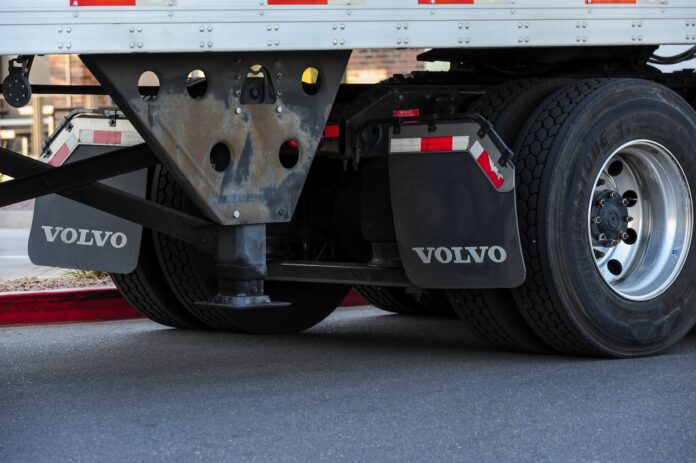

If you drive anywhere in the United States and your vehicle is equipped with mud flaps, those flaps must follow the rules set by each state you travel through. While many states share similar requirements for mud flap height, a few have slightly different standards. That said, a simple rule works almost everywhere: keep your mud flaps about 6 to 8 inches above the ground. Following this guideline will generally keep your vehicle compliant across all states.
How high should mud flaps be off the ground?
In most U.S. states, mud flap laws are very similar. Only a handful of states have unique requirements, and many of those rules mainly apply to commercial or industrial vehicles.
Across the country, certain vehicles; especially large work trucks; are required to have mud flaps installed behind their tires. These flaps help protect other drivers from debris kicked up by the tires.
Mud flaps should not hang so low that they bend or slide under the tire when the vehicle moves in reverse. At the same time, they should not be mounted too high, as this would reduce their ability to block mud and debris.
NOTE: When a truck is carrying a heavy load, the extra weight can cause the suspension to sink lower. This is a key reason mud flap height rules exist. If mud flaps sit too low when the truck is unloaded, the driver may accidentally drive over them once the bed drops under a heavy load, causing the flaps to tear off.
Diesel big rig trucks and mud flaps
The rules for large diesel-powered semi-trucks are different from those for personal cars and pickup trucks. All semi-trucks and big rigs are required to have mud flaps installed behind their tires. These flaps are essential for shielding vehicles behind them from flying dirt, water, and debris.
Basic regulations
To avoid problems with inspections or fines, mud flaps should generally be mounted so they sit about 6 to 8 inches above the ground. They should also be installed at an angle of roughly 22 degrees. As long as these two conditions are met, your vehicle should meet mud flap requirements in most states.
What if a vehicle had mud flaps that are too low?
When mud flaps are mounted too close to the ground, a driver may end up backing over them. This can pull the flaps out of their mounts and damage them. While mud flaps are inexpensive, replacing and reinstalling them can still be an unnecessary inconvenience.
What are the benefits of having mud flaps on your vehicle?
Many people assume that only semi-trucks or commercial vehicles need mud flaps, but that is not the case. Cars, SUVs, and pickup trucks can also benefit from having mud flaps installed.
There are several advantages to adding mud flaps to a car, SUV, or truck.
The most obvious benefit is cleanliness. Mud flaps help stop mud, dirt, and water from splashing onto the wheels, fenders, and underside of the vehicle.
Cleaning dried mud and grime from the underside of a vehicle can take a lot of time and effort. If this buildup is ignored for too long, it may even lead to rust.
Mud flaps greatly reduce how much dirt and debris reaches the bottom of your vehicle, making maintenance much easier.
Another benefit is cost. Mud flaps are an affordable way to protect your vehicle. Prices can start as low as $10 per pair and may go up to around $50, depending on the material, strength, and mounting style.
A third advantage is customization. Many drivers choose mud flaps that allow images, logos, or designs to be printed on them.
This means drivers behind you can see your design, adding a personal touch to your vehicle. It can be a fun way to express yourself.
Small business owners can also use mud flaps as a simple advertising space to promote their services to other drivers.
The fourth benefit of mud flaps is protection from rocks and debris. They help stop stones and other hard objects from striking the underside of the vehicle and damaging exposed parts.
This is especially useful for trucks and off-road vehicles that frequently drive on gravel, dirt roads, or rough terrain. Mud flaps prevent rocks and sticks from being thrown upward by the tires.
What other laws pertain to mud flaps and vehicles?
In Utah, Montana, Washington, Alaska, and Connecticut, mud flaps are mandatory for all trucks. The requirement covers both commercial vehicles and personal trucks used for standard road travel.
Conclusion
Staying compliant with U.S. regulations typically requires maintaining 6 to 8 inches of clearance between your mud flaps and the ground. This height specification matters because loaded vehicles experience suspension compression that lowers the rear end.
When mud flaps hang too low and cargo weight compresses the suspension further, drivers risk reversing over the flaps and ripping them from their brackets.
Installing mud flaps protects your vehicle’s underside from accumulating mud, gravel, and dirt. These guards also minimize undercarriage damage from flying rocks and road debris. In Montana, Alaska, Connecticut, Utah, and Washington, mud flaps are mandatory equipment for all trucks.