
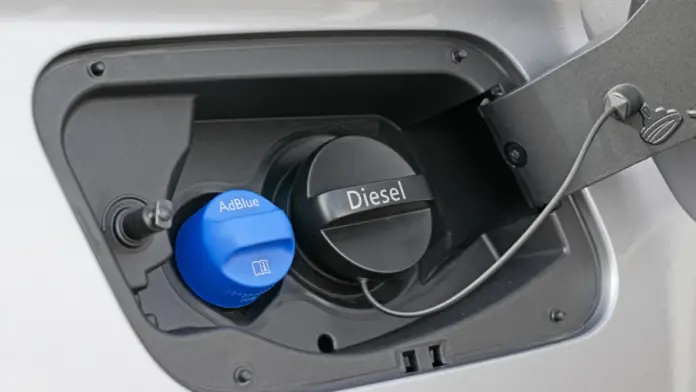
If you drive a diesel vehicle, you have probably heard the word AdBlue at some point. Maybe it appeared on the dashboard as a warning. Maybe you saw a separate filler cap near the fuel door and wondered why your diesel needed something besides diesel. Or maybe you heard another driver say, “Make sure your AdBlue doesn’t run out,” and realized you were not entirely sure what that meant.
That confusion is understandable. AdBlue is not fuel. It is not a fuel additive. It is not engine oil, coolant, or washer fluid. Yet on many modern diesel vehicles, it is absolutely essential. If the tank runs dry, the vehicle may enter a restricted operating mode or even refuse to restart after you switch the engine off. That makes it one of the most important fluids many diesel owners know the least about.
As an automotive systems specialist, I can tell you that AdBlue is one of the clearest examples of how modern emissions technology has changed diesel ownership. Older diesel engines were known for durability, torque, and efficiency, but they also produced more nitrogen oxide emissions than regulators and environmental standards were willing to tolerate. To keep diesel vehicles viable in modern markets, manufacturers had to make them cleaner. One of the most effective ways to do that was through a system called Selective Catalytic Reduction, or SCR. AdBlue is the fluid that helps that system do its job.
The good news is that AdBlue is not complicated once you understand the basics. It sits in a separate tank. It gets used in small amounts. It is injected into the exhaust system, not the engine itself. And its purpose is simple: it helps convert harmful diesel exhaust gases into much safer substances before they leave the tailpipe.
In this guide, I will walk you through everything you need to know about AdBlue from an expert but practical perspective. We will cover what it is, how it works, what it is made from, which diesel vehicles need it, whether it affects fuel consumption, how much it costs, where to buy it, how to refill it, how long it lasts, what happens if you run out, and which mistakes to avoid. I will also clear up some very common misunderstandings, such as whether water can be used in its place, whether all diesel cars need it, and whether driving with the warning light on is safe.
By the end of this article, AdBlue should feel a lot less mysterious and a lot more manageable. Let’s begin with the most basic question of all: what exactly is it?
What Is AdBlue?
AdBlue is a brand name for a diesel exhaust fluid used in diesel vehicles equipped with a Selective Catalytic Reduction (SCR) system. The name itself is trademarked by the German automotive industry association, but in practical terms, many drivers use “AdBlue” to mean any diesel exhaust fluid that meets the same standard.
This is an important point: AdBlue is not poured into the diesel fuel tank, and it does not mix with the fuel. It is stored in a completely separate reservoir and used only by the emissions-control system. Its job is to help reduce harmful nitrogen oxide emissions in the exhaust stream before those gases leave the vehicle.
Modern diesel engines are very efficient and excellent at producing torque, but they also create nitrogen oxides, often shortened to NOx, during combustion. These gases are linked to air quality and health concerns, which is why modern emissions regulations became much stricter. To meet those regulations, especially in Europe and many other global markets, manufacturers added SCR systems. AdBlue is the fluid that makes those systems effective.
From a driver’s point of view, AdBlue is easy to understand once you stop thinking of it as a fuel. It behaves more like a service fluid, similar in concept to washer fluid or coolant in that it is stored separately and consumed gradually. But unlike those fluids, it directly supports emissions compliance. Without it, the diesel vehicle cannot fully perform the emissions-cleaning process it was designed for.
That is why manufacturers take it seriously. A vehicle that requires AdBlue is programmed to monitor the fluid level continuously. If the tank gets low, warning messages appear. If the fluid is ignored long enough, the vehicle may protect itself by limiting performance or refusing restart once shut off. This is not because AdBlue helps lubricate the engine or keep it cool. It is because emissions regulations require the system to function correctly, and the system cannot function correctly without the fluid.
So, in the simplest possible terms, AdBlue is a diesel exhaust treatment fluid that helps modern diesel vehicles run much cleaner. It does not make the engine produce power. It does not improve lubrication. It does not replace diesel. Its entire mission is emissions control—and it is very good at that job.
How Does AdBlue Work?
To understand how AdBlue works, it helps to understand the problem it is trying to solve. Inside a diesel engine, combustion happens under high pressure and high temperature. That is part of what gives diesel engines their efficiency and torque. But those same high-temperature conditions also encourage nitrogen and oxygen from the air to react, producing nitrogen oxides. These gases are among the more problematic diesel emissions because they contribute to smog and air pollution.
Manufacturers could not simply ignore that issue. As emissions standards tightened—especially around Euro 6 rules in Europe and similar regulations elsewhere—diesel vehicles needed a way to drastically reduce NOx output. That is where Selective Catalytic Reduction comes in.
Here is the process in practical terms. The diesel engine runs normally and produces exhaust gases. Those gases travel through the exhaust system. Before they reach the SCR catalyst, a carefully metered amount of AdBlue is injected into the hot exhaust stream. Once exposed to exhaust heat, the AdBlue solution breaks down and eventually produces ammonia. That ammonia then reacts with the nitrogen oxides in the presence of the SCR catalyst. The result is a chemical conversion of harmful NOx gases into nitrogen and water vapor—both of which are far less harmful.
The important thing to understand is that AdBlue is not “burned” in the same way diesel fuel is. It is not there to add energy to the engine. It is there to support a chemical reaction in the exhaust after combustion has already happened. This is why it belongs in a separate tank and why it is only consumed in relation to engine operation and emissions control.
Modern vehicles manage this process automatically. Sensors monitor engine load, temperature, exhaust conditions, and emissions system behavior. The control module then determines how much AdBlue should be injected. In some driving conditions, very little is needed. In heavier-load situations, the system may demand more. The driver does not have to manage this dosing manually. As long as the tank contains enough fluid and the system is healthy, the vehicle handles the chemistry on its own.
This technology is a major reason modern diesel cars can still exist in regulated markets. Without SCR and the fluid that supports it, many of these engines would struggle to meet emissions requirements. That is also why the system is not optional in vehicles built around it. If AdBlue runs out, the emissions strategy fails. And when the emissions strategy fails, the car’s control system is designed to force your attention very quickly.
One of the best ways to think about AdBlue is to compare it to a cleaning agent for the exhaust, except it is being applied in a highly controlled chemical process. It does not clean the engine itself. It cleans up the engine’s environmental footprint after combustion has already taken place.
Done properly, the result is impressive. SCR systems with AdBlue can reduce nitrogen oxide emissions by well over 90 percent in many applications. That is not a small improvement. It is one of the key technologies that transformed diesel from an emissions liability into something many manufacturers could continue selling under modern environmental rules.
Why Diesel Cars Need AdBlue
Not every diesel vehicle in history used AdBlue, which is why some drivers assume it must be some optional modern add-on rather than a necessity. The truth is more specific. Diesel cars need AdBlue if they were designed with an SCR system that depends on it. In those vehicles, the fluid is not optional because the emissions-control system was engineered around it from the beginning.
Diesel engines create high combustion pressures and temperatures. That gives them excellent torque and strong efficiency, but it also increases nitrogen oxide formation. Older diesel designs emitted far more NOx than modern standards allow. As regulations grew stricter, especially in Europe, simply refining combustion inside the engine was not enough. Additional after-treatment became necessary.
That is where the modern diesel design philosophy changed. Instead of trying to eliminate all NOx during combustion, manufacturers began managing more of it after combustion in the exhaust system. SCR with AdBlue became one of the most effective solutions because it allowed diesel engines to retain their performance benefits while sharply lowering harmful emissions.
So when you ask why diesel cars need AdBlue, the real answer is this: they need it to keep their exhaust clean enough to satisfy modern emissions standards. Without it, they would release too much NOx, and the vehicle would no longer be operating within the environmental design it was certified under.
This is why the car will not simply shrug and keep going if the fluid tank runs dry. The system knows that without AdBlue, the emissions control process is incomplete. That is why many diesel vehicles begin with warning messages, move to stronger alerts, and then may enter reduced-power operation or prevent restart altogether once the tank is empty. Manufacturers do not do this to annoy drivers. They do it because the car cannot legally and cleanly operate as intended without the fluid.
In other words, AdBlue is not a convenience product. It is a critical operating fluid for emissions-compliant diesel ownership.
What Is AdBlue Made Of?
AdBlue is a very precisely formulated liquid. It contains 32.5% high-purity urea and 67.5% deionized water. That ratio is not arbitrary. It is carefully chosen because it provides the correct chemical performance and freezing characteristics for SCR systems.
The urea used in AdBlue is not ordinary agricultural-grade material. It is highly purified automotive-grade urea. The water is also not just ordinary tap water. It is deionized so that minerals, salts, and impurities do not contaminate the system. This purity matters because the dosing injector, sensors, tank hardware, and catalyst are all designed to work with a very specific fluid quality. Introducing contaminants can damage the system or interfere with emissions performance.
Many people hear that urea is involved and immediately think of urine. That is one of the most common misunderstandings about AdBlue. While urea is indeed a compound associated with urine in a biological sense, the AdBlue used in vehicles is a highly controlled industrial product made to exact standards. It is not something you can replace with homemade mixtures, random industrial chemicals, or diluted alternatives. The vehicle’s system is designed to detect proper concentration, and many modern systems monitor fluid quality directly.
AdBlue is generally considered non-flammable and relatively safe to handle compared with many other automotive fluids, but that does not mean it should be treated carelessly. It can irritate skin, leave crystalline residue when it dries, and corrode certain metals over time. It can also damage painted surfaces if allowed to sit. If you spill it on the vehicle, your clothes, or your skin, clean it off promptly with water.
Because the formulation is so specific, storage also matters. The fluid should be kept sealed, reasonably cool, and free of contamination. Dirt, dust, fuel, oil, coolant, or tap water introduced into the container can ruin the fluid for automotive use. This is another reason I recommend buying from reputable suppliers and handling the bottle carefully when refilling.
So, while AdBlue may sound simple—a mixture of urea and water—it is in fact a tightly controlled chemical product built for one very specific job. Precision is part of why it works as well as it does.
Is AdBlue the Same as DEF?
In everyday use, yes—AdBlue is a type of diesel exhaust fluid, often shortened to DEF. The difference is mostly about naming and branding rather than purpose. AdBlue is the trademarked name widely recognized in Europe and many other markets, while DEF is the more general descriptive term used especially in North America.
The important point is not the label on the bottle but whether the fluid meets the required quality standard, commonly ISO 22241. If it does, it is suitable for SCR systems designed to use AdBlue or equivalent diesel exhaust fluid. That means you do not necessarily need a bottle that literally says “AdBlue” if your vehicle uses this type of system. You need a compatible, specification-compliant DEF.
This also means that generic diesel exhaust fluid can often be used interchangeably with branded AdBlue as long as it meets the correct quality standard. What you must never do is assume that any blue bottle or any fluid sold near diesel products is acceptable. Always verify the specification. The SCR system cares about fluid quality, not brand loyalty.
So if you ever hear one person say AdBlue and another say DEF, they are usually talking about the same type of fluid. The name may change by region, but the purpose stays the same.
Which Cars Need AdBlue?

Not every diesel vehicle needs AdBlue. The cars that need it are the ones equipped with a Selective Catalytic Reduction system that uses DEF to reduce nitrogen oxide emissions. In practical terms, this includes many newer diesel passenger cars, SUVs, vans, and trucks built to meet modern emissions regulations.
In Europe, SCR-equipped diesel vehicles became especially common as Euro 6 emissions rules took effect. In the United States and other markets, many modern diesel pickups, vans, and some passenger vehicles also use DEF-based systems. The exact rollout varied by manufacturer, region, and vehicle class, so there is no single year that covers all diesel vehicles everywhere. But as a broad rule, if you are driving a relatively modern diesel with strict emissions controls, there is a good chance it uses AdBlue or another DEF equivalent.
The easiest way to know is to look for one of the following:
- a separate filler cap labeled AdBlue or DEF
- a dashboard warning related to AdBlue or diesel exhaust fluid
- owner’s manual instructions for DEF refilling
- SCR system references in the emissions or maintenance section of the manual
If your diesel car has a dedicated AdBlue or DEF tank, then yes, it needs it. And if the system runs dry, most vehicles will not simply ignore the problem. Some will enter a reduced-power or limp-type mode. Others will warn you repeatedly and then refuse to restart once you shut the engine off. That behavior is built in on purpose so the vehicle cannot continue operating indefinitely without the emissions treatment fluid it was designed around.
This is why diesel owners need to monitor the level and take warning lights seriously. Unlike some service items that can be delayed briefly without immediate consequence, AdBlue depletion can directly affect whether the vehicle remains fully operable.
So the general rule is simple: if your diesel vehicle was built with an SCR system, it needs AdBlue or an equivalent diesel exhaust fluid. If it was not, then adding AdBlue would serve no purpose and could create confusion if poured into the wrong location.
Where Is the AdBlue Tank Located?
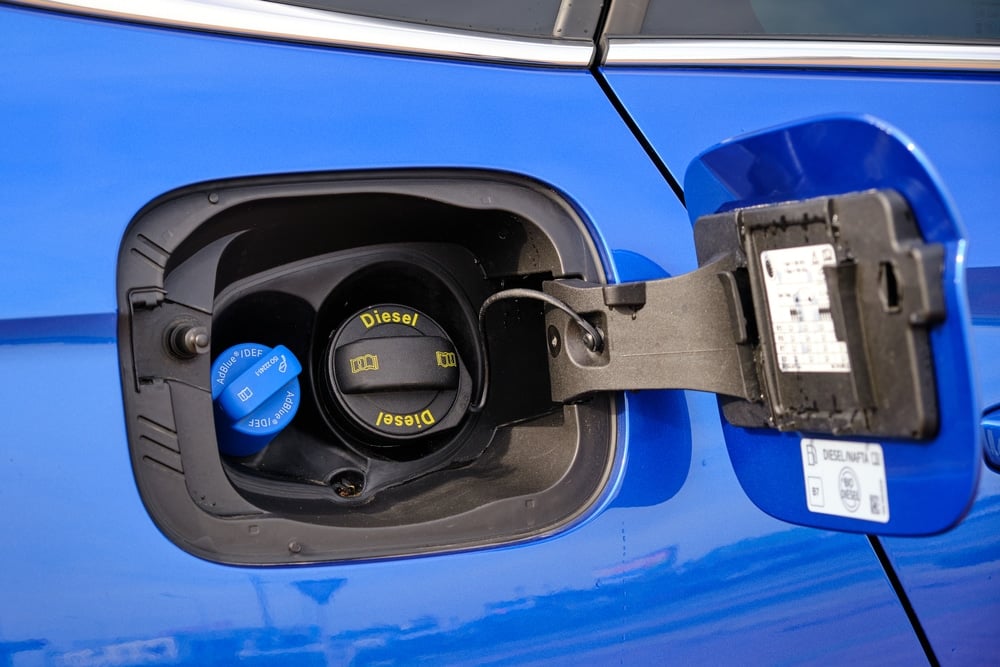
This varies by vehicle, which is one reason new diesel owners sometimes struggle to find it. On some cars, the AdBlue filler sits right next to the diesel fuel cap behind the same fuel door. On others, it is under the hood. Some vehicles place the filler in the trunk area, near the spare wheel well, or behind a separate access panel. Heavy-duty pickups and commercial vehicles may position it in more visible, service-friendly locations.
Manufacturers do this based on packaging, crash safety, tank size, and overall platform design. There is no single universal location. The best source of truth is your owner’s manual. If the car has an AdBlue tank, the manual will show where the filler cap is and often how much fluid the system holds.
The cap is usually clearly marked and designed differently enough from the diesel filler that accidental mix-up is less likely. That distinction matters because putting AdBlue into the diesel fuel tank—or diesel into the AdBlue tank—is a serious mistake with expensive consequences. Always double-check the label before opening or pouring.
Experienced owners usually become familiar with the tank location quickly because the dashboard reminders eventually force the issue. But if you just bought a diesel vehicle and are still learning it, finding the AdBlue filler before the warning appears is a smart move.
Does AdBlue Affect Fuel Consumption?
In a direct sense, no—AdBlue does not improve or worsen your diesel fuel economy in the way many people imagine. It is not mixed with the diesel fuel, it does not act as a combustion improver, and it is not there to change how much fuel the engine burns. Its main job is emissions control.
What AdBlue does affect is the vehicle’s ability to operate within its designed emissions limits. It allows the SCR system to convert harmful NOx gases into harmless nitrogen and water vapor. That process happens in the exhaust, not inside the combustion chamber. So when people ask whether AdBlue boosts fuel mileage, the technical answer is no—it is not a fuel-saving additive.
However, diesel drivers often connect AdBlue to fuel economy because both are part of the same ownership experience. You fill the diesel tank, you also occasionally fill the DEF tank, and both are consumption items. That can create the impression that they are directly linked. They are linked operationally, but not in the same way gasoline and a fuel additive would be.
If you want to improve diesel fuel economy, the solutions lie elsewhere. Driving style, tire pressure, maintenance quality, vehicle load, and route conditions matter far more. In fact, if you want to stretch a tank of diesel further, the smartest strategies are fairly traditional:
- Avoid excessive idling.
- Accelerate smoothly rather than aggressively.
- Keep your speed steady whenever possible.
- Maintain proper following distance so you brake and re-accelerate less.
- Keep unnecessary weight out of the vehicle.
- Check tire pressure regularly.
Those habits matter much more to fuel economy than the presence of AdBlue in the system. So while AdBlue is essential for emissions compliance, it should not be viewed as a mileage booster. It serves a different mission entirely.
How Much AdBlue Does a Car Use?
AdBlue is consumed gradually, and the exact rate depends on the vehicle, the size of the engine, the way it is driven, and the emissions strategy programmed into the SCR system. There is no single universal number that fits every diesel car, van, or truck, but most passenger vehicles use DEF at a relatively modest rate compared with diesel fuel itself.
A useful rule of thumb is that many diesel cars consume AdBlue at roughly 2 to 6 percent of diesel fuel usage. In real-world terms, that often works out to roughly one liter every several hundred miles, though some vehicles use more and some use less. Larger engines, heavier towing use, repeated cold starts, and demanding operating conditions may increase consumption. Long steady highway driving may reduce it.
That is why some owners refill the AdBlue tank only every few thousand miles, while others see the warning light more often. The fluid is not used at the same constant rate in every driving situation. The system doses based on what the engine is doing and what the exhaust treatment process requires.
The most practical approach is to monitor the warning system rather than trying to calculate usage obsessively. Modern vehicles are built to warn you long before the fluid is completely exhausted. As long as you do not ignore those warnings, you do not need to guess constantly.
If you want a rough benchmark, many mid-size diesel cars may go something like 600 miles or more on a liter under ordinary conditions, while larger vehicles may use it faster. But always treat that as a guide rather than a promise. Your vehicle’s manual and your real-world refill pattern are more useful than a universal average.
Where Can You Buy AdBlue and How Much Does It Cost?
AdBlue is widely available now, though exactly where you find it depends on the country and the type of vehicle you drive. Many fuel stations sell it in sealed containers. Some truck stops and commercial diesel stations offer pump-based DEF filling. You can also buy it from auto parts stores, online retailers, dealerships, agricultural suppliers, and many large retail chains.
Pricing varies by region and by packaging. In general, standard diesel exhaust fluid often costs somewhere around $5 to $7.50 per gallon, though prices fluctuate. Brand-name AdBlue may cost slightly more than generic equivalents in some areas, especially if you buy it in smaller retail packaging or through a dealership. The more important issue is not whether the label says AdBlue or DEF, but whether the fluid meets the required specification.
It is also important to think about package size. Larger jugs and multi-gallon containers may offer a better price per gallon, but that does not always make them the best buy for an ordinary passenger-car owner. AdBlue has a shelf life, and if you only need small top-ups occasionally, a large container may partly go to waste before you use it. This is especially true if it is stored poorly or exposed to temperature extremes.
That is why many private owners prefer smaller containers even if the unit cost is slightly higher. The convenience of easier storage, cleaner pouring, and less waste often offsets the difference. Commercial operators and heavy diesel users, on the other hand, usually benefit more from bulk purchasing because their usage rate is much higher.
If you are buying online, stick with reputable sellers and avoid suspiciously cheap fluid from unknown sources. The SCR system is sensitive to contamination and concentration errors. Saving a little money on questionable fluid is not worth the risk if the quality is uncertain.
In short, AdBlue is not difficult to find, and for most diesel owners the ongoing cost is manageable. But it is still best to treat it like a proper maintenance fluid rather than an afterthought. Buy the right product, store it correctly, and do not let the tank run down simply because it seemed like something you could deal with later.
How to Refill AdBlue the Right Way
Refilling AdBlue is not complicated, but it should be done carefully. The fluid is easy to spill, and contamination matters. Because it is not a fuel and not a lubricant, many owners assume the process is foolproof. In reality, a careless refill can create mess, corrosion, and in some cases avoidable warning lights if the wrong amount or wrong fluid is used.
The best way to refill the system is to treat it like any other service fluid: confirm the need, use the correct product, protect the car, and fill slowly. Below is a practical method that works well for most vehicles.
1. Start with Safety and Cleanliness
Before opening the tank, make sure the car is parked safely on level ground. Wear gloves if possible. AdBlue is not especially dangerous compared with gasoline, but it can irritate skin, dry into a crusty residue, and damage some surfaces if left behind. If the filler area is dirty, wipe it first so that debris does not enter the tank.
If any fluid spills on painted surfaces, rinse it off with water quickly. Letting it dry on the paint is a mistake. The same goes for clothing and skin. Clean it off right away.
2. Confirm the Level or Warning
Most modern diesel vehicles provide dashboard warnings long before the tank is empty. Many systems first trigger a low-fluid message when a meaningful reserve still remains. That is your signal to plan a refill, not to panic.
Some vehicles also allow you to view DEF level through the onboard information display, while others rely mainly on warning stages. Depending on the model, the physical tank may be visible enough for a rough check, especially if it is semi-transparent, but dashboard monitoring is usually easier and more accurate.
As a practical habit, many owners simply refill when the warning appears. That works well as long as you do not wait until the final stage. Letting the tank get dangerously low creates unnecessary stress because some vehicles become very strict as the fluid approaches empty.
3. Know How Much the Vehicle Needs
Do not pour blindly. Some vehicles only need a modest top-up, while others expect a larger refill quantity before the warning system resets properly. Your owner’s manual should explain the approximate tank capacity and, in some cases, the minimum refill amount the system expects once a low-level warning has been triggered.
This matters because some cars do not immediately clear the warning after a tiny addition. The system may require a certain minimum volume to recognize that the tank has been properly refilled. Pouring in too little can leave you thinking something is wrong with the sensor when the real issue is simply that the system has not yet reached its reset threshold.
In many passenger diesels, owners add a liter or two at a time during routine top-ups. But if the warning is serious or the no-restart countdown has begun, you may need a more substantial refill to fully satisfy the system.
4. Find the Correct Filler Port
This may sound obvious, but it is one of the most important steps. The AdBlue filler must never be confused with the diesel fuel filler. They are usually different sizes and clearly labeled, but rushing is how mistakes happen. If your vehicle has both ports behind the same fuel door, stop and confirm carefully before opening anything.
If the filler is under the hood or in the trunk area, use the owner’s manual so you are certain. Adding AdBlue to the fuel tank or adding diesel to the AdBlue tank creates a much bigger problem than simply running low on DEF.
5. Pour Slowly and Avoid Overfilling
Use a proper spout, nozzle, or funnel if the container design allows it. Pour slowly. AdBlue is easy to spill because it is thin and the filler necks are sometimes awkward. There is no prize for rushing. A clean, slow refill is better than creating a crusty mess around the filler area.
Do not overfill the tank. The system does not benefit from being packed to the brim, and extra spill risk is not worth it. Once the needed amount has been added, close the cap securely and wipe away any residue.
Some owners like to top up a little at every diesel fill-up. That is not usually necessary unless your vehicle’s consumption pattern is especially heavy. Most systems are designed around periodic refill intervals rather than constant topping off.
6. Give the System Time to Register the Refill
After refilling, the dashboard warning may disappear immediately—or it may take a short drive or restart cycle to update. That delay can vary by manufacturer. If the correct amount of proper fluid was added and the message does not vanish instantly, do not assume something is wrong right away. The vehicle may need time to recalculate the level.
However, if the warning remains after driving and you know you added the correct amount, then the system may need diagnosis for a sensor, quality, or SCR-related issue. The refill itself is not always the whole story.
Done properly, the refill process is simple, clean, and low risk. Most problems begin not with the fluid itself, but with rushing, mixing up ports, or ignoring the manual’s basic guidance.
What Happens If You Run Out of AdBlue?
If your diesel vehicle relies on AdBlue and the tank runs empty, the car will not simply continue operating normally forever. Manufacturers build in multiple warning stages to prevent exactly that. The system wants you to refill before the situation becomes critical, and it becomes increasingly firm about getting your attention.
In many vehicles, the process starts with an amber or yellow dashboard warning. This appears when there is still enough fluid left for a meaningful distance, often giving you plenty of time to buy and add more. If you ignore that warning, the messages become more urgent. Some vehicles display a countdown in miles or kilometers until restart will be blocked. Others begin preparing for reduced-power operation.
Once the AdBlue supply is truly exhausted, several outcomes are possible depending on the vehicle design. Some may enter a limp-home or reduced-performance mode. Many will allow you to keep driving until you stop the engine, but then refuse to restart until DEF is added. That restart lockout is common because it ensures the vehicle cannot continue indefinitely without emissions treatment fluid.
This behavior often shocks owners the first time they encounter it, especially those who assumed AdBlue was optional because it was not fuel. But from the vehicle’s perspective, the emissions system is part of legal and technical operation. If the SCR system cannot function, the vehicle is programmed to force compliance in one way or another.
The practical lesson is simple: do not wait until empty. Treat the first warning as your reminder to plan a refill, not as something to postpone until next month. Running out creates hassle that is entirely avoidable.
Can You Drive With the AdBlue Warning Light On?
Usually, yes—at least at first. The initial warning light or message typically appears while there is still enough AdBlue in the tank for a decent amount of driving. The purpose of that warning is to give you time to act before the situation becomes severe.
What matters is which stage of warning you are in. If the light has just come on and the vehicle is telling you that the fluid is low, you can generally continue driving while you arrange to refill it. If the warning begins flashing, the message becomes more urgent, and you should stop delaying. If the dashboard is showing a restart countdown or a message indicating the engine will not restart after shutdown, the situation is no longer casual.
So yes, it is often safe to drive briefly with the first warning light on. But that does not mean it is wise to ignore it. Think of the first warning as a grace period, not a suggestion that the fluid can be forgotten. The system is buying you time, not giving permission to procrastinate.
Can You Use Water Instead of AdBlue?
No. Water should never be used in place of AdBlue, either by itself or mixed into the tank as a way to “stretch” the fluid. This is one of the most damaging mistakes an owner can make with the DEF system.
Remember that AdBlue is not just water. It is a very specific blend of 32.5% high-purity urea and 67.5% deionized water. Regular tap water contains minerals, salts, and impurities that the system was never designed to handle. Even distilled water alone is not a substitute because the urea concentration is central to how the SCR system works and how the vehicle monitors fluid quality.
Many modern diesel vehicles have quality sensors or logic checks that can detect when the fluid composition is wrong. If the system senses an improper concentration, it may trigger warnings, store fault codes, or limit operation just as it would if the tank were empty. Worse, contaminated fluid can damage the injector, tank components, or catalyst over time.
So if you are low on AdBlue, do not improvise with water. Use the correct specification fluid only. This is one of those systems where a homemade shortcut tends to create a very professional repair bill later.
Can You Put AdBlue in Any Diesel Car?
Only if the diesel car was designed to use it. That means it must have an AdBlue or DEF filler and an SCR-based emissions system built around the fluid. If a diesel vehicle does not have that system, AdBlue serves no purpose and should not be poured anywhere.
It should also never be put into the diesel fuel tank under any circumstance. AdBlue is not a diesel additive, not a fuel conditioner, and not something that belongs in the combustion side of the vehicle. Its entire job happens in the exhaust after-treatment system. Putting it in the wrong tank can create severe contamination and expensive repairs.
So yes, any diesel vehicle with a proper DEF filler and compatible SCR system can use AdBlue or equivalent diesel exhaust fluid. No, not every diesel vehicle should receive it. Compatibility is determined by system design, not by the simple fact that the engine burns diesel.
How Long Does AdBlue Last?
There are two different ways to answer this question. The first is how long it lasts in the vehicle. The second is how long it lasts in storage. Both matter.
In the vehicle, AdBlue consumption depends on engine size, driving conditions, and system design. A practical rough figure for many mid-size diesel cars is that one liter may last roughly several hundred miles, sometimes around 600 miles in ordinary use. But that is only a ballpark estimate. Larger vehicles or harder driving may use more. The safest approach is to learn your own vehicle’s refill pattern over time.
In storage, AdBlue has a limited shelf life. Under good conditions—sealed container, protected from direct sunlight, and stored at moderate temperatures—it can last many months. Under poor conditions, especially excessive heat or contamination exposure, its usable life drops. This is why buying a huge amount for a small passenger car is not always smart unless you know it will be used quickly enough.
If the fluid has been stored badly, exposed to dirt, or left sitting in an opened container for too long, it is not worth gambling with an expensive SCR system to save a few dollars. Fresh, properly stored fluid is always the safer choice.
How Often Should You Refill AdBlue?
There is no universal refill interval because consumption varies too much between vehicles and usage patterns. Some owners add a little fluid at nearly every diesel fill-up, but that is often unnecessary. Others only refill when the warning system tells them to. In most normal passenger-car use, waiting for the low-level warning is perfectly practical as long as you do not ignore it.
If you prefer a maintenance-based routine rather than a warning-based one, checking the AdBlue level every few thousand miles or every few months is a sensible habit. Fleet vehicles, tow vehicles, and high-mileage diesels may benefit from more frequent attention simply because their usage rate is higher.
As a general habit, I recommend not letting the warning light become an emergency. Refill before the final-stage warnings appear, and keep a basic sense of your vehicle’s DEF consumption so the system never catches you by surprise.
What Happens If You Spill AdBlue?
AdBlue is not flammable like diesel fuel, and it is not dangerous in the same way gasoline is. But that does not mean a spill should be ignored. When AdBlue dries, it leaves behind a white crystalline residue that can look messy and can be mildly corrosive to certain metals and finishes if left in place too long.
If you spill it on paint, wash it off with water right away. If it gets on trim, wheel surfaces, or metal components near the filler area, wipe and rinse the area. If it gets on your skin or clothes, wash it off promptly. The fluid is generally low-toxicity, but there is no good reason to leave it sitting on your body or the car.
The biggest issue with spills is not panic-level danger. It is carelessness. A little attention immediately after the spill prevents a crusty, irritating cleanup later.
Common AdBlue Mistakes to Avoid
Most AdBlue problems are preventable. Drivers rarely damage these systems through bad luck alone. More often, the trouble starts with one of a few very avoidable mistakes.
The biggest mistake is putting the fluid in the wrong tank. AdBlue never belongs in the diesel fuel tank, and diesel never belongs in the AdBlue tank. A second common mistake is using low-quality or contaminated fluid. If the container is not sealed properly, comes from a questionable source, or has been stored badly, do not trust it.
Another mistake is waiting too long after the warning appears. Drivers sometimes assume the low-fluid message is similar to a low-washer-fluid reminder. It is not. The car may eventually block restart if you ignore it. That is a much more serious inconvenience.
Then there is the classic shortcut mistake: trying to dilute or replace AdBlue with water. That never ends well. The system is too precise for improvisation.
Finally, some people overbuy the fluid and let it sit too long in poor storage conditions. That may seem economical, but stale or contaminated fluid is not a bargain. Buy what you can realistically use, and store it properly.
Most modern diesel owners only need to learn these lessons once. After that, AdBlue becomes just another normal maintenance fluid rather than something mysterious or frustrating.
Final Thoughts
AdBlue is one of the most important fluids in many modern diesel vehicles, even though it is often misunderstood. It is not fuel, not a fuel additive, and not something you can ignore once the warning light appears. It is a carefully formulated diesel exhaust fluid used by SCR systems to convert harmful nitrogen oxide emissions into harmless nitrogen and water vapor.
It works because it is injected into the hot exhaust stream, where it helps drive the chemical reaction that makes modern diesels much cleaner than older ones. That role is so important that vehicles designed around it may restrict performance or even prevent restart if the fluid runs out completely.
The fluid itself is a precise mixture of 32.5% high-purity urea and 67.5% deionized water. That means there is no safe shortcut with tap water, homemade mixtures, or contaminated substitutes. Only the correct specification fluid should go into the tank.
The good news is that AdBlue ownership is not difficult. The fluid is widely available, the refill process is straightforward, and the car usually warns you long before the tank is empty. As long as you use the correct product, keep an eye on the warnings, and avoid mixing it up with the diesel fuel tank, the system is easy to manage.
In the end, AdBlue is simply part of what modern diesel ownership looks like. Once you understand what it does and why it matters, it stops feeling like an inconvenience and starts feeling like exactly what it is: a practical emissions tool that helps diesel vehicles stay road-legal, efficient, and much cleaner than they would otherwise be.
If your diesel has an SCR system, AdBlue is not optional. It is part of the vehicle’s operating reality—and now you know exactly why.

