


Coupe or convertible? It’s one of those decisions that seems straightforward until you actually start shopping. On paper, you’re looking at the same car with a different roof. In practice, the differences run much deeper than whether or not you can feel the wind in your hair.
The roof structure affects everything. How the car handles. How much it weighs. How rigid the chassis is. How much you’ll pay for insurance. Even how fast it depreciates. Choosing between a coupe and a convertible isn’t just about lifestyle preference. It’s an engineering tradeoff, and understanding what you’re giving up (and gaining) with each option makes the decision a lot clearer.
Let’s break down the real differences between these two body styles, with actual numbers and examples that go beyond the usual surface-level comparisons.
The Core Difference Between a Coupe and a Convertible
At the most basic level, here’s what separates them:
- Coupe: A fixed, permanent roof that’s welded into the body structure. This creates a stiffer chassis and better aerodynamics right out of the box.
- Convertible: A retractable roof, either a fabric soft-top or a folding hardtop, that allows open-air driving. The tradeoff is that removing a fixed roof means the engineers have to compensate for the lost structural rigidity in other ways.
That compensation is where things get interesting. It affects weight, performance, cost, and even how the car feels in a corner. Let’s get into the specifics.
How the Roof Changes the Way a Car Drives
If you care about how a car feels on a twisty road or a track day, this section matters a lot.
Handling, Rigidity, and Weight
| Factor | Coupe | Convertible |
|---|---|---|
| Chassis Rigidity | Typically 15-30% more rigid thanks to the fixed roof acting as a structural member | Requires extra bracing in the floor, sills, and firewall, adding 5-10% more weight |
| Weight Distribution | More balanced front to rear, which translates to sharper handling | Tends to be slightly rear-biased because the roof mechanism and its motors sit behind the cabin |
| Cabin Noise | Quieter at highway speeds with less wind intrusion | Noticeably louder with the top down, though modern soft-tops have improved dramatically when closed |
Here’s a real-world example that puts this into perspective. The BMW M4 Coupe hits 60 mph in about 3.8 seconds. The convertible version of the same car? 4.1 seconds. That 0.3-second gap comes almost entirely from the extra 248 pounds the convertible carries due to its roof mechanism and the structural reinforcements needed to compensate for the missing fixed roof.
Three-tenths of a second might not sound like much on paper, but you can feel it. The coupe is crisper off the line, more responsive in transitions, and just slightly more eager in every situation. For casual driving, you probably won’t notice. On a spirited backroad run or a track day, you absolutely will.
That said, modern convertibles have gotten remarkably close to their coupe counterparts. The Porsche 911 Cabriolet, for instance, is so well-engineered that most drivers would struggle to tell the difference on public roads. The gap between the two body styles has never been narrower than it is right now.
Which One Is More Practical Day to Day?
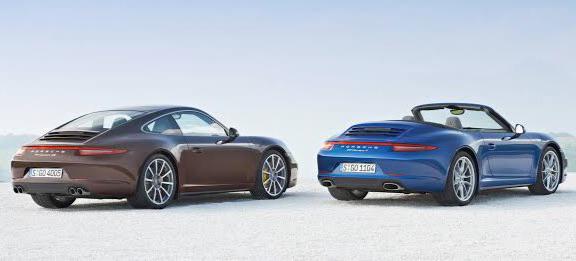
Performance is one thing, but most people aren’t tracking their cars every weekend. For the other 95% of the time, you’re commuting, running errands, and fitting your life into the trunk. Here’s how the two compare when it comes to everyday usability.
- Cargo space: Coupes generally win here, though not by a huge margin. As an example, the Ford Mustang Coupe offers 13.5 cubic feet of trunk space compared to 11.4 cubic feet in the convertible. That difference comes from the folding roof mechanism eating into the trunk when it’s stowed. It’s enough to matter if you’re trying to fit luggage for a weekend trip.
- Rear seat room: Surprisingly similar in most models. The seats themselves are usually the same size. But convertibles can feel tighter in the back when the top is up because the folded roof structure can encroach on headroom.
- Security: This one’s straightforward. A fixed metal roof is harder to break into than a fabric soft-top. If you park on the street or in areas where break-ins are a concern, the coupe offers obvious peace of mind. Hardtop convertibles split the difference here, but they’re still mechanically more complex and potentially more vulnerable than a welded-in roof.
None of these differences are dealbreakers on their own. But they add up. If you’re using the car as a daily driver and regularly need to haul groceries, gym bags, or weekend luggage, the coupe’s practicality edge is worth considering.
Are Convertibles Less Safe Than Coupes?
This used to be a valid concern. Early convertibles genuinely offered less protection in a rollover because, well, there was nothing above your head. But the engineering has come a very long way.
| Safety Feature | Coupe | Convertible |
|---|---|---|
| Rollover Protection | Standard fixed roof provides inherent protection | Reinforced windshield frames and pop-up roll bars deploy automatically in a rollover |
| NHTSA Crash Ratings | Typically earns 5-star overall ratings | Modern convertibles now achieve comparable ratings (the Porsche 911 Cabriolet earned 5 stars) |
Today’s convertibles use reinforced A-pillars, high-strength steel in the windshield frame, and automatic pop-up roll bars that deploy in milliseconds if the car’s sensors detect a rollover is happening. The structural reinforcements that add weight to the convertible aren’t just there for rigidity. They’re also doing double duty as safety structures.
The bottom line? If you’re looking at a modern convertible from a reputable manufacturer, safety shouldn’t be the thing that steers you away from it. The gap between coupe and convertible crash protection has effectively closed for most mainstream and luxury models.
The Real Cost Difference Between Coupes and Convertibles
This is where a lot of people get surprised. The price difference between a coupe and its convertible counterpart goes well beyond the sticker price. The convertible costs more to buy, more to insure, more to maintain, and it loses value faster.
| Cost Factor | Coupe | Convertible | Difference |
|---|---|---|---|
| Base MSRP (example) | $45,000 | $52,000 | About 15% more |
| Annual Insurance | $1,200 | $1,700 | About 42% more |
| Depreciation Over 5 Years | 35% | 45% | 10 percentage points more |
| Annual Maintenance | Standard costs | Add $300-$500 per year for roof mechanism servicing | About 20% more |
Let’s unpack a few of these.
The insurance premium jump is significant. Insurers charge more for convertibles because they’re statistically more expensive to repair after an accident. The roof mechanisms are complex, the specialized glass or fabric panels cost more to replace, and the structural repairs are more involved.
Depreciation hits convertibles harder for a few reasons. The market for used convertibles is smaller (not everyone wants one), and buyers worry about the condition of the roof mechanism on a pre-owned car. A coupe with 60,000 miles is straightforward. A convertible with 60,000 miles raises questions about whether the top still seals properly, whether the motors are wearing out, and whether there’s been any water intrusion.
Then there’s the roof maintenance itself. Soft-tops need to be cleaned and conditioned regularly to prevent fading, cracking, and leaks. Hardtop convertibles have hydraulic systems, electric motors, and complex latching mechanisms that all need periodic attention. Budget $300 to $500 a year for this, and more if something actually breaks. A hydraulic cylinder failure on a retractable hardtop can easily run $1,500 or more to repair.
Over a typical five-year ownership period, the total cost difference between owning the coupe version and the convertible version of the same car can easily exceed $15,000 to $20,000 when you factor in the higher purchase price, insurance, depreciation, and maintenance. That’s real money.
Who Should Buy a Coupe?
The coupe is the smarter choice in several specific situations:
- Performance enthusiasts who care about handling precision, chassis rigidity, and getting the most out of every horsepower. If you do track days or spirited canyon runs, the coupe will reward you.
- Budget-conscious buyers who want lower insurance premiums, slower depreciation, and fewer maintenance headaches. The coupe wins on total cost of ownership by a wide margin.
- Cold climate residents who realistically won’t be driving with the top down more than a handful of times a year. If you live in Minnesota and the top-down season is three months, spending thousands extra for a convertible is hard to justify.
Who Should Buy a Convertible?
The convertible makes sense when the experience matters more than the spreadsheet:
- Drivers who live for the open-air experience. There’s genuinely nothing like dropping the top on a warm evening and driving a coastal road or through rolling countryside. If that image lights you up, no coupe will ever scratch that itch.
- Warm climate residents who can realistically drive top-down eight or nine months out of the year. If you’re in Southern California, Florida, or Arizona, a convertible isn’t a novelty. It’s a lifestyle.
- Weekend and leisure drivers who aren’t worried about maximizing trunk space or minimizing ownership costs. If this is your fun car, not your only car, the convertible’s compromises become a lot easier to swallow.
Quick Decision Guide: Coupe vs Convertible by Priority
| What Matters Most to You | Go With |
|---|---|
| Pure driving performance | Coupe |
| Open-air driving experience | Convertible |
| Keeping costs down | Coupe |
| Everyday practicality | Coupe |
| Holding resale value | Coupe (especially limited editions) |
| Making a luxury statement | High-end convertible (think Mercedes SL-Class or Porsche 911 Cabriolet) |
Here’s the honest truth: modern engineering has shrunk the performance and safety gap between coupes and convertibles to the point where the decision is less about objective capability and more about what kind of driving experience makes you happy. If you’re cross-shopping the same model in both body styles, like a BMW 4 Series or a Chevy Corvette, the best thing you can do is drive both back to back. The spec sheet will tell you one story. Five minutes behind the wheel will tell you another. Trust the second one.