


The question of whether subscription-based vehicle connectivity services justify their ongoing cost represents one of the most common dilemmas facing modern luxury vehicle buyers. As an automotive technology consultant who has evaluated connected car platforms across multiple premium brands, I can tell you that Lexus Enform presents a compelling yet nuanced value proposition that demands careful individual assessment. The platform delivers a comprehensive suite of convenience, safety, and connectivity features—but whether these capabilities align with your specific driving patterns, lifestyle requirements, and budget priorities determines whether the investment makes financial sense for your particular situation.
Throughout this comprehensive analysis, I’ll provide detailed insight into the complete Lexus Enform ecosystem—examining each feature category with professional perspective, breaking down the true cost structure beyond the marketing materials, evaluating real-world performance based on extensive user data, and ultimately providing a systematic framework you can apply to make an informed decision. By the conclusion, you’ll possess the knowledge necessary to confidently determine whether Lexus Enform deserves a permanent place in your automotive technology budget.
Comprehensive Overview: Understanding the Lexus Enform Connected Services Platform
Lexus Enform represents the brand’s integrated telematics and connected services architecture—a sophisticated digital ecosystem that establishes continuous communication channels between your vehicle, your mobile devices, and Lexus’s cloud-based service infrastructure. Originally introduced with the 2010 Lexus HS250h hybrid sedan, the platform has undergone substantial evolution through multiple generations, progressively incorporating more advanced capabilities as wireless network infrastructure, smartphone technology, and embedded vehicle computing power have advanced.
At its fundamental level, Enform functions as a bidirectional communication system. Your Lexus continuously transmits vehicle status data, location information, and diagnostic parameters to Lexus’s servers through an integrated cellular modem. Simultaneously, the system receives commands from your smartphone application, processes requests through Lexus’s cloud infrastructure, and executes actions ranging from simple status queries to complex remote vehicle operations. This architecture creates what the automotive industry terms a “connected vehicle experience”—your car becomes an internet-enabled device that you can monitor and control from virtually anywhere with cellular coverage.
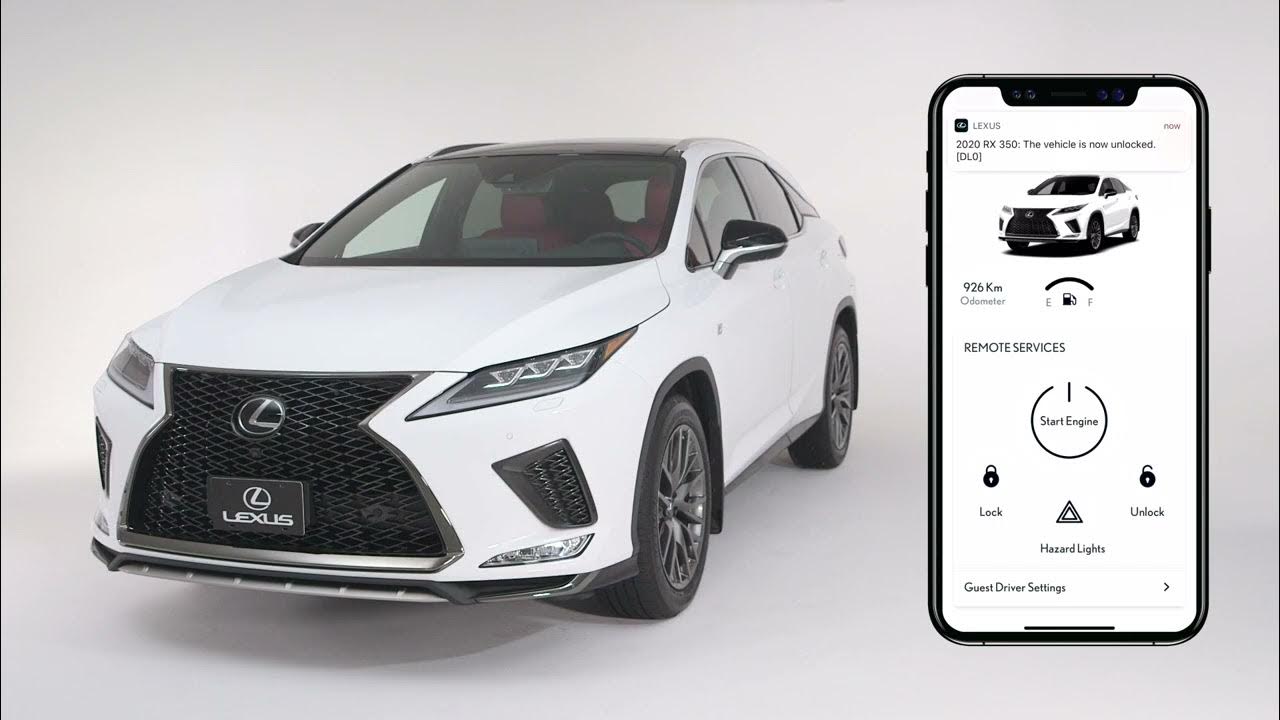
The primary user interface for Enform services consists of the Lexus mobile application, available for both iOS and Android platforms. This app serves as your digital command center, providing graphical displays of vehicle status, intuitive controls for remote operations, access to concierge services, and management of subscription settings. For certain functions, you can also interact with Enform through the vehicle’s integrated multimedia display, though the smartphone app represents the primary access point for most features—particularly those remote services that define much of Enform’s value proposition.
From a technical architecture perspective, Enform relies on embedded hardware within your Lexus—specifically a telematics control unit (TCU) that integrates a cellular modem, GPS receiver, and the processing capability necessary to manage communication protocols. This hardware interfaces with your vehicle’s various control modules through the internal communication networks, allowing the system to access information about engine status, door lock position, fuel level, maintenance requirements, and dozens of other parameters. The cellular connectivity operates independently of your personal smartphone data plan, using a dedicated connection managed by Lexus’s telematics service provider.
Understanding this architecture helps clarify both the capabilities and limitations of the system. Because Enform depends on cellular network coverage, functionality may be compromised in areas with poor signal strength—remote rural locations, parking structures with signal interference, or regions with limited carrier coverage. Additionally, as cellular network technology evolves (the transition from 3G to 4G to 5G networks), older vehicles may eventually require hardware updates or face service discontinuation as carriers retire legacy network infrastructure—a consideration for long-term ownership planning.
Feature Analysis: Breaking Down the Enform Service Portfolio
Lexus structures Enform as a modular platform comprising several distinct service categories, each addressing different aspects of vehicle connectivity. Understanding the specific capabilities within each category—and honestly assessing which features you’ll actually use regularly versus which sound appealing but may gather digital dust—represents the foundation of an informed value assessment.
Safety Connect: Emergency Response and Security Services
Safety Connect forms the foundational tier of the Enform platform, emphasizing emergency assistance and vehicle security features. From both a safety engineering and insurance risk management perspective, these capabilities offer tangible protective value that extends beyond mere convenience.
The Emergency Assistance (SOS) feature provides immediate connection to a Lexus response center staffed by trained operators 24 hours daily, 365 days annually. When you press the dedicated SOS button located in your vehicle’s overhead console, the system establishes a voice connection while simultaneously transmitting your precise GPS coordinates to the response center. The operator can then assess your situation, dispatch appropriate emergency services with exact location data, and remain on the line to provide assistance until help arrives. This capability proves particularly valuable in scenarios where you’re unfamiliar with your surroundings, unable to clearly communicate your location due to stress or injury, or in areas where traditional cellular service might be marginal but the vehicle’s dedicated antenna maintains connectivity.
Complementing the manual SOS function, Automatic Collision Notification monitors your vehicle’s airbag deployment sensors and crash detection systems. In the event of a collision severe enough to trigger these safety systems, Enform automatically initiates contact with the response center even if you’re unable to press the SOS button yourself. The system transmits crash severity data along with your location, enabling the response center to make informed decisions about appropriate emergency service dispatch. For solo drivers, elderly motorists, or anyone who might become incapacitated during an accident, this automatic notification can dramatically reduce emergency response times—a factor that medical research consistently demonstrates can significantly improve trauma survival outcomes.
The Stolen Vehicle Locator service activates when you report your Lexus stolen to law enforcement. After filing a police report and contacting Lexus with the case information, the system begins transmitting real-time location data to assist recovery efforts. Unlike consumer-grade GPS trackers that thieves can locate and disable, the Enform system integrates deeply into the vehicle’s electronic architecture, making it substantially more difficult to defeat. While no tracking system guarantees recovery, police departments report significantly higher recovery rates for vehicles equipped with professional tracking systems compared to those without—and recovered vehicles are typically found more quickly, often before significant damage or dismantling occurs.
Enhanced Roadside Assistance upgrades the traditional roadside service experience by automatically providing your exact location to service providers when you request help. Rather than attempting to describe your location on an unfamiliar highway or in an area without clear landmarks, the Enform system transmits precise coordinates that guide the tow truck or service vehicle directly to you. This feature integrates with Lexus’s roadside assistance program, which many owners already receive as part of their warranty coverage or can add as a standalone service.
From a value assessment perspective, Safety Connect addresses scenarios you hope to never encounter but that carry potentially severe consequences when they do occur. The question becomes: what is reliable emergency assistance access worth to you? For some owners—particularly those who frequently drive alone, travel in remote areas, or transport family members with medical considerations—the peace of mind alone justifies the subscription cost. For others who primarily drive short distances in urban areas with reliable cellular coverage and rarely venture beyond familiar territory, the value proposition appears less compelling.
Remote Connect: Smartphone-Based Vehicle Command and Monitoring
Remote Connect delivers the features that typically generate the most immediate “wow factor” when demonstrating connected vehicle capabilities—the ability to interact with your Lexus from a distance through your smartphone creates a tangible sense of technological sophistication that appeals to many luxury vehicle buyers.
The Remote Engine Start capability allows you to start your vehicle’s engine from inside your home, office, or virtually any location with smartphone connectivity. The primary application involves climate preconditioning—starting the engine several minutes before you plan to drive allows the heating or air conditioning system to bring the cabin to a comfortable temperature before you enter the vehicle. In extreme weather regions, this feature transitions from “nice to have” to “genuinely valuable” remarkably quickly. Northern climate owners appreciate entering a pre-warmed vehicle with defrosted windows on frigid winter mornings, while those in hot climates value the ability to cool the cabin before exposure to scorching interior temperatures that can exceed 150°F in summer sun.
Technical implementation details matter for evaluating this feature’s practical utility. The remote start function operates through the cellular network rather than traditional radio frequency key fobs, providing substantially greater range—you’re not limited to the typical 100-200 foot range of RF systems. However, each remote start command carries a time limit (typically 10 minutes) before the engine automatically shuts down for safety and emissions compliance reasons. If you don’t enter the vehicle and insert the key within this window, you’ll need to issue another start command. Additionally, remote start operates the engine but does not unlock the doors—a security feature that prevents unauthorized access but requires a separate unlock command or physical key when you’re ready to enter.
Remote Door Lock and Unlock functionality addresses the common scenario of forgetting whether you locked your vehicle after parking. Rather than walking back to verify (or worrying about it throughout your activity), you can simply open the app and either confirm the current lock status or send a lock command. The feature also provides convenience when you need to grant vehicle access to someone else—a family member who needs to retrieve something from the car, a service provider performing scheduled work, or a valet parking attendant. Some owners report that this becomes one of their most frequently used features, particularly if they’re prone to second-guessing whether they locked the doors.
The Vehicle Finder function leverages GPS positioning to help you locate your Lexus in crowded parking environments. The feature displays your vehicle’s location on a map within the smartphone app and can provide walking directions from your current position. For those who frequently park in large lots—airport long-term parking, shopping mall structures, sporting event venues, or convention center garages—this capability eliminates the wandering search or key fob button mashing that otherwise characterizes the “where did I park?” experience. An ancillary benefit involves confirming that your vehicle remains where you parked it, providing early indication if it’s been moved or stolen.
Guest Driver Monitoring creates a geofencing and behavior monitoring capability designed primarily for parents of teen drivers, though it applies equally to any scenario where someone else operates your vehicle. You can configure alerts based on several parameters: speed threshold violations (notification when the vehicle exceeds your specified speed), curfew monitoring (alerts if the vehicle operates outside permitted hours), and boundary violations (notification when the vehicle travels beyond a defined geographic area). The system records this information and makes it available for review, creating accountability and enabling constructive conversations about safe driving practices.
From a parental safety perspective, this feature set provides visibility that was previously available only through expensive standalone tracking devices. However, implementing monitoring capabilities requires thoughtful consideration of trust, privacy, and the relationship dynamics involved. Some families find that transparent discussion and mutually agreed-upon monitoring creates positive accountability, while others report that surveillance approaches damage trust and create resentment. The feature’s value depends substantially on your specific family dynamics and approach to teen driver supervision.
Vehicle Status Check allows you to query various vehicle parameters remotely: fuel level, odometer reading, door and window position, and other monitored systems. The practical application involves planning—checking whether you have sufficient fuel for your next trip without walking to the garage, verifying that all doors and windows are closed before a storm, or confirming current mileage when scheduling maintenance. While individually these checks represent minor conveniences, the aggregate effect for some users creates a sense of connected awareness that they come to appreciate.
Service Connect: Proactive Maintenance Management
Service Connect applies telematics technology to vehicle maintenance management, creating a proactive system that monitors maintenance requirements and facilitates service scheduling rather than relying on owners to track service intervals manually.
The system monitors multiple maintenance parameters based on your Lexus’s specific service schedule: oil change intervals, tire rotation requirements, scheduled inspections, and other manufacturer-recommended services. When a service milestone approaches, Maintenance Alert Notifications appear in your smartphone app, providing advance warning that service is coming due. For owners who might otherwise overlook maintenance schedules or operate on a “I’ll take care of it when I have time” approach that indefinitely postpones important services, these automatic reminders help ensure that your vehicle receives appropriate care.
Vehicle Health Reports provide periodic summaries of your Lexus’s condition, including alerts for any diagnostic trouble codes or system warnings detected by the vehicle’s computers. While these reports don’t provide the detailed diagnostic information available through professional scan tools, they offer early warning of potential issues before they progress to complete failures. Receiving notification of a minor fault allows you to address it during planned service rather than experiencing an inconvenient breakdown.
The Dealer Appointment Integration streamlines service scheduling by allowing direct communication between the Enform system and your preferred Lexus dealership. When maintenance becomes due, you can request appointment scheduling through the app, with the system transmitting relevant vehicle information and service requirements directly to the dealer. This integration eliminates the phone tag and information exchange that typically characterizes service scheduling, though availability and implementation quality varies by dealership.
From a vehicle longevity and reliability perspective, Service Connect addresses a common failure mode: deferred maintenance due to forgetfulness or procrastination. Vehicles that receive consistent scheduled maintenance according to manufacturer recommendations demonstrably experience fewer major repairs, maintain better resale value, and deliver longer service life. If maintenance reminders help you stay current with service requirements, the feature potentially saves money that far exceeds the subscription cost through avoided repairs and preserved vehicle value.
Destination Assist: Live Concierge Navigation Support
Destination Assist delivers a human-powered navigation concierge service—an interesting hybrid approach that combines traditional personal assistance with modern vehicle integration. By pressing the Destination Assist button in your vehicle (typically located in the overhead console or center control panel), you connect with a live operator who can help you identify destinations, locate specific addresses or points of interest, and send routing information directly to your navigation system.
The service proves most valuable in scenarios where you know what you’re looking for conceptually but lack specific address information: “I need to find a highly-rated Italian restaurant near the theater district,” “Where’s the closest urgent care facility from my current location,” or “I’m looking for the Apple Store in this city.” The operator can search, provide recommendations, compare options, and ultimately send your selected destination directly to the vehicle’s navigation system with a single command—no manual address entry required.
Evaluating Destination Assist’s value requires honest assessment of your navigation habits. In the smartphone era, many drivers reflexively turn to Google Maps, Apple Maps, or Waze for navigation needs rather than built-in vehicle systems. These smartphone apps provide robust search, real-time traffic integration, and familiar interfaces that many users prefer over embedded navigation. If you primarily navigate using your phone already, Destination Assist solves a problem you don’t actually have. Conversely, if you prefer using your vehicle’s integrated navigation system and appreciate human assistance over algorithmic search results, the concierge approach offers differentiated value.
Wi-Fi Connect: Mobile Hotspot Connectivity
Wi-Fi Connect transforms your Lexus into a mobile internet hotspot, allowing passengers to connect devices—smartphones, tablets, laptops—to high-speed internet through the vehicle’s cellular modem. The system supports simultaneous connections from up to five devices, creating a shared network environment for vehicle occupants.
The included data allocation typically provides 4GB monthly during the initial trial period, with various data plan options available for purchase after the complimentary period expires. Data consumption rates depend heavily on usage patterns: basic web browsing and email consume relatively little data, while video streaming, large file downloads, or software updates can exhaust monthly allocations quickly.
Assessing Wi-Fi Connect value requires consideration of several factors. Most smartphone plans now include mobile hotspot capability, allowing you to share your phone’s data connection with other devices. If passengers can simply connect to a smartphone hotspot, the vehicle-based system provides redundancy but not unique capability. However, the dedicated vehicle hotspot offers advantages in specific scenarios: it operates independently of driver phone battery life, maintains connection even if the driver leaves the vehicle temporarily, and doesn’t consume the driver’s personal data allocation—relevant for families sharing data plans where multiple users connecting through one phone’s hotspot strains available data.
For business professionals who regularly conduct mobile office work during travel, families on frequent road trips with multiple connected devices, or rideshare drivers offering passenger connectivity as an amenity, the dedicated hotspot provides genuine utility. For solo commuters with unlimited smartphone data plans who rarely transport passengers needing connectivity, the feature remains largely unused.
Financial Analysis: Understanding the True Cost Structure
Evaluating Enform’s value proposition requires comprehensive understanding of the complete cost structure—not only the subscription fees themselves, but also how pricing tiers work, what happens after complimentary trial periods expire, and how costs accumulate over a multi-year ownership timeline.
Lexus provides Enform services complimentary for an initial trial period with new vehicle purchases. The specific duration and included services vary by model year and trim level, but typically encompass a one-year complimentary trial of complete Enform functionality. This trial period serves multiple purposes from Lexus’s perspective: it differentiates the ownership experience during the critical early adoption phase, encourages owners to integrate the services into their routines (creating habit formation that increases subscription conversion), and provides a genuine evaluation period before requesting payment.
Following trial expiration, Lexus implements a modular subscription structure with several pricing tiers and package combinations. Current pricing (subject to change and variation based on promotions or model year) typically follows this framework:
- Safety Connect—Approximately $8 monthly ($80 annually) for the emergency assistance and security features
- Remote Connect—Approximately $8 monthly ($80 annually) for smartphone-based remote vehicle control
- Service Connect—Approximately $8 monthly ($80 annually) for maintenance management features
- Destination Assist—Approximately $8 monthly ($80 annually) for concierge navigation services
- Complete Package—Approximately $16-22 monthly ($160-220 annually) for combined access to all services
These figures represent general pricing guidance based on current market information, but specific costs may vary by region, promotional periods, and individual negotiation. Lexus periodically offers promotional pricing for renewal subscriptions or multi-year pre-payment discounts that can reduce effective monthly costs.
Several important structural considerations affect cost analysis. First, for certain model years (particularly 2017 and earlier vehicles plus the 2018 GX), Safety Connect subscription is required as a prerequisite for purchasing other Enform services. This bundling requirement means you cannot subscribe exclusively to Remote Connect without also maintaining Safety Connect, affecting the minimum subscription cost for accessing desired features.
Second, annual payment options typically provide cost savings compared to month-to-month billing—usually around 15-20% discount for annual commitment. If you’ve determined that Enform delivers value worthy of ongoing subscription, annual payment maximizes that value through reduced per-month costs.
Third, the cumulative cost over a typical ownership period creates substantial total investment. Consider a six-year ownership timeline (near the average new car ownership duration in the United States). If you subscribe to the complete Enform package at $200 annually following the initial complimentary year, the five-year subscription cost totals $1,000. While this figure appears modest when compared to the vehicle’s purchase price, it exceeds the cost of many maintenance services and warrants thoughtful consideration of delivered value.
Historical pricing context provides additional perspective. Earlier Enform generations implemented different cost structures—Safety Connect alone carried approximately $140 annual subscription fees, while comprehensive packages approached $265 annually. Lexus has generally trended toward more competitive pricing over time, though individual service costs fluctuate based on market competition and technology cost factors.

Comparative Analysis: Enform Versus Competing Connected Service Platforms
Understanding how Lexus Enform compares to similar offerings from other luxury automotive manufacturers provides essential context for value assessment. Nearly every premium brand now offers connected services with comparable feature sets, but implementation quality, pricing structures, and user experience vary significantly across manufacturers.
Mercedes-Benz mbrace delivers similar core functionality including emergency assistance, remote vehicle access, and concierge services. Pricing structures are comparable to Enform, though Mercedes typically bundles services more aggressively into package tiers rather than offering individual service subscriptions. The mbrace interface receives generally positive reviews for user experience, though some owners report that feature availability varies confusingly across different vehicle model lines.
BMW ConnectedDrive provides remote services, concierge assistance, and emergency functions through a platform that integrates deeply with BMW’s iDrive interface. BMW has experimented with various pricing approaches, including controversial attempts to introduce subscriptions for features like heated seats that were previously one-time options. ConnectedDrive pricing is typically competitive with Enform for comparable service tiers.
Audi Connect offers emergency assistance, Wi-Fi hotspot capability, and integration with Audi’s MMI infotainment system. Pricing aligns closely with Lexus Enform, though Audi’s approach to service bundling and tier structure differs. The platform receives mixed reviews regarding interface intuitiveness, with some users finding the service activation and management process less straightforward than preferred.
General Motors OnStar—while not exclusively a luxury brand offering—merits comparison due to its market longevity and widespread implementation across GM’s portfolio including Cadillac luxury vehicles. OnStar pioneered many telematics features that have become industry standard, and the service maintains strong brand recognition and generally positive user perception. Historical pricing positioned OnStar at a premium relative to Enform, though current pricing has become more competitive. The primary differentiator involves OnStar’s extensive operator-based assistance versus Enform’s greater emphasis on app-based self-service features.
Across this competitive landscape, several patterns emerge. First, core safety and emergency assistance features are remarkably similar across brands—automatic collision notification, SOS assistance, and stolen vehicle tracking operate through comparable technical implementations and deliver equivalent functionality. The differentiation emerges primarily in user interface design, service bundling strategies, and ancillary features like concierge services or advanced integration with smart home platforms.
Second, pricing has compressed significantly as connected services have matured from premium differentiators to expected standard features. Manufacturers compete actively on subscription costs, resulting in generally reasonable pricing across the luxury segment. Lexus Enform’s pricing positions competitively within this landscape—neither notably cheaper nor significantly more expensive than comparable offerings.
Third, long-term service continuity and technology refresh cycles vary across manufacturers. Some brands have maintained consistent service platforms over many model years, while others have introduced new platforms that sometimes leave earlier adopters with deprecated systems. Lexus has generally maintained service continuity well, though the industry-wide transition from 3G to 4G cellular networks required hardware updates for older vehicles—a consideration for long-term ownership planning.
Real-World User Experience: Aggregated Owner Feedback and Performance Assessment
Theoretical feature descriptions and pricing analysis provide necessary context, but actual user experiences reveal how Enform performs in daily driving life. Synthesizing feedback from owner forums, professional reviews, and consumer satisfaction surveys creates a balanced perspective on the platform’s strengths and weaknesses.
The most consistently praised aspects of Enform center on reliability and responsiveness of core safety features. Emergency assistance and automatic collision notification receive strong satisfaction ratings, with owners appreciating the peace of mind these capabilities provide even if they never require activation. The few reported instances of actual emergency use generally describe positive experiences—responsive operators, appropriate service dispatch, and effective coordination with emergency responders.
Remote climate control via smartphone represents the feature that generates the most enthusiastic user advocacy. Owners in extreme temperature climates—both hot and cold—frequently cite remote start as the single most valuable Enform capability. The ability to enter a pre-conditioned vehicle transforms the daily driving experience sufficiently that many owners consider this feature alone worth the subscription cost. The feature proves particularly popular among owners with leather interiors, which become uncomfortably hot in summer sun or cold in winter weather.
Vehicle location services receive positive feedback from owners who regularly park in large, unfamiliar lots. Airport travelers, urban dwellers who park in different locations daily, and those who simply acknowledge their own forgetfulness regarding parking locations report genuine utility from the vehicle finder feature. The walking directions provided through the smartphone app work reliably and reduce parking-related stress.
Guest driver monitoring generates mixed reactions that correlate strongly with use case. Parents monitoring teen drivers report appreciation for the visibility and accountability the system creates, though some note that the speed threshold alerts can produce notification fatigue if set too conservatively. Several owners report that the monitoring features facilitated productive conversations about safe driving practices. However, other families elected not to activate monitoring capabilities, citing privacy concerns or preferring different approaches to teen driver supervision.
Common criticisms and frustrations cluster around several specific issues. Smartphone app performance generates the most frequent complaints, with users reporting occasional connectivity delays, features that intermittently fail to execute, or app updates that introduce new bugs while fixing previous ones. While major functionality-breaking issues are rare, minor annoyances appear common enough that multiple owners cite app reliability as the platform’s most significant weakness.
Remote command response time creates frustration for some users, particularly when remote start or door unlock commands take longer than expected to execute. Most users report typical response times of 5-15 seconds for remote commands, though occasional delays extending to 30-60 seconds occur. These delays result from the multi-stage process involved—command transmission from phone to cloud servers, server processing and vehicle communication, command execution, and confirmation transmission back through the system. While understandable from a technical architecture perspective, the delay creates user experience friction compared to the instant response of physical key fobs.
Destination Assist receives the most polarized feedback. Some owners—particularly those less comfortable with smartphone technology or who value human interaction over algorithmic search—report regular use and appreciation for the concierge service. However, a larger proportion of users report rarely or never activating the feature, instead defaulting to smartphone-based navigation apps that provide more familiar interfaces and integration with personal accounts. The generational divide appears particularly pronounced with this feature, with older demographics showing higher utilization rates.
Service Connect’s maintenance reminders receive generally positive feedback, though several owners note that the system sometimes generates alerts that duplicate dealer-provided service reminders or owner-initiated tracking systems. The vehicle health reports feature is rarely cited in user feedback—either positive or negative—suggesting that many owners either aren’t aware of this capability or don’t find significant value in it.
Wi-Fi hotspot experiences vary dramatically based on coverage area and usage patterns. Users in strong network coverage areas report reliable performance and appreciate the convenience, while those in rural or marginal coverage zones express frustration with inconsistent connectivity. Data allowance consumption also generates mixed feedback—light users find the included allocation sufficient, while families with multiple streaming devices exhaust monthly limits quickly and express dissatisfaction with data overage costs or the need to purchase additional capacity.
Regarding subscription renewal decisions, user feedback suggests approximately 40-60% of owners elect to maintain at least some Enform services after the complimentary trial expires, with Safety Connect and Remote Connect showing the highest retention rates. Many owners adopt a selective approach—maintaining the specific features they actively use while dropping services that proved less valuable during the trial period. This pattern suggests that the modular subscription structure, despite adding complexity, actually serves user interests by allowing customization rather than forcing all-or-nothing decisions.
Decision Framework: Systematic Assessment of Personal Value Proposition
With comprehensive understanding of Enform’s capabilities, costs, and real-world performance, you can now apply a systematic framework to determine whether the platform delivers sufficient value for your specific circumstances. Rather than relying on generalized recommendations, this assessment process considers your individual driving patterns, lifestyle factors, and personal priorities.
Climate and Weather Considerations: If you reside in a region with temperature extremes—either winter cold or summer heat—remote climate control transitions from convenience to genuine quality-of-life enhancement. Owners in moderate climates where cabin temperatures rarely become uncomfortable may find remote start appealing but not essential. Assess honestly: how many months annually would you actively use remote climate preconditioning, and how much value does comfortable cabin temperature upon entry represent to you personally?
Family Situation and Teen Driver Presence: Parents of teenage drivers should carefully weigh the monitoring capabilities against their family communication style and approach to developing driving responsibility. If you favor data-informed conversations about driving behavior and believe monitoring creates helpful accountability, Guest Driver features deliver targeted value. Conversely, if your approach emphasizes trust-building or if monitoring would create family tension, the feature may not align with your parenting philosophy regardless of technical capability.
Driving Pattern Analysis: Examine your typical driving routine. If you primarily operate on familiar routes within a limited geographic area—commuting between home, work, and regular errands—many Enform features may see minimal use. Conversely, frequent travelers, those who regularly visit unfamiliar destinations, or drivers who park in various locations daily will extract more value from navigation assistance and vehicle finding capabilities.
Technology Comfort Level: Assess your existing relationship with smartphone applications and connected technology. If you actively use apps for various life management tasks—banking, shopping, scheduling, home automation—integrating vehicle connectivity into this ecosystem likely feels natural. If you generally prefer minimal technology interaction and find app-based systems more frustrating than helpful, Enform may create complexity you’d rather avoid.
Security and Emergency Assistance Valuation: Consider your personal risk profile and how you value emergency assistance access. Solo drivers, those who frequently travel in remote areas, individuals with medical conditions that could require emergency assistance, or anyone who has experienced vehicle breakdowns or accidents may assign substantial value to Safety Connect features. Those who primarily drive in urban areas with robust cellular coverage and rarely travel alone may view emergency assistance as “nice to have” rather than essential.
Budget Priority Assessment: Place the Enform subscription cost in context of your overall vehicle budget and discretionary spending. For some owners, $15-20 monthly represents negligible expense—less than weekly premium coffee expenditure. For others managing tighter budgets, the same amount represents meaningful recurring cost that competes with other priorities. Neither perspective is more “correct”—the relevant question is where connected services rank in your personal spending priorities.
Alternative Solution Evaluation: Consider whether you already possess alternative solutions for Enform’s core features. If your smartphone plan includes generous hotspot data allowances, mobile Wi-Fi becomes redundant. If you exclusively use smartphone navigation apps and never reference the vehicle’s built-in system, Destination Assist solves no actual problem. If you already subscribe to comprehensive roadside assistance through auto insurance or motor club membership, the incremental value of Lexus-specific roadside coordination may be minimal. Identify genuine capability gaps that Enform fills versus redundant features that duplicate existing solutions.
Strategic Subscription Recommendations: Optimizing Value Delivery
If you’ve determined that Enform delivers sufficient value to warrant subscription, several strategic approaches help maximize return on your investment while minimizing unnecessary costs.
Fully utilize the complimentary trial period: Treat the initial year as a comprehensive evaluation opportunity rather than a simple bonus feature. Deliberately test all available capabilities during various scenarios—different seasons, weather conditions, trip types, and use cases. Document which features you actually use regularly versus which remain theoretical benefits you rarely activate. This data-driven trial approach creates informed subscription decisions rather than emotional reactions to marketing appeals or dealer recommendations.
Select modular subscriptions based on actual usage patterns: If trial period analysis reveals that you actively use remote climate control and vehicle finding but never activated Destination Assist, configure your subscription accordingly. The modular structure exists precisely to enable this customization—leverage it rather than defaulting to comprehensive packages that include services you won’t use.
Commit to annual payment for features you’ve validated: Once you’ve confirmed genuine value from specific Enform services, annual subscription payment typically offers 15-20% cost reduction compared to month-to-month billing. This savings accumulates meaningfully over multi-year ownership—potentially $30-40 annually depending on service selection.
Monitor promotional offers and renewal incentives: Lexus periodically offers promotional pricing for subscription renewals, particularly as trial periods near expiration. These promotions may include discounted first-year renewal rates, bundled multi-year packages, or enhanced service tiers at reduced cost. Before renewing at standard rates, verify whether current promotions apply to your account.
Establish systematic feature utilization habits: The documented pattern shows that owners who integrate Enform into established routines report higher satisfaction than those who subscribe but rarely remember to use available features. If you’re paying for remote start, create the habit of using it during your morning routine. If vehicle status checking is included, incorporate that into your pre-trip preparation. Systematic use ensures you extract value proportional to cost rather than paying for capabilities that remain dormant.
Reassess annually based on evolving needs: Your Enform value proposition may shift over time as circumstances change. Teen drivers age and move out, you might relocate to different climate zones, lifestyle changes could alter driving patterns, or technology preferences might evolve. Schedule annual subscription review as part of regular financial planning, approaching the decision fresh rather than automatically renewing based on previous years’ determinations.
Conclusion: Synthesizing Informed Value Assessment
The fundamental question—”Is Lexus Enform worth it?”—yields no universal answer applicable to all owners in all circumstances. The platform delivers genuine capability spanning emergency assistance, remote vehicle control, maintenance management, and connectivity services. These features provide measurable value through enhanced safety, improved convenience, and reduced friction in vehicle ownership experience. The subscription costs, while recurring, price competitively within the luxury connected services market and remain modest relative to overall vehicle ownership expenses.
However, value ultimately derives not from theoretical capability but from actual utilization aligned with personal needs. An owner who never ventures beyond familiar local routes, parks in consistent locations, lives in moderate climate, drives solo, and prefers minimal technology interaction will extract minimal benefit regardless of Enform’s technical sophistication. Conversely, a family with teen drivers, residing in temperature extreme regions, frequently traveling to unfamiliar destinations, and comfortable with smartphone-based vehicle management will likely find multiple Enform features deliver genuine daily value that easily justifies subscription costs.
The strategic approach involves treating the complimentary trial period as serious evaluation opportunity rather than throwaway bonus feature. Systematically test all capabilities across diverse scenarios. Document actual usage patterns rather than relying on assumptions about what you “might” use. Assess alternatives and identify genuine capability gaps versus redundant features. Calculate total subscription costs over your expected ownership period and evaluate whether delivered value justifies that investment within your budget priorities.
Most importantly, recognize that the subscription decision is neither permanent nor binary. You can maintain specific high-value services while dropping others, adjust subscription selections as circumstances change, or discontinue entirely if delivered value fails to meet expectations. The modular structure and annual decision points create flexibility that allows optimization over time rather than forcing immediate all-or-nothing commitments.
Lexus Enform represents sophisticated technology thoughtfully implemented to address legitimate vehicle ownership needs. Whether that implementation delivers personal value worthy of ongoing financial investment depends entirely on the intersection between your specific requirements and the platform’s capabilities—an assessment only you can make through informed, systematic evaluation of your unique circumstances.