
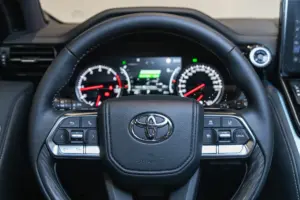

In an era where driver‑assistance systems are rapidly evolving from luxury novelties to essential safety pillars, Toyota’s Sway Warning stands out as a sophisticated yet intuitive feature designed to keep you centered in your lane and alert you when you’re drifting into danger.
Imagine you’re cruising down a highway after a long night shift, the road stretches endlessly ahead, and your eyelids begin to feel heavy. Without a nudge, you might unintentionally wander into the adjacent lane, risking a collision. Toyota’s Sway Warning acts as a vigilant co‑pilot, ready to flash a visual cue and sound an audible reminder the moment it detects an unintended lane departure.
Table of Contents
This article dives deep into the technology, its integration with Toyota’s broader Safety Sense suite, the conditions under which it operates, and practical advice for drivers who want to maximize its benefits while staying fully engaged behind the wheel.
Beyond the basic description, we’ll explore the engineering principles that make Sway Warning reliable, the sensor suite that powers it, and the real‑world scenarios where it shines; or where its limitations become apparent. We’ll also compare it with similar systems from competing manufacturers, discuss how to customise its sensitivity to match your driving style, and provide a comprehensive list of Toyota models that include this feature across model years. Whether you’re a current Toyota owner, a prospective buyer, or simply a safety‑conscious motorist, this deep‑dive will equip you with the knowledge to use Sway Warning effectively and responsibly.
The conversation around vehicle safety has shifted from passive restraints like airbags to proactive, predictive systems that anticipate driver error before it culminates in an accident. Sway Warning is a prime example of this paradigm shift. It is not a replacement for attentive driving, but rather a safety net that complements human judgment. By understanding the intricacies of how it works, you can make informed decisions about when to rely on it, when to disable it, and how to integrate it into a holistic defensive‑driving strategy.
In the following sections, we will break down every aspect of Toyota Sway Warning; its operational criteria, its relationship with the Lane Tracing Assistant (LTA), the historical context of Toyota Safety Sense, and the practical steps required to toggle it on or off. We’ll also address common misconceptions, outline the conditions under which the system may be less effective, and provide actionable tips for drivers who want to optimise their vehicle’s safety suite.
By the end of this article, you will have a thorough, expert‑level understanding of Toyota Sway Warning and how it fits into the broader landscape of modern automotive safety.
Let’s begin by unpacking the core functionality of Sway Warning, its role within Toyota’s safety ecosystem, and the technical specifications that enable it to operate seamlessly across a wide range of driving environments. We’ll also examine the human factors; fatigue, distraction, and over‑reliance; that can influence how effectively the system protects you. With this foundation, you’ll be better prepared to harness the full potential of Toyota’s innovative lane‑keeping technology while maintaining the critical discipline of active driving.
Toyota Sway Warning
At its core, Toyota Sway Warning is an intelligent alert system that monitors the position of your vehicle relative to lane markings and intervenes when it detects an unintentional sway that could lead to a lane departure. Unlike rudimentary lane‑departure warnings that simply beep, Toyota’s implementation is integrated with a multi‑sensor platform that includes a front‑facing camera, a radar unit, and sophisticated software algorithms. These components work in concert to deliver a timely, context‑aware notification that helps you correct your trajectory before a potentially catastrophic error occurs.
When the system identifies a sway; such as a gradual drift caused by driver fatigue, momentary distraction, or loss of focus; it triggers a dual‑modal alert. Visually, a coffee‑cup icon appears on the dashboard screen, symbolically reminding you that it may be time to take a break. Audibly, a subtle chime or tone sounds, ensuring that even if your eyes are elsewhere, your ears will catch the warning. This combination of visual and auditory cues is designed to maximise driver awareness without causing unnecessary alarm or panic.
The coffee‑cup imagery is more than a stylistic choice; it serves as a gentle, non‑intrusive nudge toward self‑care. Toyota’s designers recognised that many lane‑departure incidents are linked to drowsiness, and the icon subtly communicates the message: “You might need a coffee, a stretch, or a short rest.” This human‑centred design philosophy underscores the brand’s commitment to not only preventing accidents but also promoting overall driver wellbeing.
Importantly, Sway Warning is not an autonomous driving feature. It does not steer the vehicle back into the lane on its own; rather, it provides a prompt for the driver to make a corrective input. This distinction is crucial because it places the onus of control firmly in the driver’s hands while still offering a safety buffer. The system’s effectiveness hinges on the driver’s readiness to respond promptly to the alert, reinforcing the principle that technology should augment; not replace; human judgment.
To appreciate the sophistication of Sway Warning, it’s essential to understand the technical environment in which it operates. The system leverages a high‑resolution camera positioned near the windshield that captures real‑time images of road markings. Simultaneously, a forward‑looking radar monitors the distance to the vehicle ahead, providing data that helps differentiate between intentional lane changes (such as when you’re turning) and inadvertent swerves. The fusion of visual and radar data allows the system to make nuanced decisions about when to issue an alert, reducing false positives and enhancing overall reliability.
Furthermore, the software behind Sway Warning continuously calibrates itself based on driving conditions. For instance, it can adjust its sensitivity depending on the speed of the vehicle, the curvature of the road, and the clarity of lane markings. This adaptive approach ensures that the alert is relevant across a spectrum of scenarios; from highway cruising at 70 mph to navigating winding rural roads at lower speeds. The result is a system that feels intuitive, responsive, and minimally intrusive, aligning with Toyota’s reputation for user‑friendly technology.
Another layer of intelligence comes from the vehicle’s Lane Tracing Assistant (LTA), which works hand‑in‑hand with Sway Warning. While Sway Warning focuses on alerting the driver, LTA can provide subtle steering inputs to keep the car centered within the lane, especially when Adaptive Cruise Control is engaged. This synergy creates a comprehensive lane‑keeping ecosystem where alerts and corrective actions complement each other, offering a seamless safety experience.
It’s also worth noting that Sway Warning is designed to operate only when certain pre‑conditions are satisfied. These criteria ensure that the system functions in environments where it can reliably detect lane markings and where intervening would be safe. The following conditions must all be true for the feature to be active:
- Sway Warning Setting: The “Sway Warning” option in the multi‑information display must be set to “ON”. This toggle is accessible through the vehicle’s central console and can be customised to suit individual preferences.
- Vehicle Speed: The car must be traveling at a minimum of 32 mph (50 km/h). Below this threshold, the system deemactivates to avoid unnecessary alerts during maneuvering or parking.
- Lane Width: The traffic lane must be approximately 9.8 ft. (3 m) or wider. Narrower lanes, such as those found in some urban or construction zones, may not provide sufficient data for accurate detection.
- System Integrity: No malfunctions or errors should be present in the Sway Warning system. The vehicle’s diagnostic module continuously monitors the health of the cameras, radar, and associated software, and will disable the feature if any anomalies are detected.
These criteria collectively create a safety envelope within which Sway Warning operates optimally. When any one of these conditions is not met, the system gracefully disables itself, preventing false alerts and ensuring that drivers are not lulled into a false sense of security. Understanding these prerequisites helps you recognise when the system is active and when you must rely solely on your own vigilance.
Beyond the basic criteria, the performance of Sway Warning is also influenced by environmental factors such as lighting conditions, weather, and road surface quality. For example, heavy rain can obscure lane markings, reducing the camera’s ability to accurately detect boundaries. Similarly, bright sunlight glaring off the windshield may temporarily dazzle the camera sensor. Toyota’s engineers have implemented algorithms that compensate for these variables, but awareness of such limitations contributes to a more realistic expectation of the system’s capabilities.
Now that we’ve established the operational framework, let’s explore how Sway Warning integrates with Toyota’s broader safety philosophy, particularly its flagship Safety Sense suite. This integration is not merely a marketing convenience; it reflects a cohesive strategy where multiple assistive technologies work together to create a layered defence against accidents.
Sway Warning and Safety Sense
Toyota’s Safety Sense suite represents a comprehensive, pre‑emptive approach to vehicle safety, bundling together a suite of technologies designed to anticipate and mitigate risks before they escalate into collisions. First introduced in March 2015, Safety Sense was initially rolled out across 68 countries and regions, marking a significant milestone in Toyota’s commitment to global safety standards. The inaugural version included core features such as the Lane Departure Alert, which laid the groundwork for the more sophisticated Sway Warning that would follow.
The original Lane Departure Alert system was a foundational technology that simply warned drivers when the vehicle began to drift out of its lane without a turn signal activation. While effective, it lacked the nuanced sensitivity and integrated assistance that characterise today’s Sway Warning. Toyota recognised the need for a more adaptive solution; one that could not only alert drivers but also provide gentle corrective inputs to keep the vehicle on track. This insight led to the development of the second generation of Safety Sense in January 2018, which introduced the Lane Tracing Assistant (LTA).
LTA is a sophisticated evolution of the original lane‑departure concept. It combines the alert functionality of Sway Warning with an active steering assist that subtly nudges the vehicle back toward the centre of the lane when the driver’s inputs are insufficient. This dual‑layered approach; alert plus assistance; creates a more robust safety net, particularly in high‑speed, high‑traffic scenarios where lane discipline is critical.
Sway Warning is a core component of LTA. When the system detects a sway, it first triggers the visual and auditory alerts described earlier. If the driver does not respond promptly, LTA can intervene by applying gentle torque to the steering wheel, guiding the vehicle back into its designated lane. This graduated response respects driver autonomy while providing an extra margin of safety. The integration of Sway Warning within LTA exemplifies Toyota’s philosophy of “assist, don’t take over”; ensuring that the driver remains in control at all times.
Since its debut, Safety Sense has expanded dramatically. As of today, Toyota offers Safety Sense in 108 countries and regions worldwide, with over 16 million vehicles equipped with the technology. This global reach underscores the brand’s dedication to making advanced safety accessible to a broad audience, not just limited to premium models or specific markets. The suite’s success is a testament to its effectiveness and driver acceptance, as evidenced by positive feedback from owners and independent safety organisations alike.
Looking ahead, Toyota has ambitious plans to further enhance Safety Sense. Future iterations will incorporate even more predictive capabilities, such as emergency steering assist to avoid obstacles, dynamic radar cruise control with curve speed reduction to adapt speed before entering sharp bends, and driver emergency stop assist that can bring the vehicle to a controlled halt if the driver becomes incapacitated. These upcoming features build upon the foundation laid by Sway Warning, illustrating a continuous pipeline of innovation aimed at reducing the human error factor in driving.
One of the most compelling aspects of Safety Sense is its uniform implementation across a wide range of Toyota models, ensuring that even entry‑level vehicles benefit from cutting‑edge safety technology. This democratisation of safety is a deliberate strategy, reflecting Toyota’s belief that advanced driver‑assistance systems should not be confined to luxury segments. By standardising features like Sway Warning across its lineup, Toyota is setting a new industry benchmark for vehicle safety.
To provide a concrete sense of the models that include Sway Warning, the following list outlines the Toyota makes and models that feature this safety technology. This list is current as of the latest model year and includes both gasoline and hybrid variants, demonstrating the suite’s versatility across powertrain options:
- Prius Prime
- Prius
- Corolla
- Corolla Hybrid
- Corolla Hatchback
- Camry
- Camry Hybrid
- Avalon
- Avalon Hybrid
- Mirai
- Sienna
- Tundra
- Tacoma
- C-HR
- RAV4
- RAV4 Hybrid
- RAV4 Prime
- Venza
- Highlander
- Highlander Hybrid
- 4Runner
- Sequoia
- Corolla Cross
The video above provides a visual demonstration of Sway Warning in action, showcasing how the system reacts to lane‑departure scenarios under various driving conditions. Watching the footage can help you appreciate the immediacy and subtlety of the alerts, reinforcing the idea that Sway Warning is designed to be unobtrusive yet highly effective.
It’s also worth noting that many of these models have been equipped with Sway Warning for several model years prior to the current lineup. Toyota’s commitment to continuous improvement means that older vehicles often receive over‑the‑air software updates that enhance the performance of existing safety features, including Sway Warning. If you own a slightly older Toyota, it’s a good idea to check with your dealership about available updates that could optimise the system’s functionality.
Can You Turn Off Sway Warning?
Yes, Toyota understands that driver preferences vary, and the Sway Warning system offers the flexibility to be toggled on or off, as well as adjusted for sensitivity. This customisation ensures that the feature aligns with your individual driving style, whether you prefer a gentle nudge or a more assertive alert. It’s important to remember, however, that disabling Sway Warning removes a layer of protection, so any decision to turn it off should be made with careful consideration of the associated risks.
To manage the Sway Warning settings, you’ll need to access the vehicle’s multi‑information display, which is typically controlled via the dashboard console or the steering‑wheel stalk buttons. The process is straightforward and can be completed in a few simple steps. Below is a detailed walkthrough of how to enable, disable, or fine‑tune the system:
Step 1: Access the Settings Menu – Begin by pressing and holding the “OK” button located on the steering‑wheel stalk or the central console. This action brings up the main menu on the dashboard screen. Use the arrow buttons or the touchscreen interface to navigate to the “Settings” tab.
Step 2: Navigate to Lane Center Controls – Within the Settings menu, scroll down to locate the “Lane Assist” or “Lane Center” submenu. Here you will find options related to lane‑keeping functionalities, including Sway Warning.
Step 3: Enable or Disable Lane Centering – Select the “Lane Center” option. You will see a toggle switch that allows you to enable or disable the lane‑centering function. When enabled, the system will actively steer the vehicle toward the centre of the lane if it detects a sway. Disabling this feature means you’ll only receive the visual and auditory alerts without any steering assistance.
Step 4: Adjust Sway Warning Sensitivity – Return to the previous menu and look for the “Sway Warning” setting. Here you can choose to turn the feature on or off. If you keep it on, you’ll also have the option to set the warning sensitivity. Sensitivity levels typically range from “Low” to “High”. A low setting means the system will only alert you when a significant lane departure is detected, whereas a high setting will trigger alerts for even minor deviations.
Step 5: Confirm and Test – After making your selections, confirm the changes and exit the menu. It’s a good practice to test the new settings on a quiet road to ensure they behave as expected. You should notice the alerts (or lack thereof) corresponding to the sensitivity level you chose.
If you ever feel uncertain about the system’s behaviour after adjusting the settings, you can always reset to the factory defaults by navigating to the “System Reset” option within the Settings menu. This will restore the original configuration, which is optimised for safety based on Toyota’s extensive testing.
Relying on Toyota Sway Warning
While Toyota’s Sway Warning is a sophisticated tool that enhances lane‑keeping safety, it is essential to understand that it is an assist rather than a replacement for attentive driving. The system is designed to alert you to potential lane departures, but it cannot compensate for a driver who is completely disengaged, asleep, or otherwise incapacitated. Over‑reliance on any driver‑assistance system can create a false sense of security, which may lead to serious consequences if the technology fails or operates outside its intended parameters.
The most effective way to use Sway Warning is as part of a holistic defensive‑driving strategy. This means staying alert, keeping both hands on the steering wheel, and being prepared to respond instantly to any alerts. Think of Sway Warning as a safety net that catches you when you momentarily lose focus, not as a system that will steer you back on course without any input from you.
Below are specific scenarios where you should never rely solely on Sway Warning, even if the system is fully functional. In these situations, the risk of an accident is significantly higher, and the driver must remain fully engaged:
- Snow‑covered highways or roads: When the road surface is covered in snow, lane markings may be obscured, and the vehicle’s traction is reduced. Sway Warning may not accurately detect lane boundaries, and any corrective steering inputs could lead to loss of control.
- Construction zones: Construction areas often have temporary lane configurations, unclear markings, or shifting traffic patterns. The system may misinterpret these dynamic conditions, leading to inappropriate alerts or actions.
- Slippery surfaces: Roads that are wet, icy, or covered in hail reduce tire grip. Even a gentle corrective steer from LTA could cause the vehicle to skid, especially if the driver does not anticipate the reduced traction.
- Poor visibility: Fog, heavy rain, or darkness can obscure lane markings, making it difficult for the camera to accurately identify lane boundaries. In such conditions, the system’s reliability diminishes, and manual control becomes paramount.
- Towing a trailer: When hauling a trailer, the vehicle’s dynamics change dramatically. The added weight and altered aerodynamics can affect how the steering assist operates, potentially causing over‑correction or instability.
- Spare tire or non‑standard wheels: Using a spare tire, especially a temporary “donut,” changes the vehicle’s handling characteristics. The system may not account for these changes, leading to unexpected behaviour during a lane‑keeping maneuver.
- Temporary lanes: Lanes that are created for special events, detours, or roadwork may have markings that are not permanent. The system’s algorithms are optimized for standard lane widths and may not recognize these temporary configurations.
- Low tire pressure: Under‑inflated tires reduce fuel efficiency and traction, making the vehicle less responsive to steering inputs. Relying on Sway Warning in this state could compromise safety.
In all of the above scenarios, the driver must remain vigilant, maintain a safe following distance, and be prepared to intervene manually at a moment’s notice. The Sway Warning system is most effective when used in conjunction with good driving habits, not as a standalone safeguard.
Moreover, it’s crucial to recognise that Sway Warning is part of a larger ecosystem of driver‑assistance features. For instance, it works in tandem with the Adaptive Cruise Control to maintain a consistent speed and distance from the vehicle ahead, while also keeping you centered in your lane. When both systems are active, the vehicle can achieve a higher level of automation, but the driver is still legally and ethically responsible for the vehicle’s operation.
Maintenance and Software Updates
Proper maintenance is essential to keep Sway Warning operating at peak performance. Fortunately, most of the system’s components are sealed units that require minimal user intervention. However, there are several proactive steps you can take to ensure reliability.
Camera Care: The forward‑facing camera is located behind the windshield, usually near the rear‑view mirror. Keep the windshield clean, and periodically inspect the camera housing for any signs of damage or debris. If you notice condensation inside the camera lens, allow the vehicle to ventilate; most modern cameras have built‑in defogging mechanisms.
Radar Maintenance: The radar sensor is typically hidden behind a plastic cover at the front of the vehicle. Ensure that this cover remains free from dirt, ice, or road tar. In rare cases, a damaged radar cover can cause the system to malfunction, triggering a dashboard error light.
Software Updates: Toyota regularly releases over‑the‑air updates that refine the Sway Warning algorithm, improve detection accuracy, and address any software bugs. To receive these updates, ensure that your vehicle’s infotainment system is connected to a cellular network or Wi‑Fi. You can also schedule a software update at the dealership if you prefer a hands‑on approach.
Diagnostic Checks: If you notice frequent false alerts or a complete loss of functionality, have the vehicle’s computer scanned for diagnostic trouble codes (DTCs). Many dealerships and independent service centers can retrieve these codes quickly, helping to pinpoint whether the issue lies with the camera, radar, or software.
Driver Best Practices for Maximising Sway Warning Effectiveness
To get the most out of Toyota’s Sway Warning, consider adopting the following best‑practice habits. These recommendations are designed to create a synergy between driver vigilance and technological assistance, resulting in a safer, more enjoyable driving experience.
1. Keep the Camera Lens Clean: Dirt, fingerprints, or ice buildup on the windshield can obstruct the camera’s view, reducing its ability to detect lane markings. Regularly clean the exterior of the windshield and ensure that the camera lens is free from debris. In winter, clear any snow or frost before setting off.
2. Maintain Proper Tire Pressure: Under‑inflated tires can affect handling and may cause the vehicle to drift unintentionally. Check your tire pressure monthly, especially before long trips, and inflate to the manufacturer’s recommended levels. Proper inflation improves fuel economy and enhances the effectiveness of Sway Warning.
3. Stay Informed About Software Updates: Toyota periodically releases firmware updates that refine the Sway Warning algorithm. Enable the vehicle’s remote update feature (if available) or schedule a visit to the dealership to ensure your system runs the latest version.
4. Use the Sensitivity Setting Wisely: If you frequently drive on winding roads, you may benefit from a lower sensitivity setting to avoid unnecessary alerts. Conversely, if you often travel long distances on highways, a higher sensitivity can provide earlier warnings, helping to prevent fatigue‑related lane departures.
5. Combine Sway Warning with Other Safety Features: For maximum protection, enable complementary systems such as Adaptive Cruise Control, Blind Spot Monitor, and the Pre‑Collision System. When these features work together, they create a comprehensive safety net that addresses multiple potential hazards simultaneously.
6. Remain Engaged at All Times: Even with Sway Warning active, keep both hands on the steering wheel and stay mentally focused. Avoid activities that divert your attention, such as texting, eating, or adjusting the radio. Remember that the system is a tool, not a substitute for active driving.
Comparing Toyota Sway Warning to Competitor Systems
While many automakers now offer lane‑departure warning systems, Toyota’s Sway Warning distinguishes itself through its integration with the broader Safety Sense suite and its emphasis on driver comfort. For example, Honda’s LaneWatch uses a side‑view camera to show blind‑spot footage when the turn signal is activated, but it does not provide an auditory alert for lane departures. Similarly, Ford’s Windshield Wiper de‑icer and lane‑keeping system focus heavily on maintaining speed and distance, sometimes at the expense of clear, gentle alerts.
Toyota’s approach is notable for its subtlety. The coffee‑cup icon is a gentle reminder rather than an aggressive alarm, helping to reduce driver fatigue that can arise from overly intrusive warnings. Moreover, the ability to adjust sensitivity gives drivers a level of control that many competitors lack. This customisation ensures that the system can be tuned to match both cautious drivers who want early warnings and experienced drivers who prefer a higher threshold before an alert is triggered.
Another differentiator is Toyota’s commitment to continuous improvement through over‑the‑air updates. Many rival systems require a dealership visit to receive software upgrades, whereas Toyota can push enhancements directly to your vehicle, ensuring that Sway Warning stays up‑to‑date with the latest algorithmic refinements. This capability not only improves safety but also extends the useful life of the technology, keeping your vehicle competitive for longer.
Conditions in Which Sway Warning May Not Work Properly
Even under ideal circumstances, no technology is infallible. Sway Warning is engineered to be highly reliable, but there are specific conditions where its performance can degrade or become unreliable. Understanding these limitations helps you anticipate when the system might not function as expected and adjust your driving behaviour accordingly.
The following list outlines the most common scenarios that can affect the accuracy and responsiveness of Sway Warning. Familiarising yourself with these situations will enable you to stay one step ahead, ensuring that you never become overly dependent on the system’s alerts.
- Sharp curves: When navigating a tight bend, lane markings may be close together or even double‑back on themselves. The camera may struggle to differentiate between the actual lane boundary and surrounding markings, potentially causing delayed or missed alerts.
- Merge or diverge points: Areas where lanes split or combine present complex visual patterns that can confuse the lane‑detection algorithm. The system may momentarily lose track of the correct lane, leading to erratic behaviour.
- Guardrails or poles mistaken for lane lines: In some environments, reflective guardrails, road signage, or utility poles can be misidentified as lane markings. This misinterpretation can cause the system to trigger false alerts or fail to recognise an actual lane departure.
- Repair marks on roadways: Roadwork often leaves temporary paint marks, arrows, or symbols that can be misinterpreted by the camera. These marks may be brighter or thicker than standard lane lines, causing the system to misjudge lane boundaries.
- Intersections: Uncontrolled intersections lack clear lane definitions, and the presence of cross traffic further complicates lane detection. Sway Warning may be intentionally disabled or operate in a limited mode when crossing an intersection.
- Crosswinds: Strong side winds can push the vehicle laterally, creating a sway that is not caused by driver error. The system may interpret this wind‑induced movement as a lane‑departure risk, resulting in unnecessary alerts.
- High speeds: At very high velocities, the dynamics of the vehicle change, and the system’s reaction time may lag behind the actual lane‑departure event. Additionally, high speeds can exacerbate the impact of any corrective steering inputs.
- Shadows parallel to lane lines: Shadows cast by overhead structures, trees, or other vehicles can create dark streaks that mimic lane markings. The camera may misinterpret these shadows, leading to inaccurate lane‑centering or missed warnings.
- Wet or snowy road surfaces: Water, snow, or ice can obscure lane markings, reducing the camera’s ability to detect them clearly. In such conditions, the system may become less responsive or may not function at all.
- Slopes: Driving uphill or downhill can affect the vehicle’s posture, altering the camera’s angle relative to the road. This change in perspective may impact lane detection accuracy.
- Abnormally wide or narrow lanes: Lanes that deviate significantly from the standard width (approximately 9.8 ft./3 m) may not be fully recognised by the system. The algorithm is calibrated for typical lane dimensions, and extreme variations can cause it to disengage.
Drivers should treat these conditions as red flags that demand heightened attention. If you notice any of the above scenarios, consider deactivating Sway Warning temporarily or reducing your reliance on it until you reach a more predictable environment. Remember, the system is designed to complement; not replace; your own situational awareness.
Understanding the Sensors Behind Sway Warning
To truly appreciate the sophistication of Toyota’s Sway Warning, it’s helpful to delve into the sensor technologies that power it. At the heart of the system is a high‑resolution forward‑looking camera mounted near the windshield. This camera captures real‑time images of the road ahead, using image‑recognition algorithms to identify lane markings, road signs, and other visual cues. The camera operates in visible light, which means its performance can be affected by darkness, glare, or inclement weather; however, Toyota’s engineers have incorporated infrared and low‑light enhancement techniques to improve reliability across a range of conditions.
Complementing the camera is a front‑facing radar unit that emits radio waves to detect objects ahead of the vehicle, including other cars, pedestrians, and stationary obstacles. The radar provides crucial data about distance, speed, and relative motion, enabling the system to differentiate between intentional lane changes (such as when you’re turning) and inadvertent swerves. By fusing camera and radar data, Sway Warning achieves a higher level of accuracy than either sensor could provide alone.
In addition to these primary sensors, many Toyota models equipped with Sway Warning also incorporate an inertial measurement unit (IMU) that monitors the vehicle’s pitch, yaw, and roll. This information helps the system understand the dynamics of the car’s movement, especially during cornering, braking, or acceleration. The IMU’s data is essential for distinguishing between a genuine lane‑departure risk and a normal maneuver such as a gentle turn.
Together, these sensors create a comprehensive picture of the driving environment, allowing Sway Warning to issue alerts with minimal latency. The system’s software continuously calibrates itself, learning from each drive to improve future performance. This machine‑learning aspect means that over time, the alerts become more nuanced and better aligned with your personal driving habits.
Frequently Asked Questions About Toyota Sway Warning
Below are answers to some of the most common questions drivers have about Sway Warning. This FAQ section is designed to clear up any lingering uncertainties and help you make the most of this safety technology.
Q: Can Sway Warning be used on unpaved roads?
A: Sway Warning is calibrated for paved surfaces with visible lane markings. On gravel, dirt, or off‑road trails, the system may not detect any lane boundaries, and it will typically remain inactive. It is best to disable the feature when driving off‑road to avoid false alerts.
Q: Will the system work if I have a windshield crack directly in front of the camera?
A: A large crack or obstruction in the camera’s field of view can impair its ability to read lane markings. In such cases, the system may deactivate automatically, and a dashboard warning light will appear. Repairing the windshield promptly will restore full functionality.
Q: Does Sway Warning function in stop‑and‑go traffic?
A: The system requires a minimum speed of 32 mph (50 km/h) to activate. In heavy traffic where speeds are lower, Sway Warning will remain dormant. However, the Lane Tracing Assistant may still provide steering assistance if Adaptive Cruise Control is engaged.
Q: How does the system handle lane changes initiated by the driver?
A: When you signal a lane change, the system recognises the intention and temporarily suspends Sway Warning for that maneuver. If you change lanes without signaling, the system may still issue an alert, assuming the lane change was unintentional.
Q: Can I completely disable Sway Warning permanently?
A: Yes. You can turn off the feature through the Settings menu, and it will stay disabled until you re‑enable it. However, we recommend keeping it on for added safety, especially on long highway drives.
In Conclusion
Toyota’s Sway Warning represents a significant leap forward in proactive vehicle safety, offering drivers a subtle yet powerful safeguard against unintentional lane departures. By integrating advanced sensor technology, intuitive alerts, and a user‑friendly design, it helps prevent accidents caused by fatigue, distraction, or loss of focus. However, the system is most effective when used as part of a broader defensive‑driving strategy that prioritises driver vigilance, proper vehicle maintenance, and responsible use of technology.
Understanding the operational criteria, limitations, and best‑practice recommendations outlined in this article will empower you to harness the full potential of Sway Warning while maintaining control of your vehicle. Whether you’re embarking on a cross‑country road trip, commuting daily, or simply navigating city streets, this feature provides an extra layer of confidence, allowing you to focus on the journey ahead with greater peace of mind.
As Toyota continues to refine its Safety Sense ecosystem, features like Sway Warning will become even more sophisticated, paving the way for a future where technology and driver expertise work hand‑in‑hand to achieve unprecedented levels of road safety. By staying informed, engaged, and responsible, you can ensure that you; and every passenger in your vehicle; benefit from the full protective potential of this groundbreaking technology.