
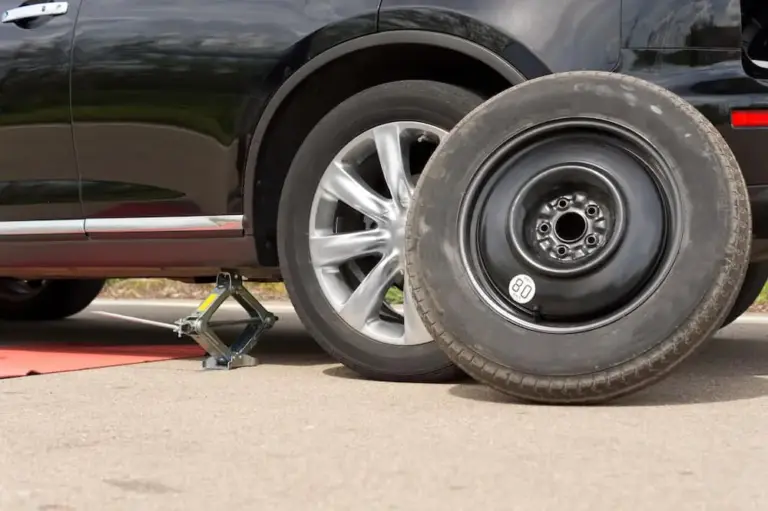
There is never a good time for a flat tire. If you are lucky, it happens near people, near a gas station, or near an auto shop that can actually help you right away. But flats also show up in the middle of nowhere, on a dark stretch of road, or on a long highway run where help feels miles away. A spare tire can save your day, but it is not meant to last forever. So the real question is simple: how far can you drive on your spare tire without turning a quick fix into a dangerous situation?
The answer depends on the type of spare you have. A compact “donut” spare, a full-size spare, and a run-flat spare all work differently. Some are limited by speed. Others are limited by distance. And a few are designed to keep you moving longer, but they still need to be replaced once you have made it to safety.
Let us break it down the way a careful driver would think about it: what each spare type is for, what the typical limit is, and what you should do next so you protect yourself and everyone else on the road.
How far can you drive on a spare tire? (Limits by type)
Here is a quick, practical comparison first. Then you can scroll and get the details for each spare type, plus real-world driving tips that help you get where you need to go safely.
| Spare tire type | Typical distance limit | Typical speed limit | What you should do next |
|---|---|---|---|
| Donut spare tire | Do not exceed 50 miles | Do not exceed 50 mph | Plan a repair or replacement as soon as possible |
| Full-sized spare tire | Can often drive longer than a donut | Match safe driving for the repaired tire condition | Visit the nearest repair shop for professional assistance or replacement ASAP |
| Run-flat spare tire | About 50 miles before replacement is needed | Follow your vehicle guidance and typical safe speed | Replace once you reach a shop, even if it still feels usable |
1) Donut spare tire (the compact lifesaver)
Donut spare tires are compact and lightweight. They are built to save space and weight, which is why they show up on many cars with limited trunk room. Also, they are portable and easier to install compared to heavier, full-size spares.
But here is the trade-off. Donut spares are designed for temporary use. Their narrower size and compact design mean you must treat them like a short-term bridge, not a replacement for the real tire you damaged.
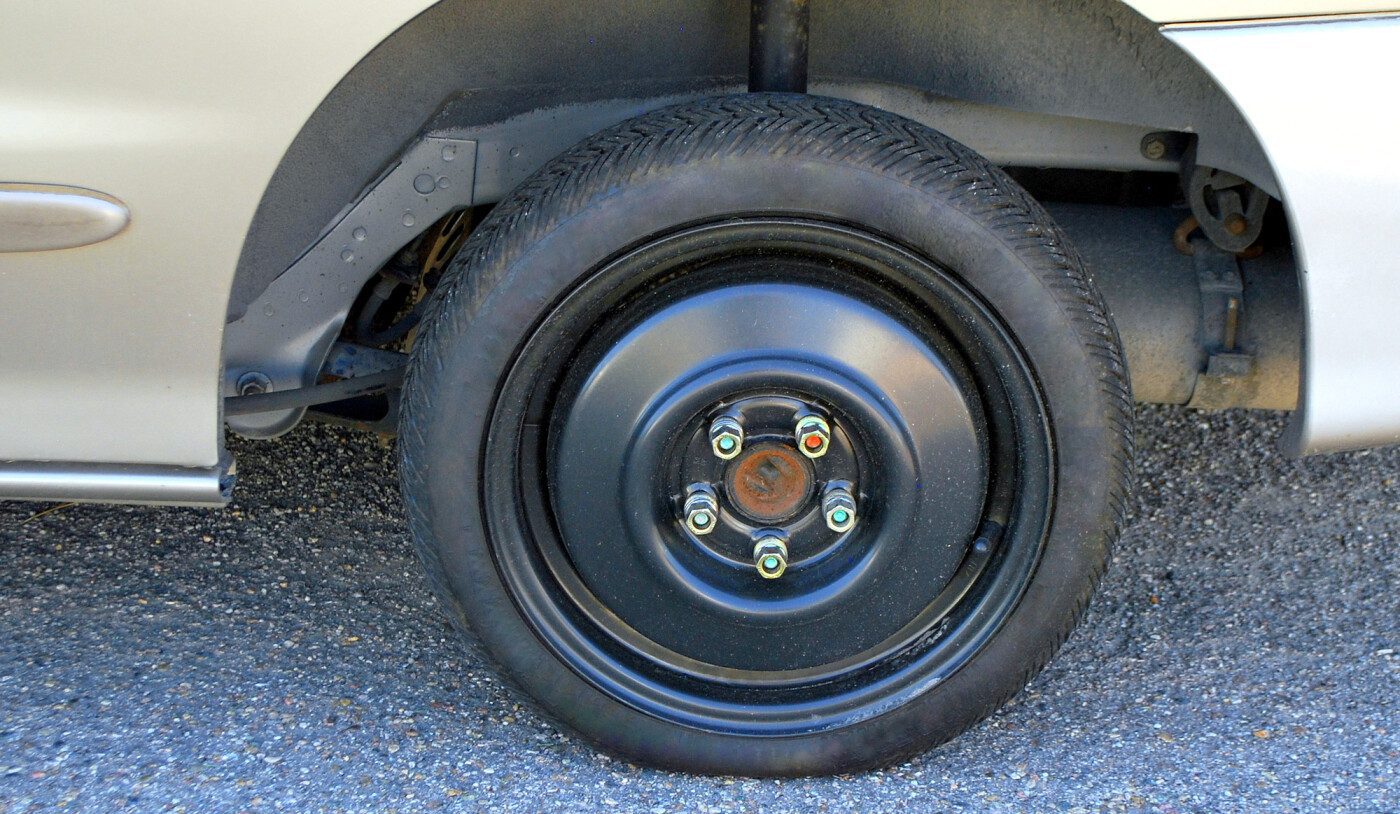
Donut spare tire limit: 50 miles and 50 mph
You should not use a donut tire for over 50 miles or speeds over 50 miles per hour. That limit matters because compact spares are not built to handle long-distance heat and stress the way your regular tire is.
In practical terms, if you notice your flat happened far from town, you should plan your route like an emergency trip. Take the safest roads available, avoid reckless speed changes, and keep your turns gentle. Even if you feel confident at the wheel, the tire is still working under limitations.
Here is a real-world example. Imagine you get a flat at 7 p.m. on a familiar highway that usually takes you 45 minutes to reach a shop. If you only have a donut, you should not assume you can drive “just a little longer” beyond the limit. If the route turns into an hour-and-a-half detour because you missed an exit, you might be pushing the spare past what it is designed to handle.
How to drive a donut spare so you stay safe
When you put a donut on, your car behaves a little differently. Acceleration can feel less responsive, braking distance can change, and handling may feel less predictable on wet roads. The goal is to drive in a way that reduces stress on the tire and protects the people around you.
- Keep speeds modest: Stay under the 50 mph limit and drive below that when traffic and weather demand it.
- Avoid hard cornering: Turn smoothly. Sharp turns increase sideways stress and heat.
- Brake early and gently: Do not wait for the last moment to slow down.
- Avoid rough roads when possible: Potholes and debris can damage the spare faster than you expect.
- Do not tow with a donut: Towing adds strain that your temporary tire is not meant to handle.
Also, if your vehicle has a tire pressure monitoring system, watch for warning lights. A donut spare may look “fine” while it is actually running low on pressure. Low pressure increases heat buildup and can reduce traction when you need it most.
2) Full-sized spare tire (more familiar feel, still temporary)
Many older vehicles come with full-sized spares. These are closer to the working tire set, meaning the tire size and overall road behavior feel more normal. Changing a full-sized spare usually takes a bit more energy and skill because it is heavier. Still, the upside is that you can often drive further than you would with a donut.
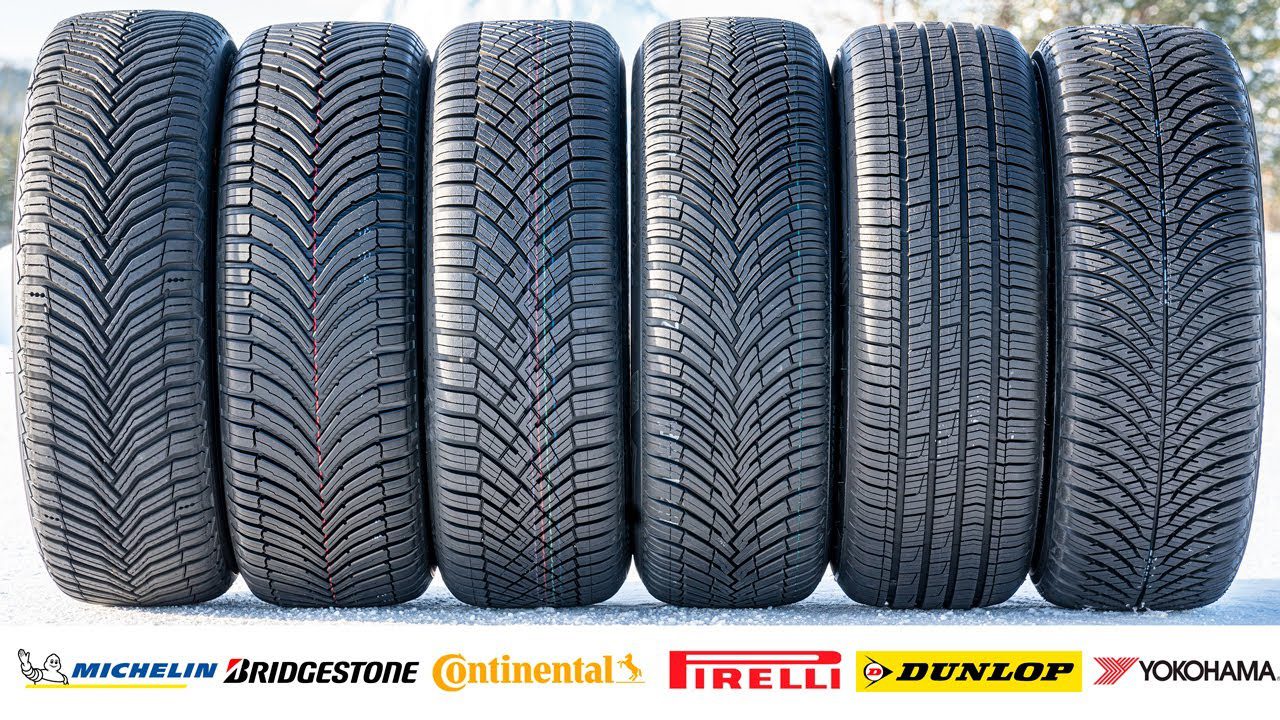
Full-sized spare: still visit a repair shop soon
Even with a full-sized spare, you should still visit the nearest repair shop for professional assistance or get a replacement as soon as possible. The spare might match your tire size, but it still is a spare. The tire may be older than your road tires. It may not match tread depth. And it may not be ready for an extended stretch of highway driving.
Here is the mindset that helps. Think of a full-sized spare as “more comfortable to get you there,” not “fine for months.” If your regular tire needs repair, the right approach is to restore your tire setup to normal as quickly as you can.
What changes when you mount a full-sized spare
Even when it is full-sized, something still changes. Tire age and tread depth can differ from your other tires. That difference can affect traction, especially in rain or snow. On some vehicles, mismatched tires can also influence how the car distributes power, particularly on all-wheel drive systems.
And yes, that matters for safety. But it also matters for your wallet. If you delay the repair too long, a small issue can become a bigger repair later.
- Check tire pressure right away: A full-sized spare should be inflated properly before you drive.
- Keep an eye on vibrations: If you feel shaking, stop and re-check the mounting and alignment.
- Plan for the next step: Treat the spare as your trip to the shop, not your long-term solution.
One more real-world point. If your flat was caused by road debris, you should inspect the damaged tire carefully when you get it off. Sometimes the cause points to a recurring issue like a bent rim. If you just keep driving on the spare without getting the underlying cause handled, you can end up stranded again.
3) Run-flat spare tire (designed to keep moving)
Run-flat tires are common on many luxury cars. The whole idea is simple: you can keep driving for a while even after losing air, giving you time to reach a safe location or service. These tires are designed to withstand road hazards and to run much longer without punctures.
Even so, run-flat does not mean “no limits.” It means the tire is engineered to delay the moment you must stop. The guidance still includes a distance limit and a need for replacement.
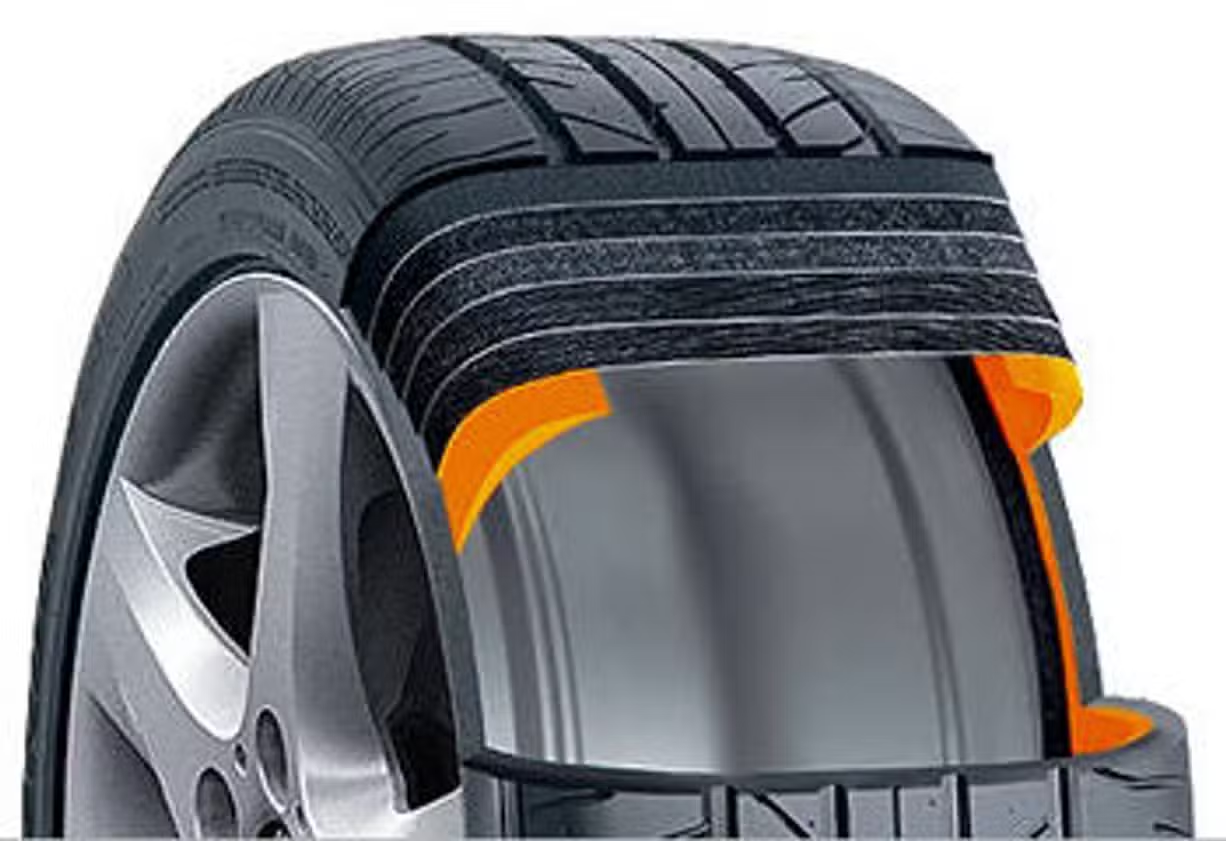
Run-flat limit: about 50 miles, then replace
You can drive for about fifty miles before you need to get a replacement. The exact number varies based on your vehicle and your driving conditions, but the core point stays the same. After that distance window, you should treat the run-flat tire as compromised and get it replaced.
Picture this. You lose pressure in a run-flat tire on a busy evening. You keep moving to the nearest exit and reach a safe area. Even if the car still feels controllable and the tire seems “okay,” you should still go get it replaced. The tire has been doing extra work. Heat and stress accumulate, and rubber is not magic.
How to drive on a run-flat without making things worse
With run-flat tires, your biggest risk is assuming you can go as long as you want. The second risk is driving aggressively because you think the tire is “tough enough.” It is tough enough for a limited window. Aggressive driving can shorten that window fast.
- Drive like you are already protecting the tire: Smooth acceleration and gentle braking.
- Avoid heavy loads: If you can, reduce cargo weight and number of passengers.
- Do not wait for damage to become obvious: If you see persistent warning lights, take them seriously.
- Get replacement as soon as possible: Do not plan a “later tonight” repair if you can handle it now.
Also, remember that run-flat systems still rely on the vehicle’s tire monitoring and your awareness. If you ignore warnings for too long, you lose the advantage run-flat was designed to give you.
Why you should fix the tire immediately
A spare tire helps you reach a repair shop safely and in a timely manner. That is the point. You should always have a spare, especially if you are traveling outside of town or on routes where a tow truck is not just around the corner.
Your car manual also offers guidance. Pay attention to how smaller wheels can affect safety systems like ABS, traction, and electronic stability control. Those systems depend on correct tire size, accurate signals, and predictable grip. When you use a spare that differs from your normal setup, the systems can behave differently than you expect.
Here is the uncomfortable truth. Many drivers treat spare tire use like an inconvenience rather than a time limit. But the longer you delay, the more likely it becomes that the tire is damaged further, the vehicle handling changes, or you end up with a second problem you cannot fix on the road.
What “fix immediately” really means
“Fix immediately” does not mean you must panic and cancel every plan. It means you should treat getting the tire repaired or replaced as your next priority, not something you put off until the weekend.
- Drive to the nearest safe location if needed.
- Get professional help as soon as the shop is available.
- Replace or repair the damaged tire based on the mechanic’s recommendation.
- Recheck tire pressure and tire mounting before leaving the shop.
Real-life factors that can reduce how far you should drive
Even when your spare type has a clear limit, the actual safety margin depends on how you drive and where you drive. Two drivers can hit the same mileage number and have totally different outcomes because one driver was gentle and drove smooth roads, while the other took highway exits aggressively and hit potholes.
Here are common real-life factors that can shorten the “safe” usable distance. If any of these apply, you should shorten your plan, not stretch it.
- Cold or hot weather: Extreme temperatures can change tire behavior and accelerate wear.
- Heavy loads: Cargo and passenger weight increase stress on the spare.
- Potholes and rough road surfaces: Impacts can damage sidewalls and increase heat.
- Frequent stop-and-go driving: Frequent starts and braking can build stress faster.
- Wet or icy conditions: Traction is different on temporary spares, so smooth driving matters more.
- Bad alignment or bent rim on the damaged wheel: If the underlying problem is not fixed, you can be back where you started.
Think of it like this. The printed limit is not a dare. It is a safety guideline. If you want the best chance of getting where you need to go without issues, plan to reach service well before the spare’s maximum distance.
Before you need it: check your spare like you check your oil
A spare tire only helps if it is actually ready to work. Many drivers think the spare “is fine” because it is sitting in the trunk. But tires slowly lose pressure over time. If your spare has been sitting for months or years, it might not be inflated to the right level, even if it looks okay.
Here is a simple routine you can use. It takes a few minutes and can save you a lot of frustration later.
Spare tire checklist (quick and practical)
- Check pressure: Use a tire gauge. Adjust pressure based on your door jamb or owner guidance.
- Inspect the spare: Look for cracks, dry rot, bulges, or dry-looking sidewalls.
- Confirm tools are present: Jack, lug wrench, and any required adapters.
- Know where the spare sits: Make sure you can access it quickly when you are stressed.
- Practice the basics: Mentally rehearse the steps so you do not freeze if it happens at night.
If you do not want to deal with pressure checks yourself, schedule it during routine maintenance. A technician can inspect the spare and tell you if it is safe to use.
Mounting a spare safely: what to do at the roadside
When the flat happens, your goal is not to look heroic. Your goal is to keep yourself safe while you handle a mechanical task. That means creating distance from traffic, using hazard lights, and making sure the car is stable.
Before you try to lift anything, do these basics in order:
- Get to a safe spot: Pull off as far as possible, if you can do so safely.
- Turn on hazards: Other drivers need clear signals.
- Set up warning protection: If you have flares or a warning triangle, use them if needed.
- Stay behind the barrier: Keep your body away from traffic lanes.
- Use the correct jack points: Wrong placement can slip and become dangerous.
Even if you know how to change a tire, it helps to slow down. Rushing is where accidents happen. A spare tire change should feel controlled, not chaotic.
Common mistakes people make with spare tires
Most drivers have good intentions. The mistakes come from assumptions. People assume that because it is a spare, it is meant for long trips. They assume that because the car “moves,” it is okay. They assume that because the spare looks fine, it will perform fine.
Here are the mistakes that cause the most problems.
- Overdriving a donut spare: Going past 50 miles or past 50 mph is not worth the risk.
- Ignoring warning lights: If your system warns you about a tire issue, take the signal seriously.
- Driving aggressively: Quick turns and hard braking increase stress and reduce traction.
- Forgetting to check spare pressure: A spare can lose air while it sits.
- Delaying the repair: A spare is your way to reach service, not your way to avoid service.
Here is an easy way to avoid the biggest mistake. Treat your spare like a “limited-time tool.” Decide your destination and time window early. If you cannot reach the shop comfortably within that window, you need a new plan such as calling roadside assistance.
FAQ: spare tire distance and driving safety
Can I drive on a donut spare on the highway?
You can drive short distances on a donut spare, but you must follow the limit: do not exceed 50 miles and do not exceed 50 miles per hour. If your route forces higher speeds or a long distance, you should stop and get assistance rather than pushing it.
How do I know when my run-flat spare is done?
Run-flat tires are designed to get you moving longer, but the guidance is still about replacement. You can drive for about fifty miles before you need to get a replacement. Also watch the vehicle warnings and take them seriously. If your car signals continued problems, do not gamble on “maybe it is fine.”
Is a full-sized spare safe for long trips?
A full-sized spare lets you drive further than a donut, but it still should not turn into long-term use. You should still visit the nearest repair shop for professional assistance or get a replacement as soon as possible. That is the smart move because tread depth, tire age, and performance can differ even when the size matches.
What should I do immediately after installing the spare?
Make sure the spare is properly mounted, check that the lug nuts are tightened correctly, and then drive gently. After you reach the shop, ask the technician to inspect the spare and the damaged tire. If there is an underlying issue like a bent wheel, you want it corrected so the next trip does not end the same way.
Your next move
Before you roll out on a spare, ask yourself one clear question: am I within the spare’s safe distance and speed limits, and have I planned the repair or replacement as the next step? If the answer is not a confident yes, do not keep driving and hoping. Change the plan, find a safer stop, and get the tire fixed today.