


Power steering is one of those features drivers rarely think about until something feels wrong. You turn into a parking space, ease into a driveway, or navigate a tight corner, and the wheel responds with very little effort. That smooth, easy steering feel has become so normal in modern driving that most people never stop to consider what makes it possible. But if you have ever driven an older vehicle without power steering, you already know the truth: turning the wheel at low speed can feel like a full upper-body workout.
That is why keeping the power steering system healthy matters. In vehicles that use a hydraulic power steering setup, the fluid inside that system is not just a filler liquid. It is the working force behind the assist you feel at the wheel. It also lubricates moving parts, helps manage heat, protects seals, and keeps internal components from wearing out too quickly. Use the wrong fluid, neglect the old fluid for too long, or let the level drop too far, and you can end up with noise, heavy steering, leaks, pump damage, and expensive repairs that could have been avoided.
From a maintenance standpoint, power steering fluid does not get as much attention as engine oil, coolant, or transmission fluid. Many owners are not even sure what type their vehicle uses, and some are not certain whether their car uses hydraulic power steering fluid at all. That confusion is understandable. Vehicle manufacturers have used several different fluid types over the years, and some modern vehicles now rely on electric power steering systems that do not use fluid in the first place. If you are shopping for fluid at the parts store without knowing which system your vehicle has, it is very easy to make the wrong choice.
That is exactly why this guide matters. I am going to explain the three major categories of power steering fluid, show you how to figure out which one your car actually needs, discuss when you should change it, and walk you through the correct way to check and replace it. I will also explain what happens when the fluid is low, old, or contaminated, and why topping it off is not always the same thing as servicing it properly.
This article is written from the perspective of long-term mechanical care, not guesswork. In workshop practice, power steering problems often begin small. A little noise, a slight leak, or a darker fluid color may not seem urgent. But once the pump starts cavitating, seals begin to wear, or metal contamination enters the system, the repair bill climbs quickly. A fluid change done at the right time is cheap. A power steering pump and rack replacement is not.
So before you grab whatever bottle says “power steering fluid” on the label, take a few minutes to understand what your vehicle needs. The right fluid matters more than many drivers realize, and changing it the correct way can add years of life to the system.
What Power Steering Fluid Actually Does
Before discussing the different fluid types, it helps to understand what power steering fluid is supposed to do. In a hydraulic power steering system, the fluid serves as the medium that transfers force from the pump to the steering gear or rack. When you turn the wheel, the system directs pressurized fluid to help move the steering mechanism, reducing the effort required by the driver.
That makes power steering fluid a functional hydraulic fluid first, but it does much more than simply carry pressure. It also lubricates the internal parts of the pump, valve body, seals, and steering rack. It helps reduce wear inside moving metal surfaces. It carries heat away from the system. It resists foaming, corrosion, and oxidation. And it must remain stable across a wide range of temperatures, from cold winter starts to high under-hood heat in summer traffic.
If the fluid is too thick when cold, the steering may feel heavy and the pump may struggle to draw it. If it becomes too thin under heat, system pressure may suffer and lubrication quality can drop. If the wrong additive package is used, seals may swell or shrink improperly, internal wear may increase, and the system can begin to leak or operate noisily. That is why power steering fluid is not something you should treat casually.
It is also worth clarifying that not every modern vehicle uses hydraulic power steering. Many newer cars use electric power steering, often called EPS. These systems use an electric motor rather than hydraulic pressure to provide steering assist. If your car uses EPS, there is no power steering reservoir to check and no fluid to replace. This guide applies to vehicles that use hydraulic or electro-hydraulic steering systems with a fluid reservoir.
If you are unsure what your vehicle has, open the hood and look for a power steering reservoir cap labeled with steering fluid information. If you cannot find one and the owner’s manual does not mention hydraulic fluid, there is a good chance the car uses electric steering.
For the cars that do use fluid, the next step is knowing which fluid belongs in the system. That is where many owners go wrong.
The 3 Main Power Steering Fluid Types
Although power steering fluid comes in many brand names and label designs, most vehicle applications fall into three broad categories. These are ATF-based transmission fluid, synthetic hydraulic power steering fluid, and universal power steering fluid. Each category has its own chemistry, viscosity characteristics, and manufacturer compatibility. Choosing the wrong one can create steering problems, leaks, and in some cases expensive system damage.
For clarity and practical use, I am going to explain them in the order that makes the most sense from a diagnostic and selection standpoint, beginning with the one that confuses owners the most.
1. ATF Transmission Fluid Used as Power Steering Fluid
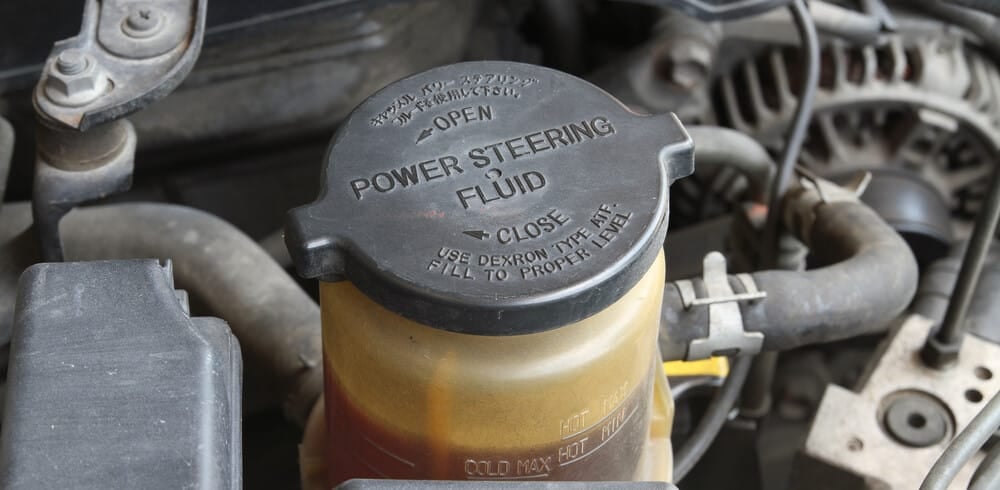
One of the biggest surprises for many drivers is that some power steering systems were designed to use automatic transmission fluid, not a bottle labeled specifically as “power steering fluid.” This is not a shortcut or a mechanic’s improvisation. It is the factory-specified fluid type for many vehicles, especially domestic models from certain decades.
Fluids such as Dexron, Mercon, ATF+4, and older Type F transmission fluid have all been used in hydraulic steering systems depending on the manufacturer. Ford, General Motors, and Chrysler used ATF in many models from roughly the 1970s through the mid-1990s, and some applications continued beyond that. Certain U.S.-market Volkswagens from specific years also used ATF in the steering system.
The reason this works is that automatic transmission fluid is already a highly engineered hydraulic fluid with detergents, anti-wear agents, oxidation inhibitors, and stable viscosity characteristics. In some steering systems, that chemistry matched what the manufacturer wanted. So using ATF in those vehicles is not only acceptable—it is correct.
However, this is where drivers make dangerous assumptions. Just because some cars use ATF does not mean your car does. A modern European system requiring a special synthetic fluid may react badly if ordinary ATF is poured into it. Seals may not like it. Steering feel may change. Pump noise may appear. And long-term wear can increase.
ATF-based steering systems often have reservoir caps or owner’s manuals that specify the exact transmission fluid family to use. That wording matters. Dexron is not the same as Mercon. ATF+4 is not interchangeable with every older fluid. Type F has a different friction profile from later fluids. Even within the ATF family, compatibility is not universal.
Another point worth understanding is color. Many ATF fluids are red or reddish-pink when fresh. That sometimes leads owners to believe any red fluid under the hood must be transmission fluid. In a vehicle that uses ATF in the power steering system, that is not a mistake. But you should never identify fluid solely by color. The reservoir label and manufacturer specification matter more than appearance.
From a service perspective, ATF-based steering systems tend to tolerate routine maintenance well, but they still suffer if neglected. Over time, the fluid darkens, oxidizes, loses some of its anti-wear protection, and can become contaminated with fine particles from pump and steering gear wear. When that happens, owners may hear pump whining, feel heavier steering, or begin seeing seepage at seals and hoses.
So if your vehicle calls for ATF in the power steering system, use the exact type recommended. Do not replace it with a random “universal” bottle unless the product specifically states compatibility with that specification and you have confirmed it is appropriate for the car.
ATF in the steering system is normal in many older and domestic applications. It is only a problem when the wrong ATF is used, or when ATF is assumed to be correct for a system that requires something else entirely.
2. Synthetic-Based Hydraulic Power Steering Fluid
The second major category is synthetic hydraulic power steering fluid, and this is the one most commonly associated with European and many Japanese vehicle manufacturers. This type of fluid is built to more specific performance standards and often offers improved low-temperature flow, stronger oxidation resistance, and better long-term protection for pumps, valves, and seals.
European brands such as Volkswagen, Audi, Porsche, BMW, Mercedes-Benz, and Volvo have frequently used their own approved steering fluid specifications. These fluids are not generic in the ordinary sense. They are often designed to meet standards such as ISO 7308 or DIN 51 524T3, depending on the application. That means they are engineered not just for hydraulic pressure transfer, but for the exact seals, pump materials, and cold-weather steering behavior those manufacturers intended.
Japanese manufacturers have also used specialized steering fluid formulas in many models. Subaru, Honda, Nissan, Toyota, and Mitsubishi have all used steering system specifications that differ from domestic ATF-based systems. In some cases, the fluid may look similar to generic power steering fluid. That does not make it interchangeable. Some manufacturers are especially sensitive to fluid chemistry, and using the wrong one can create pump noise, leak development, seal swelling, or degraded steering feel.
One of the major advantages of synthetic-based steering fluid is low-temperature performance. In cold climates, steering systems need fluid that can flow rapidly on startup and deliver immediate lubrication without becoming thick and sluggish. Synthetic fluids often excel here. That is one reason many high-spec or cold-weather-sensitive vehicles use them. They help preserve steering assist quality in the very conditions where heavy steering would be most noticeable to the driver.
These fluids also tend to resist oxidation well. Under-hood temperatures can become extreme, and hydraulic fluid lives a hard life near the engine. A fluid that maintains stability under heat has a major durability advantage. It protects the pump longer, reduces varnish and deposit formation, and supports more consistent steering effort over time.
The downside, of course, is cost and specificity. Synthetic steering fluids are often more expensive than generic alternatives, and the approved product list can look intimidating to owners. But this is not an area where guessing saves money. If your BMW, Mercedes, Audi, or Subaru requires a specific synthetic hydraulic fluid, using the proper fluid is still far cheaper than replacing a damaged pump or steering rack later.
This is also the category where fluid confusion is most costly. A vehicle that requires a green synthetic central hydraulic fluid, for example, should not be topped off with red ATF just because both are described online as “power steering fluid.” The two are not functionally equivalent. Mixing them can create a mess that requires flushing the system just to undo the mistake.
In other words, synthetic-based steering fluid is not just the “fancy” option. In many vehicles, it is the only correct option. If your manufacturer specifies it, respect that requirement.
3. Universal Power Steering Fluid
The third major category is universal power steering fluid. This is the product many drivers find first on the shelf because the label often promises broad compatibility and simplified shopping. In some vehicles, that promise holds up well. In others, it can create false confidence.
Universal power steering fluid is designed to work across a wide range of hydraulic steering systems. Manufacturers of these fluids build the formula to match many common seal materials, viscosity expectations, and anti-wear needs. For vehicles that call for a standard, non-specialized power steering fluid, a quality universal product can work perfectly well. That is why these fluids remain popular with independent repair shops and owners who want a versatile product for general use.
However, the word “universal” must be interpreted carefully. It does not mean “safe in every steering system ever made.” It means the fluid is intended to meet a broad range of common applications. Some products truly do have an impressive compatibility list. Others rely more on marketing language than on exact specification matching. That is why you should never stop reading at the word “universal.” Continue reading the back label, the compatibility chart, and the manufacturer approval notes.
Some vehicles can use universal fluid only if the product also includes special additives or explicitly states compatibility with the OEM specification. A few systems require enhanced seal conditioning, corrosion inhibitors, or anti-foam additives beyond what the most generic fluid provides. If the vehicle’s steering system was built around a very specific hydraulic fluid standard, universal may not be good enough just because it is convenient.
That said, quality universal fluid has a real place in the market. Many mainstream vehicles respond perfectly well to it, and for simple top-offs or flushes on compatible systems, it can be a practical and cost-effective solution. The problem is not the concept. The problem is careless use in systems that needed something more specific.
If you want to use a universal power steering fluid, verify that it is listed as compatible with your vehicle’s specification. Do not rely on broad claims alone. If your owner’s manual or reservoir cap names a precise fluid type, use that as your first reference. Universal fluid is a useful category, but it is not a free pass to ignore factory guidance.
How to Know Which Power Steering Fluid Your Car Needs
If there is one rule I would insist every car owner follow, it is this: do not guess. Power steering systems are less forgiving of incorrect fluid than many people think. Choosing the wrong fluid may not destroy the system instantly, but it can create noise, reduced assist, foaming, seal damage, or long-term wear that costs far more than the correct bottle would have.
The best first place to look is the power steering reservoir cap. Many manufacturers print the required fluid type directly on the cap. It may say “Use ATF Dexron,” “Use only approved hydraulic fluid,” or name a manufacturer-specific fluid type. That information is valuable because it is tied directly to the car in front of you, not just a general brand recommendation.
The next place to check is the owner’s manual. This remains the most authoritative source for your exact year, make, model, engine, and steering system configuration. If the manual names a fluid specification or part number, treat that as the gold standard.
If the manual is missing, reputable online parts catalogs and OEM documentation sources can often help you identify the right fluid. Many parts sites let you enter your license plate number or vehicle details and then show approved products. This can be helpful, but I still recommend verifying against a manufacturer reference whenever possible, especially with European vehicles or any system using synthetic hydraulic fluid.
Another practical clue is the color and type already in the reservoir, but this should be treated as supporting evidence, not final proof. A red fluid may suggest ATF, while a green fluid may suggest a specialized synthetic hydraulic fluid. But fluids can darken with age, and previous owners or repair shops may already have added the wrong one. So use appearance only as a clue, not a decision-maker.
If you remain unsure, ask a qualified technician or dealership parts department for the exact specification. A two-minute confirmation is worth it. The steering pump and rack are too expensive to gamble over a fluid bottle.
When Should You Change Power Steering Fluid?
Power steering fluid lives in a cleaner environment than engine oil because it is not exposed directly to combustion byproducts. That is one reason some manufacturers do not list a strict service interval for it at all. However, “not listed” should not be mistaken for “lifetime forever.” Fluids age, even in cleaner systems.
As a practical rule, changing power steering fluid every 50,000 miles or about every 5 years is a sensible maintenance approach for many vehicles using hydraulic steering. That interval is not universal, but it is a reasonable benchmark when the owner’s manual offers little guidance.
Why change it at all if the system is sealed? Because time and heat still affect it. Power steering fluid is constantly exposed to pressure, heat cycling, internal friction, and small amounts of wear particles from the pump and steering components. Over the years, the fluid’s additives gradually weaken. Anti-wear protection, anti-foam properties, oxidation resistance, and corrosion inhibitors all decline. The fluid may darken, thin out, or become contaminated with tiny particles.
That contamination matters more than many owners realize. Old steering fluid can contribute to pump whining, reduced steering assist quality, sticky spool valves, and seal wear. It may not fail dramatically the way neglected engine oil can, but it can slowly shorten the life of the steering components that rely on it.
If the fluid looks dark, smells burnt, or appears cloudy, that is a strong sign it is overdue regardless of mileage. Likewise, if the steering system is making noise, the pump sounds strained, or the wheel feels inconsistent, fluid condition should be inspected early in the diagnosis rather than assuming the pump itself is already ruined.
Environmental conditions matter too. A vehicle driven in extreme heat, heavy traffic, mountain roads, or hard urban use may put more thermal stress on the power steering fluid than a lightly used commuter car. In those cases, more frequent service can be justified.
The smartest view is this: power steering fluid may last longer than some other fluids, but it is not immortal. If you keep the fluid healthy, the pump, seals, and steering gear have a much better chance of staying healthy too.
Signs Your Power Steering Fluid Is Old or Low
A hydraulic steering system usually gives some warning before it fails completely. The trick is recognizing the clues before a small fluid problem becomes a pump or rack replacement.
One of the clearest signs is noise. A whining, groaning, or moaning sound when turning the wheel—especially at low speed—often points to low fluid, air entering the system, or degraded fluid that no longer lubricates properly. Drivers often notice this while parking or making tight turns because steering load is highest there.
Heavy steering is another warning sign. If the wheel suddenly feels harder to turn than usual, the system may be low on fluid or struggling to maintain pressure. In severe cases, steering assist can become intermittent, with the wheel feeling normal in one moment and heavy the next.
You may also see fluid discoloration. Healthy power steering fluid is usually clear or lightly tinted, depending on type. Old fluid often turns darker and may look brownish, murky, or dirty. If it appears foamy, that can indicate air contamination in the system, often from low fluid level or a leak.
Visible leaks around the reservoir, hoses, pump, or steering rack should never be ignored. Power steering systems are not designed to consume fluid. If the level is low, the fluid went somewhere. Finding that source matters, because topping off repeatedly without fixing the leak simply delays the inevitable and increases the risk of pump damage.
Finally, if the wheel feels jerky, inconsistent, or noisy only when cold and then improves later, fluid condition may be part of the issue. Thickened or degraded fluid often behaves worst when temperatures are low.
These symptoms do not always guarantee the fluid is the only problem. Pumps, racks, hoses, and belt-driven accessories can all contribute. But fluid is cheap and easy to inspect, which is why it should always be part of the first diagnosis.
How to Check Power Steering Fluid Level
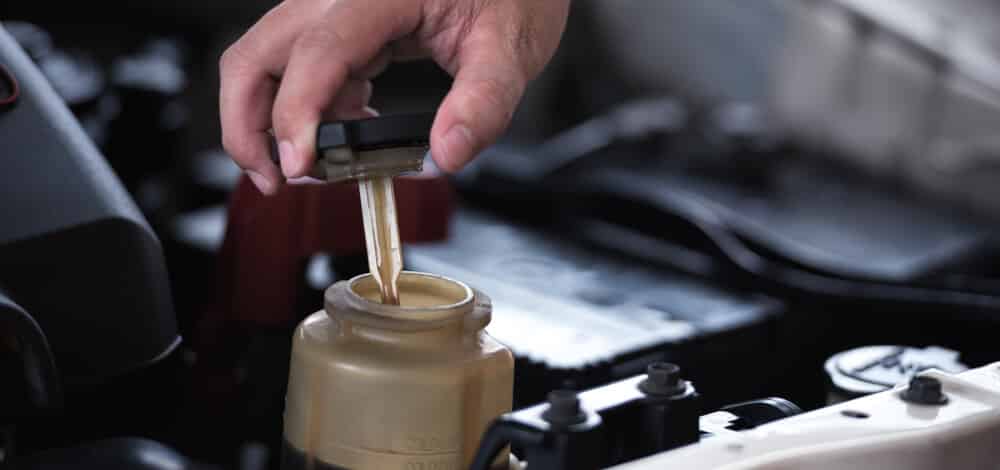
Checking power steering fluid is straightforward, but it should be done carefully. A sloppy check can let dirt enter the system, and contamination is the last thing you want in a hydraulic circuit.
1. Find the Reservoir and Pump
On most hydraulic systems, the power steering pump is mounted on the engine and driven by a belt. The fluid reservoir may be attached directly to the pump or mounted remotely nearby. If it is remote-mounted, it is often found on the inner fender or another accessible location under the hood.
If you cannot find it quickly, use the owner’s manual. Some reservoirs are small and tucked away, especially on more crowded engine bays. Make sure the vehicle is off before checking unless the manufacturer specifies otherwise for a particular system.
2. Clean the Cap Area Before Opening It
This is a small step that matters a lot. Before removing the cap, wipe off the top of the reservoir and the surrounding area with a clean cloth. Dirt sitting on the reservoir can fall inside when you open it. Power steering systems do not appreciate debris. Abrasive contamination can shorten pump and seal life quickly.
3. Remove the Cap and Read the Level
Some reservoirs use a dipstick built into the cap. Others have level markings molded into the side of the container. You may see markings for COLD and HOT or a simple MIN and MAX range.
If the system has a cold/hot distinction, read it under the correct conditions. Fluid expands when warm, so a hot reading and a cold reading are not meant to match exactly. If you are checking the car after it has been sitting, use the cold marks.
While the cap is off, look at the fluid’s condition. Is it clean? Dark? Foamy? Burnt-smelling? The level matters, but so does the health of the fluid itself.
4. Add the Correct Fluid if Needed
If the fluid is below the proper mark, add the correct specified fluid slowly. Pour carefully. It does not take much to move from low to overfilled, especially on small reservoirs.
Do not overfill the system. An overfilled reservoir can create expansion and overflow issues once the fluid warms up. It can also make diagnosing leaks more confusing. Add only enough to bring the level back into the correct range.
If the level was low, monitor it. A power steering system should not need frequent topping off. If you have to add fluid more than once, there is likely a leak somewhere in the system that deserves attention.
Can You Just Refill the Power Steering Fluid?
Yes, you can top off the reservoir if the level is slightly low and the rest of the fluid still looks healthy. In fact, that is the correct immediate action when the level is below the minimum mark and you need to restore safe steering assist. But topping off and servicing the system are not the same thing.
If the fluid is old, dark, contaminated, or repeatedly low, simply refilling it is not enough. Topping off only dilutes the old fluid slightly. It does not remove contamination, restore depleted additives, or solve the leak that caused the drop in the first place.
Think of topping off as a corrective measure, not a maintenance strategy. It is useful when the level is low. It is not a substitute for changing old fluid or repairing a leak. A steering system that needs repeated refills is already telling you there is a problem somewhere.
So yes, refill if needed. Just do not stop there if the fluid condition or leak pattern tells a bigger story.
How to Change Power Steering Fluid Properly
There are two common ways to change power steering fluid. One is a quick reservoir exchange method, which removes old fluid from the reservoir and gradually refreshes the system over several cycles. The other is a more complete flush that removes much more of the old fluid from the hoses, pump, and steering gear. If you want the most effective result, the flush-style method is better.
Below is the full-service method I recommend when the fluid is old or contaminated and you want a proper reset of the hydraulic system.
Step 1: Prepare the Vehicle and the Correct Fluid
Start by confirming the exact fluid specification for your car. This is not the place for “close enough.” Have enough fresh fluid on hand to flush the system and then refill it. Place drain pans or a suitable fluid container beneath the working area, and if needed, raise the front wheels safely so you can turn the steering with less resistance during bleeding.
It is smart to wear gloves and protect painted surfaces. Some hydraulic fluids can stain or soften finishes if left sitting too long.
Step 2: Remove Old Fluid from the Reservoir
Before disconnecting anything, remove as much old fluid as possible from the reservoir using a suction pump, fluid extractor, or clean turkey baster dedicated to shop use. This reduces the mess and gives you a cleaner starting point for the flush.
This step alone does not fully change the fluid, but it makes the next steps much more effective.
Step 3: Disconnect the Return Line
Locate the low-pressure return hose going back to the reservoir. Disconnect it carefully and direct it into a drain container. Then cap or plug the return port on the reservoir so fresh fluid does not simply spill out of that opening.
This matters because when the system pushes old fluid out, you want it leaving through the return hose into your container—not looping back into the reservoir again.
Step 4: Add Fresh Fluid and Flush the System
Fill the reservoir with fresh power steering fluid. Then have an assistant briefly start the engine while you watch the return line discharge old fluid into the container. Refill the reservoir immediately as needed. The goal is to push the old fluid out without ever allowing the pump to run dry.
Some technicians prefer to do this with the engine off by cycling the steering manually lock-to-lock with the front wheels raised, especially if they want to reduce pump stress. Others use very short engine runs. Either method can work if done carefully. The key is maintaining fluid in the reservoir at all times.
Continue until the fluid exiting the return line looks clean and matches the fresh fluid you are adding. This is how you know most of the old fluid has been displaced.
Step 5: Reconnect the Return Hose
Once the system is flushed and the outgoing fluid is clean, reconnect the return hose securely to the reservoir. Make sure the clamp is properly seated and there are no visible leaks or hose distortions.
This is a good moment to inspect the hose condition as well. If the hose is swollen, cracked, or damp with fluid, replacing it now may save you from doing the whole job again after a leak develops.
Step 6: Fill to the Correct Level
Refill the reservoir to the proper level using the correct hot or cold markings. At this stage, do not overfill. You still need to bleed the system, and fluid level may shift slightly once air is removed.
Step 7: Bleed the Power Steering System
Bleeding removes trapped air. This is critical because air in the steering system can cause foaming, whining noise, inconsistent assist, and poor fluid level readings.
With the front wheels off the ground if possible, start the engine and slowly turn the steering wheel from full left lock to full right lock several times. Do not hold the wheel hard against the stops. Just move it steadily back and forth. Watch the reservoir. If the fluid level drops, add more. If you see foam or bubbles, let the system settle and continue bleeding until the fluid becomes clear and stable.
Once the air is gone and the steering feels smooth and quiet, set the fluid level correctly and reinstall the cap securely.
Step 8: Final Inspection and Test Drive
Lower the vehicle if it was raised, start the engine, and test the steering at idle and during a short drive. Listen for whining, groaning, or any unusual feel. Recheck the fluid level afterward and inspect all hose connections for leaks.
If the system remains noisy after a proper flush and bleed, you may be dealing with a failing pump, persistent air entry from a leak, or deeper steering component wear rather than a fluid issue alone.
The Quick Reservoir Refresh Method
Not every owner wants to disconnect hoses and perform a full flush. There is a simpler, lower-risk method often used for maintenance refreshes. It does not remove all of the old fluid at once, but it can improve fluid quality over time.
The process is simple: remove as much old fluid as possible from the reservoir using a suction tool, refill with fresh fluid, drive the vehicle for a few days, then repeat. After several cycles, much of the old fluid has been diluted out and replaced. This method is useful when the fluid is old but not heavily contaminated, and when the owner wants to avoid opening the return line.
It is not as thorough as a real flush, but it is far better than never changing the fluid at all. For many home mechanics, this is a practical compromise between doing nothing and performing a full hydraulic service.
Cost to Replace Power Steering Fluid
If you take your vehicle to a repair shop, power steering fluid service typically costs somewhere around $95 to $140 on average. The exact price depends on the shop’s labor rate, the amount and type of fluid required, and whether the service is a simple reservoir refresh or a full system flush.
High-end European vehicles or systems requiring specialty synthetic hydraulic fluid may cost more, especially if the fluid itself is expensive. Vehicles with difficult hose access can also push labor upward slightly. Still, compared with many maintenance jobs, power steering fluid service is usually affordable.
If you do the work yourself, the cost drops significantly. In that case, you are usually paying only for the fluid and perhaps a few shop supplies. That makes this one of the more approachable maintenance jobs for a careful home mechanic.
The real cost issue appears when the fluid is ignored. A failing power steering pump can cost several hundred dollars to replace. A leaking rack or contaminated steering system can push the total much higher. In that context, periodic fluid service is cheap insurance.
Common Mistakes to Avoid
Power steering systems are not especially complicated, but there are a few mistakes I see repeatedly. The first is using the wrong fluid because the bottle “looked close enough.” That can create immediate noise or long-term seal and pump wear. Always verify the correct fluid.
The second is running the pump dry during a flush. This can damage the pump quickly. Always keep fresh fluid in the reservoir during the flushing process.
The third is overfilling the reservoir. Fluid expands as it warms up, and overfill can lead to mess, overflow, and confusion when diagnosing leaks later.
Another common mistake is assuming a top-off solves everything. If the level is low, ask why. Leaks do not fix themselves.
And finally, many people forget to bleed the system properly after service. Air trapped inside will make the new fluid seem like a failure even when the fluid itself is perfectly fine. A good flush followed by a poor bleed still produces noise and poor steering feel.
Frequently Asked Questions
Can I just refill my power steering fluid?
Yes, you can top it off if the level is low, as long as you use the correct fluid. But if the fluid is old, dark, or repeatedly dropping, a top-off is only a temporary measure. You should inspect for leaks and consider a proper fluid change.
How do you know if you need power steering fluid?
The easiest way is to check the reservoir level. If the fluid is below the minimum mark, you need to add some. Other clues include whining noise when turning, heavier steering effort, foamy fluid, or visible leaks.
What happens if you have low power steering fluid?
Low fluid allows air to enter the hydraulic system. That leads to noise, jerky steering, inconsistent assist, and increased wear on the pump. If ignored, it can damage the power steering pump and other components.
How do I know which power steering fluid to use?
Check the owner’s manual first. You can also inspect the reservoir cap, which often names the required fluid type. If needed, use a reputable parts catalog by entering the vehicle details. Do not rely on appearance or guesswork.
Is power steering fluid the same as transmission fluid?
Sometimes, but not always. Some vehicles are designed to use automatic transmission fluid in the power steering system. Others require dedicated synthetic hydraulic fluid or a specific power steering formula. They are only the same when the manufacturer says they are.
Can old power steering fluid damage the pump?
Yes. Old or contaminated fluid loses lubricating quality and can introduce wear particles into the system. Over time, that can contribute to pump noise, reduced assist, internal wear, and eventual component failure.
Final Thoughts
Power steering fluid may not get the same attention as engine oil or transmission fluid, but it still plays a major role in how your vehicle feels and how long expensive steering components survive. The right fluid provides hydraulic force, lubrication, cooling, corrosion protection, and seal conditioning. The wrong fluid can create noise, leaks, poor steering feel, and long-term damage.
The three main categories—ATF-based transmission fluid, synthetic-based hydraulic fluid, and universal power steering fluid—are not interchangeable by default. Some cars absolutely require ATF. Others need a highly specific synthetic fluid. Some can use a universal fluid safely, while others should not. The only smart path is to verify what your specific vehicle calls for before adding anything.
From a maintenance standpoint, power steering fluid should not be forgotten simply because some manufacturers call it “lifetime.” Fluids age, additives weaken, and contamination builds. A reasonable change interval of around 50,000 miles or 5 years makes good mechanical sense for many hydraulic systems, especially when the fluid is dark, noisy, or visibly deteriorating.
And if you hear whining from the pump, feel heavier steering, or see low fluid in the reservoir, do not delay. A bottle of the correct fluid and a proper service are inexpensive compared with replacing a pump or steering rack. In automotive maintenance, small attention paid early almost always costs less than major attention paid late. Power steering fluid is a perfect example of that rule.
Keep the system clean, use the right fluid, service it before it turns into a problem, and your steering should remain smooth and effortless for a very long time.