
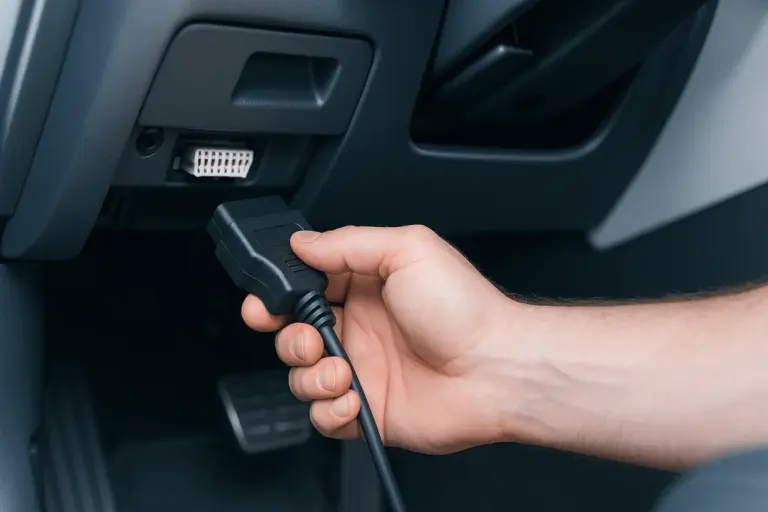
You walk out to your car, slide into the driver’s seat, and plug in your OBD2 scanner to check things before your scheduled emissions test. You scroll through the readiness monitors, expecting to see everything marked as “Ready” or “Complete.” But instead, you see it: “Not Ready” or “Incomplete” next to one or more of the monitors. Your heart sinks a little because you know what this means. Your car is not ready for an emissions test, and if you try to get it inspected today, there is a very real chance it will be rejected before they even start testing.
This is one of the most frustrating situations a car owner can face, especially if the emissions test deadline is looming or if you just bought a used car and need to register it quickly. The “Not Ready” status does not necessarily mean your car has a problem. But it does mean the vehicle’s computer has not completed its self-check process on certain emission control components, and until it does, you cannot pass an official inspection in most states.
So what does “Not Ready” actually mean? Why does it happen? And most importantly, how do you fix it so you can get your car through emissions testing without unnecessary delays or expenses? Let us break down everything you need to know about OBD2 readiness monitors, why they show “Not Ready,” and the step-by-step fixes that actually work.
What Are OBD2 Readiness Monitors and Why Do They Matter?
To understand the “Not Ready” issue, you first need to understand what readiness monitors are and what they do. Every car built since 1996 (in the United States) has an On-Board Diagnostics system, specifically OBD2, which continuously monitors the performance of the emission control systems. This includes things like the catalytic converter, oxygen sensors, evaporative emissions system (EVAP), and exhaust gas recirculation (EGR) valve, among others.
The OBD2 system does not just wait until something breaks to alert you. It runs a series of self-tests on these components while you drive. These self-tests are called readiness monitors. Think of them like a checklist that the car’s computer runs through under specific driving conditions. Once a particular monitor completes its self-test successfully, it is marked as “Ready” or “Complete.” If the test has not been run yet, or if the test could not complete due to certain driving conditions not being met, it shows up as “Not Ready” or “Incomplete.”
There are typically anywhere from 8 to 11 different monitors, depending on the vehicle. Some of the most common ones include:
- Catalyst Monitor (checks the efficiency of the catalytic converter)
- Oxygen Sensor Monitor (evaluates the performance of the oxygen sensors)
- EVAP Monitor (checks for leaks in the fuel vapor system)
- EGR Monitor (tests the exhaust gas recirculation system)
- Secondary Air Monitor (if equipped, checks the air injection system)
- Misfire Monitor (detects engine misfires)
- Fuel System Monitor (evaluates the air-fuel ratio control)
- Comprehensive Component Monitor (checks various sensors and switches)
When you take your car to an emissions testing station, the technician plugs into your OBD2 port and checks the status of these monitors. In most states, if too many monitors show “Not Ready,” your car will be rejected from testing. The exact number allowed to be “Not Ready” varies by state, but a common standard is that no more than one monitor (other than the EVAP monitor on 1996-2000 vehicles) can be incomplete.
The key point here is this: “Not Ready” does not always mean something is broken. It often just means the car’s computer has not had the right conditions to run the test yet. But until those tests complete, you cannot pass inspection.
Why Do Readiness Monitors Show “Not Ready”?
There are several reasons why one or more of your readiness monitors might not be ready. Some are simple and expected. Others point to actual problems that need to be fixed. Let us go through the most common causes.
1. The Battery Was Recently Disconnected or Died
This is far and away the most common cause. Anytime your car’s battery is disconnected, whether for replacement, repair, or because it went completely dead, the engine control module (ECM) loses power. When that happens, all the stored readiness monitor data is erased. The ECM essentially resets to factory state, and all the monitors go back to “Not Ready.”
This is not a fault or a malfunction. It is just how the system is designed. The computer needs to relearn the status of all the emission components by running its self-tests again from scratch, and those tests only happen under specific driving conditions. Until you drive the car through the necessary conditions, the monitors will remain incomplete.
A lot of people get caught by this after replacing a battery right before an emissions test. They assume the new battery will fix any issues, but instead, they show up to the testing station only to find out they cannot get tested because all the monitors are “Not Ready.”
2. The ECM Was Reset With a Scan Tool or Code Reader
If you or a mechanic cleared diagnostic trouble codes (DTCs) using an OBD2 scanner, the readiness monitors were also reset. This is standard behavior. When you clear codes, you are essentially telling the ECM to forget everything it has learned and start fresh.
Some people make the mistake of clearing codes right before an emissions test, thinking it will help them pass. In reality, it does the opposite. The testing station will see that all the monitors are “Not Ready,” and they will either reject the test or, worse, assume you are trying to hide a problem. Either way, you are not getting tested that day.
3. You Have Not Driven the Car Enough or Under the Right Conditions
Even if the battery has been connected and no codes have been cleared, the monitors can still show “Not Ready” if the car has not been driven in a way that allows the self-tests to run. Each monitor requires specific conditions to complete its test. For example:
- The Catalyst Monitor usually requires steady-state highway driving at a consistent speed.
- The EVAP Monitor typically runs when the fuel tank is between 15% and 85% full, and the car has been parked and cooled down overnight.
- The O2 Sensor Monitor needs a mix of city and highway driving.
If you only drive short trips around town and never get on the highway, some monitors might never complete. If you always keep your tank either nearly empty or nearly full, the EVAP monitor might not run. The car needs a variety of driving conditions to check all the systems.
4. There Is an Actual Problem With the Emissions System
If a component in the emissions system is malfunctioning, the related monitor may not be able to complete its test. For example, if one of the oxygen sensors is failing or if there is a leak in the EVAP system, the ECM might repeatedly try to run the test but never get a passing result, leaving the monitor stuck in “Not Ready” status.
Usually, if there is an actual fault, the check engine light will be on and there will be stored diagnostic trouble codes. But not always. Some intermittent faults or borderline-failing components can prevent a monitor from completing without triggering a code.
5. A Sensor Is Disconnected or Has a Wiring Problem
The ECM relies on data from sensors all over the vehicle. If a sensor is unplugged, has a broken wire, or has a corroded connector, the ECM cannot run the associated monitor because it is not receiving the data it needs. In most cases, this will also trigger a check engine light and a fault code, but occasionally the system will just mark the monitor as “Not Ready” or “Not Supported.
6. The Catalytic Converter or Another Emissions Component Was Removed or Modified
If someone deleted the catalytic converter, bypassed the EGR valve, or made other modifications to the emissions system, the ECM will not be able to complete the related monitors because the hardware it is looking for is no longer there. In some cases, the monitor will show “Not Supported.” In others, it will stay “Not Ready” indefinitely.
Some people try to get around this with simulators, O2 sensor spacers, or custom tuning, but these workarounds do not always fool the ECM, and they are generally illegal for street-driven vehicles in most places.
How to Fix OBD2 Monitors That Are Not Ready
Now that you understand why monitors might not be ready, let us talk about how to fix it. The solution depends entirely on the cause, so the first step is always proper diagnosis.
Step 1: Check for Diagnostic Trouble Codes
Before you do anything else, plug in an OBD2 scanner and check for stored or pending trouble codes. If the check engine light is on or if there are codes stored, those need to be addressed first. The monitors will not complete if there is an active fault in the system.
Even if the check engine light is not on, check for pending codes. These are codes that have been triggered once or twice but not enough times to turn on the light. Pending codes can still prevent monitors from completing.
If you find codes, write them down, research what they mean, and fix the underlying issue before moving forward. Common codes related to readiness monitor issues include P0420 or P0430 (catalyst efficiency), P0440-P0456 (EVAP system), and P0131-P0141 (oxygen sensor issues).
Step 2: Drive the Vehicle Through a Complete Drive Cycle
If there are no codes and the only issue is that the monitors are “Not Ready,” the fix is usually to drive the car through what is called a drive cycle. A drive cycle is a specific pattern of driving designed to allow the ECM to run all of its self-tests.
There is no universal drive cycle that works for every car. Different manufacturers have different requirements. But a generic drive cycle that works for many vehicles looks something like this:
- Cold start: Start the engine after it has been sitting overnight (engine at ambient temperature).
- Idle: Let the car idle for 2 to 3 minutes without touching the accelerator.
- City driving: Drive at speeds between 20 and 40 mph with steady throttle for about 10 minutes. Include a few gentle stops and accelerations.
- Highway driving: Drive at a steady speed between 50 and 60 mph for at least 10 to 15 minutes without significant throttle changes.
- Deceleration: Slow down gradually without braking and let the car coast for 20 to 30 seconds.
- Stop and idle: Come to a complete stop and let the car idle for 1 to 2 minutes.
- Repeat: In some cases, you may need to repeat parts of this cycle or perform multiple drive cycles over several days.
For the EVAP monitor specifically, make sure your fuel tank is between 1/4 and 3/4 full. Some vehicles require the car to sit parked overnight with the engine off before the EVAP monitor will run during the next drive cycle.
The best approach is to look up the specific drive cycle procedure for your vehicle’s year, make, and model. Many manufacturers publish these in their service manuals, and you can often find them online with a quick search.
Step 3: Fix Any Emissions System Faults
If you have completed multiple drive cycles and a particular monitor still will not set to “Ready,” there is likely a fault in that system. Here are some common fixes:
Oxygen Sensor Issues: If the O2 sensor monitor will not complete, check for worn or failing oxygen sensors. These typically last 60,000 to 100,000 miles. Replace any that are out of spec.
Catalytic Converter Problems: If the catalyst monitor stays “Not Ready,” the converter itself might be failing. This is expensive to replace, but it is also required by law in most areas. A failing catalyst will eventually trigger a P0420 or P0430 code.
EVAP System Leaks: If the EVAP monitor will not run, check for a loose or damaged gas cap first. It is the most common cause and the easiest fix. If the cap is fine, there may be a leak in the EVAP hoses, charcoal canister, or purge valve. A smoke test at a shop can locate the leak.
EGR System Issues: If the EGR monitor will not complete, the EGR valve may be clogged with carbon deposits or stuck. Cleaning or replacing the valve usually solves this.
Step 4: Check Sensor Connections and Wiring
If a monitor will not complete and there are no obvious faults, inspect the wiring and connectors for the related sensors. Corrosion, loose connections, and damaged wires can all prevent monitors from running. Pay special attention to the oxygen sensor connectors, mass airflow sensor connector, and any EVAP-related connections near the fuel tank.
Step 5: Address Modifications or Deletions
If the vehicle has had emissions equipment removed, there is no easy fix short of reinstalling the missing components. O2 sensor spacers, defoulers, and tuning tricks sometimes work, but they are not reliable and they are illegal in most jurisdictions. The proper fix is to return the vehicle to stock configuration.
How Long Does It Take for Monitors to Become Ready?
This is one of the most common questions, and the answer is frustratingly vague: it depends. Some monitors can complete in a single drive cycle that lasts 30 to 45 minutes. Others, particularly the EVAP and catalyst monitors, can take several days of varied driving to complete.
As a general rule, if you have just reconnected the battery or cleared codes, plan on driving the car for at least 50 to 100 miles over the course of several days, including a mix of city and highway driving, before all the monitors are ready. Some stubborn monitors, like the EVAP on certain Honda and Toyota models, can take even longer.
If you need to get the car tested quickly, prioritize getting the catalyst, O2 sensor, and misfire monitors to complete first, as these are the most commonly checked by emissions testing stations.
Can You Pass Emissions With Monitors Not Ready?
It depends on your state and the specific monitors that are incomplete. Most states allow one monitor to be “Not Ready” (in addition to the EVAP monitor on 1996-2000 vehicles). But if two or more are incomplete, you will be rejected.
Some states are stricter and require all monitors to be ready except EVAP on older vehicles. Others are more lenient. Check your state’s specific regulations before scheduling your test.
A good rule of thumb: if you plug in a scanner and see more than one monitor showing “Not Ready,” do not schedule the test yet. Drive the car more and recheck the status.
Common Mistakes People Make When Trying to Fix Not Ready Monitors
Here are a few things that people often do wrong when dealing with this issue:
- Clearing codes right before the test: This resets all the monitors and guarantees failure. Never clear codes unless you have time to complete multiple drive cycles afterward.
- Only driving short trips: City-only driving will not complete the catalyst or O2 sensor monitors. You need sustained highway speed to set those.
- Ignoring the fuel level: The EVAP monitor requires a specific fuel level range. Fill the tank too full or let it get too low and the monitor will not run.
- Not letting the car cool down: Some monitors require a cold start. If you keep restarting a warm engine, certain tests will not run.
- Assuming all monitors will complete at once: They will not. Some run quickly, others take days. Be patient.
What If You Have Done Everything and Monitors Still Will Not Set?
If you have driven the car extensively, verified there are no codes, checked all the sensors and wiring, and the monitors still will not complete, it is time to take the car to a professional diagnostic technician. There may be an intermittent fault that is not setting a code, a problem with the ECM itself, or a deeper issue that requires advanced scan tools and expertise to diagnose.
In rare cases, the ECM may need to be reprogrammed or replaced, though this is uncommon. More often, the issue is something simple that was missed during the initial checks, like a failing sensor that is on the edge of going bad but has not fully failed yet.
Quick Reference: Monitor-Specific Tips
| Monitor | Common Causes of Not Ready | Typical Fix |
|---|---|---|
| Catalyst | Insufficient highway driving, failing converter | Drive at steady highway speed for 15+ minutes |
| O2 Sensor | Failing sensor, short trips only | Replace sensor if old, drive mixed city/highway |
| EVAP | Wrong fuel level, no overnight cool-down | Keep fuel 1/4 to 3/4 full, park overnight, drive next day |
| EGR | Clogged valve, carbon buildup | Clean or replace EGR valve |
| Misfire | Ignition issues, fuel delivery problem | Fix any misfires, drive normally |
| Secondary Air | Failed air pump or valve (if equipped) | Repair or replace air injection system |
Why This Matters More Than You Think
Getting your readiness monitors to show “Ready” is not just about passing an emissions test. It is about confirming that your vehicle’s emissions control systems are functioning correctly. These systems do not just reduce pollution. They also keep your engine running efficiently, protect expensive components like the catalytic converter, and ensure you get the best fuel economy your car is capable of.
A car with incomplete monitors is a car that has not been fully evaluated. There could be a hidden problem waiting to become a major repair. Taking the time to get the monitors to complete is actually a form of preventive maintenance. It forces you to drive the car properly, check for faults, and verify that everything is working as it should.
So if your scanner shows “Not Ready,” do not panic, but do not ignore it either. Run through the diagnostic steps, complete the necessary drive cycles, and fix any faults that show up. Your car, your wallet, and the environment will all be better off for it.