
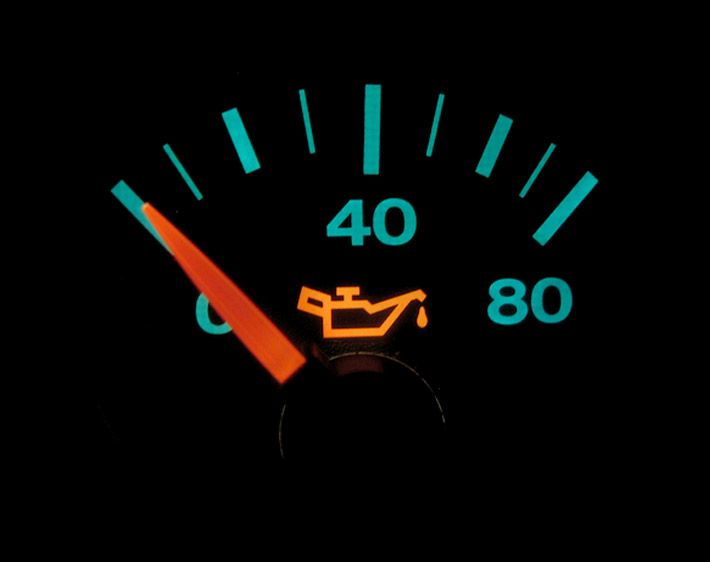
Few things get your attention faster than watching your oil pressure gauge bounce around while you’re driving. One minute it looks fine, the next it’s dipping toward zero at a red light, then climbing back up when you accelerate. Is your engine dying? Is the gauge broken? Or is it something in between?
The answer depends on exactly how the gauge is behaving, what you’re hearing, and whether the pressure is actually low or the gauge is just lying to you. Let’s work through this step by step.
First, Figure Out What Kind of Fluctuation You’re Seeing
Not all oil pressure movement is created equal. Some of it is completely normal. Some of it means you need to pull over right now. Before you start replacing parts or panicking, pay attention to the specific behavior.
Does the Pressure Follow Your RPMs?
Here’s something a lot of people don’t realize: oil pressure is supposed to rise with engine speed and drop at idle. That’s normal physics. The oil pump spins faster at higher RPMs, which builds more pressure. At idle, the pump slows down, and so does the pressure.
The real question is this: does it drop dangerously low, near zero or into the red zone, when you’re sitting at a hot idle (like at a traffic light), then shoot back up to normal the moment you touch the gas? That’s the pattern that signals a real problem.
Is the Needle Twitching or Jumping Instantly?
Pay attention to how fast the needle moves. Oil is a physical fluid moving through passages and bearings. It doesn’t change pressure in a split second. If the needle is vibrating, snapping from high to low and back again almost instantly, that behavior is almost always electrical. A bad sensor, a loose wire, or a grounding issue. Not an engine problem.
Is the Warning Light Coming On Too?
This is an important detail. The gauge and the red oil pressure warning light often run on separate circuits with different thresholds. If the gauge is moving around but the warning light stays off, you might be dealing with a gauge or sensor issue. If that red oil can light is flickering or staying on solid, take it seriously. That light is your engine’s way of screaming for help.
The Most Important Test You Can Do From the Driver’s Seat
Roll down your window. Turn off the radio. Turn off the AC. Listen. When the pressure drops on the gauge, do you hear anything unusual from the engine? A metallic ticking from the top of the engine or a heavy thud or knock from the bottom? If yes, that changes everything.
When to Shut It Down Immediately (No Exceptions)
There are three situations where you should turn the engine off right away and have the vehicle towed. Not driven. Towed.
- You hear knocking or clattering. If a low gauge reading comes with a metallic clattering, ticking, or deep knocking sound, the oil film between metal surfaces has collapsed. Metal is grinding against metal. Every second the engine runs in this condition causes more damage.
- The gauge drops to absolute zero and stays there. If it hits zero and stays for more than two or three seconds, or if the red oil pressure warning light comes on solid and stays illuminated, you have no oil pressure. Running the engine without oil pressure will destroy it in minutes.
- The engine temperature is climbing at the same time. Low oil pressure combined with rising coolant temperature means oil isn’t flowing. Without that flow, the engine loses both lubrication and a significant source of cooling. This is a catastrophic failure in progress.
If any of those three things are happening, don’t try to limp it home. Don’t convince yourself it’ll be fine for just a few more miles. Pull over safely and call a tow truck.
Start with the Easy Checks (Rule Out the Cheap Stuff First)
Assuming you’re not in an emergency situation, the smart approach is to work from simple and inexpensive to complex and costly. Most of the time, fluctuating oil pressure gauges turn out to be something external and fixable without major surgery.
Check 1: Pull the Dipstick
This sounds obvious, but you’d be amazed how often this is the answer. Check three things:
- Oil level: If you’re two or more quarts low, the oil pump can start sucking air along with oil. That’s called cavitation, and it causes the gauge to bounce around erratically. Top it off and see if the problem goes away.
- Smell the oil: Does it smell strongly like raw gasoline? Fuel dilution thins the oil, which reduces its ability to maintain pressure, especially at hot idle. This can happen with faulty fuel injectors or excessive short trips where the engine never fully warms up.
- Look for glitter: Wipe the dipstick on a white paper towel. If you see fine metallic flakes, stop right there. That’s bearing material, and it means internal engine components are already failing. No amount of fresh oil is going to fix what’s happening inside.
Check 2: Think About the Oil Filter
Did you recently change the oil? Cheap, no-name oil filters are a surprisingly common cause of pressure fluctuations. Some budget filters have weak internal bypass valves or poor flow characteristics. A collapsed internal core can restrict oil flow enough to cause noticeable gauge movement.
If you installed a bottom-shelf filter and the pressure problems started shortly after, try swapping in a quality OEM or name-brand filter and see if it makes a difference. On some engines, the filter choice matters more than you’d think.
Check 3: Inspect the Oil Pressure Sending Unit
This is the single most common cause of fluctuating oil pressure gauge readings. The sending unit is typically located near the oil filter housing or screwed into the engine block. Here’s how to check it:
- Unplug the electrical connector and look inside. Is there oil in the connector? If oil has pushed through the sensor’s internal diaphragm and into the wiring, the sensor is dead. Replace it.
- Wiggle the wire while the engine is idling. If the gauge jumps when you move the wire, you’ve found a wiring fault, not an engine problem. That’s good news.
Oil pressure sending units are cheap (usually under $30) and relatively easy to replace on most vehicles. If yours is old or leaking, swapping it out is a logical first step.
Check 4: Verify with a Mechanical Gauge (The Test That Tells the Truth)
This is the most important diagnostic step you can take, and it should come before you spend serious money on anything else. Do not trust the dashboard gauge. It can lie to you because of a bad sensor, a wiring issue, or a flaky instrument cluster.
Here’s what to do:
- Rent or buy a mechanical oil pressure test kit. Most auto parts stores rent them for free with a deposit.
- Remove the oil pressure sending unit from the engine.
- Screw in the mechanical gauge’s hose fitting.
- Start the engine and read the actual pressure directly from the mechanical gauge.
If the mechanical gauge reads steady and strong, typically 15 to 25 PSI at hot idle and 40 to 60 PSI while cruising, your engine is perfectly fine. The problem is your dashboard sensor, wiring, or gauge cluster. That’s a much cheaper fix than anything internal.
If the mechanical gauge confirms the pressure really is fluctuating or dropping too low, then you know the problem is inside the engine, and it’s time to dig deeper.
When the Problem Is Actually Inside the Engine
If you’ve confirmed with a mechanical gauge that the oil pressure genuinely is fluctuating or too low, the issue is internal and hydraulic. Here are the most common causes, ordered roughly from least to most expensive.
Sludge Blocking the Pickup Screen
If the previous owner (or you) went too long between oil changes, sludge builds up inside the oil pan. The pickup tube sits at the bottom of the pan with a screen over it, and that screen can get clogged with hardened gunk.
What happens is the pump tries to suck oil through a partially blocked screen. As it pulls harder, more sludge gets drawn against the screen, choking flow even more. Pressure drops. When you let off the gas and the suction decreases, some of the debris falls away and pressure partially recovers. It’s a frustrating, intermittent cycle.
The fix: Drop the oil pan, clean out the sludge, and clean or replace the pickup tube and screen.
A Cracked Pickup Tube O-Ring (Especially Common on GM LS Engines)
The O-ring that seals the pickup tube to the oil pump is a known failure point on certain engines, particularly GM’s LS family. Over time, the rubber hardens and cracks, allowing the pump to suck air bubbles along with the oil. This aeration causes pressure readings to bounce around unpredictably.
The part itself costs almost nothing. The labor to get to it is the expensive part, since it requires dropping the oil pan.
The fix: Drop the oil pan, replace the O-ring. While you’re in there, inspect the pickup tube for cracks too.
A Stuck Pressure Relief Valve
Inside the oil pump, there’s a spring-loaded relief valve that prevents pressure from going too high. If debris gets trapped in this valve and holds it partially open, oil pressure bleeds off constantly. The gauge shows lower-than-normal readings, especially at idle.
On the flip side, if the valve sticks closed, pressure builds with nowhere to go and can blow the oil filter gasket right off the housing. Either scenario is bad.
The fix: Replace the oil pump. On most engines, this involves removing the timing cover, which is a significant job.
Worn Bearings: The Worst-Case Scenario
This is the one nobody wants to hear. Oil pressure is fundamentally about resistance to flow. The oil pump pushes oil through the engine’s bearing journals (rod bearings and main bearings), and the tight clearances in those bearings are what creates back-pressure on the system.
As bearings wear down over hundreds of thousands of miles, those clearances widen. The oil still flows through, but it escapes the gaps too easily. The pump can’t build pressure because there’s nowhere for it to build against.
The telltale pattern looks like this: decent pressure when the engine is cold (because cold oil is thicker and fills the gaps better), but pressure drops significantly once the engine reaches operating temperature and the oil thins out. Pressure rises with RPM because the pump spins faster, compensating for the leak. But at hot idle, when the pump is spinning slowly and the oil is thin, pressure falls to dangerously low levels.
The fix: Engine rebuild or replacement. There’s no shortcut here. You can try running thicker oil as a temporary bandage (going from 5W-20 to 10W-30, for example), but that’s buying time, not solving the problem.
Quick-Reference Troubleshooting Matrix
Here’s a summary table based on the most common patterns seen in vehicles like the Chevy Silverado, Ford F-Series, Jeep Wrangler, and similar platforms. Use this to narrow down your diagnosis:
| What You’re Seeing | Any Engine Noise? | Most Likely Cause | How Common | Cost to Fix |
|---|---|---|---|---|
| Needle jumps or twitches erratically | No | Oil pressure sending unit (sensor) | Very common (70%) | $ / Easy DIY |
| Gauge reads 0, then normal, then 0 again | No | Wiring issue or bad ground | Moderate (15%) | $ / Easy DIY |
| Low at hot idle, normal at speed | No | Worn oil pump or oil viscosity breakdown | Moderate (10%) | $$ / Professional job |
| Low at hot idle, normal at speed | Yes (ticking or knocking) | Worn bearings / internal engine wear | Less common (5%) | $$$$ / Major repair |
| Fluctuates while cruising at steady speed | No | Low oil level or aeration | Very common | $ / Easy DIY |
| Needle pinned at maximum | No | Sensor wire shorted to ground | Moderate | $ / Easy DIY |
The bottom line? Start with the dipstick and the sending unit. Those two things account for the vast majority of oil pressure gauge complaints. Verify with a mechanical gauge before you let anyone talk you into expensive internal engine work. What does your gauge do, and when does it do it?