
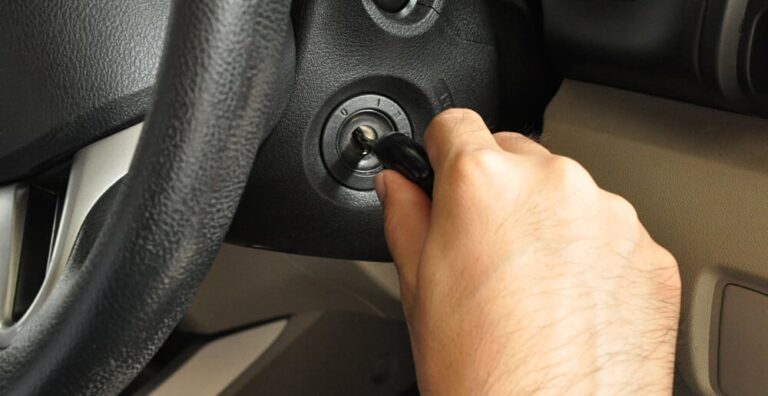
A while back, a client asked me a question that stopped me in my tracks for a second. Not because I didn’t know the answer, but because of how casually they asked it. “What would happen if I just turned off the engine while I was driving?” They said it like they were asking about the weather. But the reality behind that question is anything but casual. Depending on the car you drive, accidentally or intentionally killing the engine while the vehicle is in motion can range from mildly inconvenient to genuinely life-threatening.
It’s the kind of thing most drivers never think about because, well, why would you? You start the car, you drive, you park, you turn it off. That’s the normal sequence. But curiosity is a powerful thing, and so are accidents, malfunctions, and moments of panic. People do accidentally bump ignition switches. Keys do get jostled out of the ignition barrel on older vehicles. And push-button start systems, while designed with safeguards, aren’t completely foolproof in every scenario.
This guide walks through exactly what happens when the engine shuts off while your car is still moving. We’ll cover how older vehicles handle it differently than modern ones, what specific systems fail and in what order, why the consequences vary between automatic and manual transmissions, how push-button start cars are designed to prevent this from happening, and most importantly, what you should do if you ever find yourself in this situation. Because understanding the mechanics of this scenario could genuinely save your life someday.
Let’s break it all down.
The Short Answer: Why Turning Off Your Engine While Driving Is Dangerous
Here’s the blunt version before we get into the details. If you turn off your engine while driving, you lose power steering, your brakes become extremely difficult to use, and on many vehicles, the steering wheel can physically lock in place. Any one of those things alone is dangerous. All three happening simultaneously while you’re traveling at highway speed is a recipe for a serious accident.
The engine in a modern vehicle doesn’t just propel the car forward. It powers a network of critical systems that you rely on every second you’re behind the wheel, even though you probably never think about them. Power steering, power brake assist, the alternator that charges the electrical system, the hydraulic pump, the vacuum system. When the engine dies, all of these systems begin to fail, some instantly and some within seconds. The car doesn’t just coast to a gentle stop like a bicycle. It becomes progressively harder to control with every passing moment.
Now, the severity of what happens depends heavily on several factors: the age and design of the vehicle, whether it has a traditional ignition key or a push-button start, the type of transmission, the speed you’re traveling at, and the road conditions around you. Let’s work through each of these variables in detail.
Older Cars vs. Modern Cars: Two Very Different Scenarios
The era your vehicle was built in plays a major role in what happens when the engine shuts off during driving. Cars from the 1950s and 1960s behaved very differently from cars built in the last two decades, and understanding why requires a quick look at how automotive engineering has evolved.
Vehicles from the 1950s and 1960s: Simpler Systems, Simpler Consequences
If you were driving a car from the 1950s or 1960s and the engine died, the experience would be alarming but potentially manageable. Vehicles from that era were built with much simpler mechanical systems. Many didn’t have power steering at all. They used manual steering racks that required more effort from the driver but didn’t depend on engine power to function. No engine meant no change in steering feel, because the steering was already purely mechanical.
The same applied to brakes on many older vehicles. While some had early power brake systems, many relied on purely mechanical drum brakes that functioned regardless of engine status. The brake pedal was harder to push compared to a modern power-assisted setup, but it still worked.
On some of these older vehicles, you could even remove the key from the ignition while driving without the steering wheel locking. The steering column lock, which is the mechanism that prevents the steering wheel from turning when the key is removed, wasn’t universally adopted until the late 1960s and 1970s as an anti-theft measure. So a driver in a 1958 Chevrolet Bel Air could theoretically pull the key out while cruising down the road and still maintain steering control, even though the engine would die.
That doesn’t mean it was safe, of course. Losing engine power at speed still meant you were coasting with no ability to accelerate, no engine braking (particularly important on downhill grades), and limited time to get the engine restarted or bring the car to a safe stop. But the mechanical simplicity of these vehicles meant fewer cascading failures when the engine stopped.
Modern Vehicles: Complex Systems Create Bigger Problems
Modern cars are engineered with an extensive web of electronically controlled, engine-dependent systems. Power steering (whether hydraulic or electric), power brake assist, stability control, traction control, airbag readiness, electronic throttle control, and dozens of other systems all rely on the engine running or on the electrical system being fully energized. When the engine stops, this web begins to unravel.
Modern vehicles are also designed with safeguards that make it difficult to accidentally turn off the engine while driving. The ignition key barrel on vehicles with traditional keys typically has detents and interlocks that prevent you from turning the key all the way to the “off” or “lock” position while the transmission is in gear. You generally have to shift into Park or Neutral before the key will turn to those positions.
But “difficult” doesn’t mean “impossible.” Manufacturing defects, worn ignition tumblers, heavy keychains that create leverage on the key (this was actually the subject of a massive recall involving millions of GM vehicles in the mid-2010s), or a moment of confusion can all lead to situations where the engine shuts off while the vehicle is in motion. And when it does, the consequences are significantly more severe than they would be in a simpler, older vehicle.
The reason is straightforward: modern drivers are accustomed to the assist systems that the engine powers. You’ve never had to steer your car without power steering at 60 mph. You’ve never had to apply the brakes without vacuum-assisted boost. Your muscle memory, your reflexes, your sense of how much effort is needed for a given input, all of it is calibrated to a car with full power assist. When those assists suddenly vanish, the car doesn’t feel like it’s “broken.” It feels like it’s fighting you. And in that moment of shock and confusion, most untrained drivers make the situation worse.
Exactly What Fails When the Engine Shuts Off (And in What Order)
Understanding the specific sequence of system failures helps you appreciate why this situation is so dangerous and what you’d be dealing with if it ever happened to you. Let’s walk through each critical system one by one.
Power Steering: Your First and Most Immediate Problem
The moment the engine dies, power steering assistance stops. This is the first thing you’ll notice because the effect is immediate and dramatic.
On vehicles with hydraulic power steering (which uses an engine-driven pump to pressurize hydraulic fluid), the assist disappears the instant the engine stops turning the pump. The steering wheel becomes extremely heavy, particularly at lower speeds. At highway speeds, the aerodynamic forces on the front wheels actually help somewhat, so the steering won’t feel completely locked, but it will require significantly more effort than you’re used to. At parking-lot speeds or during a turn, the steering can feel nearly immovable.
On vehicles with electric power steering (EPS), the situation is slightly different but still problematic. EPS uses an electric motor to provide steering assist, and it draws power from the vehicle’s electrical system rather than directly from the engine. If the engine dies but the ignition remains in the “on” or “accessory” position, the EPS motor may continue to function for a short time, drawing power from the battery. But the battery’s charge will deplete quickly without the alternator running, and the EPS system may also shut down as a protective measure when it detects that the engine isn’t running.
In either case, the practical effect is the same: steering becomes dramatically harder. A driver who isn’t expecting this sudden change in steering effort can easily lose control of the vehicle, particularly if they’re mid-turn when the power assist fails. The natural reaction is to try harder, which can lead to over-correction and swerving.
Brake Assist: Stopping Becomes a Physical Battle
Most modern vehicles use a vacuum-assisted brake booster to multiply the force you apply to the brake pedal. The engine generates vacuum through the intake manifold (on gasoline engines) or through a dedicated vacuum pump (on diesel engines and some turbocharged gasoline engines). This vacuum is stored in the brake booster and used to amplify your pedal pressure so that a moderate push on the brake pedal produces strong braking force at the wheels.
When the engine stops, it stops generating vacuum. The brake booster has a small reserve of stored vacuum that provides assist for approximately one to three brake applications after the engine dies. After those stored applications are used up, the booster is depleted and you’re left with an unassisted brake pedal.
An unassisted brake pedal feels completely different from what you’re used to. The pedal becomes extremely stiff, almost rock-hard, and requires enormous leg force to produce any meaningful braking. Most drivers, encountering this for the first time, instinctively pump the pedal trying to get it to respond, which actually makes things worse because each pump uses up more of the remaining stored vacuum. After a few pumps, there’s no assist left at all.
It’s important to understand that the brakes still physically work. The hydraulic brake system is a closed circuit that doesn’t require engine power. If you push the pedal hard enough, the brakes will engage. But “hard enough” in this context means pushing with your full body weight and leg strength, which is a level of effort most drivers have never experienced and aren’t prepared for. In an emergency situation where you need to stop quickly, this can be the difference between stopping in time and not stopping in time.
Here’s a critical point that could save your life if you’re ever in this situation: do not pump the brake pedal. If the engine dies and you need to stop, apply the brake pedal firmly and hold it. One strong, sustained push gives you the best chance of using whatever vacuum assist remains in the booster. Every pump wastes stored vacuum and makes subsequent applications weaker.
Steering Wheel Lock: The Most Dangerous Consequence
This is the one that can turn a manageable situation into a catastrophe. On vehicles with traditional ignition keys, the steering column includes a steering lock mechanism that physically prevents the steering wheel from turning when the key is removed or turned to the “lock” position. This feature exists as an anti-theft measure to prevent someone from steering a car that’s been hotwired without the key.
If you turn the key all the way to the “off” or “lock” position while driving, the steering lock can engage. When it does, the steering wheel becomes completely immovable. You can’t turn it left. You can’t turn it right. The front wheels are locked in whatever position they were in when the lock engaged. If they were pointed straight ahead, the car will travel in a straight line until it hits something or runs off the road. If they were mid-turn, the car will continue turning in that direction with no way to correct course.
Not every engine-off situation activates the steering lock. On most modern vehicles with key ignitions, there’s an intermediate “off” position (sometimes called “ACC” or “accessory”) where the engine is off but the steering lock hasn’t engaged. If the key is in this position, you lose power steering assist (the wheel gets heavy) but you can still physically turn the wheel. The steering lock only engages when the key is turned all the way to “lock” or removed entirely.
This distinction matters enormously. If the engine dies due to a mechanical failure (running out of fuel, stalling, etc.) and the key stays in the “on” position, the steering lock won’t engage. You’ll lose power assist but retain the ability to steer. If someone physically turns the key to lock or removes it, the steering lock becomes the primary danger.
Some older vehicles, even those with steering locks, had designs where the lock could engage even when the key was just turned to “off” without being removed. The specific behavior depends on the vehicle’s make, model, and year. If you drive an older car with a traditional key ignition, it’s worth understanding how your specific vehicle’s ignition switch and steering lock interact.
Electronic Systems: Airbags, Stability Control, and Everything Else
Beyond steering and brakes, a cascade of other electronic systems begins to fail when the engine stops and the electrical system loses its primary power source (the alternator).
Airbag systems may lose their readiness status. Most airbag control modules are designed to remain active as long as the ignition is on, drawing power from the battery. But if the ignition switches to “off” or “lock,” the airbag system may deactivate. This means that if you’re in an accident after the engine has been turned off, your airbags might not deploy. You’ve just removed one of your most critical safety systems at the exact moment you’re most likely to need it.
Electronic stability control (ESC) and traction control require continuous communication between wheel speed sensors, the steering angle sensor, and the vehicle’s computer. When the engine and ignition are off, these systems go dormant. If the car begins to skid or slide after losing engine power (which is more likely because the tires are more prone to locking up without ABS intervention), there’s no electronic safety net to help you recover.
ABS (anti-lock braking system) requires electrical power and hydraulic pressure from the ABS pump to modulate brake pressure during hard stops. Without the engine running, ABS functionality degrades and may not function at all. This means if you slam on the brakes (which you’re likely doing because the pedal is rock-hard and you’re panicking), the wheels can lock up completely, causing the vehicle to skid. On wet or icy roads, this loss of ABS can be the factor that determines whether you slide through an intersection or stop in time.
Headlights, turn signals, and brake lights may continue to function on battery power for a short time, depending on whether the ignition is in “off” or “accessory” versus “lock.” If the electrical system has completely shut down, other drivers behind you won’t see your brake lights when you’re trying to stop. They won’t know you’re slowing down until they see the distance between your vehicles closing rapidly. In low-light conditions, this dramatically increases the risk of a rear-end collision.
Infotainment, navigation, Bluetooth, and GPS all shut down when the ignition turns off. This is the least of your concerns in an emergency, but it’s worth noting because it means you can’t use the car’s built-in systems to call for help or navigate to a safe location. Your personal phone becomes your only communication tool.
Automatic vs. Manual Transmission: How the Drivetrain Affects the Outcome
The type of transmission in your vehicle creates meaningfully different experiences when the engine shuts off while driving. Understanding these differences is important because the correct response varies depending on what you’re driving.
Manual Transmission Vehicles
If you’re driving a car with a manual (stick shift) transmission and the engine dies, you have a slight advantage. The mechanical connection between the transmission and the wheels means the engine doesn’t instantly stop turning, even after the ignition is cut. The forward momentum of the car continues to spin the engine through the clutch and transmission, which keeps it turning for a brief period.
During this brief window, the power steering pump (on hydraulic systems) and the brake booster vacuum may continue to receive some assistance, though at reduced levels. This gives you a few extra seconds of partially-assisted steering and braking compared to an automatic transmission vehicle.
If you’re quick and aware of what’s happening, you may also be able to restart the engine by simply turning the key back to “start” while the car is still moving in gear (assuming the engine hasn’t seized or run out of fuel). The forward motion of the car will help crank the engine, similar to a push-start. This is one of the genuine advantages of a manual transmission in an emergency scenario.
As the car decelerates, the engine speed drops with it. Eventually, the engine’s resistance to turning becomes greater than the car’s forward momentum, and it stalls completely. At that point, you lose all engine-driven assistance and the vehicle coasts to a stop based purely on remaining momentum minus road friction and aerodynamic drag.
The engine braking effect of a manual transmission (where the engine’s compression resistance slows the car through the drivetrain) works in your favor here, providing some deceleration without you needing to touch the brake pedal. This can be particularly helpful on downhill grades where gravity would otherwise keep the car accelerating.
Automatic Transmission Vehicles
Automatic transmissions create a different dynamic. The torque converter that sits between the engine and the transmission in most automatic vehicles doesn’t provide the same direct mechanical link that a clutch does in a manual. When the engine stops, the torque converter essentially decouples the engine from the drivetrain almost immediately.
The practical effect is that you lose engine-driven assistance (power steering, brake vacuum) faster in an automatic than in a manual. The engine isn’t being kept spinning by the car’s momentum, so the power steering pump stops immediately and the brake booster vacuum depletes from its stored reserve without being replenished.
You also lose engine braking almost entirely. In an automatic with the engine off, the car is essentially in neutral from a deceleration standpoint. It coasts on momentum alone, with only rolling resistance, aerodynamic drag, and whatever brake force you can apply slowing it down. On flat ground, a car coasting with the engine off can travel a surprisingly long distance before stopping, especially at highway speeds. On a downhill grade, it can actually accelerate if gravity overcomes the rolling resistance, which is obviously a terrifying scenario if your brakes are barely functional.
Some automatic transmissions will also shift into a default state (often Neutral or Park) when the engine is off and the ignition is turned to “lock.” If the transmission shifts to Park while the vehicle is still moving, the parking pawl (a small metal pin that locks the output shaft) can be damaged or broken, creating a loud grinding noise and potentially causing the drive wheels to lock suddenly. This is another reason why turning the key to “lock” while moving is so dangerous in an automatic vehicle.
Push-Button Start Cars: How Modern Vehicles Prevent This Scenario
Most modern vehicles have moved away from traditional ignition keys entirely and instead use keyless ignition systems with push-button start. These systems use an RFID (Radio-Frequency Identification) key fob that communicates wirelessly with the car. As long as the fob is inside the vehicle or within a certain proximity, the car recognizes it and allows the engine to start and run.
These systems are designed with specific safeguards to prevent the engine from being accidentally shut off while driving. Here’s how they typically work.
What Happens If You Press the Stop Button While Driving
On most modern vehicles with push-button start, a single press of the start/stop button while driving at speed will not turn off the engine. The car’s computer recognizes that the vehicle is in motion and ignores a single press of the button as a likely accidental input.
To actually shut off the engine while moving, most manufacturers require you to either press and hold the button for several seconds (typically 3 to 5 seconds) or press it rapidly multiple times in succession (usually 3 times within a short window). This deliberate multi-step process is designed to ensure that the driver genuinely intends to shut off the engine, not that they accidentally bumped the button.
Some vehicles have an additional speed-based safeguard. At speeds below approximately 20 mph, the start/stop button functions normally and will turn off the engine with a single press, just as it would when you’re parked. At speeds above this threshold, the override protection kicks in. The exact speed threshold varies by manufacturer, so it’s worth checking your specific vehicle’s owner’s manual to understand how your system behaves.
If you do successfully shut off the engine using the override method while driving at speed, the same consequences we discussed earlier apply: loss of power steering, loss of brake assist, and potential loss of other electronic safety systems. The only thing you won’t experience is the steering wheel locking, because push-button start vehicles don’t use a mechanical key-operated steering lock. They use an electronic steering lock that typically only engages when the vehicle is in Park and the engine is off.
What Happens If the Key Fob Leaves the Vehicle While Driving
Here’s a question that comes up a lot: what if someone accidentally throws the key fob out the window, or a passenger takes the fob when they exit the car at a stoplight, or the fob’s battery dies while you’re driving?
The answer is reassuring. The engine will continue to run. Modern keyless ignition systems only check for the fob’s presence when you initially try to start the engine. Once the engine is running, it stays running regardless of whether the fob is nearby. The car may display a warning message on the dashboard (something like “Key Fob Not Detected” or “No Key Detected”), but it won’t shut off the engine.
The car’s computer is smart enough to distinguish between “the fob is not here” and “the fob has malfunctioned.” In either case, it defaults to keeping the engine running as a safety measure. The rationale is simple: it’s far more dangerous to kill the engine on a moving vehicle than it is to allow the car to operate temporarily without the fob nearby.
However, once you do turn off the engine, you won’t be able to restart it without the fob. The car will enter a state where it recognizes that the fob is missing and will refuse to start until the fob is present again. This is an inconvenience, not a safety hazard, but it’s worth being aware of, especially if you’re in a remote area.
If the fob’s battery dies while you’re driving, the same principle applies. The engine stays running. Most vehicles also have a backup method for starting the engine with a dead fob battery, usually by holding the fob directly against the start button or against a specific spot on the steering column where an NFC (Near-Field Communication) reader can detect the fob’s passive RFID chip without battery power. Check your owner’s manual for the specific procedure for your vehicle.
Real-World Scenarios: How This Actually Happens to People
You might be thinking, “Who would actually turn off their engine while driving?” The answer is more people than you’d expect, and it’s usually not intentional.
The Heavy Keychain Problem
This is one of the most well-documented real-world causes of accidental engine shutoff. Drivers who carry heavy keychains (loaded with house keys, office keys, gym fob, bottle opener, decorative keychains, etc.) create a pendulum effect on the ignition key. Road vibrations and bumps can cause the weight of the keychain to turn the key from “run” to “accessory” or even “off,” killing the engine mid-drive.
This exact issue was at the center of a massive recall and legal case involving General Motors in the 2010s. GM vehicles equipped with a specific ignition switch design were found to be susceptible to the key turning out of the “run” position due to the weight of objects attached to the keyring. The resulting loss of engine power (and the associated loss of power steering, brake assist, and airbag readiness) was linked to numerous accidents and fatalities. GM ultimately recalled over 30 million vehicles and paid billions in settlements.
The lesson here is practical: keep your ignition keychain as light as possible. Your car key should ideally be on its own ring or with minimal additional keys. Every extra ounce on the keychain increases the risk of the key turning under vibration.
Accidental Button Presses
With push-button start vehicles, accidental engine shutoffs are rare because of the safeguards we discussed. But they’re not impossible. A driver might reach for a nearby control (climate, audio, window switch) and accidentally press the start/stop button. If the vehicle is moving below the speed threshold where the safeguard activates (typically around 20 mph), the engine could shut off.
This is most likely to happen in slow-moving traffic, parking lots, or during low-speed maneuvers. The consequences are less severe at lower speeds because you have more time to react and less kinetic energy to manage. But it’s still startling and can be dangerous if the driver panics.
Mechanical Failures and Engine Stalls
Sometimes the engine shuts off on its own, without any action from the driver. Running out of fuel, a failed fuel pump, a broken timing belt, a seized engine, a catastrophic electrical failure, or a major sensor malfunction can all cause the engine to die while the vehicle is in motion. The effects are the same as turning off the ignition: loss of power steering, loss of brake assist, and potential loss of electronic safety systems.
The key difference is that in a mechanical failure scenario, the steering lock won’t engage because the ignition switch hasn’t been turned. You’ll still be able to steer (with greatly increased effort), and you’ll still have a few brake applications with stored vacuum assist. This gives you a better chance of safely maneuvering to the shoulder or pulling into a safe area.
Regular vehicle maintenance dramatically reduces the risk of these mechanical failures. Keeping fuel in the tank (don’t habitually run on empty), replacing fuel filters on schedule, monitoring the condition of timing belts and chains, and paying attention to warning lights and unusual sounds are all basic practices that prevent the kind of sudden engine death that puts you in this situation.
The Insurance and Legal Consequences You Need to Know About
Beyond the physical danger, there are serious financial and legal implications if you cause an accident by turning off your engine while driving.
If an insurance investigation determines that you deliberately or negligently turned off your vehicle’s engine while it was in motion, and that action contributed to an accident, your claim could be denied. Insurance policies typically require the policyholder to operate the vehicle in a reasonable and safe manner. Intentionally shutting off the engine at speed is not reasonable operation by any standard, and insurers know it.
From a legal liability standpoint, if your loss of control injures another driver, a pedestrian, or a cyclist, you would almost certainly be found at fault. The fact that you deliberately shut off the engine (if that’s what happened) would be treated as negligent or reckless behavior. Depending on the jurisdiction, this could result in civil liability for damages, criminal charges (reckless driving, vehicular assault, or worse), and suspension or revocation of your driver’s license.
Even in cases where the engine shutoff was accidental (heavy keychain, mechanical failure), the liability analysis can get complicated. Were you aware of a recall and failed to have it addressed? Were there warning signs of an impending mechanical failure that you ignored? Did you have unusually heavy objects on your keychain despite knowing it could affect the ignition? These are the kinds of questions that insurance adjusters and attorneys will ask.
The simplest way to avoid all of this is prevention. Maintain your vehicle properly, keep your keychain light, understand how your ignition system works, and never deliberately turn off the engine while the vehicle is in motion.
What You Should Do If the Engine Dies While You’re Driving
Despite all precautions, things can still go wrong. If your engine dies while you’re driving, whether because of a mechanical failure, an accidental keyswitch, or any other reason, here’s exactly what to do. These steps could save your life and the lives of people around you.
Step 1: Don’t Panic, and Don’t Slam the Brakes
Your first instinct will be to stomp on the brake pedal. Resist it. Remember that you have limited brake assist remaining, and slamming the pedal wastes it. Take a breath, grip the steering wheel firmly, and assess your situation. You still have momentum, and momentum gives you time.
Step 2: Try to Restart the Engine
If the key is still in the ignition and hasn’t been turned to “lock,” try turning it to “start.” If the engine turns over and restarts, you’re back in business. On a manual transmission vehicle, you may be able to restart the engine simply by being in gear and releasing the clutch while still moving (a bump start). On a push-button start vehicle, pressing the button should restart the engine as long as the transmission is in the correct state.
Don’t spend more than a second or two on this attempt. If the engine doesn’t restart immediately, move on to getting the car stopped safely. You can diagnose the problem once you’re out of traffic.
Step 3: Steer Toward Safety
Without power steering, the wheel will be heavy, but it will still turn. Use both hands and apply firm, steady pressure. Your goal is to guide the car toward the shoulder, a parking lot, a side street, or any safe area away from the flow of traffic. Use your remaining momentum to coast as far as you need to reach a safe stopping point.
Turn on your hazard lights if the electrical system is still active. This alerts other drivers that your vehicle is experiencing a problem and encourages them to give you space.
Step 4: Apply the Brakes Firmly and Steadily
When you’re ready to stop, apply the brake pedal with one firm, sustained push. Don’t pump it. You want to use whatever stored vacuum assist remains in a single application. It will require significantly more leg force than normal, but the brakes will work. Push hard and hold it.
If the brake pedal feels completely unresponsive (all vacuum assist depleted), you still have the parking brake (emergency brake) as a backup. Apply it gradually rather than yanking it all at once, which can lock the rear wheels and cause the car to spin. A gradual application provides controlled deceleration.
Step 5: Once Stopped, Secure the Vehicle
Once the car has come to a complete stop, shift the transmission to Park (automatic) or leave it in gear (manual), set the parking brake, and turn on your hazard lights if they aren’t already on. If you’re on a roadway, stay in the vehicle with your seatbelt on until you can assess whether it’s safe to exit. On a busy highway, getting out of the car and standing on the shoulder can be more dangerous than staying inside.
Before attempting to restart and drive, try to determine why the engine died. Check the fuel gauge. Look for warning lights on the dashboard. Listen for unusual sounds. If the engine restarts and runs normally, you may have experienced a one-time stall. If it won’t restart or restarts but dies again, you have a mechanical issue that needs professional attention. Call for roadside assistance rather than trying to limp the vehicle to a shop.
How to Prevent This From Ever Happening to You
Prevention is always better than emergency response. Here are the practical steps you can take to minimize the risk of your engine dying while you’re driving.
Keep your keychain light. If you drive a vehicle with a traditional ignition key, remove unnecessary items from your keyring. Your car key, maybe one or two other keys, and nothing else. No heavy decorative keychains, no bottle openers, no collection of loyalty cards and fobs. The lighter the keychain, the less likely it is to create enough leverage to turn the key out of position.
Stay current on recalls. Check your vehicle’s recall status at least once a year. The NHTSA website allows you to enter your VIN and see all open recalls for your specific vehicle. If there’s an ignition-related or engine-control-related recall, get it addressed immediately. Recalls are repaired at no cost to you at any authorized dealer.
Don’t run the fuel tank to empty. Running out of fuel is one of the most common causes of engine shutoff while driving, and it’s 100% preventable. Make it a habit to refuel when the tank reaches a quarter full. This also protects your fuel pump, which uses the fuel in the tank as a coolant and can overheat when the tank is nearly empty.
Follow your maintenance schedule. Timing belt replacements, fuel filter changes, spark plug replacements, and regular inspections of the ignition and fuel systems all reduce the risk of sudden engine failure. A $100 maintenance item performed on schedule is infinitely cheaper than the consequences of an engine dying in traffic.
Know your vehicle’s ignition system. Understand how your specific car’s ignition works. If it’s a key ignition, know which positions are “run,” “accessory,” “off,” and “lock,” and understand which positions engage the steering lock. If it’s push-button start, know how the override shutoff works and at what speed the safeguards activate. This knowledge takes five minutes to acquire and could be invaluable in an emergency.
Pay attention to warning signs. Engines rarely fail without warning. Unusual sounds (knocking, ticking, grinding), warning lights (check engine, oil pressure, temperature), performance changes (hesitation, rough idle, power loss), or unusual smells (burning oil, fuel vapor, coolant) are all signals that something is developing. Don’t ignore them. Get the vehicle inspected before a developing problem becomes a sudden failure.
What About Auto Start-Stop Systems? Are They Related?
A lot of drivers confuse the scenario we’ve been discussing with the automatic start-stop systems found in many modern vehicles. These are the systems that shut off the engine when you come to a stop at a red light or in traffic and then restart it when you release the brake pedal. Let’s clear up the confusion.
Auto start-stop systems are completely different from turning off the engine while driving. These systems are designed to operate only when the vehicle is stationary. They shut off the engine at a standstill to save fuel and reduce emissions, and they restart it instantly when you lift your foot off the brake. While the engine is temporarily off, the electrical system remains fully powered, the brake assist remains active (via an electric vacuum pump or stored hydraulic pressure), the steering remains functional, and all safety systems remain armed.
Auto start-stop systems will not shut off the engine while the vehicle is moving. They have speed, temperature, battery charge, and other conditions that must all be met before the system will activate. If any of those conditions aren’t met (for example, the battery charge is low or the engine hasn’t reached operating temperature), the system won’t engage at all.
So if you’re driving a vehicle with auto start-stop and you’re worried about the engine dying at an intersection, don’t be. The system is designed to maintain full vehicle control at all times, and it’s been tested extensively to ensure that the restart is seamless. The only thing you might notice is a brief vibration as the engine restarts when you release the brake, which is normal.
The Difference Between “Engine Off” and “Engine Stall”
It’s worth distinguishing between deliberately turning off the engine and the engine stalling on its own, because the two situations produce different outcomes.
When the engine stalls (due to mechanical failure, fuel starvation, or electrical problems), the ignition switch typically remains in the “on” position. This means the steering lock doesn’t engage, the electrical system continues to draw from the battery (keeping lights, hazards, and some safety systems active), and the dashboard warning lights illuminate to give you diagnostic information.
When you deliberately turn off the engine by rotating the key or pressing the stop button, the ignition switch moves to the “off” or “lock” position. This can engage the steering lock (on key ignition vehicles), cut power to more systems, and deactivate safety features that remain active during a stall.
In practical terms, an engine stall while driving is less dangerous than deliberately turning off the ignition, because the stall preserves steering control and some electrical functionality. Both situations require the same emergency response (steer to safety, brake firmly, stop the car), but the stall gives you slightly more capability to work with.
The Geography Factor: Why Road Conditions and Location Matter
Where you are when the engine dies significantly affects the danger level and your response options. The same event produces very different outcomes depending on the geographic and traffic context.
On a flat, straight highway with wide shoulders: This is the most manageable scenario. You have clear sightlines, a predictable road surface, and a shoulder to coast onto. The main challenge is the loss of power steering and brake assist, but the straight road means minimal steering input is needed. Signal, coast to the shoulder, apply brakes firmly, stop safely.
On a winding mountain road with no shoulder: This is one of the most dangerous scenarios. Without power steering, navigating curves becomes extremely difficult. Without reliable brakes, a downhill grade can accelerate the vehicle instead of slowing it. And without a shoulder, there’s no easy escape route. If you’re in mountainous terrain, the consequences of engine failure escalate dramatically.
In dense urban traffic: High risk because of the proximity of other vehicles, pedestrians, and cyclists. You have less room to maneuver, more obstacles to avoid, and more people who could be affected if you lose control. The slight advantage is that urban speeds are typically lower, which gives you more time to react and less kinetic energy to dissipate.
On wet, icy, or snowy roads: Any loss of vehicle control systems (ABS, stability control, traction control) is amplified on slippery surfaces. Without ABS, a hard brake application can lock the wheels instantly on ice, turning the vehicle into a 4,000-pound hockey puck. Regions that experience regular winter weather conditions add an extra layer of risk to any engine-off scenario.
In rural areas far from assistance: If the engine dies on a remote highway or rural road, you might be miles from the nearest service station or tow truck. Your cell phone might not have reception. The physical danger of the immediate situation might be lower (less traffic, more room), but the logistical challenge of getting help increases significantly.
Understanding how your local driving environment would interact with an engine failure scenario helps you mentally prepare for it. You don’t need to obsess over unlikely events, but having a general plan in mind for “what would I do if the engine died right now” while you’re driving is a form of defensive driving awareness that takes almost no effort and could prove invaluable someday.
If It Happens to You, This Is What Matters Most
The engine dying while you’re driving is one of those rare events that most people will never experience but everyone should understand. The physics are straightforward: you lose power steering, you lose brake assist within a few applications, and on some vehicles, you risk the steering wheel locking entirely. The correct response is equally straightforward: stay calm, try to restart the engine, steer toward safety, brake firmly without pumping, and stop the vehicle as quickly and safely as possible.
Modern vehicles are engineered with multiple safeguards to prevent accidental engine shutoff. Push-button start systems require deliberate, multi-step actions to kill the engine at speed. RFID key fobs won’t shut off the engine if they leave the vehicle while it’s running. And even traditional key ignitions have interlocks designed to prevent the key from turning to “lock” while the transmission is in gear.
But no system is perfectly foolproof. Manufacturing defects happen. Mechanical failures happen. Human error happens. The best protection is a combination of vehicle maintenance (keeping the mechanical and electrical systems in good working order), awareness (understanding how your specific vehicle’s ignition and safety systems work), and preparation (knowing what to do if the worst case materializes).
So the next time you get behind the wheel, take one second to appreciate the dozens of systems that are silently working to keep you safe and in control. And if you’re carrying a keychain that weighs half a pound, maybe lighten it up a bit. Your ignition switch will thank you.