
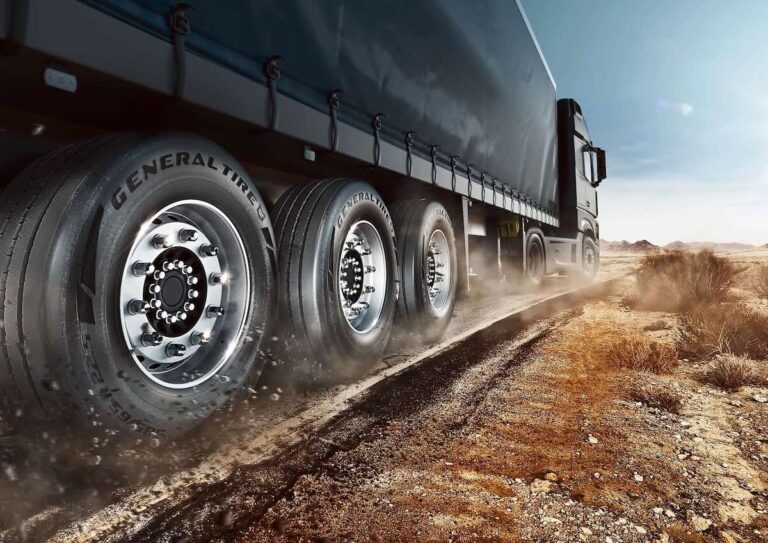
Think about your truck for a second. It might have the most powerful engine on the market, the best suspension money can buy, and a bed that can haul just about anything. But without the right tires? That truck is going nowhere. Literally.
Tires are the only part of your truck that actually touches the road. That sounds obvious, but a lot of truck owners do not give their tires nearly enough thought. They slap on whatever is cheapest or whatever the tire shop recommends and call it a day. Then they wonder why their truck feels squirrelly on wet highways, burns through fuel faster than expected, or cannot get enough grip on a muddy job site.
The truth is, choosing the right tire for your truck is one of the most impactful decisions you can make. It affects handling, braking, fuel economy, ride comfort, noise levels, and how long the tires themselves last before you need to buy another set. And with so many types of truck tires available today, it can feel overwhelming if you do not know what you are looking at.
So let us break it all down. We are going to walk through every major type of truck tire, explain what each one is designed for, and lay out the pros and cons so you can make an informed choice. Whether you drive a half-ton pickup for weekend errands, a three-quarter-ton work truck that hauls equipment daily, or a full-size SUV that sees a mix of pavement and dirt roads, there is a tire type that fits your life. You just need to know which one.
Why Your Tire Choice Matters More Than You Think
Before we get into the specific types, it is worth understanding why this decision carries so much weight. A lot of people treat tires as a commodity, something generic that just needs to be round and hold air. But tires are engineered products, and the differences between types are significant.
Your tires determine how your truck grips the road in rain, snow, mud, and dry conditions. They affect how quickly you can stop in an emergency. They influence how much road noise you hear inside the cab on a long highway drive. They even play a role in how much fuel your truck consumes, because different tread designs and rubber compounds create different levels of rolling resistance.
Here is a quick way to think about it. Imagine you buy a set of aggressive mud tires because they look tough and you like the way they fill out the wheel wells. But 90% of your driving is on the highway, commuting to work. Those mud tires will be louder than a jet engine at 70 mph. They will wear out faster on pavement. They will hurt your fuel economy. And they will not handle as well on dry or wet roads compared to a tire designed for that surface.
On the flip side, if you buy smooth highway tires and then try to take your truck down a muddy trail to your deer lease, you are going to get stuck. Possibly very stuck. The kind of stuck that requires a buddy with a winch and a long cable.
The point is, the best tire is the one that matches how you actually use your truck. Not how you wish you used it. Not what looks coolest on Instagram. The tire that fits your real-world driving.
The 6 Main Types of Truck Tires (And Who Each One Is For)
Let us go through each category one by one. For every type, we will cover what it is designed to do, where it excels, where it falls short, and who should seriously consider buying a set.
1. Heavy-Duty Truck Tires: Built to Handle Serious Weight
When people in the industry talk about “truck tires” as a specific category, they are usually referring to heavy-duty tires designed for full-size trucks and SUVs that regularly carry or tow heavy loads. These are not your basic passenger-car tires with a truck-size diameter. They are built from the ground up with reinforced sidewalls, stiffer construction, and tread compounds that can handle the extra stress of hauling weight.
If you drive a truck that regularly carries tools, equipment, building materials, or anything else that adds significant weight to the bed or a trailer behind it, heavy-duty tires are worth a serious look. They are designed to maintain their shape and performance under load, which is something that standard tires simply cannot do as well.
These tires also tend to perform reasonably well across different seasons. They are not specialized for winter or off-road use, but they offer a solid baseline of traction and durability that works in most conditions. Think of them as the workhorses of the tire world. They are not flashy. They are not specialized. But they get the job done day after day.
What heavy-duty truck tires do well:
- They handle heavy loads without deforming or overheating
- They perform adequately across multiple seasons, reducing the need for seasonal tire swaps
- Maintenance is straightforward and they do not require any special care
- They tend to run quietly on paved roads, which matters if you spend a lot of time on highways
- They save you money in the long run if you do not drive your truck every single day, since they are versatile enough to cover most situations
- In moderate winter conditions (light snow, cold but not icy), they often outperform budget winter tires
Where heavy-duty truck tires fall short:
- If you drive frequently and put on serious mileage, expect to replace them roughly every six to eight months of heavy use. They are durable, but they are not immortal.
- Extreme weather, whether that is blistering heat or brutal cold with heavy ice, can push these tires past their comfort zone
- Aggressive driving (hard acceleration, sharp turns, sudden braking) will wear them down much faster than steady, controlled driving
- On icy or heavily snow-packed roads, they do not provide the same level of grip as dedicated winter tires
Best for: Truck and SUV owners who use their vehicles for work, hauling, or towing and want a dependable tire that handles most conditions without fuss.
2. Off-Road Tires: For When Pavement Is Optional
Off-road tires are built for one thing: getting you through rough, unpaved terrain without leaving you stranded. They feature aggressive tread patterns with deep lugs that bite into loose surfaces like sand, gravel, dirt, and rock. The rubber compounds are formulated to resist punctures and cuts from sharp objects you might encounter on trails, construction sites, or backcountry roads.
If you spend a significant portion of your driving time on unpaved surfaces, off-road tires are a game changer. They give you confidence on terrain that would have a regular tire slipping and spinning. The tread design channels away loose material and digs down to find solid footing, which is exactly what you need when you are climbing a rocky hill or crossing a gravel wash.
But here is the trade-off, and it is a big one. Off-road tires are not designed for highway driving. That aggressive tread pattern that works so well in the dirt creates a lot of noise on smooth pavement. We are talking about a noticeable hum or roar that can get tiresome on long drives. And because the rubber compound is optimized for off-road durability rather than highway efficiency, they tend to wear faster on pavement and increase fuel consumption due to higher rolling resistance.
Think of off-road tires as specialist tools. A hammer is great for driving nails, but you would not use it to turn a screw. Same idea here. If your truck lives mostly off-road, these tires are exactly what you need. If your truck mostly lives on the highway with occasional off-road excursions, you might be better served by all-terrain tires (which we will cover next).
What off-road tires do well:
- Excellent traction on rocky, sandy, and loose-gravel surfaces
- Built tough with puncture-resistant construction that holds up against sharp rocks and debris
- Strong grip on muddy surfaces thanks to deep, widely spaced lugs
- Generally affordable compared to some specialty tire categories
- Wide side grooves help with cornering stability on uneven surfaces
- Long-lasting when used in the conditions they were designed for
Where off-road tires fall short:
- Very noisy on paved roads. If highway comfort matters to you, these tires will test your patience.
- They wear out surprisingly fast when driven regularly on pavement
- Not rated for high-speed highway driving. The handling characteristics at highway speeds are noticeably inferior to highway-oriented tires.
- Higher rolling resistance means your fuel economy will take a hit
Best for: Truck owners who spend the majority of their driving time off pavement, including construction workers, ranchers, trail enthusiasts, and anyone who regularly deals with rough, unpaved roads.
3. All-Terrain Tires: The Jack of All Trades
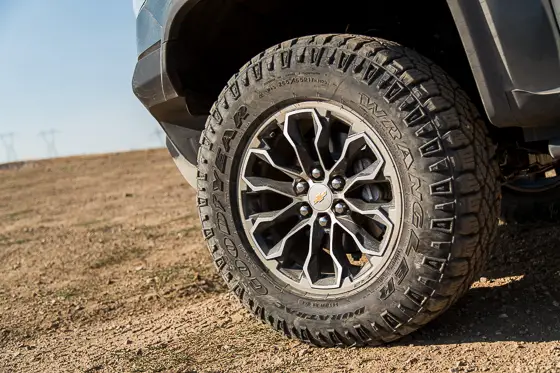
If you could only own one set of tires and your driving involves a mix of highway commuting and occasional off-road adventures, all-terrain tires are probably your best bet. These tires are designed to be a compromise, and in this case, “compromise” is not a dirty word. It means they do a reasonably good job on both paved and unpaved surfaces.
All-terrain tires have a more aggressive tread pattern than highway tires but less aggressive than dedicated off-road or mud tires. The tread blocks are typically larger and more widely spaced than highway tires, giving them better grip on dirt, gravel, and light mud. At the same time, the tread design is refined enough to provide a relatively smooth, quiet ride on asphalt.
Many all-terrain tires also carry a three-peak mountain snowflake (3PMSF) symbol, which means they meet certain traction standards for severe snow conditions. That makes them a solid option for truck owners in areas that get moderate snowfall but do not experience the kind of extreme winter conditions that demand a dedicated snow tire.
The real appeal of all-terrain tires is their flexibility. You can drive to work on Monday, tow a trailer on Wednesday, and hit a dirt road to your campsite on Friday, all on the same set of tires. They will not be the absolute best at any one of those tasks, but they will be good enough at all of them that you never feel like you need a second set of wheels.
That said, all-terrain tires are not perfect. The tread compound is typically softer than what you find on highway tires, which means the tread wears down faster. The more aggressive tread pattern also creates slightly more road noise than a pure highway tire, though modern all-terrain designs have gotten remarkably quiet compared to what was available 10 or 15 years ago.
Another issue to watch for is cupping, also called scalloping. This is a wear pattern where uneven patches develop on the tread surface, creating a bumpy, noisy ride. Cupping is often caused by worn shocks or struts, misaligned wheels, or unbalanced tires, but all-terrain tires seem to be more susceptible to it than other types. Regular tire rotations and keeping your suspension in good shape will help prevent this.
What all-terrain tires do well:
- Provide a genuine compromise between on-road comfort and off-road capability
- Resistant to cuts and punctures from road debris and off-road hazards
- Stronger sidewall construction than highway tires, which helps when airing down for off-road traction
- Prominent tread patterns deliver good grip on a wide variety of surfaces
- Many models carry snow traction ratings, making them a decent three-season or even four-season option
- Available in a huge range of sizes to fit everything from midsize trucks to full-size heavy-duty rigs
Where all-terrain tires fall short:
- Noisier on the highway than dedicated highway tires, though this varies a lot by brand and model
- The softer rubber compound means shorter tread life compared to highway tires
- Prone to cupping if the suspension is not maintained or the tires are not rotated regularly
- In deep mud or extreme off-road conditions, they do not match the performance of dedicated off-road or mud tires
- Slightly higher rolling resistance than highway tires, which can affect fuel economy by a mile or two per gallon
Best for: Truck owners who split their driving between paved roads and occasional off-road use. This includes weekend warriors, rural drivers, and anyone who wants one tire that handles a wide range of conditions without needing to be swapped out seasonally.
4. Mud Tires: Maximum Grip When the Ground Gets Soft
Mud tires are the extreme end of the off-road tire spectrum. If off-road tires are specialists, mud tires are ultra-specialists. They feature the most aggressive tread patterns of any tire type, with massive, widely spaced lugs that look almost like paddles on a steamboat wheel. And that design is intentional. Those big lugs dig deep into mud, clay, and soft soil to find traction, while the wide gaps between them allow mud and debris to self-clean as the tire rotates.
If you have ever watched a truck crawl through axle-deep mud without getting stuck, chances are it was wearing mud tires. These tires are specifically engineered for the worst conditions. Thick, soupy mud that would swallow a regular tire whole. Wet clay that is as slippery as ice. Loose, loamy soil on a steep grade. Mud tires handle all of it with a level of grip that no other tire type can match in those specific conditions.
Some mud tires also feature tread patterns that extend onto the sidewall. This gives them lateral grip on slopes and in ruts, which is incredibly useful when you are navigating deep tracks or trying to climb out of a ditch at an angle.
But the downsides are real, and you need to go in with your eyes open. Mud tires on pavement are absolutely miserable. They are loud. Really loud. The kind of loud that makes you turn up the radio and still struggle to hear it. They wear incredibly fast on hard surfaces because all those big lugs are taking a beating with every mile of asphalt. Fuel economy drops noticeably. And handling on wet or dry pavement is noticeably worse than with highway or all-terrain tires because the contact patch is broken up by those deep tread channels.
Mud tires also tend to be on the expensive side. The aggressive construction, reinforced sidewalls, and specialized rubber compounds all add to the cost. You are paying a premium for a tire that excels in a narrow set of conditions.
What mud tires do well:
- Unmatched grip on muddy, soft, and waterlogged surfaces
- Self-cleaning tread design keeps mud and debris from packing into the tread
- Good traction on rocky surfaces as well
- Long lifespan when used in off-road conditions they were designed for
- Moderate puncture protection from reinforced construction
- Lateral sidewall tread helps in ruts and on side slopes
- Relatively low maintenance requirements
Where mud tires fall short:
- Extremely noisy on pavement. This is not a minor inconvenience; it fundamentally changes the driving experience on highways.
- Rapid tread wear on hard surfaces. If you drive on pavement regularly, expect a short tire life.
- Higher cost compared to most other tire types
- Poor fuel economy due to high rolling resistance
- Reduced handling and braking performance on paved roads
Best for: Truck owners who frequently drive on muddy, unpaved surfaces and do not mind the trade-offs on pavement. Ideal for farmers, off-road enthusiasts, hunters who access remote properties, and anyone whose regular driving involves serious mud.
5. Winter Tires: Your Best Friend When the Temperature Drops
If you live somewhere that gets real winters, with temperatures consistently below freezing, heavy snowfall, and icy roads, winter tires are not a luxury. They are a safety essential. And this applies even to trucks and SUVs with four-wheel drive. Four-wheel drive helps you accelerate in snow, but it does nothing to help you stop or steer. That is the tire’s job.
Winter tires are made from a fundamentally different rubber compound than all-season or summer tires. Regular tire rubber hardens as temperatures drop, which reduces its ability to grip cold pavement. Winter tire rubber is formulated to stay soft and pliable even in sub-zero temperatures. That flexibility allows the tire to conform to the road surface and maintain traction where a harder tire would simply slide.
The tread design is different too. Winter tires feature deep grooves and thousands of tiny slits called sipes. These sipes create extra biting edges that grip snow and ice far more effectively than the broader, smoother tread patterns found on highway or all-season tires. Think of it like the difference between smooth-soled dress shoes and hiking boots with deep lugs. On a snowy sidewalk, you know which one you would rather be wearing.
Here is something a lot of people do not realize: winter tires are not just for snow. They outperform all-season tires on cold, dry pavement too. When the temperature drops below about 45 degrees Fahrenheit, the rubber compound in all-season tires starts to stiffen, and their grip decreases. Winter tires maintain their grip at those temperatures because their compound is specifically designed for it.
The downside? You absolutely cannot leave winter tires on year-round. That soft rubber compound that works so well in the cold wears down extremely fast in warm weather. If you run winter tires through the summer, they will be bald before fall arrives. The handling on warm, dry pavement is also noticeably worse because the soft rubber flexes too much, making the truck feel vague and wallowy in turns.
The best approach is to have two sets of tires: your regular set (all-terrain or highway, depending on your needs) and a set of winter tires that you swap on when the cold season arrives, typically when average daily temperatures consistently drop below 45 degrees Fahrenheit. Yes, it is an extra expense upfront. But here is the math: while you are running your winter tires, your regular tires are sitting in the garage not wearing out. So you end up getting more total miles out of both sets. And the safety benefit in winter conditions is hard to overstate.
What winter tires do well:
- Far superior traction on snow, ice, and cold pavement compared to any other tire type
- Rubber compound stays pliable in freezing and sub-zero temperatures
- Deep sipes and grooves provide exceptional grip on slippery surfaces
- Dramatically shorter stopping distances on snow and ice compared to all-season tires
- Can last multiple winter seasons with proper care and storage
- Provide a real, measurable safety improvement in cold weather driving
Where winter tires fall short:
- Completely unsuitable for warm-weather driving. The soft rubber wears rapidly and handles poorly in heat.
- Require seasonal swapping, which means either storing a second set of tires or paying a shop to handle the changeover twice a year
- The soft rubber makes them feel a bit less responsive on dry pavement compared to all-season tires, even in cold weather
- Higher initial cost when you factor in buying a dedicated set plus possibly a second set of wheels to mount them on
Best for: Anyone living in a region with real winters, meaning regular snow, ice, and extended periods of sub-freezing temperatures. Especially important for trucks, which can be tail-heavy and prone to fishtailing on slippery surfaces.
6. Highway Tires: Smooth, Quiet, and Built for the Long Haul
Highway tires are what most trucks come with from the factory. They are designed for one thing above all else: making your on-road driving experience as smooth, quiet, and efficient as possible. If your truck’s primary job is commuting, running errands, road trips, and maybe some light towing on paved roads, highway tires are the natural fit.
The tread pattern on highway tires is relatively smooth compared to all-terrain or off-road designs. The tread blocks are smaller and more tightly packed, which creates a larger contact patch with the road surface. That translates to better grip on dry and wet pavement, lower road noise, and reduced rolling resistance, which means better fuel economy.
Highway tires also tend to have longer tread life than more aggressive tire types. Because the rubber compound is optimized for pavement and the tread pattern is less aggressive, these tires can last 50,000 to 70,000 miles or more with proper maintenance. Compare that to a set of mud tires that might only last 20,000 to 30,000 miles of mixed driving.
The ride quality is another major advantage. Highway tires are engineered to absorb road imperfections and deliver a comfortable, car-like ride. If you are driving two hours each way to a job site every day, that comfort adds up. Your back, your ears, and your fuel budget will all appreciate the difference.
The obvious weakness is off-road capability, or more accurately, the complete lack of it. Highway tires on a dirt road are fine. Highway tires on a muddy trail, a rocky hillside, or a sandy wash are a recipe for getting stuck. The shallow tread and hard rubber compound offer almost no grip once you leave pavement. Even wet grass can be a challenge for some highway tires.
What highway tires do well:
- Excellent ride quality and handling on paved surfaces
- Low road noise for a comfortable driving experience
- Fuel-efficient thanks to low rolling resistance
- Long tread life when used on their intended surface
- Good wet and dry traction on pavement
- Lightweight construction supports higher speed ratings
Where highway tires fall short:
- Practically useless off-road. Even moderate mud, sand, or loose gravel will defeat them.
- Puncture easily on rough terrain because the sidewalls and tread are not reinforced for off-road hazards
- Not great in significant snow or ice unless you are buying a dedicated winter tire
- If your truck goes anywhere near unpaved roads regularly, you will be wishing you had something more capable
Best for: Truck owners who drive almost exclusively on paved roads. Commuters, long-haul drivers, and anyone who values ride comfort, fuel economy, and low noise over off-road capability.
A Quick Comparison: Which Tire Type Fits Your Life?
Here is a side-by-side look at all six tire types to help you compare at a glance:
| Tire Type | Best Surface | Highway Comfort | Off-Road Ability | Snow/Ice | Tread Life | Noise Level |
|---|---|---|---|---|---|---|
| Heavy-Duty | Mixed/Paved | Good | Fair | Fair | Moderate | Low |
| Off-Road | Unpaved/Rocky | Poor | Excellent | Fair | Moderate (off-road) | High |
| All-Terrain | Mixed | Good | Good | Good | Moderate | Moderate |
| Mud | Mud/Soft Ground | Poor | Excellent (mud) | Fair | Short (on road) | Very High |
| Winter | Snow/Ice | Good (cold) | Fair | Excellent | Moderate | Moderate |
| Highway | Paved Roads | Excellent | Poor | Poor | Long | Low |
How to Pick the Right Tires for Your Truck
Now that you know what each tire type brings to the table, how do you actually decide which one is right for you? It comes down to three straightforward questions.
What Kind of Truck Do You Drive?
This matters because tire size and load rating need to match your vehicle. A half-ton pickup like a Ford F-150 or Chevy Silverado 1500 uses a completely different tire size than a one-ton dually like an F-350. An SUV like a Tahoe or Expedition will have its own set of size requirements too.
You can find your truck’s recommended tire size on a sticker inside the driver’s door jamb or in the owner’s manual. Whatever type of tire you choose, make sure the size is compatible with your truck. Running the wrong size can throw off your speedometer, mess with your ABS and traction control systems, and even cause rubbing against the fender or suspension components.
If you are thinking about upsizing your tires for a more aggressive look, do your homework first. Larger tires may require a lift kit, new wheels with a different offset, or recalibration of the truck’s computer. It is doable, but it is not as simple as just slapping on a bigger tire.
What Do You Actually Use Your Truck For?
Be honest with yourself here. A lot of truck owners buy tires based on what they want to do with their truck rather than what they actually do with it. If you have grand plans to go off-roading every weekend but the reality is that you go twice a year, all-terrain tires make a lot more sense than dedicated mud tires.
Think about your typical week. Are you hauling heavy loads? Look at heavy-duty tires with a high load rating. Are you commuting 50 miles a day on the interstate? Highway tires will save you money on fuel and last longer. Do you work on a ranch or a farm where you are constantly on dirt and gravel? All-terrain tires strike a great balance. Do you spend your weekends in the mud pits or on the trails? Mud tires or off-road tires are worth the trade-offs.
What Kind of Roads and Weather Do You Deal With?
Your regular route and your local climate play a huge role. If you live in Texas and your daily commute is 30 miles of smooth interstate, you will never need mud tires or winter tires. Highway or all-terrain tires are your best bet. If you live in Minnesota and deal with five months of snow and ice every year, a set of winter tires for the cold season is practically non-negotiable.
If your area gets moderate weather year-round with occasional snow, a good set of all-terrain tires with the three-peak mountain snowflake rating can cover most situations in a single tire. You give up a little bit of on-road refinement compared to highway tires, but you gain a lot of versatility.
For truck owners in regions with truly extreme winters, the ideal setup is two sets of tires: a set of all-terrain or highway tires for spring through fall, and a dedicated set of winter tires for the cold months. It sounds expensive, but remember that each set is only being used for part of the year, so the total lifespan of both sets is significantly longer than running one set year-round.
Understanding Tire Load Ratings and Ply Ratings
This is an area that confuses a lot of truck owners, so let us clear it up. When you see a tire described as “10-ply” or “E-rated,” that refers to the tire’s load-carrying capacity, not the literal number of fabric layers inside the tire (though it used to mean that years ago).
Modern truck tires use a load range designation system:
- Load Range C (6-ply equivalent): Light-duty. Suitable for lighter trucks and SUVs that do not carry heavy loads.
- Load Range D (8-ply equivalent): Medium-duty. Good for trucks that carry moderate loads or tow occasionally.
- Load Range E (10-ply equivalent): Heavy-duty. Built for trucks that regularly haul or tow near their rated capacity. This is the most common rating for three-quarter-ton and one-ton trucks.
- Load Range F (12-ply equivalent): Extra heavy-duty. Typically found on commercial trucks and the most demanding applications.
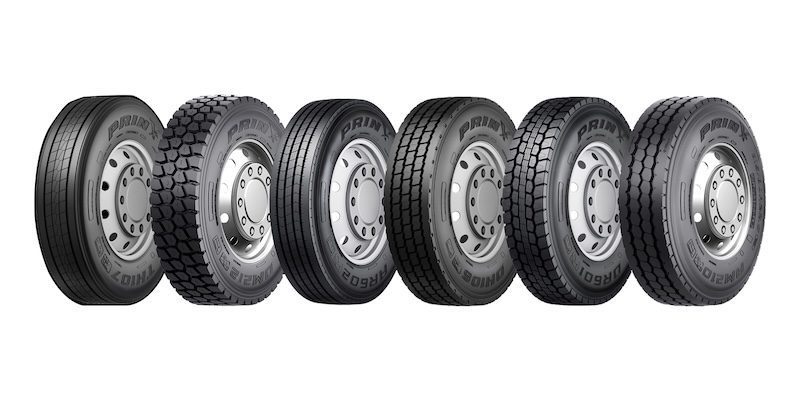
Higher load range tires have stiffer sidewalls and can handle more weight at higher inflation pressures. But they also ride harder because that stiff sidewall does not absorb bumps as well. So if you are driving a half-ton truck and you never carry anything heavier than groceries, putting on Load Range E tires will give you a harsher ride for no real benefit.
Match the load range to your actual usage. If you tow a heavy trailer every weekend, you want the stiffer, higher-rated tire. If you mostly drive empty, you will be happier with a lighter-rated tire that gives you a more comfortable ride.
How to Read a Truck Tire Sidewall
The sidewall of every tire is stamped with a string of numbers and letters that tell you everything about that tire. It looks like gibberish at first, but once you know how to read it, it is actually straightforward. Let us use a common truck tire size as an example: LT265/70R17 121/118S.
- LT stands for Light Truck. This tells you the tire is designed for truck applications and has a heavier construction than a passenger (P) tire.
- 265 is the tire width in millimeters, measured from sidewall to sidewall.
- 70 is the aspect ratio. It means the sidewall height is 70% of the tire’s width. A lower number here means a shorter, sportier sidewall. A higher number means a taller sidewall with more cushion.
- R means radial construction, which is standard for virtually all modern tires.
- 17 is the wheel diameter in inches. This tire fits a 17-inch wheel.
- 121/118 is the load index. The first number is for single-tire applications, the second for dual-tire setups (like on a dually truck). You can look up load index numbers in a chart to find the maximum weight each tire can support.
- S is the speed rating. “S” means the tire is rated for sustained speeds up to 112 mph, which is more than enough for any truck.
When shopping for new tires, make sure the size, load rating, and speed rating match what your truck manufacturer recommends. You can go with a higher load or speed rating if needed, but going lower is never a good idea.
Keeping Your Truck Tires in Good Shape: Maintenance That Actually Matters
No matter which type of tire you choose, it will only perform as well as you maintain it. A $300 tire that is underinflated, misaligned, and never rotated will perform worse than a $150 tire that is properly cared for. Here are the maintenance items that make a real difference.
Check Your Tread Depth Regularly
The tread is the grooved rubber surface that contacts the road. It is what gives you grip in wet, snowy, and loose conditions. When the tread wears down, your traction drops, your stopping distances increase, and your risk of hydroplaning goes up.
New truck tires typically come with a tread depth of about 11/32 of an inch. Most states require a minimum of 2/32 of an inch, but honestly, if you let your tires get that low, you are driving on what is essentially a slick tire in anything other than dry conditions.
A good rule of thumb: consider replacing your tires when the tread gets down to 4/32 of an inch. At that depth, you still have some tread left, but performance in rain and snow starts to drop off significantly. You can check tread depth with an inexpensive tread depth gauge from any auto parts store, or use the old penny test. Insert a penny into the tread groove with Lincoln’s head pointing down. If you can see the top of his head, your tread is too low.
Keep Your Tire Pressure Right
This is probably the single most important maintenance task for your tires, and it takes less than five minutes. Incorrect tire pressure affects everything: handling, braking, fuel economy, tire wear, and ride comfort.
Underinflated tires flex more than they should, which generates heat. Heat is the enemy of tire rubber. It accelerates wear, weakens the tire structure, and in extreme cases can cause a blowout. Underinflation also increases rolling resistance, which means your engine has to work harder and burn more fuel to maintain speed. And the wear pattern will be uneven, with the outer edges of the tread wearing faster than the center.
Overinflated tires ride on the center of the tread, reducing the contact patch with the road. This decreases traction and makes the ride harsh and bouncy. The center of the tread will wear faster than the edges, and the tire is more susceptible to damage from potholes and road debris because the sidewall is stretched tight with less ability to absorb impacts.
Check your tire pressure at least once a month and before any long trip. Do it when the tires are cold (before you have driven more than a mile or two) for the most accurate reading. The correct pressure for your truck is listed on the door jamb sticker, not on the tire sidewall. The number on the tire is the maximum pressure, not the recommended operating pressure.
Rotate Your Tires on Schedule
Tire rotation means moving the tires from one position on the truck to another (front to back, side to side, or in a specific pattern recommended by the manufacturer). The purpose is to equalize wear across all four tires so they wear out at roughly the same rate.
Without rotation, the front tires on a rear-wheel-drive truck will wear differently than the rears because they handle all the steering forces. On a front-wheel-drive or all-wheel-drive vehicle, the drive tires wear faster than the free-rolling tires.
Most manufacturers recommend rotating tires every 5,000 to 8,000 miles. A lot of people tie it to their oil change schedule so they do not forget. It is a quick job that any tire shop will do for free or for a small fee, and it can add thousands of miles to the life of your tires.
Keep Your Lug Nuts Properly Torqued
Every time a wheel is removed and reinstalled, whether for a tire rotation, brake job, or flat tire repair, the lug nuts need to be tightened to the correct torque specification. Too loose, and the wheel can work itself free while driving. Too tight, and you risk warping the brake rotor or stretching the wheel studs, which can lead to a stud snapping at the worst possible time.
Use a torque wrench, not just an impact gun. Impact guns are great for getting lug nuts off, but they are terrible for putting them on accurately. Your truck’s lug nut torque spec is in the owner’s manual. For most trucks, it is somewhere between 100 and 140 ft-lbs, but always verify.
A good practice is to re-torque your lug nuts about 50 to 100 miles after any wheel service. Lug nuts can settle slightly as the wheel seats against the hub, and a quick re-torque ensures everything stays tight.
Drive Like Your Tires Cost Money (Because They Do)
Your driving habits have a massive impact on tire life. Hard acceleration, aggressive cornering, and sudden braking all scrub rubber off your tires at an accelerated rate. Hitting curbs, driving through potholes at speed, and running over debris can damage the internal structure of a tire in ways that are not visible from the outside.
You do not have to drive like a grandparent heading to church on Sunday. But being reasonably smooth with your inputs, maintaining safe following distances so you do not have to slam on the brakes, and being mindful of road hazards will all extend the life of your tires. It will also improve your fuel economy and reduce wear on your brakes and suspension. Everybody wins.
Fix Problems Early, Not Later
If you notice a vibration at highway speed, your truck pulling to one side, uneven wear on one tire, or a slow leak that requires you to add air every few days, do not ignore it. These are symptoms of problems that will only get worse and more expensive if you let them go.
A vibration might be a simple balance issue (a $20 fix) or it could be a separated tire that is about to blow out. A pull to one side could be low tire pressure on that side or a developing alignment problem that is eating through your tread unevenly. A slow leak might be a nail in the tread (an easy plug or patch) or a corroded wheel that needs to be refinished or replaced.
Catching these things early saves you money and keeps you safe. A $20 tire balance is a lot cheaper than replacing a tire that wore out prematurely because it was out of balance for 10,000 miles.
What About All-Season Tires? Are They the Same as All-Terrain?
This is a common point of confusion, so let us clear it up. No, all-season tires and all-terrain tires are not the same thing.
All-season tires are designed for year-round use on paved roads. They offer a blend of dry, wet, and light-snow performance. Think of them as the default tire for passenger cars and light-duty trucks that never leave pavement. They are the tire equivalent of a comfortable pair of sneakers. Good for most everyday situations, but not specialized for anything extreme.
All-terrain tires are designed for a mix of paved and unpaved surfaces. They have more aggressive tread patterns, stronger sidewalls, and are generally tougher than all-season tires. Think of them as hiking boots. They handle trails and rough ground that sneakers cannot, while still being comfortable enough for a walk around town.
If your truck never leaves pavement, a good set of all-season tires might be all you need. But if you venture onto dirt roads, gravel driveways, job sites, or any other unpaved surface with any regularity, all-terrain tires are the better choice. The extra durability and off-road grip are worth the slight increase in noise and decrease in fuel economy.
How Long Should Truck Tires Last?
This depends on the tire type, how you drive, and how well you maintain them. Here are some general guidelines:
- Highway tires: 50,000 to 70,000 miles
- All-terrain tires: 40,000 to 60,000 miles
- Heavy-duty tires: 40,000 to 55,000 miles
- Off-road tires: 30,000 to 50,000 miles (varies widely based on surface)
- Mud tires: 20,000 to 40,000 miles (shorter if driven on pavement regularly)
- Winter tires: 3 to 5 winter seasons (mileage depends on how much you drive in winter)
Keep in mind that even if the tread still looks good, tires should be replaced after about six years of service regardless of mileage. The rubber compounds deteriorate with age, even if the tire is just sitting in your garage. You can find the manufacturing date on the tire sidewall in a four-digit code (the DOT number). The last four digits indicate the week and year of manufacture. For example, “2321” means the tire was made in the 23rd week of 2021.
A Few Extra Tips When Shopping for Truck Tires
Here are some practical pointers that can save you money, frustration, or both when it is time to buy:
- Always replace tires in sets of four. Mixing old and new tires, or mixing different brands and tread patterns, can create handling imbalances, especially on trucks with all-wheel drive or four-wheel drive systems.
- Buy from a reputable dealer that includes free or low-cost tire rotations, flat repairs, and road hazard warranties. These perks can save you hundreds of dollars over the life of the tires.
- Check for manufacturer rebates. Tire companies frequently offer $50 to $100 rebates when you buy a set of four. Timing your purchase around these promotions can cut your total cost significantly.
- Get an alignment check whenever you install new tires. Even if the alignment was fine before, it is worth verifying. A slight misalignment can cause brand-new tires to wear unevenly within a few thousand miles.
- Do not cheap out on tire installation. Make sure the shop mounts the tires correctly, balances each one, installs new valve stems or TPMS sensors if needed, and torques the lug nuts to spec. A sloppy install can lead to vibrations, leaks, and premature wear.
- Read reviews from other truck owners with a similar vehicle and driving style. A tire that works great on a Tacoma might not be the best choice for an F-250. Real-world feedback from people who drive your kind of truck on your kind of roads is worth more than any manufacturer’s marketing claims.
What Happens When You Put the Wrong Tires on Your Truck
Let us be real about the consequences. Running the wrong type of tire is not just a minor inconvenience. It can have serious implications for safety and your wallet.
A truck with highway tires attempting a muddy off-road trail is likely to get stuck, potentially causing damage to the undercarriage if you try to force your way through. A truck running mud tires on the highway will have noticeably longer stopping distances on wet pavement because the tread design is not optimized for water evacuation on smooth surfaces. And running summer-compound tires in freezing conditions is genuinely dangerous, because the rubber hardens so much that the tires can lose grip even on dry roads.
Then there is the financial impact. The wrong tire for your conditions will wear out much faster, meaning you are buying new tires more often. It will hurt your fuel economy, costing you money at the pump with every fill-up. And if the wrong tire contributes to an accident, the costs go beyond money.
Getting the tire choice right the first time saves you trouble down the line. It is not a complicated decision once you understand the options, and you now have all the information you need to make it.
The Right Tire for You Is the One That Matches Your Reality
We covered a lot of ground here, from heavy-duty workhorses to aggressive mud tires to refined highway cruisers. Each type exists for a reason, and none of them is objectively “the best.” The best tire is the one that fits your truck, matches the surfaces you drive on, handles the weather you face, and supports the loads you carry.
Do not get swayed by what looks cool or what your buddy swears by. Think about your own driving. Where do you go? What are the roads like? What does winter look like where you live? How much weight do you carry? Answer those questions honestly, and the right tire type will be obvious.
And once you have the right tires mounted, take care of them. Check the pressure. Rotate them on schedule. Watch the tread depth. Fix problems early. A good set of tires, properly maintained, is one of the best investments you can make in your truck’s performance, safety, and your own peace of mind.
So here is the real question: when was the last time you actually looked at your truck’s tires and asked yourself if they are the right ones for how you drive?