
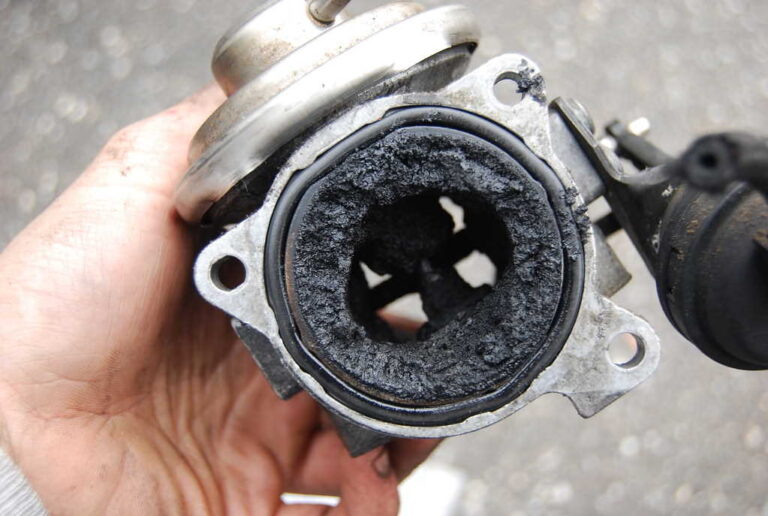
I had a guy bring in a Golf TDI a few months back convinced his turbo was dying. Engine felt gutless above 2000 RPM, idle was lumpy, and there was a faint burnt smell when he opened the hood. Turned out his EGR valve was gummed up solid with carbon, stuck somewhere between open and closed, and once we pulled it and cleaned it out the car ran like a completely different vehicle.
EGR problems are one of the more common comebacks I see on both gas and diesel engines, and they get misdiagnosed a lot because the symptoms overlap with turbo issues, injector problems, and even transmission hunting. If you know what the valve actually does and how it fails, you can usually narrow it down fast with a scan tool and save yourself a guessing game of parts swapping.
What the EGR valve is actually doing under there
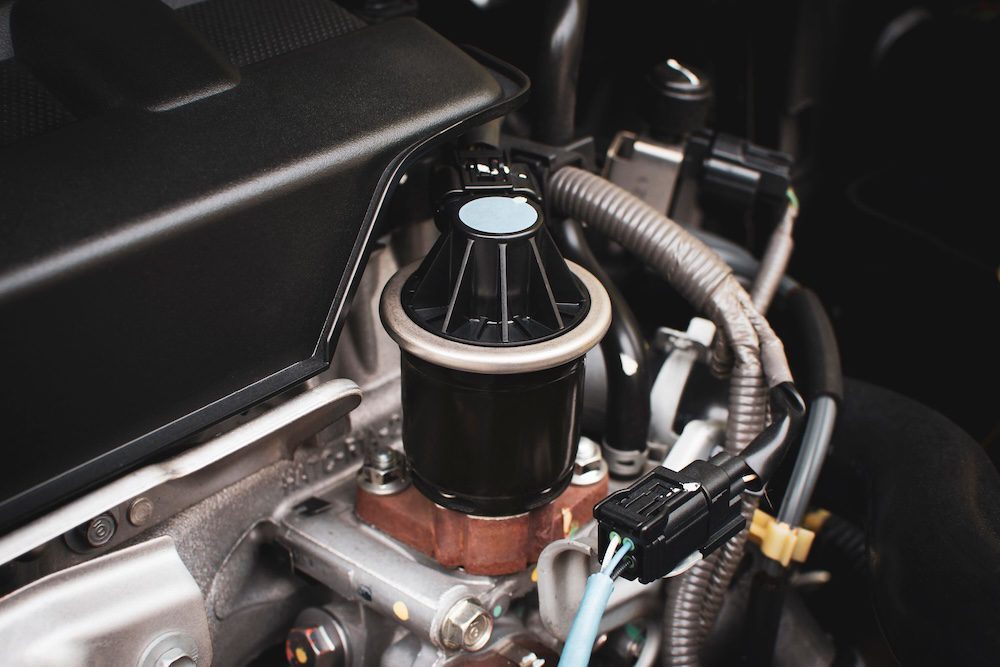
Exhaust gas recirculation, or EGR, is a system that takes a portion of the exhaust gas your engine already produced and routes it back into the intake manifold. That sounds backwards at first since you’d think you want fresh air going in, not spent exhaust, but the goal isn’t more oxygen, it’s lowering combustion temperature.
Nitrogen oxide (NOx) forms when combustion temperatures get high enough to force nitrogen and oxygen in the air to react with each other. By diluting the incoming air charge with inert exhaust gas, the EGR valve lowers peak combustion temperature and cuts down how much NOx the engine produces in the first place. That’s the entire reason this part exists on your car.
The earliest EGR valves were electro-pneumatic, meaning vacuum pressure did the actual opening and closing while the electronic side stayed isolated from the high heat of the exhaust stream. Most modern engines have moved to fully electric valves controlled directly by the engine control unit, and the advantage is speed. An electric EGR valve with a DC motor can open or close in around 100 milliseconds, which matters because the valve needs to snap shut completely the instant you ask for full torque, like stomping the pedal to merge onto a highway.
How the recirculation process actually plays out
Once exhaust gas gets routed back into the intake manifold, it displaces some of the fresh air that would otherwise be feeding the cylinders. Less available oxygen means the combustion reaction has less fuel for the NOx-forming chemistry to latch onto, and the recirculated gas itself absorbs heat during combustion, pulling the peak cylinder temperature down further. Two mechanisms, one shared goal.
A computer manages a solenoid that controls the valve in metered pulses rather than a simple on-off switch. On vacuum-controlled setups, the injection computer signals when vacuum pressure from the vacuum pump should act on the valve diaphragm to pull it open.
Here’s the part that causes most of the real-world trouble. Every time exhaust gas flows back through that passage, it carries soot and unburned residue with it. Over time that residue bakes onto the intake tract, the valve itself, and surrounding components as carbon and calamine deposits. Left unchecked, those deposits build up thick enough to physically restrict or jam the valve, and that’s when you start seeing real drivability symptoms.
I’ll be honest about something here: engine decarbonization treatments get pitched a lot as a fix for this kind of buildup, and I’m not a fan. I haven’t seen it produce consistent results on a stuck or heavily carboned EGR valve, and I’ll get into why that is in more detail another time. If you skip decarbonization and the valve’s already gummed up, you’re looking at a proper cleaning or a replacement, not a quick chemical shortcut.
Does your gas engine even have one?
Most gasoline engines run on a stoichiometric air-fuel mixture, which keeps NOx production low enough on its own that an EGR system isn’t strictly necessary. That’s why plenty of older carbureted and early fuel-injected gas engines never had one at all.
The exception is direct injection gas engines running a stratified mixing mode, which can produce enough NOx under certain conditions to warrant an EGR system after all. If you’re driving a modern direct injection gas car and you’re surprised to learn it has an EGR valve, that’s probably why.
A stuck EGR valve causes two very different sets of problems
The valve can fail stuck in either direction, open or closed, and the symptoms you get are almost opposite depending on which one happens. Knowing which failure mode you’re dealing with narrows your diagnosis considerably before you even pull a code.
Stuck open: this is the dangerous one
When the valve gets stuck open, exhaust gas floods into the intake constantly instead of only when it’s supposed to. The engine ends up running an air charge that’s perpetually too rich in recirculated exhaust, and the effects stack up fast.
- The engine becomes saturated with recirculated gas in a short time, choking out the fresh air charge it needs to run properly.
- Acceleration power drops noticeably, and in bad cases the engine can stall at idle or even while driving.
- Turbocharged engines take a real hit here. With the EGR stuck open, exhaust gases don’t cool the way they’re supposed to, and sustained overheating can break down engine oil as it works its way toward the turbo, damaging the unit over time.
- If overheating continues unchecked, lubrication breaks down permanently to the point where the engine starts consuming its own oil instead of just fuel. That’s engine-rebuild or full replacement territory, not a quick repair.
That turbo damage pathway is the one that should scare you a little, because it turns a $55 to $300 part into a multi-thousand dollar repair if it’s ignored long enough. If your car is losing power and you smell something hot or burnt, don’t wait around on it.
Stuck closed: less dramatic, but still a problem
A valve stuck closed basically means the EGR system has been switched off without your permission. The engine runs, but it’s missing the emissions benefit the valve is supposed to provide.
- The valve no longer does its job at all, functionally the same as removing the component from the car.
- Nitrogen oxide emissions climb past the legal limit, and you’ll often see it with your own eyes as darker, denser smoke from the tailpipe.
- The engine tends to run louder than normal, a symptom I’ve noticed personally on more than one stuck-closed EGR diagnosis.
Stuck closed won’t destroy your engine the way stuck open can, but it will fail an emissions test, trigger a check engine light, and leave you running dirtier than the law allows.
| Failure mode | Main symptoms | Risk level |
|---|---|---|
| Stuck open | Power loss, stalling, turbo strain, possible engine oil breakdown | High, can lead to turbo or engine damage |
| Stuck closed | Darker exhaust smoke, louder engine, failed emissions test | Lower, mostly an emissions and compliance issue |
What to actually do once you suspect a stuck valve
Your two real options are cleaning it or replacing it, and which one makes sense depends on the valve type and how far gone it is. Get a proper diagnosis first, either at a shop or with your own OBD-II scan tool if you’re comfortable reading live data, then decide between cleaning and replacement based on what you find. Pricing varies quite a bit by make and model, which we’ll get into with actual numbers further down.
How a shop actually diagnoses EGR problems
Because the EGR system directly affects emissions compliance, the engine control unit keeps a close eye on it and will trigger the check engine light the moment it detects something off. Most EGR valves carry a position sensor that reports valve position back to the computer in real time, since that position directly affects both torque output and how much pollutant gets filtered out.
A valve stuck closed means no exhaust gas reaches the intake, so NOx emissions climb, exactly what the computer is watching for. A valve stuck open means exhaust keeps flowing constantly, which risks the high-temperature problems covered above. Either direction trips a fault code, and that’s your starting point for diagnosis.
OBD-II codes tied to the EGR valve itself
| Code | Meaning |
|---|---|
| P0400 | Exhaust gas recirculation flow malfunction |
| P0401 | Exhaust gas recirculation insufficient flow |
| P0402 | Exhaust gas recirculation excessive flow |
| P0403 | EGR control circuit |
| P0404 | EGR control circuit, signal outside limits |
| P0405 | EGR sensor A circuit, signal below minimum limit |
| P0406 | EGR sensor A circuit, signal above minimum limit |
| P0407 | EGR sensor B circuit, signal below minimum limit |
| P0408 | EGR sensor B circuit, signal above minimum limit |
| P0486 | EGR sensor B circuit |
| P0489 | EGR sensor A control circuit, signal below minimum limit |
| P0490 | EGR sensor B control circuit, signal below minimum limit |
| P2413 | Performance of exhaust gas recirculation system below limit |
Any one of these pointing at the EGR system is worth pulling the valve and physically inspecting it before you spend money on a replacement part. Sometimes a stubborn code clears right up after a proper cleaning.
The EGR cooler is a whole separate system worth understanding
Pumping hot exhaust gas straight into the intake without cooling it first doesn’t accomplish much, since the whole point is lowering combustion temperature. If the recirculated gas arrives still scorching hot, it barely helps with the NOx reduction job it’s there for.
Since 2001, most diesel engines for cars have come equipped with cooled EGR systems, using a radiator circuit, typically the engine’s own coolant, to bring the exhaust gas temperature down before it ever reaches the intake manifold. Cooling the gas increases its density, which helps in two ways: it drops the combustion temperature more effectively, and it reduces the amount of fresh oxygen available in the mix because the denser recirculated gas takes up more of the available space.
This cooling doesn’t run constantly. A bypass valve routes the flue gas either through the radiator circuit or around it depending on engine temperature, only engaging the cooling function once the engine reaches a certain operating threshold.
OBD-II codes for the EGR cooling valve
| Code | Meaning |
|---|---|
| P2425 | EGR cooling valve control circuit, open |
| P2426 | EGR cooling valve control circuit, signal below minimum limit |
| P2427 | EGR cooling valve control circuit, signal above minimum limit |
| P2457 | EGR cooling system low performance |
| P245A | EGR cooler bypass control circuit, open |
| P245B | EGR cooler bypass control circuit range/performance, signal outside limits |
| P245C | EGR cooler bypass control circuit low |
| P245D | EGR cooler bypass control circuit high |
Worth knowing: on a lot of newer diesels, particularly some Volkswagen models, the EGR cooler is integrated right into the EGR valve assembly. If that cooler fails, you’re not just replacing the valve, you’re replacing the combined unit, which bumps the repair cost up noticeably compared to a simple stand-alone valve swap.
The temperature sensor’s role
Whether the engine’s computer decides to engage the cooling bypass depends on readings from a dedicated temperature sensor that monitors the exhaust gas temperature before it enters the intake manifold. If that sensor goes bad, the computer loses the data it needs to manage the cooling function correctly.
| Code | Meaning |
|---|---|
| P040A | EGR temp sensor circuit |
| P040B | EGR temp sensor circuit range, signal outside limits |
| P040C | EGR temp sensor A circuit low |
| P040D | EGR temp sensor A circuit high |
| P040E | EGR temp sensor circuit intermittent |
| P040F | EGR temperature sensor discrepancy between A and B sensor signals |
| P041A | EGR temp sensor B circuit |
| P041B | EGR temp sensor B circuit signal outside range |
| P041C | EGR temp sensor B circuit low |
| P041D | EGR temp sensor B circuit high |
| P041E | EGR temp sensor B intermittent circuit |
The EGR throttle, a less talked about part of the system
Some systems control exhaust gas flow not just through the EGR valve itself, but with a dedicated throttle positioned in the intake manifold. It’s built similarly to a standard throttle body you’d find on a gasoline engine’s intake, just used here for a different purpose entirely.
When the computer wants a higher flow of recirculated exhaust gas into the intake, this throttle closes down, restricting fresh air flow and effectively pushing more of the gas mix toward exhaust gas instead. It’s a secondary lever the system uses alongside the EGR valve itself.
| Code | Meaning |
|---|---|
| P0487 | EGR throttle control circuit A open |
| P0488 | EGR throttle position control range/performance |
| P213A | EGR throttle control circuit B open |
| P213B | EGR throttle position control circuit B range/performance |
| P213C | EGR throttle position control circuit B low |
| P213D | EGR throttle position control circuit B high |
| P2141 | EGR throttle position control circuit A low |
| P2142 | EGR throttle position control circuit A low |
Cleaning an EGR valve, step by step

An EGR valve that’s merely gummed up with carbon rather than electronically failed can often be cleaned back to proper function instead of replaced outright. That said, once a valve’s been broken and repaired, it’s usually more cost-effective in the long run to just buy a new one rather than keep nursing the old one along.
Older vacuum-controlled valves are the easiest to work on. Since they’re mechanically simpler, you can typically clean the whole assembly or replace just the inner membrane and have it behave like new again. Newer electronic valves are a different story, their added electrical components make them genuinely difficult to repair even for experienced techs, which usually makes replacement the more practical call once they’ve failed.
Some newer cars run an electric motor driven arc-type EGR valve, and these can get stuck too. Cleaning and lubricating the shaft on these is possible, but be careful, doing it wrong can actually destroy the unit rather than fix it.
The cleaning process itself
- Disconnect the car battery before touching anything electrical on the valve or its sensors.
- Disconnect the sensors and clamps attached to the valve, then loosen the screws holding the EGR valve in place.
- Remove the curvature or carbon buildup using a knife carefully, then clean the valve repeatedly with a dedicated brake cleaner-style spray made for this job.
- Once clean, lubricate the valve using WD-40 to make sure the moving parts slide freely again.
- Use an electrical cleaning device specifically designed for electrical components if any part of the valve assembly has electronics, standard cleaning spray can damage those parts if it gets where it shouldn’t.
- Reconnect the battery once everything’s reassembled and dry.
- If the valve is electronic, you’ll need an OBD2 scanner afterward to clear old fault codes and run the basic setting procedure for the new or cleaned valve. Skip this step and you risk the same code reappearing down the road even though the valve itself is fine now.
If you’ve never done this kind of job on your own car before, I’d lean toward taking it to a shop rather than learning on the fly. One stray spray of cleaner into the wrong electrical connector can turn a $20 cleaning job into a $300 sensor replacement.
Testing whether the valve is actually bad
The exact test procedure depends heavily on whether you’re working with a vacuum-controlled valve or a fully electronic one.
Vacuum-controlled valve testing
- Check the vacuum hose running between the intake and the EGR valve for cracks, disconnection, or collapse.
- Use a vacuum pump to manually open the valve and check whether it holds pressure.
- If it doesn’t hold pressure, you’re looking at replacing the membrane if that’s an option on your valve, or the whole EGR unit if it isn’t.
- Pull the valve and confirm it physically opens when you apply vacuum with the pump. If it opens fine, shift your attention to the solenoid that controls it, checking its power supply and ground connection.
Electronically controlled valve testing
- Remove the EGR valve unit to visually confirm how it opens and closes.
- Connect a battery charger during diagnosis to make sure you’re testing against accurate, stable voltage rather than a weak or draining battery skewing your readings.
- Use an OBD2 scanner to command the valve open and closed repeatedly, confirming it responds correctly each time.
- Run the scanner’s basic setting function to reset stored parameters, and check the EGR wiring harness for any damage while you’re in there.
- Open the valve housing and inspect for water intrusion or corrosion. If you find corrosion, an electrical cleaning device made for this purpose is the right tool, not general-purpose cleaner.
- Reinstall and retest the whole process. If the valve still fails to perform correctly, it’s time to replace it.
What this actually costs
| Item | Typical cost |
|---|---|
| EGR valve (part only) | $55 to $300 |
| Labor | $20 to $60 |
| Older vacuum-controlled valve, lower end | Under $90 |
| Newer valve with integrated EGR cooler | Higher end of range, varies by make |
If you’re driving an older car with a vacuum-controlled EGR valve, you’re in a better spot cost-wise than owners of newer cars, since those simpler valves tend to run cheaper and are easier to repair rather than fully replace. Newer vehicles, especially ones like certain Volkswagen models where the EGR cooler is built into the valve assembly, carry a higher bill because you’re often replacing both components together rather than just the valve on its own.
The final number you pay depends heavily on your specific make, model, and the shop you choose, so treat these ranges as a starting point for budgeting rather than an exact quote.
Mistakes I see people make with this repair
- Spraying general cleaner directly onto electrical connectors or sensors instead of using a dedicated electrical-safe cleaner, frying a sensor that was otherwise fine.
- Skipping the OBD2 reset and basic setting procedure after installing a new electronic valve, then getting confused when the same code comes back.
- Assuming a power or acceleration loss is a turbo problem when it’s actually an EGR valve stuck open, and chasing the wrong repair for weeks.
- Trying to clean and lubricate an electric motor driven arc-type valve without knowing the correct procedure, destroying the unit in the process.
- Reaching for an engine decarbonization treatment as a first fix for a heavily carboned valve rather than a proper mechanical cleaning or replacement.
Most of these come down to rushing the process or skipping a step because it seems unnecessary. The scanner reset step especially gets skipped more than it should, and it’s the one that causes people to think their new part is defective when it’s actually working fine, just not told what its baseline position should be yet.
DIY versus taking it to a shop
If you’ve got a vacuum-controlled EGR valve, basic hand tools, and some patience, cleaning or replacing it yourself is a reasonable weekend project. The process is mechanically simple and the parts are forgiving if you take your time with the vacuum hoses and don’t force anything.
Electronic EGR valves are a different animal. Between the sensitive wiring, the need for an OBD2 scanner to properly reset and configure a new unit, and the real risk of damaging a sensor with the wrong cleaning product, I’d point most people toward a shop for this version of the job. It’s not an expensive repair in the grand scheme of things, and a botched DIY attempt that fries a position sensor ends up costing more than just paying for labor in the first place.
For general background on how NOx formation and emissions controls work, the EPA’s nitrogen oxides pollution overview is a solid plain-language reference, and the Wikipedia page on exhaust gas recirculation covers the broader engineering history if you want more depth on how the system evolved across different engine types.
What I’d actually do
If your check engine light is on and you’re seeing any of the P040x or P2413 range codes, don’t put off the diagnosis, especially if you’ve noticed power loss or a hot smell, since a valve stuck open can genuinely take a turbo down with it. Pull the valve, inspect it visually for carbon buildup, and decide between cleaning and replacement based on what you actually find rather than guessing.
If it’s a vacuum-controlled valve on an older car and you’re comfortable with basic hand tools, cleaning it yourself is a fair afternoon project and the parts cost is low enough that even a full replacement won’t hurt much. If it’s a modern electronic valve, especially one combined with an EGR cooler, I’d rather pay a shop the $20 to $60 in labor and know the scanner reset gets done correctly the first time. My takeaway: don’t ignore the symptoms, this is a cheap fix now and a genuinely expensive one later if a stuck-open valve is allowed to cook your turbo.