
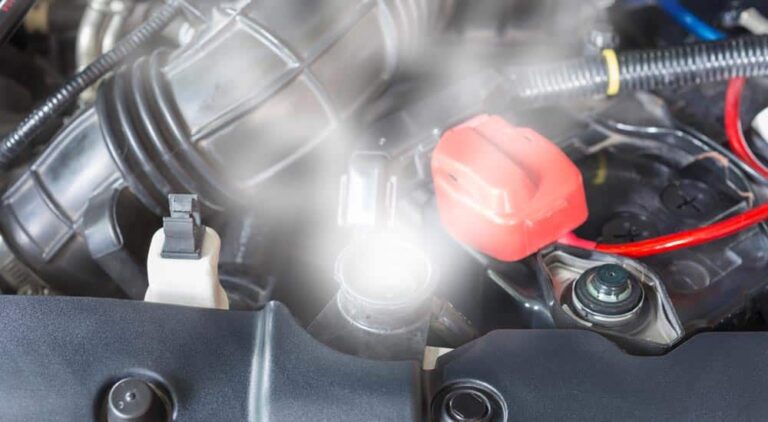
You are sitting in traffic on a hot summer afternoon, and suddenly you notice steam rising from under the hood. The temperature gauge is climbing into the red zone. Or maybe you catch it earlier, a faint sweet smell in the cabin, a bubbling sound you have never heard before, or a puddle of liquid under the car where there should not be one.
Boiling coolant is one of those problems that sends a lot of drivers into a panic. And understandably so, because if you handle it wrong, you can turn a fixable cooling system issue into a catastrophically expensive engine rebuild. But if you handle it right, you may walk away with nothing more than a repair bill and a lesson learned.
This guide covers everything you need to know: what causes coolant to boil, what to do when it happens, what not to do, and what the real consequences look like if you ignore it. Read all of it before you need it, because when the steam is already coming out from under your hood is not the best time to be reading an article.
Stop the Car Immediately: The Most Important Thing You Can Do
Before getting into causes and explanations, one point needs to be made clearly right at the start. If you see steam from the hood, smell something sweet and chemical, or your temperature gauge is climbing into the danger zone, you need to act on it immediately. Continuing to drive with boiling coolant can turn a $200 thermostat replacement into a $5,000 engine rebuild or worse. The engine damage that results from sustained overheating is not always repairable at any price.
That said, “stop immediately” does not always mean slam on the brakes and cut the engine right where you are. There is actually a right way and a wrong way to respond, and the wrong way can make things significantly worse. We will cover the correct response in detail later in this article.
What Causes Coolant to Boil? The 10 Most Common Reasons
Coolant does not just randomly start boiling. Something in the cooling system has failed or is failing, and that failure is preventing the system from doing its job of keeping engine temperature within a safe operating range. Here are the ten most common culprits, starting with the ones you should check first.
1. A Clogged or Damaged Radiator
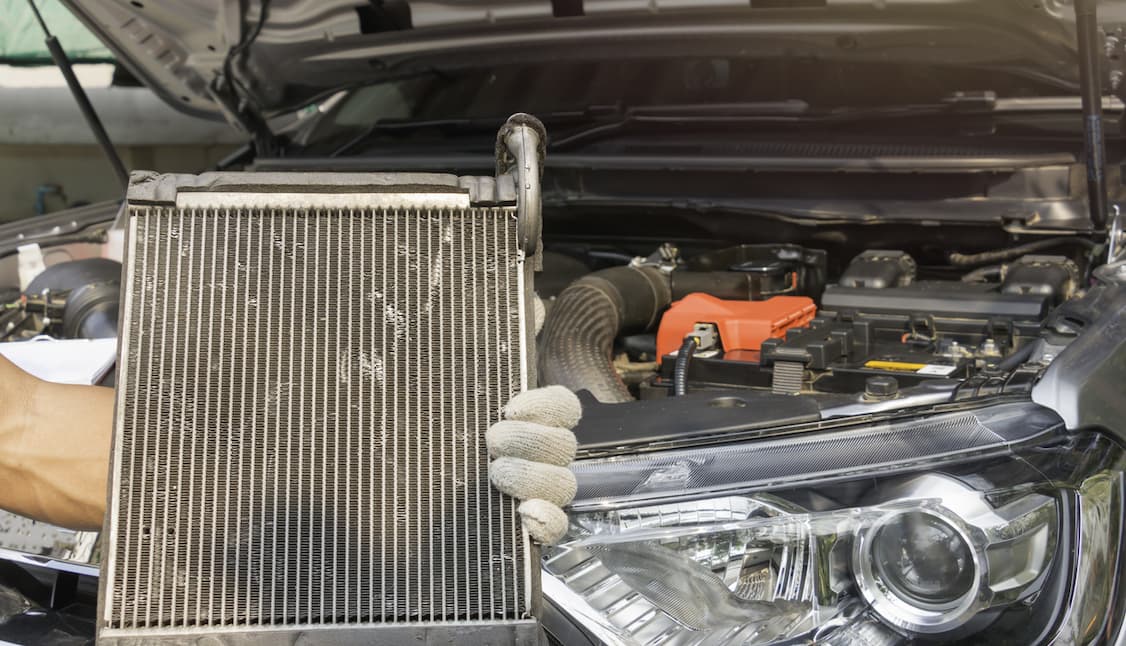
The radiator is the heart of your cooling system. Its entire job is to take hot coolant coming from the engine and release that heat into the air passing through it before sending the cooled fluid back around the loop. When a radiator gets clogged internally with scale, rust, or debris, or when it sustains physical damage from road debris or a minor collision, it cannot transfer heat effectively.
A partially blocked radiator does not always cause problems at highway speeds where plenty of airflow helps compensate. But put that car in slow city traffic in summer heat, and suddenly the degraded cooling capacity is no longer enough. The coolant temperature climbs, and eventually it boils. This is one of the most common causes, which is exactly why checking the radiator is always the right starting point when diagnosing a boiling coolant problem.
2. A Stuck or Failing Thermostat
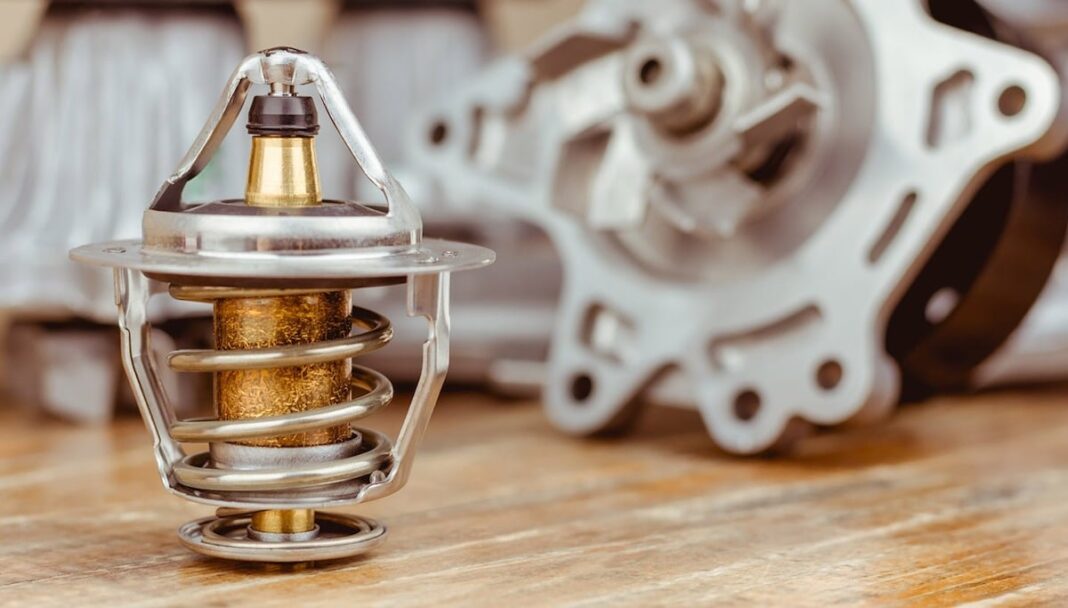
The thermostat is a small, inexpensive valve that controls when coolant starts flowing through the radiator. When the engine is cold, the thermostat stays closed, keeping coolant circulating only within the engine to help it reach operating temperature faster. Once the engine reaches approximately 85 degrees Celsius (185 degrees Fahrenheit), the thermostat opens and allows coolant to flow through the radiator to be cooled.
If the thermostat sticks in the closed position, coolant never reaches the radiator. It just keeps circulating through a hot engine with no way to cool down. The temperature builds rapidly, and the coolant boils. Here is a useful diagnostic clue: if the radiator feels cold when the engine is clearly hot, or if the coolant boils shortly after being replaced, a stuck thermostat is the most likely cause. Touch the upper radiator hose after the engine has been running for several minutes. If the radiator is cold and the hose going into it is hot, the thermostat is almost certainly stuck closed.
3. A Failed Water Pump
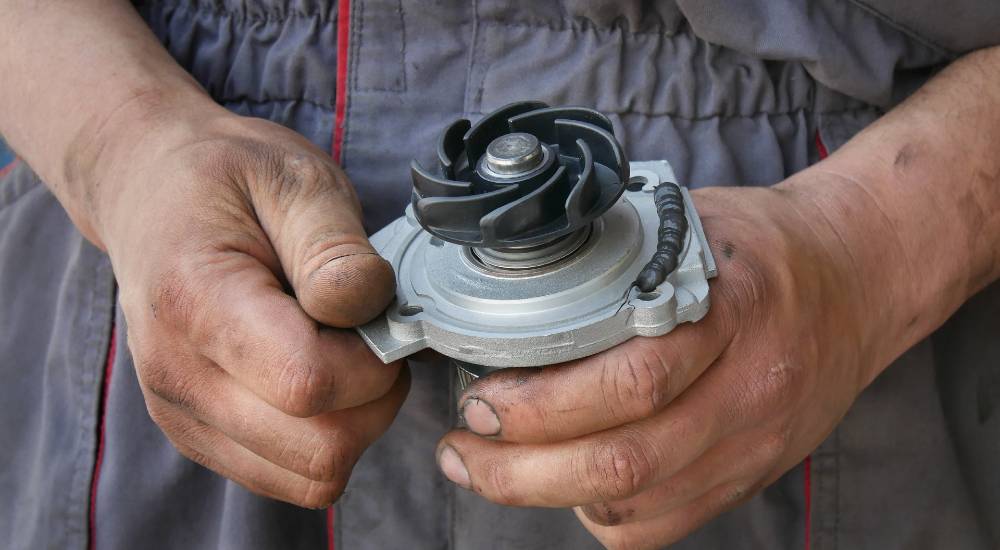
The water pump is what keeps coolant moving through the entire system. It does not cool anything by itself, but without it, there is no circulation. Coolant sitting stationary next to a hot engine will boil very quickly because there is no movement to carry heat away to the radiator.
Water pump failure is often accompanied by other symptoms: a grinding or whining noise from the front of the engine, coolant leaking from the pump weep hole, or coolant temperature rising even though the thermostat opens correctly. If the pump impeller has corroded or broken internally, you might have a pump that appears to be turning but is not actually moving coolant. That is a more difficult diagnosis that typically requires a pressure test.
4. A Non-Functioning Cooling Fan
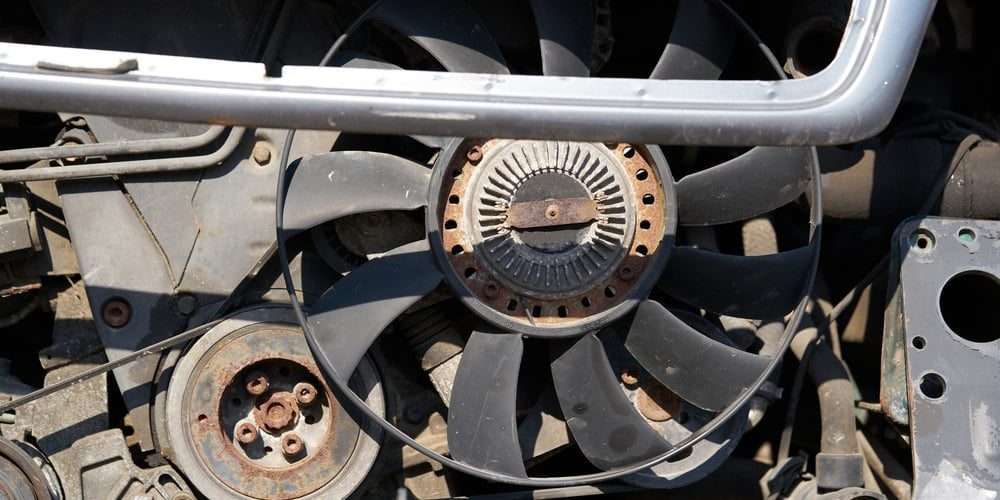
At highway speeds, the movement of the car pushes enough air through the radiator to cool it effectively even without the fan running. But in slow traffic or when the car is idling, that forward motion airflow disappears. That is when the cooling fan has to do the work, pulling air through the radiator to compensate.
If the fan has failed, that compensation never happens. The coolant temperature climbs steadily during traffic stops and slow driving, eventually reaching boiling point. Electric cooling fan failures often come down to a bad relay, a failed fan motor, corroded connectors, or a broken wire. The fan may work perfectly at some times and fail intermittently, which makes diagnosis more frustrating. This problem is especially obvious if your car overheats in traffic but runs fine on the highway, because that pattern points directly to inadequate low-speed cooling.
5. Air in the Cooling System
Air pockets in the cooling system are more harmful than most drivers realize. The cooling system is designed to work under pressure, and that pressure is what raises the boiling point of the coolant significantly above its atmospheric boiling temperature. When there is air trapped in the system, several problems happen simultaneously.
First, the system pressure drops because air compresses and does not maintain pressure the same way liquid does. Lower pressure means a lower boiling point. Second, air pockets create hot spots in the engine where coolant cannot reach, causing localized overheating. Third, the anti-corrosion inhibitors in the coolant deteriorate faster when exposed to oxygen, which reduces the coolant’s protective properties over time.
Air gets into the cooling system most commonly through a faulty radiator cap, a leaking hose, a damaged head gasket, or improper coolant refilling procedures. Any time coolant is drained and replaced, the system needs to be properly bled to remove all trapped air before driving.
6. Low Coolant Level
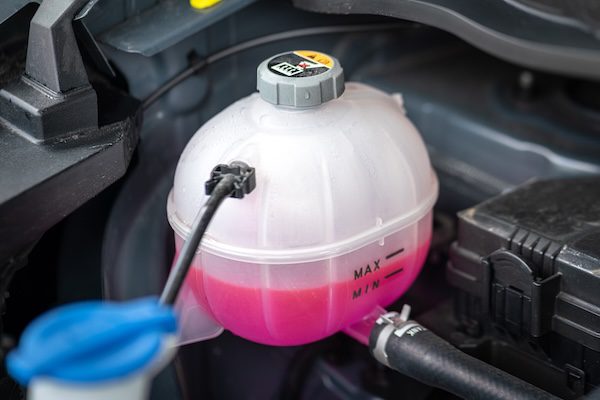
This one sounds obvious, but low coolant level is still one of the most common causes of overheating. If there simply is not enough coolant in the system, the reduced volume cannot absorb and transfer heat effectively. The less coolant there is, the faster it heats up, and eventually it reaches its boiling point.
Coolant level drops for two reasons: either the system has a leak somewhere and coolant is escaping, or the coolant is being burned internally through a damaged head gasket. External leaks leave puddles under the car, usually sweet-smelling and often a greenish or orange color. Internal leaks are sneakier: the coolant disappears without any visible puddle, but you might see white smoke from the exhaust or notice a mayonnaise-like sludge on the oil cap, which is coolant mixing with oil.
7. A Bad Coolant Temperature Sensor
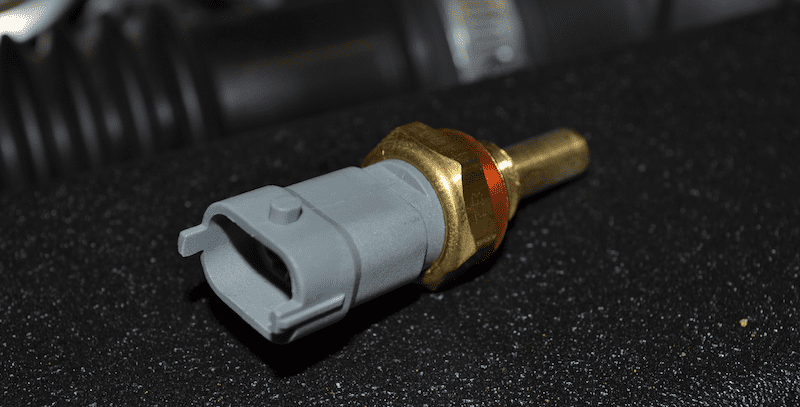
The coolant temperature sensor monitors engine coolant temperature and sends that information to the engine control unit, which in turn controls the cooling fan and other cooling-related functions. If this sensor fails or sends incorrect readings, the fan may not activate when it should, or the thermostat response may be delayed.
A bad temperature sensor can also give you a false reading on the dashboard, meaning your temperature gauge might read normal even while the engine is dangerously hot. Conversely, a faulty sensor might trigger an overheating warning when the engine temperature is actually fine. Either scenario creates problems. The sensor is generally inexpensive to replace, but diagnosing whether the sensor or the actual cooling system is the issue requires a proper scan tool and some systematic testing.
8. Poor Quality or Wrong Type of Coolant
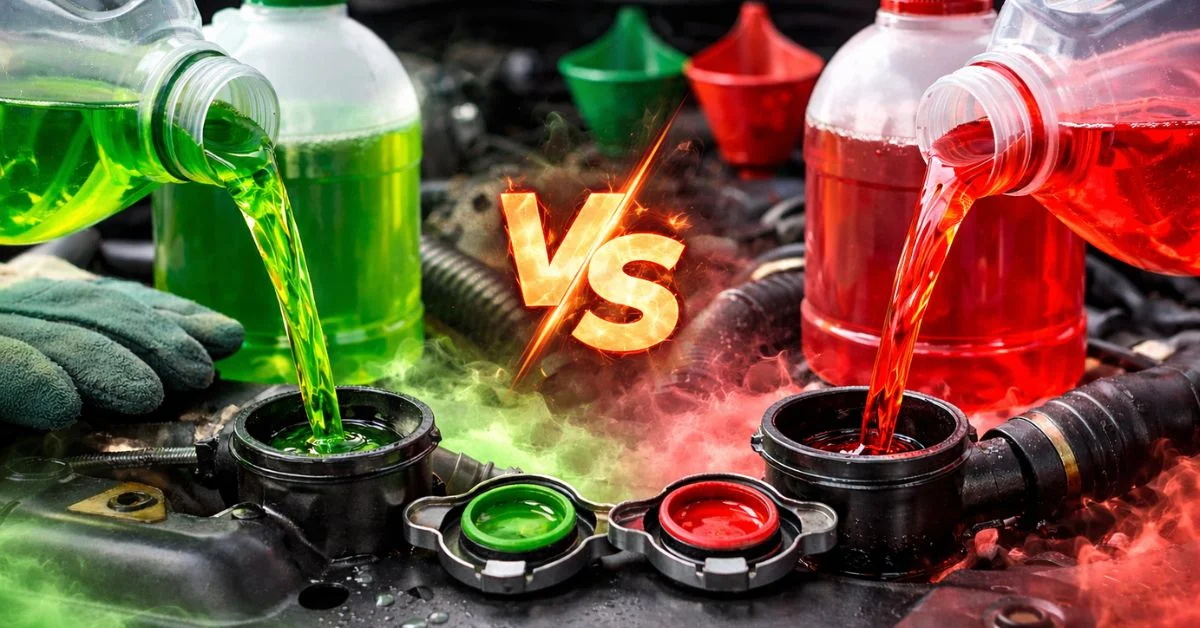
Not all coolants are equal, and using the wrong one can cause serious problems. Counterfeit or substandard coolants sometimes begin boiling at temperatures below 100 degrees Celsius (212 degrees Fahrenheit), which is well below the temperatures a healthy engine runs at. Those products are a false economy. You pay less upfront and potentially far more later.
Using a coolant that is not compatible with your specific engine is another problem. Modern engines often require specific coolant formulations to protect their aluminum components. Using an older silicate-based coolant in an engine that requires an OAT or HOAT formulation can cause accelerated corrosion and deposits that damage the cooling system over time. Always check your owner’s manual for the correct coolant specification and stick to it.
One practical note worth keeping in mind: antifreeze should not be used undiluted. The correct mixture is typically no more than 60 percent coolant concentrate to 40 percent water by volume. Counterintuitively, pure antifreeze concentrate actually has a lower boiling point and worse heat transfer properties than the properly mixed solution. Always dilute correctly.
9. Foaming Coolant
Coolant foam is a particularly destructive form of cooling system failure. When coolant foams, it can no longer transfer heat effectively because foam is largely air, and air is a terrible heat conductor. The result is rapid overheating even if the coolant level appears adequate.
Foaming happens for several reasons: mixing incompatible coolant types is one of the most common causes. Some coolants are not compatible with each other, and mixing them causes chemical reactions that produce foam. Using the wrong coolant type for your vehicle’s engine can also cause foaming. The most serious cause of foaming is a blown head gasket, which allows combustion gases to enter the cooling system. Those gases react with the coolant and create foam. If you see foamy or frothy fluid in your overflow tank, have a mechanic check for a head gasket issue immediately.
10. A Failed Radiator Cap or Expansion Tank Cap
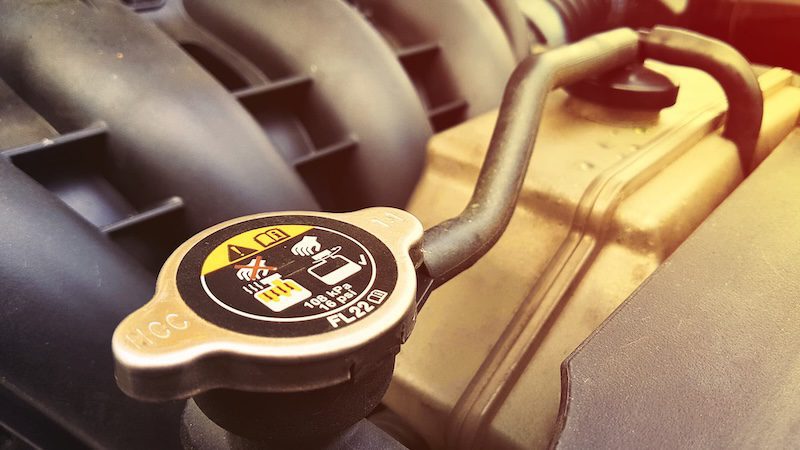
The radiator cap is a component most people never think about, but it performs a critical function. It maintains the system pressure, and that pressure is what raises the boiling point of the coolant. A typical cooling system operates at around 15 to 16 PSI above atmospheric pressure. That pressure raises the coolant’s boiling point from 100 degrees Celsius to approximately 120 degrees Celsius or higher, creating a much larger safety margin above normal operating temperature.
When the radiator cap fails, the system loses its ability to maintain pressure. The pressure equalizes with atmospheric pressure, and the boiling point drops back down. Suddenly the coolant is boiling at temperatures the engine regularly reaches. A failing cap gasket or a faulty pressure relief valve inside the cap can both cause this problem. A pressure-tested cap can be replaced for just a few dollars, making this one of the cheapest potential causes on this entire list to fix.
When Is Coolant Most Likely to Boil?
Boiling coolant does not happen randomly. Certain conditions put the cooling system under maximum stress, and those are the scenarios where an already weakened system will reach its failure point.
- Slow city traffic in summer heat: This is the single most common scenario. The engine is working, the ambient temperature is high, and there is almost no airflow through the radiator from forward motion. The cooling fan has to carry the entire load, and if anything in the system is slightly underperforming, it shows up here first.
- Long highway drives at sustained high speed: Sustained high RPM generates more heat than the engine produces in urban driving. A cooling system that handles moderate stress adequately may struggle when heat generation is constant and high for hours at a time.
- Driving with air conditioning in hot weather: The A/C condenser sits in front of the radiator and adds heat to the air before it reaches the radiator. This reduces the radiator’s cooling efficiency. On a hot day with a marginally performing cooling system, running the air conditioning can be the tipping point that pushes coolant to its limit.
- Towing or hauling heavy loads: Additional load means the engine works harder, generating more heat. Towing in hot weather on a vehicle with a cooling system that is anything less than fully healthy is asking for trouble.
What Actually Happens to Your Engine When Coolant Boils?
The consequences of boiling coolant are directly related to how long the engine runs while overheating. There is a meaningful difference between catching it quickly and ignoring it completely.
Mild Overheating: Less Than 10 Minutes
If you catch the problem quickly, within roughly 10 minutes of the coolant boiling, the damage may be minimal. Some slight dimensional changes in engine pistons are possible, but in most cases if the engine had no pre-existing issues, fixing the root cause of the overheating and topping up the coolant may be all that is required. This is the best-case scenario and the one where fast action genuinely makes a difference.
Moderate Overheating: Around 20 Minutes
This is where the repair bills start climbing significantly. At sustained high temperatures, typically when the engine reaches above 120 degrees Celsius (248 degrees Fahrenheit), the following types of damage become likely:
- Warping of the cylinder head, which is expensive to machine flat and sometimes requires full replacement
- Cracks in the cylinder head, ranging from hairline fractures to visible breaks that make the head unrepairable
- Head gasket failure, allowing coolant and oil to mix or combustion gases to enter the cooling system
- Destruction of the inter-ring partitions on engine pistons, which requires engine disassembly to repair
- Oil seal failure, which allows oil to either leak externally or contaminate the coolant
Any one of these outcomes represents a repair that can range from several hundred to several thousand dollars. A warped head combined with a blown gasket on a modern engine can easily exceed $2,000 to $3,000 in labor and parts costs alone.
Severe Overheating: Continued Driving Past the Warning Signs
If a driver ignores all the warning signs and continues driving, the destruction of the engine becomes progressive and typically sequential:
- The pistons begin to melt and deform under the extreme heat
- Molten piston material contacts the cylinder walls, creating friction that impedes piston movement and accelerates destruction
- The engine either stalls as the pistons seize, or continues running long enough for the oil to reach critical temperature and lose all lubricating properties
- With no lubrication, every moving metal surface in the engine is essentially running against bare metal
- Small components melt and bond to the crankshaft, making rotation increasingly difficult
- Valve seats and other components begin to fail
- The crankshaft, under extreme stress, can break or bend
- A broken crankshaft can penetrate the cylinder block wall, which represents a total engine failure that is typically not economically repairable
At this point, you are looking at a complete engine replacement. Depending on the vehicle, that can mean anywhere from $4,000 to $10,000 or more in parts and labor. For many older vehicles, the repair cost exceeds the value of the car entirely.
What to Do When Your Coolant Is Boiling: Step by Step
The most important thing before anything else: do not panic. A clear head in this situation genuinely makes the difference between a manageable repair and total engine destruction. Follow these steps in order.
- Shift to neutral and reduce engine load. Take the car out of gear or put it in neutral and let the engine drop to idle speed. Reducing RPM reduces heat generation immediately. Do not turn the engine off yet.
- Keep moving if at all possible. While this seems counterintuitive, movement pushes more air through the radiator than sitting still does. Keep rolling at low speed rather than stopping abruptly in the middle of the road.
- Turn the heater on full blast, maximum temperature, maximum fan speed. Do this immediately and regardless of the outside temperature. The heater core acts as a second radiator, drawing heat out of the coolant and blowing it into the cabin. Yes, you will be uncomfortable. Do it anyway. This single step can meaningfully slow the temperature rise.
- Find a safe place to stop, ideally in shade. If you are in summer weather, parking in direct sunlight adds additional radiant heat to an already overheating engine. A shaded spot gives the engine the best conditions to cool down naturally.
- Leave the ignition on for 5 to 10 minutes after stopping. This allows the heater to keep pulling heat from the coolant even with the engine off. Then turn the ignition off completely.
- Open the hood. This allows the engine compartment to ventilate naturally. Do not touch any engine components with your bare hands at this point. Everything near the engine is extremely hot and will cause serious burns.
- Wait. In summer conditions, wait approximately 40 to 50 minutes before attempting anything further. In winter, the engine will cool faster, roughly 20 minutes. Do not rush this step.
- Call for a tow truck if possible. This is genuinely the best option. Having the car transported to a shop without driving it further protects the engine from additional damage and gives a mechanic a chance to properly diagnose what caused the overheating in the first place.
- If you must add coolant, wait until the engine is completely cool before removing the radiator cap or expansion tank cap. Never open a hot pressurized cap. When you are sure it has cooled, use a cloth to slowly turn the cap, releasing pressure gradually before fully removing it. Add clean water or appropriate coolant slowly to bring the level up to the indicated mark.
- If driving to a shop is the only option, go slowly, watch the temperature gauge continuously, and stop immediately if the temperature climbs above 90 degrees Celsius (194 degrees Fahrenheit). Wait again for the temperature to drop before continuing. The shop needs to flush and replace the coolant regardless, because coolant that has been through a boiling event has lost its protective properties and should not remain in the system.
What Not to Do When Coolant Is Boiling: Avoid These Mistakes
Some instinctive responses to a boiling coolant situation actually make things significantly worse. Avoid these mistakes specifically.
- Do not rev the engine or add load. Higher RPM generates more heat at the exact moment you need to reduce heat generation. Keep the engine at idle speed.
- Do not immediately stop and switch off the engine. This seems like the obvious response, but cutting the engine abruptly stops all coolant circulation and allows heat to build up in a stationary pool around the hottest parts of the engine. Keep it running at idle while you manage the situation as described above.
- Do not open the radiator cap or coolant tank cap while the engine is hot. The system is under pressure. Opening the cap releases that pressure instantly, turning the coolant into steam explosively. The resulting spray of boiling liquid will cause severe burns. Wait until the engine has cooled completely before opening any part of the pressurized cooling system.
- Do not pour cold water directly onto the engine block or radiator. The sudden temperature difference between a red-hot engine and cold water can crack the engine block, cylinder head, or both. Let the engine cool naturally with the hood open.
- Do not continue driving once the temperature gauge is in the red. The temptation to push on and get somewhere before dealing with the problem is understandable but potentially catastrophic. Every minute of continued operation at excessive temperature multiplies the potential damage.
- Do not ignore a temporary fix. If you add water and drive the car to a shop, that is not the end of the story. Find out what caused the overheating. Topping up the coolant and hoping for the best is not a solution. The root cause needs to be identified and corrected.
How to Check Your Cooling System Before Problems Develop
The best approach to boiling coolant is to catch potential problems before they become emergencies. These checks take only a few minutes and should be part of your routine vehicle maintenance.
- Check the coolant level monthly. With the engine cold, look at the expansion tank. The coolant should sit between the minimum and maximum marks. If it is consistently dropping, there is a leak somewhere that needs to be found and fixed.
- Inspect the coolant condition annually. Fresh coolant is typically green, orange, pink, or blue depending on the type. Old, degraded coolant becomes brown or rusty and loses its protective properties. Most manufacturers recommend changing coolant every two to five years or every 30,000 to 50,000 miles. Check your owner’s manual for the specific interval for your vehicle.
- Check all coolant hoses for signs of wear. Look for cracks, soft spots, hardening, swelling, or any signs of leakage at the connections. Hoses degrade over time and should be inspected at every service interval.
- Inspect the radiator cap condition. A cap that has a cracked or deformed gasket is not sealing properly and is not maintaining system pressure. This is a cheap part to replace and worth checking periodically.
- Watch the temperature gauge during normal driving. Know what normal looks like for your vehicle. If the gauge consistently runs higher than usual or occasionally spikes before settling back down, that is an early warning sign of a developing cooling system problem.
- Keep a small bottle of compatible coolant in the trunk. It takes up almost no space and can genuinely be useful if a minor issue develops away from home. Make sure it is the correct specification for your vehicle, not just whatever was on sale.
Diagnosing the Root Cause: A Systematic Approach
When you get to a shop after a boiling coolant incident, a good mechanic will work through the potential causes systematically. Here is roughly the sequence they should follow, from the simplest and most likely to the more complex:
| Component to Check | What to Look For | Replacement Cost Estimate |
|---|---|---|
| Radiator cap and expansion tank cap | Cracked gasket, failed pressure relief valve | $10 to $30 |
| Coolant level and condition | Low level, contamination, wrong type, poor quality | $20 to $50 for coolant flush and refill |
| Thermostat | Stuck closed, radiator cold when engine is hot | $50 to $200 including labor |
| Cooling fan operation | Fan not activating in slow traffic, bad relay or motor | $100 to $400 depending on type |
| Temperature sensor | Incorrect readings, fan not engaging appropriately | $50 to $150 |
| Water pump | Noise, leakage, lack of circulation | $200 to $500 including labor |
| Radiator condition | External damage, internal clogging, leaks | $300 to $900 for replacement |
| Head gasket integrity | White exhaust smoke, oil contamination, coolant loss without leaks | $1,500 to $3,000 or more |
A cooling system problem that is caught early and handled correctly is genuinely manageable. The same problem ignored until steam is pouring from the hood and the temperature gauge has been in the red for twenty minutes is a completely different financial situation. Know the warning signs, act quickly when they appear, and do not let a minor repair become a major one by hoping the problem will somehow resolve itself. It will not. Cooling systems do not heal on their own.