
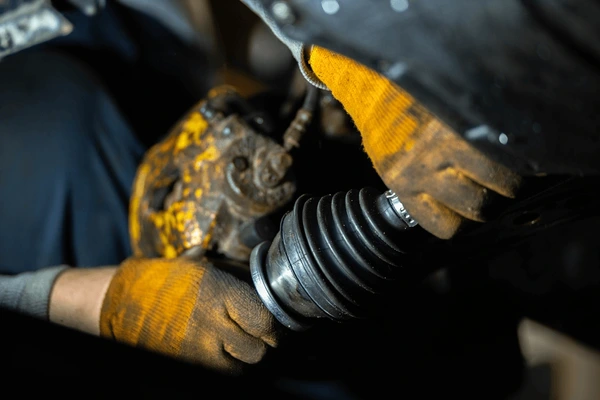
If you drive a front-wheel drive or all-wheel drive vehicle, there is a component under your car that you probably never think about until it fails. It is called the CV boot, and while it may seem like a minor part, its failure can lead to expensive repairs if you ignore the warning signs.
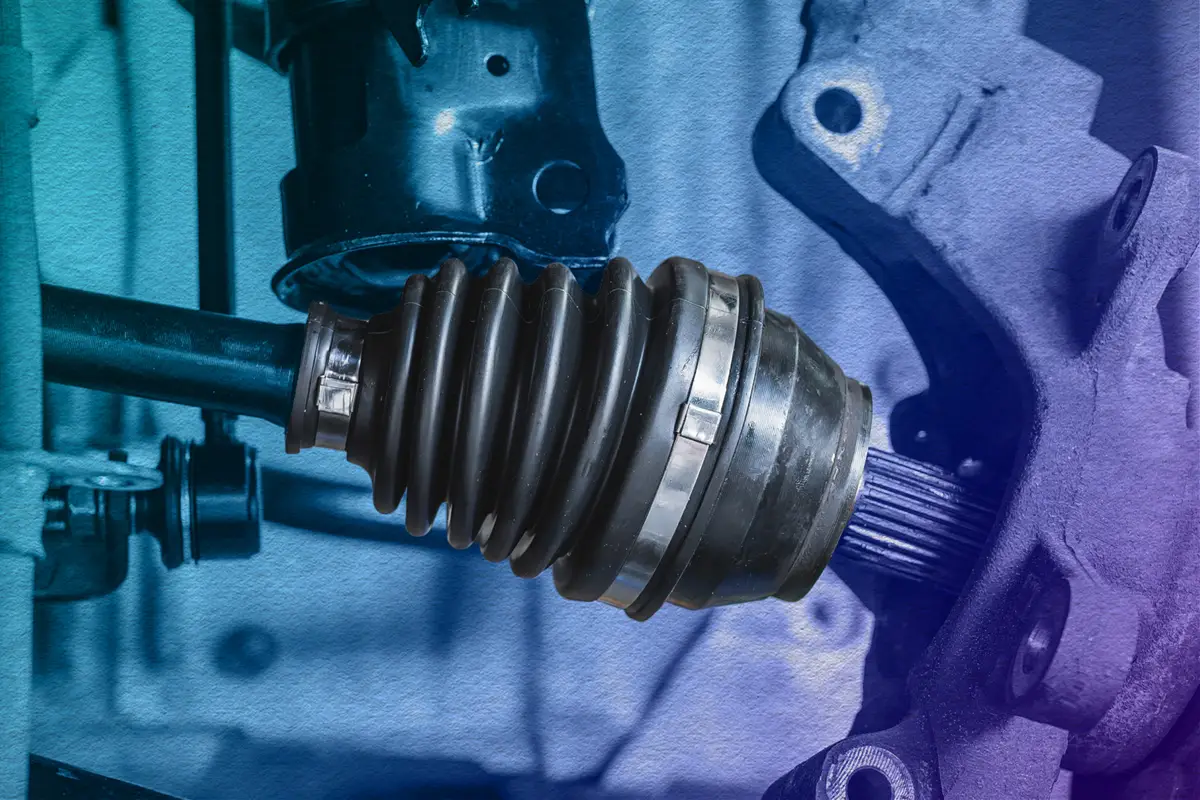
CV boots are rubber or synthetic covers that protect the constant velocity joints on your drive axles. These joints allow your wheels to receive power from the engine while moving up and down with the suspension and turning left and right with the steering. The boots keep grease inside the joint and keep dirt, water, and debris out. When a CV boot cracks or tears, the joint loses its protection and begins to deteriorate rapidly.
One common question that comes up when a CV boot fails is whether a split CV boot is a good temporary or permanent solution. Split CV boots are designed to be installed without removing the axle, which makes them faster and cheaper to install. But do they actually work, and how long can you expect them to last?
Let’s go through everything you need to know about CV boots, why they fail, what split boots are, and whether they are worth using.
What CV Boots Do and Why They Matter
To understand why CV boots are important, you first need to understand what CV joints do. Constant velocity joints are the flexible couplings on either end of your drive axles. They allow the axle to bend and flex while still transferring power from the transmission to the wheels.
There are two CV joints on each axle: an inner joint near the transmission and an outer joint near the wheel. The outer joint has to accommodate more movement because it has to handle both suspension travel and steering angle. The inner joint mainly deals with suspension movement and minor length changes in the axle as the suspension compresses and extends.
Inside each CV joint are ball bearings, cages, and precisely machined metal surfaces that allow smooth rotation at varying angles. These components are packed with a special high-temperature grease that lubricates the moving parts and prevents metal-on-metal contact. The CV boot is a rubber or thermoplastic cover that seals the joint, keeps the grease in, and keeps contaminants out.
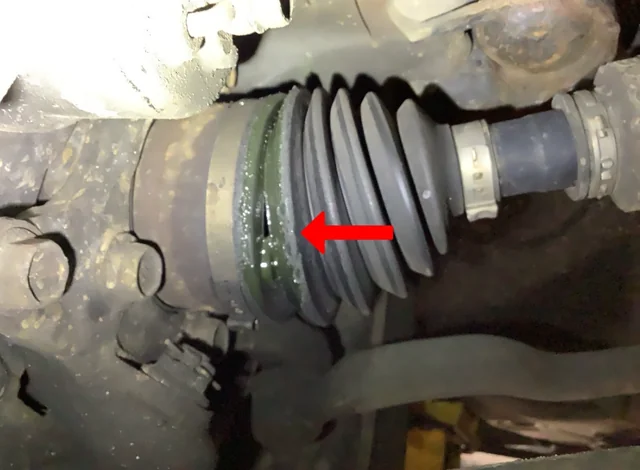
When the boot is intact, the CV joint can last the entire life of the vehicle. But when the boot cracks or tears, the grease starts to leak out and contaminants like dirt, water, and road salt get in. Once that happens, the joint wears out quickly, and you will start hearing clicking, popping, or clunking noises, especially when turning.
What Is a Split CV Boot?
A traditional CV boot is a one-piece molded rubber or thermoplastic cover that is installed over the CV joint during axle assembly. To replace a damaged boot with a traditional boot, you have to remove the axle from the vehicle, disassemble the joint, slide the new boot on, repack the joint with grease, reassemble everything, and reinstall the axle. It is a time-consuming process that requires special tools and mechanical knowledge.
A split CV boot, on the other hand, is designed to be installed without removing the axle. It is a two-piece boot that wraps around the CV joint and is secured with clamps, adhesive, or screws along a seam. The idea is that you can replace a torn boot quickly and inexpensively without the labor-intensive process of removing and disassembling the axle.
Split boots are marketed as a convenient, budget-friendly solution for drivers who want to avoid the cost of a full CV axle replacement or a traditional boot replacement. But convenience comes with trade-offs.
How Long Do Split CV Boots Last?
The honest answer is that split CV boots do not last as long as original equipment boots. In ideal conditions, a split boot might last anywhere from 30,000 to 50,000 miles, though some fail much sooner. Original CV boots, by comparison, can last 100,000 miles or more if the vehicle is well-maintained and driven under normal conditions.
The reason split boots have a shorter lifespan comes down to their design. The seam where the two halves of the boot join is a weak point. No matter how well the seam is sealed with adhesive or clamped together, it is never as strong or flexible as a one-piece molded boot. Over time, the constant flexing of the joint, exposure to heat, road chemicals, and vibration can cause the seam to separate or crack.
Once the seam fails, the boot is no longer protecting the joint, and the same problems that led to the original boot failure start all over again. Grease leaks out, contaminants get in, and the CV joint begins to wear.
That said, if you catch a torn CV boot early and install a split boot as a temporary fix, it can buy you some time. But it is not a permanent solution, and you should not expect it to last as long as a proper boot replacement.
Why Do CV Boots Keep Splitting or Cracking?
CV boots are made from rubber or thermoplastic, and like any rubber component on a car, they are subject to wear and degradation over time. Here are the most common reasons CV boots crack or tear:
Heat and Age
CV boots sit close to the engine, exhaust system, and brakes, all of which generate significant heat. Over time, repeated heat cycles cause the rubber to dry out, lose its flexibility, and become brittle. Once the rubber is brittle, it cracks easily, especially where it flexes the most.
Road Chemicals and Salt
In areas where road salt is used in the winter, CV boots are constantly exposed to corrosive chemicals. Salt accelerates rubber degradation and can cause boots to crack prematurely. Oil, grease, and other road contaminants also break down rubber over time.
Physical Damage
Rocks, debris, or road hazards can physically tear a CV boot. A single sharp impact can puncture the boot and expose the joint to the elements. This is especially common on the outer CV joint, which is closer to the wheel and more exposed to road debris.
Excessive Flexing
The outer CV joint has to accommodate a wide range of motion, especially during hard turns. Over time, the constant flexing can cause the boot to develop stress cracks, particularly at the folds or ridges in the rubber.
Poor Quality Boots
Not all replacement CV boots are created equal. Cheap aftermarket boots may use lower-quality materials that do not hold up as well as OEM boots. If you are replacing a boot, it is worth spending a bit more for a reputable brand.
How to Prevent CV Boots From Cracking
While CV boots will eventually wear out, there are steps you can take to extend their lifespan:
- Inspect them regularly. During routine maintenance like oil changes or tire rotations, have your mechanic check the condition of your CV boots. Catching a small crack before it becomes a tear can save you from a much more expensive CV joint replacement.
- Keep the undercarriage clean. If you live in an area with road salt, wash the underside of your car periodically during the winter to remove salt and chemical buildup.
- Avoid deep water and mud. Driving through deep puddles or mud can force water and debris into small cracks in the boot and accelerate deterioration.
- Replace boots at the first sign of damage. If you notice a small tear or crack, replace the boot immediately. Waiting will only allow the CV joint to become contaminated, which turns a simple boot replacement into a full axle replacement.
How Often Should CV Boots Be Replaced?
There is no set mileage interval for replacing CV boots because their lifespan depends on driving conditions, climate, and the quality of the boot. In general, you should inspect CV boots every 25,000 to 40,000 miles and replace them as soon as you notice any cracks, tears, or grease leaking from the joint.
If you drive in harsh conditions, such as areas with heavy road salt, extreme heat, or rough terrain, you may need to replace CV boots more frequently. If you catch a damaged boot early, a simple boot replacement can prevent the need for a much more expensive CV axle replacement down the road.
Signs That Your CV Boot Has Failed
Here are the most common signs that a CV boot has torn and the joint is beginning to fail:
- Grease on the inside of the wheel or around the CV joint: If you see thick, dark grease splattered on the wheel or suspension components, the boot has torn and grease is being thrown out as the axle rotates.
- Clicking or popping noise when turning: A rhythmic clicking sound that speeds up as you turn is a classic sign of a worn outer CV joint.
- Vibration during acceleration: A damaged inner CV joint can cause a vibration or shudder when you accelerate, especially at highway speeds.
- Clunking when shifting or changing speed: A failing inner CV joint can produce a clunking sound when you shift from drive to reverse or when you accelerate and decelerate.
If you notice any of these symptoms, have the CV joints and boots inspected immediately. Continuing to drive on a failing CV joint can cause it to break completely, which can leave you stranded and may cause additional damage to the transmission or wheel hub.
Should You Use a Split CV Boot or Replace the Whole Axle?
If you catch a torn CV boot early, before the joint has been contaminated, a split boot can be a reasonable temporary fix. It is quick, inexpensive, and can protect the joint long enough for you to save up for a proper repair. But if the CV joint has already been exposed to dirt and water, or if the joint is making noise, a split boot is not going to solve the problem. At that point, the joint is already damaged and will continue to deteriorate even with a new boot.
In most cases, the best long-term solution is to replace the entire CV axle assembly. Modern replacement axles are affordable and come with new CV joints and boots already installed. The labor to replace an axle is comparable to the labor required to properly replace a CV boot, so the overall cost difference is often minimal.
Replacing the whole axle gives you a fresh start with new joints, new boots, and a warranty. It is a more reliable solution than trying to patch a damaged boot and hoping the joint holds up.
The Bottom Line on Split CV Boots
Split CV boots can work as a short-term fix if the boot is caught early and the CV joint is still in good condition. But they are not a permanent solution, and they will not last as long as a traditional one-piece boot or a new CV axle. If you are trying to save money in the short term, a split boot might buy you some time. But if you want a reliable, long-lasting repair, replacing the CV axle is the smarter choice.
Do not ignore a torn CV boot. The longer you wait, the more damage occurs to the joint, and what starts as a simple boot replacement can quickly turn into a full axle replacement or worse. Inspect your CV boots regularly, replace them at the first sign of damage, and you will avoid the headache and expense of a failed CV joint.