
V8 engines have a reputation that goes beyond just performance numbers. There is a certain mystique around them, a combination of raw power, mechanical complexity, and that unmistakable rumble that enthusiasts can recognize from blocks away. But despite their popularity and the passion they inspire, a lot of drivers do not actually understand how they work under the hood.
One of the most common questions that comes up when people start learning about V8 engines is this: how many crankshafts does a V8 have? It is a fair question, especially when you consider that a V8 has eight cylinders, eight pistons, and a whole lot of moving parts. Does each bank of cylinders get its own crankshaft? Do high-performance V8s use multiple crankshafts for balance or power?
The short answer is simple, but the full explanation gets into some fascinating engineering details that help explain why V8 engines sound and perform the way they do.
How Many Crankshafts Does a V8 Engine Have?
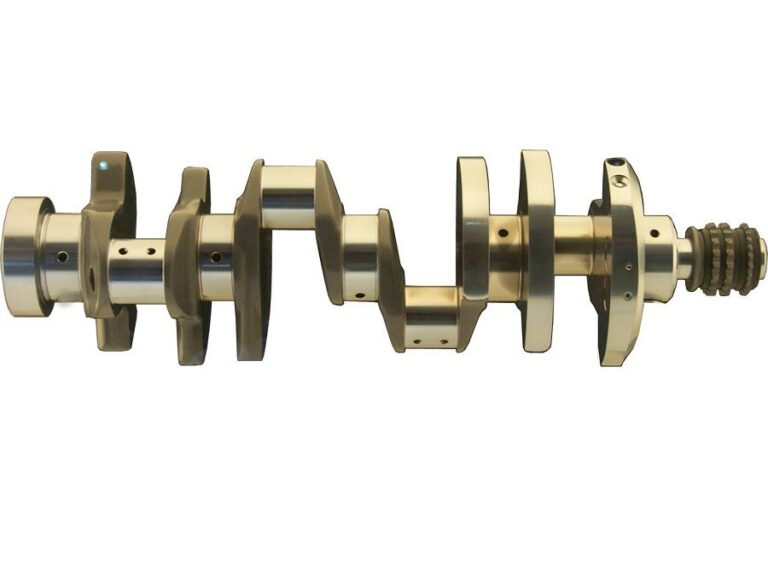
A V8 engine has one crankshaft. This is true for the vast majority of V8 engines, from the small-block Chevy in a 1970s muscle car to the high-revving V8 in a modern Ferrari. Regardless of the number of cylinders, pistons, or camshafts, there is only one crankshaft doing the work of converting the up-and-down motion of the pistons into the rotating motion that turns the wheels.
The reason comes down to function and design. The crankshaft is the central component that all the pistons connect to. Each piston is linked to the crankshaft via a connecting rod, and as the pistons move up and down inside the cylinders, they push and pull on the crankshaft, causing it to rotate. That rotational energy is what ultimately drives the transmission and the wheels.
Adding a second crankshaft would not only be unnecessary, it would create massive engineering challenges. You would need to synchronize two separate rotating assemblies, find space for both in an already crowded engine block, and figure out how to transfer power from two crankshafts to a single transmission. It is mechanically complex, expensive, and offers no real benefit over a single, well-designed crankshaft.
So while a V8 has two banks of cylinders, two cylinder heads, and often multiple camshafts, it still has just one crankshaft running down the center of the engine block.
Why One Crankshaft Is All You Need
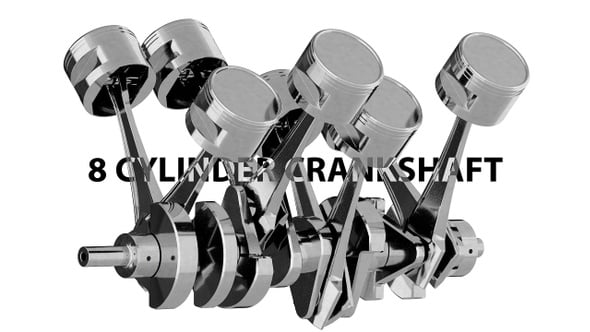
The crankshaft serves one primary purpose: converting linear motion into rotational motion. Every piston in the engine is connected to this single crankshaft, and each piston fires in a specific sequence to keep the crankshaft spinning smoothly and continuously.
In a V8, the eight pistons are arranged in two banks of four cylinders each, set at an angle to each other, usually 90 degrees. This V-shaped configuration is where the engine gets its name. The pistons in both banks connect to the same crankshaft, which runs lengthwise through the center of the engine block.
Because all eight pistons are connected to one crankshaft, the firing order can be carefully orchestrated to balance the forces acting on the crankshaft and minimize vibration. Engineers design the crankshaft with strategically placed counterweights and precisely angled crankpins to ensure smooth, balanced rotation even at high RPM.
One crankshaft is not a limitation. It is an elegantly efficient solution that has been refined over more than a century of internal combustion engine development.
The Two Main Types of V8 Crankshafts
While nearly all V8 engines use a single crankshaft, not all crankshafts are designed the same way. There are two primary crankshaft designs used in V8 engines, and the choice between them has a huge impact on how the engine sounds, how it revs, and how it delivers power.
Cross-Plane Crankshaft
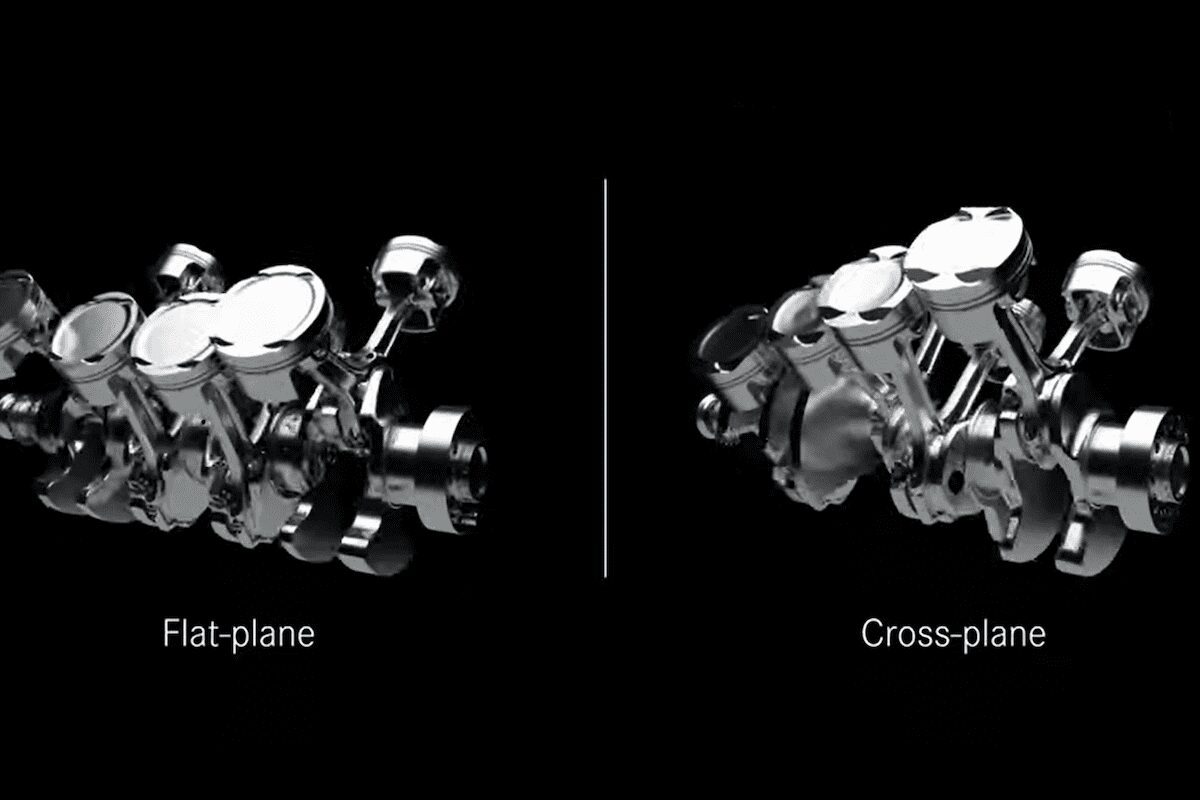
The cross-plane crankshaft is by far the most common design in V8 engines, especially in American muscle cars and trucks. It gets its name from the layout of the crankpins, which are arranged in two planes at 90-degree intervals. When you look at the crankshaft from the end, the four crankpins form a cross or plus sign.
This design results in a firing order where two consecutive exhaust pulses occur on the same bank of cylinders before switching to the other bank. That uneven firing pattern is what gives cross-plane V8s their distinctive rumbling exhaust note. It is the sound you associate with classic American muscle cars like the Chevrolet Camaro, Ford Mustang, or Dodge Challenger.
The cross-plane crankshaft is heavier than a flat-plane design because it requires larger counterweights to balance the uneven firing forces. But that extra mass also helps dampen vibrations, resulting in a smoother, more refined engine at lower RPMs. This makes cross-plane V8s well-suited for street use, towing, and applications where low-end torque and smoothness are priorities.
Examples of vehicles that use cross-plane V8s include:
- Chevrolet Corvette (LS and LT engines)
- Ford Mustang GT (Coyote engine)
- Dodge Charger and Challenger (Hemi engine)
- Ram 1500 pickup trucks
- Cadillac CTS-V
Cross-plane crankshafts dominate the American V8 market because they deliver the sound, feel, and torque characteristics that fit the muscle car and truck tradition.
Flat-Plane Crankshaft
The flat-plane crankshaft is less common but highly prized in high-performance and racing applications. In this design, the crankpins are arranged in a single plane, alternating up and down like the crankshaft of a four-cylinder engine. This results in a firing order that alternates between the two cylinder banks with every combustion event.
Because the firing is evenly distributed between banks, flat-plane V8s do not need the heavy counterweights required by cross-plane designs. This makes the crankshaft significantly lighter, which reduces rotational inertia and allows the engine to rev much faster. Flat-plane V8s are known for their screaming high-RPM performance and razor-sharp throttle response.
The trade-off is that flat-plane crankshafts produce more secondary vibrations, especially at lower RPMs. They also sound completely different from cross-plane V8s. Instead of the deep, burbling rumble, flat-plane V8s produce a high-pitched, almost shrieking exhaust note that sounds more like a superbike or a Formula 1 car than a traditional American V8.
Flat-plane V8s are most commonly found in European supercars and high-performance sports cars, where high-revving power and lightweight construction are prioritized over low-end torque and smoothness.
Examples of vehicles that use flat-plane V8s include:
- Ferrari 458 Italia
- Ferrari F430
- McLaren P1
- Porsche 918 Spyder
- Ford Mustang Shelby GT350 (a rare American example)
- Lotus Esprit V8
The Ford Mustang Shelby GT350 is particularly notable because it is one of the few American production cars ever to use a flat-plane crankshaft. Ford designed the Voodoo V8 specifically to deliver high-revving, track-focused performance, and the flat-plane crank was a key part of that formula.
Comparing Cross-Plane and Flat-Plane Crankshafts
Here is a side-by-side comparison to help clarify the differences:
| Feature | Cross-Plane Crankshaft | Flat-Plane Crankshaft |
|---|---|---|
| Weight | Heavier due to counterweights | Lighter, less rotational mass |
| Sound | Deep, rumbling exhaust note | High-pitched, screaming exhaust |
| Vibration | Smoother at low RPM | More vibration, especially at low RPM |
| Rev limit | Lower, typically under 7,000 RPM | Higher, often above 8,000 RPM |
| Torque delivery | Strong low-end and mid-range torque | Power focused in higher RPM range |
| Common use | Muscle cars, trucks, street performance | Supercars, race cars, track-focused builds |
| Exhaust tuning | More complex due to uneven firing | Simpler, allows better scavenging |
Why V8 Engines Do Not Use Multiple Crankshafts
Some enthusiasts wonder if using two crankshafts, one for each bank of cylinders, would offer any performance advantage. In theory, it might seem like it could improve balance or allow for more radical tuning. But in practice, the disadvantages far outweigh any potential benefits.
First, there is the issue of space. A crankshaft is a large, heavy component that requires substantial bearing support and room to rotate. Fitting two crankshafts into a single engine block would require a much larger and heavier block, which defeats one of the main advantages of the V8 layout: compact size and relatively light weight for the power output.
Second, synchronizing two crankshafts would be a nightmare. You would need a complex system of gears or chains to ensure both crankshafts rotate at exactly the same speed and stay perfectly in phase with each other. Any slippage or misalignment would cause catastrophic engine damage.
Third, transferring power from two crankshafts to a single transmission output would require additional gearing, adding more weight, complexity, and points of potential failure.
And finally, there is simply no need. A single, well-designed crankshaft can handle the power output of even the most extreme V8 engines. Whether it is a 1,000-horsepower drag racing engine or a high-revving supercar powerplant, one crankshaft is more than capable of doing the job.
What About Camshafts? Are Those Different?
It is worth clarifying the difference between crankshafts and camshafts, because the two are often confused.
The crankshaft is the component that the pistons connect to and that converts their motion into rotation. A V8 has one crankshaft.
The camshaft, on the other hand, controls the opening and closing of the intake and exhaust valves. A V8 can have one, two, or even four camshafts depending on the design. Older pushrod V8s typically use a single camshaft located in the center of the engine block. Modern overhead cam V8s often use two camshafts per cylinder bank, for a total of four camshafts.
So while a V8 always has one crankshaft, the number of camshafts can vary.
The Crankshaft Is the Heart of the V8
The crankshaft is one of the most critical and hardest-working components in any engine, and in a V8, it is the single piece that ties together the coordinated motion of eight pistons, eight connecting rods, and two banks of cylinders. It has to withstand enormous forces, operate at high speeds, and do so reliably for hundreds of thousands of miles.
Whether it is a cross-plane crank delivering that classic American muscle car rumble or a flat-plane crank screaming toward 9,000 RPM in a Ferrari, the crankshaft is what gives a V8 its character, its power delivery, and its sound.
Understanding how the crankshaft works and why there is only one in a V8 helps you appreciate the engineering brilliance behind these engines. It is not just about adding more cylinders or making things bigger. It is about precision, balance, timing, and making the most out of every combustion event.
One crankshaft. Eight cylinders. And a whole lot of engineering that makes it all work together seamlessly.