
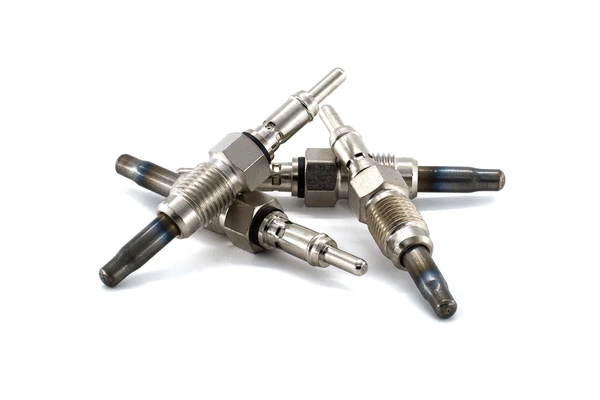
If you have ever driven a diesel vehicle on a cold morning and noticed that little coil icon light up on your dashboard before the engine starts, that is your glow plug system doing its job. Most drivers have no idea what glow plugs actually do or why they matter. But if you own a diesel, understanding these small components can save you from some very frustrating mornings and some surprisingly expensive repairs.
So let us break it all down in plain language, starting with the basics and working through everything you need to know as a diesel owner.
What Glow Plugs Actually Do (And Why Diesel Engines Need Them)
Diesel engines work completely differently from petrol engines. A petrol engine uses a spark plug to ignite the air-fuel mixture inside each cylinder. Diesel engines do not have spark plugs at all. Instead, they rely on heat generated by compression. When air is compressed tightly enough inside a cylinder, it gets hot enough to ignite diesel fuel the moment it is injected. No spark needed.
Here is the problem with that on a cold morning. If the engine is cold, the cylinder walls, the piston, and the air inside have all been sitting at ambient temperature overnight. When you crank a cold diesel, the compressed air does not get nearly as hot as it would in a warm engine because so much of that heat bleeds away into the cold metal surrounding it. The result is hard starting, rough idling, black smoke billowing from the exhaust, sputtering, and jerking at idle until the engine warms up enough to run properly on its own.
Glow plugs solve this problem. They are essentially small electrical heating elements that screw into each cylinder, positioned so their tip sits directly in the combustion chamber. When you turn the ignition key to the “on” position, the ECU activates the glow plugs and they heat up rapidly, sometimes reaching over 850 degrees Celsius at the tip. They pre-warm the combustion chamber just enough that when you crank the engine, the compressed air reaches ignition temperature reliably even in freezing conditions.
That little coil symbol that glows on your dashboard when you first turn the key? That is telling you to wait. The glow plugs are heating. Once the light goes out, the engine is ready to start. Trying to crank the engine before that light goes out is one of the fastest ways to develop a hard-starting problem over time.
How Many Glow Plugs Does a Diesel Engine Have?
The simple answer is: one per cylinder. A four-cylinder diesel has four glow plugs. A six-cylinder has six. But as with most things in automotive engineering, the real world is more complicated than that.
Different manufacturers have taken very different approaches to glow plug design, quantity, and heating system configuration. Some engines use additional plugs for auxiliary heating circuits that warm the transmission and differential as well. Some combine the glow plug and fuel injector into a single unit called a glow plug injection system, which requires pre-heating the combustion chamber before injection can occur. Others use external heat lamps or electric coils in place of traditional glow plug designs.
Heating time also varies significantly between manufacturers. Depending on the design and the ambient temperature, glow plugs can take anywhere from a few seconds on modern systems to several minutes on older designs. The more glow plugs a system has, and the faster they heat up, the more reliably the engine will start in cold conditions.
How Different Manufacturers Approach Glow Plug Design
It is worth looking at how some major manufacturers have implemented glow plug systems, because the variation is more significant than most people realize.
Ford has experimented with glow plug ignition in the Triton V8 engine, using four glow plugs per cylinder in that application.
General Motors uses four glow plugs per cylinder in the medium and heavy-duty versions of the Duramax diesel engine, which has six cylinders. Light-duty versions use five glow plugs per cylinder, totaling 30 plugs in the 6.6-liter engine. The 3.0-liter version uses 18 per cylinder for a total of 54 plugs across the engine, along with four pre-heating coils. That is a substantial system by any measure.
Mercedes-Benz took a different path with their OM646 engine, which uses 16 glow-plug injectors combined with four individual pre-heat coils integrated into the fuel system. This combined approach allows very precise control over both heating and fuel delivery.
Nissan’s M62T engine uses four glow plugs per cylinder but with an interesting twist: these plugs are pre-heated using heat lamps positioned below them rather than the electric coil approach used by most other manufacturers. This design was carried over from earlier Nissan engine families including applications in the Cavalier and Serena.
Renault Trucks went large with their 8.9-liter V8 diesel, fitting 14 glow-plug injectors into the engine to ensure reliable cold-start performance across a wide range of operating temperatures.
Scania’s DSI 3.7-liter common rail direct injection engine uses four glow plugs per piston across six cylinders. Early versions reportedly had 24 plugs total, but subsequent development using more advanced modeling software increased that number to prevent pre-ignition issues at lower temperatures.
As you can see, there is no universal standard. The number, type, and configuration of glow plugs varies widely depending on engine displacement, intended application, operating climate, and the manufacturer’s engineering philosophy.
How the Glow Plug System Actually Works
Early glow plug systems were built around a dedicated unit called a glow starter. This was a self-contained module with its own battery and control electronics that managed the glow plugs independently from the main engine management system. Each plug had its own heating element, and most systems included a dashboard indicator light so the driver knew when the plugs were active and when they were ready.
Modern systems are integrated directly into the ECU, which gives the engine computer precise control over timing, voltage, and duration. Here is why that matters. The ECU does not just switch the glow plugs on at startup and then forget about them. It uses a timer to control exactly how long the plugs stay active, both during the initial pre-heat phase before cranking and during the post-start phase while the engine warms up.
That post-start heating phase is something many drivers do not know about. On modern diesel engines, the glow plugs often stay active for a period after the engine starts, helping to stabilize combustion during those first few minutes of cold running. This reduces the rough idle, white smoke, and stumbling that older diesels were notorious for in cold weather.
The timer function also acts as a protection mechanism. If glow plugs were allowed to run continuously without a time limit, they would overheat and fail prematurely. They could also cause the fuel to ignite before the piston reaches the correct position in the cylinder, which creates abnormal combustion pressure that damages pistons, connecting rods, and bearings over time. The ECU prevents this by cutting the glow plug circuit after the appropriate heating period.
Some diesel systems, particularly older ones using throttle body fuel injection, allow individual glow plugs to be deactivated selectively. This means if you need to restart on a cold day without waiting for all plugs to cycle through a full warm-up, you can do so by bypassing certain plugs temporarily. It is also a fuel-saving strategy on engines where you want to keep throttle input minimal until the engine reaches operating temperature but still need immediate power available for overtaking or emergency maneuvers.
Will a Diesel Engine Still Run With a Bad Glow Plug?
Yes, but with some important caveats that are worth understanding before you decide to put off replacing a faulty plug.
A diesel engine will typically continue to run with one failed glow plug, especially once the engine is warm. Once combustion is happening consistently across all cylinders and the engine is up to operating temperature, the heat of compression alone is usually sufficient to keep things firing correctly. The engine does not absolutely depend on glow plugs for ongoing operation the way it does for cold starts.
But here is the thing. Starting the engine is where the failed plug causes real problems. With one cylinder not pre-heated properly, that cylinder will contribute less to the starting process. On a mild morning, you might not notice much difference. On a genuinely cold morning, the difference can be dramatic. The engine may crank longer than normal, fire up rough, run on fewer cylinders for the first few seconds, and emit white or black smoke from the exhaust until combustion stabilizes across all cylinders.
Run it this way repeatedly over weeks and months and you start to put extra stress on the working glow plugs, the injectors in the affected cylinder, and the cylinder walls themselves. What starts as a minor inconvenience can gradually contribute to bigger problems if left unaddressed.
The other issue is that a failed glow plug often does not announce itself dramatically. The engine might just seem a little harder to start than usual, or a little rougher in the first minute of running. Drivers chalk it up to cold weather or old fuel and carry on. By the time the starting problems become obvious, several plugs may have failed, not just one.
Signs That Your Glow Plugs May Be Failing
Knowing what to look for makes it much easier to catch glow plug issues before they turn into a situation where your diesel will not start on a cold morning when you actually need it.
- Hard starting in cold weather that was not a problem before. If your diesel used to fire up on the first crank in cold temperatures and now it takes several attempts, glow plugs are one of the first things to check.
- Rough idle immediately after starting. A healthy diesel with working glow plugs settles into a smooth idle within a few seconds. Prolonged roughness or misfiring at idle when cold points to incomplete combustion in one or more cylinders.
- Excessive white smoke from the exhaust on cold starts. Some white smoke is normal for the first few seconds on a cold day. Persistent white smoke that takes a long time to clear usually means unburned fuel is passing through cylinders that are not reaching ignition temperature.
- The glow plug warning light stays on longer than usual or does not come on at all. If the system is not completing its pre-heat cycle normally, the ECU will often flag it.
- A check engine light accompanied by a misfire code on a cold start diagnostic. Not all glow plug failures generate a specific glow plug code, but misfires caused by cold cylinder failures will show up.
- Decreased fuel economy in cold weather. An engine that is not combusting efficiently from the moment it starts will consume more fuel during warm-up.
Glow Plug Lifespan and Replacement: What You Should Know
Modern glow plugs are considerably more durable than they used to be. Older ceramic-tip designs had relatively short service lives, sometimes as few as 60,000 to 80,000 miles. Current iridium and multi-layered steel tip designs from quality manufacturers can last well over 100,000 miles under normal operating conditions.
That said, a few things accelerate glow plug wear significantly:
- Frequent short trips where the engine never fully warms up, meaning the glow plugs activate every single time
- Operating in consistently extreme cold, which puts maximum demand on the heating elements
- Poor quality diesel fuel or fuel contaminated with water, which affects combustion quality and puts more stress on the system
- Extended idle periods at low temperatures
When it comes to replacement, the general advice from most diesel technicians is to replace glow plugs as a complete set rather than individually. The logic is straightforward. If one plug has failed after 90,000 miles of use, the remaining plugs are all at the same point in their lifespan and will likely begin failing in quick succession. Replacing only the failed one means you will be back doing the job again within a few months. Do the whole set at once and the job is done for another 100,000 miles.
One practical warning about glow plug replacement: seized glow plugs are a genuine risk on high-mileage diesel engines, particularly if the plugs have never been removed before. The plug tips operate in an extremely hot, high-pressure environment and can bond to the cylinder head threads over time. Removing a seized glow plug without breaking it off in the head is a skilled job. If your engine has significant mileage and the glow plugs have never been changed, this is not a job to attempt yourself on a cold Sunday afternoon without the right tools and some experience. A broken glow plug tip inside a cylinder head is an expensive problem.
Quick Reference: Glow Plug Facts by Manufacturer
| Manufacturer | Engine | Glow Plug Configuration |
|---|---|---|
| Ford | Triton V8 | 4 per cylinder |
| GM (medium/heavy duty) | Duramax 6-cylinder | 4 per cylinder |
| GM (light duty) | Duramax 6.6L | 5 per cylinder, 30 total |
| GM (light duty) | Duramax 3.0L | 18 per cylinder, 54 total plus 4 pre-heat coils |
| Mercedes-Benz | OM646 | 16 glow-plug injectors plus 4 pre-heat coils |
| Nissan | M62T | 4 per cylinder, heat lamp pre-heated |
| Renault Trucks | 8.9L V8 | 14 glow-plug injectors |
| Scania | DSI 3.7L | 4 per piston, 6 cylinders |
The Broader Picture: Why Glow Plugs Matter More Than Most Drivers Realize
Diesel engines have a reputation for being tough and long-lived. That reputation is well-earned. Well-maintained diesel engines routinely reach 300,000, 400,000, even 500,000 miles in commercial applications. But that longevity depends on those engines starting cleanly and reaching operating temperature efficiently from day one.
Every cold start where combustion is incomplete puts extra strain on cylinder walls, piston rings, and injectors. The fuel that does not fully combust leaves carbon deposits that build up over time. Oil contamination from unburned fuel washing cylinder walls is a real phenomenon that shortens engine life. These are not dramatic failures. They are slow, gradual forms of wear that accumulate over thousands of cold starts across years of ownership.
Functioning glow plugs are not just a cold-weather convenience. They are part of what keeps a diesel engine in good internal condition over its full service life. The cost of a set of glow plugs is a fraction of what you will pay if years of poor cold starts accelerate wear on injectors, rings, and cylinder heads.
If you own a diesel and you cannot remember the last time the glow plugs were checked or replaced, that is your sign to find out exactly where they stand. A quick diagnostic check from any diesel-competent shop will tell you whether your plugs are all firing correctly. It is a small investment in information that could easily save you a much larger one down the road.