
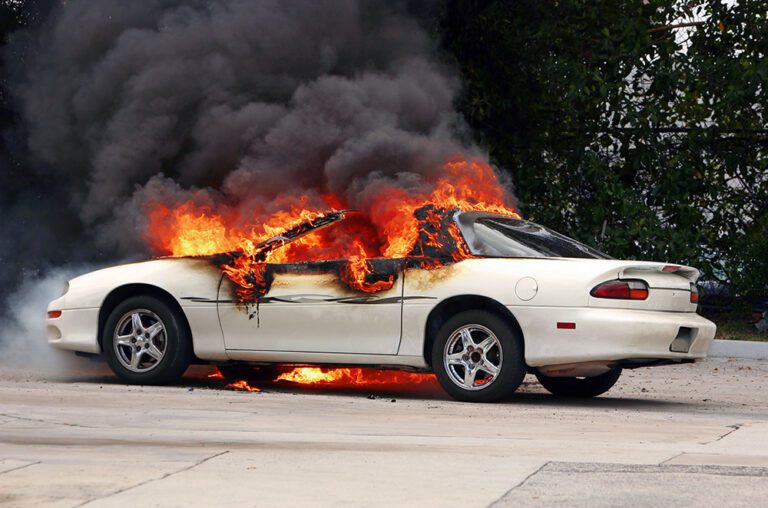
You are sitting in traffic when you notice an unusual smell. Maybe it is a burning electrical odor, or perhaps something plasticky and chemical. You check your dashboard and everything looks normal. A few minutes later, you see wisps of smoke coming from under the hood. Your heart starts racing. Is your car about to catch fire?
Car fires are terrifying, and they happen more often than most people realize. Every year, hundreds of thousands of vehicle fires occur worldwide, destroying cars, injuring people, and sometimes claiming lives. The scary part is that it can happen to anyone, in any car, at any time. A brand new vehicle fresh off the lot is not immune, and neither is a well-maintained older car.
In this comprehensive guide, I am going to walk you through everything you need to know about car fires. We will cover what causes them, how to recognize the warning signs before flames appear, what to do if your car catches fire, whether cars actually explode like in movies, and most importantly, how to prevent a fire from happening in the first place. By the end, you will understand the real risks and have a solid action plan for staying safe.
What Actually Causes Car Fires?
If you ask most people what causes car fires, they will probably say fuel leaks or engine problems. While these can contribute, the reality is quite different from what most people assume.
Electrical Problems Are the Number One Cause
According to fire safety statistics, electrical system failures cause the majority of vehicle fires. We are talking about 60 to 70 percent of cases. This surprises people because electrical fires seem less dramatic than fuel fires, but they are far more common.
Modern vehicles are absolutely packed with wiring. There are miles of electrical cables running through every car, powering everything from headlights to infotainment systems to engine computers. All of this wiring is wrapped in insulation to prevent short circuits, but that insulation can fail.
The insulation degrades over time from heat, vibration, moisture, and age. Wires rub against metal parts and wear through. Connections corrode. Aftermarket installations by people who do not know what they are doing create overloaded circuits and improper connections. When insulation fails and bare wires touch metal or each other, you get a short circuit.
Most short circuits just blow a fuse and shut down whatever circuit was affected. That is exactly what fuses are designed to do, protect the system by sacrificing themselves when too much current flows. But sometimes the conditions are just right for disaster. The short happens in a location near flammable materials. The fuse does not blow immediately or the wire itself heats up before the fuse fails. The hot wire ignites carpet fibers, sound deadening material, plastic trim, or insulation.
Once something starts smoldering, it can grow into an actual fire remarkably quickly if conditions are right. The fire spreads to other flammable materials, fed by the plastics and fabrics throughout the interior. Before you know it, the entire car is involved.
Fuel System Leaks Are Less Common But More Dangerous
Despite what movies show, fuel-related fires account for a smaller percentage of vehicle fires than electrical problems. But when fuel is involved, fires tend to be more severe and develop faster.
Fuel system components are heavily regulated and tested during manufacturing. Tanks, lines, pumps, and injectors are designed with safety in mind and made from durable materials. For a fuel fire to happen, something has to go wrong, usually from damage, improper repair, or severe component failure.
Common fuel fire causes include cracked fuel lines that leak gasoline onto hot engine components, loose fuel line connections that spray fuel when the engine is running, damaged fuel tanks from accidents or road debris, and improper repairs using substandard parts or incorrect installation.
The good news about fuel leaks is that they are usually obvious before they cause a fire. You will smell gasoline, which has a very distinctive and strong odor. You might see puddles under the car or notice fuel dripping. These warning signs give you the opportunity to address the problem before it becomes critical.
The bad news is that when gasoline does ignite, it burns hot and fast. Gasoline fires are incredibly dangerous and can engulf a vehicle in minutes.
Mechanical Failures and Overheating
Mechanical problems can also lead to fires, though less frequently than electrical or fuel issues. An engine that overheats severely can cause nearby plastic components, rubber hoses, or oil-soaked materials to ignite. Transmission fluid leaking onto a hot exhaust system can catch fire. Engine oil leaking onto the exhaust manifold creates smoke and can ignite under the right conditions.
Catalytic converters get extremely hot during normal operation, sometimes exceeding 1,200 degrees Fahrenheit. If you park over dry grass, leaves, or other flammable materials, the heat from the catalytic converter can start a fire underneath the car that spreads upward.
Brake system failures can cause fires too. A seized brake caliper creates enormous friction and heat. If the brake fluid leaks onto the overheated components, it can ignite. Worn brake pads grinding metal-on-metal generate heat and sparks that can ignite brake dust and debris.
Aftermarket Modifications and Improper Repairs
A huge percentage of vehicle fires trace back to poor quality repairs or aftermarket modifications done incorrectly. Someone installs an aftermarket stereo and taps into the wrong wires or creates connections that are not properly insulated. An alarm system gets wired in with inadequate gauge wire that cannot handle the current. A performance modification adds electrical load that exceeds what the stock wiring can safely carry.
These amateur electrical modifications are disasters waiting to happen. The person doing the work might not understand electrical principles, might use inappropriate materials, or might create connections that work initially but fail over time as vibration and heat take their toll.
Even professional shops can create fire hazards if they take shortcuts or use cheap parts. A fuel line repair done with the wrong type of hose that deteriorates from gasoline exposure. An electrical repair using undersized wire or improper connectors. These compromises might save a few dollars initially but create serious safety risks.
Recognizing the Warning Signs Before Flames Appear
The good news about most car fires is that they do not happen instantly. There are usually warning signs that give you time to react before you have actual flames. Knowing what to look for can save your car and possibly your life.
Unusual Smells
Your nose is your first line of defense against car fires. Different problems create different smells, and recognizing them helps you identify issues before they become critical.
An electrical burning smell is distinct. It smells like burning plastic or rubber, similar to an overheated electrical outlet in your house. This odor means insulation is melting or wiring is overheating. If you smell this while driving, something is seriously wrong with your electrical system.
Gasoline smell is unmistakable and should never be ignored. If you smell raw gasoline while driving or after parking, you have a fuel leak somewhere. This is an immediate safety concern that needs addressing before you drive the car again.
Burning oil smells different from burning electrical components. It is more acrid and chemical. Oil leaking onto hot exhaust components creates this smell. While not an immediate fire hazard in most cases, it indicates a leak that needs repair.
A sweet, chemical smell might indicate coolant leaking onto hot engine parts. Coolant itself is not particularly flammable, but the leak indicates overheating issues that could lead to other problems.
Any unusual smell should prompt immediate investigation. Pull over safely, shut off the engine, and try to identify the source. Do not ignore weird smells hoping they will go away. They will not, and the problem will only get worse.
Smoke
Where there is smoke, there is fire, or at least something is about to catch fire. Any smoke coming from your vehicle while driving needs immediate attention.
Smoke from under the hood while driving could indicate engine overheating, coolant leak, oil leak, or electrical problems. If you see smoke coming from the hood, pull over immediately and shut off the engine.
Smoke inside the cabin is even more concerning because it means something is burning very close to you. This could be an electrical fire under the dashboard, in the seats, or in the trunk. Get out of the car immediately if you see smoke inside the cabin.
Smoke from the wheels usually indicates brake problems. A seized caliper or dragging brake pad creates enormous heat and smoke. This is not an immediate fire hazard in most cases, but it indicates a mechanical failure that needs addressing.
Electrical Problems
Warning signs in your electrical system often precede electrical fires. Lights that flicker or dim unexpectedly indicate voltage problems. Fuses that blow repeatedly without obvious cause suggest an overload or short circuit somewhere in that circuit. Accessories that work intermittently or shut off randomly point to wiring problems.
If you notice any of these electrical anomalies, get the system checked professionally. These are warning signs that something is wrong, and that wrong thing could eventually cause a fire.
Fluid Leaks
Puddles under your car tell you something is leaking. The color and smell help identify what. Red or pink fluid is usually transmission fluid or power steering fluid. Green, orange, or yellow fluid is coolant. Clear, oily fluid is often water or occasionally gasoline. Dark brown or black fluid is oil. Light brown or clear with a strong smell is gasoline.
Gasoline leaks are the most immediate fire concern. Any other leak indicates a problem that could contribute to a fire if the leaking fluid contacts hot components, but gasoline is by far the most dangerous.
What to Do If Your Car Catches Fire
This is information I hope you never need to use, but knowing what to do in a car fire situation can save your life and possibly your vehicle.
At the First Sign of Fire
The moment you smell smoke, see flames, or have any indication of fire, take immediate action. Pull over to a safe location away from traffic, buildings, and other vehicles if possible. Turn off the engine and remove the key from the ignition. This shuts off the fuel pump and electrical system, removing two potential sources feeding the fire.
Get everyone out of the vehicle immediately. Do not waste time gathering belongings. Get yourself and all passengers away from the car. Lives are more important than possessions.
Once everyone is safely out and away from the vehicle, assess the situation. If the fire is very small and contained, and you have a fire extinguisher, you might attempt to put it out. If the fire is already producing significant flames or smoke, do not attempt to fight it. Get far away and call emergency services.
Using a Fire Extinguisher
If you decide to attempt extinguishing a small fire, you need to know proper technique. Standard automotive fire extinguishers are small, typically rated for small fires only. They discharge quickly, giving you maybe 10 to 15 seconds of spray.
Approach from upwind so smoke blows away from you. Aim at the base of the flames, not the top. Use a sweeping motion back and forth across the base of the fire. If the fire does not start reducing immediately, stop trying. The extinguisher is not big enough for this fire. Back away and wait for professional help.
Never open the hood fully if fire is coming from the engine compartment. The rush of oxygen can cause the fire to flare dramatically. If you must access the engine compartment, crack the hood slightly and spray the extinguisher through the gap.
If the fire is inside the cabin, you probably will not be able to extinguish it with a small automotive extinguisher. The interior has too much flammable material. Once cabin fires get going, they spread fast. Do not risk yourself trying to save the car.
When to Give Up and Get Away
If you cannot extinguish the fire within the first minute or two, it is already beyond what a small extinguisher can handle. Accept that the car is going to burn and focus on safety. Move at least 100 feet away from the vehicle. Cars contain all sorts of components that can fail violently when heated, including tires, shock absorbers, and yes, fuel tanks in some circumstances.
Call emergency services immediately. Give them your exact location and describe the situation. Stay on the line if they ask you to. Keep other people away from the burning vehicle. Warn approaching traffic if the fire is near a roadway.
Do not go back to the car for any reason once you have evacuated. Not for your phone, not for your wallet, not for important documents. Nothing in that car is worth dying for. Insurance can replace possessions, but it cannot replace you.
Special Considerations
If you can safely do so before the fire gets serious, disconnect the battery. This removes electrical power and can prevent the fire from spreading through electrical circuits. But only attempt this if the fire is very small and you can access the battery safely. Do not put yourself at risk.
If other drivers stop to help, have them call 911 if you have not already. Ask if they have fire extinguishers. Multiple small extinguishers working together are more effective than one. But make sure everyone understands that if the fire does not respond immediately to extinguisher use, everyone needs to back away.
After the fire is out, whether you extinguished it or firefighters did, do not assume the car is safe. Hot spots can reignite hours later. The vehicle should be towed to a repair facility, not driven. Even if it looks drivable, fire damage compromises structural integrity and safety systems in ways that are not immediately obvious.
Do Cars Actually Explode?
Movies and television have given people the impression that cars explode dramatically when they catch fire. The reality is quite different and worth understanding.
The Hollywood Myth vs. Reality
In movies, cars crash and immediately burst into massive fireballs, or fires start and within seconds the entire vehicle explodes in a spectacular blast. This makes for great visuals but bears little resemblance to how real vehicle fires behave.
Real car fires develop slowly in most cases. Small fires spread gradually, fed by flammable materials like plastics, fabrics, and rubber. Even when fuel is involved, gasoline burns rather than explodes when it leaks and ignites. The fire spreads as more and more materials heat up and ignite, but this process takes minutes, not seconds.
When Fuel Tanks Fail
The fuel tank can fail catastrophically under certain circumstances, but this is not an explosion in the Hollywood sense. Modern fuel tanks have venting systems to prevent pressure buildup. As the tank heats from external fire, the fuel inside vaporizes and creates pressure. The vents relieve this pressure, which might create a fireball as the venting fuel vapor ignites, but this is different from a contained explosion.
If fire damages the tank structure itself, the tank can rupture and spill fuel, which then ignites and burns. This creates a large fire very quickly, but again, this is combustion, not explosion.
True explosions require specific conditions. You need fuel vapor mixed with air in the right proportions inside a confined space. This can happen if fuel vapors accumulate in an enclosed area like a trunk and then find an ignition source. But this is rare compared to the normal progression of a car fire.
Where Fires Are Most Dangerous
Fires that start in the engine compartment are the least likely to cause tank failure because the tank is at the rear of the vehicle. The fire would have to spread the entire length of the car to reach the tank, which takes time and gives occupants and bystanders opportunity to get away.
Fires that start in or near the trunk or rear of the vehicle are more dangerous because they are closer to the fuel tank. If fire reaches the tank area, tank failure becomes more likely. But even in these cases, explosive failure is rare. The tank is more likely to melt if it is plastic or burn through if it is metal, spilling fuel that burns rather than exploding.
Other Components That Can Fail Violently
While fuel tanks rarely explode, other components can fail in ways that send debris flying. Tires can explode when heated, sending rubber and possibly metal from the wheel flying. Shock absorbers and struts contain pressurized gas and can fail violently. Bumper covers and other plastic components can melt and fall off.
These failures are why you need to stay well away from a burning vehicle even if you do not think the fuel tank will explode. Pieces of the car can become projectiles as components fail from heat.
Special Note on Alternative Fuel Vehicles
Vehicles with compressed natural gas (CNG) or liquefied petroleum gas (LPG) systems have pressurized fuel tanks. These tanks are incredibly strong and include safety valves to prevent catastrophic failure. If exposed to fire, the safety valves release pressure in a controlled manner. The venting gas will burn like a large torch, which is dangerous but controlled. The tank itself is unlikely to explode even under direct fire exposure.
Electric vehicles present different fire risks. Lithium-ion battery fires burn extremely hot and are very difficult to extinguish. They can also reignite hours or even days after apparently being put out. But these fires still do not typically cause the dramatic explosions seen in movies.
The bottom line is this. While cars can and do burn completely, Hollywood-style explosions are extremely rare. The real danger is the fire itself, the toxic smoke it produces, and the possibility of components failing and becoming projectiles. You do not need to fear an imminent explosion, but you do need to get away from the fire and stay away.
Preventing Car Fires: What You Can Control
The best car fire is the one that never happens. While you cannot control manufacturing defects or freak accidents, there is a lot you can do to minimize fire risk.
Maintain Your Vehicle Properly
Regular maintenance catches problems before they become fire hazards. Follow the recommended maintenance schedule for your vehicle. This includes oil changes, fluid checks, belt and hose inspections, and electrical system checks.
Pay special attention to the fuel system. Inspect fuel lines for cracks, wear, or damage. Make sure connections are tight and not leaking. Replace fuel filters according to schedule. If you smell gasoline, find and fix the source immediately.
Check your electrical system regularly. Look for frayed wires, corroded connections, or signs of overheating like melted insulation. If you notice electrical problems like flickering lights or repeatedly blown fuses, have a professional diagnose and repair the issue.
Keep the engine clean. Oil and grease buildup on the engine creates fuel for fires. A clean engine is less likely to burn if a small leak or electrical problem occurs.
Be Careful With Modifications and Repairs
If you modify your vehicle or have repairs done, use quality parts and proper installation techniques. Electrical modifications are particularly risky when done improperly. Use the correct gauge wire for the current load. Make proper connections with appropriate connectors and heat shrink or electrical tape. Never tap into wires by just wrapping bare wire around them and hoping for the best.
If you are not confident in your electrical skills, pay a professional to do the work. The money you save doing it yourself is not worth the fire risk from a botched job.
When replacing fuel system components, use parts designed for automotive fuel systems. Never use generic rubber hose for fuel lines. It will deteriorate from gasoline exposure and fail. Use proper fuel hose with the correct pressure rating and appropriate clamps.
Don’t Overload Electrical Systems
Adding lots of accessories like high-power stereos, lighting, or other electrical devices can overload your vehicle’s electrical system. The alternator has limited capacity. The wiring has limited capacity. If you exceed these limits, you create conditions for electrical fires.
If you want to add significant electrical load, have a professional assess whether your system can handle it and what upgrades might be necessary. This might include a higher-output alternator, upgraded wiring, or additional fuses and circuit protection.
Keep a Fire Extinguisher and Know How to Use It
Every vehicle should have a fire extinguisher rated for automotive use. This means it can handle Class B (flammable liquid) and Class C (electrical) fires. A standard ABC extinguisher works for cars.
Do not just buy the smallest, cheapest extinguisher you can find to satisfy legal requirements. Get a decent-sized unit, at least 2.5 pounds, preferably 5 pounds. Mount it somewhere accessible, not buried in the trunk under cargo where you cannot reach it quickly.
Read the instructions on your extinguisher before you need it. Know how to remove the safety pin and operate the nozzle. Those seconds you spend figuring out how the extinguisher works could be the difference between putting out a small fire and watching your car burn.
Be Mindful of Where You Park
Never park over dry grass, leaves, or other flammable materials. The heat from your catalytic converter and exhaust system can ignite these materials, starting a fire underneath the car. Park on pavement or dirt when possible.
If you must park on grass, do not leave the car running or let it idle. Move the vehicle as soon as possible to avoid heat buildup. After driving, the exhaust and catalytic converter remain extremely hot for quite a while, so even parking briefly on dry vegetation is risky.
The Insurance and Legal Side of Car Fires
If your car does catch fire, understanding the insurance and legal implications helps you navigate the aftermath.
Comprehensive auto insurance typically covers fire damage to your vehicle. This is different from collision coverage. If fire is the primary cause of the loss, comprehensive coverage applies. Check your policy to confirm you have comprehensive coverage and understand your deductible.
If the fire resulted from a manufacturing defect, you might have a claim against the manufacturer. This requires proving that a defect caused the fire and that you were not at fault through negligence or improper maintenance. These cases are complex and usually require legal assistance.
If your car fire damages someone else’s property or causes injury, your liability coverage should provide protection. This is why adequate liability limits are important. A car fire that spreads to a building or causes injury can result in massive claims that exceed minimum liability coverage.
Document everything after a fire. Take photos of the damage before the car is moved or cleaned up. Get a copy of the fire department report. Keep all receipts related to towing, rental cars, and other expenses. This documentation supports your insurance claim.
The Bottom Line on Car Fires
Car fires are scary but understanding them makes them less frightening and more manageable. Most fires result from electrical problems or fuel leaks that develop warning signs before flames appear. Paying attention to unusual smells, smoke, or electrical problems gives you the chance to address issues before they become critical.
If fire does occur, knowing how to react can save lives. Get everyone out immediately, move away from the vehicle, and only attempt to fight very small fires with appropriate equipment. Accept that sometimes cars cannot be saved and the priority is safety, not possessions.
Hollywood explosions are fiction. Real car fires burn rather than explode in most cases. But even without explosions, fires are incredibly dangerous from heat, smoke, and component failures. Respect the danger and maintain safe distance.
Prevention is the best strategy. Maintain your vehicle properly, be careful with modifications and repairs, do not overload electrical systems, and keep a fire extinguisher accessible. These simple steps dramatically reduce your fire risk. Your car should transport you safely, not threaten you with flames. Take fire prevention seriously, know how to respond if the worst happens, and hopefully you will never need to use this information for anything more than peace of mind.