
Your engine is essentially a collection of metal parts moving against each other at high speed. Without oil flowing through the system at the right pressure, those parts grind, overheat, and wear out fast. Oil pressure is what keeps everything lubricated, cooled, and protected. And the oil pressure gauge on your dashboard is what tells you whether that system is doing its job or quietly failing.
Most drivers glance at that gauge occasionally and move on. But understanding what it is actually telling you, and what to do when the needle starts behaving strangely, can be the difference between catching a minor issue early and facing a catastrophic engine failure down the road.
Let’s break down everything you need to know about the oil pressure gauge: how it works, how to read it, and what every possible reading actually means for your engine.
What the Oil Pressure Gauge Is Actually Measuring
The oil pressure gauge measures the resistance of oil as it is pushed through your engine by the oil pump. The pump pulls oil from the sump (the oil pan at the bottom of the engine), pressurizes it, and forces it through narrow passages called oil galleries to lubricate bearings, camshafts, valve train components, and other moving parts.
The gauge is not measuring how much oil you have. That is what the dipstick is for. What the gauge is measuring is the force at which that oil is moving through the engine. Think of it like water pressure in a garden hose. The gauge tells you how strongly the water is flowing, not how full the tank is.
When oil pressure is in the normal range, every moving part inside your engine is getting the lubrication it needs. When pressure drops too low, metal parts start making direct contact with each other. That contact generates heat and friction that can destroy engine components in a surprisingly short amount of time.
How the Oil Pressure Gauge System Works
The gauge itself is connected to the engine through a sensor screwed into an oil passage or gallery in the engine block. There are two main types of systems you will find in modern vehicles:
Electric Oil Pressure Gauge
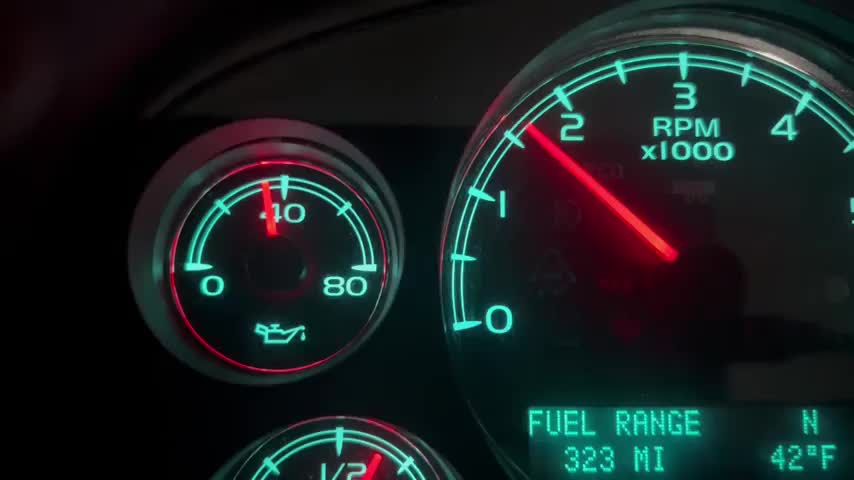
Most modern vehicles use an electric system. A sending unit (also called a pressure sensor or transducer) is threaded into the engine block at a point where oil flows. This sensor converts oil pressure into an electrical signal that is sent to the gauge on your dashboard. As pressure rises or falls, the electrical resistance in the sensor changes, which moves the needle on the gauge accordingly.
There is also typically a separate oil pressure warning switch wired into the system. This is what triggers that low oil pressure warning light on your dashboard. Even if your car does not have a full analog gauge (some vehicles only have a warning light), this switch is there monitoring the system constantly.
Mechanical Oil Pressure Gauge
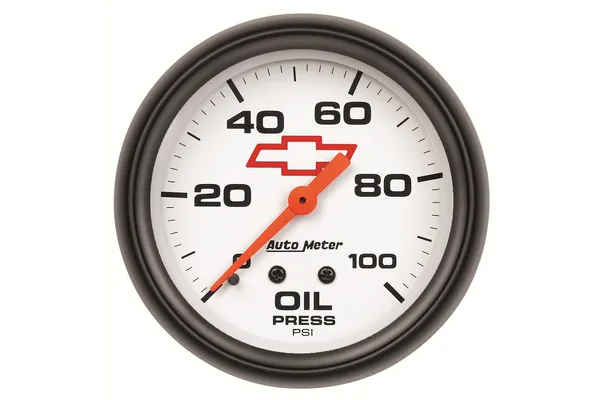
Older vehicles and some performance applications use a mechanical gauge instead. This type is connected directly to an oil line running from the engine to the gauge. The actual oil pressure physically moves a needle through a bourdon tube mechanism inside the gauge. Mechanical gauges are considered more accurate than electric ones, but they require a physical oil line to run through the firewall into the cabin, which presents more potential for leaks.
Either way, the goal is the same: give you a real-time readout of what is happening inside your engine’s lubrication system while you drive.
How to Read Your Oil Pressure Gauge Correctly
Oil pressure gauges vary slightly between vehicles, but most operate on a scale from 0 to 80 or 0 to 100 PSI (pounds per square inch). The gauge typically has a needle that moves across this range, with markings or color zones indicating low, normal, and high pressure areas.
Here is how to interpret what you are seeing:
Normal Reading: The Sweet Spot
For most passenger vehicles, normal oil pressure falls somewhere between 25 and 65 PSI while the engine is running. At idle, pressure will be on the lower end of that range. As engine speed increases, the oil pump spins faster and pressure rises. This is completely normal behavior.
Many gauges have a midpoint or center zone marked as the ideal operating range. When the needle is sitting comfortably in the middle section of the dial while driving, you are in good shape. Check your owner’s manual for the exact normal range specified for your vehicle, as this can vary.
Low Reading: Time to Pay Attention
A low reading is when the needle drops to around 20 PSI or below. On gauges marked with an “L” zone, the needle will be sitting near or in that zone. Low oil pressure is a warning you should never ignore, especially while the engine is warm and running at normal operating temperature.
At idle, a slight drop in pressure is expected because the pump is running slowly. But if the needle is consistently sitting low during normal driving, or if the low oil pressure warning light comes on, pull over safely as soon as possible. Running an engine on critically low oil pressure can cause irreversible bearing damage within minutes.
High Reading: Not Always Better
Higher is not always better when it comes to oil pressure. If the needle is pushed into the high range near or at the maximum of the scale, that is also a problem. Excessively high oil pressure can blow out seals and gaskets, cause oil leaks, and stress components that are not designed to handle that level of force.
Some temporary high readings right after a cold start are normal because cold, thick oil creates more resistance. But once the engine warms up, pressure should return to the normal range. If it stays high after warm-up, there is likely an issue with the pressure relief valve or a blockage in the system.
Why Your Oil Pressure Gauge Is Fluctuating
Some movement in the oil pressure gauge needle while driving is completely normal. The pump spins in relation to engine RPM, so as you accelerate and decelerate, the needle will move accordingly. But if the needle is swinging wildly, dropping suddenly, or behaving in a way that feels unpredictable, something needs investigation.
Here are the most common reasons for an erratic or fluctuating oil pressure gauge, starting with the most likely culprits:
1. Low Oil Level in the Engine
This is the first thing to check, every time, without exception. If the oil level is low, the pump can intermittently suck air along with oil, causing pressure to fluctuate as the pump struggles to maintain consistent flow. The needle may rise and fall erratically, especially when cornering or braking as oil sloshes around the pan.
Pull over safely, let the engine cool for a few minutes, and check the dipstick. If the level is low, top it up with the correct oil specification for your vehicle before driving further. If the level keeps dropping between oil changes, there may be a leak or the engine could be burning oil, both of which need to be addressed by a mechanic.
2. Worn or Degraded Engine Oil
Oil does not last forever. Over time and mileage, the oil breaks down and loses viscosity, meaning it becomes thinner and less able to maintain consistent pressure through the engine’s oil galleries. Old, broken-down oil will struggle to maintain steady pressure, particularly under load or at high temperatures.
If your oil is overdue for a change, start there. Fresh oil of the correct viscosity grade is one of the simplest fixes for mild pressure fluctuation caused by degraded lubricant.
3. Wrong Oil Viscosity
Using the wrong viscosity oil for your engine can cause abnormal pressure readings. Oil that is too thin for your engine’s specification will not maintain adequate pressure, especially at high temperatures. Oil that is too thick can cause artificially high pressure readings on a cold start that take too long to come down as the engine warms up.
Always use the viscosity grade specified in your owner’s manual. Common ratings are 5W-30, 0W-20, or 10W-40, but your vehicle will have a specific recommendation based on the engine design and operating conditions it was built for.
4. Fluctuating Oil Temperature
Oil viscosity changes with temperature. Cold oil is thicker and creates more resistance, which translates to higher pressure readings. As the engine warms up and the oil temperature rises, oil becomes thinner and flows more easily, which brings pressure down to the normal operating range.
This is why you might notice higher pressure right after starting a cold engine, and why it settles after a few minutes of driving. This is normal and expected behavior. The concern arises if pressure stays excessively high after full warm-up, or if it drops too low once the engine is fully up to temperature.
5. Faulty Oil Pressure Sending Unit
The sending unit or pressure sensor is an electrical component, and like all electrical components, it can fail. A faulty sending unit can send incorrect signals to the gauge, causing it to read falsely low, falsely high, or jump around unpredictably even when the actual oil pressure is perfectly fine.
This is actually one of the more common causes of erratic gauge behavior in higher-mileage vehicles. The good news is that the sending unit is usually an inexpensive part and straightforward to replace. A mechanic can verify whether the sender is at fault by checking actual oil pressure with a mechanical gauge at the same time as reading the dashboard gauge. If the mechanical reading is normal and the dashboard gauge is still erratic, the sender is the likely problem.
6. Worn Engine Bearings
Engine bearings are small, smooth components that allow the crankshaft and other rotating parts to spin with minimal friction. They rely on a thin film of pressurized oil to prevent metal-to-metal contact. When bearings wear out, the clearances between the bearing surface and the shaft increase, and oil can escape through those wider gaps more easily.
The result is lower overall oil pressure because the system cannot hold pressure as effectively. If you have an older, high-mileage engine that shows persistently low oil pressure despite a full oil level and fresh oil, worn bearings are a real possibility. This is a significant mechanical issue that typically requires engine work to address properly.
7. Worn or Failing Oil Pump
The oil pump is what creates all the pressure in the first place. If the pump itself is worn out or failing, it loses the ability to build and maintain adequate pressure throughout the engine. You might see pressure that is consistently on the low side, or pressure that fluctuates as the pump struggles to keep up with demand.
Oil pump failure is more common in high-mileage engines and in engines that have been run low on oil at some point in their life. Regular oil changes go a long way toward keeping the pump in good condition, since the oil itself lubricates the pump’s internal components.
8. Faulty Pressure Relief Valve
The oil pump includes a pressure relief valve that prevents the system from building too much pressure. When everything is working correctly, this valve opens at a set pressure point to bleed off excess pressure and keep readings in the normal range. If this valve sticks open, pressure will be consistently low. If it sticks closed, pressure can spike dangerously high.
A stuck-open relief valve is the most common failure mode and will cause chronically low readings even with fresh oil and a full level. This is a mechanical repair, typically addressed when the oil pump is inspected or replaced.
9. Post-Engine Overhaul Issues
If your engine has recently been rebuilt or overhauled and you are now seeing pressure fluctuations, the issue may be related to the reassembly. New bearings have tighter clearances than worn ones, which can initially cause pressure to read slightly higher than expected. Conversely, if components were not reinstalled correctly, or if the oil pump was not primed properly before startup, you may see erratic readings until the system normalizes.
Any significant engine work should be followed up with a careful check of oil pressure readings during the break-in period. If the readings seem off, go back to the shop that did the work and have it rechecked before the issue becomes a bigger problem.
10. The Gauge Itself Is Faulty
Sometimes the simplest explanation is the right one. The gauge can malfunction independently of any actual oil pressure issue. Dashboard gauges can develop electrical faults, corroded connections, or internal failures that cause them to read incorrectly. Before assuming the worst about your engine, it is worth having a mechanic verify actual oil pressure with a dedicated mechanical gauge. If the engine pressure is fine but the dash gauge still reads abnormally, the gauge or its wiring is the problem, not the engine.
A Quick Summary of Causes and What to Do About Each
| Cause | Likely Symptom | What to Do |
|---|---|---|
| Low oil level | Fluctuating, especially in corners | Check and top up oil immediately |
| Worn or old oil | Consistently low, worsens when hot | Change oil and filter |
| Wrong oil viscosity | High when cold, doesn’t normalize | Use correct grade per owner’s manual |
| Oil temperature fluctuation | High at startup, normalizes after warm-up | Normal behavior, monitor only |
| Faulty sending unit | Erratic or stuck needle | Test and replace sending unit |
| Worn engine bearings | Persistently low on warm engine | Engine inspection and bearing replacement |
| Worn oil pump | Low or fluctuating under load | Oil pump inspection or replacement |
| Faulty pressure relief valve | Chronically low or dangerously high | Inspect and replace relief valve |
| Post-overhaul issues | Erratic after engine work | Return to mechanic for re-inspection |
| Faulty gauge or wiring | Incorrect reading, engine sounds fine | Verify with mechanical gauge, repair wiring |
What to Do When Your Oil Pressure Warning Light Comes On
If a low oil pressure warning light appears on your dashboard while driving, do not assume it will sort itself out. This light is triggered when pressure drops below a safe threshold, and at that point, your engine’s moving parts may already be operating without adequate lubrication.
Here is exactly what to do:
- Do not panic, but do act quickly. Find a safe place to pull over as soon as reasonably possible. Avoid hard acceleration while looking for a spot to stop.
- Turn the engine off. Once you are safely stopped, shut the engine down. Continuing to run the engine with low oil pressure risks serious and expensive internal damage.
- Wait a few minutes and check the oil level. Allow the engine to cool slightly, then check the dipstick. If the level is low, top it up with the correct oil and check whether the light goes out when you restart.
- Check for visible oil leaks. Look under the vehicle for any puddles or fresh oil staining. Check around the oil filter and drain plug as well.
- If the oil level is fine and the light stays on, do not drive. Call for a tow. A normal oil level combined with a low pressure warning means there is a mechanical issue, and driving further will make it significantly worse.
How to Keep Your Oil Pressure in the Healthy Range
Preventing oil pressure problems is far cheaper than fixing the damage they cause. A few consistent maintenance habits go a long way:
- Change your oil on schedule. Follow your vehicle manufacturer’s recommended oil change interval. Fresh oil maintains viscosity and protects internal components far better than oil that has been in the engine for 10,000 miles past its change date.
- Check your oil level regularly. Make it a habit to check the dipstick every few weeks or at every fuel stop. Catching a low level before it becomes a problem is simple and takes less than a minute.
- Use the right oil for your engine. Always use the viscosity grade and oil type specified in your owner’s manual. The manufacturer engineered your engine around a specific oil specification.
- Replace the oil filter with every oil change. A clogged or restricted filter reduces oil flow through the system. Always use a quality filter from a reputable brand.
- Address oil leaks promptly. Even a slow leak will eventually drop your oil level to a dangerous point. If you notice oil spots where you park, get the source identified and fixed.
- Warm up the engine gently after a cold start. Avoid hard acceleration immediately after starting on a cold morning. Give the oil a minute or two to reach full operating temperature and proper pressure before putting the engine under heavy load.
Normal vs. Abnormal Oil Pressure: Knowing the Difference
Not every gauge movement is a cause for concern. Here is a quick guide to help you distinguish normal behavior from something that needs attention:
| What You See | Normal or Concerning? |
|---|---|
| Higher pressure at cold start, drops after warm-up | Normal |
| Pressure rises with RPM when accelerating | Normal |
| Slight pressure drop at idle in traffic | Usually normal, monitor if it drops very low |
| Needle bouncing wildly at all engine speeds | Concerning, investigate immediately |
| Pressure stays high after full warm-up | Concerning, possible relief valve issue |
| Consistent low reading on warm engine | Concerning, check oil level and condition first |
| Warning light on with normal oil level | Concerning, do not continue driving |
| Pressure drops suddenly while driving | Stop safely and investigate immediately |

Your Oil Pressure Gauge Is One of Your Engine’s Most Honest Signals
A lot of dashboard gauges are largely decorative in everyday driving. The oil pressure gauge is not one of them. It is giving you a direct, real-time window into the health of your engine’s lubrication system, and what it shows you matters.
Fluctuation is normal. A needle that swings wildly, drops dangerously low, or pins itself at the top of the scale is telling you something specific. The question is whether you are paying attention. Most catastrophic engine failures that result from lubrication problems are not sudden random events. They are the end result of warning signs that were ignored over days, weeks, or months.
Get in the habit of glancing at that gauge when you start the car and periodically while driving. Check your oil level regularly. Change your oil on time. And if that needle ever does something unexpected, treat it as the warning it is and investigate before the engine tells you in a much more expensive way.