

You do not need to trade in your car or invest in any expensive upgrades to meaningfully reduce how much fuel you burn every month. The car you already own is capable of significantly better fuel economy than you are probably getting from it right now. The difference between an efficient driver and an inefficient one in the same vehicle can be enormous, sometimes 20, 30, or even 40 percent better fuel economy, just from changing habits.
Here is the core principle to keep in mind: your car burns fuel to build kinetic energy, the energy of motion. Every time you brake, you throw that energy away as heat through the brake discs. Good fuel economy driving is fundamentally about converting as little of that energy to wasted heat as possible. Everything else flows from that idea.
1. Smooth Acceleration Makes a Bigger Difference Than You Think
This does not mean crawling away from every traffic light so slowly that you frustrate everyone behind you. It means accelerating at a measured, consistent pace rather than flooring it aggressively. There is a meaningful difference between the two.
Here is a number that surprises most drivers: accelerating from 0 to 38 mph burns more than a third more fuel than accelerating to 30 mph. For an 8 mph difference in top speed, that is a dramatic penalty in fuel consumption. If your typical urban speed cap is 30 mph, you will notice a genuine reduction in how often you fill up just by not reaching for that extra 8 to 10 mph.
The same principle applies on faster roads. Reducing your motorway or dual carriageway speed by 10 percent produces a significant and measurable improvement in fuel economy. The aerodynamic drag your car has to overcome increases with the square of speed, meaning that going from 70 mph to 80 mph does not just add a little extra resistance. It adds a lot. Your engine has to work substantially harder to overcome that drag, and it does so by burning more fuel.
And the most obvious point: why accelerate hard when there is a red light 300 metres ahead? You are burning fuel to build speed you are about to throw away through the brakes. Drive at a pace that makes sense for the conditions ahead, not just for the 50 metres of empty road immediately in front of you.
2. Keep the Engine in Its Efficient RPM Range
Every engine has a range of RPM where it operates most efficiently, where it produces the most torque relative to the fuel it burns. For most petrol engines, this range typically sits between around 1,700 and 2,500 RPM, though it varies depending on engine design, displacement, and whether the engine is turbocharged or naturally aspirated. Diesel engines tend to have their efficiency band slightly lower.
The habit that wastes the most fuel is keeping the engine spinning unnecessarily high. Many drivers hold gears longer than needed, revving the engine well past where it needs to be for the speed they are travelling. Shifting up earlier, before the engine climbs too high in its RPM range, keeps you in that efficient zone and reduces fuel consumption noticeably.
That said, there is a limit in the other direction too. Running the engine too low in its RPM range, called lugging, causes the engine to strain to maintain speed, which is hard on internal components and does not save fuel. The goal is to find the lowest comfortable gear that allows the engine to respond smoothly to the throttle without laboring.
A practical way to calibrate this: try shifting up 50 RPM earlier than you currently do. If the engine still pulls cleanly and responds without hesitation, keep it there. If it starts to feel sluggish or rough, shift back. Most drivers find they were shifting much later than necessary, and moving to earlier upshifts produces a quick improvement in fuel economy.
3. Read the Road Ahead and Anticipate Traffic
This is one of the highest-impact habits on this entire list, and it is completely free to develop. Drivers who look far ahead, who process what is happening 200, 300, or 400 metres down the road rather than just reacting to the car immediately in front of them, naturally drive more smoothly, brake less frequently, and burn significantly less fuel.
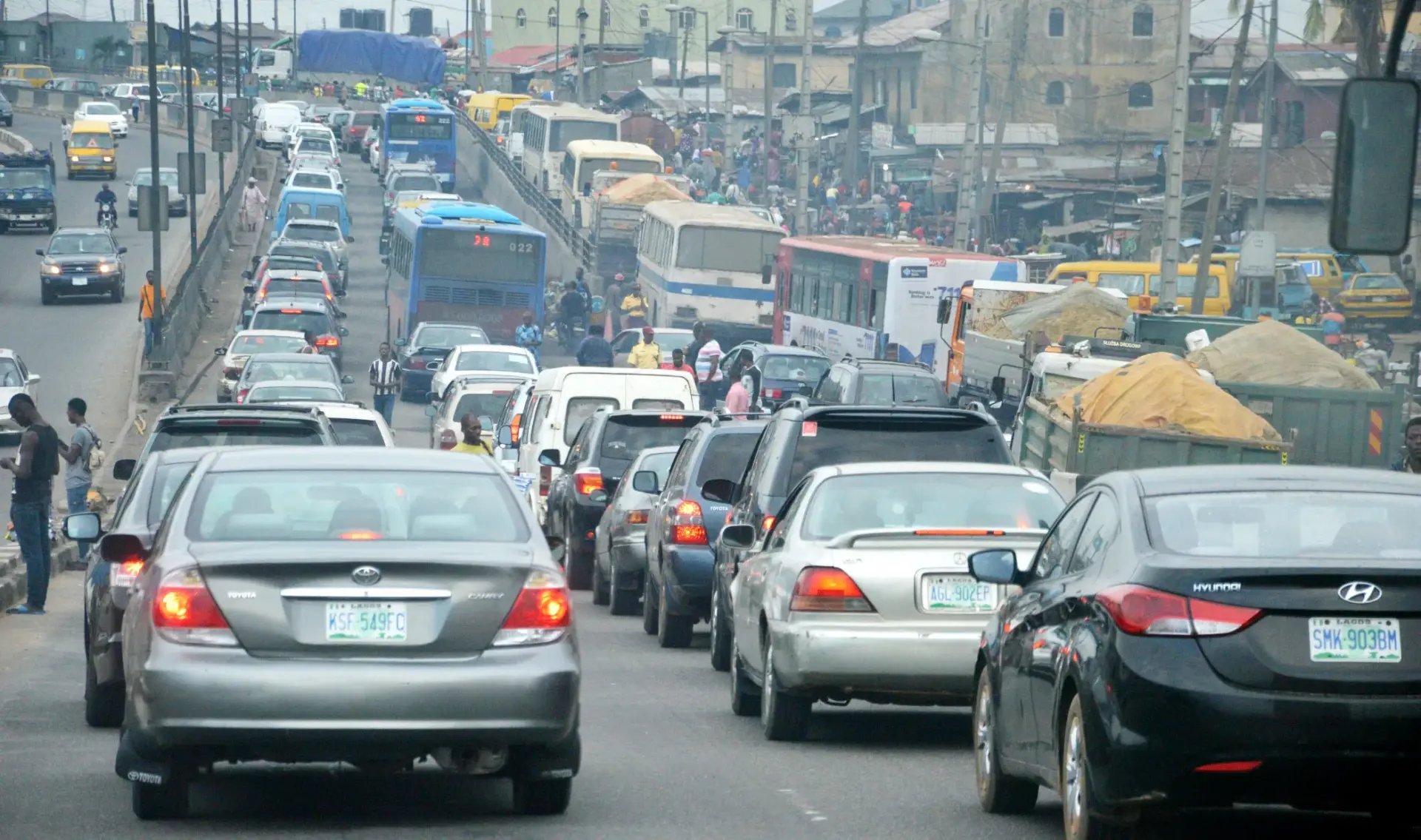
The logic is straightforward. If you can see a red light or a queue building up 300 metres ahead, you have the option to lift off the accelerator now and coast gradually toward it rather than accelerating to 40 mph and then slamming the brakes at the last moment. Both approaches get you to the same red light. One of them wastes a significant amount of energy. The other uses almost none.
Pay attention to traffic light cycles. Many urban traffic lights follow a pattern you can learn over time on your regular routes. If the light is red and you know it typically changes every 60 seconds, there is no point accelerating toward it. Roll in slowly, let the light change, and you can pull away without ever having stopped, saving both fuel and brake pad wear in a single smooth manoeuvre.
4. Maintain a Proper Following Distance
Keeping a two to three second gap between yourself and the vehicle ahead is not just a safety measure, it directly improves fuel economy. The mechanism is simple: more space means more time to see and react to what is happening ahead of the car in front of you. More reaction time means more opportunity to use engine braking and coasting rather than sudden braking.
Drivers who tailgate are effectively forcing themselves into a constant cycle of sudden acceleration and hard braking. They can only react to what the car immediately ahead does, not what is actually happening further down the road. This reactive driving style is one of the most fuel-hungry ways to navigate traffic. Increase the gap, and you gain the ability to drive proactively rather than reactively.
5. Use Engine Braking Consistently
Engine braking is what happens when you lift off the accelerator in a lower gear and let the engine’s natural resistance slow the car, rather than using the brake pedal. On modern fuel-injected engines, the fuel cut-off during engine braking means the engine uses essentially zero fuel during this phase. You are decelerating for free.
A common mistake is to shift into neutral when approaching a stop and coast with the clutch in. This feels like the right thing to do, you are not revving the engine, after all, but it actually costs more fuel. When the gearbox is in neutral and the engine is disconnected from the drivetrain, the engine needs a small amount of fuel just to idle and keep itself running. When you engine brake in gear, the fuel cut-off engages and fuel consumption drops to zero for the duration of the deceleration.
Keep the car in gear, lift off the accelerator early when you see a reason to slow down, and let the engine do the slowing work. Use the brake pedal only for the final stop or in situations that require faster deceleration. Your fuel consumption and your brake pads will both benefit from this habit.
6. Use Air Conditioning Strategically
Air conditioning is a significant load on the engine. Depending on the engine size and the ambient temperature, running the air conditioning can increase fuel consumption by 10 to 20 percent. That is a number worth taking seriously, especially if you commute daily in hot weather.
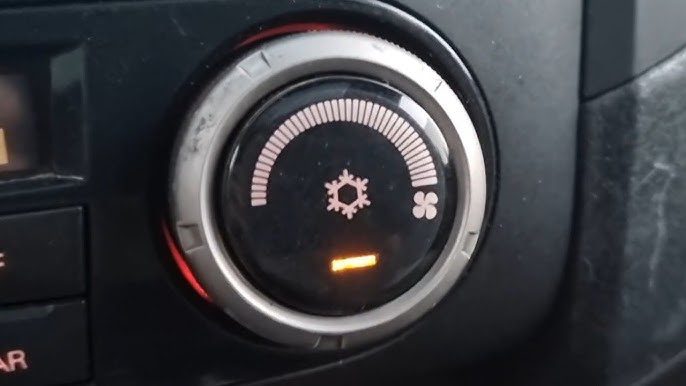
This does not mean suffering through summer heat in the name of fuel economy. It means being smart about when and how you use it. Some practical approaches:
- Park in the shade wherever possible to reduce cabin temperature buildup
- If the car has been baking in the sun, open the windows and drive for a minute or two to flush the hot air out before engaging the air conditioning, the system cools a 30-degree cabin much faster than a 50-degree one, and uses less fuel in the process
- Once the cabin is at a comfortable temperature, reduce the air conditioning intensity rather than maintaining maximum cooling unnecessarily
- At low city speeds, open windows may be more efficient than air conditioning. At motorway speeds, the aerodynamic drag from open windows costs more fuel than the air conditioning would, at that point, use the air conditioning and keep the windows up
7. Reduce Unnecessary Weight in the Car
Many drivers are unknowingly hauling 20 to 30 kilograms of unnecessary weight in their cars at all times. Tools left permanently in the boot, sports equipment that never gets used, bags of items meant for charity donation, a full tank of fuel when half would suffice, it adds up.
Every additional 30 kilograms (roughly 66 lbs) of weight increases fuel consumption by approximately 1 to 1.5 percent. That might sound small, but if you are carrying an extra 60 kilograms, that is 2 to 3 percent more fuel burned on every journey, every day, across every mile you drive this year. The maths compound quickly.

Remove roof racks and bike carriers when they are not in use. Beyond the weight, roof racks dramatically increase aerodynamic drag even when empty, some studies suggest an empty roof rack can increase fuel consumption by 10 percent or more at motorway speeds. Take it off when it is not needed. The time it takes to fit it back when you actually need it is a worthwhile trade for the fuel savings in the meantime.
8. Keep Your Tyres at the Correct Pressure
Under-inflated tyres are one of the most common and most easily corrected causes of unnecessary fuel consumption. A tyre that is below its recommended pressure deforms more as it rolls, increasing what is known as rolling resistance, the friction between the tyre and the road that the engine has to overcome with every revolution of the wheel.
The correct tyre pressure for your vehicle is printed on a sticker inside the driver’s door jamb or in the owner’s manual. Check your pressures at least monthly and always before a long journey. Tyres lose pressure naturally over time, typically around one PSI per month, so regular checks are genuinely necessary, not just good practice.
Some drivers inflate tyres slightly above the manufacturer’s recommendation in pursuit of better fuel economy. This can provide a marginal gain, but it also reduces the tyre’s contact patch with the road, which affects braking performance and handling. Following the manufacturer’s specification gives you the right balance between efficiency and safety.
Two additional tyre-related points worth noting:
- Running winter tyres in summer substantially increases rolling resistance; winter tyres use a softer compound and different tread pattern designed for cold conditions, both of which create more friction on warm dry roads. Use the right tyre for the season.
- Low rolling resistance tyres (sometimes marketed as eco or fuel-saving tyres); use tread compounds and patterns specifically engineered to minimise rolling resistance. If you are due for new tyres, choosing a low rolling resistance model can reduce fuel consumption by 3 to 8 percent on its own.
Tyre management alone can account for up to a 10 percent improvement in fuel economy, one of the highest single-factor impacts on this list.
9. Stay Away From Miracle Fuel-Saving Devices
Fuel prices are high enough that an entire industry has grown up around products claiming to dramatically reduce fuel consumption with minimal effort. Fuel line magnets, intake vortex generators, miracle additives, chip boxes, the promises are consistent: dramatic fuel savings, effortless improvement, limited risk.

The reality is equally consistent: independent testing repeatedly shows that the vast majority of these products produce no measurable improvement in fuel economy under real-world conditions. Some produce small, statistically insignificant variations that can be explained by driving condition differences during the test. Most produce nothing at all.
Legitimate engine remapping from reputable specialists can improve performance and efficiency on certain vehicles, but it comes with caveats, it alters emissions performance, can affect warranty coverage, and the results vary significantly between engine types and applications. It is not a simple bolt-on fix, and it is not appropriate for every vehicle.
Save the money you would spend on miracle products. The habits described in this article are free, proven, and produce genuine results.
10. Stay on Top of Oil and Filter Changes
A well-maintained engine operates more efficiently than a neglected one. When the engine has to work harder to overcome internal friction from degraded oil, or to pull air through a partially clogged filter, it burns more fuel to produce the same power output. The driver does not necessarily notice any change in performance, the engine compensates by burning more fuel, which is exactly why this form of efficiency loss goes undetected for so long.
A clogged air filter alone can increase fuel consumption by up to 12 percent. That is the equivalent of paying 12 percent more for your fuel, for the cost of an air filter replacement that typically runs between $15 and $40 depending on the vehicle. The return on investment is obvious.
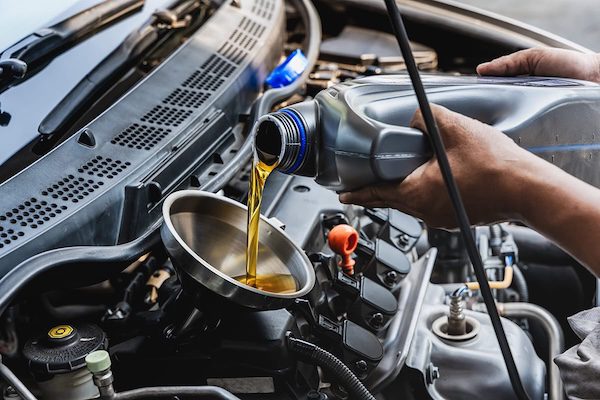
Engine oil loses its effectiveness over time as its additive package depletes and viscosity changes. Oil that has degraded beyond its useful life increases internal friction, requiring the engine to work harder. Changing the oil on schedule, typically every 9,000 miles or annually on most modern engines, though always follow your manufacturer’s specification, keeps internal friction at its designed minimum.
11. Avoid Very Short Trips Where Possible
Cold engines consume dramatically more fuel than warm ones. During the first mile or two after a cold start, many vehicles burn fuel at a rate equivalent to as little as 12 miles per gallon, regardless of how efficiently the engine performs once fully warmed up. The cold-start enrichment that modern engines use to run cleanly and smoothly when cold is genuinely fuel-hungry.
If your trip is genuinely short, a journey you could reasonably walk or cycle in 10 to 15 minutes, the car never has the opportunity to warm up and reach its normal operating efficiency. The entire journey is completed on a cold, inefficient engine. Beyond the fuel cost, frequent short cold trips are particularly hard on engine components: oil does not fully circulate and warm up, moisture in the engine does not evaporate as it would during a longer run, and carbon deposits accumulate more quickly.
Where possible, combine short errands into a single trip rather than making several separate ones. Or use alternatives for genuinely short distances. Your engine will thank you with lower consumption and longer service life.
12. Cruise at 37 to 62 mph Where Conditions Allow
Most petrol and diesel engines achieve their best fuel economy at cruising speeds in this range. Below roughly 37 mph, the engine is typically operating at low load but in a lower gear, which is not where efficiency peaks. Above 62 mph, aerodynamic drag increases dramatically and the engine has to work progressively harder to maintain speed.
The aerodynamic drag on a car increases with the square of its speed. Going from 60 mph to 70 mph does not add 17 percent more drag. The relationship is exponential, not linear. At 80 mph, a car is fighting significantly more than twice the aerodynamic resistance it faces at 60 mph. The engine compensates by burning substantially more fuel. On long motorway journeys, the difference between cruising at 70 mph versus 80 mph can represent a 15 to 25 percent increase in fuel consumption.
13. Switch Off Unnecessary Electrical Loads
Your alternator generates electricity by converting mechanical energy from the engine into electrical current. Every electrical device you run in the car draws current from the alternator, which in turn draws slightly more power from the engine, which burns slightly more fuel to compensate.
Individually, most electrical loads are minor. But they accumulate. Heated rear window, heated seats, heated mirrors, maximum blower fan speed, interior lighting, phone chargers, running all of these simultaneously creates a meaningful load on the alternator. Switch off anything you are not actively using, particularly heated elements that you often forget to turn off once the initial chill is gone.
14. Choose the Right Engine Oil for Fuel Economy
Not all engine oils are equal when it comes to fuel economy. Lower viscosity oils flow more easily through the engine, reducing internal friction and allowing the engine to run more efficiently. Modern low-viscosity oils like 0W-20 and similar grades with low High-Temperature High-Shear (HTHS) viscosity ratings, specified by standards like A5/B5, are formulated specifically with fuel economy in mind.
The key is using the oil grade that your manufacturer specifies for your engine. Using a thicker oil than recommended does not provide extra protection on a modern engine, it just creates more internal friction and reduces fuel efficiency. Using the correct low-viscosity oil for your engine, changed at the correct intervals, gives you the efficiency benefit that the engine was designed to deliver.
If your car manufacturer approves a low-viscosity grade for your engine, switching to it at your next oil change is one of the easiest efficiency improvements available with no driving habit changes required.
The interesting thing about fuel economy driving is that most of these habits make you a better, safer driver at the same time. Smoother acceleration, better following distances, reading traffic further ahead, using engine braking, these are all characteristics of a skilled, confident driver, not just a frugal one. Better fuel economy is the reward that comes with better driving. Start with two or three of these changes and measure the difference over a full tank cycle. The results might genuinely surprise you.