

You press the brake at a red light, you’re expecting the engine to cut off, and… nothing. The car just idles like an older model. If you’re new to auto start-stop, that moment can feel like a failure—especially when the feature was advertised as a fuel-saving highlight. But before you assume something is broken (or schedule a service appointment), it helps to understand a truth most owners never hear from the salesperson:
Your start-stop system is “allowed” to work only when the car decides conditions are safe and beneficial. If those conditions aren’t met, the engine will keep running by design. In many cases, the system is doing exactly what it’s supposed to do—protecting battery reserve, maintaining cabin comfort, preserving braking and steering assistance, and preventing excessive engine cycling in situations where fuel savings would be minimal.
This guide explains why your auto start-stop stays dormant, how to tell normal inhibition from a real fault, and what you can realistically do to restore operation—without wasting money on unnecessary repairs.
It’s Not a Bug, It’s a Feature
Here’s the thing most drivers don’t realize: your auto start-stop system is designed to stay off under dozens of different conditions. Engineers intentionally built these safeguards to prevent the feature from creating new problems—like a dead battery, reduced braking assist, overheating, or poor drivability. When the engine refuses to shut down, it is usually obeying programming rules rather than malfunctioning.
Start-stop systems are tightly integrated with the vehicle’s control network. Depending on the manufacturer, the system may consult:
- Battery Management System (BMS)
- Engine Control Module (ECM/PCM)
- Transmission Control Module (TCM)
- HVAC control module
- ABS/ESC module (brake pressure and stability inputs)
- Steering angle sensors and/or steering assist controller
The system monitors everything from engine temperature and battery charge to brake vacuum reserve and cabin cooling demand. If any single input is outside its acceptable range, the system stays inhibited. That’s why owners can experience “start-stop doesn’t work” on one day and “works perfectly” the next—nothing is broken; the conditions simply changed.
Your Engine Isn’t Warm Enough Yet
Cold engines and start-stop don’t mix. Your engine needs to reach normal operating temperature—often roughly 160°F to 200°F—before the system allows auto-stop events. This is especially true in cold weather or after short, low-speed trips.
Why the system blocks start-stop when cold:
- Oil viscosity: cold oil is thicker. Frequent restarts can increase wear and drain battery reserve more quickly.
- Emissions strategy: the catalytic converter needs to reach “light-off” temperature to reduce emissions properly.
- Transmission drivability: cold transmission fluid can delay engagement after restart or create harshness.
Your transmission fluid needs warmth too. If it’s cold and sluggish, you may notice a hesitation or delay when you try to move immediately after the engine restarts. To avoid that awkward “restart then lag” sensation, many vehicles won’t perform auto-stop until the fluid is warm enough.
Quick fix: On short trips, your engine may never warm up enough. Take a longer drive occasionally so the coolant, oil, transmission fluid, and catalyst can reach stable operating temperature.
| What Needs to Heat Up | Temperature Required | Why It Matters |
|---|---|---|
| Engine coolant | 140-160°F | Reduces cold-start wear and activates emissions control |
| Transmission fluid | 122°F minimum | Ensures quick gear engagement after restart |
| Ambient air (lower limit) | Above -5°F | Protects battery from excessive cold discharge |
| Ambient air (upper limit) | Below 122°F | Prevents engine overheating during idle periods |
Your Battery Isn’t Charged Enough
This is the number one reason drivers experience disabled start-stop systems. Start-stop is fundamentally a battery-heavy feature: every engine restart takes energy, and the car must guarantee that it can restart the engine every single time—no exceptions. To do that, modern start-stop vehicles use AGM (Absorbent Glass Mat) or EFB (Enhanced Flooded Battery) technology designed for frequent cycling.
Your car’s Battery Management System (BMS) usually tracks three critical metrics:
- State of Charge (SOC): how “full” the battery is right now
- State of Health (SOH): how much capacity the battery still has compared to new
- State of Function (SOF): whether the battery can deliver the required starting power reliably
If SOC drops below a typical threshold (often around 75–80%), start-stop is disabled to preserve enough reserve for a guaranteed restart and critical electronics. This happens constantly in real life, especially for drivers who make short trips.
Short trips “starve” the battery. A 5–10 minute drive might not be long enough for the alternator (or DC/DC system in some vehicles) to replenish the energy used during the start, plus the energy consumed by lights, fans, heated seats, infotainment, defrosters, and charging your phone. Over days and weeks, the battery gradually ends up in a lower state of charge—and the start-stop feature is quietly switched off.
What to do: Take a 20–30 minute highway drive once a week. That consistent drive gives the charging system time to restore SOC. If you rarely drive long enough for proper recharge, a smart battery maintainer can also help (especially in winter)—but the highway drive is the simplest place to start.
You Replaced Your Battery Without Registering It
Did you recently install a new battery? If a technician didn’t “register” or “code” it to your vehicle’s computer, your start-stop system may not behave correctly—even if the battery is brand new.
Here’s why registration matters: as batteries age, their internal resistance changes and usable capacity drops. The BMS learns that aging behavior over time and compensates by adjusting charging strategy (often increasing charging voltage or altering charge patterns). If you install a new battery without telling the BMS, the car continues to treat the new battery like the old worn battery.
The consequences can include:
- Overcharging the new battery
- Premature battery aging
- Persistent “start-stop inhibited” behavior because the system still believes battery health is poor
Professional fix required: Battery registration typically requires a diagnostic tool. Many independent shops, dealerships, and some well-equipped parts stores can do this. If your start-stop stopped working immediately after battery replacement, registration is one of the first things to verify.
Your Climate Control Is Running Too Hard
Your climate system is not “just a fan.” It’s a load-management priority system, and start-stop must respect comfort and safety rules. If you’re demanding maximum cooling on a hot day, your vehicle may keep the engine running so the AC compressor can maintain cabin temperature. On many vehicles, the compressor is belt-driven—meaning it needs the engine turning to produce cooling.
The HVAC module constantly monitors cabin conditions. If the difference between your requested temperature and the cabin’s actual temperature exceeds a threshold (often around 3–5°F), start-stop may be blocked. Defrost mode can also override start-stop because windshield visibility is considered safety-critical.
Some vehicles will allow the engine to stop briefly and then restart automatically if cabin temperature rises too quickly or humidity increases. This is normal behavior, not a defect.
Try this: Reduce your fan speed, raise the temperature setting slightly, or turn off MAX AC. If the HVAC demand drops, the system may allow start-stop to engage at the next stop.
You’re Driving in Stop-and-Go Traffic
It sounds counterintuitive, but heavy traffic can disable start-stop. Many systems require you to exceed an initial speed threshold—often around 3–5 mph—before the feature becomes “armed” after startup.
Between auto-stop events, many vehicles require you to reach about 6–12 mph for a couple seconds. This prevents rapid cycling (stop-start-stop-start) in crawling traffic, where fuel savings are minimal and wear on electrical components would be unnecessary.
In other words, if you’re inching forward in a queue without ever reaching the speed and time thresholds, your car may keep the engine running because the system is trying to avoid excessive cycling.
You’re Turning the Steering Wheel
Sharp turns and parking maneuvers commonly inhibit start-stop. When the steering angle changes significantly, the system interprets that as active maneuvering and keeps the engine running.
Why? Steering assist is a safety and effort factor. Some vehicles reduce steering assistance when the engine stops (especially systems with hydraulic assistance or hybrids with different assist strategies). Rather than risk heavy steering during a maneuver, the software chooses the conservative path: engine stays on.
You’re on a Steep Hill
If your car detects you’re on an incline beyond a threshold (often around 5–7 degrees), start-stop may be disabled. This is a rollback-prevention decision. Even a small restart delay can matter on a hill—especially if you release the brake and the engine is still waking up.
Full torque control matters on hills, so the computer prioritizes stability and safety over fuel economy.
Your Brake Vacuum Is Low
Many vehicles use a vacuum brake booster. With the engine running, intake vacuum helps provide braking assist. When the engine stops, the brake system relies on stored vacuum in a reservoir.
If you pump the brakes while stopped, that reserve can be depleted. Once vacuum falls below a threshold (often equivalent to around 6–8 psi depending on design), the system will restart the engine to restore vacuum and guarantee safe brake assist. This is one of the least understood but most important safety override behaviors.
If there’s a faulty brake booster pressure sensor or a vacuum leak, the system may disable start-stop entirely because it cannot guarantee braking performance. In those cases, you’ll often see a warning state rather than a simple “inhibited” icon.
If you pump the brakes while stopped, you deplete this reserve. Once pressure drops below a critical threshold (typically around 6-8 psi), the engine automatically restarts to replenish the vacuum.
Your Diesel Is Regenerating Its Particulate Filter
Diesel owners have an additional start-stop blocker: DPF regeneration. Your Diesel Particulate Filter traps soot, and the vehicle periodically burns it off at very high temperatures (often exceeding 1,100–1,200°F) to prevent clogging.
During active regeneration, shutting the engine off would cool the exhaust and interrupt the cleaning process. Interruptions can lead to increased soot loading and eventually require forced regeneration or dealer service. To prevent that, start-stop is commonly inhibited during regen events.
Mostly city driving? Your diesel may not get hot enough for passive regeneration, which can trigger more frequent active regens and therefore more frequent start-stop inhibition.
Your Transmission Isn’t in the Right Gear
Start-stop logic is sensitive to gear selection because the system must be absolutely sure the vehicle won’t move unexpectedly. Automatic transmission vehicles typically require the selector in Drive with brake applied. If you shift into Reverse, Sport, or certain manual shift modes, many systems disable start-stop immediately.
Manual transmission cars commonly require neutral with the clutch fully released. If the clutch position sensor, neutral switch, or related wiring is faulty (or misadjusted after clutch work), the ECU may never receive the “safe to stop” signal.
Check this: If you recently had clutch work done and start-stop stopped working afterward, sensor adjustment is a realistic possibility. This is especially true if other driveability quirks appear (starter interlock issues, cruise control oddities, etc.).
What Your Dashboard Is Actually Telling You
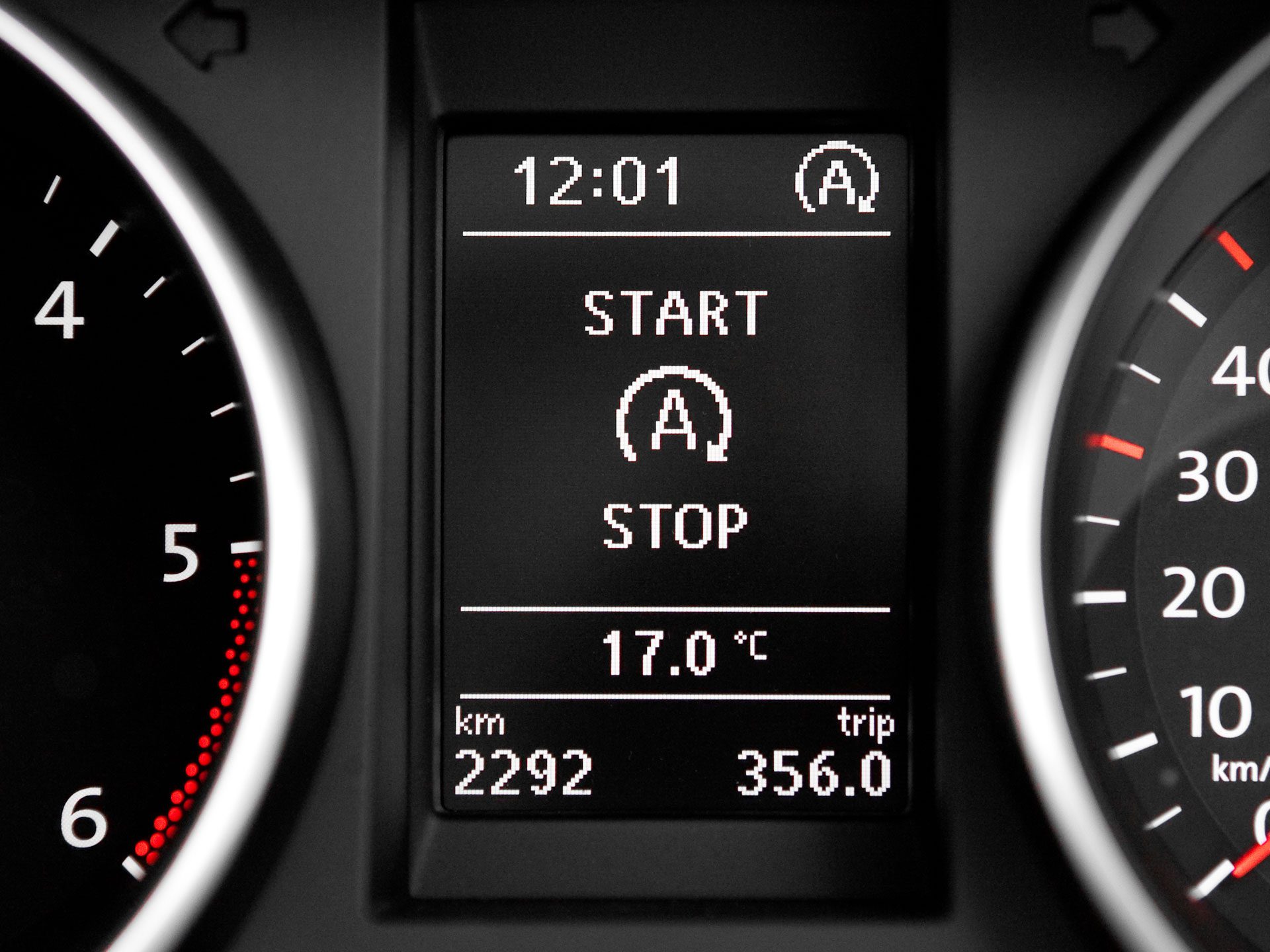
Most cars use an “A” with a circular arrow icon. The icon’s color and style matter. Here’s what the different states typically mean:
- Green icon: System is active and engine is currently stopped
- White/gray icon with slash: System is enabled but inhibited by one of the normal conditions we’ve covered
- Amber warning with message: Actual system fault detected—time for diagnostics
The difference between “inhibited” and “fault” is where many owners get misled. Inhibited is normal and temporary. Fault suggests a sensor, module, or system has logged an error that requires troubleshooting.
| Dashboard Message | What’s Really Wrong | Your Next Step |
|---|---|---|
| “Battery Charging” | SOC below threshold | Take a longer drive to recharge |
| “Engine Running for Comfort” | HVAC demand too high | Adjust climate settings |
| “Start-Stop System Fault” | Sensor or module error | Scan for diagnostic codes |
| “Hood Ajar” | Latch switch malfunction | Check hood latch and wiring |
The System Won’t Damage Your Car
Despite what you may have heard, frequent starts do not harm modern engines when start-stop is properly engineered. Vehicles equipped with start-stop are built for this duty cycle. Depending on the manufacturer, that can include:
- Reinforced starter motors or starter solenoids
- Upgraded engine bearings and crankshaft support strategies
- Improved battery technology (AGM/EFB) and smarter charging control
- Enhanced lubrication strategies to reduce restart friction
Also, a start-stop event is not a cold start. The engine is already warm, oil is at a normal viscosity, and the restart happens quickly. Some vehicles use belt-driven starter generators (BSG) or integrated starter generators that can restart the engine in roughly 0.4 seconds with minimal vibration and noise.
The fuel savings are real—typically 3–7% in city driving depending on route, traffic, and how often the system can actually engage. Your vehicle was designed for this. When properly maintained, the system is expected to last as long as the rest of the car.
Real Faults vs. Normal Inhibition
Genuine failures are less common than most drivers assume. Before you conclude the system is broken, work through the basics below. I’ve kept the original checklist but reordered it into a more diagnostic-friendly sequence.
- Verify recent battery replacement was coded. This is one of the most overlooked causes of persistent start-stop inhibition.
- Check your battery age. If it’s over 3–4 years old and you mostly drive short trips, a weak battery can disable the system even if the car starts normally.
- Look for specific fault codes. Diagnostic codes like P0A08 (DC/DC converter) or P0705 (transmission range sensor) point to actual problems.
- Consider software updates. Some manufacturers release updates to fix SOC calculation errors or environmental logic thresholds that are too strict.
If you’ve ruled out normal inhibitors and still see fault messages, professional diagnostics are the next step—especially if warnings relate to braking, charging, or transmission sensors.
Should You Use an Auto-Stop Eliminator?
Auto-stop eliminators (aftermarket devices that disable start-stop permanently) are popular, but it’s worth being clear about what they do and what they don’t do. They do not magically improve reliability or extend the life of components beyond what the vehicle already accounts for. Start-stop systems were engineered with upgraded starters, batteries, and control logic specifically to support frequent cycling.
What an eliminator typically changes is your fuel use and emissions. Disabling start-stop generally increases city fuel consumption by roughly 3–7% and increases idle emissions accordingly. It may also affect warranty considerations depending on how the device interfaces with the vehicle.
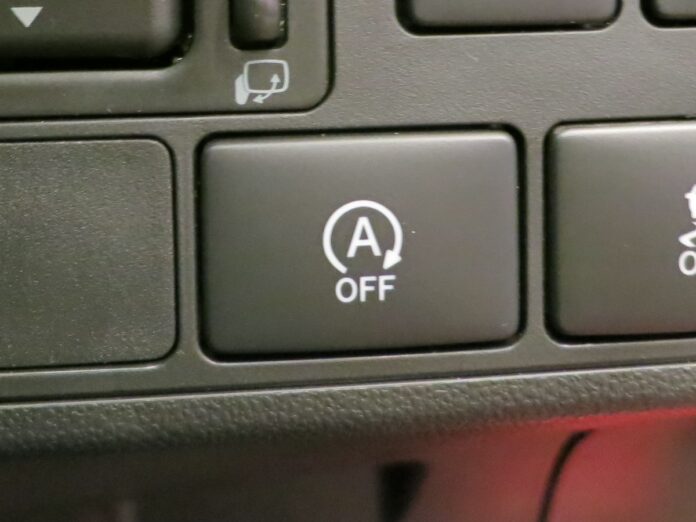
If the feature genuinely annoys you, most vehicles offer a manual disable button you can press after starting the car. It’s less permanent, less invasive, and avoids adding an aftermarket device into your vehicle’s electronics.
The Bottom Line
When your auto start-stop doesn’t activate, it’s usually protecting something—your battery reserve, cabin comfort, braking and steering assistance, drivetrain operation, or engine temperature management. The system includes numerous safeguards that keep it dormant under conditions where stopping the engine would be inconvenient, unsafe, or hard on electrical reserves.
Cold engines, short trips, heavy climate control demand, and low battery charge are the most common reasons start-stop stays inactive. Real faults do happen, but they’re far less frequent than normal operational inhibition. Before spending money, read your dashboard messages carefully, ensure your battery is healthy (and properly registered if replaced), and allow the vehicle to reach proper operating temperature.
Your start-stop system likely isn’t broken. It’s waiting for the right conditions to do its job.