
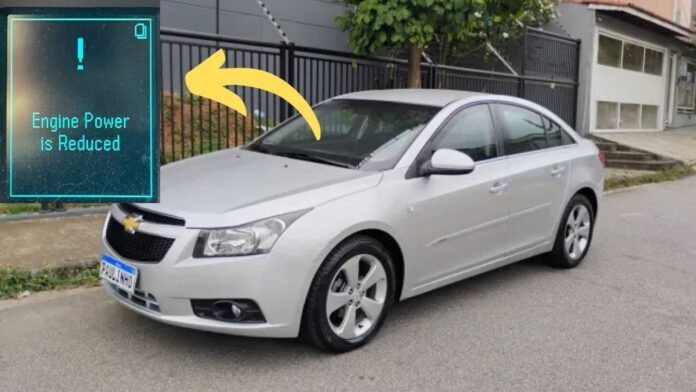
If your Chevy Cruze just flashed a “Reduced Engine Power” warning, you already know something’s off. The car feels sluggish, won’t accelerate properly, and might even struggle to keep up with traffic. It’s not your imagination — the engine control system has deliberately limited your power output because it detected a problem with the throttle body, a sensor, or the electronic communication that keeps everything running smoothly.
Here’s the good news: this warning doesn’t always mean something catastrophic happened. In many cases, you’re dealing with a dirty throttle body, a flaky sensor, corroded wiring, or a software hiccup that can be diagnosed and fixed without draining your bank account.
Let’s break down exactly what’s going on, which parts are most likely involved, and how to get your Cruze driving like itself again.
What “Reduced Engine Power” Actually Means in Your Cruze
Think of this warning as your car’s version of self-preservation. The engine management system spotted something it doesn’t like — maybe a wonky sensor signal, a throttle response that doesn’t match pedal input, or an airflow reading that seems off — and decided to play it safe by cutting power.
The engine isn’t necessarily falling apart. Your Cruze’s computer is just saying, “I don’t trust the data I’m getting, so I’m going to limit what this engine can do until someone figures it out.” It’s a fail-safe, not a death sentence.
But here’s the thing — it makes driving genuinely difficult. Hills feel like mountains. Merging onto the highway becomes a white-knuckle experience. Even pulling away from a stoplight can feel painfully slow. The car still runs, but it no longer performs the way you need it to.
Unlike older vehicles with a direct mechanical link between the gas pedal and throttle plate, the Cruze uses electronic throttle control. Everything runs through sensors and software. The ECU reads your pedal input, checks throttle position, monitors airflow, and then decides how much power to deliver. When any piece of that chain sends questionable data, the system gets conservative — fast.
What It Feels Like When It Happens
The most obvious sign is the warning message itself popping up on the dash, usually while you’re driving. Once it appears, you’ll notice the engine barely responds when you press the gas. You might push the pedal halfway down and get almost nothing in return — just a sluggish, reluctant creep forward.
The check engine light almost always tags along. Behind the scenes, the computer has stored one or more diagnostic trouble codes related to throttle performance, pedal position, airflow, or voltage problems. Those codes are your starting point for figuring out what went wrong.
In more severe cases, the car enters what mechanics call limp mode. Speed gets capped, shifting feels weird, and even light throttle barely does anything. It’s designed to get you off the road safely — not to get you across town comfortably.
Pay attention to the subtle warning signs too. Many Cruze owners report a brief hesitation when accelerating, a momentary stumble leaving a stop, or a rough idle that comes and goes — all before the full reduced power warning shows up. Those early symptoms are the car telling you a component is starting to fail, not that it’s already broken. Catching it at that stage can save you a lot of hassle.
What Usually Triggers the Warning
Throttle-related problems sit at the top of the list. A dirty or failing throttle body is one of the most frequent culprits — carbon buildup restricts the throttle plate, the internal motor gets erratic, or the position doesn’t match what the ECU expects. The Cruze needs precise airflow control, and when that precision disappears, the computer reacts quickly.
The accelerator pedal sensor and throttle position sensor (TPS) are right behind it. These sensors tell the computer how much gas you’re requesting and whether the throttle body is actually doing what it’s told. If those signals disagree or drift outside normal range, the ECU treats it as a serious problem. It can’t allow full power if it doesn’t trust the relationship between your foot and the throttle plate.
Diagnosing this properly starts with an OBD-II scanner. Plug it in, read the fault codes, and use them as a map — not a final answer. A throttle code might point to the throttle body itself, but it could also be caused by damaged wiring, a corroded connector, or a voltage drop somewhere upstream. That’s why good diagnosis involves codes, live data, visual inspection, and electrical testing before you commit to replacing anything.
Swapping parts based on internet guesses is one of the most expensive ways to fix this problem. A disciplined approach — reading codes, watching live sensor data, checking wiring — almost always gets you to the real cause faster and cheaper.
Why the ECU Is the Real Decision-Maker
The Engine Control Unit (ECU) is the brain behind everything. It’s constantly processing data from dozens of sensors — throttle position, pedal input, airflow, coolant temperature, oxygen levels — and making thousands of real-time adjustments to fuel delivery, ignition timing, and throttle response. It’s doing all of this while you’re just focused on driving.
When the ECU gets a signal that doesn’t make sense — say the throttle body reports it’s open 30% but the pedal sensor says you’re only requesting 10% — it sees a potential risk. Rather than guessing and hoping for the best, it cuts power. That’s the “Reduced Engine Power” warning in action.
This is worth understanding because some reduced power problems aren’t caused by broken parts at all. Sometimes it’s a miscommunication — a noisy sensor signal, a corroded wire, or a software logic issue. The ECU is doing exactly what it was designed to do. The challenge is figuring out why it felt the need to intervene.
The ECU also stores valuable evidence. Fault codes, freeze frame data, and conditions under which the fault occurred are all recorded. That information is a diagnostic goldmine. Instead of guessing whether it’s the throttle body, pedal sensor, or wiring, you can use the ECU’s own logs as a roadmap to the actual problem.
The Parts Most Likely to Kill Your Engine Power
Engine performance in the Cruze isn’t controlled by one magic component. It’s the result of several systems working in sync — the throttle body managing airflow, oxygen sensors fine-tuning the fuel mix, pedal sensors interpreting your intentions, and supporting electronics verifying it all checks out. One unreliable signal from any of these, and the ECU might decide full power isn’t safe.
Let’s look at the components that cause the most trouble.
Throttle Body and Throttle Position Sensor
The throttle body controls how much air gets into your engine. In the Cruze, it’s electronically managed — no cable, no mechanical linkage. The ECU commands it to open or close based on sensor data, and the system needs to know exactly where that throttle plate is at all times. Precision matters here.
Carbon and oil residue build up on the throttle plate over time. It’s normal, but eventually, that gunk makes the plate sticky, restricts airflow at low openings, and causes hesitation or unstable idle. If it gets bad enough, the ECU sees the inconsistency and pulls the plug on full power. A good cleaning with proper throttle body cleaner often fixes this — but if the internal motor or electronics are failing, cleaning won’t cut it.
The throttle position sensor (TPS) tells the ECU exactly how far the plate is open. If that signal gets erratic — jumping around, reading incorrectly, or disagreeing with the commanded position — the computer interprets it as a fault. The ECU constantly compares what it told the throttle to do versus what the TPS says actually happened. A mismatch beyond a certain threshold triggers reduced power immediately.
When diagnosing this area, check for contamination, verify the plate moves smoothly, and review live data on a scan tool. If the throttle angle reading jumps around or doesn’t track with pedal input, you’re likely looking at a replacement. Getting this right makes a huge difference — airflow control affects virtually every aspect of how the engine responds.
Oxygen Sensors and Diesel Particulate Filter
O₂ sensors monitor oxygen levels in the exhaust and help the ECU dial in the perfect air-fuel mixture. When they’re working, combustion stays efficient and clean. When they start failing, the ECU gets bad data about what’s happening inside the engine, which can lead to poor fuel trims, rough running, and eventually — you guessed it — reduced power.
A failing O₂ sensor doesn’t always scream for attention right away. You might just notice slightly worse fuel economy or a subtle loss of responsiveness before the check engine light finally comes on. But because the Cruze relies on tight fuel control, even a partially degraded O₂ sensor can push the system past its comfort zone.
For diesel Cruze models, the diesel particulate filter (DPF) adds another wrinkle. Its job is trapping soot from exhaust emissions. Over time, especially with lots of short trips, the DPF can clog up because the car never gets hot enough or runs long enough to complete a regeneration cycle. A clogged DPF creates exhaust backpressure that chokes the engine. The result? Significant power loss and potential warning messages.
Fixing a DPF issue isn’t always about replacing it. Sometimes a proper regeneration cycle, either through driving conditions or a professional service, can clear things up. But if soot loading got out of hand, you’ll need to figure out why — short trips, injector problems, or failed regen events could all be contributing factors.
Accelerator Pedal Sensor and Brake Pedal Sensor
When you step on the gas in a Cruze, you’re not pulling a cable — you’re sending an electronic signal. The accelerator pedal sensor measures how far you’ve pressed and relays that to the ECU, which then tells the throttle body what to do. If that sensor starts giving unreliable readings, the ECU can’t trust what you’re asking for and shuts things down to be safe.
A dying pedal sensor might cause delayed throttle response, uneven acceleration, hesitation when you try to speed up, or a sudden dive into reduced power mode. Most of these assemblies use dual signal tracks internally for cross-checking. When the two readings disagree, the computer assumes it can no longer reliably interpret driver demand. That’s a big deal in an electronically controlled powertrain.
The brake pedal sensor plays a less obvious role, but it still matters. If it sends incorrect signals, the system might misinterpret braking input, which can interfere with throttle response or trigger unexpected safety strategies. It’s not the usual suspect in reduced power cases, but it’s worth checking when other explanations don’t pan out.
During diagnosis, technicians compare accelerator pedal position, throttle response, and brake switch status in live data to make sure everything lines up. When these inputs are all telling the same story, the Cruze drives smooth and predictable. When they don’t agree, even slightly, the ECU gets cautious — and you feel it instantly.
How to Fix Reduced Engine Power (Step by Step)
The worst thing you can do is start throwing parts at the problem. The best thing? A systematic approach — scan the codes, inspect the components, test the circuits, and then fix what’s actually broken. This warning can come from multiple systems, so jumping to conclusions usually wastes time and money.
The encouraging part is that the most common causes are genuinely fixable. A dirty throttle body can be cleaned. Bad sensors can be tested and swapped. Wiring problems can be tracked down with a little patience. Let’s walk through the key repair areas.
Cleaning or Replacing the Throttle Body
Start here — the throttle body has a direct impact on airflow and throttle response, and it’s one of the most common offenders. Pop the intake off and take a look at the throttle plate and bore. If you see carbon buildup, oil film, or dark residue, that’s your first target.
Use a proper throttle body cleaner — not carb cleaner, not brake cleaner. Clean the plate and bore carefully, and avoid forcing the plate open in a way that might damage the electronic actuator. After cleaning, make sure everything’s reassembled tightly. Even a small air leak at an intake connection can cause new problems.
If cleaning doesn’t help — the plate still sticks, the actuator motor is inconsistent, or throttle codes come right back — you’re probably looking at a replacement. Disconnect the battery before swapping the unit, and don’t skip the throttle relearn procedure after installation. Without it, the ECU doesn’t know how to calibrate to the new part, and you might end up with a rough idle or a persistent warning even with a brand-new throttle body installed.
Also worth asking: why did the throttle body get so dirty in the first place? Normal carbon buildup happens over time, but excessive contamination can point to issues with crankcase ventilation or infrequent maintenance. If you clean the throttle body and the problem returns quickly, dig deeper into the intake system.
Testing and Replacing Faulty Sensors
Sensors like the TPS and accelerator pedal sensor deserve careful attention whenever reduced power shows up. But before you buy new parts, inspect what’s there first. Look at the connectors — are the locking tabs broken? Are the pins bent or corroded? Is there moisture inside the plug? Many “sensor failures” are actually connection failures disguising themselves as something worse.
A multimeter can help test sensor circuits if you know the expected voltage ranges. Even better, use a scan tool to watch live sensor data while you press the pedal or observe throttle movement. If the readings jump erratically, drop out, or don’t match what they should, you’ve found your problem.
When replacement is necessary, don’t forget the recalibration step. Some sensors require a relearn procedure through a scan tool after installation. Bolting in a new sensor without completing calibration can leave the ECU confused about baseline values — and the warning might stick around even though the faulty part is gone.
The key takeaway: don’t guess. A pedal sensor problem can feel exactly like a throttle body issue. A TPS fault can look like an ECU error. Codes, wiring checks, and live data — that combination gets you to the right answer without expensive trial and error.
Tracking Down Wiring and Connection Problems
Wiring problems are sneaky. They’re the reason some people replace a perfectly good throttle body or sensor and still have the same warning staring at them on the dash. The Cruze relies on clean, uninterrupted signals between sensors, actuators, and the ECU. A frayed wire, a corroded ground, or a connector that’s worked loose from vibration can create enough signal noise to trigger reduced power mode.
Do a thorough visual inspection. Look for chafed insulation near brackets, heat-damaged wires by the exhaust, corroded pins inside connectors, and any plugs that don’t click firmly into place. Pay special attention to wiring around the throttle body, pedal assembly, and ECU harness. A wire that looks fine on the outside can have an internal break — a gentle tug test and continuity check can catch those.
Fix any damaged wires properly. Use correct splicing techniques, quality connectors, and secure insulation — not electrical tape and a prayer. Test ground points and battery voltage under load too, since weak grounds and low voltage can cause erratic behavior across multiple systems simultaneously.
Once repairs are done, clear the codes, take a test drive, and monitor live data. If the ECU is finally getting clean signals from everything, the warning should disappear and throttle response should come back to normal. Wiring fixes aren’t flashy, but in an electronically managed car like the Cruze, they’re often the difference between a fix that sticks and one that doesn’t.
How to Keep This From Happening Again
Preventing reduced engine power is a whole lot easier than diagnosing it on the side of the road. While you can’t predict every failure, many of the common triggers are directly tied to maintenance — or the lack of it. The Cruze’s engine management system is sensitive to airflow quality, sensor accuracy, and electrical stability. Take care of those things consistently, and the odds of a surprise power cut drop dramatically.
The best preventive strategy? Treat small drivability changes as early warnings. A slight hesitation, a lazy throttle, a rough idle that comes and goes — these aren’t random quirks. They’re often the first signs that a component is starting to fail. Catching problems at that stage is always cheaper and less stressful than waiting for the full warning to hit.
Clean Components Run Better (and Last Longer)
Periodic throttle body cleaning makes a bigger difference than most drivers realize. Carbon buildup happens gradually — you won’t notice it day to day — but eventually it degrades airflow accuracy, idle stability, and throttle response enough to catch the ECU’s attention. A quick cleaning before things get bad is way better than dealing with the consequences of a system that’s lost confidence in itself.
While you’re at it, check for loose intake hoses, worn electrical connections, and any signs of moisture or corrosion around sensor connectors. Sometimes the ECU triggers power reduction because of something as simple as a connector that’s not fully seated. A few minutes of careful inspection can prevent a much more dramatic problem down the road.
Don’t forget your air and oil filters either. A clogged air filter affects airflow and efficiency, while dirty oil contributes to internal deposits and wear. These are cheap, easy replacements that support smooth acceleration and long-term reliability.
Stick to the Service Schedule — Seriously
Timely oil changes, spark plug replacements, and fluid checks aren’t just boxes to tick — they’re your first line of defense against performance problems. Clean oil reduces friction and helps maintain stable engine operation. Old, contaminated oil increases wear, reduces heat control, and can contribute to the kind of unstable behavior the ECU monitors constantly.
Scheduled maintenance also gives a technician the chance to spot things you might miss during normal driving. A pending code that hasn’t triggered the check engine light yet, a slightly dirty throttle body, a connector that’s starting to corrode — these are all things an experienced mechanic can catch early. That’s the difference between a $50 fix now and a $500 headache later.
Even tire rotations and alignment matter in the big picture. Properly maintained tires reduce rolling resistance and unnecessary strain on the drivetrain. It won’t fix a throttle body fault, but it’s part of keeping the whole vehicle running efficiently.
Special Considerations for Diesel Cruze Models
Diesel Cruze owners have a few extra things to watch. Fuel quality matters more than you might think — poor fuel can gum up injectors, cause rough combustion, increase soot production, and eventually trigger reduced power. Use clean, quality diesel and don’t cheap out at no-name stations if you can avoid it.
The DPF needs regular attention too. If your daily driving is mostly short trips around town, the filter may never get hot enough to complete its self-cleaning regeneration cycle. Soot piles up, backpressure builds, and power drops. Make a point of occasional highway drives to let the system do its thing, and get the DPF inspected regularly.
Driving style plays a role as well. Smooth, steady acceleration reduces strain on aging components and helps the engine management system operate more consistently. You don’t have to baby the car, but smoother habits combined with proper maintenance help diesel powertrains stay strong and predictable for a long time.
Whether your Cruze runs on gas or diesel, the principle is the same: most reduced engine power warnings are the end result of small problems that were allowed to snowball. Clean components, solid electrical connections, fresh fluids, and paying attention to how the car feels — that’s the formula for keeping this warning off your dash for good.

