
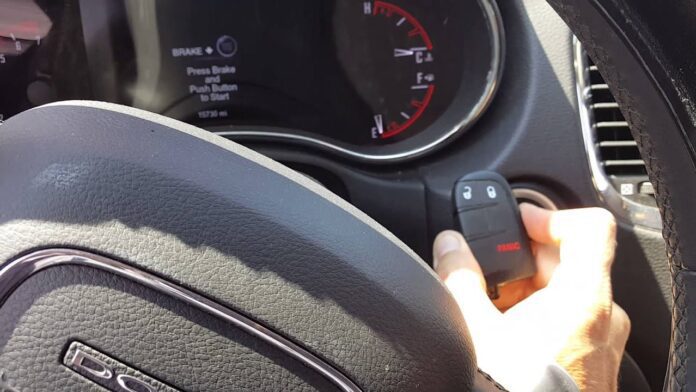
Few things are more annoying than pressing that start button and getting… nothing. Most of the time, Dodge Durango push start button problems come down to something simple — a dead key fob battery, a weak car battery, or a dirty connection. The good news? A little know-how can save you a tow truck call and a hefty mechanic bill.
How Your Durango’s Push Start Button Actually Works
The push start button system ditches the traditional metal key in favor of a wireless handshake between your key fob and the vehicle. When everything’s working right, it’s seamless — you hop in, press the brake, hit the button, and the engine fires up. But when one piece of the puzzle breaks down, the whole thing stops cooperating.
The Parts That Make It All Happen
Your key fob is the star of the show. It sends a coded signal to the vehicle, telling it “hey, I’m the real deal — go ahead and unlock and start.” Inside that fob is a small battery that powers the transmitter, and when it dies, the car can’t hear the signal.
Then there’s the starter system — the starter motor, solenoid, and relay that physically crank the engine when you press the button. A transmitter inside the car also constantly checks whether your key fob is nearby. If it doesn’t detect one, the system won’t engage.
What Happens When You Press the Button
Here’s the sequence: your key fob needs to be inside the cabin. You press the brake pedal while hitting the start button, and the system verifies the fob’s signal before telling the starter motor to do its thing. It’s designed to be quick and effortless — a true keyless experience.
If nothing happens when you press the button, the breakdown is somewhere in that chain. Maybe the fob battery is dead, maybe the starter connections are corroded, or maybe the button itself has gone flaky. Knowing how the pieces fit together makes troubleshooting way easier.
4 Common Problems (And How to Fix Them)

Most Durango push start button failures fall into one of four categories. Let’s break them down so you can figure out what’s going on with yours.
1. Your Key Fob Is the Problem
This is the most common culprit, and thankfully the easiest to fix. A weak or dead fob battery means the car can’t detect the key, so it won’t start. Swap in a fresh CR2032 battery (or whatever your fob uses), and you might be back in business in 30 seconds.
If a new battery doesn’t help, try a spare fob if you’ve got one. That tells you whether the problem is the fob or the vehicle itself. Also look for physical damage — cracked cases or worn contacts can mess with the signal. Pro tip: keep a spare fob battery in your glovebox. It’s a two-dollar insurance policy.
2. A Weak or Dead Car Battery
Even if your fob is perfectly fine, a drained car battery won’t give the starter motor enough juice to turn the engine over. Telltale signs? Flickering dashboard lights, sluggish cranking, or interior lights that seem dimmer than usual.
Check the battery terminals — if you see white or greenish buildup, that’s corrosion, and it can block the electrical connection. Clean the terminals, tighten any loose cables, and if your battery is more than three years old, it might just be time for a replacement. A quick load test at any auto parts store will tell you for sure.
3. Electrical Issues and Blown Fuses
A blown fuse can kill the push start button without any warning. Your Durango’s fuse box — usually under the hood or behind the dashboard — contains a fuse dedicated to the starter circuit. If it’s blown, the system simply won’t work.
Pull the relevant fuse and hold it up to the light. If the metal strip inside is broken, replace it with one that has the same amp rating. While you’re in there, eyeball the wiring for anything that looks frayed, loose, or disconnected. If the electrical side of things looks like a mess, that’s when a mechanic’s trained eye really pays off.
4. Ignition System Glitches
If the fob, battery, and fuses all check out, the ignition system itself might be acting up. We’re talking about the starter solenoid, relay, or the ignition switch. Listen carefully when you hit the start button — clicking sounds, grinding, or total silence each point to different problems.
Diagnosing ignition components at home can get complicated fast. Unless you’re comfortable with a multimeter and wiring diagrams, this is usually best left to a qualified mechanic. Proper diagnostics pinpoint the exact part that’s failed, so you’re not throwing money at guesses.
How to Diagnose the Problem Yourself (Step by Step)
If your Durango won’t start and you want to narrow things down before calling a shop, work through these checks in order. Start with the easiest fixes first.
Start With the Key Fob
Pop in a fresh battery — it’s the fastest thing to rule out. If the new battery doesn’t help, look for physical damage on the fob. You can also try holding it right up against the start button; some systems have a backup reader built into the button area for weak fobs.
Got a second fob? Use it. If the backup works fine, your original fob is the issue. If neither works, move on.
Check the Electrical System
Inspect the battery terminals for corrosion or loose connections. Clean them up if needed and make sure the battery has a solid charge. A battery that reads 12.4 volts or lower is struggling and might not have enough power to engage the starter.
Next, check the fuses tied to the ignition and starter circuits. Look for any visibly damaged wiring while you’re under the hood. A bad starter motor can also mimic electrical problems, so keep that in mind if everything else looks fine.
Don’t Overlook the Fuel System
It’s easy to forget, but if the fuel pump isn’t delivering gas to the engine, the car won’t start — even though the push button system itself might be working perfectly. Listen for a brief hum from the fuel pump when you turn the ignition to “on” (before cranking). No sound? That’s a red flag.
A clogged fuel filter can cause the same symptom by choking off fuel flow. If you haven’t replaced yours in a while, it’s worth swapping out to eliminate it as a suspect.
Test the Ignition Components
If you’ve made it this far without finding the problem, the ignition switch, coils, or related modules are worth investigating. A worn ignition switch can break the connection between the push button and the starting system. Faulty ignition coils, meanwhile, can cause misfires or a complete no-start condition.
Testing these components typically requires some specialized tools. For most people, this is the point where a professional diagnosis makes the most sense.
How to Keep Your Push Start Button Working Reliably
Prevention beats repair every time. A few simple habits can keep your Durango starting on the first press for years to come.
Take Care of Your Key Fob
Store your fob somewhere dry and away from extreme heat or cold. Water and temperature swings can fry the electronics inside. Swap the battery every 12–18 months — don’t wait for it to die on you in a parking lot at 11 PM.
Try not to drop it, either. The internal circuit board is more fragile than the plastic shell suggests.
Stay on Top of Your Car Battery
Test your battery’s charge level a couple of times a year. Clean the terminals with a baking soda and water paste whenever you see buildup forming. It takes five minutes and can prevent a no-start situation.
Watch for warning signs like dim headlights or an engine that cranks slowly. If your battery is approaching the three-to-five-year mark, get it load-tested and budget for a replacement before it leaves you stranded.
Schedule Regular Electrical Checkups
Have a mechanic look over your Durango’s electrical system as part of your regular maintenance routine. They’ll check wiring, fuses, and the ignition switch — things you might miss on your own.
Catching a frayed wire or a corroded connector early is a whole lot cheaper than dealing with a full no-start breakdown on a Monday morning. Think of it as cheap insurance for your peace of mind.

