
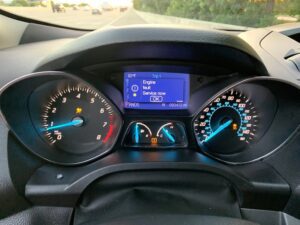

Picture this: You’re cruising in your Ford Escape, enjoying a smooth ride, when suddenly the dashboard lights up with the ominous **Engine Fault Service Now** message. This alert isn’t just a minor annoyance, it’s your vehicle’s urgent way of signaling that the engine management system has detected a problem. Far from being a single-issue warning, it can stem from a variety of culprits, ranging from simple fixes to more complex repairs. Acting quickly is key to preventing minor glitches from escalating into major headaches.
Mastering the Fix: How to Fix Ford’s Engine Fault Warning
Imagine your morning routine going perfectly: fresh coffee in hand, beating traffic, and arriving at work ahead of schedule. Everything feels right; until lunchtime rolls around. You hop back into your Ford, only to be greeted with those glaring words: **Engine Fault Service Now** splashed across the dashboard. What just happened, and how do you tackle it head-on?
Table of Contents
Demystifying the Engine Fault Warning
At its core, an **engine fault** serves as a broad diagnostic flag, alerting you that something within the powertrain isn’t performing as designed. This sophisticated system monitors countless parameters in real time, and when it spots an irregularity; whether in combustion, emissions, or mechanical integrity; it demands immediate attention.
If this message appears on your Ford’s dashboard or infotainment screen, treat it as a priority. Pull over safely when possible and investigate. Delaying action on persistent engine concerns can snowball into reduced efficiency, higher emissions, or even catastrophic component failure down the line.
MUST READ: Ford Key Not Detected: Here’s Why & How to Fix It
Leading Culprits Behind the “Engine Fault Service Now” Message in Ford Vehicles
Engine Misfires: One of the most frequent triggers occurs when combustion falters, often due to worn or fouled spark plugs. These small but vital components deliver the spark needed to ignite the precise blend of air and fuel inside each cylinder. When they underperform, unburned fuel disrupts the rhythm, forcing adjacent cylinders to compensate and leading to rough running or power loss.
Replacement is straightforward: A qualified technician removes the faulty plugs and installs fresh ones. Expect parts costs between $16 and $100 for a pair, with labor typically adding around $250 to the bill.
Spark plugs are inexpensive heroes of engine health; don’t underestimate their impact.
Oxygen Sensor Failure: Nestled in the exhaust stream, these sensors constantly feed data to the engine computer about oxygen levels in the exhaust gases, helping fine-tune the air-fuel ratio for optimal combustion. Overtime, or after repeated overheating episodes; they can degrade, sending misleading signals that trick the system into overcompensating with excess air.
The result? An imbalanced mixture that hampers performance and efficiency. Resolution usually involves full sensor replacement, with combined parts and labor often reaching up to $500.
Catalytic Converter Problems: Serving as the exhaust system’s eco-guardian, the catalytic converter transforms harmful pollutants into less toxic emissions. When it clogs, cracks, or fails internally, you might detect a telltale sulfur-like (rotten egg) odor from the tailpipe, alongside reduced power.
Recent years have seen shortages due to widespread thefts, pushing many owners toward repairs rather than full replacements. Repair averages around $1,500, while a new unit can climb to $2,500 or more.
Swollen or Corroded Lug Nuts: Surprisingly, this mechanical quirk ranks high among Ford-specific complaints. Ford’s two-piece chrome-capped lug nuts can swell from moisture intrusion and temperature swings, making wheel removal nearly impossible with standard tools. While not a direct engine issue, it complicates tire rotations, brake work, or any service requiring wheel access.
Fixing it means extracting the swollen nuts (often requiring specialized tools) and installing replacements; typically under $100 total for parts and labor.
For models equipped with Ford’s acclaimed EcoBoost engines, keep an eye on the **fuel injectors**. These precision components atomize fuel into a fine mist for efficient combustion. When they clog or malfunction, expect misfires, sluggish acceleration, and the unmistakable scent of unburned fuel lingering after short drives. This points to trouble in your Ford truck EcoBoost engine.
Fortunately, many cases respond well to a DIY cleaning session using a quality fuel injector kit; just follow the directions carefully, and you could resolve it in one to two hours without professional help.
Can You Safely Drive with the Engine Fault Warning Active?
Technically, yes; your Ford will continue to run, often in a protective “limp” mode to minimize further damage. However, every mile driven without diagnosis risks amplifying the underlying problem, potentially leading to stranded situations or expensive secondary failures.
Use your vehicle’s onboard diagnostics menu to pull any displayed trouble codes for clues. While driving, stay vigilant for telltale signs of escalation: sluggish acceleration, delayed throttle response, or random power drops to accessories like the air conditioning, radio, or interior lights. These could signal a deepening problem with the engine.
Final Thoughts
Whether it’s a failing fuel injector, a struggling catalytic converter, worn spark plugs, faulty oxygen sensors, or even those notorious corroded lug nuts, the **Engine Fault Service Now** warning covers a spectrum of potential threats to your Ford’s performance and longevity.
You may still drive short distances, but don’t tempt fate, schedule a professional inspection without delay. Early intervention keeps costs down and ensures your Ford remains reliable for the long haul.