
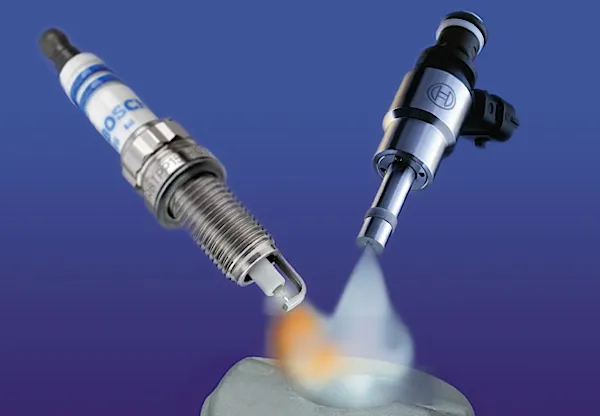
Fuel injectors are one of those parts most drivers never think about. They sit up in the engine and do their job quietly, spraying precisely measured fuel into the combustion chamber thousands of times per minute.
When they work, the engine starts easily, idles smoothly, and you do not have to wonder why your car runs the way it does. Then one injector starts to fail, and suddenly everything changes fast.
You notice rough running. Fuel economy drops. Starts become harder. In worse cases, the engine will not start at all. At that point, the questions become very practical: how long will it take, and what will it cost?
This guide answers both questions and goes further. You will also learn how to tell the difference between a failing injector and a dirty injector, because replacement is not always the next step. Sometimes cleaning fixes the problem for a fraction of the cost.
By the end, you will know what to expect from the repair process, how to confirm the injector really needs replacing, and when it is smarter to do something else first.
How Long Does a Fuel Injector Replacement Actually Take?
Replacement time depends mostly on two things: where the injector sits in your engine and how experienced the person doing the work is.
For a qualified mechanic who has done the job before, replacing one fuel injector on a typical engine usually takes about one to two hours. Some vehicles make access easy, and the job can be faster.
Other engines are not so friendly. When the intake manifold has to come off or the injector rail is buried under other components, labor time increases. It is still doable, but you are not looking at a quick in-and-out repair.
If it is your first time and you are doing it at home, plan on three to five hours, assuming nothing goes sideways. That includes no seized fasteners, no parts that do not match the tutorial perfectly, and no unexpected wiring or vacuum connections getting in the way.
In real life, first-time repairs often take longer than people expect. That is not a sign you are doing it wrong, it just reflects how complex fuel systems can be, especially on modern engines.
When replacing multiple injectors, the time scales up, but not in a perfectly linear way. Some setup steps are shared across all injectors, especially removing intake components and relieving system pressure.
What Does a Fuel Injector Replacement Cost?
Cost is where the range gets wide. There is no single number because the injector part price depends on your vehicle, and the labor time depends on access.
For many mainstream vehicles, one replacement fuel injector commonly costs about $150 to $300 for the part. Premium vehicles, performance cars, and diesel applications often land higher, sometimes well above $300 for the part alone.
Then you add labor. For a single injector, total repair cost typically falls between $200 and $900. If you need to replace more injectors or if the job involves significant disassembly to reach them, it can move beyond $1,000.
If you are replacing a full set, especially across multiple cylinders, costs can climb quickly. A full set replacement for all cylinders is often in the $800 to $1,500+ range depending on model and labor access.
| Cost Component | Typical Range |
|---|---|
| Single injector (part only) | $150 to $300+ |
| Labor (per injector) | $100 to $200+ |
| Full replacement (one injector, parts and labor) | $200 to $900 |
| Full set replacement (all cylinders) | $800 to $1,500+ |
| DIY cost (part only, no labor) | $150 to $300+ per injector |
That is why some drivers consider DIY injector replacement. If you remove the labor charge, you save real money. Whether DIY makes sense depends on your mechanical confidence, how accessible your injectors are, and whether you can safely follow proper fuel system procedures.
Some engines make this an honest DIY project. Others make it a frustrating “why is everything packed into this engine bay” job that turns into a weekend-long learning experience.
How Long Do Fuel Injectors Last?
Fuel injectors are not like brake pads or wiper blades. They are not usually a routine maintenance replacement item.
A quality set, properly maintained, typically lasts somewhere between 50,000 and 100,000 miles. Many engines see injector life even longer than that, especially when fuel quality is good and maintenance is consistent.
Real-world timing depends on how much you drive. If someone covers around 1,000 miles per month, injector problems might not appear for six to eight years or more.
On the other hand, a high-mileage driver who racks up 2,500 miles or more per month could see injector issues in two to four years. Those are averages, not guarantees, but they help you estimate what “normal aging” looks like.
Injector life drops faster when you have:
poor fuel quality, infrequent fuel filter changes, engines that run hot for long periods, and vehicles that sit unused for extended stretches.
Contaminated fuel is particularly hard on injectors because debris gradually clogs or damages the precision nozzle that controls the spray pattern.
Warning Signs That a Fuel Injector Is Failing
Injectors rarely fail without warning. Most drivers notice symptoms building over time, which gives you options. The longer you wait, the more likely you end up with a no-start situation or additional engine damage from running too lean or too rich.
Here are the most common warning signs:
- Fuel economy dropping noticeably. If you are filling up more often without any change in your driving habits, a leaking or stuck-open injector can flood a cylinder with excess fuel.
- Rough or shaky idle. When one or more cylinders do not get the right fuel amount, the engine can idle unevenly. You may feel vibration when stopping.
- Hard starting or multiple cranks needed. If the engine takes several attempts to fire, it can be related to an injector not delivering adequate fuel during startup.
- Dark or excessive exhaust smoke. Thick black smoke often points toward an overly rich condition, which can happen with an injector stuck open. White smoke can have other causes too, so it is important to look at the full picture.
- Increased engine vibration under load. When acceleration makes the car shake or hesitate more than it used to, a misfire related to injector issues may be involved.
- Engine refusing to start. In severe cases, a completely failed injector can starve a cylinder of fuel. If the engine cranks but will not fire, injector failure on one or more cylinders becomes a real possibility.
Important caveat: these symptoms are not unique to injectors. A rough idle can come from a vacuum leak, worn spark plugs, a failing coil pack, or a dirty MAF sensor. Hard starting can come from a weak battery, a failing fuel pump, or a bad crankshaft position sensor.
The symptoms point in a direction, but they do not lock in a diagnosis by themselves. If you replace the wrong part, you pay twice. Sometimes you pay more than twice.
How to Confirm It Is Actually the Injector
Before spending money on a replacement, you want a reasonable level of certainty. The best way to confirm injector trouble is with an OBD-II scanner.
Most modern cars store diagnostic trouble codes (DTCs) when the engine control unit detects a fault. Injector issues usually show up as cylinder-specific misfire codes, or as injector circuit codes that identify which injector or which cylinder is involved.
For example, you might see misfire codes like P0301 for a misfire on cylinder one. You might also see injector circuit fault codes tied to the specific injector. These codes do not automatically prove the injector is physically worn out, but they narrow down the possibilities considerably.
A basic OBD-II scanner can be a smart purchase for drivers. Entry-level units that read and clear codes often cost $20 to $50. If you have never used a scanner before, start there. Learn your codes. Learn your patterns. It will make repairs far less confusing.
More capable scanners can provide live data. That helps you determine whether the injector, its wiring, fuel pressure, or another system is responsible for the fault.
At a professional shop, a mechanic may perform a balance test or use specialized equipment to measure each injector’s actual fuel delivery rate. This confirms whether an injector is underperforming before a replacement decision is made.
Replacement vs. Cleaning: How to Know Which One You Actually Need
This question can save you several hundred dollars if you handle it the right way. The key idea is simple: not every injector problem means the injector is permanently broken.
Injectors work in a harsh environment. Heat, pressure, and fuel deposits take their toll over time. Still, some “failing injector” symptoms are caused by carbon buildup, varnish from old fuel, and other deposits that partially clog the nozzle or disrupt the spray pattern.
A clogged injector can behave similarly to a failed injector. The spray pattern is wrong. A cylinder receives the wrong fuel mixture. You can get misfires, rough running, and reduced efficiency. The difference is that the injector is not necessarily dead. It may just need cleaning.
Signs Cleaning Might Be Enough
The most common clue that you may be dealing with a dirty injector instead of a fully failed one is misfiring or sputtering, especially under load or during acceleration.
If an injector were completely failed, the misfire would usually be consistent and persistent. With a clog, the behavior can be more intermittent. It may be worse when the engine is cold and then improve as everything warms up.
Another scenario to pay attention to: if your diagnostic codes suggest a lean or rich condition on a specific cylinder, but your injector wiring and fuel pressure are normal, clogging becomes more likely. That is the point where injector cleaning is often worth exploring before ordering a replacement.
How Injector Cleaning Works
There are two main cleaning approaches.
1) On-car cleaning. A specialized cleaning solution is introduced into the fuel system while the engine runs. This approach can help with mild buildup and it is usually less expensive. Still, it has limits when deposits are heavy.
2) Off-car ultrasonic cleaning. Injectors are removed and professionally cleaned using ultrasonic equipment. This is typically more thorough and more effective when there is significant deposits. A reputable shop can test the injector flow rate before and after cleaning to confirm improvement.
If cleaning brings the injector back within normal flow specifications, you avoid the replacement cost entirely. If cleaning does not fix the problem, you have confirmed that replacement is the next logical step. In many cases, the cleaning cost is modest compared with replacing the injector.
DIY Fuel Injector Replacement: Is It Worth It for You?
Whether DIY makes sense depends on your situation, your tools, and your willingness to do the safety parts correctly. This is not a job where you want to improvise.
On the positive side, labor cost for injector replacement is significant. It is often in the range of $100 to $200 or more per injector, depending on accessibility. If you can handle the job well, you save the labor directly.
For accessible injectors on straightforward engines, the job can be within reach for a mechanically confident driver using a basic toolkit and a service manual. If you can follow instructions carefully, you can often do it without drama.
That said, fuel injection systems operate under pressure. Before removing an injector, fuel system pressure must be relieved correctly so fuel does not spray under pressure when connections are opened.
You also need proper safety precautions, including good ventilation and keeping ignition sources away from the work area. Injector O-rings and seals must be replaced correctly to prevent leaks after reassembly. Even then, if the replacement injector is not the correct specification for your engine, you can create new problems.
If your car has not been diagnosed properly, or if you are not certain the injector is actually the issue, attempting a DIY replacement first can waste money. In that case, the best protection is getting the diagnosis right up front using a scanner or a shop evaluation.
That approach protects you whether you decide to DIY or hand it to a mechanic.
A failing fuel injector is not something you want to delay indefinitely. Running an engine with a misfiring cylinder creates additional stress on other components. It can also damage the catalytic converter because unburned fuel passes through the exhaust.
The longer the symptoms persist, the more likely your fix becomes more expensive. If your diagnosis points toward an injector and the symptoms are present, handling it promptly is usually the smarter and cheaper decision.
What You Should Do Next (So You Do Not Waste Money)
Here is a sensible next step that works for most drivers. Scan the car first, write down the codes, and confirm which cylinder is involved. Then verify that wiring and fuel pressure make sense for that code before you assume the injector itself is the failure point.
If your injector symptoms look more like clogging, ask about cleaning and whether the shop can test flow performance before replacement. That one question can change the outcome of your repair bill.
If the diagnosis confirms injector failure, schedule the work soon. Preventing misfires from continuing is not just about drivability. It is also about protecting the rest of the emissions and exhaust system.