
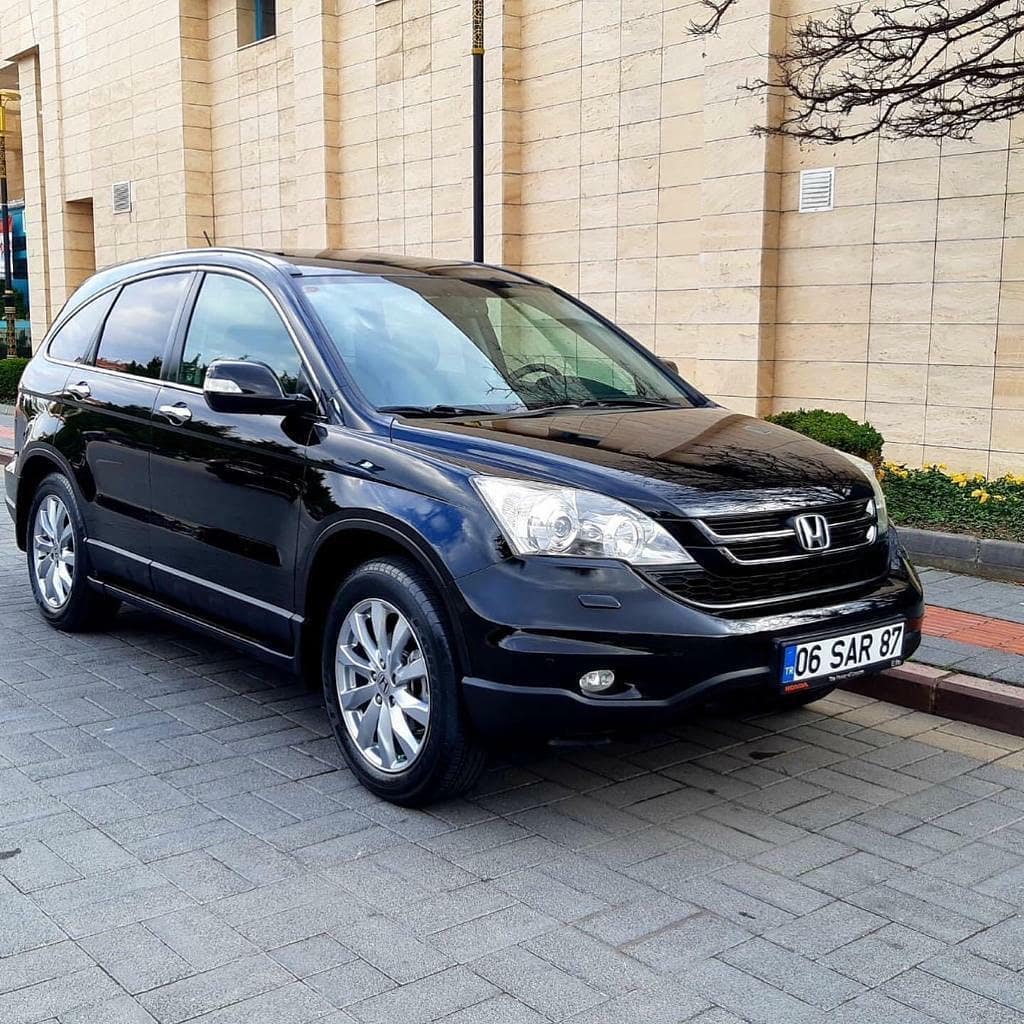

Honda vehicles are equipped with a wide range of systems designed to make driving more engaging, smoother, and; most importantly; safer. Many of those systems are no longer “standalone.” Instead, they communicate continuously so the vehicle can respond in real time to road conditions, driver input, traction changes, and braking demands. The Controller Area Network (CAN) is the communication backbone that makes this possible, and on most modern Hondas, the fast controller area network (F-CAN) is the most critical of all CAN pathways because it carries time-sensitive information.
The F-CAN is responsible for several mission-critical functions; especially those involving braking, stability, traction, and powertrain coordination. When the F-CAN has a problem, it’s not just a “computer glitch.” In practical terms, it can disrupt communication between your ABS/VSA system and other control units, leading to warning lights, reduced stability support, disabled traction assistance, and in some cases, a vehicle that behaves differently under emergency braking. That’s why an F-CAN malfunction should always be treated as a safety-related fault, not an inconvenience to ignore.
So what exactly is the F-CAN, how does it work, and why does it fail? In this article, I’ll break down the F-CAN system in clear language, explain what the vehicle is doing behind the scenes, show you the most common failure points, and outline a diagnostic strategy that mirrors what an experienced Honda technician would do; without drowning you in unnecessary theory. Let’s get started.
What is F-Can and How Does it Work?
At its core, the Controller Area Network (CAN) is a high-speed communication system that allows multiple control modules to “talk” to each other over the same pair of wires. Instead of having a separate wire for every single signal (which would add weight, complexity, and failure points), CAN allows modules to share a network and broadcast messages that other modules can listen to and use. This is why modern vehicles can coordinate complex behavior; like traction control reducing engine torque while the ABS modulates brake pressure; almost instantly.
The Controller Area Network receives and shares pulsating indications that come in and out of the control modules. The Can uses two signal lines, namely CANL and CANH. It sends these signals to the ECM.
Those two lines; CANH (CAN High) and CANL (CAN Low); work together as a differential pair. Instead of relying on a single wire referenced to ground, CAN compares the difference between CANH and CANL. This design makes the network more resistant to electrical noise, which is a big deal in a vehicle environment where you have ignition coils, injectors, alternator ripple, electric motors, and countless devices generating interference.
However, when the ECM can’t receive the signals for a long time, it detects an error, causing Diagnostics Trouble Code (DTC) to pop up.
This is an important point: modules are constantly expecting network messages. If a module stops “hearing” expected messages (or sees corrupted data), it assumes something is wrong; either with the network itself or with the module that should be transmitting. Once the time threshold is exceeded, the module logs a DTC and may disable certain functions as a protective measure.
Whether it is Honda Odyssey, Civics, Pilot, or Accord, Honda models generally have two Controller Area Network (CAN) systems. The Fast Controller Area Network (F-Can) works at a faster speed of 33.33kbps. It essentially controls more important functions such as braking system (ABS), traction, vehicle stability, and so on.
In everyday terms, think of the F-CAN as the “express lane” for data that cannot afford delays. Systems such as ABS and VSA depend on fast, reliable communication. If a wheel speed sensor detects slip, the ABS/VSA unit must respond immediately. That response often requires simultaneous coordination with the engine and transmission modules to manage torque and keep the vehicle stable. Any communication lag or dropout can degrade system performance or force the vehicle into a fail-safe mode.
The Body Controller Area Network (B-CAN), on the other hand, is a lower-speed Can. It regulates less critical activities such as blind spot indication, door locks, climate control, and so on.
B-CAN is still important, but its priorities are different. If your door lock signal takes a fraction longer, it’s inconvenient; not dangerous. If ABS coordination takes a fraction longer, it can affect stopping distance and stability in emergency situations. That’s why Honda separates the networks into fast and body networks and uses gateway logic to move information between them efficiently.
The two Can systems distribute information along several Engine Control Units (ECUs) in your car. However, the F-Can share information for real-time activities, including emissions and fuel data.
It’s also helpful to understand that these “ECUs” aren’t limited to the engine computer. In a modern Honda, you may have an ECM/PCM (engine and powertrain control), ABS/VSA modulator control unit, electric power steering module, gauge/instrument cluster module, body control module, SRS module, and more. Each module expects specific messages. For example, the instrument cluster may expect vehicle speed data, warning status, and stability system status from other modules. When those messages are missing or corrupted, the cluster can illuminate warning lights or display failure messages.
The CAN system contains the Gauge Control module. This module works on the Gateway Function principle to help decode information from F-Can to B-Can and vice versa.
That “gateway” role is more important than many drivers realize. The Gauge Control Module (GCM) doesn’t just display information; it often serves as a translation and routing point between networks. If the gateway function is compromised, one network may be healthy while the other appears to fail because messages cannot be bridged properly. This is one reason why F-CAN faults can look confusing: sometimes the root problem is not ABS itself, but the module responsible for converting and forwarding the information between networks.
Expert diagnostic insight: When you see multiple seemingly unrelated symptoms; such as VSA light, ABS light, and odd behavior in the gauge cluster; don’t assume multiple parts failed at the same time. In many F-CAN cases, a single communication problem creates a cascade of warnings because several modules stop receiving required messages and each flags its own “missing communication” fault.
What “malfunction” really means on a network: An F-CAN malfunction usually does not mean the network vanished completely. It can mean the network is noisy, intermittently shorted, suffering from poor connector contact, experiencing a failing module that drags the line down, or dealing with an open circuit that causes reflections and message corruption. The vehicle may behave normally one moment and throw warnings the next; especially over bumps, in wet weather, or during high electrical load.
Why this matters for safety systems: ABS/VSA systems must be able to exchange information reliably. If they can’t, the vehicle typically disables advanced functions and falls back to a more basic mechanical braking mode. Your brakes will still work, but you may lose ABS pulsing control, traction intervention, and stability correction; features that are most valuable when the road is slick or an emergency maneuver occurs.
Why Does F-Can Malfunction?
Here are a few things that can cause your Honda F-Can not to work. Centrally, an F-Can issue is a problem of communication between the vehicle’s ABS and ECU.
To expand that idea in practical terms: ABS/VSA is one of the major “talkers” on the F-CAN network. The ECM/PCM is another. If the ABS/VSA module can’t communicate properly with the PCM or the gateway, you’ll often see stability and braking warnings. If the PCM can’t reliably exchange data with other modules, you may see a broader pattern of communication codes. The cause can be a module failure, wiring fault, connector corrosion, or even a problem introduced by prior repair work (pinched harness, bent pins, water intrusion).
Let’s go through the most common causes systematically.
Faulty Engine Control Module (ECM)
Generally, once there is a problem with the engine control module, most parts of your vehicle will be affected. The ECM, as the name suggests, is a unit in your car that ensures optimal performance of the engine. It monitors and controls a couple of actuators on the car’s internal combustion engine.
The ECM/PCM is not only responsible for fuel and ignition; it also participates in network messaging that other systems depend on. For instance, stability control may request torque reduction during a skid event, and the engine module must respond quickly. If the ECM is failing, suffering internal power/ground issues, or experiencing corrupted logic, it may stop transmitting valid CAN messages; or transmit messages that appear invalid to other modules.
Once the system is damaged, a series of components in the controller area network (CAN) will become faulty. For example, the Vehicle Stability Assist will fail as the light turns on. It doesn’t matter if your Honda drives perfectly.
This line is especially important: a vehicle can “feel normal” and still have a serious electronic safety fault. Many drivers assume that if the car accelerates and shifts normally, the system must be fine. But network failures can be silent until you need ABS/VSA in a real emergency. The warning lights exist to tell you that the system is not guaranteed to perform as designed under extreme conditions.
How ECM-related F-CAN issues often present:
- Multiple communication DTCs across different modules
- Intermittent warnings that come and go with temperature or vibration
- Random limp mode behavior in combination with stability system warnings
- Codes that return quickly after clearing, even when wiring checks appear okay
Expert note: ECM failures are possible, but they are not the first thing a careful technician replaces. Wiring faults, poor grounds, water intrusion, and connector issues are generally more common. The correct approach is to confirm network integrity and power/ground integrity before condemning a module.
Shorted or open VSA or GCM Harness
If the Vehicle Stability Assist or Gauge Control Module is open or has a short circuit, the fast controller area network will not work properly.
This is because the CAN network depends on stable electrical characteristics. When wiring is shorted (to ground, to power, or between CAN lines), the network can become “pulled” to an incorrect voltage state. When wiring is open (broken), the network may lose continuity, causing message reflections and data corruption. Either condition can prevent modules from communicating reliably.
This is because the system will experience low resistance, causing accidental current diversion and contact of components.
On a healthy CAN network, resistance and voltage behavior fall within predictable ranges. A short circuit changes those characteristics dramatically. In practical terms, a CAN short can cause modules to go offline, trigger multiple DTCs, and create a situation where the scan tool cannot communicate with one or more systems.
Although it has a self-diagnostic function, a faulty Gauge Control Module will exhibit the same problem if it’s a short circuit.
That’s a key diagnostic challenge: a failing module can sometimes mimic a wiring short because it “loads” the network internally. A module with internal failure can drag the CAN line voltage down or create bus errors that look like harness trouble. This is why experienced technicians isolate modules one at a time when diagnosing network faults; especially when symptoms are inconsistent.
Real-world causes of open/short harness issues:
- Harness damage after a collision repair, especially around the front end or underbody
- Rodent damage (chewed wiring), a common and often overlooked cause
- Water intrusion into connectors (windshield leaks, door leaks, flooded carpet)
- Improper aftermarket installations (audio systems, remote start, alarms) spliced into harnesses
- Pinched harness during engine or transmission work
Expert reminder: Always inspect connectors for bent pins, pushed-out terminals, corrosion, and poor pin tension. A connector can look “plugged in” and still have poor electrical contact, especially if water intrusion has altered the metal surfaces.
Failing Vehicle Stability Assist (VSA) Modulator Control Unit
A failing VSA modulator control unit can also cause the F-Can to malfunction. The first symptom when the VSA modulator control system is that you’ll lose communication with the VSA. In the same vein, the cruise control won’t also work. This way, when you press the VSA button, nothing will happen.
The VSA modulator control unit is a central player in the fast network because it manages ABS pressure modulation, stability interventions, and traction management. When it fails; or when it cannot communicate; Honda often disables related features as a safety measure. That’s why cruise control may stop functioning: stability and braking systems are part of the safety assumptions behind cruise behavior, and Honda may choose to disable cruise when those systems aren’t verified.
Typical warning patterns when VSA is the issue:
Important diagnostic caution: A VSA module can appear “bad” when the real issue is power/ground, a connector problem, or a harness fault. The correct diagnosis verifies that the module has proper power supply, ground integrity, and stable network voltages before replacement is recommended.
What makes VSA-related faults tricky: Some failures are temperature-dependent. A module may communicate when cold and drop offline when warm (or vice versa). That can cause intermittent DTC behavior and confuse quick checks. Recording freeze-frame data and noting when the fault occurs (cold start, after driving, after rain, after hitting bumps) can speed up diagnosis significantly.
Poor electrical connection
Your Honda F-Can Vehicle Stability Assist poor electrical connection can cause the F-Can to malfunction. The Gauge Control Module circuit may also be poorly connected.
Poor electrical connections are among the most common causes of network problems; and they’re often the most frustrating because they can be intermittent. A slightly loose connector, a terminal with weak pin tension, corrosion on a connector face, or a ground connection with high resistance can all cause CAN communication errors without fully “killing” the system. The vehicle may work for days and then suddenly display warnings.
So, if there is a poor electrical connection or the circuit is damaged, the VSA or GCM light will give a false indication of a working system. Even if you turn on the VSA, the indicators may be off.
To clarify in expert terms: the lights and messages are not “false” as in “lying.” They are “false” in the sense that the driver may believe the system is functioning because the vehicle drives normally, but the indicator may not reflect a reliable, fully operational system state. If the module can’t communicate, it can’t guarantee stability intervention; even if the car feels fine during routine driving.
Where poor connections commonly occur in Honda CAN systems:
- Battery terminals and main ground points (a weak electrical foundation affects everything)
- Module connectors exposed to moisture (ABS/VSA area, firewall harness pass-throughs)
- Instrument cluster/GCM connectors (especially after dash work)
- Harness junction points where multiple branches meet
- Under-hood fuse/relay box connectors
Expert habit: Whenever diagnosing F-CAN faults, always verify battery health and charging system stability first. Low voltage and unstable voltage can cause modules to reset, drop off the network, or transmit incomplete messages; creating communication codes that disappear once voltage is restored.
How to Troubleshoot and Fix Honda F-Can Malfunction
There’s no one-size-fits-all technique to fix the F-Can malfunction. What you should do is look at each of the causes of a failing F-Can system above. Visually check the related issues, including the wiring connectors and harnesses.
That statement is the truth of network diagnostics: you don’t “guess” your way through CAN faults. You apply a structured process. The goal is to determine whether the failure is caused by wiring integrity, connector integrity, module failure, power/ground issues, or software calibration problems. In many cases, the vehicle will throw several codes at once, and your job is to find the root cause rather than reacting to every symptom.
Inspect the damaged components, poorly connected wires, broken connectors, bent connector pins, pushed-out parts, and more. Regardless of the issue that causes the F-Can to fail, the check engine light will illuminate.
Professional-grade visual inspection checklist: A thorough visual inspection is not “just looking.” It’s a deliberate process where you examine the most likely failure points and confirm connector condition.
- Inspect harness routing: look for abrasion marks, melted insulation, pinched sections, and points where the harness contacts sharp edges.
- Inspect connectors: confirm locking tabs are intact, pins are not bent, terminals are not pushed back, and there is no green/white corrosion.
- Inspect grounds: locate major ground points and check for rust, loose bolts, and paint under the ground lug.
- Inspect for water: wet carpet, moisture around modules, or water tracks near fuse boxes are major clues.
- Inspect for aftermarket splices: “T-taps,” twisted wires, and electrical tape bundles near the dash often indicate prior modifications.
As a helpful rule of thumb, before you troubleshoot or replace any faulty components, check all live data and record all freeze data. Take note of any onboard snapshots.
This is excellent advice and it mirrors professional practice. Freeze-frame data is the system’s snapshot of conditions when the fault was detected; engine speed, vehicle speed, voltage, and other parameters. In communication faults, freeze-frame voltage is especially valuable. If you see the code set during a low-voltage event, you may be chasing a battery/charging problem rather than a wiring failure.
Depending on the error and error code, however, you can be in for a long haul when fixing an F-Can malfunction. It can take up to an hour of labor to be exact.
In real-world shops, the time can vary. A simple connector reseat might take minutes. A harness short hidden inside a loom can take far longer. But “up to an hour” is a fair baseline for diagnosis on a vehicle with accessible modules and cooperative symptoms. Complex intermittent issues can take longer because technicians must replicate the fault to confirm the fix.
Here is a practical diagnostic sequence that aligns with how Honda systems are intended to be checked using the Honda Diagnostic System (HDS):
- Switch your Honda ignition on
- Clear all DTC with Honda Diagnostic System (HDS)
- Inspect DTCs with HDS or Temporary DTCS
Why clearing codes is part of diagnosis (not denial): Clearing codes and seeing what returns helps you differentiate between historical noise and active faults. “Temporary” or “pending” DTCs can also reveal intermittent problems that have not matured into full DTCs yet. The return pattern matters: a code that returns instantly without moving the car often points to a hard electrical fault; a code that returns only while driving suggests vibration, heat, or dynamic conditions.
If the system indicates the error code, say DTC U0028, it’s time to update the PCM. There may be no updated PCM software. You can as well replace the old PCM with a new one. If the DTC U0028 indication disappears with a good PCM, you may need to replace the OEM PCM. At this time, the system should be fine and show no intermittent failure.
Expert interpretation: DTC U0028 is a network-related code that can be triggered by communication issues or software logic. Updating the PCM (or verifying it has the latest calibration) is a rational step when the manufacturer has identified software revisions that improve network behavior. However, be careful: if the true issue is wiring or a failing module, replacing a PCM without confirming network integrity can become an expensive detour. The strongest approach is: verify power/ground, verify network resistance/voltage behavior, and then update/replace PCM if indicated by service information and test results.
When PCM replacement becomes a reasonable conclusion: If a known-good PCM causes the code to disappear and network behavior stabilizes, then PCM replacement becomes justified. But in practice, “known-good PCM” confirmation is often performed at dealer level or by a specialist shop because module substitution and programming typically require specific tools and immobilizer/key matching procedures.
If the problem is the VSA modular control unit, take the steps above plus check for communication between HDS and VSA system and the connection at the GCM-PCM-VSA terminals.
This is a critical path in Honda diagnostics. When the HDS cannot communicate with the VSA unit, it can mean: (1) the VSA module is offline, (2) the network is down, (3) the DLC/scan tool path is compromised, or (4) the gateway (often GCM) is not forwarding communication properly. Checking connections at the GCM-PCM-VSA terminals helps isolate whether the fault is in the physical wiring, the module connectors, or a module itself.
Helpful real-world tactic: If you can access some modules but not others, that often points to either a module-specific power/ground issue or a localized network short/open affecting that branch. If you can’t access any modules beyond basic engine data, the problem may be at the DLC circuit, gateway, or a major network failure dragging the bus down.
If the HDS doesn’t communicate with the VSA, troubleshoot the DLC circuit by doing the following:
- Switch the ignition switch off
- With the HDS, jump the SCS
- Unplug the VSA modulator control unit and the PCM connector
- Inspect if there’s continuity between PCM terminal connectors
Expert note on continuity checks: Continuity testing is useful, but it must be paired with proper context. Continuity alone does not confirm the network is “healthy”; it only confirms the path is not completely broken. CAN issues can also be caused by partial breaks, high resistance, corrosion, or intermittent opens that only appear under vibration. If you have a multimeter and appropriate service information, testing CAN resistance across the network (often around 60 ohms across CANH and CANL when both termination resistors are in place) can provide more insight. However, always follow model-specific Honda procedures because network architecture can differ by year and trim.
Why specialists matter for F-CAN faults: Network diagnosis often requires more than generic scan tools. A specialist can use HDS functions, module communication maps, and sometimes even an oscilloscope to view the CAN waveform. A clean waveform suggests healthy communication; distorted waveforms can confirm a short, a reflection due to open circuits, or electrical noise from a failing module.
What you should expect after a proper repair: Once the root cause is corrected; whether it’s a connector, harness, PCM update, or VSA module issue; the warnings should clear, communication should stabilize, and the system should show no intermittent failure during a road test. A responsible technician will also confirm proper ABS/VSA operation through a controlled test drive and verify there are no returning codes.
Owner-friendly advice: If your Honda shows multiple lights (ABS/VSA/check engine) and then they disappear randomly, don’t assume the problem “fixed itself.” Intermittent F-CAN issues often return. Intermittent communication faults should be addressed early because they can worsen over time as corrosion spreads or wiring fatigue increases.
FAQs
What is the F-Can fault code for Honda Accord?
In most cases, the fault code for the F-CAN communication malfunction of your Honda Accord is ABS 86-01. Once this code error pops up, you’ll need to attend to it asap.
When the “F-CAN communication malfunction” error message comes up, the fault detected is the YAW rate sensor. What this means is that there’s an error on one of the connectors to the CAN wiring.
Expert clarification: The yaw rate sensor plays a central role in stability control logic. It helps the VSA system understand how the vehicle is rotating (yaw) relative to driver steering input. If yaw data is missing, corrupted, or not reaching the VSA module reliably due to an F-CAN issue, the system cannot confidently apply stability corrections. That’s why the vehicle flags it as urgent. Often the sensor itself is fine; the communication path is the issue, which is why connectors and wiring integrity become primary suspects.
Practical implication: Even if the vehicle “feels okay” during normal commuting, the yaw rate sensor and VSA network are most valuable in sudden maneuvers, slippery roads, and emergency braking while turning. Treat ABS 86-01 as a safety-related event.
What is the F-Can fault code for Honda Civic?
If you’re driving a Honda civic, the error code for F-Can failure is code U0122. The reason for the error code includes a faulty VSA modulator control unit, short VSA wiring harness, poor electrical connector or faulty Engine Control Module.
Expert note: U0122 is a communication-related fault that typically points to a module not being able to communicate with another required module (often within stability/ABS-related communications). The key to diagnosing it correctly is understanding whether the failure is a hard fault (always present) or intermittent (appears with bumps, temperature changes, or moisture). The cause list you see here; VSA unit, wiring harness, connector issues, ECM; covers the most common pathways that interrupt fast network messaging.
How to narrow it down faster: If the scan tool cannot access the VSA module at all, focus on VSA power/ground and network wiring first. If the VSA module communicates but shows multiple missing message codes, focus on network integrity and gateway behavior. If multiple modules show U-codes simultaneously, battery voltage and network shorts become stronger suspects.
How Much to Diagnose an F-Can Issue?
Most auto repair shops charge between $100 and $150 per hour. However, the labor cost may vary from one professional to another. Your location, car model, make of your vehicle, and engine type is factors that determine how much to pay.
Expert pricing perspective: Communication faults can be quick if the cause is obvious (like a corroded connector) or time-consuming if the issue is intermittent and buried in a harness. The best shops will explain their diagnostic process and provide a clear estimate. If a shop wants to immediately replace major modules without network testing, consider getting a second opinion; especially because F-CAN faults are often caused by wiring/connector issues rather than module failure.
What you’re paying for during diagnosis: A competent diagnosis often includes scanning all modules, recording freeze frame, evaluating communication maps, checking power/ground circuits, inspecting harnesses, and sometimes performing continuity and resistance checks. In more complex cases, it may include waveform analysis. This is why diagnostic labor is billed as skilled time; it’s not just “plugging in a scanner.”
Final Thoughts
An F-Can malfunction can throw any driver or car owner off balance; especially because the symptoms often appear as a cluster of warning lights and confusing messages. But you don’t have to panic any time you experience this issue and any of its symptoms. What you do need is a structured diagnostic approach and, in many cases, professional-level tools like the Honda Diagnostic System. You may need to take a trip to the dealer. But again, a certified professional may be able to handle the issue.
As you know, an instrument cluster failure can be responsible. To avoid tampering with other critical components, get to a shop that deals exclusively in F-Can work.
Expert closing advice: Communication networks are the nervous system of modern Hondas. When one of the “fast lanes” (F-CAN) becomes unreliable, the vehicle may still drive, but it may not protect you the way it was engineered to during a sudden stop or a stability event. Handle F-CAN faults early, document when the symptoms occur, avoid random parts replacement, and choose a technician who understands network diagnostics. When the correct root cause is repaired; whether it’s a connector, harness, PCM update, VSA unit, or gateway issue; the difference is immediate: stable communication, no returning codes, and safety systems that you can trust.