
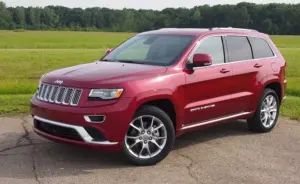

Few things are more frustrating than a vehicle that starts perfectly fine one day and refuses to cooperate the next. If your Jeep Grand Cherokee has developed an intermittent starting problem, you already know the feeling. You turn the key (or press the button), and nothing happens. No crank, no response. Then an hour later, it fires right up like nothing was ever wrong.
This kind of inconsistency makes diagnosis tricky because the problem isn’t always present when you’re looking for it. But the good news is that intermittent starting issues on Grand Cherokees almost always trace back to a handful of common causes. Let’s work through them systematically so you can stop guessing and start fixing.
Table of Contents
Recognizing What’s Actually Happening When It Won’t Start
Before you start replacing parts, pay close attention to what the vehicle does (or doesn’t do) when it refuses to start. The symptoms themselves are your best diagnostic clues.
Here’s an odd one that catches a lot of Grand Cherokee owners off guard: the truck sometimes won’t start when the steering wheel is turned to the right. If you’ve noticed this pattern, it points toward a connection between steering geometry and the ignition circuit, possibly involving wiring that gets pinched or stretched at certain wheel angles.
Other things to watch for:
- Complete silence when you turn the key: This usually means the starter motor isn’t getting power at all. The issue could be in the battery cables, the starter relay, or the TIPM (Totally Integrated Power Module), which controls power distribution.
- A single click but no cranking: This often points to a failing starter motor or a bad connection at the starter itself.
- It starts in Neutral but not in Park: That’s a classic sign of a faulty neutral safety switch or transmission range sensor. Try shifting into Neutral next time it won’t start. If the engine fires right up, you’ve likely found your culprit.
Getting clear on which symptom you’re dealing with saves a ton of time and money. A no-crank condition is a completely different diagnostic path than a crank-but-no-start situation.
Start With the Battery (It’s More Often the Problem Than You Think)
The battery is always the first place to look with intermittent starting issues. Even if your lights come on and your radio works, the battery might not have enough reserve power to actually spin the starter motor. Those accessories draw a fraction of the current that cranking the engine requires.
How to Test Battery Voltage Properly
Grab a multimeter and set it to DC voltage. Connect the red probe to the positive terminal and the black probe to the negative terminal with the engine off.
A healthy, fully charged battery should read around 12.6 volts. If you’re seeing 12.2 volts or lower, the battery is significantly discharged and may not have the juice to engage the starter reliably. That inconsistency in available power is exactly what causes the “works sometimes, doesn’t work other times” behavior.
If the voltage is low, a jump start or battery booster will get you going temporarily. But if the battery keeps dropping below 12.4 volts after sitting overnight, it’s probably time for a replacement. Most auto parts stores will load-test your battery for free, which gives you a much clearer picture of its actual health.
Don’t Skip the Corrosion Check
Even a perfectly good battery won’t perform if the connections are compromised. Pop the hood and take a close look at both battery terminals.
What you’re looking for:
- White, green, or blue powdery buildup on the terminals or cable ends. This corrosion creates resistance in the circuit, and resistance is the enemy of reliable starting.
- Loose cable connections. Try wiggling each cable by hand. If there’s any play at all, that’s a problem. A connection that’s 95% tight can still cause intermittent failures.
To clean corroded terminals: Mix a tablespoon of baking soda with a cup of water and scrub the terminals with a battery terminal brush. This neutralizes the acid buildup and restores a clean metal-to-metal contact. It takes about five minutes and costs virtually nothing, but it solves more intermittent starting problems than most people realize.
Testing the Starter Motor: Is It Dying on You?
If the battery checks out fine but your Grand Cherokee still won’t crank consistently, the starter motor moves to the top of the suspect list. Starters don’t always fail all at once. They often develop intermittent problems first, working fine when cool and failing when hot, or vice versa.
Symptoms of a Failing Starter
Two telltale signs to watch for:
- The engine doesn’t turn over at all despite a healthy battery showing good voltage.
- You hear a clicking sound when you turn the key, but the engine doesn’t crank. That click is the starter solenoid engaging, but the motor itself isn’t spinning.
Here’s a quick diagnostic trick: with the key in the START position, have someone check for voltage at the starter’s main terminal using a multimeter. If you’re getting full battery voltage at the starter but it still won’t crank, the starter motor itself is the problem.
Also try shifting from Park to Neutral and attempting to start. If it fires up in Neutral but not Park, the neutral safety switch is likely the issue rather than the starter itself.
The Voltage Drop Test
This test reveals whether there’s excessive resistance somewhere in the circuit between the battery and the starter. It’s one of the most useful tests for intermittent starting problems, yet a lot of people skip it.
How to do it:
- Set your multimeter to DC voltage
- Connect the negative lead to the battery’s negative post
- Connect the positive lead to the starter motor’s positive terminal
- Have someone turn the key to START while you watch the reading
A healthy circuit should show less than 0.5 volts of drop. If you’re seeing more than that, there’s resistance somewhere in the path. It could be a corroded cable, a bad ground connection, or a failing relay. The voltage drop test won’t tell you exactly where the resistance is, but it confirms that the problem exists in the starter circuit.
Checking Solenoid Engagement
When you turn the key, listen carefully. You should hear a distinct click from the starter area. That click is the solenoid engaging, which pushes the starter’s drive gear into the flywheel.
If you don’t hear the click:
- Verify the battery is fully charged and delivering proper voltage
- Check the starter relay in the fuse box. Swap it with an identical relay from another circuit to test it. A defective relay can cause exactly this kind of intermittent behavior.
If you hear the click but the engine doesn’t crank:
- Run the voltage drop test described above to check for excessive resistance
- Inspect the wiring going to the starter for corrosion, chafing, or damaged insulation
Inspecting the Electrical Connections That Often Get Overlooked
Intermittent starting problems love to hide in electrical connections. A wire that’s 99% connected still fails 1% of the time, and that 1% is enough to leave you stranded in a parking lot.
Here are the key connection points to inspect:
| Connection Point | What to Look For |
|---|---|
| Battery Cables | Corrosion on terminals, loose clamps, frayed cable ends |
| Starter Relay | Secure fittings, no heat damage, relay pins not corroded |
| Neutral Safety Switch | Clean contacts, proper engagement when shifter is in Park/Neutral |
| Ground Straps | Tight mounting bolts, no rust at grounding points on the frame |
Use a multimeter to verify voltage at the starter with the key in the START position. If you’re not getting full battery voltage there, the break in the circuit is somewhere between the battery and the starter. Work your way along the circuit, checking each connection point until you find the culprit.
If you’ve noticed a warning light on the dash or your key fob acting up alongside the starting issue, those can also point toward electrical connection problems. The TIPM in particular is a known trouble spot on Grand Cherokees. It handles power distribution for multiple systems, and when its internal connections start failing, all kinds of weird, intermittent symptoms can pop up.
Could Your Fuel System Be Causing a No-Start?
If your Grand Cherokee cranks normally but won’t actually fire, the problem shifts from the starter circuit to the fuel system. Even if it runs fine once it starts, fuel delivery issues can cause hard starts or extended cranking before the engine catches.
Here’s what to check:
Fuel Pressure:
- Connect a fuel pressure gauge to the test port on the fuel rail. Your repair manual will have the specific pressure specs for your engine.
- After connecting the gauge, let the vehicle sit for 15 to 20 minutes. If pressure drops significantly during that time, fuel is leaking back into the tank. That means the next time you try to start, the system has to re-pressurize before the engine will fire, causing that extended crank time.
Fuel Pump and Check Valve:
- Turn the ignition to ON (don’t start the engine) and listen for the fuel pump to prime. You should hear a brief whirring sound from the rear of the vehicle lasting about two seconds. If you don’t hear it, the pump may not be activating.
- A faulty anti-backflow valve (also called a check valve) inside the fuel pump assembly allows fuel to drain back into the tank when the engine is off. A leak-down test will confirm this. If pressure bleeds off within minutes of shutting the engine down, that check valve is the likely problem.
A well-maintained fuel system is fundamental to reliable starts. If you’re dealing with a crank-no-start scenario, especially after the vehicle has been sitting for a few hours, fuel pressure bleed-down should be high on your suspect list.
Don’t Forget the Alternator
The alternator doesn’t directly start your engine, but it keeps the battery charged. If the alternator isn’t doing its job, the battery slowly drains over time. You might start the truck fine in the morning after it’s been on the charger overnight, then struggle to start it after a series of short trips where the alternator never had a chance to fully recharge the battery.
Here’s how to check it:
- With the engine running, check battery voltage at the terminals. You should see between 13.5 and 14.5 volts. If you’re only getting 12 to 13 volts with the engine running, the alternator isn’t charging properly.
- Most auto parts stores like AutoZone will test your alternator for free while it’s still on the vehicle. This gives you a more thorough evaluation than a simple voltage check.
- An OBD-II scanner can also reveal charging system codes that point to alternator problems before they cause a complete failure.
If the alternator turns out to be weak, replace it and the battery together if the battery has been repeatedly deep-discharged. A battery that’s been drained multiple times due to a bad alternator often has reduced capacity even after being recharged.
When You’ve Checked Everything and It Still Acts Up
Intermittent problems are maddening precisely because they don’t always show up on command. If you’ve worked through the battery, starter, electrical connections, fuel system, and alternator without finding a clear answer, it’s time to bring in professional help.
A qualified Jeep technician with dealer-level scan tools can monitor live data and catch faults that a basic code reader won’t pick up. The TIPM, body control module, and CAN bus communication issues are all possibilities that require more advanced diagnostics to pin down.
The worst thing you can do with an intermittent starting problem is start swapping expensive parts based on guesswork. Diagnose methodically, test each system properly, and let the data point you toward the fix. Your Grand Cherokee’s starting issue has a cause. It’s just a matter of catching it in the act.