
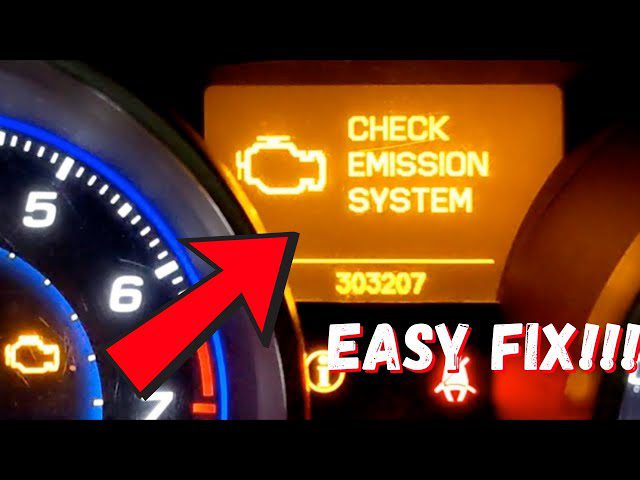

Seeing a “Service Emission System” message on your dashboard can be unsettling; especially if it appears out of nowhere and the vehicle otherwise seems to run normally. But this alert is far more common than most drivers think, and it can show up on vehicles of any age, from nearly new to high-mileage. Don’t panic if this is your first time seeing it. Your car is equipped with an emission control system designed to reduce pollution by keeping fuel vapors contained, optimizing combustion, and cleaning exhaust gases before they leave the tailpipe. So when the message appears, it simply means the vehicle has detected a fault somewhere in that emissions network and wants you to address it.
That said, “no panic” doesn’t mean “ignore it.” Emissions faults range from harmless (like a loose gas cap after filling up) to expensive (like catalytic converter efficiency failure). Some issues only increase emissions; others can affect drivability, fuel economy, and long-term engine health if left unattended. The good news is that the error is usually easy to resolve once you know what triggered it; and many causes can be diagnosed quickly with a logical inspection and, ideally, a basic OBD II scan.
Below, I’ll help you narrow down what might have caused the message, what symptoms to look for, and how to fix each likely trigger. I’ll also explain when a simple reset makes sense, when it’s risky, and how to avoid repeating the same problem in the future.
What Causes the Service Emission System Message?
The service emission system message can be triggered by many different faults because “emissions” isn’t one single component; it’s an entire system. Common causes include a loose gas cap, a manifold leak, or a dirty air filter. A defective oxygen sensor (O2 sensor) or a damaged catalytic converter can also cause an emissions system malfunction. Depending on your vehicle, the same warning may be used instead of the traditional check engine light; or it may appear alongside it.
From a technician’s point of view, an emissions fault usually falls into one of these categories:
- EVAP/pressure integrity issues (fuel vapor leaks, gas cap, purge/vent problems)
- Airflow measurement issues (MAF, intake leaks, dirty filters)
- Exhaust feedback issues (O2 sensors, exhaust leaks, catalyst efficiency)
- Emissions reduction hardware faults (EGR, DPF/DEF/SCR on diesels)
Note: The error message may be a false positive (sometimes written as “force positive”), although rare. If you suspect the warning is an electronic hiccup rather than a real, active fault, you can try resetting the Powertrain Control Module (PCM) first and see if the message disappears. Disconnect the battery for about 15 minutes; the error might clear after reconnecting the power.
Expert caution about resetting: Clearing power or disconnecting the battery can erase stored fault data and readiness information that helps diagnose the true cause. If the message returns after a reset, don’t repeat resets; scan the vehicle for codes instead. And if your car must pass an emissions inspection, resetting may temporarily set monitors to “not ready,” which can delay testing until the car completes a proper drive cycle.
Now let’s break down the most common specific triggers; starting with the easiest and most frequent fixes.
A Loose Gas Cap
One of the most common causes of a service emission warning is a loose gas cap. It often happens right after a fuel fill-up; especially if the cap wasn’t tightened until it clicked. Your fuel cap is part of the EVAP (evaporative emissions) system, which prevents fuel vapors from venting into the atmosphere. If the cap isn’t sealed correctly, the system can detect a leak and trigger an emissions warning. The gas cap can also crack, lose its sealing gasket, or become damaged in ways that mimic a vapor leak. In some cases, the cap may be missing entirely, leaving the filler neck open.
When this happens, many cars display a specific message such as “tighten gas cap.” However, some models skip the separate gas-cap message and go straight to a generic service emission system notification; even though the root cause is still the cap.
How to Fix: Remove the cap, inspect it, and reinstall it carefully. Confirm the cap threads smoothly and tighten it until it clicks (or reaches the designed stop). Examine the cap for cracks, flattened seals, or a damaged gasket. If the cap is missing or broken, replace it; often around $25 on average. You can also replace the gasket or fuel cap lining if worn out.
Expert tip: If you tightened the cap and the warning remains, it may take several drive cycles before the EVAP monitor reruns and the message clears; unless you clear codes with a scan tool. In other words, a correct fix doesn’t always result in an instant dashboard update.
When it’s not the cap: If the cap is fine and the warning persists, EVAP leaks can also come from purge valves, vent valves, cracked vapor hoses, or a leaking charcoal canister. Those typically require scanning for codes and sometimes smoke testing for accurate leak location.
Failing Air Filters
Your engine air filter prevents dust and debris from entering the intake system. Over time, it accumulates contaminants and becomes restricted. When that restriction becomes significant, airflow decreases and the engine management system must compensate. That’s not just a performance issue; airflow changes affect fueling calculations. Since the engine requires a specific amount of air and fuel to produce the right power efficiently, an airflow restriction can disrupt combustion quality and emissions output.
A clogged filter can contribute to an imbalance in the air-fuel ratio. You may notice power loss, sluggish acceleration, reduced fuel economy, and in some cases, darker exhaust smoke or an engine that feels “choked.” Eventually, your vehicle may trigger a warning message; sometimes a check engine light, and sometimes the service emission system message depending on your car’s software strategy.
For diesel engines, there’s what specialists call a Diesel Particulate Filter (DPF). As the name suggests, it traps diesel particulate matter (soot) from the exhaust. Like any filter, it can clog and fail; especially if the vehicle is used primarily for short trips that prevent proper regeneration. A clogged DPF can absolutely trigger an emissions-related warning message.
How to Fix: Replace the failing filter. Many professionals recommend changing the engine air filter every 12,000 to 15,000 miles, although dusty conditions can shorten that interval. If you DIY, expect roughly $20 to $75 depending on vehicle type and filter quality.
Expert notes that matter:
- If the filter is severely clogged, check the intake tract for debris and ensure the airbox is sealed properly.
- A very dirty filter can be a sign of driving environment and may justify more frequent replacement.
- For DPF issues, “replacement” isn’t always the first step; some cases can be addressed with proper regeneration procedures, but repeated DPF warnings should be diagnosed professionally.
What not to do: Don’t remove the filter and drive without it “just to test.” Unfiltered air can introduce abrasive particles that damage the engine, MAF sensor, and turbo components (if equipped).
Manifolds Leak
A manifold leak is a broad but very real trigger for emissions warnings. Your exhaust system can develop a crack or hole, allowing exhaust gases or fuel vapors to escape into the atmosphere. There may also be damage to gaskets where the exhaust manifold meets the cylinder head or where exhaust sections join. On the intake side, a loose intake manifold (or a failing intake gasket) can cause a vacuum leak; allowing unmetered air into the engine. Either way, the engine’s emission control logic detects abnormal readings (via fuel trims, oxygen sensor feedback, and airflow calculations) and turns on the warning message.
Why leaks matter for emissions: Intake leaks often create a lean condition (too much air relative to fuel), while exhaust leaks; especially before the upstream O2 sensor; can cause false oxygen readings that confuse fueling and catalyst monitoring. Both scenarios can trigger emissions-related codes and warnings.
How to Fix: Physically inspect the manifolds and related joints. Sometimes it’s as simple as a loose bolt, clamp, or a worn-out gasket. A leak at the gaskets will require gasket replacement. You may repair a leaky exhaust temporarily using epoxy or welds. Alternatively, installing a new manifold is the best long-term fix when the manifold itself is cracked or severely warped.
Note: Finding a manifold leak can be laborious and time-consuming for a DIYer. Many professionals use smoke machines for intake leaks or use careful listening/inspection for exhaust leaks. If you don’t have the right equipment or access, you may need a reliable mechanic.
Expert diagnostic clue: If you hear ticking noises on cold start that improve as the engine warms, suspect an exhaust manifold leak. If you hear hissing and notice high idle or rough idle, suspect an intake vacuum leak. Both can be connected to emissions warnings.
A Faulty Sensor
Your vehicle’s emission control system relies on several sensors to do its job accurately. Two of the most common sensors tied directly to emissions warnings are the mass air flow sensor (MAF sensor) and the oxygen sensor (O2 sensor).
The MAF sensor measures the amount of air moving into the engine through the intake path. That information helps the ECU calculate how much fuel to inject so the engine maintains a correct air-fuel mixture. The oxygen sensor, on the other hand, measures oxygen content in the exhaust stream and provides feedback so the ECU can fine-tune fueling and verify catalytic converter efficiency. Most vehicles have at least two O2 sensors; one upstream and one downstream; because catalyst monitoring requires comparing those signals.
If one of these sensors fails (or delivers inconsistent data), the system detects the abnormal behavior and alerts you; sometimes via a check engine light, and sometimes via the service emission system message.
How to Fix: Replace the defective sensor. The challenge is identifying which sensor is actually at fault. An OBD II scanner helps by retrieving diagnostic trouble codes (DTCs) that point you toward the affected circuit or sensor bank. After reading the codes, consult your owner’s manual (or a reliable service reference) to interpret what they mean and where the sensor is located.
Expert warning: Don’t “parts cannon” sensors. Many oxygen sensor codes are caused by exhaust leaks, wiring damage, or engine misfires rather than the sensor itself. A scan tool with live data can help you confirm whether the sensor signal is truly dead, sluggish, or out of range.
Practical signs of a sensor-related emissions issue:
- Rough idle or hesitation
- Poor fuel economy
- Check engine light with codes related to fuel trim, O2 sensors, or MAF performance
- Failed emissions readiness/inspection
Once replaced and verified, codes can be cleared and the vehicle can complete a drive cycle for emissions monitors to reset to a ready state.
Problematic EGR System
The EGR (exhaust gas recirculation) system is a critical part of emission control. Its main purpose is to reduce nitrogen oxides (NOx), which form at high combustion temperatures. It does this by recirculating a controlled amount of exhaust back into the intake stream, lowering peak combustion temperature and reducing NOx formation.
If there’s an issue in the EGR system, the engine control unit will trigger the service emission system warning light. The issue could be a defective EGR bypass valve, carbon blockage in passages, a position sensor error, or a wiring/connector problem.
How to Fix: Use an OBD II scanner to identify EGR-related codes quickly and accurately. The scanner may show DTC codes such as P0406 and P2495 tied to EGR performance or sensor feedback. Repairs can include cleaning carbon buildup (vehicle-specific), repairing wiring issues, or replacing the faulty bypass valve. Depending on the vehicle layout, this may not be a beginner DIY job because access can be tight and proper torque/sealing matters.
Expert insight: EGR faults can cause more than a warning light. They can lead to rough idle, pinging/knocking under load, increased combustion temperatures, and in some cases, drivability issues that feel like misfires. That’s why EGR problems should be handled promptly.
Also note: Some vehicles use EGR coolers, differential pressure sensors, or electronic EGR control strategies. Because the system design varies widely by engine family, accurate diagnosis is essential.
DEF-Related Problem
Diesel Exhaust Fluid (DEF) is a special solution made primarily of water and urea. It’s injected into the exhaust stream of many diesel engines equipped with Selective Catalytic Reduction (SCR). Its job is to convert NOx gases into less harmful emissions during the catalytic reaction.
If an issue occurs in the DEF/SCR system; such as poor DEF quality, level sensor errors, dosing issues, or a temporary communication glitch; you may get a notification through the check engine light or the service emission system message. A DEF-related problem commonly occurs after filling the DEF tank using some DEF fill equipment, especially if the ignition status isn’t ideal for your vehicle’s monitoring strategy.
How to Fix: Often, the warning clears shortly after filling, once the system recognizes the updated DEF level and stabilizes sensor readings. Make sure the vehicle remains keyed on until the error clears. You can reduce the likelihood of encountering the error by always keying off the car during filling.
Expert additions that prevent repeat warnings:
- Use only DEF that meets the correct specification and is sealed and uncontaminated.
- Avoid spilling DEF on electrical connectors or metal parts; it can crystallize and cause corrosion-like issues.
- Ensure the DEF cap is tightened properly; some systems monitor tank integrity.
If DEF warnings persist, a scan is recommended because modern SCR systems can store detailed codes related to pumps, heaters, NOx sensors, and dosing control.
Defective Catalytic Converter
A catalytic converter (often shortened to “cat”) is a wear-and-tear item. Many last up to 100,000 miles or more, but real lifespan depends on driving habits, engine condition, fuel quality, and whether the engine has been burning oil or running rich. The catalytic converter is one of the most critical emissions components because it transforms harmful gases (like CO, HC, and NOx) into less harmful compounds before they exit the tailpipe.
When the converter fails or becomes inefficient, the vehicle may trigger the service emission system message and store a catalyst efficiency code. The error often includes a code like P0420. At that point, the vehicle is effectively saying the downstream exhaust readings suggest the catalyst is no longer doing its job as well as it should.
How to Fix: Perform catalytic converter replacement. This is one of the most expensive emissions repairs and can cost over $2,000 depending on your vehicle model.
Expert warning before replacing a cat: Don’t replace the catalytic converter until you confirm it’s truly the root cause. Misfires, fuel trim issues, exhaust leaks, and failing oxygen sensors can trigger P0420-like conditions. If you replace the converter while the engine is still misfiring or burning oil, the new converter can be damaged prematurely.
Signs a converter may be failing beyond codes:
- Rattling sounds (broken catalyst substrate) especially on start-up
- Noticeable sulfur/rotten-egg smell (not always present)
- Loss of power at higher RPM (possible restriction)
- Persistent P0420 or related catalyst codes after other issues are fixed
Because replacement is costly, this is the point where professional diagnosis pays off. A shop can test upstream/downstream O2 patterns, check for exhaust leaks, and verify whether the catalyst is actually restricted or simply being misdiagnosed due to another fault.
How to Diagnose the Service Emission System Message Faster (A Practical Checklist)
If you want to diagnose this warning efficiently, don’t start with the most expensive possibility. Start with the most likely and easiest items first. Here is a professional-style checklist that keeps you from wasting money:
- Check the fuel cap: remove, inspect gasket, and tighten until it clicks.
- Check for obvious intake leaks: ensure the intake tube is clamped and not cracked.
- Inspect the air filter: if it’s dirty enough that you can’t see light through it, replace it.
- Listen and smell: hissing can indicate a vacuum leak; exhaust smell under hood can indicate manifold leak.
- Scan for codes: use an OBD II scanner to retrieve DTCs and freeze-frame data.
- Fix the root cause, then clear codes and complete a drive cycle.
Expert rule: If the message is accompanied by rough running, flashing check-engine light, strong fuel smell, or overheating; stop driving and diagnose immediately. Those conditions can cause further damage (including catalytic converter damage) if ignored.
Can You Drive With the Service Emission System Message On?
In many cases, yes; you can drive short distances, especially if the vehicle is not misfiring and no severe symptoms are present. A loose gas cap or a mildly dirty filter may not create an immediate drivability problem. However, “service emission system” is still a warning that something is outside normal operating parameters. Driving for weeks without diagnosis can turn a minor issue into a major one.
Drive with caution and avoid hard acceleration until you know what caused the message. If you have a scan tool, check for codes as soon as possible. If you don’t, schedule a scan at a shop or parts store that offers code reading. The sooner you identify the cause, the less likely you’ll face expensive repairs later.
Conclusion
As mentioned, you don’t need to get anxious if you see the service emission system message on your dashboard. There’s rarely immediate danger. It could be a rare false positive, a loose fuel cap, or another easy-to-fix issue like a clogged air filter; problems that can be resolved quickly with basic inspection and good maintenance habits.
While a damaged catalytic converter is a possible cause, it’s not the most likely first explanation in many cases because converters often last a long time when the engine is healthy. Still, if you can’t identify the cause or the message keeps returning, seek the help of a reliable specialist for accurate diagnosis and repair. The best approach is simple: diagnose early, fix correctly, and avoid repeated resets that erase valuable clues.