
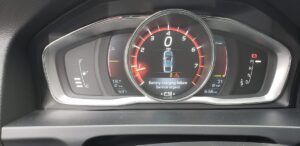

So your dashboard just lit up with a “Charging Failure Service Urgent” warning, and now you’re wondering how bad the situation really is. Fair question. This isn’t one of those warnings you can shrug off and deal with next weekend.
This message is telling you that your Volvo’s charging system has a problem. We’re talking about a potential malfunction in the battery, alternator, wiring, or ECU. And here’s the kicker: once this warning pops up, you’ve typically got somewhere between 35 and 60 minutes before your car stalls out completely.
Let’s break down exactly what’s going on, what’s causing it, and what you can do about it.
What This Warning Actually Means for Your Car
Your car’s charging system is a team effort between the alternator, battery, wiring, and ECU. They all work together to keep electricity flowing after you turn the key. When everything’s working right, your alternator recharges the battery while the engine runs, and the battery powers all the electrical systems.
When you see this error message, it means that teamwork has broken down. Your vehicle is now running purely on whatever charge the battery has left. Think of it like unplugging your laptop from the wall. The battery will keep things going for a while, but the clock is ticking.
If you ignore it, the battery will drain completely. That’s bad for more than just your commute. Letting a battery run all the way dead can seriously shorten its lifespan and even cause permanent damage.
The most common culprit? The alternator. A broken voltage regulator, loose mounting bolts, or damaged diodes can all cause it to fail. But the alternator isn’t always to blame, so let’s look at the full picture.
What’s Actually Causing the Warning to Appear
There are several things tied to the charging system that can trigger this message. Here are the most likely ones:
1. A Failing Alternator
The alternator’s whole job is to recharge the battery while the engine runs. When it fails, the battery stops getting power and starts draining instead. Several things can cause alternator failure: a bad voltage regulator, damaged internal wiring, or insufficient power generation because the battery itself is struggling.
Picture this: you’re driving home from work, the headlights start dimming, and the radio cuts out. That’s your alternator waving a white flag. It’s one of the most common reasons for this specific warning.
2. A Worn-Out Commutator Inside the Alternator
The commutator sits inside the alternator and plays a key role in converting electrical energy. Over time, it wears down. When that happens, the electrical contact becomes unreliable, and the alternator can’t do its job properly.
This is technically still an alternator issue, but it’s worth calling out separately because it’s a specific internal component that mechanics sometimes overlook during a quick inspection. If the alternator looks fine on the outside but isn’t performing, a worn commutator could be the hidden problem.
3. A Battery That’s on Its Last Legs
Your battery is the primary source of electrical charge in the car. If it’s defective or nearing the end of its life, it might produce low or irregular voltage. That inconsistency makes it tough for the alternator to recharge it properly.
Another thing to watch for is sulfation buildup on the battery terminals. That crusty, whitish-blue residue you sometimes see? It can interfere with the electrical connection and trigger this exact warning message. A simple cleaning might be all it takes in some cases.
4. A Worn or Loose Alternator Belt
The alternator belt (also called the serpentine or drive belt) physically drives the alternator so it can generate power. These belts don’t last forever. They stretch, crack, and wear down over time. A loose or deteriorated belt will slip, and when it slips, the alternator can’t spin fast enough to produce adequate charge.
While you’re at it, check the belt tensioner too. A weak tensioner can cause the same slippage problems even if the belt itself still looks decent.
5. ECU or Software Glitches
This one’s less common, but it does happen. Your car’s ECU (the onboard computer) sometimes needs software updates or recalibration. If it’s running outdated software, it can glitch and throw false warnings, including the “Charging Failure Service Urgent” message.
It’s rare, but it’s worth ruling out, especially if you’ve already checked the battery, alternator, and belt and everything looks fine. A dealer or qualified technician can check for pending software updates and recalibrate the system.
How to Fix the Charging Failure Service Urgent Warning
First things first: don’t keep driving if this warning shows up. The last thing you want is your car dying in the middle of a highway during rush hour. Pull over safely or get to a nearby mechanic as soon as possible.
Here’s a practical checklist for resolving the issue:
- Replace the alternator if testing shows it’s not producing adequate voltage.
- Inspect and replace the drive belt if it’s cracked, glazed, or loose.
- Check all wiring connections for corrosion, fraying, or loose connectors in the charging circuit.
- Update or replace the ECU if software is outdated or the module is malfunctioning.
- Replace the battery if it’s old, weak, or can’t hold a proper charge.
- Clean corrosion off the battery terminals using a wire brush and a baking soda solution.
- Reduce the electrical load by turning off non-essential accessories (heated seats, stereo, rear defogger) to buy yourself more time if you’re in a pinch.
- Test and verify your fixes with a multimeter to make sure voltage readings are back in the normal range.
The key is performing a proper inspection first. Throwing parts at the problem without diagnosing the root cause will just waste your money.
How to Test Your Alternator at Home (Step by Step)
Testing the alternator yourself is actually pretty straightforward if you’ve got a multimeter. Here’s how to do it:
What you’ll need: A digital multimeter, safety gloves, and safety goggles.
- Turn off the engine and let it cool for at least 20 minutes. You don’t want to burn yourself on hot engine components.
- Locate the alternator. It’s typically near the front of the engine, connected to the engine block via the drive belt. Look for a cylindrical component with wires attached.
- Set your multimeter to DC voltage.
- Test the battery with the engine off. Connect the red probe to the positive terminal and the black probe to the negative terminal. You should see around 12.6 volts. If it’s significantly lower, your battery might already be the problem.
- Start the engine and let it idle for a couple of minutes. Now test the battery terminals again with the same setup. This time, the reading should be between 13.5 and 14.5 volts. That range means the alternator is doing its job and actively charging the battery.
- Measure voltage directly at the alternator output terminal. Again, you’re looking for 13.5V to 14.5V.
- Use your nose. Seriously. Smell around the alternator for any burning odor. A burnt smell often indicates fried internal components.
If all the readings fall within spec and there’s no burning smell, your alternator and battery are likely fine, and the issue might be wiring or ECU-related. If the numbers are off, you’ve found your problem.
Should You Keep Driving With This Warning On?
In a word: no. This isn’t a “check engine light that’s been on for three months” situation. When your charging system fails, you’re operating on borrowed time. Every minute you drive, the battery drains a little more. Eventually, you’ll lose power steering, your engine will stall, and you’ll be stranded.
If there’s still enough juice in the battery to get you somewhere safe, drive directly to a mechanic or pull into a parking lot and call for a tow. Don’t gamble on making it across town. The risk simply isn’t worth it.
The bottom line? When your Volvo tells you the charging system needs urgent service, believe it. Get it diagnosed quickly, fix the root cause, and you’ll avoid turning a relatively affordable repair into an expensive roadside breakdown. How much time do you really want to spend hoping that battery holds out?