
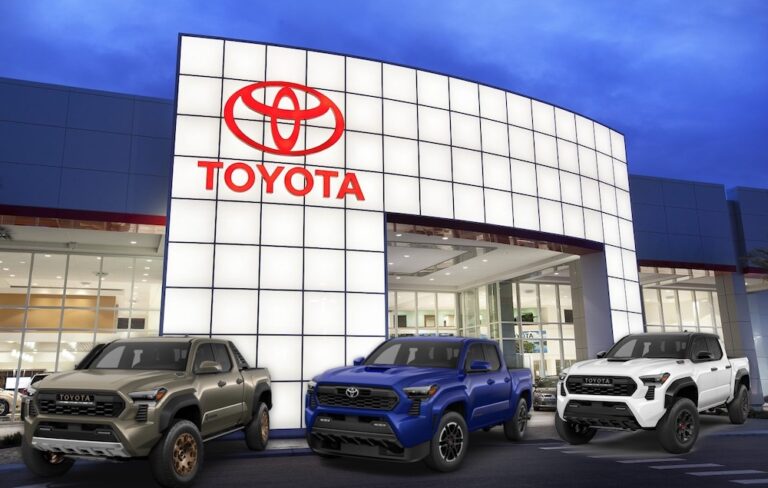
If you have been shopping for a Toyota and you keep running into the same wall, you are not alone. You walk into the dealership, you look at what is sitting on the lot, and you notice it is close. But it is never quite right. The color is off. The trim does not match what you want. The options you care about are missing. Then you do the same song-and-dance again at the next store.
At some point, you start wondering a very practical question. Can you skip the inventory limitations and order your Toyota straight from the factory like you are building it for your own life?
Here is the good news. Toyota does have a custom order path that everyday buyers can use. It is not the same as owning a private production line, but it is also not just a sales gimmick. You can design a Toyota that matches what you are actually trying to buy.
This guide breaks down how Toyota’s factory ordering and configuration system works, what you can customize, what the timeline looks like, and when it makes more sense to handle changes through a dealership instead. You will also see what third-party customization looks like and where warranty issues can pop up.
Let us start with the simplest answer first.
Is It Possible to Order a Toyota Directly from the Factory?
Absolutely, everyday buyers can bypass the dealership and order a personalized vehicle straight from Toyota’s factory.
That means you are not limited to whatever happens to be sitting on a lot that week. You can build a Toyota around your preferences, including trim level, powertrain choice, and the kind of options that actually matter to you.
If you have ever felt that dealership shopping is like settling, this is the alternative. You are putting the selection process in your hands instead of relying on inventory luck.
To be clear, this does not mean you are choosing every possible part on Earth. Unless you have a direct relationship inside Toyota, you will not build a car from the absolute ground up. But Toyota does provide a configuration experience that lets you select from their current lineup and personalize it.
Many shoppers go down the factory-order thinking path after they visit multiple dealerships and realize something keeps missing. It might be the color. It might be the engine choice. It might be one specific feature. Once you figure out what is missing, the factory configuration approach becomes a lot easier to justify.
So yes, it is possible. The next question is how Toyota’s system actually works in the real world.
How Toyota’s Custom Order System Works
The process starts with the Toyota configurator. On the Toyota website, you can use the tool to craft your ideal vehicle.
You can access the configurator here: Toyota.com/configurator.
Once you arrive in the configurator, Toyota shows you which vehicles are available for customization. As of 2022, Toyota offered over 30 models for personalization through this kind of setup.
That is important because it answers a common worry. People assume factory ordering only applies to a couple of special models. In reality, it can apply to a wide variety of Toyota cars, trucks, and SUVs.
Whether you are interested in an electrified Skylander truck, a Prius Prime, a RAV4 hybrid, a spacious Sienna minivan, or you want something sporty like a GR Supra, the configurator is meant to match what Toyota has available in the current lineup.
One more reality check. Ordering directly from Toyota’s factory is not always instant. It typically takes several weeks to a couple of months to receive your vehicle, depending on timing and production schedules.
That wait is not a punishment. It is simply the cost of getting exactly what you envisioned. If you want options that the dealer lot does not carry, the factory route usually delivers.
If your changes are minor, though, factory ordering can be overkill. For example, if you only need small interior or accessory changes, it is often faster to buy a nearby dealership vehicle and have them perform the updates on-site.
Next, let us talk about what the configurator actually lets you choose, because that determines whether this method fits your situation.
Toyota’s Modification Process
After you choose the vehicle in the configurator, Toyota walks you through configuration steps that are tied to what is actually available for that specific model.
In the early part of the configuration, you will usually see different version types. For example, the configurator might list options like standard, XL, limited, or hybrid versions depending on your vehicle.
Once you select the model, the next page typically lists available engine options for that vehicle and the specific model combination you chose. The configurator guides you step-by-step through modifications that make sense for your build.
Here is a detail that helps you avoid frustration. Not every customization applies to every vehicle. A truck build can have different options than a compact Prius build. The configurator handles these compatibility rules for you, which is exactly what you want.
You can also select colors and finishes. Toyota’s configurator allows options like matte or glossy finishes, depending on what applies to your vehicle.
Accessories are also available after you finalize the main vehicle modifications. That can be helpful if you want to add items that the factory build supports.
If you are the kind of buyer who already knows exactly what you want, this process tends to feel straightforward. If you are still deciding, the configurator can be a great way to compare combinations because you can see what is possible in one place.
Need Help? Contact Customer Service
Sometimes a buyer runs into something the configurator does not show. That does not always mean it cannot be done. It sometimes means the configurator only displays certain items by default, or it means the exact accessory needs to be requested through support.
If a specific modification or accessory is not listed, you can reach out through Toyota’s customer service channels. The important thing is not to assume “not listed” equals “not possible.”
Also, if your request matters because of your budget or timing, contacting customer service early can save weeks. You want the build aligned with what can actually be delivered on the timeline you are working with.
Custom Orders Through Dealerships
Ordering directly from Toyota’s factory is a great option when you want specific configuration choices. However, not every customization requires factory ordering.
If you need small changes, the dealership route can be the smarter option. Many Toyota-certified dealerships can customize a vehicle to your preferences through repainting, accessory installations, or adding certain equipment packages.
Dealership options can include things like repainting the vehicle, installing custom lighting inside the cabin, or providing roadside emergency kits for a specific model or trim.
In many cases, dealership modifications are completed in under a week. If a specific part is out of stock, it might take two or three weeks.
This is a key decision point. If you need the car quickly, dealership modifications can sometimes beat factory ordering simply because they are happening in a more flexible workflow.
If you are trying to decide between factory ordering and dealership modifications, here is a simple way to choose:
| Your Goal | Factory Ordering Usually Fits | Dealership Customization Usually Fits |
|---|---|---|
| Exact trim and configuration not on the lot | Yes | Sometimes |
| Quick timeline | Not always | Often |
| Small accessories or interior upgrades | No | Yes |
| Specific color and finishes you want | Yes | Sometimes |
| Options that require factory-level compatibility | Yes | Limited |
That table is a shortcut, not a rule. Still, it can help you avoid the worst kind of buyer frustration: waiting on a factory build when you only needed one minor change, or paying for dealership work when the factory configuration would have been cleaner.
What About Third-Party Customizations?
Maybe you already own a Toyota and you want to upgrade it. You might be thinking about better brakes, refreshing worn upholstery, or improving the stereo system so music finally sounds like it should.
Third-party shops can do excellent work. Many auto body shops and performance installers can customize paint, lighting, interior upgrades, audio systems, and more. That said, you need to be cautious because some modifications can impact your warranty.
Here is how to think about it. If your Toyota is still under warranty, ask the shop how the modification might affect warranty coverage. Some changes are straightforward and low risk. Other changes can create issues if they interfere with sensors, electrical systems, emissions-related components, or factory wiring.
If your vehicle is no longer under warranty, you generally have more freedom. You can modify it how you like. Still, a good shop will help you think through what is safe and what is likely to cause problems later.
Trending Vehicle Customizations
Customizations can happen in three main places: dealerships, Toyota’s ordering system, or third-party shops. Knowing what other drivers are choosing can help you decide what type of customization makes sense for you, not just what looks cool.
Here are three popular customizations that show up again and again in real buyer decisions.
- Unique paint and designs: Standard black and white are fine, but why settle when you can choose from countless hues and finishes? Many owners pick high-gloss, matte, or semi-gloss finishes to make the vehicle stand out.
- Window tinting: Tint is a classic because it improves privacy and reduces some glare. A lot of areas allow tint levels around 20 to 35 percent, but you still need to check local laws before you commit.
- Underglow neon lights: RGB underglow lighting is not only for show cars anymore. Many drivers add underglow to create a distinctive effect under the vehicle, especially at night.
These types of upgrades also differ in how much they can affect warranties and electrical systems. Paint and tint are often simpler. Underglow lights can be more wiring-intensive, so you need a shop that can handle it cleanly.
That is where planning matters. You want a customization that you can enjoy now, not a modification that causes electrical issues a few months later.

Final Thoughts
You can order a custom Toyota through the manufacturer experience, and yes, it usually takes several weeks to get delivered once your selections are confirmed. During the process, you select the vehicle’s make, model, engine choice, color, and other modifications available in the configurator.
You can also buy accessories through the configurator process, depending on what is offered for your specific build. If you choose third-party customization instead, popular options include unique paint jobs, underglow lights, and window tinting. That is where warranty considerations and shop-quality matter most.
Now the question is not “Can you order?” The real question is “Do you want to wait for exactly what you want, or do you want it sooner with smaller changes?”
Action step: If you know the one thing your local dealership never has, write it down. Then decide whether that missing piece is a factory-level configuration requirement or a dealership customization fix. Once you know which bucket it belongs to, ordering becomes simple.
What is the one feature you keep missing when you look at Toyota inventory, the color, the trim, the powertrain, or an accessory?